

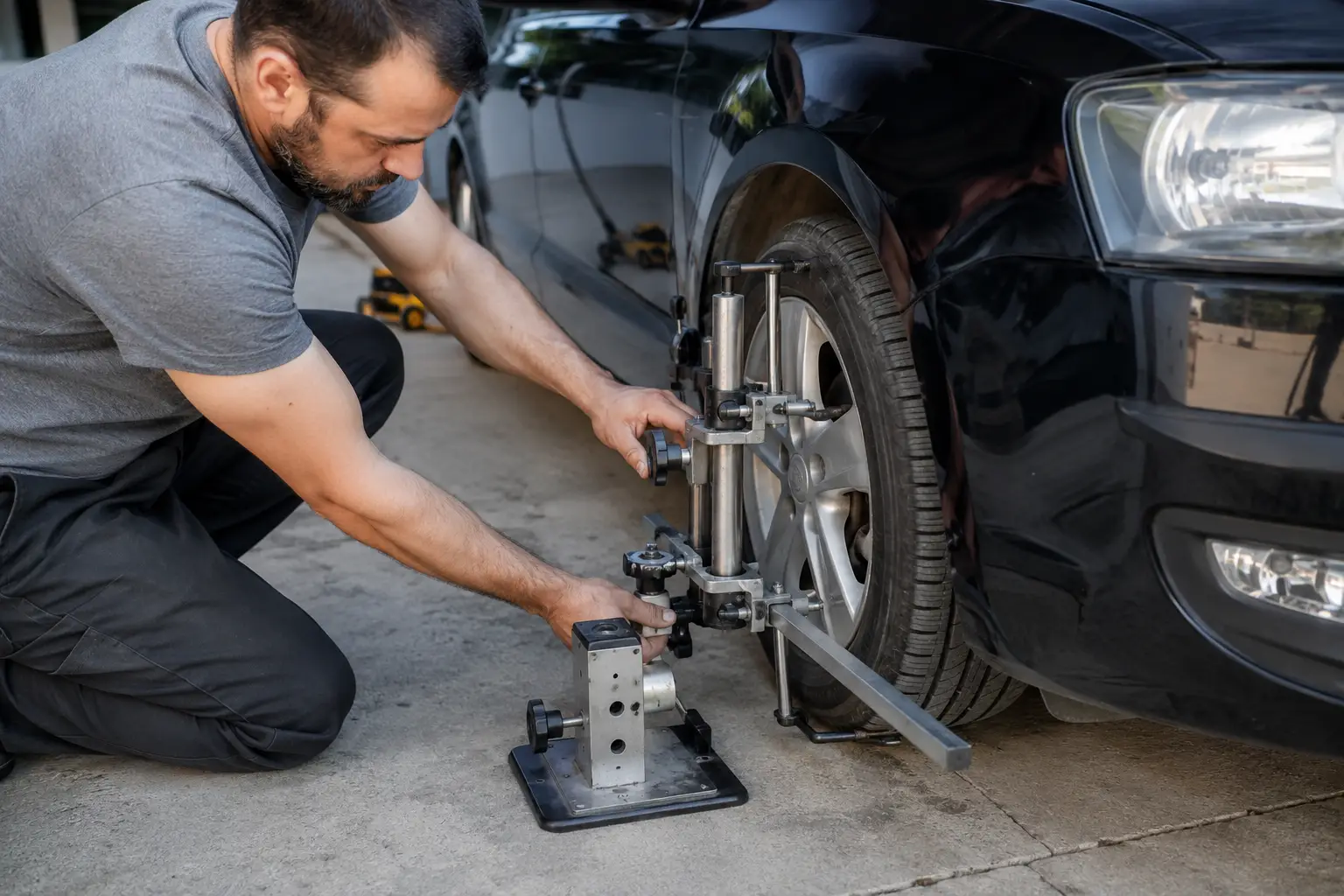
You must understand how to align car tires to extend the life of your expensive rubber. If your steering wheel pulls left or your tires wear unevenly, your alignment already needs immediate correction. From an automotive engineering perspective, suspension geometry relies on three critical angles: camber, toe, and caster. These specific measurements optimize the tire-road contact patch to ensure your vehicle tracks perfectly straight.
I recently interviewed Marcus, a veteran ASE-certified suspension technician with twenty years of shop experience. Marcus explained that while modern computer racks offer flawless precision, a careful owner can achieve safe, drivable results in their driveway.
Furthermore, he emphasized that mastering how to fix your alignment requires nothing more than string, jack stands, and hand wrenches. Therefore, this guide will walk you through the exact physics and hands-on steps necessary to fix your car’s steering geometry.
What is Wheel Alignment?
When you learn how to align car tires, you actually adjust the vehicle’s suspension components rather than the rubber itself. Alignment simply refers to the specific direction and angle at which the wheels sit relative to the road. First, technicians evaluate “Toe,” which indicates the direction the tires point relative to each other from a top-down view. Next, “Camber” describes the inward or outward vertical tilt of the tire when you look at the vehicle from the front.
Finally, “Caster” represents the steering stability angle by measuring the forward or backward tilt of the steering axis. Specifically, positive camber means the top of the tire leans away from the engine, while negative camber means it leans inward. Performance drivers often utilize negative camber to improve cornering grip during aggressive driving. Conversely, improper camber on a daily commuter vehicle quickly destroys the inner or outer shoulder of the tire tread.
Next, caster angles dictate how the steering wheel naturally returns to the center position after completing a turn. Positive caster tilts the steering axis backward toward the driver, which drastically improves high-speed straight-line stability. Properly executing how to align car tires ensures these three critical angles perfectly match the manufacturer’s factory specifications.
Consequently, your vehicle resists dangerous “darting” across the highway and maintains a perfectly centered steering wheel. Furthermore, ignoring these angles causes rapid tire degradation, poor fuel economy, and unpredictable handling during emergency maneuvers. Therefore, wheel alignment essentially synchronizes the entire steering system so your car drives exactly where you point it.
What Throws Off Your Alignment?
Many drivers wonder what exact events ruin their perfect suspension geometry. The most frequent culprit involves hitting a deep pothole at high highway speeds. This sudden, violent impact forcefully shoves the control arms out of their calibrated positions. Similarly, striking a curb while parallel parking bends tie rods or shifts the steering rack completely out of spec. Therefore, even minor daily impacts accumulate over time and quietly distort your suspension angles.
Additionally, worn suspension components naturally alter the geometry as the vehicle ages. Bushings dry rot, ball joints loosen, and coil springs sag after years of supporting the engine’s heavy weight. Consequently, this natural mechanical wear shifts the wheels out of alignment even if you never hit a pothole. Accident damage represents another major cause, as frame damage permanently misaligns the mounting points for the suspension components.
Furthermore, off-road driving stresses the suspension linkages far beyond their standard design limits. The constant vibration from washboard dirt roads slowly backs out adjustment bolts and loosens eccentric washers. Over time, this intense vibration forces the lower control arms to migrate out of their factory slots. Similarly, carrying heavy payloads in the trunk alters the vehicle’s ride height, which dynamically changes the camber and toe angles.
Once you remove the heavy cargo, the suspension springs may fail to return to their original resting position. Before you even attempt how to align car tires, you must thoroughly inspect the undercarriage for these bent or broken parts.
A bent control arm will never hold an alignment correctly, regardless of your wrenching efforts. You must replace damaged components before you measure the toe or camber angles. Ultimately, keeping your suspension parts fresh ensures your alignment stays locked in place for thousands of miles.
How Often to Align Car Tires?
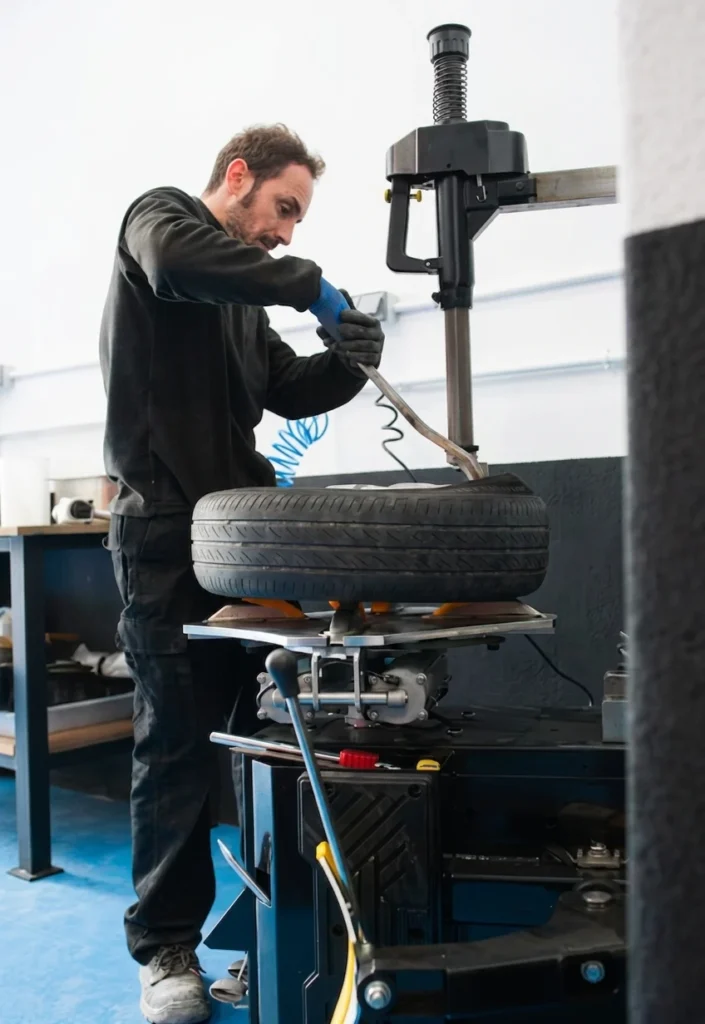
Every responsible owner should know how often they need to perform this vital maintenance check. Automotive experts generally recommend inspecting your suspension tracking every 6,000 to 12,000 miles. Furthermore, you must always check the wheel angles immediately after installing new suspension parts like struts or tie rods. Replacing your tires also warrants a fresh alignment to protect your new, expensive investment from premature edge wear.
If you experience a severe impact with road debris, you should verify the steering angles that same week. Regular checks proactively prevent “feathering” or “cupping” wear patterns on the edges of your tire tread. Therefore, inspecting the tracking twice a year helps you avoid replacing tires long before their mileage rating expires. Understanding how to align car tires allows you to perform these routine checks at home completely for free.
Can You Align Tires Yourself?
Many weekend mechanics ask if they can truly perform a precise alignment without a massive shop machine. The honest answer is yes, but you must understand the practical limitations of DIY methods. Professional automotive shops utilize multi-thousand-dollar laser tracking systems to measure angles down to a tenth of a degree. However, performing how to align car tires at home serves as a highly effective correction method for basic toe issues.
While camber and caster usually require specialized alignment shims or eccentric bolts, toe relies purely on simple threaded tie rods. Consequently, adjusting the toe at home requires only a tape measure, some string, and basic open-ended wrenches.
Therefore, this do it yourself car alignment approach perfectly suits project cars, track day adjustments, or getting a repaired vehicle safely to a professional shop. As long as you work on a perfectly level concrete surface, you can successfully center your steering wheel.
How to Align Car Tires at Home
The traditional string method remains the most reliable DIY technique for fixing your vehicle’s tracking. This systematic approach creates a perfectly parallel reference box entirely around your vehicle. First, park the car on completely flat ground and perfectly center the steering wheel. Next, place four jack stands near the bumpers and pull a high-tension string tightly around the entire car. You must ensure the string sits exactly at the center height of the wheel hubs.
After setting the string, measure the physical distance between the string and the front lip of the wheel rim. Then, measure the distance between the string and the rear lip of the same wheel rim. If the front measurement differs from the rear measurement, your toe angle requires immediate correction. Next, loosen the tie rod lock nut and twist the tie rod sleeve to adjust the wheel’s angle.
You must make very small turns, as minor tie rod rotations create massive changes at the tire tread. After adjusting the rod, firmly tighten the lock nut and physically roll the car back and forth. Rolling the vehicle settles the suspension joints before you take your final confirmation measurement. Understanding how to align car tires using this method gives you a perfect visual representation of your steering angles.
How to Do Wheel Alignment with a Tape Measure
How to do wheel alignment with a tape measure provides another excellent DIY option for home mechanics. Specifically, understanding how to align car tires with a tape measure focuses entirely on the front toe angle. First, you measure the tread distance exactly at the front of the tires. Next, you measure the corresponding tread distance precisely at the rear of the tires.
If the front measurement sits smaller than the rear, your vehicle has a “Toe-In” condition. Conversely, a larger front measurement indicates a problematic “Toe-Out” alignment. Therefore, you adjust the steering rack tie rods until both measurements equalize completely. Learning how to align car tires this way requires a very steady hand and sharp eyesight.
Wheel Alignment Procedure Step by Step
While DIY methods work, a professional wheel alignment procedure step by step guarantees perfect highway safety. First, mechanics inspect the suspension for worn ball joints or leaking shock absorbers. Next, they mount high-precision laser sensors securely to each individual wheel. Consequently, these laser sensors communicate instantly with a central computer alignment rack.
The computer displays exactly how to align car tires according to the original manufacturer specifications. Then, the technician adjusts the camber using specialized eccentric bolts or adjustable upper strut mounts. Finally, the mechanic corrects the toe and sweeps the steering wheel to verify the caster angle. Most shops recommend watching the technician to truly understand how to align car tires safely.
How to Align Front Tires on a Car
Knowing how to align front tires on a car represents the most common maintenance task for drivers. Usually, the front suspension suffers the most mechanical abuse from heavy engine weight and continuous steering forces. Consequently, adjusting the front tie rods fixes almost all common vehicle tracking issues. Therefore, mastering how to align car tires fundamentally starts directly at the front axle.
Specifically, you loosen the tie rod lock nut and carefully rotate the inner adjustment sleeve. This rotation lengthens or shortens the rod, which changes the tire’s toe angle immediately. You must adjust both sides equally to keep the steering wheel perfectly centered during straight driving. Otherwise, you will fail at how to align car tires because the car tracks straight but the steering wheel sits crooked.
How Long Does it Take to Align Car Tires?
Many beginners ask how to align car tires quickly in a residential driveway. A professional automotive shop completes the entire alignment process in roughly 30 to 90 minutes. However, doing an alignment at home usually requires one to three hours of careful, patient work. Therefore, you must schedule a full afternoon when you first learn how to align car tires.
Specifically, rusted or seized tie rods significantly increase your overall repair time. You must use penetrating oil or a blow torch to break loose frozen suspension bolts safely. Consequently, extreme patience remains your best tool when performing this intricate chassis repair. Mastering how to align car tires quickly only comes with repeated practice and high-quality wrenches.
How Much Does Wheel Alignment Cost?
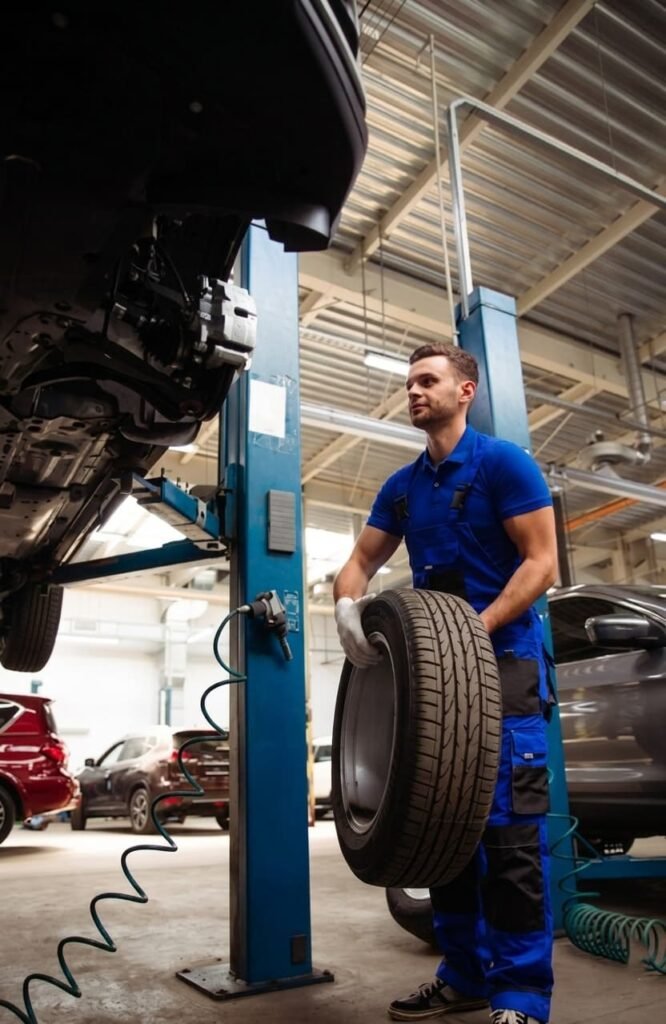
Drivers constantly wonder about professional dealership prices compared to home repairs. How much is a wheel alignment for a Mazda CX 5 at a modern dealership? Typically, a standard four-wheel service costs between $100 and $150 depending on your local region. Consequently, learning how to align car tires saves you significant money over the vehicle’s total lifespan.
Does the Honda Odyssey need 4 wheel alignment for optimal tire wear? Yes, most modern vans and crossovers require complete four-wheel tracking to prevent rapid rear tire scrubbing. Therefore, investing in professional shop service occasionally makes logical financial sense. However, utilizing how to align car tires at home works perfectly for minor steering wheel corrections between major dealership services.
Will Alignment Fix Camber?
Many vehicle owners ask if an alignment fixes camber issues automatically. The honest answer depends entirely on your specific vehicle’s factory suspension design. Some modern economy cars feature fixed camber plates that prevent standard shop adjustment. Therefore, knowing how to align car tires only solves simple toe problems on these specific vehicle models.
If your camber sits completely out of specification, you likely have a bent strut or sagging coil spring. Mechanics must install aftermarket camber bolts to fix these severe suspension geometry issues. Consequently, basic driveway adjustments cannot repair heavily damaged structural components. Understanding how to align car tires includes knowing exactly when you must buy replacement parts instead.
How to Align Tires in Car Mechanic Simulator 2026
Gaming enthusiasts often practice virtual repairs before touching a real physical vehicle. The game accurately mirrors real-world automotive diagnostic procedures for educational purposes. First, you drive the virtual vehicle safely onto the computerized garage alignment stand. Next, the simulator screen shows you precisely how to align car tires using digital hand tools.
You turn the virtual tie rods until the red “Toe” indicators turn perfectly green. Additionally, the game requires you to adjust camber angles on aggressive performance race builds. Consequently, this video game provides a fantastic, risk-free educational environment for novice mechanics. Practicing virtually builds incredible confidence before you attempt how to align car tires in your actual garage.
Alignment for Performance & Drag Racing Cars
Motorsports completely change the standard rules regarding how to align car tires for maximum performance. When mechanics ask how to align tires on a drag racing car, they prioritize straight-line traction over tire longevity. Specifically, drag racers configure a slight “Toe-In” setup to prevent dangerous high-speed wandering. Therefore, the race car launches straight down the asphalt track under massive engine acceleration.
Conversely, road course racers prefer “Toe-Out” to achieve sharper turn-in response during tight corners. These aggressive racing setups wear tires out rapidly but deliver massive lap time improvements. Consequently, the ideal method for how to align car tires depends entirely on your specific driving application. You must carefully research the correct aggressive specifications for your specific motorsport discipline.
Do It Yourself Alignment vs Professional Service
When evaluating do it yourself alignment vs professional service, you must consider mechanical accuracy and safety. Fixing alignment on car suspension components at home offers a low-cost, medium-accuracy solution. This DIY method perfectly suits older trucks or project cars that see frequent track day modifications. Therefore, learning how to align car tires empowers home mechanics to maintain their own personal fleet.
However, professional laser alignment guarantees flawless digital accuracy down to the exact millimeter. Modern luxury vehicles with advanced driver assistance systems require precise camera calibrations alongside the physical hardware alignment. Consequently, traditional driveway methods cannot recalibrate radar cruise control sensors effectively. Therefore, you should use your knowledge of how to align car tires primarily for mechanical tracking repairs.
How to Fix Your Alignment
Knowing exactly how to fix your alignment begins with an accurate visual tire diagnosis. First, check your tire tread physically for uneven wear patterns or rough “feathering” rubber edges. Next, determine if the steering wheel pulls aggressively to the left or right on a completely flat road. These specific warning signs tell you exactly how to align car tires to correct the underlying mechanical fault.
If you only need a minor toe correction, adjusting the tie rods at home works wonderfully well. Furthermore, you must double-check your tire pressures manually before measuring any complex suspension angles. Consequently, uneven tire pressure creates fake alignment issues that confuse beginner home mechanics. Finally, mastering how to align car tires means accepting your mechanical limits and visiting a shop when necessary.
Frequently Asked Questions
How do you align car tires at home?
You can fix your suspension tracking at home using the traditional string or tape measure method. Specifically, you measure the front and rear physical distances of the tire rim. Then, you adjust the steering tie rods until the wheels sit perfectly parallel. Knowing how to align car tires this way saves tremendous money.
Can you align tires yourself?
Yes, you can easily adjust the front toe angle directly in your home driveway. However, complex camber and caster adjustments usually require professional laser alignment equipment. Therefore, do it yourself car alignment works best strictly for minor tracking corrections.
What throws off car alignment?
Hitting deep road potholes or striking concrete parking curbs ruins your suspension geometry immediately. Furthermore, worn ball joints and sagging coil springs slowly alter the wheel angles over time. Consequently, you must regularly practice how to align car tires to catch these dangerous changes.
How often should you align tires?
Mechanics highly recommend checking your suspension angles every 6,000 miles or twice a year. You must also perform this vital service after installing new tires or replacing worn suspension parts.
Does alignment fix steering pull?
Yes, properly adjusting the toe and caster angles effectively stops the vehicle from pulling sideways. This precise adjustment centers the steering rack and perfectly balances the physical road forces.
Conclusion
Ultimately, mastering how to align car tires provides immense mechanical value to any automotive enthusiast. During my garage sessions with Marcus, he continually praised the incredible financial benefits of routine driveway maintenance. He noted that regular string alignment checks prevent premature tire replacements entirely. Consequently, this simple mechanical skill keeps your vehicle safe and completely predictable on the highway.
Therefore, you should gather your wrenches, buy some high-visibility string, and measure your tracking today. Maintaining perfect suspension geometry ensures optimal handling response and superior long-term fuel economy.