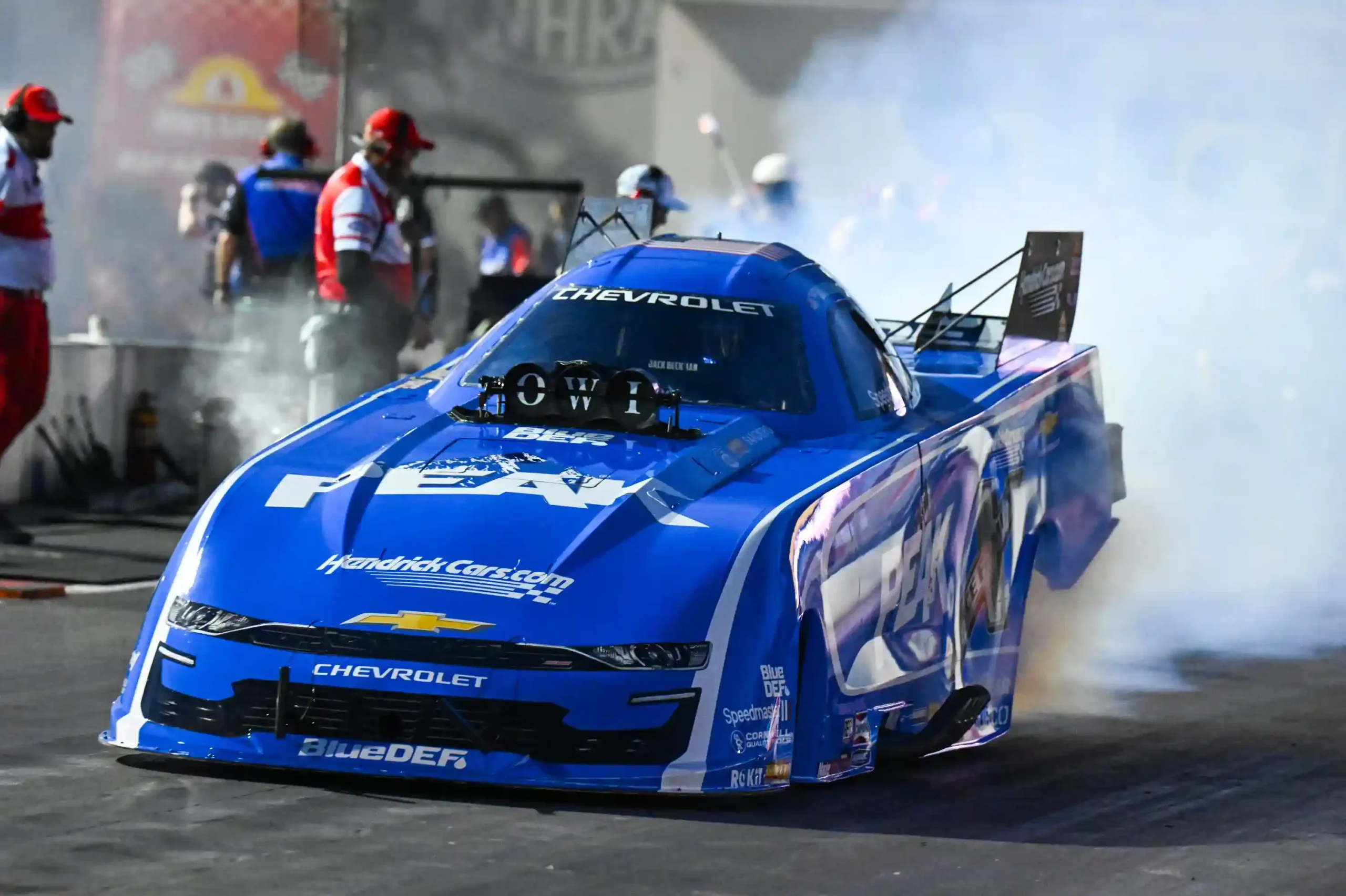

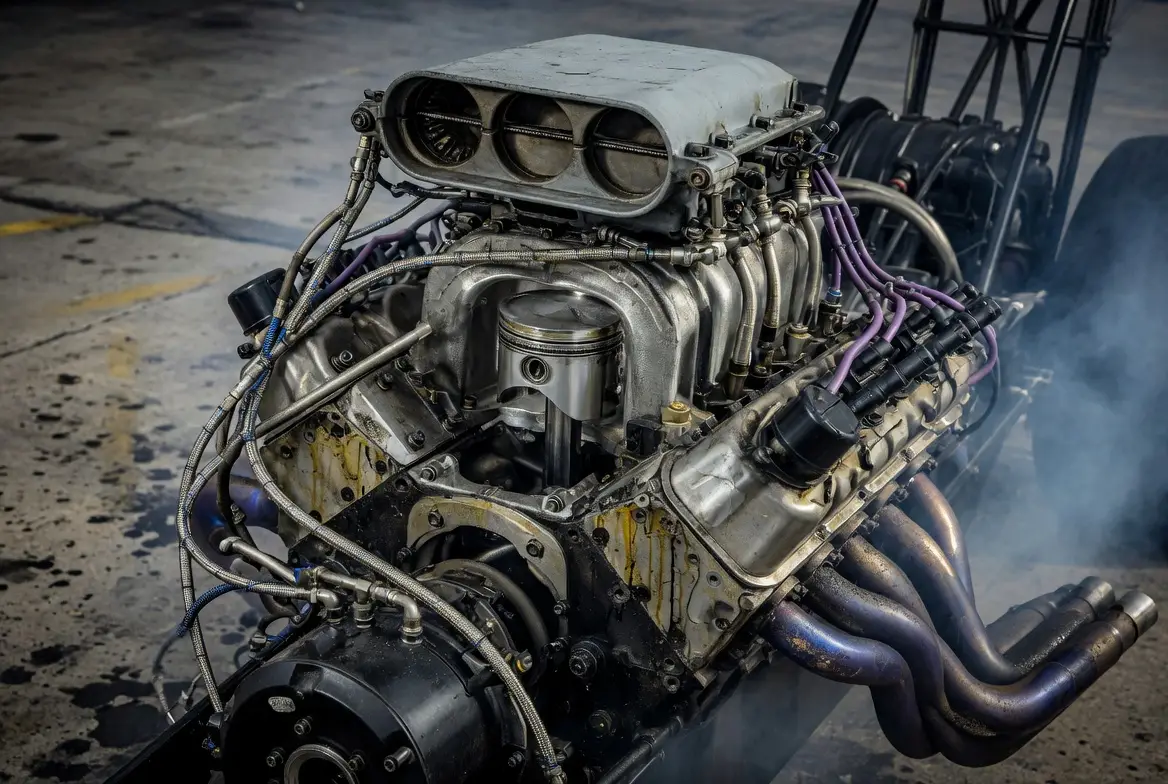
Diehard motorsports enthusiasts frequently ask how much does a NHRA Top Fuel engine cost when they witness these asphalt-shredding land rockets launch down the drag strip. These machines represent the absolute pinnacle of straight-line acceleration across the global racing landscape. Consequently, professional teams spend fortunes to build and maintain these mechanical monsters.
A veteran crew chief will tell you that figuring out how much does a NHRA Top Fuel engine cost requires analyzing both initial fabrication and the endless cycle of replacement parts. A complete, race-ready power plant easily commands a six-figure premium before it ever ignites a drop of fuel. Furthermore, these mechanical marvels require a complete teardown and rebuild after every single four-second pass.
How Much Does a NHRA Top Fuel Engine Cost?
When calculation experts look at building a complete unit from scratch, determining how much does a NHRA Top Fuel engine cost yields a staggering six-figure baseline estimate. Specifically, a fully assembled engine costs approximately $100,000 to $120,000. However, this initial price tag only scratches the surface of actual operational expenses.
Furthermore, team managers tracking how much does a NHRA Top Fuel engine cost must allocate massive budgets for secondary spare units in the race hauler. Most elite teams carry at least five to six complete backup engines to every national event. Therefore, looking at how much does a NHRA Top Fuel engine cost reveals that the base price only represents the entry ticket to professional drag racing.
Consequently, high-profile team owners routinely evaluate how much does a NHRA Top Fuel engine cost over an entire 21-race national event schedule. When you add the cost of constant component replacements, a single dragster can consume over $1 million in engine parts per year. The table below outlines the realistic current market pricing for major components in 2026.
| Component | Estimated Cost (USD) |
| Custom Billet Aluminum Block | $12,500 – $15,000 |
| High-Output Supercharger (Blower) | $11,000 – $13,000 |
| Multidisc Clutch Assembly | $8,500 – $10,000 |
| Billet Steel Crankshaft | $4,500 – $5,500 |
| Full Rebuild (Parts per Run) | $3,500 – $5,000 |
What Engine Is in a NHRA Top Fuel Car?
To understand how much does a NHRA Top Fuel engine cost, one must first examine the specific power plant hiding beneath the rear wing. These dragsters utilize a custom-built 500 cubic inch (8.2-liter) Hemi V8 engine modeled after the historic Chrysler design. Specifically, calculating how much does a NHRA Top Fuel engine cost involves analyzing the 500 cubic inch supercharged Hemi V8 layout.
In addition, evaluating how much does a NHRA Top Fuel engine cost forces mechanics to consider custom billet aluminum blocks without water cooling jackets. Because the engine runs for less than ten seconds per cycle, incoming nitromethane fuel and heavy oil provide all necessary cooling. Engineers forge the entire block from a solid piece of aluminum to withstand extreme cylinder pressure.
Furthermore, the fuel system introduces massive amounts of nitromethane directly into the combustion chambers. Two giant magnetos supply 44 amps of current to 16 spark plugs, creating a literal arc-welding environment inside the cylinders. Consequently, this good engineering configuration delivers unprecedented power numbers that defy standard automotive limitations.
How Much Horsepower Does a Top Fuel Engine Make?
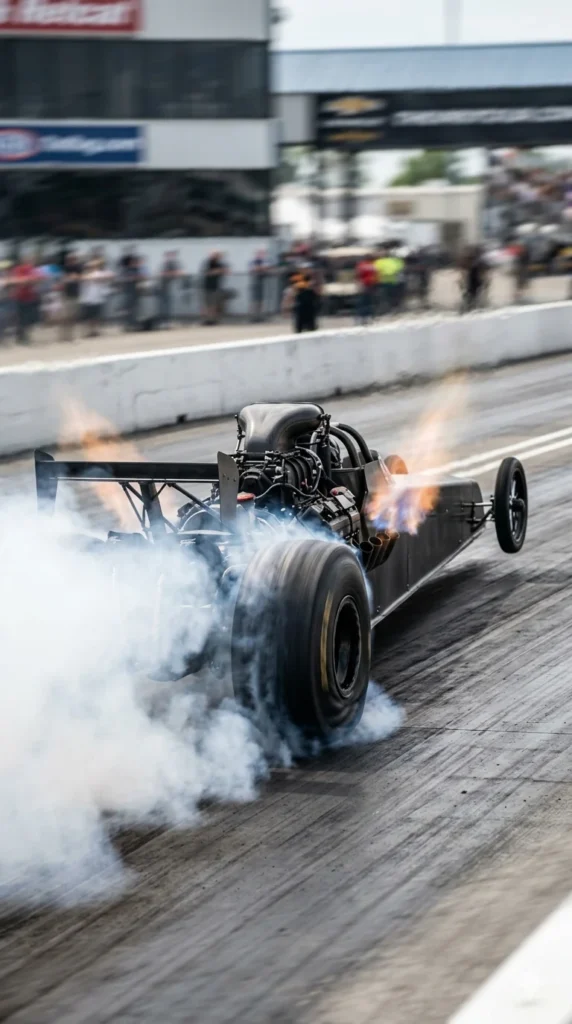
When fans discover how much does a NHRA Top Fuel engine cost, they immediately want to know the power output driving that massive price tag. Modern dynos cannot accurately measure these power plants because the immense torque would instantly destroy the machinery. Ultimately, the reason how much does a NHRA Top Fuel engine cost reaches such astronomical heights relates directly to its 11,000+ horsepower output.
For instance, measuring how much does a NHRA Top Fuel engine cost against standard performance metrics shows that a single cylinder generates more power than a NASCAR vehicle. The engine produces roughly 11,000 to 12,000 horsepower and over 8,000 pound-feet of torque. Thus, the question of how much does a NHRA Top Fuel engine cost always correlates with the sheer mechanical violence of transferring that power to the rear tires.
Veteran crew chief Todd Okuhara recently noted during a pit lane interview that managing this wheel horsepower requires surgical precision. If the clutch transfers power too quickly, the massive Goodyear rear slicks will instantly lose traction. In contrast, a conservative tune-up causes the dragster to lose valuable hundredths of a second on the racetrack.
Why Determining How Much Does a NHRA Top Fuel Engine Cost Reveals Unmatched Engineering Expenses
First, understanding how much does a NHRA Top Fuel engine cost requires a deep look into the extreme stress inside the combustion chambers. During a full-throttle launch, the supercharger forces air and fuel into the cylinders at over 60 pounds of boost pressure. Therefore, the internal components experience forces similar to an exploding hand grenade on every single revolution.
Second, part of the equation of how much does a NHRA Top Fuel engine cost stems from precision machining tolerances required for nitromethane fuel. Nitromethane contains its own oxygen atoms, which allows it to burn much faster and hotter than standard gasoline. Consequently, the engine must burn up to 15 gallons of fuel during a single four-second run.
Furthermore, engineers must design these components to endure extreme structural distortion without instantly failing. The engine block twists under full load, meaning every bearing and piston must adapt to microscopic alignment changes. Ultimately, this hyper-advanced durability engineering creates the fastest NHRA engine parts available on the global market.
Consequently, analyzing how much does a NHRA Top Fuel engine cost proves that teams pay for specialized aerospace materials. Custom titanium intake valves and Nimonic exhaust valves prevent catastrophic thermal meltdown at the finish line. Therefore, these premium materials drive up the overall investment required to run a competitive team in 2026.
Top Fuel Engine Rebuild Cost & Maintenance
The brutal nature of nitromethane combustion means that understanding how much does a NHRA Top Fuel engine cost requires looking into the mandatory post-run teardown. Specifically, a crew of specialized mechanics must completely disassemble the power plant immediately after the car returns to the pit lane. Therefore, analyzing how much does a NHRA Top Fuel engine cost means factoring in a $3,500 to $5,000 maintenance overhead for every single four-second competitive pass.
During this intense 40-minute turnaround process, the mechanical crew strips the engine down to the bare block. Consequently, they inspect every single load-bearing component for microscopic structural fractures using specialized diagnostic tools. If the tuning setup pushed the supercharger boost too far, a team can easily melt thousands of dollars in high-end components during a single qualifying round.
Furthermore, parts rotation strategies significantly influence how much does a NHRA Top Fuel engine cost over a race weekend. For example, a premier team will run a brand-new supercharger blower belt during Sunday elimination rounds. Then, that same belt cascades down to become a lower-priority qualification belt or a weekday test-session component. This meticulous resource rotation keeps the cumulative operational expenses from spiraling completely out of control.
Top Fuel Engine Parts Explained
To evaluate how much does a NHRA Top Fuel engine cost accurately, you must examine individual component pricing. The specialized crankshaft, forged from high-grade billet steel, faces incredible rotational torque and requires replacement after approximately 10 to 15 passes. Consequently, this single component adds a repeating $4,500 capital expense to the overall team ledger.
Similarly, the pistons and connecting rods operate under catastrophic thermal loads that cause them to distort rapidly. Mechanics routinely swap out all eight aluminum pistons after just a handful of launches to prevent catastrophic engine failure. This constant component replacement rhythm directly answers why tracking how much does a NHRA Top Fuel engine cost remains a moving target for independent teams.
- Billet Aluminum Block: $12,500 – Features thick cylinder walls without cooling jackets.
- High-Output Supercharger: $11,000 – Forces massive volumes of air into the Hemi architecture.
- Multidisc Clutch Assembly: $8,500 – Uses specialized steel floaters that team mechanics discard after one pass.
- High-Flow Fuel Pump: $4,000 – Delivers up to 100 gallons of liquid nitromethane per minute under full throttle.
Why Top Fuel Engines Explode & Wear Out So Quickly
The underlying reason how much does a NHRA Top Fuel engine cost so much money links directly to structural volatility. Because nitromethane burns with explosive violence, the internal cylinder pressures approach a staggering 7,000 pounds per square inch. Therefore, the engine constantly teeters on the absolute edge of complete mechanical destruction during acceleration.
Furthermore, the liquid volume of fuel entering the Hemi combustion chambers is so immense that it borders on hydraulic lock. If a single spark plug stops firing, unburned nitromethane will instantly compress inside the cylinder. Because liquids cannot compress, the piston will violently shatter, blowing the cylinder heads completely off the aluminum block.
This extreme thermal environment regularly melts the tips of the dual spark plugs before the car hits the thousand-foot mark. By the end of a record-setting run, the exhaust valves frequently weld themselves to their guides due to the intense heat. Consequently, these recurring structural failures explain why calculating how much does a NHRA Top Fuel engine cost involves expecting component destruction.
NHRA Top Fuel Speed, Acceleration & Performance
The extreme financial investment directly unlocks the most mind-boggling acceleration figures found anywhere in modern physics. A competitive dragster launches from a complete standstill to 330 mph in less than 3.7 seconds. Therefore, the vehicle generates over 5 Gs of longitudinal acceleration, which eclipses a military jet fighter leaving an aircraft carrier.
0 to 100 MPH: 0.8 Seconds (First 60 Feet)
0 to 300 MPH: 2.2 Seconds (First 350 Feet)
Total Elapsed Time: 3.65 – 3.75 Seconds
Maximum Finish Line Speed: 335+ MPH
To achieve these record-breaking runs, the vehicle requires an flawless interaction between tire expansion, clutch timing, and track traction. The dragster covers the first 60 feet in less than a second while burning multiple gallons of nitromethane. Ultimately, achieving this extreme velocity requires purchasing top-tier engine components without cutting any financial corners.
Funny Car Engine vs Top Fuel Engine
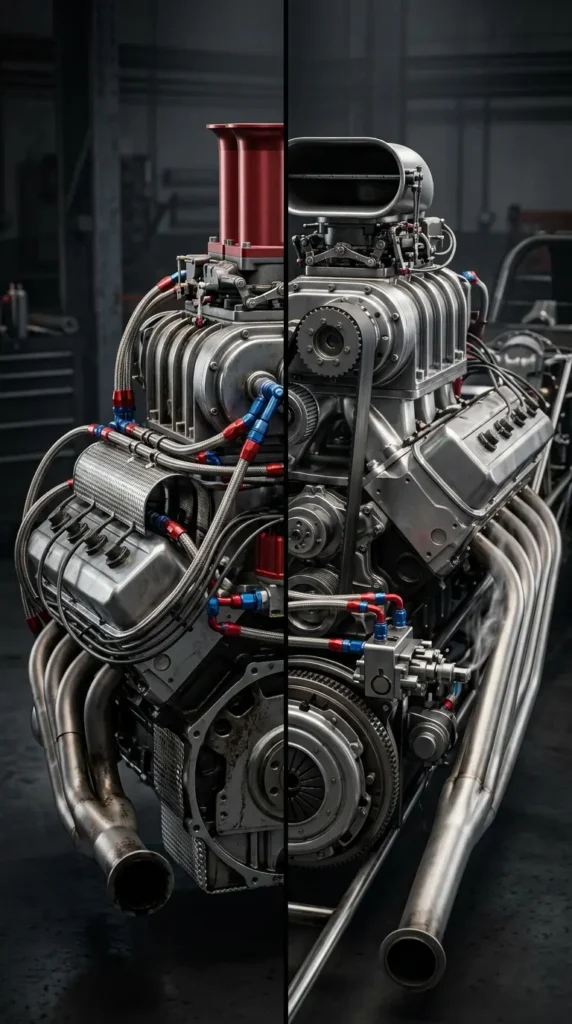
When discussing how much does a NHRA Top Fuel engine cost, fans often compare these dragsters to Funny Cars. Both professional categories utilize the identical 500 cubic inch supercharged Hemi V8 architecture as their primary power source. However, subtle tuning variances and distinct exhaust configurations separate these two types of straight-line racing machines.
Because a Funny Car positions the engine directly in front of the driver, the exhaust headers must sweep backward. This orientation creates aerodynamic downforce but alters the physical leverage acting on the rear tires. Consequently, while the engine cost remains identical, a Top Fuel dragster utilizes vertical exhaust pressure to launch harder off the starting line.
How Much Does It Cost to Run a NHRA Top Fuel Team?
Zooming out from how much does a NHRA Top Fuel engine cost reveals the immense capital required to fund a full operations budget. A top-tier, multi-car professional organization faces an annual operating expense baseline of roughly $3.5 million to $5 million per car. Consequently, corporate primary sponsorships remain completely vital for survival in modern professional drag racing.
A single race weekend easily consumes $50,000 in consumable parts, race fuel, and specialized tire replacements alone. Furthermore, hauling two 53-foot transport trailers across the country introduces massive logistics, travel, and fuel expenses. When you factor in the salaries for an eight-person mechanical crew, the real operating cost reaches roughly $1,000 per second of track time.
Behind the Scenes of a Top Fuel Dragster
Long before the car ever rolls into the staging beams, the mechanical crew conducts a precise pit lane warmup procedure. They fire up the Hemi engine on clean alcohol before transitioning the fuel system over to pure nitromethane. This initial startup sound creates a massive auditory shockwave that physically vibrates the chests of nearby spectators.
During this brief warmup, the crew chief monitors real-time racing telemetry to analyze cylinder temperatures and oil pressure drop-offs. Brilliant green exhaust flames erupt from the header pipes, signaling the ignition of highly concentrated nitro molecules. This meticulous behind-the-scenes preparation ensures that the $100,000 engine asset survives its next high-speed journey down the asphalt strip.
Frequently Asked Questions
How much does a NHRA Top Fuel engine cost to buy initially?
A complete, race-ready 500 cubic inch supercharged Hemi engine costs between $100,000 and $120,000 to construct from raw billet materials. However, professional teams must carry multiple spare blocks, superchargers, and crankshafts in their haulers to survive a multi-day national event.
How much horsepower does a Top Fuel engine make?
A modern Top Fuel engine produces between 11,000 and 12,000 horsepower along with over 8,000 pound-feet of torque. Because these extreme levels of power will instantly destroy standard automotive dynos, engineers calculate output using specialized torque sensors on the vehicle hubs.
How often are Top Fuel engines rebuilt?
Mechanics must completely tear down and rebuild a Top Fuel engine after every single competitive four-second pass down the strip. This intensive process involves replacing the pistons, wrist pins, and clutch discs while verifying that the crankshaft contains no microscopic cracks.
Why do Top Fuel engines explode so frequently during races?
These engines operate on the absolute edge of mechanical failure due to immense cylinder pressures exceeding 7,000 psi. If a spark plug fails or the fuel timing delivery goes out of calibration, the highly volatile nitromethane fuel will cause immediate hydraulic lock, causing the engine block to rupture violently.
What fuel do NHRA Top Fuel cars use?
Top Fuel dragsters utilize a specialized fuel mixture consisting of 90% nitromethane and 10% methanol. Nitromethane carries its own internal oxygen atoms, which allows it to burn with incredible violence compared to traditional racing gasoline or commercial fuels.
Conclusion
In summary, discovering how much does a NHRA Top Fuel engine cost highlights the sheer financial scale of elite drag racing engineering. A baseline investment of $100,000 delivers an unmatched 11,000 horsepower power plant built for extreme acceleration metrics.
However, the endless cycle of post-run teardowns and replacement components represents the true financial commitment for competitive teams. Ultimately, this uncompromising engineering dedication makes NHRA drag racing the most volatile and mesmerizing sport on earth.