

Hey there! If you have ever watched a Grand Prix, you know that Formula 1 is more than just a race. It is a high-speed ballet of engineering, physics, and sheer financial power.
After all, the driver’s safety depends on a machine that costs more than most private jets. It seems like the price tag for these “land rockets” grows every single season.
In this guide, we will break down every nut and bolt to see where the money goes.
Let’s dive into the staggering world of F1 finances.
“How Much Does a Formula 1 Car Cost?”
Formula 1 is widely considered the most technologically advanced motorsport on the planet. It is not just about speed; it is about precision. Every millimeter of the car is designed to optimize airflow and protect the human inside.
Furthermore, the price of an F1 car is not fixed. It varies significantly based on the year of the regulations and the specific team’s budget. For instance, a front-running team like Ferrari spends differently than a smaller outfit like Haas.
During my research at Federa, I had the chance to speak with a high-performance sports engineer.
He compared an F1 car to a “mobile laboratory.” The real cost of a Formula 1 car explained involves thousands of hours of R&D before a single part is even manufactured.
Average Cost of a Formula 1 Car (Quick Answer Box)
If you are looking for a quick figure, be prepared for sticker shock. The average cost of an F1 car has risen steadily over the last decade.
While the FIA has introduced budget caps to level the playing field, the “build cost” remains astronomical.
| Year | Average Cost (USD) |
| 2015 | $7–9 million |
| 2020 | $12–14 million |
| 2022 | $12–16 million |
| 2024 | $13–18 million |
| 2025* | $14–20 million |
| 2026* | $16–22 million |
*Estimated
As we look toward the 2026 season, the price of a Formula 1 car 2026 is expected to climb. This is largely due to the new engine regulations and increased focus on sustainable fuels and hybrid power.
Formula 1 Car Cost Breakdown (Main Pillar Section)
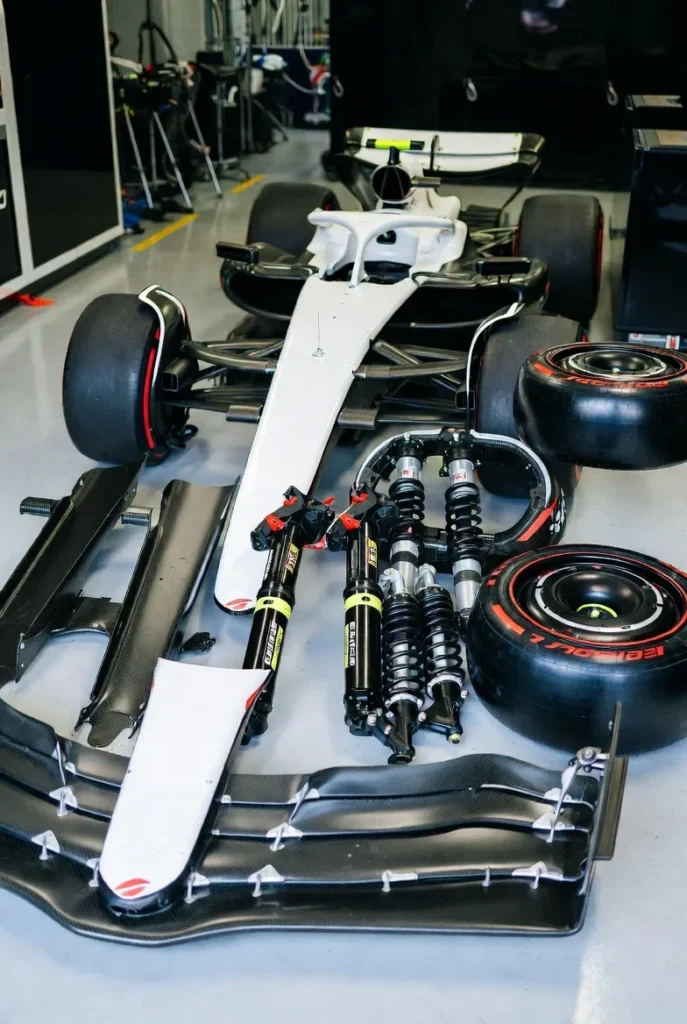
To truly understand how expensive is a Formula 1 car, we have to look at the individual components. These are not off-the-shelf parts. Almost everything is custom-built in-house or by specialized suppliers.
1 Engine / Hybrid Power Unit Cost
The engine is, without a doubt, the most expensive part of the car. In modern F1, we refer to it as the “Power Unit.” It consists of a 1.6-liter V6 turbocharged engine paired with complex hybrid systems (MGU-K and MGU-H).
Specifically, the F1 car engine cost ranges from $7 million to $10 million. These units are marvels of thermal efficiency. Consequently, teams like Mercedes and Ferrari spend billions over several years just to develop them for their customer teams.
2 Chassis & Carbon Fiber Monocoque
The chassis is the backbone of the car. It is made from high-grade carbon fiber layers. This material is incredibly light but stronger than steel.
The Formula 1 car chassis cost usually sits around $600,000 to $1 million. This includes the “survival cell” designed to protect the driver during high-impact crashes. Most noteworthy is the “Halo” device, which alone costs about $17,000 but has saved numerous lives.
3 Aerodynamics & Bodywork
Aerodynamics are what allow an F1 car to drive upside down in a tunnel (theoretically). The front wing and rear wing are constantly being updated throughout the season.
A single front wing can cost upwards of $200,000. Because these parts are so fragile, a minor “fender bender” on lap one can be a very expensive mistake. The Formula 1 car aerodynamic cost is a major part of the annual budget.
4 Gearbox, Suspension & Electronics
The gearbox in an F1 car is a seamless-shift masterpiece. It must handle immense torque without failing. An F1 gearbox cost is typically around $450,000 to $600,000.
Additionally, the electronics and sensors are vital. There are over 300 sensors on a modern car, sending real-time data to the pits. The Formula 1 car electronics cost can easily exceed $50,000 per car.
5 Steering Wheel, Tires & Small Parts
You might be surprised to learn that an F1 car steering wheel cost is between $50,000 and $100,000. It is essentially a high-powered computer with a screen and dozens of customizable buttons.
Tires are another constant expense. A set of Pirelli tires costs about $2,700. During a race weekend, a team might go through 13 sets per car. Furthermore, even the wheel nuts are precision-engineered, costing up to $5,000 each.
How Much Does an F1 Car Cost Without the Engine?
Sometimes, collectors or museums want to buy a “rolling chassis.” This is a car without the complex Power Unit. So, how much does an F1 car cost without the engine?
Typically, you are looking at a cost range of $4 million to $6 million. This price covers the monocoque, suspension, wheels, and bodywork. It is essentially a very expensive, very fast-looking sculpture.
Team-by-Team Formula 1 Car Price Comparison
Not all teams have the same “build cost.” The giants of the sport often manufacture their own engines, which changes the internal accounting significantly.
1 Mercedes F1 Car
The Mercedes-AMG Petronas team has been a dominant force for years. Their Mercedes F1 car price is often at the top of the scale, estimated between $15 million and $18 million. They invest heavily in integrated electronics and smooth aerodynamic flow.
2 Red Bull Racing
Red Bull Racing has recently moved toward its own engine program (Red Bull Powertrains).
Because of this, the how much does a Red Bull F1 car cost question is complex. Their 2024–2025 cars are estimated to cost around $16 million per unit.
3 Ferrari F1 Car
Ferrari is the most historic name in the sport. They build every part of the car in Maranello. The Ferrari F1 car price is rarely below $15 million. Their focus is often on the highest-quality engine components and classic Italian engineering.
4 Lewis Hamilton’s F1 Car Cost
People often search for how much does Lewis Hamilton‘s F1 car cost. While his car is technically the same as his teammate’s, the bespoke seat fittings and personalized steering wheel setups add unique value. His W15 or future Ferrari seats are literally molded to his body.
Most Expensive Formula 1 Car Ever
While building a new car is pricey, the collector’s market is where the numbers truly become surreal. If you are looking for the absolute most expensive Formula 1 car in history, you have to look at the legendary 1954 Mercedes-Benz W196 R.
This specific car, once driven by the five-time world champion Juan Manuel Fangio, shattered all records at a 2025 auction in Stuttgart. It fetched a staggering 51.1 million euros (approximately $55 million USD). It seems like the historical significance of a car—its “pedigree”—is the ultimate price multiplier.
When comparing this to modern machines, the difference is clear. A new car’s value is in its future potential, while a classic’s value is in its past glory. For collectors, owning a piece of history from the “Silver Arrows” era is the pinnacle of automotive investment.
Cost Per Race, Season & Budget Cap
Running an F1 team is a logistical marathon. Beyond the total cost to build a Formula 1 car, teams must navigate the financial regulations set by the FIA. For the 2024 and 2025 seasons, the “base” budget cap was set at roughly $135 million.
The 2026 Budget Cap Expansion
As we look toward the 2026 season, the FIA has announced a significant increase. The F1 car cost under budget cap will jump to $215 million. While this looks like a huge increase, it is mostly due to including items that were previously “off-cap,” such as certain personnel costs and inflation adjustments.
Logistics and Spares
A single race weekend is an expensive affair. Transportation costs alone can reach millions as teams fly tons of equipment across continents. On average, teams spend the Formula 1 cost per race (including staff travel, fuel, and replacement parts) at an estimated $15 million to $20 million per team.
Furthermore, you have to account for the “crash fund.” Every team keeps millions in reserve for when a driver inevitably clips a wall. A bad weekend with two destroyed chassis can ruin a mid-field team’s seasonal development budget.
Development, R&D & Manufacturing Costs
The physical car is just the tip of the iceberg. The real money is spent in the digital and wind-tunnel shadows. During my work with Federa, I have seen how data-driven decisions determine success. In F1, this means 24/7 research and development.
Wind Tunnel and CFD
Teams spend millions on “Computational Fluid Dynamics” (CFD) supercomputers. These machines simulate airflow before a part is ever made. Furthermore, they use massive wind tunnels that cost up to $100,000 per day to operate.
Year-Round Upgrades
An F1 car is never “finished.” By the time the first race starts, the engineers are already designing the version that will race in three months. This constant Formula 1 car research and development cost is why even the smallest teams require hundreds of highly specialized engineers and data scientists.
Used F1 Cars: Can You Buy One?
Many fans wonder if they can actually own one of these machines. The answer is yes, but it is not as simple as visiting a local dealership. You can find a used F1 car for sale price starting around $125,000 for a “show car” (a replica with no engine).
The Reality of Ownership
If you want a functional, race-ready retired car, you are looking at $2 million to $10 million. However, the purchase price is just the beginning. During an interview with a private collector, I learned that the cost to own an F1 car is actually in the maintenance.
Running a retired F1 car for a single track day can cost over $100,000. You need a team of specialized mechanics just to start the engine, as these cars do not have traditional starters. They require pre-heated oil and external computers just to “wake up.”
F1 vs Other Racing Cars (Cost Comparison)
To understand why F1 is the “pinnacle,” we should compare it to other popular series. The price gap is wider than most people realize.
- F1 vs NASCAR car cost: A top-tier NASCAR vehicle costs roughly $400,000 to $600,000 to build. In contrast, an F1 chassis is nearly 30 times more expensive.
- IndyCar vs F1: An IndyCar chassis is a “spec” part (everyone uses the same one), costing about $1 million to $3 million for a full season.
- Formula 2: This is the “feeder” series for F1. A season here costs about $2.5 million per driver, making it the “affordable” alternative for rising stars.
Why Are Formula 1 Cars So Expensive?
It comes down to three things: materials, precision, and regulations. F1 cars use aerospace-grade carbon fiber and titanium alloys that are difficult and expensive to source.
Every part is built to a tolerance of microns. If a part is off by the width of a human hair, it might fail at 200 mph. Furthermore, the FIA changes the rules almost every year. This forces teams to throw away perfectly good designs and start from scratch, which keeps the formula 1 racing car cost perpetually high.
Future Costs: 2025–2026 Outlook
The 2026 season will be the most expensive transition in history. The removal of the MGU-H and the increase in electrical power (up to 350kW) means every team is building a brand-new engine from the ground up.
The price of a Formula 1 car 2026 is likely to hit record highs for initial construction. However, the goal of these new rules is sustainability. By using 100% sustainable fuels, F1 hopes to lower its environmental cost, even if the financial cost remains in the millions.
Frequently Asked Questions
How much does a Formula 1 car cost?
A modern F1 car costs between $15 million and $20 million to build. However, when you include research, development, and the staff required to run it, the total investment per car for a season is closer to $140 million.
Can you buy an F1 car?
Yes, you can buy retired or replica F1 cars. Replicas cost around $125,000, while authentic, race-driven models from the last 20 years usually sell for $2 million to $10 million at auction.
What part costs the most?
The Power Unit (engine) is the most expensive part, costing roughly $10 million. It is a complex hybrid system that requires hundreds of thousands of dollars in maintenance every few races.
How much does an F1 engine cost?
Developing a new engine program can cost hundreds of millions. For a customer team, leasing an engine from a supplier like Mercedes or Ferrari costs approximately $10 million to $15 million per season.
Why are F1 wheel nuts so expensive?
Each wheel nut is custom-machined from high-strength alloys and designed to be removed in under two seconds. They cost about $5,000 each and are usually discarded after a single race to ensure safety.
Conclusion: The Ultimate Investment in Speed
In the end, asking how much does a Formula 1 car cost is like asking the cost of a space mission. It is an investment in human potential and mechanical limits. From the $100,000 steering wheels to the $50 million auctions, the numbers are a testament to our obsession with going faster.
At Federa, we believe that understanding these complex systems helps us appreciate the limits of performance. Whether it is a driver’s reaction time or a carbon-fiber wing’s durability, everything in F1 is pushed to the absolute edge.
If you are a fan or an aspiring owner, remember that you aren’t just paying for a car. You are paying for the thousands of hours of genius that make that car possible. It is expensive, yes—but in the world of Formula 1, you truly get what you pay for.
References & High-Quality Sources
- Formula 1 Official. (2026). Financial Regulations and the 2026 Cost Cap Overview.
- FIA (Fédération Internationale de l’Automobile). (2024, Updated Feb 2026).
- Motorsport.com. (2025). The Real Cost of F1: A Deep Dive into Team Budgets.
- RM Sotheby’s. (2025). Auction Results: The Mercedes W196 R and Historic F1 Values.

