

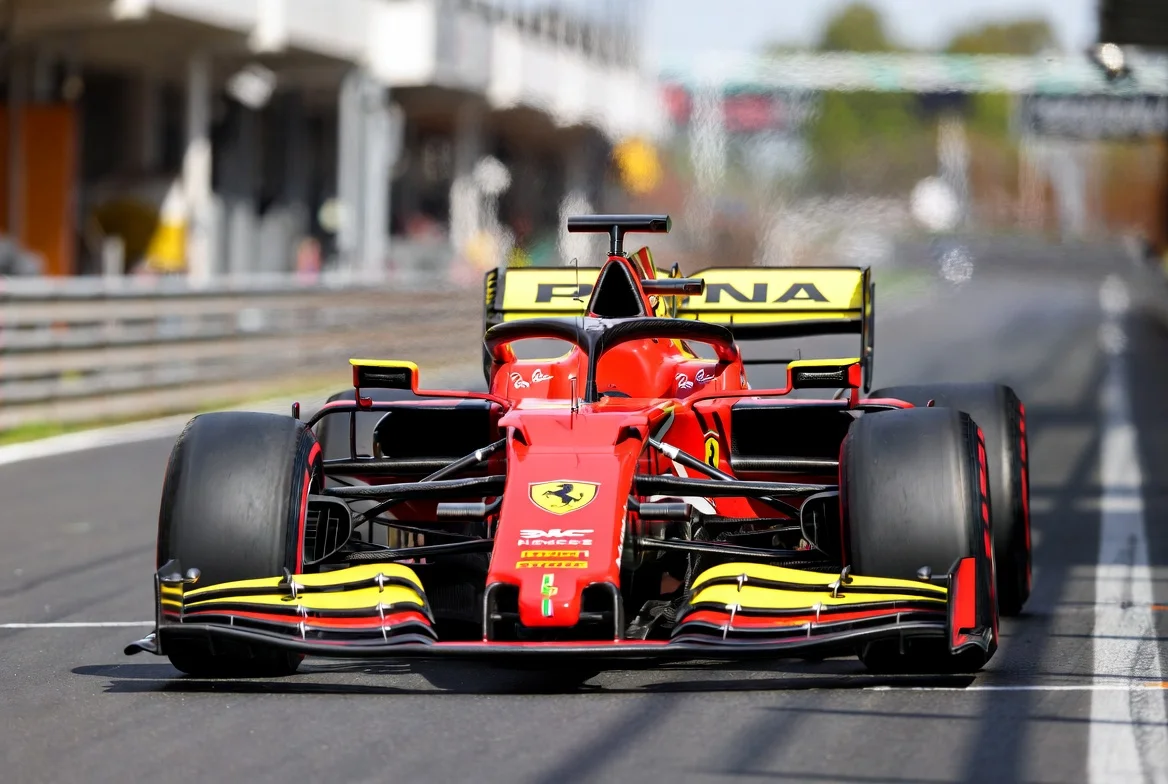
Have you ever stood trackside and felt the ground shake as a grid of twenty cars thundered past? If so, you know that a formula 1 race car is not just a vehicle; it is a mechanical marvel. These machines represent the absolute pinnacle of automotive engineering, combining aerospace technology with raw, unadulterated speed.
What is a formula 1 race car? Simply put, it is a single-seat, open-cockpit racing car designed specifically to compete in the FIA Formula One World Championship. Unlike a standard sports car or even a high-end supercar, an f1 car is built for one purpose: to navigate complex circuits at the highest possible velocity.
During a recent visit to a leading team’s headquarters in the UK, I sat down with a lead systems engineer to discuss the 2026 technical regulations. He explained that a formula 1 race car formula 1 teams develop today is essentially a fighter jet on wheels.
Every curve, winglet, and sensor serves a precise aerodynamic function. This guide explores everything from the astronomical price tags to the legendary drivers who pilot these beasts.
Which Car Is Used in the F1 Race?
Many fans ask, “Which car is used in the F1 race?” expecting to hear a specific model name like a Mustang or a 911. However, Formula 1 operates differently than most racing series. In this sport, the teams are constructors, meaning they must design and build their own chassis from scratch.
Currently, ten teams compete in the championship, each producing a unique car every season. While they follow strict regulations set by the FIA, no two cars are identical. What car brands race in Formula 1 depends on the current season, but iconic names like Ferrari, McLaren, and Mercedes-Benz are mainstays.
These teams often partner with power unit manufacturers. For example, the McLaren F1 Team currently uses Mercedes engines, while Red Bull Racing has moved toward its own Ford-partnered powertrains for 2026. The synergy between f1 teams and drivers is what ultimately determines who stands on the podium.
Formula 1 Race Car Cost & Price Breakdown
If you are looking to buy one, be prepared for some serious sticker shock. The formula 1 race car cost is difficult to pin down to a single number because these cars are not mass-produced. They are essentially prototypes that undergo constant evolution throughout a season.
How Much Does a Formula 1 Race Car Cost?
So, how much does a formula 1 race car cost in 2026? Most experts agree that the total build cost for a single car ranges between $15 million and $20 million. This figure represents the physical parts and assembly. However, if you factor in the hundreds of millions spent on research and development (R&D), the formula 1 race car worth becomes significantly higher.
The average cost of a formula 1 race car has been somewhat stabilized by the FIA’s financial “Cost Cap.” This regulation limits how much teams can spend on performance-related areas to ensure the sport remains competitive. Despite these limits, the formula 1 race car price for individual components remains astronomical.
Cost Breakdown by Component
To understand the cost of a formula 1 race car, you have to look at the individual pieces. Each part is a custom-made masterpiece of carbon fiber, titanium, and exotic alloys.
- The Power Unit (Engine): This is the most expensive part, costing roughly $10 million. It is a 1.6-liter V6 turbo hybrid system with incredibly complex energy recovery units.
- The Chassis: Made from high-grade carbon fiber, the monocoque (the survival cell) costs about $1.2 million.
- The Gearbox: A seamless-shift eight-speed transmission will set a team back nearly $450,000.
- The Front and Rear Wings: These are fragile and frequently replaced. A front wing assembly alone costs around $150,000 to $200,000.
- The Steering Wheel: Far from a simple wheel, this is a computer interface with screens and dozens of buttons, costing upwards of $50,000.
Used F1 Cars & Formula 1 Race Car for Sale
Is there a formula 1 race car for sale for the average millionaire? Yes, but it is not as simple as visiting a dealership. Private collectors and ultra-high-net-worth individuals can occasionally purchase used chassis from previous seasons.
The used f1 car for sale price varies wildly based on the car’s history. A car driven by a legend like Lewis Hamilton or Max Verstappen can fetch over $5 million at auction. Conversely, a less successful chassis from a smaller team might sell for $150,000 to $500,000, often without the engine.
If you want to know where can i drive a formula 1 race car, there are high-end track day programs. Organizations like “F1 Clienti” by Ferrari allow owners to drive their vintage F1 cars at world-class circuits. For those who cannot afford the multi-million dollar formula 1 race car price, many racing schools offer “F1-style” experiences for a few thousand dollars.
How Fast Does a Formula 1 Race Car Go?
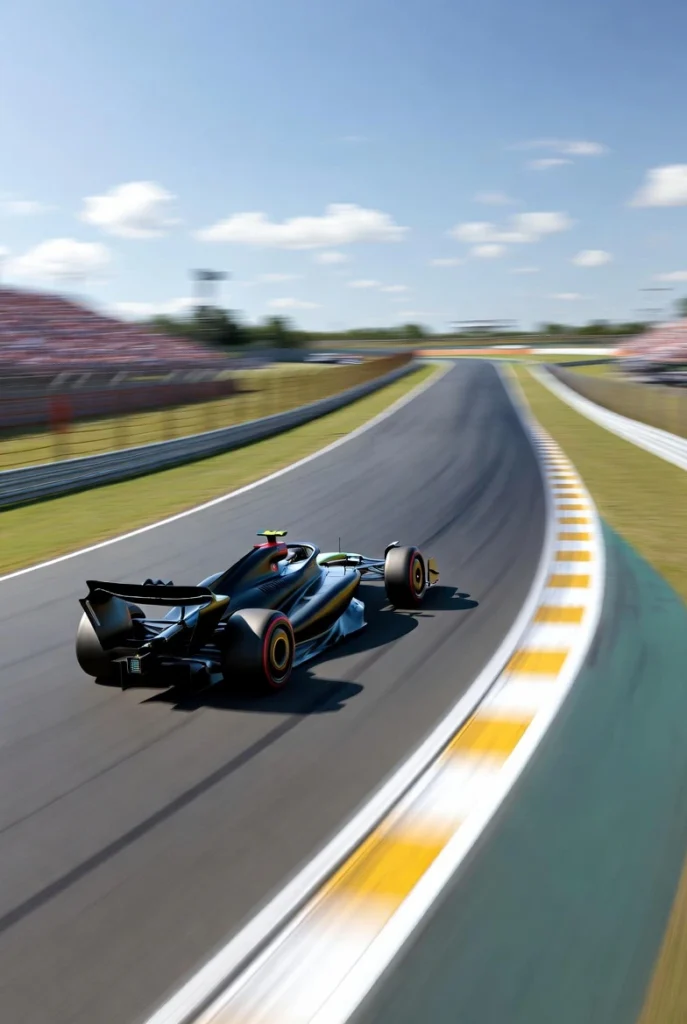
Speed is the currency of Formula 1. When people ask, “How fast does a formula 1 race car go?” they are usually looking for a top speed. On a long straight, such as the one in Mexico City or Las Vegas, an F1 car can hit speeds exceeding 230 mph (370 km/h).
Top Speed vs. Average Speed
However, the top speed of a formula 1 race car is not the most impressive stat. It is the average speed of a formula 1 race car that truly boggles the mind. Because of their immense downforce, these cars can take corners at speeds that would flip a standard road car.
On a circuit like Silverstone, a driver might maintain an average speed of 145 mph over an entire lap, including the tightest hairpins. How fast can a formula 1 race car go from 0 to 60 mph? They usually manage it in roughly 2.4 seconds. Even more impressive is the braking; they can go from 200 mph to a dead stop in less than 4 seconds.
Are F1 Cars Faster Than NASCAR?
A common debate among US racing fans is: Are F1 cars faster than NASCAR? The answer depends entirely on the environment. On a massive oval like Talladega, a NASCAR Stock Car might keep pace with an F1 car in terms of pure top speed, as NASCARs are built for sustained high-speed drafting.
However, on any circuit with turns, the F1 car is significantly faster. An F1 car’s lap time on a road course would be several minutes faster than a NASCAR. The F1 car is lighter, has more advanced aerodynamics, and features superior braking power. While NASCAR is a test of endurance and door-to-door bumping, F1 is a test of pure mechanical efficiency.
What Happens If It Rains in F1?
Rain is the ultimate equalizer in motor racing. What happens if it rains in F1? The race doesn’t stop, but the strategy changes instantly. Teams must choose between “Intermediate” tires (for damp tracks) and “Full Wet” tires (for heavy rain).
These tires have deep grooves designed to displace water—a Full Wet tire can displace up to 85 liters of water per second at high speed. If the rain becomes too heavy, the Race Director may deploy the Safety Car or even throw a Red Flag to stop the race. This usually happens when standing water causes “aquaplaning,” where the car glides on top of the water, leaving the driver with zero control.
Formula 1 Race Car Specifications & Design
The 2026 season marks a massive shift in how a formula 1 race car is built. The FIA introduced “Nimble Car” regulations to make racing closer and more exciting. These cars are now shorter and narrower than the previous generation. Specifically, the wheelbase dropped from 3600 mm to 3400 mm.
Additionally, the cars are lighter, with a minimum weight reduced by 30 kg. This makes them more agile in tight corners. The design features active aerodynamics, allowing wings to shift positions during a lap. This system reduces drag on straights and increases downforce in corners.
How much fuel does a formula 1 car use in a race? Drivers are limited to 100 kg of sustainable fuel per Grand Prix. Because of the hybrid system, they are incredibly efficient. In fact, these engines convert over 50% of fuel energy into power. Most road cars barely reach 30%.
Formula 1 Race Car Drivers & Salaries
Behind every great car is an elite pilot. Formula 1 race car drivers are some of the highest-paid athletes in the world. However, the pay gap across the grid is quite large. A world-class champion like Max Verstappen or Lewis Hamilton can earn over $50 million annually.

In contrast, a rookie might start with a base salary of around $500,000. Most of their income comes from performance bonuses and personal endorsements. I once spoke with a driver manager in the paddock about these contracts. He mentioned that “points are literal currency” for these athletes.
Every finish in the top ten triggers a payout. Furthermore, drivers must stay in peak physical condition. They lose up to 8 lbs of fluid during a single race. Their necks must be strong enough to withstand 5G cornering forces. It is a grueling job that justifies the high price tag.
How to Become a Formula 1 Race Car Driver
The path to the grid is narrow and extremely expensive. Most formula 1 race car drivers start in karting at age five or six. From there, they move into “Junior Formulas” like F4, F3, and F2. To enter F1, a driver needs an FIA Super License.
This license requires a driver to be 18 years old and have 40 points earned in other series. Beyond talent, you need significant financial backing. The cost to reach F1 from karting often exceeds $10 million. Many drivers join “Driver Academies” run by teams like Red Bull or Ferrari to help fund their careers.
Formula 1 Race Schedule, Standings & Calendar
The formula 1 calendar 2026 is a global tour of speed and culture. The season typically starts in March and ends in December. Each f1 race is called a Grand Prix, usually covering a distance of 305 km (about 190 miles).
Fans closely watch the f1 standings throughout the year. Points are awarded to the top ten finishers. The f1 schedule now includes 24 races, with massive events in the US like Austin, Miami, and Las Vegas. When is the next formula 1 car race? You can find the real-time schedule on the official F1 website or mobile app.
Formula 1 Race Car Toys, Models & LEGO Sets
You don’t need a multi-million dollar budget to own a piece of the action. The market for formula 1 race car toy products and high-end models is booming. For kids, simple pull-back cars or diecast models are great starting points. However, adult collectors often prefer high-fidelity formula 1 race car model kits.
These models come in various scales, with 1:18 and 1:43 being the most popular. Companies like Bburago and Minichamps produce incredibly detailed replicas. These include accurate liveries, tiny carbon fiber textures, and even miniature driver helmets.
LEGO Technic McLaren Formula 1 Race Car (42141)
The lego technic mclaren formula 1 race car is arguably the most famous F1 toy today. This set, specifically lego technic 42141 mclaren formula 1 race car, was developed alongside the real 2022 McLaren car. It features 1,432 pieces and measures over 25 inches long.
What makes the lego mclaren formula 1 race car special is its mechanical realism. It includes a V6 engine with moving pistons, a working differential, and active suspension. Building the lego technic mclaren formula 1 race car (42141) gives you a hands-on look at F1 engineering.
The lego 2023 mclaren formula 1 race car updates often feature new sponsor decals. It remains a centerpiece for many fans’ offices. Whether you choose the 2023 mclaren formula 1 race car version or a newer kit, the experience is rewarding. It bridges the gap between a simple toy and a complex engineering project.
Formula 1 Race Car Simulator & Driving Experiences
If you want to feel the speed, a formula 1 race car simulator is your best bet. Professional teams use simulators that cost millions of dollars. These “driver-in-the-loop” systems use hydraulics to mimic every bump on the track. For fans, high-end home setups offer a similar thrill.
If virtual racing isn’t enough, you might ask, “where can i drive a formula 1 race car?” Several companies in Europe and the US offer “Formula Experiences.” You can drive a real (though slightly de-tuned) F1 car for a few laps. It is the ultimate bucket-list item for any true racing enthusiast.
Frequently Asked Questions
How much does a Formula 1 race car cost?
A single formula 1 race car costs roughly $15 million to $20 million to build. This price covers the engine, carbon fiber chassis, and complex electronics. However, the total cost including research and development is much higher. Most of the budget goes toward aerodynamic testing and wind tunnel hours.
How fast can a Formula 1 race car go?
An F1 car can reach a top speed of over 230 mph (370 km/h). This usually happens on tracks with long straights like Monza or Las Vegas. However, their cornering speed is even more impressive. They can pull over 5G of lateral force, allowing them to take turns at incredible speeds.
What is the average speed of a Formula 1 race car?
The average speed depends on the track layout. On a high-speed circuit like Monza, the average lap speed is about 160 mph. On a tight street circuit like Monaco, the average speed drops to around 100 mph. F1 cars prioritize cornering speed over pure straight-line velocity to achieve the fastest lap times.
How much is a Formula 1 race car worth?
While they cost millions to build, an F1 car’s value is even higher as a collector’s item. Championship-winning cars driven by legends can sell for over $10 million at auction. Even a non-running show car from a modern team is often worth more than $200,000 as a marketing piece.
What car brands race in Formula 1?
The current grid features major manufacturers like Ferrari, Mercedes-Benz, McLaren, and Aston Martin. Other teams operate as independent constructors, such as Red Bull Racing and Williams. Some brands participate as engine suppliers, including Alpine (Renault) and Honda. Ford and Audi are also set to join the grid soon.
Conclusion: The Ultimate Racing Machine
To wrap things up, the formula 1 race car is the ultimate expression of human ingenuity. It is a machine that defies physics, costs a fortune, and requires superhuman skill to operate. From the high-tech hybrid engines to the complex lego technic mclaren models on our shelves, F1 captures our imagination like nothing else.
Whether you are watching the f1 standings on Sunday or building a formula 1 race car model, you are part of a global community. The 2026 season promises to be the fastest and most technologically advanced yet. Are you ready to see who takes the checkered flag?
Check out these references for more F1 insights:
- Official FIA 2026 Regulations:Formula1.com – Everything you need to know about the new F1 rules for 2026
- Comprehensive Rule Breakdown: The Guardian – The ultimate breakdown: everything you need to know about F1’s new regulations for 2026
- F1 Car Cost & Buying Guide: Red Bull – How much does a Formula 1 car cost and where can I buy one?
- Driver Salary Rankings: SPORTbible – F1 Drivers Ranked By Their 2026 Salaries
- LEGO Technic McLaren Model:LEGO.com – McLaren Formula 1™ Race Car (42141) Official Product Page

