

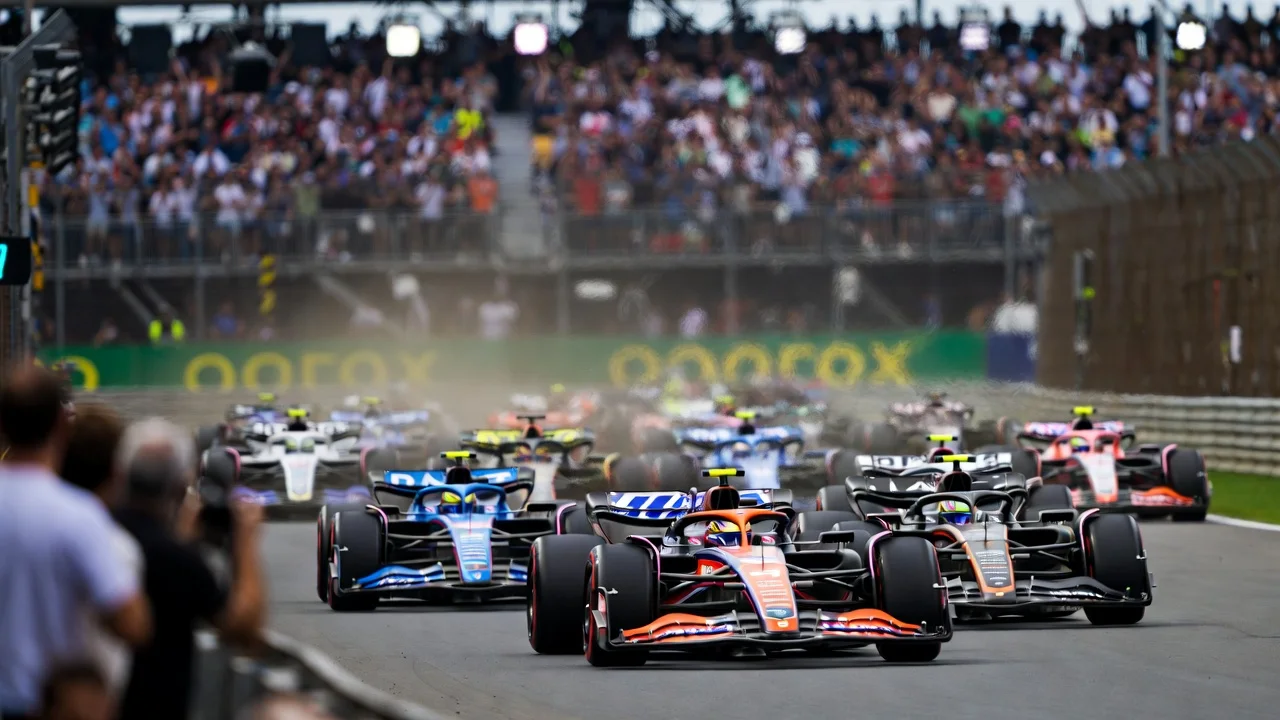
The 2026 season marks the dawn of the most radical transformation Formula 1 has seen in decades. Most importantly, a complete overhaul of both technical and sporting regulations has reset the status quo, thereby triggering massive manufacturer shifts, major driver reshuffles, and even grid expansions. As a result, the sport is entering an entirely new competitive era. Consequently, the definitive F1 teams list for 2026 expands to an electrifying 11-team grid, finally breaking the long-standing 10-team blockade that defined the modern era of Formula 1.
Furthermore, the monumental arrival of Audi as a full works entry and the highly anticipated — and hard-fought — entry of American automotive giant Cadillac are completely rewriting the global balance of power in motorsport. At the same time, several established teams are being forced to adapt rapidly to survive this next-generation technical revolution. Meanwhile, the driver market has become equally dramatic. Seven-time world champion Lewis Hamilton is now settling into his second season at Scuderia Ferrari, while reigning 2025 World Champion Lando Norris begins the defense of his crown carrying the iconic number 1 for McLaren.
In addition, a fierce new power unit war is quietly escalating behind the scenes as manufacturers race to master the next era of hybrid efficiency, sustainable fuels, and advanced energy deployment systems. Therefore, the Formula 1 2026 team lineup is not merely another seasonal reshuffle — rather, it represents one of the most historically significant turning points in modern F1 history.
Ultimately, this complete guide delivers the definitive breakdown of every constructor, driver pairing, engine partnership, technical alliance, and competitive storyline shaping Formula 1’s bold new epoch of speed.
Complete F1 Teams List 2026
For the first time in years, the pit lane has grown. The official F1 grid 2026 features 11 teams and 22 cars, introducing an unprecedented level of competition to the constructors’ championship. Below is the comprehensive structural breakdown of all official F1 teams 2026, including their engineering headquarters, corporate leadership, and power unit partnerships.
The 2026 Formula 1 Entry List
| Team Official Sporting Name | Constructor Identity | Engine Supplier & Power Unit | Team Principal / Leader | Country Base |
| Mastercard McLaren F1 Team | McLaren | Mercedes AMG | Andrea Stella | United Kingdom |
| Mercedes-AMG PETRONAS F1 Team | Mercedes | Mercedes AMG | Toto Wolff | United Kingdom |
| Oracle Red Bull Racing | Red Bull Racing | Red Bull Ford | Laurent Mekies | United Kingdom |
| Scuderia Ferrari HP | Ferrari | Ferrari | Fred Vasseur | Italy |
| Atlassian Williams F1 Team | Williams | Mercedes AMG | James Vowles | United Kingdom |
| Aston Martin Aramco F1 Team | Aston Martin | Honda | Adrian Newey | United Kingdom |
| TGR Haas F1 Team | Haas | Ferrari | Ayao Komatsu | United States / UK |
| BWT Alpine Formula One Team | Alpine | Mercedes AMG | Oliver Oakes | UK / France |
| Visa Cash App Racing Bulls F1 Team | Racing Bulls | Red Bull Ford | Alan Permane | Italy |
| Audi Revolut F1 Team | Audi | Audi | Mattia Binotto | Germany / Switz. |
| Cadillac Formula 1 Team | Cadillac | Ferrari (Customer Tier) | Dan Towriss / GM Lead | United States |
New F1 Teams Joining in 2026
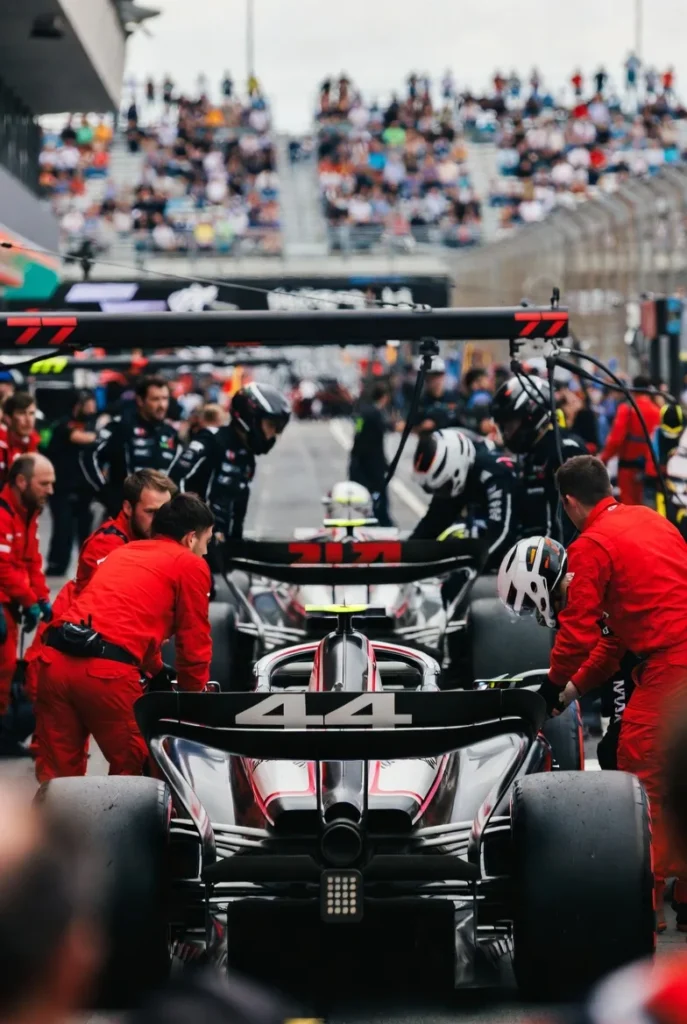
The expansion to all 11 Formula 1 teams in 2026 represents a critical tipping point for the sport. For years, the paddock operated as an exclusive and tightly protected ten-team club, with existing constructors fiercely defending their share of the championship’s massive prize-money structure. However, as Formula 1’s global popularity continued to skyrocket, mounting corporate pressure, surging franchise valuations, and evolving FIA regulations ultimately forced the garage doors open for two of the largest automotive names on Earth: Audi and Cadillac.
As a result, Formula 1’s future suddenly feels bigger, wealthier, and significantly more competitive than ever before. More importantly, the arrival of these new Formula 1 teams in 2026 fundamentally reshapes both the political and technical balance of power across the paddock. On one hand, Audi enters the sport by fully absorbing an existing operation, thereby bringing traditional German engineering precision, factory-backed efficiency, and an enormous corporate development budget directly into a fully integrated works project.
Meanwhile, on the other side of the Atlantic, the Cadillac Formula 1 entry for 2026 finally materializes after an intense, multi-year battle led by General Motors and influential American motorsport stakeholders. After enduring years of negotiations, political resistance, commercial disputes, and regulatory scrutiny, the ambitious project has ultimately secured its long-awaited place on the Formula 1 grid. Backed by the immense technical infrastructure, manufacturing capability, and financial strength of General Motors, Cadillac now arrives as a genuine standalone eleventh team rather than a symbolic branding exercise.
Cadillac and Audi Reshape Formula 1’s Global Power Structure
Furthermore, the resolution of anti-competitive concerns in the United States helped remove one of the final major barriers standing in the project’s path. Consequently, Formula 1’s long-discussed grid expansion has officially become a reality. At the same time, Cadillac’s arrival dramatically strengthens Formula 1’s position within the rapidly growing North American market, where television audiences, race attendance, sponsorship investment, and manufacturer interest continue to surge year after year.
Naturally, this dual-manufacturer expansion immediately ignites a completely new era of corporate rivalry throughout the paddock. Established giants such as Red Bull, Mercedes, and Ferrari are now being forced to defend their dominance against aggressive new challengers armed with vast financial resources, long-term infrastructure plans, and fresh technical ambition. Meanwhile, behind the scenes, the battle for engineering supremacy is becoming increasingly intense as teams compete for elite technical talent, strategic partnerships, sponsorship leverage, and next-generation power unit innovation.
Ultimately, Cadillac’s arrival — alongside Audi’s factory-backed entrance — is far more significant than simply adding another pair of teams to the grid. Rather, it signals a dramatic shift in Formula 1’s global power structure as the sport accelerates into its next-generation era of technology, manufacturer warfare, and worldwide commercial expansion.
Full F1 Driver Lineup 2026
The driver market chaos leading into this year has left the grid looking radically different. Icons have switched colors, prominent names have shifted to incoming manufacturers, and a hyper-selective crop of young talent has penetrated the stable.
The Frontrunners
- McLaren — Norris (#1) / Piastri (#81)
- Ferrari — Leclerc (#16) / Hamilton (#44)
The Innovators
- Mercedes — Russell (#63) / Antonelli (#12)
- Red Bull — Verstappen (#3) / Hadjar (#6)
The Newcomers
Cadillac — Pérez / Bottas
Audi — Hülkenberg / Bortoleto
Confirmed Drivers and Racing Numbers for 2026
- Mastercard McLaren F1 Team: Lando Norris (#1) & Oscar Piastri (#81)
- Scuderia Ferrari HP: Charles Leclerc (#16) & Lewis Hamilton (#44)
- Mercedes-AMG PETRONAS F1 Team: George Russell (#63) & Andrea Kimi Antonelli (#12)
- Oracle Red Bull Racing: Max Verstappen (#3) & Isack Hadjar (#6)
- Aston Martin Aramco F1 Team: Fernando Alonso (#14) & Lance Stroll (#18)
- Atlassian Williams F1 Team: Carlos Sainz (#55) & Alex Albon (#23)
- BWT Alpine Formula One Team: Pierre Gasly (#10) & Franco Colapinto (#43)
- TGR Haas F1 Team: Esteban Ocon (#31) & Oliver Bearman (#87)
- Visa Cash App Racing Bulls F1 Team: Liam Lawson (#30) & Arvid Lindblad (#41)
- Audi Revolut F1 Team: Nico Hülkenberg (#27) & Gabriel Bortoleto (#5)
- Cadillac Formula 1 Team: Sergio Pérez (#11) & Valtteri Bottas (#77)
The headline structural shift sees Lando Norris exercise his right as the reigning champion to carry the iconic Number 1 on his McLaren, while Max Verstappen transitions to Number 3. Meanwhile, the full F1 driver lineup 2026 features only a single pure rookie: British prodigy Arvid Lindblad, who takes his place at the Racing Bulls after an explosive trajectory through the junior ranks.
Audi F1 Team 2026 Explained
The integration of the Audi F1 team represents a multi-year chess game that has finally reached completion. Rather than building a team completely from the ground up, the Ingolstadt manufacturer executed a structured buy-out strategy, with Audi replacing Sauber in F1 step-by-step. By acquiring 100% of the Sauber Group’s operations in Hinwil, Switzerland, Audi avoided the logistical nightmare of creating a clean-sheet factory, inheriting a state-of-the-art wind tunnel and an established workforce.
The Audi Architecture
- Chassis Factory: Hinwil, Switzerland (Former Sauber HQ)
- Power Unit Facility: Neuburg an der Donau, Germany
- Strategic Mission: Eradicate the midfield gap within 36 months under the technical guidance of Mattia Binotto.
Audi isn’t entering Formula 1 to participate — it’s entering to win. The German titan has built a bespoke, high-tech power unit facility in Neuburg, ensuring they operate as a genuine full-scale works team. The Audi F1 team lineup 2026 matches engineering pragmatism with raw youth, pairing the immense development experience of veteran Nico Hülkenberg with the explosive ceiling of former Formula 2 Champion Gabriel Bortoleto. This balance is designed to give the team stable technical feedback to iterate their complex, first-generation power unit while nurturing a long-term future star.
Cadillac F1 Team and American Expansion
If Audi represents corporate calculation, the Cadillac F1 team represents a historic cultural shift. The team’s journey from a heavily resisted American bid to an official Cadillac works-backed entry evolved through high-stakes sporting and legal battles. Backed by TWG (The Dan Towriss-led sporting group) and the vast manufacturing power of General Motors, Cadillac forced its way onto the grid to capture an unprecedented wave of American commercial interest.
Cadillac’s Strategic Blueprint:
US Engineering Hub
→ GM Tech Collaboration
→ Proven Grid Veterans
→ Standalone Global Team
Cadillac’s arrival could change Formula 1’s global balance forever. Operating out of advanced facilities in the United States alongside a European base, the team has leaned on seasoned veterans to navigate their steep, brutal debut season. By signing the veteran pairing of Sergio Pérez and Valtteri Bottas, Cadillac secured immediate tactical intelligence.
Pérez brings crucial knowledge of Red Bull’s championship-winning operational philosophy, while Bottas injects deep operational insight from his dominant years at Mercedes. This experience is vital as the team faces the immense challenge of refining its chassis characteristics and building out its operational strength against decades-old racing institutions.
Formula 1 New Regulations 2026 Explained
The main catalyst behind the massive reorganization of the 2026 F1 teams list is a sweeping set of technical, aerodynamic, and engine rules. The FIA designed the 2026 guidelines to promote close, wheel-to-wheel racing while advancing global automotive sustainability.
The Technical Pillars of the 2026 Revolution
- Lighter, Nimbler Dimensions: The heavy, lumbering footprints of the previous generation are gone. 2026 cars feature a shortened wheelbase (reduced from 3600mm to 3400mm) and a narrower track (reduced from 2000mm to 1900mm). The overall target weight drops by 30 kilograms, making the cars significantly more agile.
- Active Aerodynamics (X-Mode & Z-Mode): To compensate for shifting straight-line power profiles, cars now utilize movable front and rear wings. Z-Mode opens up maximum downforce for high-speed cornering stability, while X-Mode sheds drag on straights to maximize top-end speed.
- A Radically Altered Power Balance: The intricate, highly expensive MGU-H (Motor Generator Unit – Heat) has been completely abolished. To retain performance, the hybrid system’s electrical output splits evenly with internal combustion, boosting the battery’s contribution to a massive 350kW ($~475$ horsepower).
- 100% Fully Sustainable Biofuels: The internal combustion engine relies entirely on advanced, drop-in sustainable fuels derived from municipal waste and non-food biomass, ensuring the sport acts as a real-world laboratory for sustainable commercial fuels.
F1 Engine Suppliers and Power Units for 2026
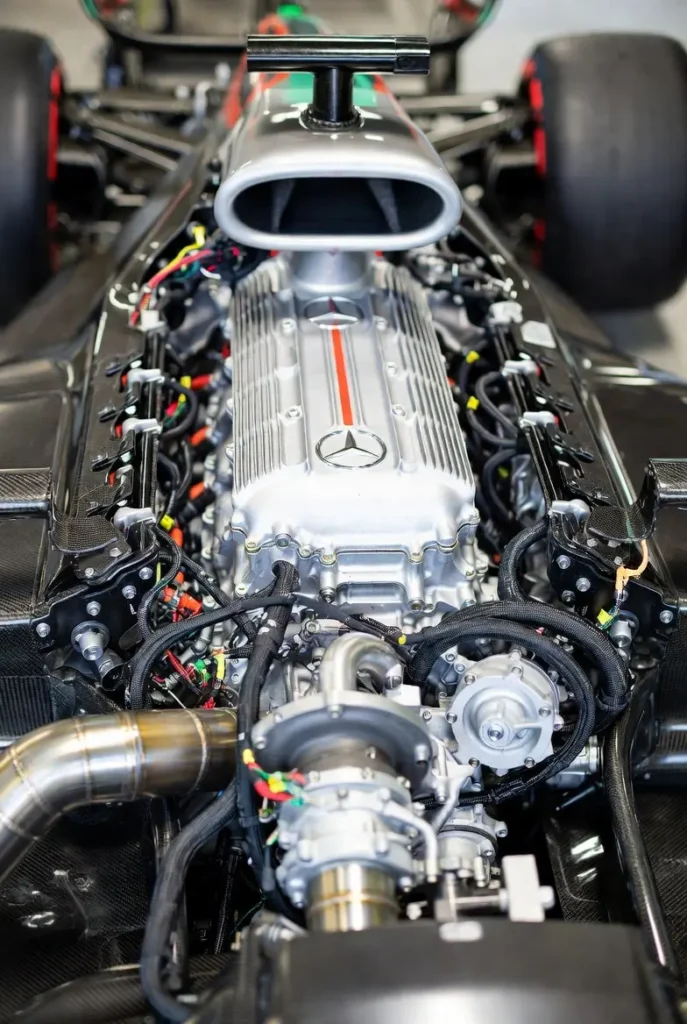
The massive shift in hybrid engine configurations has ignited a fierce power unit war among world-class automotive manufacturers. The elimination of the MGU-H has leveled the playing field, attracting new engine builders and reshaping long-term technical partnerships across the entire paddock.
2026 Power Unit Matrix
Audi
Powering: Audi (Works Exclusive)
Ferrari
Powering: Ferrari, Haas, Cadillac
Mercedes
Powering: Mercedes, McLaren, Williams, Alpine
Red Bull Ford
Powering: Red Bull Racing, Racing Bulls
Honda
Powering: Aston Martin (Exclusive)
The grid features a fascinating mix of works projects and customer supply tiers. The high-profile Red Bull Ford engine 2026 breaks Red Bull’s previous reliance on external suppliers, establishing an ambitious, in-house powertrain division in Milton Keynes backed by Ford’s global electrification expertise.
Concurrently, the historic Aston Martin Honda partnership 2026 transitions Aston Martin into a privileged, works-supported status, ending Honda’s temporary partnership with Red Bull. Mercedes maintains a formidable customer network, expanding its supply to include Alpine, which abandoned its internal Renault engine project in favor of a reliable Mercedes powertrain. Meanwhile, Ferrari supplies its internal Scuderia alongside Haas and the newly arriving Cadillac team.
Team-by-Team Breakdown for 2026
Mastercard McLaren F1 Team
The Woking-based outfit enters the season holding a position of supreme strength as the reigning back-to-back constructors’ champions. Retaining the highly stable, lethal pairing of Lando Norris and Oscar Piastri, McLaren remains the gold standard of aerodynamic design.
Their primary challenge will be ensuring their high-performance Mercedes customer engine integrates perfectly with their aggressive chassis layout to maintain their front-running performance advantage.
Scuderia Ferrari HP
The Prancing Horse has built an absolute powerhouse. Led by Fred Vasseur, Ferrari couples the unmatched raw pace of Charles Leclerc with the legendary tactical execution of Lewis Hamilton.
Having focused heavily on developing their 2026 power unit early, Ferrari boasts exceptional internal combustion efficiency. Their ultimate success hinges on preventing internal political friction and optimizing strategic decisions under intense global pressure.
Mercedes-AMG PETRONAS F1 Team
Mercedes enters 2026 with an intriguing mix of absolute experience and raw youth. George Russell steps forward as the de facto team leader, paired with the highly anticipated Italian prodigy Andrea Kimi Antonelli.
Historically, Brackley excels during massive engine regulation resets. If their new hybrid powertrain achieves the performance leap of their legendary 2014 predecessor, Mercedes could quickly reclaim absolute dominance.
Oracle Red Bull Racing
The Milton Keynes team undergoes its most turbulent structural evolution in a generation. With legendary engineer Adrian Newey gone and Laurent Mekies taking over team principal duties, Red Bull enters a bold new era. Max Verstappen remains the ultimate competitive weapon, paired with young star Isack Hadjar.
The entire trajectory of their season rests on the initial performance of the unproven Red Bull Ford power unit; any early reliability or power deficits could trigger massive waves across the driver market.
Aston Martin Aramco F1 Team
Aston Martin has built a formidable technical think-tank. By securing Adrian Newey to lead their technical department alongside a lucrative, exclusive works deal with Honda, the team has all the ingredients of a championship contender.
With Fernando Alonso bringing unmatched racecraft and Lance Stroll anchoring the second car, Aston Martin expects nothing less than race wins as Newey’s aerodynamic concepts take shape.
Atlassian Williams F1 Team
Williams continues its steady, aggressive march up the competitive ladder under James Vowles. Securing the services of Carlos Sainz alongside Alex Albon gives Grove one of the most reliable, analytically minded driver pairings in the mid-field.
As a premium Mercedes engine customer, Williams’ success depends entirely on maximizing weight-saving chassis measures and exploiting active aerodynamic deployment profiles.
BWT Alpine Formula One Team
Following years of factory restructuring, Alpine pivots to a lean, agile operating model. By shutting down their historical Viry-Châtillon engine program, Alpine transforms into a Mercedes power unit customer.
The driver pairing pairs the experienced Pierre Gasly with Argentina’s rising star Franco Colapinto, creating a highly motivated lineup determined to capitalize on a simplified, reliable mechanical package.
TGR Haas F1 Team
Haas steps into 2026 carrying a massive branding and technical upgrade through their alliance with Toyota Gazoo Racing. Now officially competing as the TGR Haas F1 Team, the American outfit benefits from Toyota’s vast manufacturing resources.
Esteban Ocon provides crucial veteran race leadership, while Ferrari academy standout Oliver Bearman injects youthful energy into an ambitious project aimed at dominating the midfield.
Visa Cash App Racing Bulls F1 Team
The primary development incubator for the Red Bull ecosystem features a fascinating dynamic for 2026. Armed with the Red Bull Ford power unit and led by team principal Alan Permane, the team pairs Liam Lawson with electric British rookie Arvid Lindblad.
Their objective remains clear: provide a highly competitive platform for young talent while serving as a tactical rear-guard for the senior Red Bull squad.
Audi Revolut F1 Team
Entering their formal debut season following the complete absorption of Sauber, Audi faces a steep learning curve. Under Mattia Binotto’s leadership, the team focuses heavily on ironing out initial reliability bugs from their Neuburg-built engine.
Nico Hülkenberg offers rock-solid engineering feedback, while Gabriel Bortoleto provides the raw speed needed to build a winning foundation for the premium German brand.
Cadillac Formula 1 Team
The historic 11th entry faces a true baptism of fire as they establish their operational footing in F1. Utilizing a customer Ferrari power unit while their own long-term powertrain architecture develops, Cadillac leans heavily on Sergio Pérez and Valtteri Bottas to avoid the back of the grid.
Their primary victory in 2026 will look like operational consistency, clean pit executions, and steady aerodynamic development as their factory infrastructure matures.
Which F1 Teams Could Dominate in 2026?
In Formula 1, new rules create new heroes. History shows that whenever the sport introduces a massive power unit reset, the team that untangles the complex relationship between electrical deployment and aerodynamic drag early gains an immense, multi-year advantage.
Championship Contender Variables:
[Engine Thermal Efficiency] + [Active Aero Integration] – [Budget Cap Restraints] = Grid Order
The fastest F1 teams 2026 will likely be the full works entries that control both chassis design and engine integration under one roof. McLaren carries elite momentum, but their status as a Mercedes customer means they must continually outperform the factory team’s packaging insights. This opens the door wide for Ferrari and Mercedes. Both traditional powerhouses possess massive, highly mature engine simulation labs that give them a distinct edge in optimizing electrical deployment strategies.
Concurrently, Aston Martin must be monitored closely; the potent combination of Honda’s hybrid expertise and Adrian Newey’s mastery of boundary-layer aerodynamics could allow the green cars to completely bypass the midfield and challenge for the Formula 1 constructors’ championship immediately.
Future of Formula 1 Teams After 2026
The structural evolution of the paddock will not stop when the 2026 season concludes. The changes introduced this year lay the foundation for a highly sustainable, hyper-competitive motorsport ecosystem that will evolve well into the next decade.
The future of Formula 1 teams after 2026 will see an unprecedented level of technology transfer between the pit lane and the commercial automotive sector. As manufacturers refine 50/50 hybrid power splits and high-density battery architectures under strict cost cap boundaries, the intellectual property generated in the paddock will directly accelerate consumer electric vehicle (EV) and sustainable fuel development.
Furthermore, with Cadillac establishing a powerful American footprint and Audi solidifying premium European manufacturer involvement, the financial valuation of F1 franchises will continue to climb, turning every slot on the grid into a highly coveted asset.
FAQ Section
What teams are in Formula 1 for 2026?
The 2026 grid consists of 11 teams: McLaren, Ferrari, Mercedes, Red Bull Racing, Aston Martin, Williams, Alpine, Haas, Racing Bulls, Audi, and Cadillac.
Is Cadillac joining F1 in 2026?
Yes. Cadillac officially joins the grid as the 11th Formula 1 team for the 2026 season, running an advanced chassis program backed by General Motors and field-proven veteran drivers.
Is Audi replacing Sauber in Formula 1?
Yes. Audi has executed a complete 100% corporate acquisition of the Sauber Group, fully transitioning the Swiss-based team into the Audi Revolut F1 Team works project.
How many F1 teams will there be in 2026?
There are exactly 11 teams competing in 2026, expanding the grid to 22 active cars on race weekends for the first time in over a decade.
What are the new F1 regulations for 2026?
The 2026 rules introduce agile chassis dimensions, active front and rear aerodynamics (X-Mode and Z-Mode), the complete removal of the MGU-H, an even 50/50 power split between the combustion engine and hybrid battery, and 100% sustainable fuels.
Which engines will Formula 1 teams use in 2026?
The grid features five primary engine builders: Mercedes (supplying Mercedes, McLaren, Williams, and Alpine), Ferrari (supplying Ferrari, Haas, and Cadillac), Red Bull Ford (supplying Red Bull and Racing Bulls), Honda (exclusive to Aston Martin), and Audi (exclusive to the Audi works team).
Who will drive for Ferrari in 2026?
Scuderia Ferrari HP competes with the elite driver lineup of Charles Leclerc (#16) and seven-time World Champion Lewis Hamilton (#44).
What is the Red Bull Ford partnership?
The partnership merges Red Bull Powertrains with Ford’s corporate R&D resources to design, build, and manufacture an all-new hybrid power unit from scratch in Milton Keynes.
Conclusion
The F1 teams list 2026 represents far more than a simple reshuffling of names and garage assignments; it signals the definitive entry into a bold, hyper-advanced era of global motorsport. The expansion to an 11-team grid via the arrival of Audi and Cadillac breathes new life into the paddock, generating fierce manufacturer rivalries and intense tactical battles from the front of the grid to the final row.
With regulations forcing cars to be lighter, more reactive, and entirely powered by sustainable elements, the competitive order is completely wide open. Whether the historic pairing of Hamilton and Ferrari can secure an elusive crown, or if McLaren, Mercedes, or a new works giant will assert absolute dominance remains the ultimate question. The 2026 Formula 1 season isn’t just another championship year — it’s the beginning of a completely new era.

