When newcomers to motorsports ask how fast do NHRA cars go, they often struggle to comprehend the sheer magnitude of the engineering reality. Specifically, drag racing at the professional level involves explosive acceleration that outpaces modern fighter jets launching from aircraft carriers. Furthermore, these incredible machines generate sensory overloads of burning nitromethane and deafening exhaust tones that physically shake the grandstands. Consequently, we must look beyond standard highway limits and enter the realm of extreme horsepower to understand this motorsport fully. This comprehensive guide breaks down the science, the speed records, and the mechanical brilliance powering the fastest vehicles on earth.
How Fast Do NHRA Cars Go in MPH and Seconds?
The definitive answer to how fast do NHRA cars go revolves around the two premier professional nitro categories. Specifically, Top Fuel and Funny Car entries routinely exceed 330 miles per hour during a standard 1,000-foot sprint down the drag strip. Naturally, when evaluating how fast do NHRA cars go, experts also emphasize the elapsed time, which typically hovers around 3.6 to 3.9 seconds. Moreover, the zero-to-sixty acceleration times offer staggering context for anyone trying to grasp the extreme physics involved.
A premier dragster hits 60 mph in roughly 0.8 seconds, making it the quickest accelerating race car on the planet. Furthermore, drivers cover the length of a football field in less than a second during a flawless launch off the starting line. Below is a detailed breakdown of speeds and acceleration metrics for the highest tiers of competition.
| Category | Top Speed | 0–60 mph | 1/4 Mile (1,000 ft ET) |
| Top Fuel | 330–340+ mph | < 0.8 sec | ~3.6 sec |
| Funny Car | 335–341+ mph | < 0.8 sec | ~3.8 sec |
Top Fuel vs Funny Car Speed Comparison
Comparing the two premier drag racing classes helps clarify how fast do NHRA cars go across vastly different vehicle designs. Top Fuel dragsters represent the absolute pinnacle of aerodynamic engineering in straight-line professional racing. These open-wheel rockets feature an incredibly long wheelbase measuring up to 33 feet, designed specifically to prevent the front tires from lifting. Furthermore, engineers strategically place the 11,000-horsepower engine firmly behind the cockpit to maximize extreme aerodynamic downforce. Consequently, this elongated layout maximizes stability and keeps the racing machine firmly planted onto the sticky concrete surface.
Conversely, determining how fast do NHRA cars go in the Funny Car class involves evaluating shorter, inherently unstable 125-inch wheelbases. Funny Cars feature lightweight, single-piece carbon-fiber bodies meticulously molded to resemble common production vehicles. Unlike dragsters, Funny Car chassis builders position the massive engine right in front of the driver, literally straddling their legs. This terrifying configuration means the driver essentially steers while looking directly over a supercharger that could explode unexpectedly. Interestingly, Funny Cars have recently matched and even exceeded the 341-mph mark, aggressively challenging historical assumptions about vehicle aerodynamics. Therefore, when fans debate how fast do NHRA cars go, they must recognize that both categories deliver nearly identical top speeds. Ultimately, observing these passes trackside reveals the distinct, aggressive handling characteristics that clearly separate the two classes.
Why NHRA Cars Are So Fast
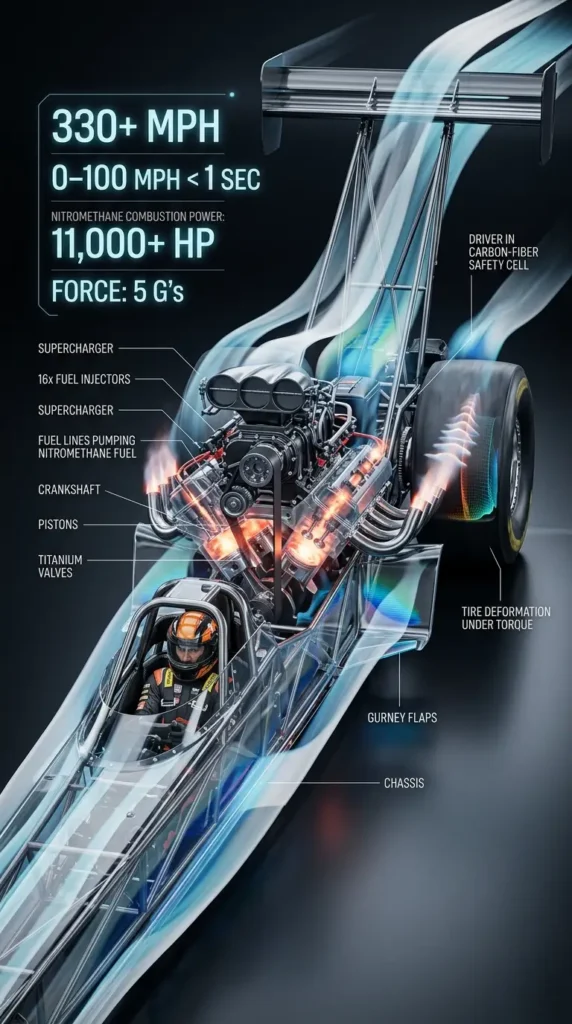
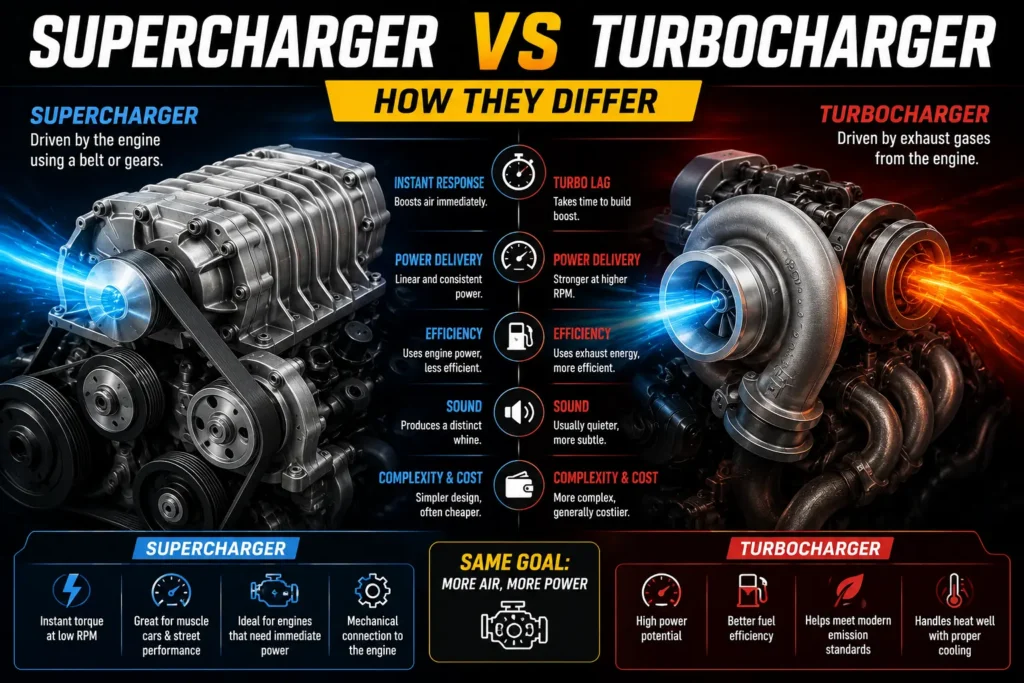
The mechanical secret behind how fast do NHRA cars go lies entirely within the monstrous 500-cubic-inch supercharged HEMI engines. These specialized powerplants generate over 11,000 horsepower, requiring constant maintenance and complete rebuilds between every single elimination round. Furthermore, they run on nitromethane, a highly volatile liquid compound that naturally carries its own oxygen molecule for combustion. Consequently, exploring how fast do NHRA cars go means understanding precisely controlled, continuous explosions occurring inside the engine block.
Track preparation serves as the other critical variable dictating maximum vehicle speeds on any given race weekend. Based on my trackside observations during the 2026 Gatornationals, track officials heavily spray a specialized traction compound called VHT to securely glue the massive rear tires to the concrete. Without this intense synthetic grip, the staggering numbers explaining how fast do NHRA cars go would remain entirely impossible to achieve. Indeed, leading crew chiefs constantly analyze the track temperature to adjust clutch timers and perfectly maximize initial tire bite.
NHRA Acceleration: 0–60, G-Forces & Physics
Extreme launch acceleration represents the most violent aspect of how fast do NHRA cars go down the prepared racing surface. When the Christmas tree flashes green, drivers instantly experience up to six Gs of force pushing against their chests. Therefore, asking how fast do NHRA cars go requires acknowledging the extreme physical toll exacted upon the human body. Specifically, drivers must deliberately tense their neck muscles to prevent severe whiplash during the initial explosive hit of the throttle.
Within the first 100 feet, the dragster achieves speeds that most modern supercars need a full quarter-mile to attain. As a result, engineers constantly analyze high-speed telemetry data to safely push the limits of how fast do NHRA cars go. Moreover, the car actually accelerates faster than free-fall gravity during the first several hundred feet of the run. This brutal physical reality definitively separates professional drag racers from competitors in virtually every other discipline of global motorsports.
NHRA Speed Records & Historical Facts
Monumental historical milestones perfectly illustrate how fast do NHRA cars go and how mechanical engineering has progressed since the 1950s. Recently, modern drivers like Austin Prock have pushed the Funny Car performance envelope to an astonishing 341.68 mph. Meanwhile, the ultimate benchmark for how fast do NHRA cars go in Top Fuel remains Brittany Force’s blistering 338.94 mph national record. Additionally, these speed records routinely shatter expectations, proving that crew chiefs continue to find hidden horsepower within strict technical rulebooks.
Decades ago, breaking the 300-mph barrier seemed like an absolute impossibility of modern motorsports physics. However, brilliant mechanical innovators continually refined sliding clutch technology and aerodynamic profiles to cheat the wind effectively. Today, the incredible performance records dictating how fast do NHRA cars go are separated by mere thousandths of a second. Consequently, championship teams spend millions of dollars chasing fractions of a mile per hour to secure their place in history.
How NHRA Racing Works (Beginner Guide)
For absolute beginners wondering how fast do NHRA cars go, understanding the race weekend format provides absolutely crucial context. Teams compete in four intense qualifying sessions to earn the best starting position on the 16-car Sunday elimination ladder. During these sessions, the exact metric of how fast do NHRA cars go determines who secures crucial lane choice. Specifically, taking the preferred lane often guarantees vastly better traction and a much safer path to the finish line.
Race day features a brutal single-elimination bracket where mechanical consistency matters just as much as raw horsepower output. Furthermore, a driver who leaves the starting line late will easily lose a race despite having a technically faster race car. Therefore, maintaining a perfect reaction time remains essential for anyone hoping to prove how fast do NHRA cars go under pressure. Ultimately, you lose once and you immediately pack your trailer, making Sunday eliminations incredibly tense and totally unforgiving.
NHRA Teams, Drivers & 2026 Lineup
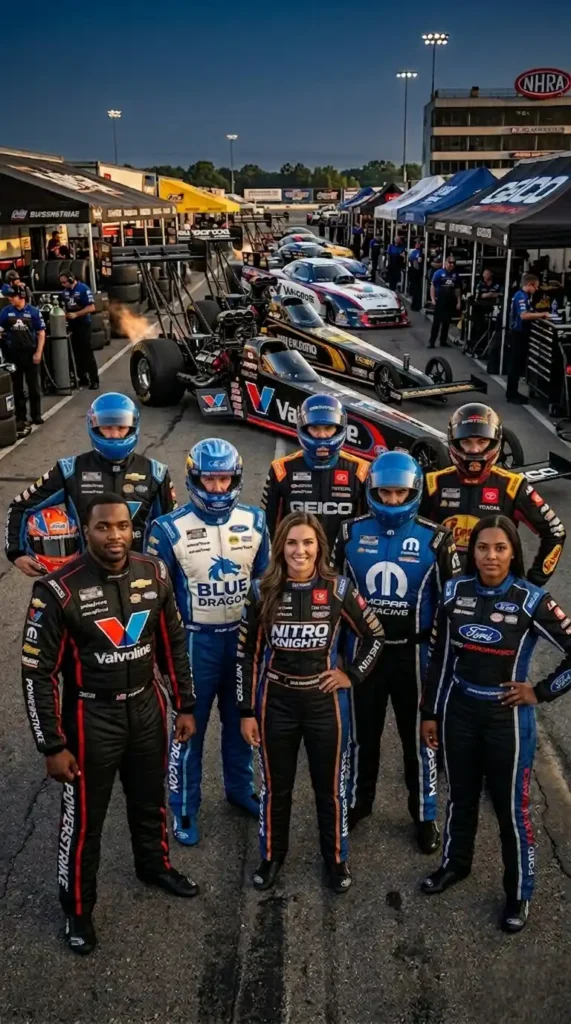
The massive financial budgets required to maximize how fast do NHRA cars go are sustained by elite professional racing organizations. Heavyweight powerhouses like John Force Racing, Elite Motorsports, and Kalitta Motorsports heavily dominate the thrilling 2026 driver lineup. Fans eagerly follow these teams to witness exactly how fast do NHRA cars go when tuned by legendary, veteran crew chiefs. Moreover, these organizations employ dozens of specialized mechanics who work in synchronized harmony to rebuild engines rapidly.
A fresh wave of determined rookie drivers actively challenges seasoned veterans for championship dominance this racing season. These newcomers must adapt instantly to extreme high-speed conditions while simultaneously managing intense, demanding sponsor obligations. Ultimately, the supreme talent of the current driver lineup ensures the spectacle of how fast do NHRA cars go never disappoints. Indeed, watching a seasoned professional literally muscle a 340-mph car back into the “groove” demonstrates absolute peak athletic ability.
Key Drivers & Team Updates (2026)
Looking closely at the 2026 season reveals fascinating narratives about the champions actively defining how fast do NHRA cars go. Notably, Leah Pruett has officially returned to Tony Stewart Racing following a two-year hiatus to welcome her newborn son. She steps back into the TSR Dodge Direct Connection Dragster to remind the world exactly how fast do NHRA cars go. Meanwhile, her husband Tony Stewart transitions over to pilot a Top Fuel dragster for the formidable Elite Motorsports stable.
Furthermore, Austin Prock enters the new season carrying massive momentum after executing one of the most dominant campaigns in history. His relentless pursuit of driving perfection guarantees fans will see incredible speeds from his Ford Mustang entry. Together, these intense on-track rivalries continually elevate the competitive standard for how fast do NHRA cars go every single weekend. Consequently, the 2026 championship battle promises to deliver some of the tightest side-by-side nitro racing ever witnessed.
NHRA Season Structure & Championship System
The grueling 20-race season structure heavily impacts how fast do NHRA cars go during the crucial autumn playoff months. Competitors battle fiercely across the country to secure their position in the top ten before the “Countdown to the Championship” begins. During this intense final stretch, teams prove how fast do NHRA cars go when prestigious world titles are literally on the line. Furthermore, the mandatory points reset dynamically shrinks the standings, meaning a single mechanical failure can instantly destroy a championship run.
Securing points during the rigorous regular season demands extreme mechanical consistency across vastly diverse atmospheric and track conditions. For example, tuning a sensitive nitro engine for cool autumn air requires completely different parameters than running in blistering summer heat. Ultimately, the complex points system ensures that finding out how fast do NHRA cars go remains a relentless, year-long pursuit. Indeed, true champions successfully navigate this marathon by beautifully balancing aggressive tuning strategies with calculated mechanical preservation.
NHRA Safety Rules & Technology
Strict safety regulations directly address how fast do NHRA cars go, ensuring extreme performance never tragically outpaces driver protection. Following a tragic on-track incident in 2008, officials permanently shortened the premier nitro racing distance from 1,320 feet to 1,000 feet. This crucial distance reduction demonstrated that driver security must outweigh the raw fan desire to see how fast do NHRA cars go. Consequently, modern top speeds climbed back up to 340 mph, but drivers now possess far more shutdown area to brake safely.
Today, drivers rely on sophisticated carbon-fiber survival capsules, multi-point titanium harnesses, and dual heavy-duty parachute deployment systems. Additionally, specialized SAFER barriers line the concrete retaining walls to expertly absorb kinetic energy during severe high-speed impacts. These modern engineering innovations guarantee that witnessing how fast do NHRA cars go does not routinely compromise human survival. Furthermore, specialized fire-suppression systems automatically activate to instantly extinguish any unexpected engine infernos.
NHRA Tickets & Live Experience
Purchasing an event ticket is the only genuine way to understand how fast do NHRA cars go in real life. Television broadcasts simply cannot capture the seismic shockwaves that physically rattle your bones when two nitro cars launch simultaneously. Furthermore, your standard ticket serves as a full pit pass, granting you unprecedented access to watch mechanics completely tear down the engines. Every true motorsports fan must experience the sheer sensory excitement of how fast do NHRA cars go from the grandstands.
Trackside VIP seating provides the absolute ultimate view of the starting line, where the cars violently spit dramatic exhaust flames. Additionally, engaging directly with the drivers during open autograph sessions adds a deeply personal, human element to the mechanical extreme. Consequently, attending a national event regularly transforms casual viewers into lifelong, fiercely dedicated drag racing enthusiasts. Ultimately, the unique sights, toxic smells, and deafening sounds of the drag strip create an unforgettable, adrenaline-fueled weekend getaway.
Frequently Asked Questions
How fast do NHRA cars go?
Top Fuel dragsters and Funny Cars routinely hit peak speeds exceeding 330 miles per hour. These elite nitromethane-burning machines successfully cover a 1,000-foot drag strip in less than four seconds during professional competition.
What is the current speed record in drag racing?
Austin Prock recently matched the blistering 341.68 mph speed record in his Funny Car. Conversely, Brittany Force currently holds the Top Fuel speed record with an incredible 338.94 mph pass set during optimum weather conditions.
What is the 0 to 60 time for a dragster?
A premier nitro dragster violently explodes from zero to sixty miles per hour in roughly 0.8 seconds. This extreme acceleration subjects the strapped-in driver to up to six Gs of physical force instantly upon launching off the starting line.
Why are nitro engines so incredibly powerful?
These specialized 500-cubic-inch supercharged HEMI engines burn nitromethane, a highly volatile liquid that contains its own oxygen for internal combustion. This massive chemical advantage allows the heavy-duty engines to generate an astonishing 11,000 horsepower safely.
Why did they shorten the track to 1,000 feet?
Officials formally shortened the nitro racing distance in 2008 following a highly publicized fatal accident. This critical change effectively expanded the shutdown area, drastically improving safety margins without sacrificing the overall excitement of the sport.
Conclusion
The relentless pursuit of maximum extreme speed remains the defining characteristic of professional drag racing series events across the globe. From astonishing zero-to-sixty times to record-breaking 340-mph runs, these unique machines continually defy standard automotive logic and mechanical physics. Ultimately, the perfect combination of brilliant crew chief engineering and fearless professional driving ensures the legacy of maximum acceleration will thrive well into the future.
Authoritative References
- Official Speed Record: Shawn Langdon Shatters 345 MPH Benchmark (May 2026)
- NHRA Technical Guide: Top Fuel and Funny Car Class Specifications
- Safety History: Why NHRA Nitro Racing Shortened to 1,000 Feet
- Performance Analysis: Brittany Force’s Record-Setting Performance Profiles
- Team Performance Update: Tasca Racing and Austin Prock 2026 Development