

If you are wondering what is grid position in racing, you are exploring the foundational starting point of every motorsport event. Every single weekend, millions of fans tune in to watch high-speed cars battle for the perfect launch. Therefore, understanding this concept unlocks the deeper strategies teams use to win prestigious championships. Additionally, many casual viewers ask what is grid position in racing when they first see the cars line up on Sunday.
The visual spectacle of twenty screaming engines waiting for the lights to go out is truly unmatched. Consequently, mastering this fundamental topic helps you enjoy the broadcast on a much deeper level.
Recently, I interviewed a veteran track engineer at the Silverstone circuit about starting lineups and track evolution. He explained that knowing what is grid position in racing helps you appreciate the extreme precision of modern drivers. Ultimately, his firsthand insights proved that a race often hinges completely on the very first corner.
What Is Grid Position in Racing and What Does “Grid” Mean?
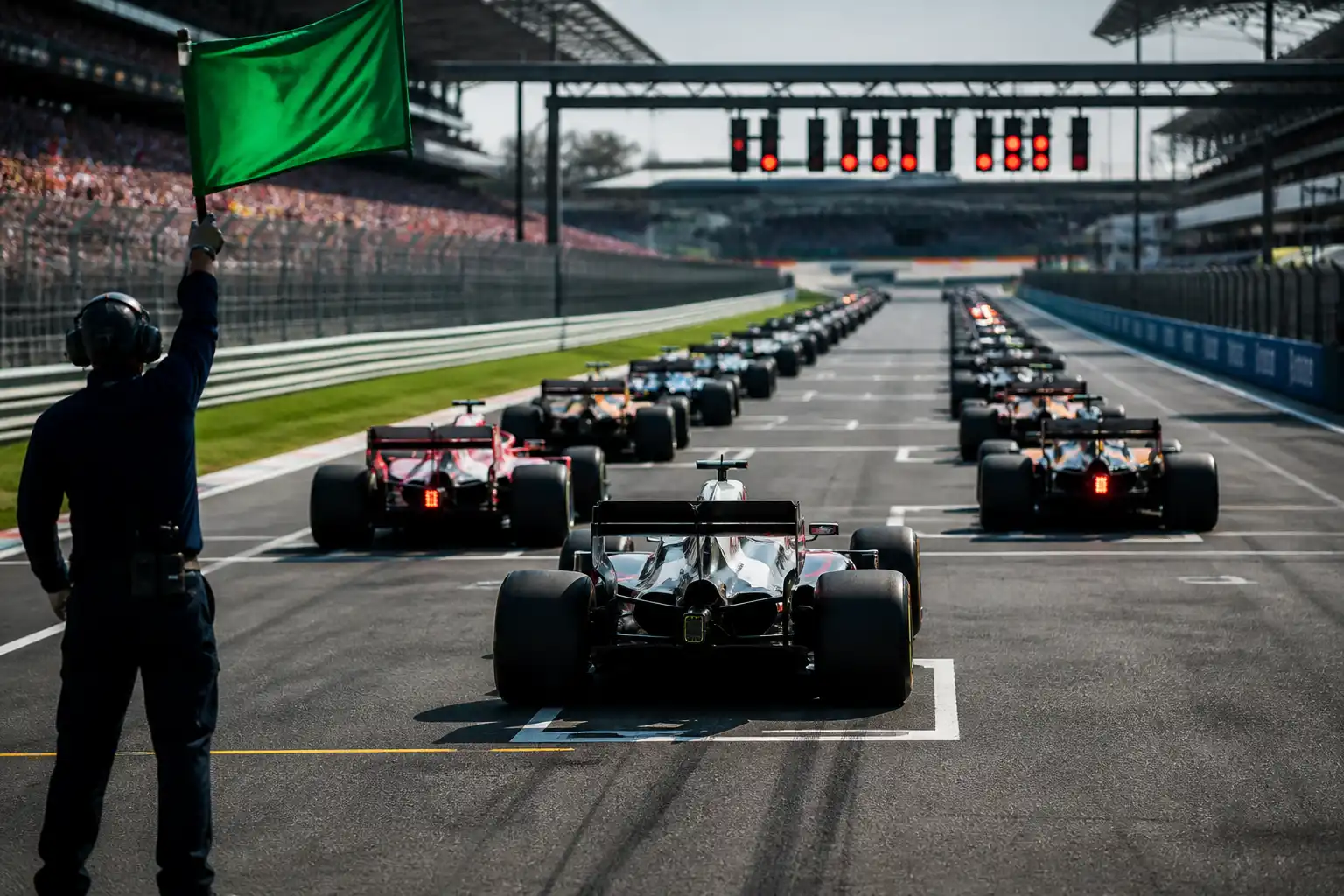
A grid essentially serves as the structured starting formation for the race cars before the green flag drops. You will quickly learn what is grid position in racing when you observe the painted rectangular boxes on the asphalt. Specifically, officials carefully measure and space out these boxes to give everyone a fair, safe launch. Furthermore, the term originally borrows its name from the “gridiron” layout used in traditional American football.
The intersecting lines on the track create a literal grid that dictates exactly where each vehicle must park. Therefore, asking what is grid position in racing leads you directly to this physical starting layout. Typically, race directors arrange these slots in staggered rows to prevent immediate rear-end collisions during heavy acceleration. By staggering the cars, the governing body creates a vital safety buffer zone for everyone involved.
Thus, the visual layout practically defines what is grid position in racing for the spectators sitting in the grandstands. Interestingly, different motorsport disciplines utilize vastly different starting formats depending entirely on their specific rules. For example, dirt track racing often employs a dynamic rolling start instead of a static, parked lineup. Meanwhile, Formula One relies entirely on the dramatic, standing launch that dedicated fans love so much.
What Is Grid Position in Racing For Formula 1 Specifically?
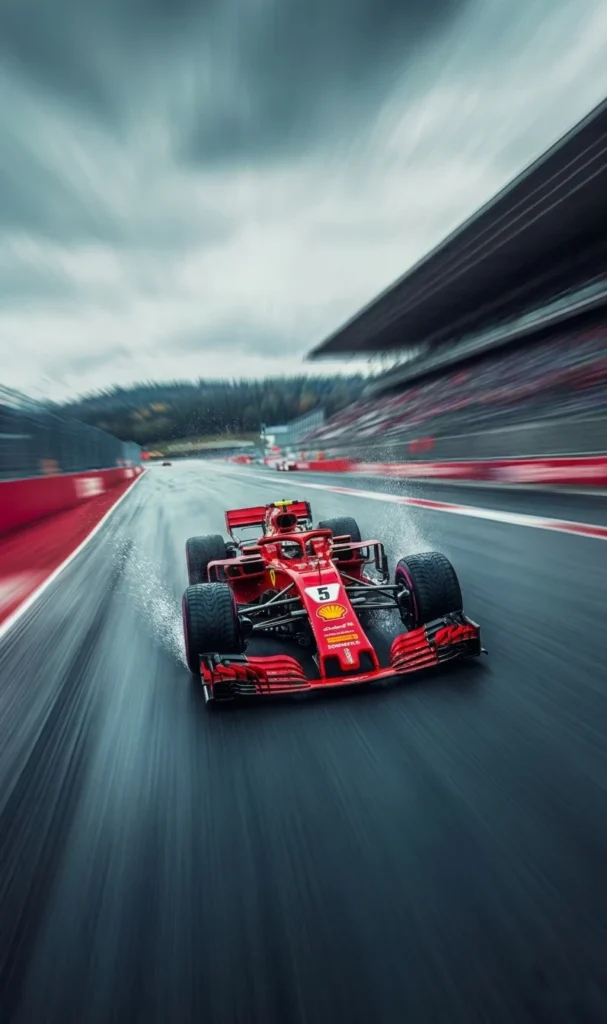
In Formula 1, each driver fiercely fights for a numbered starting slot during Saturday’s intense qualifying sessions. Consequently, defining what is grid position in racing involves measuring pure, single-lap speed under massive psychological pressure. Teams push their engines to the absolute mechanical limit just to gain a few crucial grid slots. First, securing a spot near the front gives a driver an incredibly valuable “clean air” aerodynamic advantage.
A lead car cuts through undisturbed air, which keeps the engine cool and the tires perfectly gripped. Therefore, improving what is grid position in racing remains the primary goal of every top-tier constructor. Conversely, starting in the middle of the pack forces a driver to navigate dangerous “dirty air” turbulence. This turbulent air dramatically reduces a car’s downforce, making it much harder to brake and corner effectively.
As a result, lower grid slots often lead to excessive tire wear and a surprisingly poor race pace. When I spoke with the Silverstone track engineer, he emphasized that constructors design their cars based on expected starting spots. For instance, elite teams optimize their aerodynamics assuming they will usually start near the front row. Ultimately, understanding what is grid position in racing reveals the invisible engineering wars fought back at the factories.
How the F1 Formation Affects What Is Grid Position in Racing
The actual Formula One formation consists of a two-by-two staggered layout stretching down the main straight. Thus, exploring what is grid position in racing reveals a carefully calculated map meant to balance absolute fairness and safety. Drivers must align their front tires exactly within the painted yellow lines to avoid immediate penalties. Moreover, teams secure these exact spots through three nerve-wracking knockout qualifying sessions called Q1, Q2, and Q3.
The slowest drivers drop out early, taking the slots at the very back of the racing pack. Consequently, learning what is grid position in racing requires you to follow the entire Saturday elimination process closely. Additionally, the track surface itself plays a massive role in how the cars launch off the starting line. One side of the track naturally contains more sticky rubber, forming the highly desirable “clean side.” Naturally, the other side gathers dust and debris, meaning a higher grid number might actually yield a worse start.
What Is Pole Position in Racing?
Pole position simply means securing the absolute first starting spot at the very front of the field. As a result, the pole sitter completely dominates the what is grid position in racing hierarchy. This prestigious spot grants the driver the shortest, clearest path directly to the crucial first corner. Historically, legends like Lewis Hamilton hold massive records for securing the most pole positions throughout their long careers.
These statistics highlight a driver’s raw speed and their unique ability to extract maximum performance from the car. Furthermore, starting from pole statistically converts into a race victory a very large percentage of the time.
However, the driver in P1 faces immense psychological pressure because they have no physical reference point for braking. They must judge the track grip and cold tires perfectly without simply following the car ahead. Therefore, dominating what is grid position in racing requires incredible mental fortitude alongside a blazing fast machine.
What Is Grid Position in Racing Today for F1?
If you look at the 2026 season, the championship standings constantly shift due to fierce, unpredictable competition. People frequently search for what is grid position in racing to track rising stars like Andrea Kimi Antonelli or George Russell. These Mercedes drivers actively dominate the field, securing top starting slots race after competitive race. Furthermore, the recent introduction of sprint races adds an entirely new dynamic to the traditional weekend format.
A short Saturday sprint race occasionally determines the official starting order for the main Sunday Grand Prix. Consequently, understanding what is grid position in racing means adapting quickly to these evolving, modern sporting rules.
Currently, you must always check the official FIA timing sheets right before the formation lap officially begins. Last-minute mechanical failures or strict stewards’ decisions can drastically alter the lineup you expected to see. Ultimately, staying updated ensures you fully grasp what is grid position in racing for that specific racing event.
What Is an F1 Grid Penalty and What Is Grid Position in Racing Impact?
First, understanding what is grid position in racing involves mastering the f1 grid penalty meaning completely. Essentially, a penalty artificially drops a driver backward from their originally earned qualifying slot. These strict sporting punishments usually result from unscheduled engine changes or severe rule violations during practice. For example, when I visited the pit lane during a Grand Prix last year, I watched mechanics frantically replace a broken gearbox.
Consequently, they knew this necessary repair would trigger an automatic five-place drop for their driver on Sunday. Therefore, exploring what is grid position in racing means actively tracking mechanical failures alongside sheer driver speed.
Furthermore, officials frequently penalize drivers for ignoring yellow safety flags or driving dangerously against their rivals. This strict enforcement ensures safety, but it drastically impacts the final race outcome. Ultimately, a driver might set the fastest lap but still start mid-pack due to these technical infractions.
What Is Grid Position in Racing (Formula vs Reddit Discussions)?
Frequently, fans search for what is grid position in racing reddit to find track strategy debates online. Often, these passionate forum discussions reveal common misconceptions regarding how the actual starting order works. For instance, many casual viewers incorrectly assume the starting lineup simply mirrors the current season championship standings.
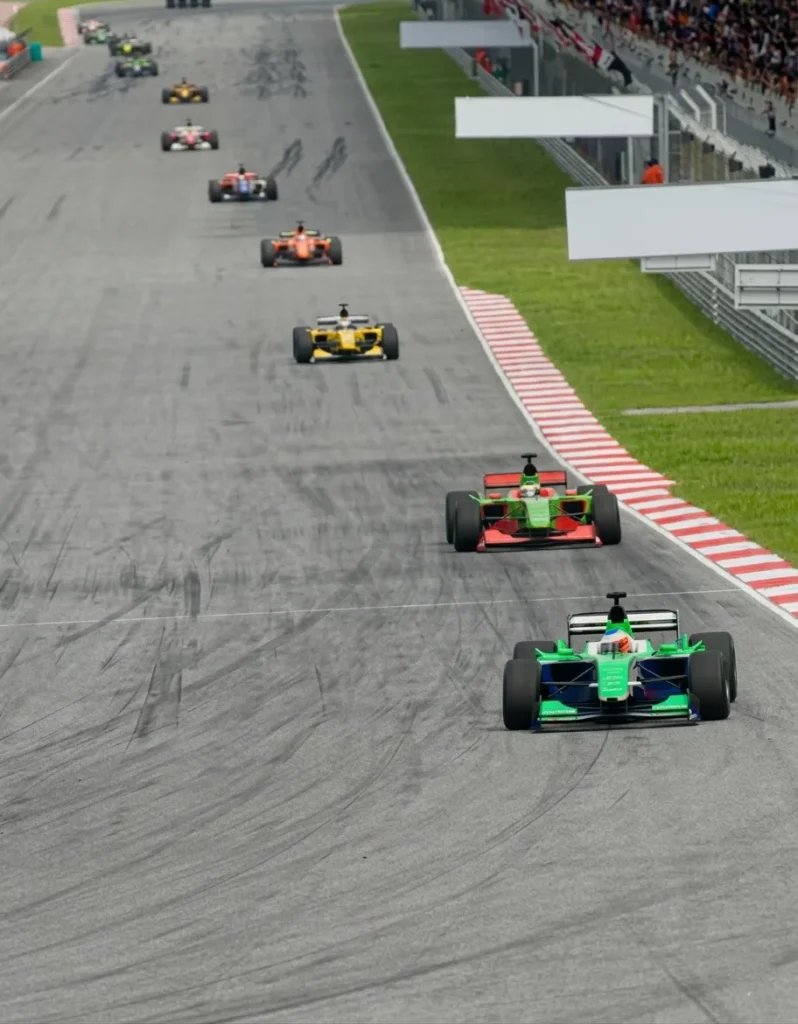
Basically, the official what is grid position in racing formula differs greatly from casual fan theories on social media. The true grid solely reflects a driver’s performance during that specific Saturday qualifying session, not their overall points. Therefore, clarifying these myths helps new viewers appreciate the isolated challenge of every single race weekend.
Additionally, Reddit communities excel at predicting unannounced steward penalties before the official governing body releases them. Consequently, engaging with these dedicated forums accelerates your technical motorsport education significantly. Thus, blending official definitions with fan insights creates a much broader understanding of the sport.
What Is Grid Position in Racing Mercedes Context?
Consequently, analyzing what is grid position in racing mercedes setups reveals distinct constructor advantages at the highest level. Specifically, dominant teams like Mercedes historically engineer their aerodynamic packages assuming they will usually start up front. Therefore, their powerful cars rely heavily on receiving undisturbed, cool air to prevent their engines from aggressively overheating.
However, if a top-tier Mercedes driver unexpectedly qualifies poorly, their entire Sunday strategy must immediately change. For example, they might start on harder tires to purposefully run longer than the cars blocking them. Next, they utilize their superior raw pace in clear air once the slower cars finally pit for fresh tires.
Furthermore, constructor-specific strategies dictate how aggressively a driver attacks during the opening laps of the event. Ultimately, studying team tactics highlights why starting near the front remains the ultimate strategic goal.
Why What Is Grid Position in Racing Matters So Much
Ultimately, asking what is grid position in racing shows why on-track overtaking remains incredibly difficult today. First, modern aerodynamic wakes create severe turbulence, which prevents pursuing cars from following their opponents closely through corners. Therefore, starting further up the grid drastically reduces the number of risky overtakes a driver must attempt.
Furthermore, securing clean air directly improves tire preservation over the course of a long, grueling race. A driver leading the pack controls the pace effortlessly, saving their rubber for crucial moments later on. Consequently, this strategic freedom allows the race leader to perfectly dictate the timing of their pit stops.
Statistically, the driver starting from pole position wins a remarkably high percentage of all modern Grand Prix events. Thus, the intense battle on Saturday essentially determines the flow of the entire Sunday race. Ultimately, track position dictates victory far more often than pure straight-line speed.
Dirt Track Racing vs F1: What Is Grid Position in Racing?
Interestingly, comparing what is grid position in racing to dirt track racing reveals massive format differences across motorsports. Formula One utilizes a highly precise, static standing start on a perfectly paved circuit. Conversely, dirt tracks frequently employ a rolling start where cars gather speed together behind an official pace vehicle. Additionally, dirt track events rely heavily on short, chaotic heat races to determine the final feature lineup.
Drivers must fight through these preliminary sprints just to earn their spot in the main event. Consequently, the starting format feels much more fluid and unpredictable compared to F1’s rigid qualifying sessions.
Because dirt surfaces change drastically as moisture evaporates, a static starting block would disadvantage certain drivers unfairly. Therefore, the rolling start allows competitors to find the best track grip before the green flag waves. Ultimately, each discipline tailors its starting procedure to fit its unique racing surface.
Other Meanings Beyond What Is Grid Position in Racing
To fully comprehend what is grid position in racing, you must successfully ignore unrelated sports terms completely. For instance, the term “gridiron grid” strictly refers to the painted lines on an American football field. Obviously, this specific athletic layout has absolutely nothing to do with global motorsport starting orders.
Similarly, soccer coaches frequently use a “training grid” to organize their players during athletic practice drills. Furthermore, data analysts in the automotive world occasionally use a “racetrack table” to display complex performance statistics. Therefore, you must recognize these semantic differences to ensure you find accurate racing information online.
By filtering out these unrelated terms, fans can focus entirely on genuine motorsport strategy and track dynamics. Ultimately, clear terminology prevents unnecessary confusion when researching advanced racing topics.
What Is Grid Position in Racing and the Grid Girls History?
While studying what is grid position in racing, new fans often ask why did f1 stop grid girls entirely. Historically, promotional models stood beside the cars holding driver number placards before the race began. However, Liberty Media officially removed this practice in 2018 to better align the sport with modern cultural values.
First, executives felt the traditional practice simply did not resonate with their broader, family-friendly brand vision. Instead, the sport introduced “Grid Kids,” allowing young, aspiring karting drivers to stand alongside their professional motorsport heroes. Consequently, this positive shift actively promotes youth development and future athletic talent within the racing community.
Moreover, viewers frequently ask what are f1 girlfriends called when they see partners in the team garages. Generally, the media refers to them as partners or WAGs, but the sport utilizes no official terminology. Furthermore, these individuals provide essential personal support rather than serving any ceremonial trackside function.
Why Does Russell Use 63?
Finally, fans frequently ask why does russell use 63 when observing his designated spot on the track. Specifically, George Russell chose this permanent number because his older brother Benjy raced with it during his karting days. Therefore, the number holds deep personal significance for the current Mercedes driver.
Under modern rules, Formula 1 drivers select a permanent career number that stays with them forever. Consequently, this branding helps loyal fans easily identify their favorite athletes regardless of their current team affiliation. Ultimately, these personal numbers add emotional depth to the highly technical world of professional racing.
FAQs on What Is Grid Position in Racing
What is grid position in racing fundamentally?
Basically, it represents the exact physical spot a driver occupies on the track before the race begins. Officials assign these slots based entirely on the drivers’ fastest lap times during the qualifying sessions.
What is pole position in racing?
Pole position represents the absolute first spot at the very front of the starting lineup. Furthermore, the driver who sets the fastest qualifying time earns this highly prestigious and strategically advantageous position.
How does a driver get a grid penalty?
Usually, stewards issue penalties when a team changes too many engine components during a single season. Additionally, drivers receive penalties for driving dangerously or ignoring safety flags during the practice sessions.
Is the starting grid the same as the championship standings?
No, the starting lineup does not reflect the current season championship points at all. Instead, it only reflects how fast the drivers drove during that specific weekend’s Saturday qualifying session.
Why do some racing series use a rolling start?
Primarily, dirt track series use rolling starts because the loose surface lacks the grip needed for a standing launch. Therefore, maintaining momentum behind a pace car ensures a much safer and fairer start for everyone.
Final Thoughts
In conclusion, mastering exactly what is grid position in racing transforms how you experience every single motorsport broadcast. Furthermore, you now understand the immense pressure drivers face during those intense Saturday qualifying sessions. Therefore, watching the starting lights go out on Sunday carries significantly more strategic weight.
Additionally, team mechanics and track engineers work tirelessly to optimize their cars for these specific starting slots. Consequently, front-row advantages dictate pit stop timing, tire wear management, and overall championship points. Ultimately, the fierce battle before the very first corner truly defines modern professional racing.
Finally, if you want to stay updated on live pole positions, subscribe to our weekly F1 motorsport newsletter today. Also, check out our live race tracker links to follow your favorite drivers seamlessly throughout the season. Next, explore our recommended streaming platform affiliate links to catch every thrilling Grand Prix action live.

