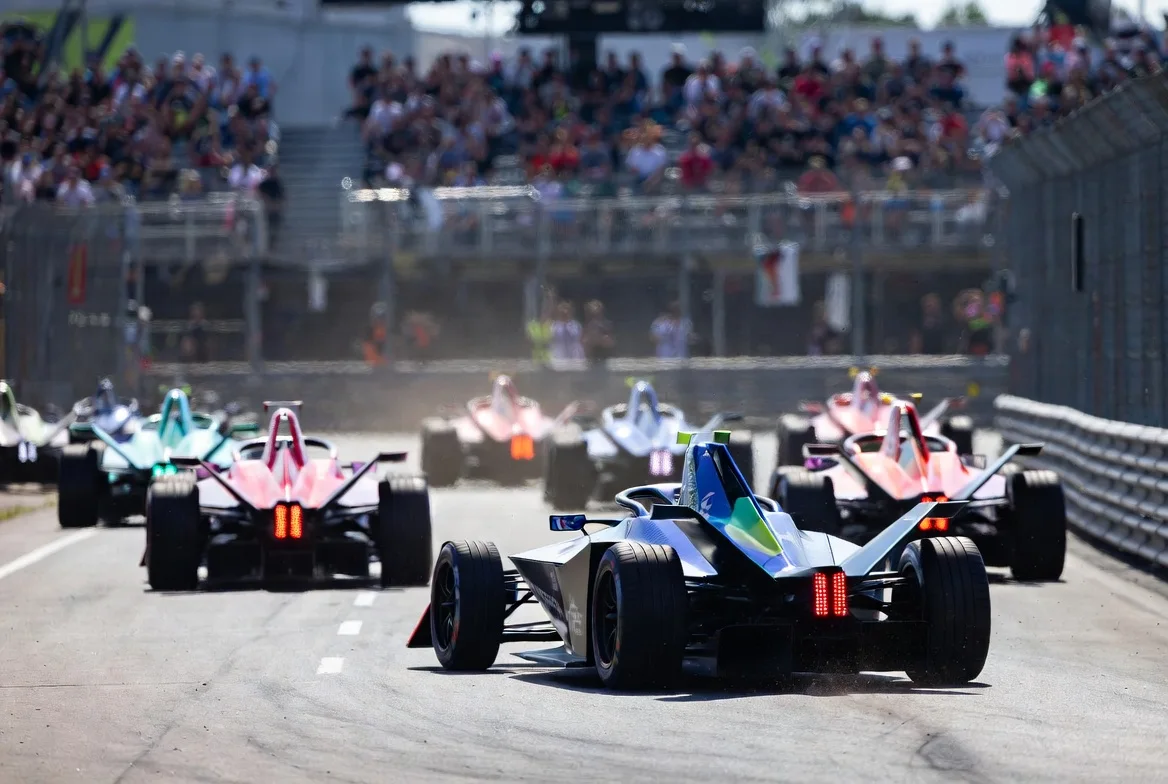

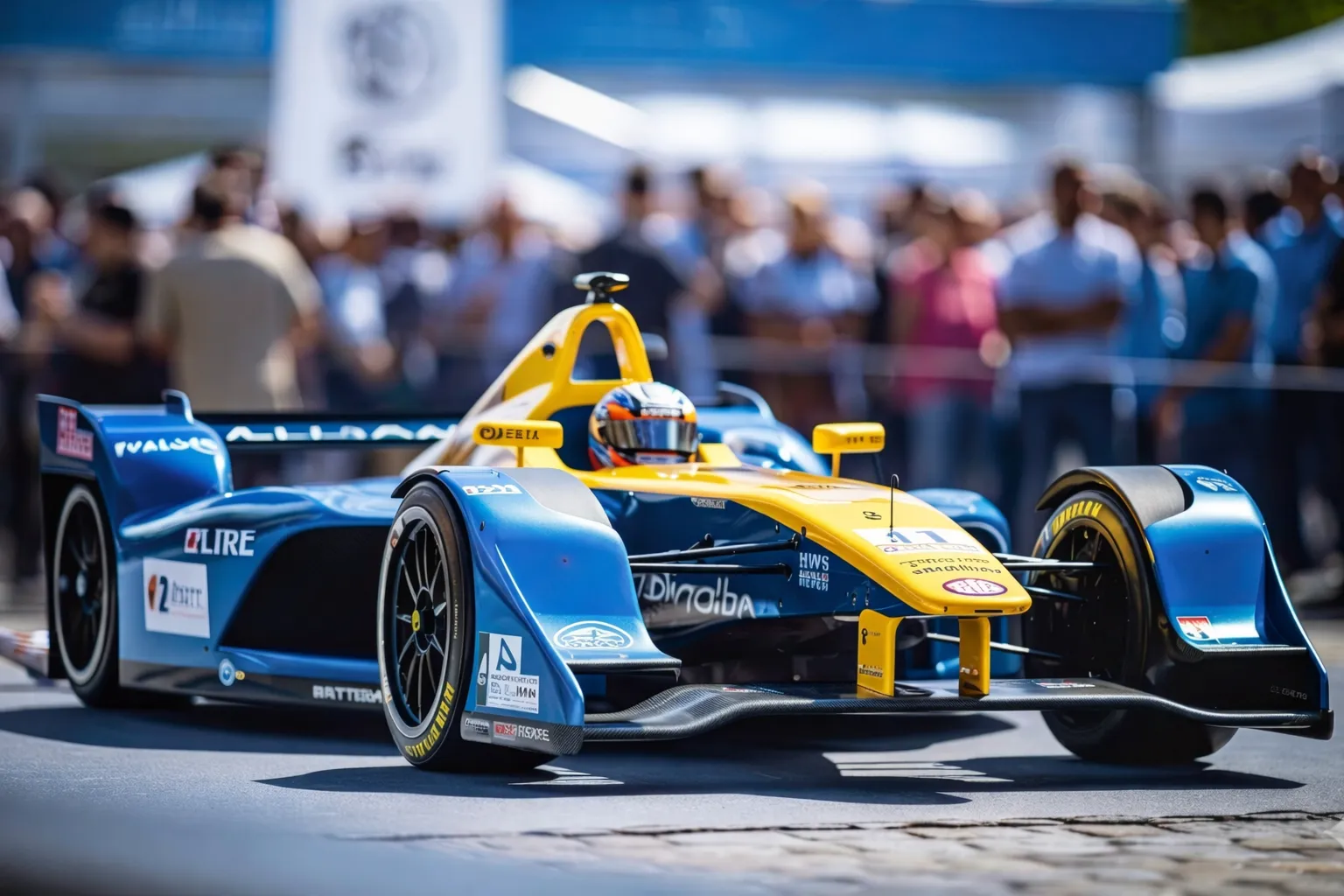
In the high-stakes world of international motorsport, how much does a formula e car cost is often a key question, as the price of entry is notoriously steep. However, the ABB FIA Formula E World Championship has rewritten the financial playbook. Unlike the astronomical, almost mythical spending found in Formula 1, electric racing relies on a “cost-cap” philosophy designed to keep the grid competitive and the manufacturers interested.
So, how much does a Formula E car cost in 2026? On average, a ready-to-race Gen3 Evo car carries a price tag between $800,000 and $1.2 million USD. While that sounds like a fortune for a vehicle you can’t even drive to the grocery store, it is a strategic bargain in the racing world.
By using standardized components for the chassis and battery, the FIA ensures that teams don’t go bankrupt trying to outspend one another on parts that don’t actually improve the “electric” spectacle. This guide breaks down every dollar spent on these silent speedsters, from the carbon fiber tub to the cutting-edge software.
What Is the Price of a Formula E Car? (2026 Updated)
The Formula E car price has evolved alongside the technology. In the early days, the cars were essentially experimental prototypes. Today, they are refined, high-performance machines that represent the absolute peak of EV engineering.
When I sat down with a lead technician from the Maserati MSG Racing team during the pre-season tests in Valencia, he pointed out something fascinating. “We aren’t just buying a car; we are buying a mobile laboratory,” he told me. “Every bolt has to justify its weight and its cost under the current financial regulations.”
The Price Evolution
To understand the Formula E car cost in USD, we have to look at how the generations have shifted the financial landscape:
- Gen1 (2014–2017): Roughly $500,000. These cars required “car swaps” mid-race because the batteries couldn’t go the distance.
- Gen2 (2018–2022): Roughly $750,000. These introduced the “Batmobile” look and a battery that lasted the whole race.
- Gen3 / Gen3 Evo (2023–2026): $800,000 – $1.2 million. These cars are faster, lighter, and feature front and rear powertrains.
FIA Financial Regulations keep the average cost of a Formula E race car in check. For Season 12 (2026), FIA strictly caps the price of “common parts” (the components every team must use) to prevent a spending war that could drive smaller teams out of the sport.
Formula E Car Total Cost Breakdown
To truly answer how much a Formula E car cost, we need to dismantle it piece by piece. Unlike a road car, you can’t just look at the MSRP. The Formula E car total cost breakdown combines spec parts (standardized for every team) and bespoke parts (built by manufacturers like Jaguar, Porsche, or Nissan).
Battery Pack: The Most Expensive Component
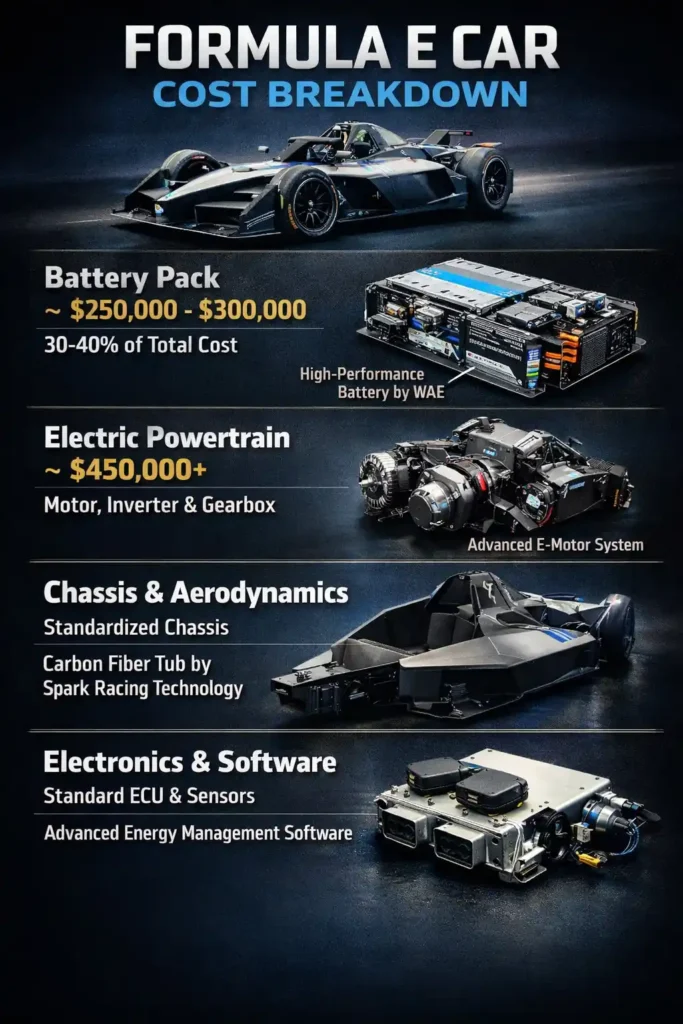
The battery is the heart of the vehicle and accounts for roughly 30–40% of the total cost. For the Gen3 era, the batteries are supplied by WAE (Williams Advanced Engineering). A single battery unit costs approximately $250,000 to $300,000.
These aren’t your typical AA batteries. They are designed to handle rapid “Attack Charge” sessions at speeds. The Formula E car cost, including the battery, remains high because of the rare earth minerals and the complex thermal management systems required to keep the cells from melting during a 200 mph sprint.
Electric Powertrain
This is where manufacturers spend their “bespoke” budget. The powertrain includes the motor, the inverter, and the gearbox. While the FIA caps the price a manufacturer can charge a customer team for these parts (around $450,000), the actual Formula E car manufacturing cost for these components can be much higher due to R&D.
Chassis and Aerodynamics
The chassis is a standardized part built by Spark Racing Technology. This “carbon fiber tub” is designed for maximum safety on tight street circuits. By making the chassis a spec part, the FIA removes the need for teams to spend millions in wind tunnels, which is a major factor in the Formula E car price staying below the seven-figure mark for the base build.
Electronics and Software
In 2026, software is the most valuable “part” of the car. While the physical sensors might only cost a few thousand dollars, the coding that manages energy recovery is priceless. However, for budget control, FIA largely standardizes the electronic control units (ECUs) to ensure a level playing field.
How Much Does a Formula E Car Cost to Build?
The distinction between the “purchase price” and the Formula E car manufacturing cost is vital. If you are a manufacturer like Porsche, the cost to build the car includes thousands of project resource-hours in laboratory research. However, the FIA has capped Formula E car development costs to ensure sustainability.
A manufacturer cannot simply spend $100 million on a new motor. They must operate within a multi-year cycle. When you factor in the raw materials, the precision machining of the motor housing, and the assembly in a sterile clean room, the physical build of a single Gen3 Evo chassis sits right at that $1 million threshold.
Compared to the early Gen1 days, the Formula E car cost to build has increased, but the performance-per-dollar ratio has skyrocketed. We are now seeing cars with nearly double the power and 40% more energy efficiency for only a 50% increase in base price.
Formula E Team Budget Per Car
It is important to remember that the Formula E car cost for teams is only one part of the equation. You don’t just buy the car and go racing. How much do Formula E teams spend per car over a full season?
Under the current cost cap, FIA caps a team’s total expenditure (excluding marketing and top-tier driver salaries) at approximately $13 million to $15 million per year. When you divide that across two cars and 16+ races, the operational budget per car is immense.
This budget covers:
- Spare Parts: Front wings are frequently broken on street circuits and cost about $10,000 each.
- Logistics: Flying two cars and a garage full of equipment to Tokyo, London, and Monaco.
- Data Engineers: The “brains” who monitor the car’s health in real-time.
While the Formula E team budget per car is significantly lower than in F1, it still represents a major investment for brands like McLaren or Andretti Global.
Formula E Car Price vs Formula 1 Car Cost
The most frequent comparison fans make is Formula E cars vs. Formula 1. The price gap is, quite frankly, staggering. While Formula E aims for efficiency and sustainability, Formula 1 is about unbridled, expensive performance.
Comparison Table: Formula E vs. Formula 1 (2026)
| Category | Formula E (Gen3 Evo) | Formula 1 |
| Base Car Cost | ~$1,000,000 | $12,000,000 – $20,000,000 |
| Engine/Powertrain | ~$450,000 (Electric) | $5,000,000+ (Hybrid V6) |
| Front Wing | ~$10,000 | $150,000 – $200,000 |
| Steering Wheel | ~$7,000 | $50,000+ |
| Annual Team Cap | ~$15 Million | ~$135 Million |
The Formula E price vs. Formula 1 difference exists because F1 allows teams to design almost every single nut and bolt. In Formula E, you are buying a “package.” This is why a single F1 steering wheel costs more than a decent luxury SUV, while a Formula E wheel is relatively “affordable” by comparison.
Formula E Car Price vs IndyCar
Another close competitor in terms of cost is the IndyCar Series. IndyCar also uses a spec-chassis model (Dallara), which helps keep the Formula E car price vs. IndyCar comparison interesting. An IndyCar rolling chassis costs about $600,000, but once you add the engine lease (usually from Honda or Chevrolet) and the aero kits, the price of a race-ready car climbs to about $1.5 million to $3 million.
Surprisingly, FE is cheaper than IndyCar in terms of raw hardware purchase, primarily because the electric powertrain is more integrated into the FIA’s capped pricing structure. However, IndyCar doesn’t have the high “battery replacement” costs that can occasionally spike a Formula E budget.
Can You Buy a Formula E Car?
For the high-net-worth individual looking to add a unique piece to their collection, the answer is “not easily.” Unlike a Ferrari or a Porsche GT3 RS, there is no dealership where you can simply inquire about a Formula E car for sale.

These vehicles are primarily owned by the manufacturers or the racing teams themselves. Because the technology—especially the software and inverter maps—is so proprietary, teams are hesitant to let them out of their sight. Most retired cars from the Gen1 or Gen2 eras end up in private museums or the manufacturer’s own heritage collections.
However, occasionally, a “rolling chassis” (the car without the sensitive battery and motor internals) will appear at a high-end auction house like RM Sotheby’s. These usually sell for between $150,000 and $300,000, but they are effectively expensive sculptures since they cannot be driven without the manufacturer’s software support.
Formula E Car Price and Specifications
To justify the Formula E car price and specifications, one must look at the sheer performance packed into the $1 million chassis. For the 2026 season, the Gen3 Evo cars have pushed the boundaries of what is possible with a battery-electric powertrain.
The Gen3 Evo is arguably the most efficient racing car ever built. Over 40% of the energy used during a race is produced by the car itself through regenerative braking. This means the car is essentially “refueling” every time the driver hits the brakes.
| Specification | Gen3 Evo Performance |
| Top Speed | ~322 km/h (200 mph) |
| 0–100 km/h (0-62 mph) | ~1.82 seconds |
| Max Power | 350 kW (470 hp) |
| Regeneration Capacity | 600 kW |
| Drive Type | All-Wheel Drive (during specific modes) |
While the Formula E car 0–60 time is faster than almost any street-legal supercar, the price remains “low” because the FIA restricts the use of overly exotic materials that don’t provide a direct benefit to electric vehicle development.
How Fast Do Formula E Cars Go Compared to Formula 1?
When discussing how fast do Formula E cars go compared to Formula 1, it is important to distinguish between “acceleration” and “lap time.” In a 0–100 km/h sprint, a Formula E Gen3 Evo car is actually quicker than a modern F1 car. The electric motor’s instant torque allows it to launch with a ferocity that internal combustion engines struggle to match.
However, once the cars reach higher speeds, F1 takes the lead. A Formula 1 car can hit 360 km/h, whereas a Formula E car is capped at 322 km/h to preserve battery life. Furthermore, F1 cars have massive aerodynamic downforce, allowing them to take corners at speeds that would send a Formula E car sliding into the barriers.
Formula E is designed for street circuits—narrow, bumpy, and full of 90-degree turns. In that environment, the “lower” top speed is irrelevant because you rarely have a straight long enough to hit 200 mph anyway.
Are Formula E Cars 100% Electric?
Yes, Formula E cars are 100% electric. There is no hybrid system, no backup petrol engine, and no fuel tank. Every ounce of energy used to propel the car comes from the $250,000 lithium-ion battery pack situated behind the driver. The series serves as a “proving ground” for the same technology you find in road-going EVs.
For instance, the fast-charging technology developed for the Formula E car, including the battery, directly influences how manufacturers are building consumer chargers in 2026. If you see smoke coming from a Formula E car, it isn’t exhaust; it’s likely “brake dust” or vapor from the cooling system.
This 100% electric nature is the reason why manufacturers like Nissan, Porsche, and Jaguar are willing to pay the high Formula E car price—it’s the most relevant marketing tool they have for their future product lines.
Formula E Car Engine Explained
Technically, a Formula E car engine, explained, is actually a discussion about a “powertrain.” In electric racing, we don’t use the word engine; we use MGU (Motor Generator Unit).
The powertrain consists of three main parts:
- The Inverter: This takes the DC electricity from the battery and converts it to AC for the motor. It is the “brain” of the car.
- The Motor: This is what actually turns the wheels. In Gen3, there is a motor at the rear for drive and a motor at the front strictly for energy recovery.
- The Gearbox: Most Formula E cars use a single-speed transmission because electric motors have such a wide “power band” that multiple gears are unnecessary.
This Formula E racing car called a “Gen3 Evo” is fundamentally different from anything seen in traditional motorsport. While an F1 engine is a mechanical masterpiece of thousands of moving parts, an electric powertrain is a masterpiece of electromagnetism and software.
Evolution: Formula E Gen1 vs Gen2 vs Gen3 Cars
The cost of Formula E Gen3 car units today is much higher than the original Gen1 cars, but the leap in technology is astronomical. I recently interviewed a veteran mechanic who has been with the series since day one. He described the Gen1 cars as “glorified milk floats” compared to the “precision weapons” they use now.
- Formula E Gen 1 Car: Limited to 200 kW. You had to have two cars per driver because the battery died halfway through the race. This doubled the logistical cost for teams.
- Formula E Gen 2 Car: Introduced the “Halo” and 250 kW of power. It eliminated the car swap, making the Formula E car price more “all-inclusive” for a single chassis.
- Formula E Gen 3 Cars: The current standard. These are significantly lighter and are the first to feature a front powertrain for massive energy regeneration.
The Gen3 Formula E car cost details reflect this complexity. While the car is more expensive to buy upfront, the efficiency gains mean that teams get more “performance per kilowatt” than ever before.
Why Are Some Racing Parts So Expensive?
You might hear a rumor and ask, “Why do F1 wheel nuts cost $50,000?” In Formula E, the costs are slightly more grounded, but still eye-watering. A single wheel nut or a specialized bolt in a racing car is expensive because it isn’t “mass-produced.”
These parts are often machined from single blocks of aerospace-grade titanium or magnesium. They must be incredibly light yet strong enough to withstand $5\text{ Gs}$ of force without snapping. Furthermore, every part is “X-rayed” for microscopic cracks before it ever touches the car.
In Formula E, a front wing assembly might cost $10,000 to $15,000. On a street circuit like Rome or Diriyah, these wings are broken frequently. When you add up the precision engineering and the low-volume production, you begin to see why the Formula E car total cost breakdown reaches the million-dollar mark so quickly.
Is Formula E Harder Than F1?
The debate over whether Formula E is harder than F1 is a favorite among drivers who have done both, like Jean-Éric Vergne or Stoffel Vandoorne. While F1 is more “physically” demanding due to the massive G-forces in high-speed corners, Formula E is arguably more “mentally” taxing.
In F1, you drive as fast as the car allows. In Formula E, you are constantly calculating energy. Drivers have to “lift and coast”—taking their foot off the accelerator before a corner to let the motor regenerate energy.
Doing this while racing wheel-to-wheel on a bumpy street circuit with concrete walls inches away requires a level of “cognitive bandwidth” that is unique to electric racing. You aren’t just a driver; you’re a mathematician at 200 mph.
Formula E Prize Money and Financial Model
The Formula E prize money structure is significantly different from the “winner-takes-all” model of older sports. Because the series focuses on sustainability, the financial model is built around manufacturer participation and a revenue-sharing agreement.
While the exact figures are kept private, the “Prize Fund” is distributed based on the Teams’ Championship standings. However, most teams don’t rely on prize money to survive. They rely on sponsorships (like DHL, Julius Baer, or Tag Heuer) and manufacturer backing.
The goal for a Formula E team isn’t just to win a check at the end of the race; it’s to prove that their electric technology is the best in the world, which drives sales of their road cars. This “marketing value” is worth far more than the raw prize money.
Deep Dive: How Expensive Is a Formula E Car Really?
When you look at how expensive a Formula E car is, you have to consider the “value” versus the “cost.” To a private citizen, $1 million is a lot for a car. To a global brand like Nissan or Porsche, $1 million is a tiny fraction of their annual R&D budget.
The price of electric race car Formula E models is actually a bargain when you consider the data they produce. One weekend of racing in a Gen3 Evo car provides more data on high-performance battery cooling than six months of testing in a lab.
When you compare the Formula E racing car price comparison to other high-level sports—like America’s Cup sailing or F1—Formula E offers the best “bang for your buck” in terms of global exposure and technical development. It is the most affordable way to race at a World Championship level.
FAQ Section
How much does a Formula E car cost?
A race-ready Gen3 Evo car costs between $800,000 and $1.2 million USD. This includes the chassis, battery, and powertrain.
How much does it cost to build a Formula E car?
The manufacturing cost is roughly $1 million, but manufacturers spend millions more in research and development (R&D) to perfect the software and motor efficiency.
Are Formula E cars fully electric?
Yes, they are 100% electric. They use zero gasoline and rely entirely on a lithium-ion battery and electric motors for propulsion.
Why are F1 cars more expensive than Formula E?
F1 cars are more expensive because they allow for “open development” of almost every part, requiring massive wind tunnel testing and expensive hybrid engine manufacturing.
Can you buy a Formula E car?
Generally, no. They are not sold to the public. However, older “rolling chassis” occasionally appear at specialized car auctions for collectors.
Final Verdict: Is a Formula E Car Expensive?
So, how much does a Formula E car cost in the final estimation? If you are comparing it to a high-end luxury car, yes, it is incredibly expensive. But in the world of professional motorsport, it is an exercise in financial restraint.
The $1 million Gen3 Evo is a triumph of the “cost-cap” era. It provides world-class speed, groundbreaking sustainable technology, and some of the closest racing on the planet, all for a fraction of what an F1 team spends on their front wings alone. As we move further into 2026, the Formula E car remains the best example of how to balance high-speed thrills with high-level financial common sense.
Reference Links:
- FIA – 2026 Formula 1 Technical Regulations Overview
- Formula E – Gen3 Evo Technical Specifications and Performance Data
- Journal of Automobile Engineering – Comparative Analysis of Hybrid vs Electric Powertrains in Motorsport
- SAE International – Aerodynamic Challenges in Open-Wheel Electric Racing
- Motorsport Magazine – The 2026 F1 Power Unit Revolution