Formula 1 Race Car: Cost, Speed, Drivers, Models, Toys & Buying Guide
Everything you need to know about an F1 race car — from the $15 million price tag and 1,000+ horsepower to the best toy models, how drivers get paid, and whether you can actually buy one.
Formula 1 Race Car: Cost, Speed, Drivers, Models, Toys & Buying Guide
Everything from the $15M price tag and 1,000 bhp to the best toy models and whether you can buy one.
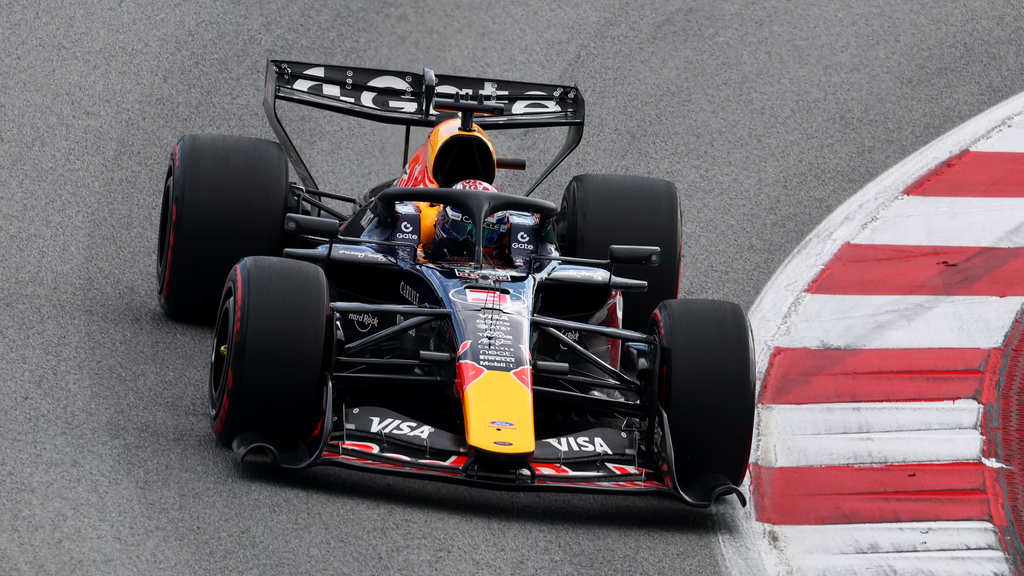
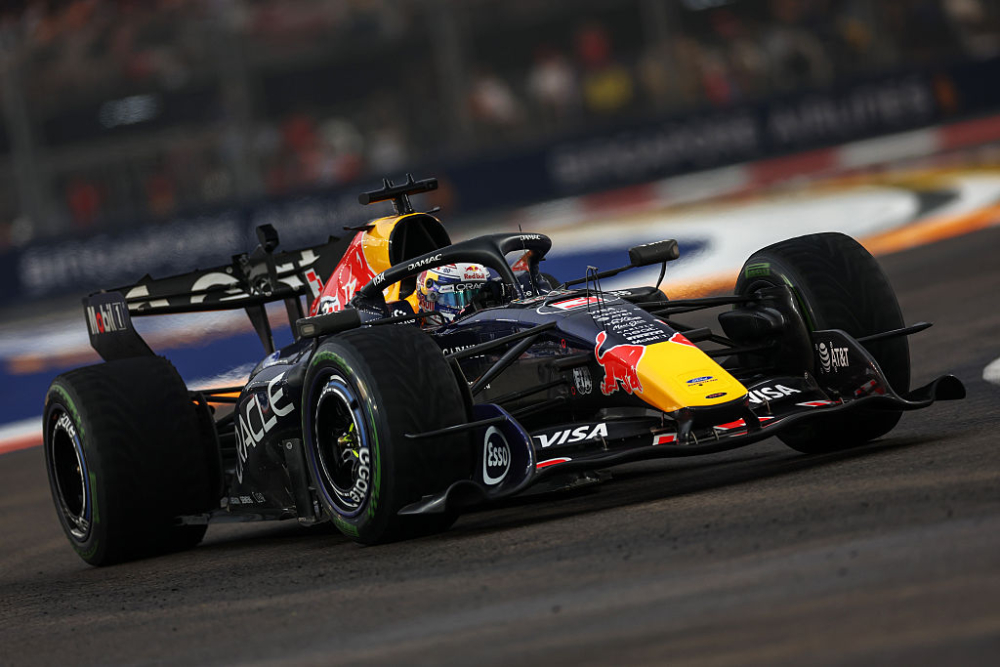
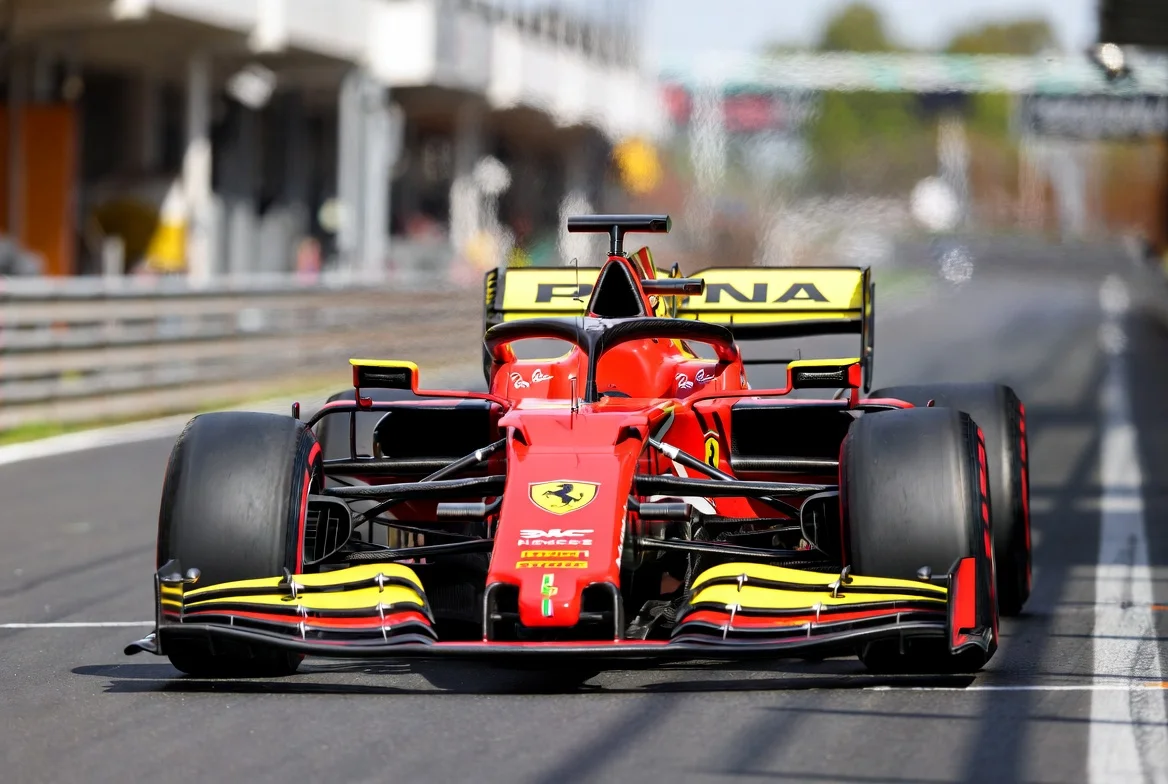
A Formula 1 race car is the fastest, most technologically advanced circuit racing vehicle ever built. In 2026, an F1 car costs approximately $15–20 million per chassis, produces around 1,000–1,050 horsepower from a 1.6-litre V6 turbo-hybrid engine, weighs a minimum of 798 kg (including the driver), and reaches a top speed of approximately 220–225 mph (354–362 km/h). You cannot buy a current-spec F1 car — but retired cars do appear at auction, and exceptional scale models start at around $60.
There is no other racing machine quite like a Formula 1 car. It is the product of thousands of hours of aerodynamic simulation, the combined expertise of hundreds of engineers, and a budget that can exceed $400 million per season at the top end. The 2026 regulations brought the most significant technical change in a decade: power now splits almost equally between the internal combustion engine and the electrical system. The result is a car that is simultaneously more powerful, more efficient, and more technically complex than anything that came before it.
This guide covers everything — the engineering behind the speed, what every component costs, how drivers earn their salaries, how the teams differ, the best toy and model cars on the market, and what it would take to actually get your hands on one. Whether you’re a newcomer trying to understand what you’re watching or a hardcore fan who wants the data behind the drama, this is the complete reference.
What Is a Formula 1 Race Car?
A Formula 1 race car is the highest class of single-seat, open-wheel, open-cockpit racing vehicle sanctioned by the FIA — the Fédération Internationale de l’Automobile. The “formula” in the name refers to a set of rules that all participants must follow. Every dimension, weight, power output limit, and material is governed by the FIA’s technical regulations. Teams can design freely within those rules — but the rules themselves define the boundaries of what’s possible.
What separates an F1 car from every other racing machine is the integration of extreme aerodynamics, cutting-edge materials science, and a hybrid power unit into a package that weighs under 800 kg and can generate over 1,000 horsepower. The result is a car that pulls more than 5G through corners and brakes from 200 mph to zero in under 3.5 seconds. Furthermore, it does this reliably — lap after lap, race after race — across 24 Grand Prix events per season.
For 2026, the FIA introduced its most radical regulation overhaul since 2022. The new power unit splits output roughly 50/50 between the internal combustion engine and the electric motor, compared to approximately 80/20 in the previous era. Active aerodynamics — moveable elements that change shape to manage drag on straights and generate downforce in corners — are also introduced for the first time. These changes make the 2026 F1 car arguably the most technically sophisticated racing vehicle ever produced. To understand the full context of what Formula 1 is, our beginner’s guide covers the sport’s structure and history from the ground up.
The FIA’s 2026 technical regulations were published after extensive consultation with all ten teams. Audi enters through the Sauber operation, while Ford has partnered with Red Bull for their power unit development. Newcomer Cadillac joins as the 11th team — the first new constructor to enter F1 in over a decade. Understanding the full 2026 F1 teams list provides important context for how these regulations are applied differently across the grid.
How Fast Is a Formula 1 Car? Full 2026 Specifications
The top speed of a Formula 1 car in 2026 race conditions is approximately 220–225 mph (354–362 km/h). The highest speed ever recorded in F1 is 372.6 km/h (231.5 mph), set by Valtteri Bottas at the 2016 Mexican Grand Prix during a speed trap. Under race conditions — with DRS open on a power circuit like Monza or Baku — current cars routinely exceed 218 mph. On slower, twistier layouts like Monaco or Singapore, top speeds drop significantly because there simply isn’t enough straight to accelerate to maximum velocity.
However, top speed is the least interesting performance metric for an F1 car. What makes it genuinely extraordinary is the combination of acceleration, cornering speed, and braking. The 0–60 mph figure of approximately 2.6 seconds sounds impressive until you consider that the car reaches 100 mph in about 4 seconds — and then brakes from 186 mph (300 km/h) back to a standstill in just 3.5 seconds, generating over 5G in deceleration. For context, a fighter pilot pulling 5G is on the edge of consciousness. F1 drivers do it dozens of times per lap, lap after lap, for two hours.
| Specification | 2026 Formula 1 — Figure | Context |
|---|---|---|
| Minimum Weight | 798 kg | Including driver and fuel |
| Length | ~5,600 mm | ~18.4 feet (varies by team) |
| Width | 2,000 mm max | Including tyres |
| Height | ~950 mm | Including roll hoop |
| Engine | 1.6L V6 Turbo-Hybrid | ~15,000 rpm rev limit |
| Combined Power | ~1,000–1,050 hp | ICE + MGU-K combined |
| Top Speed | ~225 mph / 362 km/h | Race condition max (DRS open) |
| 0–60 mph | ~2.6 seconds | Standing start |
| 0–100 mph | ~4.0 seconds | Faster than any road supercar |
| Braking 186–0 mph | ~3.5 seconds | Generating 5.5G deceleration |
| Cornering G-Force | Up to 6G | High-speed corners like Copse, Pouhon |
| Fuel Capacity | 110 kg maximum | 100% sustainable fuel from 2026 |
| Downforce | ~1,500–2,000 kg | At race speeds — more than car’s own weight |
At racing speed, an F1 car generates enough downforce to drive upside down on the ceiling. In theory, at around 160 mph, the aerodynamic load exceeds the car’s own weight — meaning suction to the road surface is greater than gravity pulling the car down.
The cornering speeds are where F1 cars truly separate themselves from all other forms of motorsport. At Silverstone’s Copse corner, cars carry approximately 186 mph through the right-hander while pulling nearly 5G. At Belgium’s Pouhon — a fast left-hander at Spa-Francorchamps — loads approach 6G. The physical demand on drivers in high-speed corners requires exceptional neck strength and core conditioning. To understand what G-force means in F1 and how it compares to a fighter jet, our explainer breaks down the numbers in detail.
How Much Does a Formula 1 Race Car Cost? Full Breakdown
A complete 2026 Formula 1 car costs approximately $15–20 million per chassis when every component is included. However, that figure is almost misleading in isolation. Teams don’t just buy one car — they build multiple chassis per season, develop upgrades through the year, and run vast engineering operations behind the scenes. Total season budgets at the top teams have historically exceeded $400 million. The FIA’s cost cap — introduced in 2021 and set at $135 million for 2026 (excluding driver salaries, marketing, and several permitted exclusions) — is the most significant regulatory change in F1’s financial history.
The power unit alone accounts for a staggering portion of the cost. Supplied by Mercedes, Ferrari, Honda RBPT, Renault, or the new Audi operation, each power unit is estimated to cost around $10.5 million. Customer teams pay significantly less through supply agreements, but they still carry costs of several million dollars per unit. Furthermore, because power units are complex hybrids with extremely tight tolerance engineering, even minor damage can write off a unit worth millions.
The cost cap limits how much teams can spend on car development, production, and race operations — though driver salaries, the top three staff members’ pay, marketing costs, and power unit development are excluded. Top teams like Mercedes and Ferrari previously spent $400M+ per season. The cap has dramatically changed the competitive landscape, forcing engineering efficiency over pure spending power.
For a detailed look at how Formula 1 car costs break down across every component, our dedicated cost guide covers the full picture.
The tyres are not owned by the teams — they are supplied exclusively by Pirelli under an FIA contract and loaned to teams for each race weekend. However, the tyre management strategy built around their behaviour is a core engineering and competitive variable. Understanding the difference between prime and option tyres in F1 — and how Pirelli’s compound allocation affects race strategy — is essential context for following any Grand Prix weekend.
The 2026 F1 Power Unit: 50/50 Hybrid Explained
The 2026 Formula 1 power unit is the most sophisticated mass-produced racing engine ever built. It consists of a 1.6-litre V6 turbocharged internal combustion engine producing approximately 550 horsepower, combined with an updated MGU-K (Motor Generator Unit — Kinetic) producing an additional 475–500 horsepower in electrical output. The combined figure of approximately 1,000–1,050 horsepower comes from an engine that weighs less than 150 kg and runs to approximately 15,000 rpm.
The key change for 2026 is the removal of the MGU-H — the heat recovery unit that was extraordinarily complex and prohibitively expensive for any new manufacturer to develop. In its place, the MGU-K’s output has been dramatically increased. The result is a power split that is approximately 50% combustion and 50% electrical, compared to roughly 80% combustion in the previous era. Moreover, all F1 cars from 2026 run on 100% sustainable fuel — a significant environmental commitment from the sport’s governing body.
Five manufacturers supply power units to teams in 2026: Mercedes, Ferrari, Honda RBPT, Renault (Alpine), and Audi (via Sauber). Ford partners with Red Bull for their Honda-based unit. The manufacturer hierarchy has shifted considerably under the new regulations — Ferrari entered 2026 as the early power unit benchmark, while Mercedes arrived with a fundamentally redesigned split-turbo architecture. Understanding the difference between a supercharger and a turbocharger provides useful context for understanding how the ICE component works.
Formula 1 Aerodynamics: How 2,000 kg of Downforce Is Generated
At race speed, an F1 car generates more aerodynamic downforce than its own weight — meaning it is literally being pressed into the road by air pressure rather than just sitting on it by gravity. This allows it to corner at speeds that would send any conventional car off the track instantly. The aerodynamic package is the primary competitive differentiator between teams, and top teams employ more than 1,000 aerodynamicists, computational fluid dynamics specialists, and wind tunnel engineers working continuously on incremental performance gains.
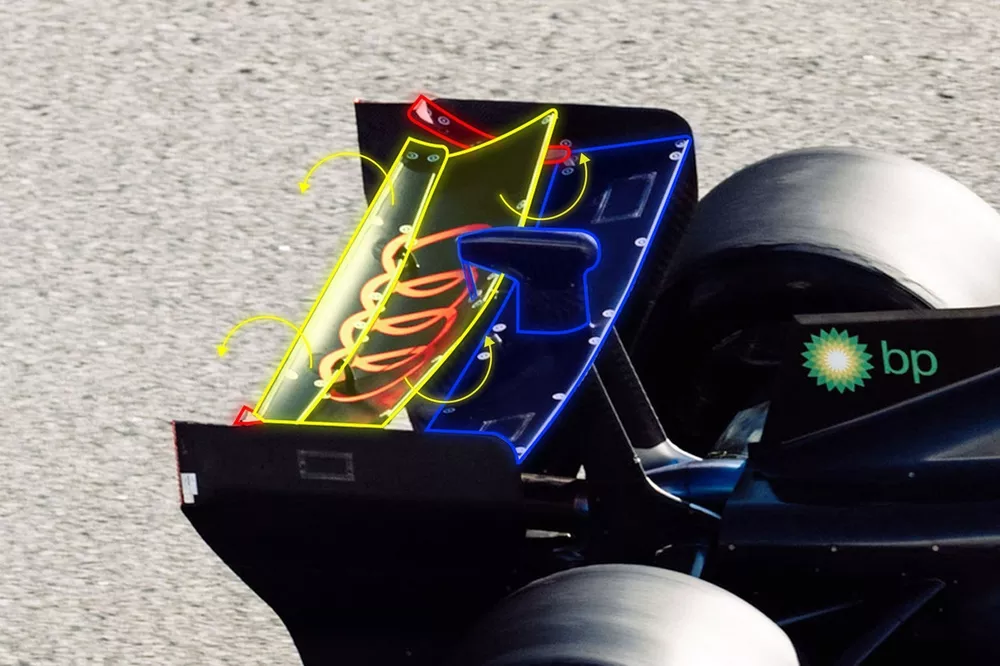
The 2022 regulations introduced ground effect aerodynamics — a system where shaped tunnels running under the floor generate the majority of downforce through suction, rather than the car relying primarily on wings. This was a deliberate FIA choice to allow cars to follow each other more closely in corners, improving on-track racing. The 2026 regulations refine this concept further while adding a new element: active aerodynamics. For the first time in the modern era, moveable bodywork can adjust angle during a lap — not just via DRS on straights, but through a broader system that balances drag and downforce dynamically.
DRS — the Drag Reduction System — is a moveable flap on the rear wing that opens on designated straights to reduce drag. When open, it cuts aerodynamic resistance by approximately 10–12%, adding around 12 mph (20 km/h) of top speed. A driver can activate DRS within one second of a car ahead if they are within one second at the DRS detection point. It was introduced in 2011 to increase overtaking opportunities. For the full explanation of what DRS is and how it works, our glossary entry covers the mechanism in detail.
The front wing is the first aerodynamic element to meet incoming airflow. Its job is not just to generate downforce at the front axle — it also directs airflow around the front tyres and towards the bargeboard and floor regions. A 1mm change in front wing angle can alter the car’s handling balance measurably. This is why front wing adjustment is often one of the first things a crew chief considers when a driver reports oversteer or understeer during a race. Furthermore, the rear diffuser — the dramatic upswept structure under the rear of the car — extracts the underfloor airflow and accelerates it, amplifying the ground effect suction. It is arguably the most performance-critical single aerodynamic component on a 2026 F1 car. To understand what downforce is and why it’s so important in racing, our explainer covers both the physics and the racing strategy implications.
F1 Drivers, Teams & What Drivers Earn in 2026
Twenty-two drivers compete in the 2026 Formula 1 World Championship across eleven teams. The 2026 grid brought significant change: Lewis Hamilton moved to Ferrari after 12 seasons with Mercedes, making headlines globally. Kimi Antonelli — 18 years old at the season opener — stepped into Hamilton’s old Mercedes seat directly from Formula 2, becoming the youngest driver in Mercedes’ constructor history. Meanwhile, Cadillac joined as the 11th team for the first time in more than a decade.
Driver salaries at the top end of the grid are substantial. Max Verstappen is the highest-paid driver in the sport — his Red Bull contract was reported at approximately $55 million per year before the latest extension. Lewis Hamilton’s Ferrari deal is reportedly in the $40–50 million per year range, making it one of the most valuable driver contracts in motorsport history. At the other end of the grid, junior drivers at smaller teams can earn as little as $500,000 annually — some actually pay for their seats through sponsorship money they bring to the team. For the full breakdown of how much Formula 1 drivers make, our salary guide covers every tier of the grid.
Getting to Formula 1 requires progressing through the FIA’s single-seater ladder. Most current drivers came through karting, then Formula 4, Formula 3, Formula 2, and finally F1. The journey typically takes 8–12 years from competitive karting. Teams scout drivers as young as 12 or 13 through junior academies — Red Bull’s renowned programme (which produced Verstappen, Vettel, and others), the Ferrari Driver Academy, and Mercedes’ junior scheme are the most coveted. Understanding how to become a race car driver and who all the 2026 F1 drivers are gives the full picture of the current generation.
Best Formula 1 Model Cars, Toys & Collectibles to Buy in 2026
You cannot buy a real Formula 1 car (more on that in the next section), but the market for F1 models, toys, and collectibles is substantial, serious, and genuinely exciting for fans at every price point. From $10 Hot Wheels to $6,000 Amalgam 1:8 replicas, the range covers collectors and children equally. Furthermore, the 2026 season’s new liveries — particularly Ferrari’s classic Rosso Corsa revival and McLaren’s papaya evolution — make this one of the more desirable collecting years in recent memory.
Diecast Scale Models: The Collector’s Choice
For serious collectors, 1:18 scale diecast models from Minichamps and Spark are the gold standard. Minichamps produces officially licenced replicas of real race cars from each season — accuracy is exceptional, with opening body panels, realistic cockpit details, and metal construction. Prices typically run $80–$200 depending on the car and year. Spark’s resin models cover a broader range of series at similar price points. Both brands produce driver-specific editions of championship-winning cars that appreciate in value over time.
For more accessible price points, Bburago‘s 1:18 and 1:43 scale F1 models represent outstanding value at $15–$35. They are officially licenced by the teams, cover current-season cars, and are the bestselling F1 diecast brand globally. Meanwhile, Hot Wheels produces 1:64 scale F1 cars — ideal for younger fans or casual collectors — at $5–$15 per car. The Hot Wheels Formula 1 range covers all current teams and drivers in official liveries.
| Brand | Scale | Price Range | Best For | Quality |
|---|---|---|---|---|
| Minichamps | 1:18, 1:43 | $80–$200 | Serious collectors | Premium |
| Spark | 1:18, 1:43 | $60–$180 | Collectors, gifts | Premium |
| Bburago | 1:18, 1:43 | $15–$35 | Fans, gift buyers | Great value |
| Hot Wheels | 1:64 | $5–$15 | Children, beginners | Accessible |
| LEGO Technic | 1:7 approx. | $50–$250 | Builders of all ages | Unique format |
| Amalgam Collection | 1:8, 1:12 | $2,000–$6,000+ | Premium collectors | Museum grade |
LEGO Formula 1 Cars: The Ultimate Build Experience
LEGO Technic has become one of the most popular formats for F1 enthusiasts who want a hands-on experience. The official LEGO Technic McLaren F1 Race Car (set 42141) features over 1,400 pieces, working steering, a V6 engine with moving pistons, and an authentic cockpit replica. Similarly, LEGO has released Speed Champions sets covering Ferrari, Mercedes, and Red Bull at smaller scales and lower price points ($20–$50). These are ideal for fans aged 8–adult and make excellent gifts for anyone who wants to engage with F1 mechanics in a tactile way.
For the most prestigious end of the collecting world, the Amalgam Collection produces hand-built, museum-quality 1:8 scale replicas of championship-winning F1 cars. Each model takes hundreds of hours to build, uses authentic materials where possible, and is finished to a standard that rivals the actual race cars. Prices begin around $2,000 and rise significantly for rare or signing editions. These are investment pieces as much as display items.
Can You Buy a Formula 1 Race Car? The Real Answer
The answer is: not a current-specification F1 car. FIA regulations and manufacturer intellectual property agreements prevent teams from selling active-season cars to private buyers. The technology is too sensitive, the liability concerns too significant, and the contractual obligations too complex. No current-spec F1 car has ever been sold to a private individual while still within its active competition window.
However, retired Formula 1 cars from previous seasons do appear on the open market. Major auction houses including Sotheby’s, RM Sotheby’s, and Bonhams regularly feature F1 cars from the 1970s through the 2010s. Prices vary enormously: a privateer team’s car from a mid-season might sell for $400,000–$600,000, while a championship-winning car — say, a Michael Schumacher Ferrari from a title-winning season — can reach $5–7 million or more.
Several teams sell show cars — non-running replicas built to exact external specifications but without the real power unit or internal components. These are used for display, promotional events, and marketing. They look identical to the race cars, are often signed by the drivers, and cost significantly less than race-prepared cars. Ferrari, Red Bull, and McLaren all offer show car purchase or lease options through official channels. A show car typically costs $200,000–$400,000.
If you want to drive an F1 car experience rather than own one, several companies offer official F1 driving experiences in ex-race cars at real circuits — prices range from $5,000 to $30,000 for a full session. Formula 1 has an official driving experience programme, and several teams operate similar offerings.
For context, the world’s most valuable road cars — hypercars like the Bugatti La Voiture Noire or the Pagani Huayra — are in the $10–$20 million range. A championship-winning F1 car from a significant year can compete with or exceed those figures at auction. The combination of performance pedigree, historical significance, and rarity makes authentic F1 cars one of the most interesting alternative asset classes in the collector car world. If you’re exploring the broader landscape of the most famous race car drivers whose cars appear at auction, the World of Speed museum archive covers many of the legends whose machines carry the highest values.
Frequently Asked Questions — Formula 1 Race Car
Sources & Authority References
- FIA.com — 2026 Formula One Technical Regulations (official)
- Formula1.com — 2026 Power Units Explained: the 50/50 split, MGU-H removal, sustainable fuel
- RaceFans.net — F1 cost cap 2026: what the rules mean for teams
- Autosport — Formula 1 top speed record history and 2026 analysis
- RM Sotheby’s — Formula One auction results and car valuations
About this guide
All specifications, cost estimates, and performance figures in this guide are sourced from official FIA technical regulations, Formula1.com, Autosport, and RaceFans.net. The 2026 power unit split figures and cost cap data are drawn from FIA official documentation published ahead of the 2026 season. Driver salary estimates reflect publicly reported figures from credible sports business sources including Forbes, Autosport, and The Race — exact figures are undisclosed by teams.
Model and toy prices reflect retail pricing as of mid-2026. Auction valuations for retired F1 cars are based on published RM Sotheby’s and Bonhams results. This guide will be updated throughout the season as new technical information becomes available.