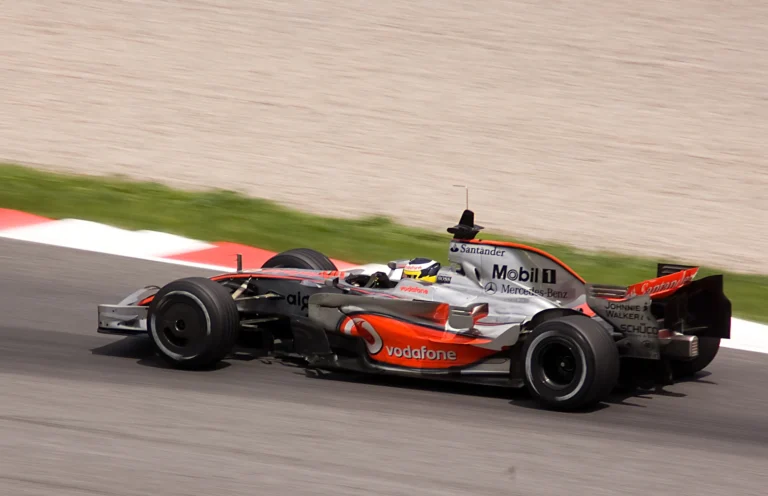
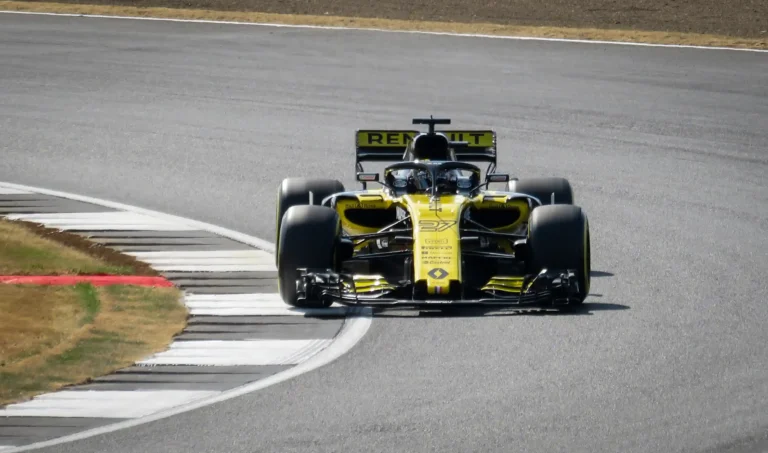
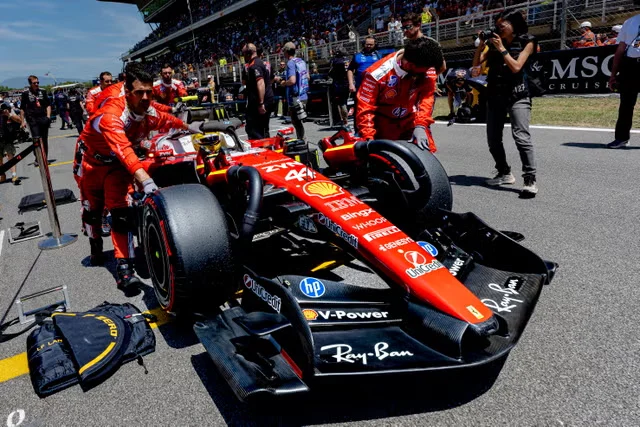
What Is G-force In F1? Formula 1 G-force Explained
What is G-force in F1? G-force is the force a Formula 1 driver feels when the car accelerates, brakes, corners, or changes direction. It is measured in multiples of normal gravity. In fast corners and heavy braking zones, F1 drivers can feel several times their body weight pushing through the neck, chest, arms, and core.
G-force is why Formula 1 is not just driving fast. It is a physical fight against acceleration, braking, downforce, heat, and fatigue.

What Is G-force In F1 is a physics question with a racing answer. G-force is the load drivers feel when a Formula 1 car changes speed or direction.
A normal person feels about 1g standing still on Earth. However, an F1 driver can feel several times that load while braking, cornering, or accelerating.
That is why F1 driver G-force is not just a number on a TV graphic. It affects steering precision, breathing, vision, neck strength, braking control, and concentration over a full Grand Prix.
This subject connects closely with what Formula 1 is, grip, downforce, and car handling.
What Is G-force In Formula 1?
G-force means the apparent force created by acceleration. In simple terms, it is how heavy your body feels when motion changes quickly.
One “g” is roughly equal to normal Earth gravity. NASA explains gravitational acceleration near Earth’s surface as about 9.8 metres per second squared.
Formula 1’s glossary describes G-force as gravitational force acting on an object or person. It also notes that F1 drivers feel extreme g-forces while cornering, braking, and accelerating.
Race analyst view: Speed impresses fans, but G-force is what attacks the driver’s body every lap.
What Are Lateral, Longitudinal, And Vertical G-forces?
F1 G-force is not one single feeling. It changes direction depending on what the car is doing.
Lateral G-force pushes the driver sideways in corners. Longitudinal G-force pushes the driver forward under braking or backward under acceleration. Vertical G-force loads the body up and down over bumps, kerbs, and elevation changes.
Mercedes-AMG Petronas explains lateral G-force as side-to-side force during cornering. It also separates braking, acceleration, and vertical loads as different physical experiences for drivers.
| Type of G-force | Where It Happens | Driver Feeling |
|---|---|---|
| Lateral G-force | Fast corners and direction changes | Head and body pushed sideways |
| Longitudinal G-force | Heavy braking and acceleration | Body thrown forward or backward |
| Vertical G-force | Kerbs, bumps, compression zones | Body loaded down or lifted briefly |
| Crash G-force | Impact with car, barrier, or wall | Sudden peak load over a short time |
How Much G-force Do F1 Drivers Experience?
Modern Formula 1 drivers often experience around 4g to 5g in fast corners and heavy braking zones. However, some moments can go higher.
Formula 1’s own 2017 analysis said drivers were pulling more than 6G through quick Albert Park corners. It listed a Hamilton peak of 6.5G through one fast bend.
That does not mean every corner gives 6G. Slow corners create less lateral load. Heavy braking zones create forward load. Fast sweepers create the biggest side load.
So, Formula 1 G-force depends on speed, corner radius, tyre grip, fuel load, wind, downforce, and track surface.
.jpg)
How Does Downforce Increase G-force In F1?
Downforce pushes the car into the track. As speed rises, the wings and floor create more aerodynamic load. Therefore, the tyres can grip harder through fast corners.
More grip allows higher corner speed. Higher corner speed creates more lateral acceleration. As a result, the driver feels stronger G-force.
This is why F1 G-force explained articles must include aerodynamics. The car does not corner like a normal road car. It uses air pressure to load the tyres into the asphalt.
For more context, read our guides on F1 diffusers, endplates, clean air, and DRS in F1.
How Does G-force Affect F1 Drivers?
G-force attacks the body in layers. The neck fights helmet weight. The core stabilizes the torso. The arms hold steering precision. Meanwhile, the legs must brake with huge force.
Formula 1 says a driver’s helmeted head can weigh up to five times more than normal during a high-speed corner. That is why neck strength is not gym vanity. It is survival-level performance work.
Under braking, the body wants to slide forward against the belts. During cornering, the head wants to fall toward the outside of the turn. Over one race distance, that load becomes exhausting.
This also links with HANS in F1, the F1 headrest, the Halo, and the F1 monocoque.
How Do F1 Drivers Train For G-force?
F1 drivers train for G-force with neck work, core work, reaction drills, cardio, heat training, and simulator laps. They do not simply lift weights and hope.
Formula 1’s driver training guide says resistance bands, weighted helmets, and specialised neck devices can simulate high-speed cornering forces. It also notes that drivers can train their neck muscles to lift serious weight.
However, fitness is only part of the answer. A driver also needs breathing control, vision stability, and rhythm. If the neck gets tired, the head moves more. Then the eyes move, and the driver loses precision.
That is why G-force separates elite drivers from fast amateurs. The car may be capable of the corner. The driver still has to function inside it.
G-force In F1 Vs Fighter Jets
F1 and fighter jets both involve high G-force, but the comparison needs care. Fighter pilots can face very high sustained vertical G with special suits and breathing techniques.
Formula 1 drivers usually face short, repeated loads in braking and cornering. The forces change direction many times per lap. Therefore, the challenge is not only peak G. It is repetition, heat, vibration, steering load, and race length.
For a deeper comparison, read our guide on G-force in F1 vs fighter jet.
Final Verdict
G-force in F1 is the physical load created when a car accelerates, brakes, corners, or rides over bumps. It is measured in multiples of normal gravity.
Modern Formula 1 cars create extreme G-force because they combine speed, downforce, tyre grip, and rapid direction changes. However, the driver still has to control the car while the body is being pushed around.
For beginners, the answer is simple. G-force is the pressure drivers feel in fast F1 cars. For serious fans, it is the hidden battle that turns every lap into a test of physics, engineering, and human endurance.
FAQs About G-force In F1
What is G-force in F1?
G-force is the load an F1 driver feels when the car accelerates, brakes, corners, or changes direction.
How much G-force do F1 drivers experience?
Drivers often feel several Gs in fast corners and braking zones. Some extreme moments can exceed 6G.
What is lateral G-force in F1?
Lateral G-force pushes the driver sideways during cornering.
What is braking G-force in Formula 1?
Braking G-force is longitudinal load that pushes the driver forward against the belts during heavy braking.
Why do F1 drivers need strong necks?
They need strong necks because G-force can make the helmeted head feel several times heavier in fast corners.