Why Are NASCAR Wheels Loose?
NASCAR teams never plan to release a car with a loose wheel. The problem usually starts when a center-lock wheel is not fully seated or its single nut is not secured during a rushed pit stop.
NASCAR wheels are not intentionally loose. In the Cup Series, the usual cause is an incomplete pit-stop installation. The 18-inch aluminum wheel may not sit flat against the hub, or the single center-lock nut may not receive enough tightening time. Damaged threads, debris, impact damage and equipment problems can also contribute.
A wheel can look installed, leave pit road, and still begin moving on the hub one lap later.
Therefore, that gap between appearance and security explains many loose-wheel incidents. A Cup pit stop lasts only a few seconds.
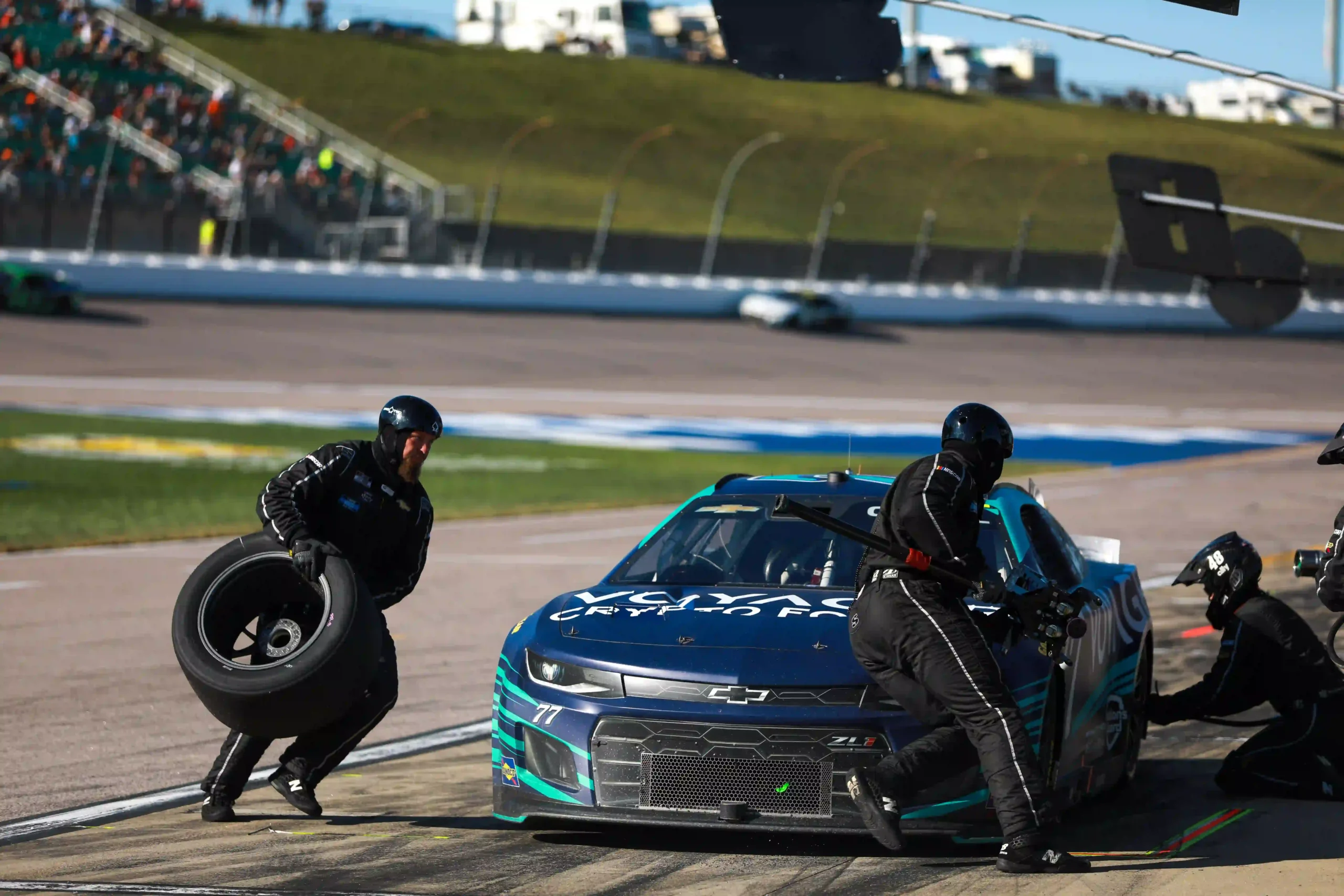
During that time, two tire changers remove four wheels. Two carriers position replacements, while a jackman lifts and drops the car.
Every movement must happen in order. However, the crew also fights for tenths of a second.
The current Cup car uses one large center-lock nut on each wheel. NASCAR introduced the system with the Next Gen car in 2022.
Previously, Cup cars used 15-inch steel wheels and five lug nuts. The older layout created different risks and different shortcuts.
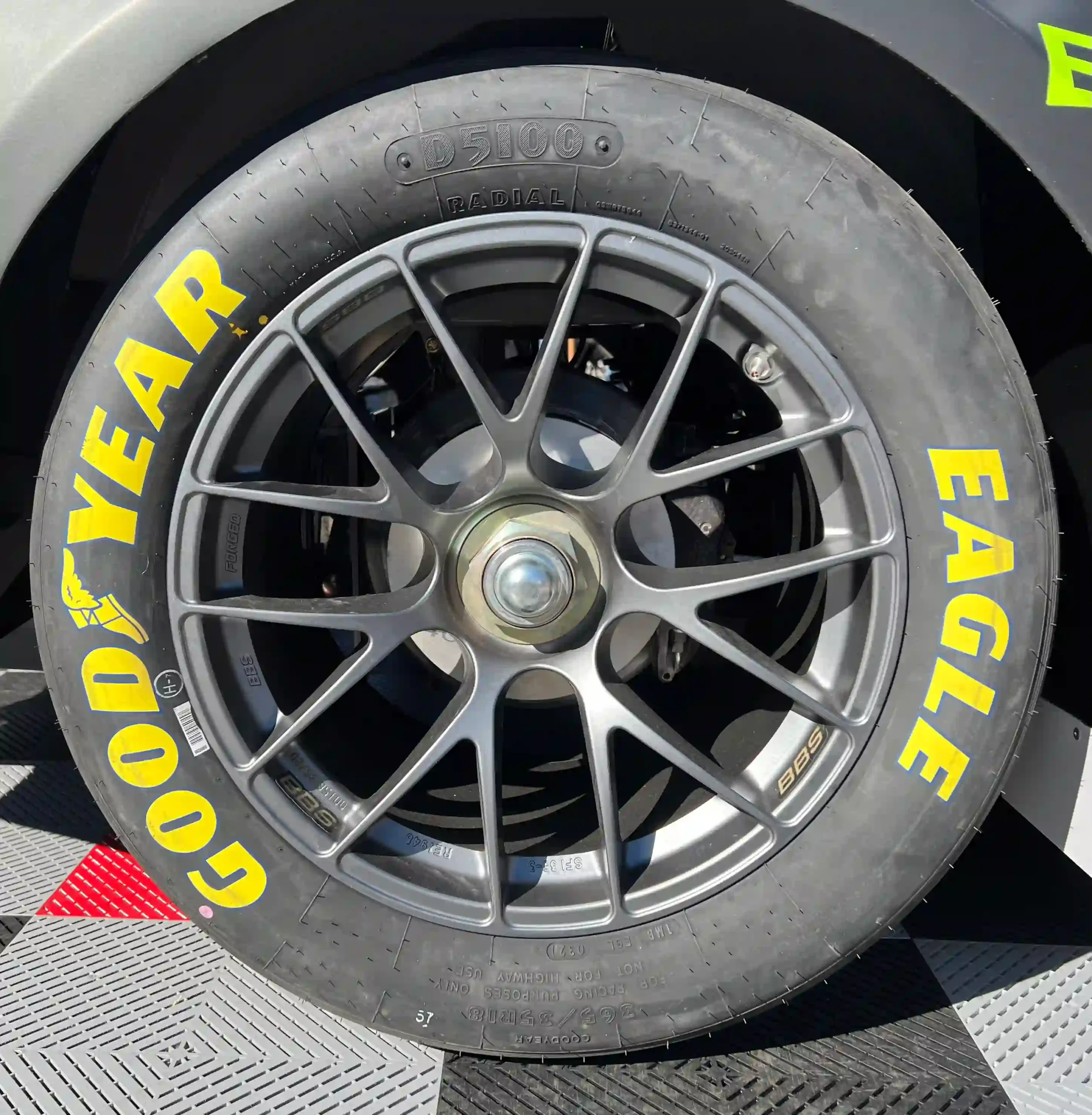
Moreover, the modern wheel is a forged-aluminum BBS design measuring 18 inches. Its shorter tire sidewall supports larger brakes and a more contemporary package.
However, aluminum is less forgiving when clamping force is missing. NASCAR said its durability testing found a major reduction when an aluminum wheel operated loose.
Therefore, the single-nut system is not casual. The tire changer gets one critical fastening action per wheel.
As a result, a driver may notice vibration, shaking or an unusual steering feel after the stop. The safest response is another visit to pit road.
Consequently, if the wheel separates, NASCAR treats the event as a safety violation. Crew suspensions and race penalties can follow.
Nevertheless, the issue remained current in 2026. Katherine Legge’s No. 78 lost its right-front wheel during the Coca-Cola 600 at Charlotte.
The incident caused a caution early in Stage 3. NASCAR later suspended two crew members for the next two championship events.
This article explains why NASCAR wheels come loose, how the center-lock system works, and why a tiny pit error can become a major penalty.
The Quick Answer: NASCAR Wheels Are Not Supposed to Be Loose
No. Teams may chase faster pit stops, but the wheel must remain safe and secure. A loose NASCAR wheel usually means the wheel did not seat correctly, the center nut was not fully tightened, or damage prevented the assembly from holding its clamping force.
The fastest explanation is also the most accurate. A loose wheel is usually an installation failure.
The tire carrier places the wheel on the hub. Next, the changer applies the center nut with a pneumatic impact gun.
If the wheel sits flat and the nut receives proper engagement, the hub and wheel act as one assembly. Friction between their mating faces carries much of the load.
However, a small gap changes everything. The wheel can shift against the hub during braking and cornering.
That motion reduces clamping force. It can also damage the wheel face, nut seat or spindle threads.
Consequently, a wheel that was only slightly loose can become much worse. The vibration is both a symptom and a cause of further damage.
Moreover, the issue is not unique to NASCAR. Any center-lock racing system depends on correct seating and fastener preload.
Still, NASCAR pit stops create a special challenge. The crew works around a heavy stock car while competitors enter adjacent stalls.
Speedway pit lanes also demand perfect timing. One hesitation can cost several positions.
The Wheel Must Sit Flat
The wheel face needs complete contact with the hub before full clamping force develops.
The Nut Must Fully Engage
The center nut needs clean threads, correct alignment and enough impact-gun time.
The Crew Must Confirm It
The jack should not drop until the changers communicate that both wheels are secure.
A loose wheel rarely begins with one dramatic failure. It usually begins with a rushed sequence that leaves the wheel a few millimeters from where it needs to be.
A Loose Wheel Is Not the Same as a Loose Race Car
NASCAR uses “loose” in two ways. A loose wheel is a mechanical attachment problem. A loose race car has oversteer, meaning the rear tires lose grip and the car rotates more than the driver wants.
Therefore, this language causes confusion for new fans. A driver may report that the car is loose without having any wheel problem.
When the chassis is loose, the rear of the car steps outward in a corner. The driver must correct with steering and throttle.
Meanwhile, that handling condition depends on tire grip, aerodynamics and setup. The guide to race-car handling explains the broader balance.
Meanwhile, a loose wheel often creates vibration. The car may shake on the straight or feel unstable under braking.
However, the two conditions can overlap. A moving rear wheel can make the car feel unpredictable.
However, the repair is different. Teams adjust air pressure or chassis balance for oversteer.
Therefore, a loose wheel requires an immediate pit stop. The crew must tighten or replace the wheel and inspect the hub.
Loose Wheel
- Mechanical attachment problem
- Often appears after a pit stop
- Can create vibration or wobble
- Requires immediate inspection
- May lead to wheel separation
Loose Race Car
- Rear oversteer condition
- Appears under cornering load
- Feels like the rear is rotating
- Can be adjusted through setup
- Does not mean the wheel is falling off
In addition, the difference between grip and attachment is fundamental. Readers can review how racing grip works for the tire side of the equation.
How the NASCAR Center-Lock Wheel Works
The wheel slides over the center hub and sits against a machined mounting face. A large threaded nut then clamps the wheel to the hub. Proper clamping force prevents movement between the wheel and hub during acceleration, braking and cornering.
Importantly, the Cup wheel does not hang from one small bolt. The large center nut clamps a broad wheel center against the hub.
When the parts are clean and tight, friction between the faces transfers the racing loads. The nut maintains that pressure.
The wheel also aligns through its center bore and hub geometry. That alignment matters before the nut reaches full torque.
Therefore, the carrier must guide the wheel squarely onto the assembly. The changer then places the socket over the nut.
NASCAR’s Next Gen nut is retained in the wheel-gun socket. Teams can use the same nut repeatedly rather than gluing five nuts to each wheel.
The retained design saves preparation time. However, debris can interfere with the nut or socket.
Meanwhile, during the early 2022 season, NASCAR technical analysis described cases where a nut escaped the socket. Tire changers carried a spare nut on their suits.
Yet a stop moves too quickly for an easy recovery. The car can leave before the changer reaches that spare.
One Fastener Does Not Mean One Small Contact Point
Moreover, the center nut applies load across the wheel center. It is closer to endurance-racing hardware than a street-car lug nut.
Still, the system has less redundancy during installation. A five-lug changer receives five chances to secure the wheel.
The Cup changer receives one. Therefore, that one action must be complete.
NASCAR Has Not Published One Universal Torque Number for Fans
Online discussions often repeat exact torque values. However, NASCAR’s public technical articles focus on engagement time and secure installation.
Gun setup, air pressure, socket condition and hardware specifications all affect the final result. Teams also inspect their equipment closely.
Therefore, a single unsourced number can mislead readers. The critical point is that the nut must reach the required clamping condition.
Why NASCAR Replaced Five Lug Nuts in the Cup Series
The Next Gen car moved from a 15-inch steel wheel to an 18-inch forged-aluminum wheel. The larger package supported bigger brakes and modern tire dimensions. NASCAR paired that wheel with a single center-locking fastener.
The five-lug pit stop became one of NASCAR’s signature sounds. A skilled changer removed or installed five nuts in about one second.
Previously, teams glued the nuts to the wheel before the race. The changer then struck them in a rapid circular pattern.
That system worked for decades. However, the Next Gen program introduced a different wheel and brake package.
Instead, NASCAR selected an 18-inch forged-aluminum BBS wheel. The former Cup wheel measured 15 inches and used steel construction.
The larger internal space allowed bigger brake rotors. It also created a shorter tire sidewall.
Those changes made the center-lock design practical. They also aligned Cup technology with other major racing categories.
However, NASCAR said the new stop would not become dramatically faster. Five-lug changers already worked at remarkable speed.
The expected gain was only a few tenths. Moreover, the tire and gun remained heavy.
The Change Removed the Lug-Nut Glue Routine
In addition, under the old system, crews prepared many wheel sets by gluing five nuts to each one. That work consumed garage time.
Consequently, the retained center nut eliminated that routine in Cup. Teams could focus on wheel preparation and tire pressures.
However, the new system demanded different muscle memory. Changers had to learn one longer gun application instead of five quick hits.
The article on how racing pit stops work explains why equipment changes can reshape an entire crew’s choreography.
Why Are NASCAR Wheels Loose After Pit Stops?
The most common path begins with incomplete installation. The wheel may not seat flat, the nut may not engage fully, or the gun may stop too early. Less common causes include damaged threads, debris, a lost nut, hub failure, bearing failure or impact damage.
The replacement reaches the hub at an angle or hangs before seating.
The gun applies force while a gap still exists behind the wheel.
The jack drops before the changer detects incomplete clamping.
Braking and cornering make the wheel fret against the hub face.
The nut, wheel center or threads lose enough security for detachment.
1. The Wheel Does Not Sit Flat
First, this is one of the clearest failure paths. The carrier may place the wheel slightly crooked.
Next, the tire changer can begin tightening before the wheel reaches the hub face. The nut then feels active without producing full clamp load.
Once the car drops, its weight can shift the wheel. The apparent tightness disappears.
2. The Air Gun Leaves Too Early
NASCAR said the single-lug gun needed to remain engaged for roughly half a second. That time lets the nut reach its required tightness.
Half a second feels long to a professional changer. The old five-lug motion rewarded extremely rapid gun movement.
Therefore, early Next Gen mistakes often involved learning a different feel. The changer had to wait for the gun’s full tightening response.
3. The Nut or Socket Has Debris
Rubber, dirt or metal debris can interfere with engagement. The retained nut can also leave the socket unexpectedly.
A changer may carry a spare. However, the car can depart before the problem is understood.
4. Threads Become Damaged
The center nut and spindle must start squarely. Cross-threading can prevent full travel.
Repeated impact use also requires inspection. Teams replace damaged hardware rather than trusting it for another stop.
5. The Nut Is Overtightened
Loose wheels receive most attention, but excessive tightening creates trouble too. NASCAR documented a 2022 case where a wheel nut bound against the wheel.
The crew struggled to remove it during the next stop. The nut eventually required cutting.
Therefore, more impact time is not automatically better. The target is correct clamping, not maximum abuse.
6. An Earlier Crash Damages the Assembly
Contact with a wall or another car can bend a wheel, hub or suspension upright. The nut may remain tight while another component fails.
Furthermore, this distinction matters in penalty reviews. NASCAR’s rule language focuses on an improperly installed tire or wheel.
A wheel that separates because crash damage broke the hub can present a different technical story. Officials inspect the parts and sequence.
Wheel Seating Matters as Much as Nut Tightness
The center nut may tighten against a wheel that still has a gap behind it. Once racing load pushes the wheel into place, the original clamping force disappears. The wheel can then move, vibrate and damage its mounting surfaces.
However, fans often ask whether the nut was tight. That question overlooks the wheel’s position during tightening.
Imagine tightening a clamp around two parts that are not touching. When the parts later move together, the clamp becomes loose.
Consequently, the same principle applies at the hub. The nut cannot create stable preload if the wheel is suspended away from its final position.
Consequently, the carrier’s job is more than delivering a tire. The carrier must place the wheel cleanly and squarely.
The changer may use a hand or knee to ensure the wheel stays against the hub. Then the gun can complete its work.
A jammed wheel creates another problem. The old wheel may resist removal because heat, deformation or overtightening binds it.
As a result, that delay pressures the crew. The replacement sequence becomes rushed, and the jackman waits for a release signal.
Key principle: The nut does not pull a badly misaligned wheel into a safe position every time. Correct placement must come first.
What the Wheel Gun Tells the Tire Changer
The impact gun delivers repeated torque pulses after the nut reaches resistance. The sound and feel help the changer judge engagement. However, noise alone cannot prove that a crooked wheel has seated correctly.
Meanwhile, a Cup wheel gun is a specialized pneumatic impact wrench. It removes and installs the center nut at pit-road speed.
The gun is heavier than the old five-lug tool. It also uses a larger socket.
As the nut tightens, the gun changes sound and vibration. Experienced changers learn that response through thousands of practice repetitions.
However, the tool cannot replace correct wheel placement. It may reach resistance because of bad threads or a misaligned seat.
Therefore, NASCAR technical analysis discussed torque sensors and indicator lights. Similar systems can tell the changer when a programmed threshold is reached.
Data logging can also show each tightening trace. A pit coach can compare successful stops with incomplete ones.
Technology adds another layer of protection. Still, crew technique remains the first line of defense.
Air Pressure and Tool Condition Matter
In addition, the gun depends on a high-flow air system. Pressure loss or a damaged hose can reduce performance.
A worn socket may not hold the nut correctly. Internal gun wear can also change its response.
Therefore, teams service pit equipment like race-car components. The fastest athlete cannot overcome a weak tool.
The Pit-Stop Sequence That Keeps the Wheel Secure
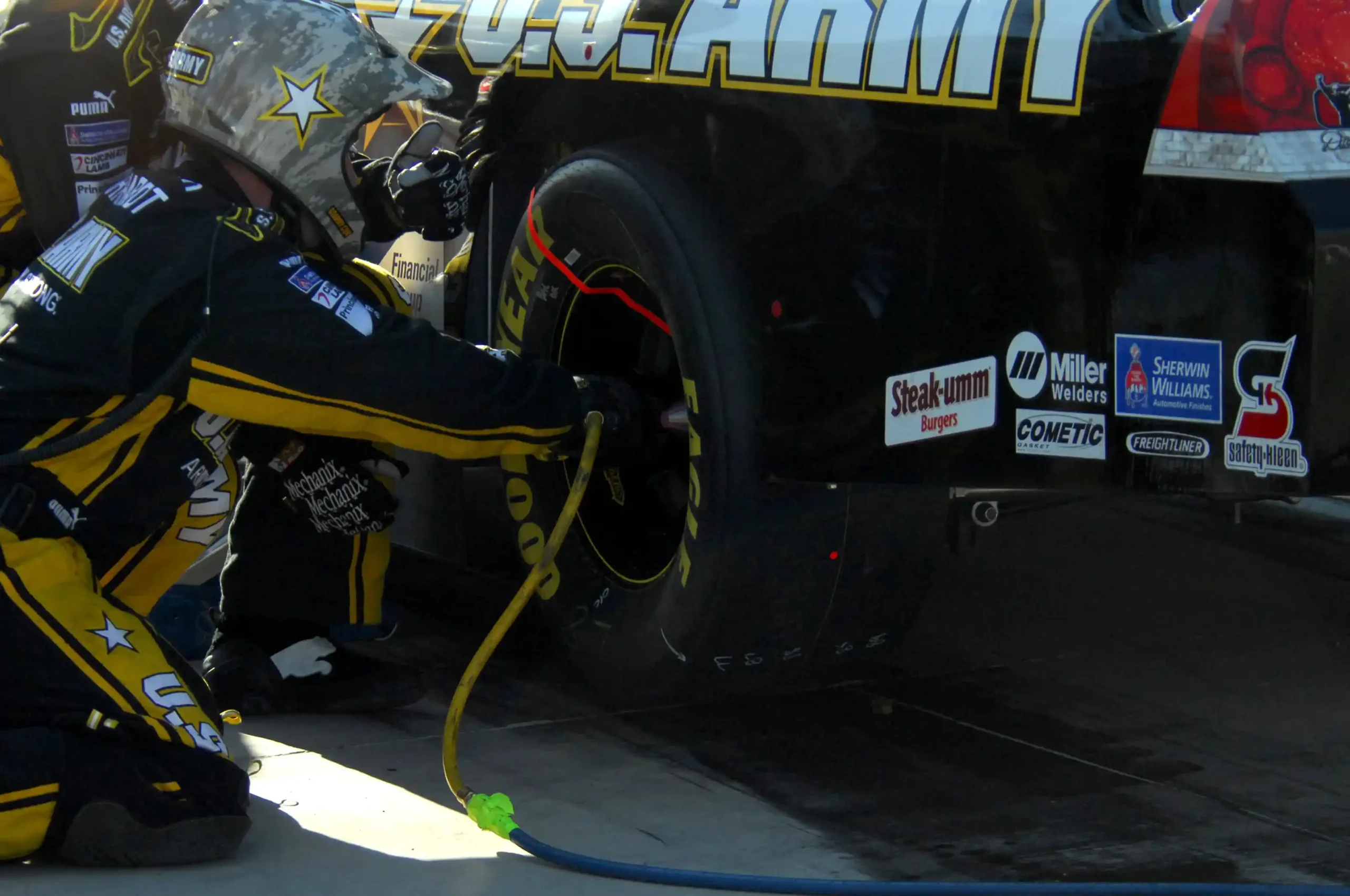
The front and rear tire changers operate the wheel guns. Tire carriers place the new wheels, while the jackman lifts the car and waits for the release signal. Wheel security depends on all three roles working in sequence.
First, a four-tire stop begins before the car fully stops. Crew members time their movement around the approaching vehicle.
Next, the jackman reaches the right side and lifts the car. The changers remove the front and rear nuts.
Meanwhile, carriers pull away old tires and place replacements. Each changer then tightens the new center nut.
Communication is often visual and physical. The jackman reads the changers’ movements before dropping the car.
If the jack falls too early, the wheel may carry vehicle weight before installation is complete. That creates both delay and risk.
Then, after the right side, the crew moves around the car. The same process repeats on the left.
Meanwhile, the fueler handles a heavy can. The driver watches traffic and waits for the crew chief’s release.
Therefore, this choreography explains why one mistake can involve several people. The changer tightens the nut, but the entire sequence controls the result.
The wider strategy appears in how car racing works and the dedicated pit-stop guide.
Why NASCAR Suspends More Than the Changer
Detached-wheel penalties have often included the tire changer and jackman. The reasoning reflects shared responsibility.
The changer secures the wheel. Meanwhile, the jackman controls when the car returns to the ground.
That penalty structure encourages communication. It also prevents teams from treating one loose wheel as one person’s private mistake.
What a Loose NASCAR Wheel Feels Like
Often, yes. A loose wheel can create vibration, shaking, steering feedback, brake instability or a rhythmic wobble. However, the driver may not identify the exact corner immediately, especially on a rough track.
The first clue often arrives as vibration after a pit stop. The steering wheel may shake on the straight.
A loose front wheel usually sends clearer feedback through the steering. It may also change braking feel.
A loose rear wheel can make the car feel unstable under throttle. The driver may report that the rear is moving or hopping.
However, tire imbalance and flat spots can create similar sensations. Teams use radio detail and timing to judge the risk.
If the vibration starts immediately after service, the crew suspects installation. If it begins after contact, the team may suspect wheel or hub damage.
Consequently, the safest decision is to pit. Track position can be recovered, but a detached wheel can end the race.
Why the Vibration Gets Worse
Moreover, a moving wheel repeatedly loads and unloads the mounting face. That motion can wear aluminum quickly.
The wheel may begin wobbling farther with each corner. The nut can then lose more preload.
Brake heat and high speed increase the stress. Therefore, waiting rarely improves the problem.
What Teams Do When They Suspect a Loose Wheel
The crew may suspect that one wheel did not tighten correctly. The driver returns so the team can apply the gun again or replace the wheel. Losing positions is safer than risking a detached wheel and a larger penalty.
The crew chief first asks the driver about vibration. The team may review pit video and wheel-gun information.
Therefore, if doubt remains, the driver returns. The crew can tighten the nut without changing the tire.
However, pit-road rules still matter. A car normally needs service in its assigned stall.
In 2025, Christopher Bell left his Las Vegas stall with a loose left-front wheel. He stopped in teammate Chase Briscoe’s stall for a quick tightening.
NASCAR penalized Bell for receiving service outside his assigned pit box. Officials later clarified that emergency service in another stall still earns a flag-status penalty.
Under yellow, that can mean restarting at the rear. Under green, it can mean a pass-through.
The clarification recognized the safety need. However, it also protected orderly pit-lane competition.
A Second Stop Is Usually the Correct Choice
Still, teams hate surrendering track position. A return trip can turn a top-five run into a recovery drive.
Still, the alternative is worse. A wheel on the racing surface can cause a caution or strike another car.
The decision resembles other safety calls explained in safety-car procedures and racing flags.
NASCAR Loose-Wheel and Detached-Wheel Penalties
NASCAR treats the loss of an improperly installed wheel as a safety violation. The system introduced before 2023 included two-event suspensions for pit-crew members. A wheel lost on track brought a two-lap penalty, while pit-road separation brought a pass-through under green or a tail-of-field penalty under yellow.
First, the penalty distinguishes a suspected loose wheel from a detached wheel. A team can correct a loose nut before separation.
Once the wheel leaves the car, the hazard becomes much larger. NASCAR then investigates installation and damage.
Meanwhile, the 2023 framework reduced the older four-race crew-chief suspension. It focused punishment on the pit crew positions involved.
Two-event suspensions still appeared in the 2026 Charlotte case. Therefore, the rule remains a serious competitive consequence.
| Situation | Immediate Risk | Typical Race Response | Penalty Context |
|---|---|---|---|
| Driver reports vibration but wheel stays attached | Possible loss of clamping force | Return to pit road for tightening or replacement | No detached-wheel suspension if corrected safely |
| Service in another team’s stall | Safety problem corrected outside assigned box | Flag-status penalty | Rear of field under yellow or pass-through under green |
| Wheel separates on the racing surface | Free wheel, caution and crash danger | Caution and recovery response | Two-lap framework plus crew suspensions |
| Wheel separates on pit road under green | Danger to crews and passing cars | Pit-road control and retrieval | Pass-through framework plus crew suspensions |
| Wheel separates on pit road under yellow | Danger during controlled traffic | Wheel recovery | Tail-of-field framework plus crew suspensions |
| Multiple unsecured lug nuts in a five-lug series | Reduced wheel security | Post-race inspection penalty | Fine and possible crew suspension |
Rule-book section numbers can change between editions. Therefore, teams follow the current event rule book rather than old internet summaries.
Therefore, the safest general statement remains simple. NASCAR expects every tire and wheel to remain secure throughout the event.
The 2026 Charlotte Detached-Wheel Case
Katherine Legge’s No. 78 Chevrolet lost its right-front wheel early in Stage 3 of the Coca-Cola 600. The wheel detached on the apron and caused a caution. NASCAR later suspended crew members Ian Schulz and Deiontae Jones for two championship events.
Moreover, the Coca-Cola 600 is NASCAR’s longest Cup race. Pit crews perform repeated four-tire stops across 400 scheduled laps.
Legge’s right-front wheel separated with 100 laps remaining in the scheduled distance. She was already multiple laps down.
However, competitive position did not reduce the safety concern. The free wheel brought out the stage’s only caution.
Afterward, NASCAR announced the penalty on May 27, 2026. The suspensions ran through the Michigan weekend.
The same Charlotte penalty report also covered the O’Reilly Auto Parts Series. Ross Chastain’s winning No. 9 had multiple lug nuts that were not safe and secure.
That violation produced a one-race suspension for a crew member and a $5,000 team fine. The contrast shows how Cup’s center-lock rule differs from lower-series lug-nut inspection.
The 2026 example also shows that loose-wheel incidents did not disappear after the early Next Gen learning period. They became less novel, but the risk remained.
Current NASCAR speed makes that risk serious. The guide to how fast NASCAR cars go explains the forces involved when a wheel separates at racing speed.
How the Five-Lug Era Created Its Own Loose-Wheel Debate
Teams discovered that skipping one of five nuts could save roughly four-tenths during a four-tire stop. The shortcut became common after NASCAR stopped actively policing lug-nut count in 2015, but loose-wheel reports increased.
Previously, the old system had five small lug nuts on each wheel. Teams glued all five in place before the race.
During 2015, crews learned that four tight nuts often held the wheel. Skipping the fifth saved time.
Consequently, competition quickly pushed the strategy across pit road. A few tenths could gain several positions.
However, the practice reduced margin. A missed nut left only three fully secure fasteners.
As a result, drivers reported more vibration and loose wheels. Safety concerns grew during the 2016 season.
On April 25, 2016, NASCAR reinforced the requirement that all five lug nuts remain safe and secure. Post-race violations brought fines and suspensions.
Afterward, NASCAR reported a sharp reduction in known loose-wheel cases after the crackdown. Crews slowed their stops to ensure all five nuts were tight.
This history matters because it challenges a common claim. NASCAR did not adopt one nut because five nuts were automatically safer.
Ultimately, both systems fail when teams shorten the installation process too far. The real issue is secure clamping under competitive pressure.
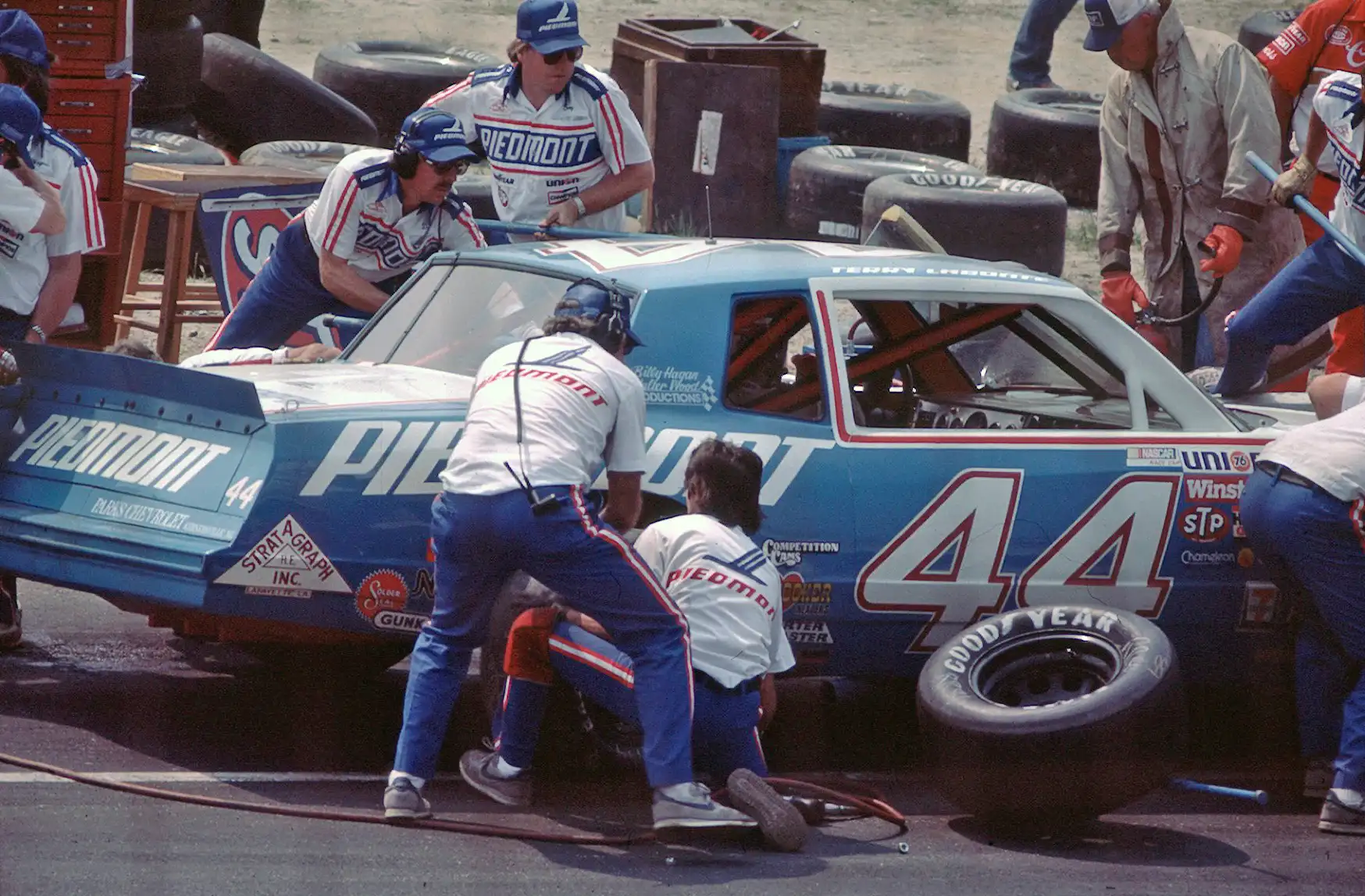
NASCAR’s pit-road history reflects the sport’s broader roots. The archive feature on the road from moonshine to NASCAR covers the culture that shaped stock-car competition.
Why Aluminum Wheels Are Less Forgiving Than Steel
Not in normal secured operation. The forged-aluminum Next Gen wheel is engineered for Cup loads. However, NASCAR said aluminum loses more durability when allowed to run loose, making correct clamping especially important.
However, steel and aluminum respond differently to repeated movement. The old steel wheel could tolerate some looseness without losing the same percentage of durability.
During Next Gen development, NASCAR said a loose condition reduced aluminum-wheel durability by about 30 percent in its studies.
Importantly, that figure did not mean the new wheel was unsafe. It meant the new wheel needed a secure fastening strategy.
Therefore, the single center nut gave the changer one clear task. When it is tight, the wheel meets its durability target.
When it is loose, movement can create fretting at the mating surfaces. Small repeated slips remove material and generate heat.
The lower-profile tire also transmits impacts differently. Less sidewall flex means the wheel receives more direct shock from curbs and contact.
Therefore, crews inspect wheels after crashes. A visually minor hit can bend the rim or damage the center.
Forged Construction Supports Strength
Meanwhile, forging shapes aluminum under pressure. The process creates a strong structure for its weight.
BBS supplies the official Cup wheel. Its design balances strength, brake clearance and service speed.
Still, no material can compensate for missing clamp load. Correct installation remains essential.
A Loose Wheel Is Not Always a Loose Nut
Yes. Crash damage, a failed hub, broken spindle, wheel-center damage or bearing failure can separate a wheel assembly. Officials inspect the parts to determine whether the cause was improper installation or mechanical failure.
Importantly, the phrase “lost a wheel” describes the result, not always the cause. A complete hub assembly can fail after heavy contact.
A wheel bearing supports rotation around the spindle. Severe heat or impact can damage that bearing.
The upright and hub also carry braking and cornering loads. A broken component can release the wheel while the nut remains attached to another piece.
Consequently, NASCAR reviews video and recovered hardware. The penalty depends on what failed and why.
Therefore, an improperly installed wheel leaves different evidence from a broken suspension part. Threads, nut position and wheel-face marks help tell the story.
This mechanical distinction connects to the wider causes in why racing crashes happen.
Brake Heat Can Complicate Removal
In addition, large brake rotors sit inside the 18-inch wheel. Road courses and short tracks create intense heat.
Thermal expansion can affect clearances and make wheel removal harder. However, heat alone should not loosen a correctly installed system.
Instead, heat becomes dangerous when another problem already exists. A damaged or under-clamped assembly has less margin.
Wall Contact Can Create Delayed Failure
A wheel may survive the first impact and fail later. Cracks can grow under repeated cornering loads.
That is why drivers report contact immediately. The crew chief may choose an inspection stop even when the tire still holds air.
The latest race reports, such as NASCAR’s 2026 California crash coverage, show how quickly contact can alter a race car’s mechanical condition.
Why a Detached Wheel Is Such a Serious Safety Risk
A wheel-and-tire assembly can roll or bounce across the racing surface at high speed. It can strike another car, enter pit traffic or create debris that drivers cannot avoid. NASCAR normally neutralizes the race so safety crews can recover it.
Moreover, a detached wheel carries significant mass and rotational energy. It can continue moving long after the car stops.
On a banked oval, gravity may send it down the track. On pit road, it can cross working stalls.
Consequently, drivers behind the incident have little time to react. A tire can bounce unpredictably after hitting seams or grass.
Therefore, NASCAR’s penalties serve two purposes. They punish the competitive failure and push teams toward safer pit procedures.
Strict consequences also reduce the temptation to release a doubtful car. One extra second is cheaper than two suspended crew members.
Race control uses flags and cautions to manage the hazard. The article on race timing explains how neutralized laps affect results and strategy.
Fast Pit Stops Still Need a Safety Margin
Meanwhile, modern Cup crews can change four tires in roughly ten seconds. That performance comes from training, athleticism and equipment.
However, the stopwatch never changes the basic rule. Every wheel must remain attached.
Therefore, top teams practice the release decision as carefully as the tire change. A safe stop is the fastest stop that reaches the finish.
Common Myths About NASCAR Loose Wheels
Why are NASCAR wheels loose despite strict rules? Most myths focus on the number of nuts. However, wheel security depends on the complete installation.
Ultimately, the wheel, hub, nut, gun and crew movement all matter. Any one of them can undermine the system.
The same systems thinking applies to oval setup. The archive guide to handling a short-oval car shows how connected racing components can be.
NASCAR Loose-Wheel FAQs
Why do NASCAR wheels come loose?
A wheel usually comes loose because it did not seat flat or its center nut was not fully tightened during a pit stop. Debris, damaged threads, impacts and hub failures can also contribute.
Why does NASCAR use one lug nut in the Cup Series?
The Next Gen car uses an 18-inch forged-aluminum wheel and larger brakes. NASCAR paired that package with a single center-locking nut when the car entered competition in 2022.
What is the penalty when a NASCAR wheel falls off?
NASCAR treats it as a safety violation. The current framework includes pit-crew suspensions and race penalties based on whether the wheel separates on track or on pit road.
Is a loose NASCAR car the same as a loose wheel?
No. A loose race car has rear oversteer. A loose wheel is a mechanical problem involving the wheel, center nut, hub or installation.
Conclusion: One Nut Is Enough, but the Installation Must Be Perfect
Why are NASCAR wheels loose? The honest answer begins on pit road.
NASCAR teams do not intentionally release unsafe wheels. However, they perform a difficult job under extreme time pressure.
The Cup Series center-lock wheel needs three things. It must align with the hub, sit flat and receive full nut engagement.
If the wheel hangs slightly away from the mounting face, the gun can create false confidence. The nut may feel active while stable clamping never develops.
Once the car drops, the wheel can shift. Braking and cornering then make it move against the hub.
That motion produces vibration. It also damages aluminum surfaces and reduces the remaining clamp load.
The Next Gen package changed the pit-stop skill. Cup changers no longer strike five glued lug nuts.
Instead, they hold a heavier gun on one retained center nut. NASCAR said the gun needs roughly half a second of engagement.
That sounds simple. Yet half a second is a long time during a ten-second stop.
The tire carrier also has a critical role. A crooked wheel can defeat the changer’s best effort.
Meanwhile, the jackman controls the release. The car should not drop until both changers signal completion.
Therefore, a loose wheel is rarely one isolated motion. It is usually a breakdown in the full sequence.
The modern aluminum wheel also demands respect. NASCAR’s testing found that running loose could reduce its durability significantly.
However, that does not make the wheel weak. It means the wheel is designed to operate with proper clamping force.
The former steel wheel had more tolerance for looseness. However, its five-lug system created different shortcuts.
During 2015 and early 2016, teams often tightened only four lug nuts to save time. Loose-wheel reports increased.
Consequently, NASCAR reinforced the five-lug requirement. The number of reported problems fell sharply.
Therefore, this history proves that neither one nut nor five nuts guarantees safety. Correct installation does.
As a result, drivers often feel a loose wheel as vibration or wobble. The best response is an immediate return to pit road.
That second stop can destroy track position. However, it prevents a rolling wheel from threatening other cars and crews.
Rules also encourage that cautious decision. A detached wheel can bring in-race penalties and two-event crew suspensions.
For example, the 2026 Coca-Cola 600 provided a current case. Katherine Legge’s right-front wheel separated and caused a caution.
NASCAR later suspended two crew members. The case showed that the risk remains even after years of Next Gen experience.
Still, not every wheel separation begins with a loose nut. Crash damage, hubs, bearings and suspension parts can fail too.
Officials therefore examine video and hardware. They need to distinguish an installation error from a broken component.
That nuance matters when discussing why NASCAR wheels come loose. The visible result can have several mechanical causes.
Yet the most common lesson remains simple. The wheel must be flush, the nut must be secure, and the crew must confirm both.
One center nut can hold a Cup wheel through tremendous loads. It only needs one thing from the pit crew: a complete installation every time.
Sources and Verification
This article was checked on August 1, 2026 against official NASCAR technical reporting, penalty reports and historical rule announcements. NASCAR’s complete rule book is issued to industry members, and section numbering can change between editions.
- NASCAR: Next Gen single-lug design, 18-inch aluminum wheels, gun engagement and wheel durability
- NASCAR: Technical analysis of early Next Gen loose-wheel incidents, retained nuts and torque-sensor options
- NASCAR: 2026 Charlotte detached-wheel and unsecured-lug penalties
- NASCAR: 2016 five-lug enforcement and the history of four-lug pit-stop shortcuts