Why Do F1 Drivers Have Teammate Battles?
The teammate shares the garage, the data and almost the same car. That makes every qualifying lap, pit call and championship point intensely personal.
F1 drivers battle teammates because the teammate is the closest performance benchmark. They compete for track position, qualifying priority, strategy, upgrades, contracts and championship support while using near-identical machinery.
A Formula 1 driver can respect every rival on the grid. However, the driver in the next garage creates the most uncomfortable comparison.
Both drivers work for the same employer. They share engineers, simulator information and the team’s competitive target. Yet only one can qualify ahead, lead the race or become the team’s long-term reference.
That is why F1 teammate battles carry a different pressure. A rival in another car can blame machinery. A teammate removes much of that excuse.
Qualifying makes the comparison public every weekend. Race pace then adds tire management, strategy and wheel-to-wheel judgment. Over a season, the results influence salaries, contract renewals and team status.
Meanwhile, the team needs both cars to score. The constructors’ championship rewards the combined result, so aggressive internal racing can help or damage the complete organization.
Managers therefore create rules of engagement. Drivers may race freely in one phase of the season, then receive stricter instructions when a title becomes possible.
History shows every version of the problem. Ayrton Senna and Alain Prost fought for titles inside McLaren. Sebastian Vettel ignored Red Bull’s “Multi 21” order. Lewis Hamilton and Nico Rosberg collided while dominating with Mercedes.
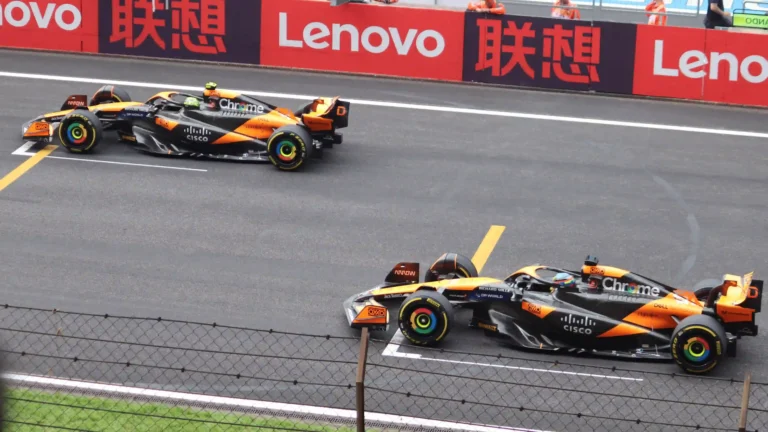
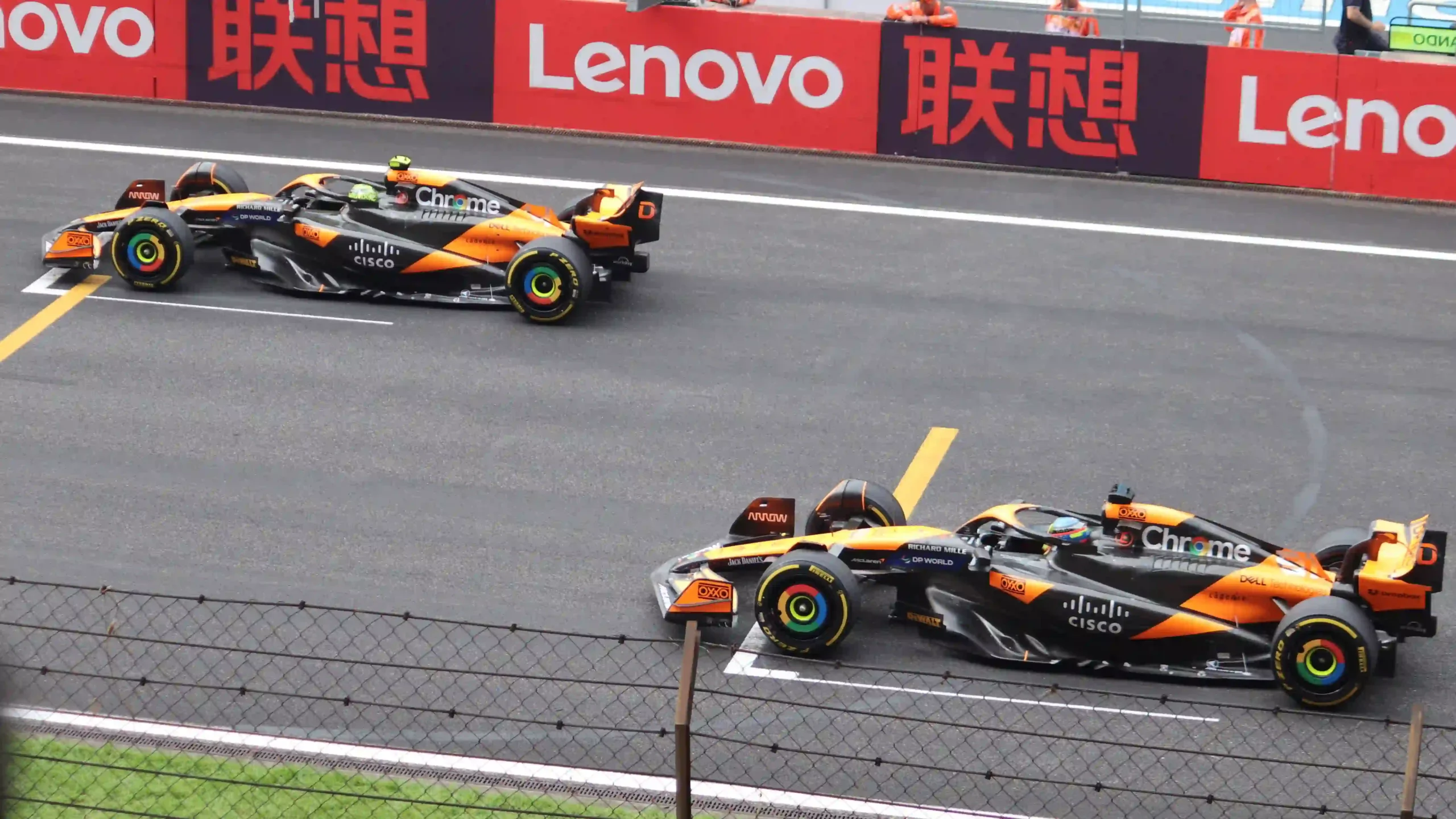
More recently, McLaren managed Lando Norris and Oscar Piastri through tense strategy calls, a title fight and on-track contact. The team retained the pairing into 2026, proving that rivalry does not automatically destroy a partnership.
So, why do F1 drivers have teammate battles? The answer combines sport, psychology, money and team politics. The teammate is both a partner and the person most capable of taking the same opportunity.
The Core Reason: One Team, One Direct Comparison
The teammate drives the same team’s car, uses the same power unit and works under the same competitive structure. Therefore, beating that driver provides the clearest evidence of individual performance.
Formula 1 cars differ enormously between teams. Aerodynamics, suspension, power-unit integration and tire behavior can separate the grid before driver skill enters the calculation.
That makes cross-team comparisons difficult. A driver finishing eighth in a slow car may perform better than someone finishing fourth in a fast car.
The teammate creates a more controlled comparison. Both drivers use the same basic chassis concept, power unit, fuel and regulations. They also attend the same briefings and receive the same event information.
Consequently, team principals and fans watch the internal gap closely. The driver who wins that comparison often gains more influence inside the organization.
The battle also shapes reputation outside the team. Beating a respected teammate can raise a driver’s market value. Losing heavily can damage a career even when the car is difficult.
For that reason, the teammate is not merely another competitor. They are the reference used to judge whether the driver is extracting the available performance.
Every driver wants a fast teammate because a strong reference adds credibility. However, that same reference can expose weaknesses every Saturday and Sunday.
How F1 Teams Compare Teammates
Teams compare qualifying gaps, race pace, starts, tire degradation, incident rates, technical feedback and points. They then correct the numbers for reliability, strategy, traffic and damage.
A championship table offers the simplest comparison. However, teams have far more detailed information than the public result.
Engineers review every lap against fuel load, tire age and track conditions. They can see braking points, steering inputs, throttle use and energy deployment.
Qualifying analysis focuses on peak performance. Race analysis examines repeatability and tire control. The team also studies how each driver responds when the setup is imperfect.
| Comparison Area | What the Team Measures | What It Can Reveal |
|---|---|---|
| Qualifying | Average gap, best sectors, improvement across Q1-Q3 | Confidence and peak lap execution |
| Race pace | Fuel-corrected laps, stint averages, traffic pace | Sunday speed and consistency |
| Tire use | Degradation, temperatures, lockups and wheelspin | Strategy flexibility and car control |
| Starts | Reaction, clutch phase, first-lap positions | Preparation and pressure handling |
| Racecraft | Overtakes, defense, contact and penalty risk | Judgment in close competition |
| Feedback | Clarity, accuracy and correlation with telemetry | Technical value to the team |
| Reliability context | Mechanical failures, damage and strategy losses | Whether the result reflects the driver |
| Season trend | Improvement, adaptation and response to upgrades | Long-term development potential |
The public often counts qualifying wins and race finishes. Inside the factory, the analysis is more careful. A driver can lose a head-to-head because of mechanical failures or badly timed Safety Cars.
Therefore, serious evaluation uses trends rather than one dramatic weekend. Teams want to know which driver repeatedly creates performance.
Our guide to how F1 qualifying works explains why the Saturday comparison carries so much weight.
Do F1 Teammates Really Drive Identical Cars?
They drive the same team design, but the cars are not always identical in condition or setup. Upgrades, component mileage, crash damage, preferred balance and weekend timing can create meaningful differences.
The phrase “same car” is useful but incomplete. Both drivers receive the same basic machine and must comply with the same technical regulations.
However, each side of the garage builds a setup around its driver. One driver may prefer sharp front-end response, while the other wants a more stable rear axle.
Mechanical parts also have different mileage. A gearbox component, floor or front wing can be newer on one car. Small damage may remain hidden from television but still affect balance.
Upgrade timing creates another complication. Teams usually aim to provide equal specifications. Yet manufacturing limits can produce only one new floor or wing for the first event.
In that case, the team chooses who receives it. Championship position, feedback value and recent performance can all influence the decision.
Moreover, a new package may not be faster for both drivers immediately. The first driver can struggle while the teammate extracts more from an older specification.
This is why “identical machinery” should not become a lazy conclusion. The teammate comparison remains the best benchmark, but context still matters.
Read our guide to oversteer and understeer in F1 for the balance differences drivers feel.
Why Qualifying Intensifies Teammate Rivalry
Qualifying places both drivers in similar conditions and rewards one maximum lap. Beating the teammate improves grid position, strategy control and the driver’s internal reputation.
Qualifying produces the cleanest weekly scoreboard. Fuel is low, tires are fresh and both drivers chase maximum speed.
A tenth of a second can change several grid places. Therefore, a small teammate gap can create a much larger race consequence.
The driver ahead often receives cleaner air and a safer first lap. They may also gain priority when both cars approach the same pit window.
Qualifying confidence matters psychologically. Repeatedly losing on Saturday forces a driver to begin races behind the other car. That can produce riskier starts and more aggressive strategy requests.
Teams do not judge only the final position. They compare sectors, preparation laps and how much time remained available.
A driver who loses by 0.050 seconds after a minor error may be close. A driver who needs the teammate’s setup every weekend may have a deeper problem.
The pressure rises at street circuits where passing is difficult. Monaco can turn one qualifying defeat into an entire weekend behind the teammate.
See what pole position means and how grid position shapes a race.
Pit Stops, Undercuts and Strategy Priority
The leading car usually receives priority because it owns track position. However, teams can reverse the order to defend against rivals, use different strategies or avoid stacking both cars together.
Strategy turns a sporting rivalry into an operational problem. A team has two cars but only one pit box.
If both drivers need tires on the same lap, the second car may wait. A double stack can work, yet any delay costs time.
The leading driver normally stops first. That protects track position and avoids giving the following teammate a free undercut.
However, outside threats can change the order. The team may pit the second car first to cover a rival. That call can accidentally move the drivers into a different order.
McLaren faced exactly that issue in Hungary in 2024. Norris stopped before race leader Piastri to defend against cars behind, then emerged ahead through the undercut.
The team later ordered Norris to return the position. He eventually slowed on Lap 68 of 70, allowing Piastri to claim his first Grand Prix victory.
Drivers understand the strategic reason. Still, giving away a race lead conflicts with every instinct that brought them to Formula 1.
Our guides to the undercut and overcut, how pit stops work and why teams double-stack explain the tactical pressure.
Why F1 Teams Use Team Orders
Teams use orders to protect points, avoid collisions, manage tire strategies, restore an agreed position or support the driver with the stronger championship chance.
Team orders can frustrate fans because racing should reward competition. However, Formula 1 also awards a constructors’ championship to the team.
A collision between teammates can remove both cars. That hurts prize money, sponsor value and hundreds of employees who built the machinery.
Orders were formally restricted between 2003 and 2010. The ban was removed for 2011 because teams could disguise instructions and the rule was difficult to enforce.
Today, teams create their own internal policies. The drivers know when they can race and when the pit wall may intervene.
Protect the Team
Hold position when both cars are secure and contact risk offers little reward.
Protect Strategy
Swap cars when one driver has fresher tires or a different race plan.
Protect a Title
Prioritize the driver with the stronger mathematical championship chance.
Orders become controversial when the reasoning is unclear. A driver may believe the team acted too early or failed to return a position later.
Therefore, the best teams agree scenarios before the race. Clear rules reduce emotional arguments over the radio.
A current official Formula 1 review of rivalry management explains how teams have used “papaya rules,” coin flips and strict racing agreements across different eras.
Number One, Number Two and Equal Driver Status
Some teams establish a clear lead driver, while others begin with equal status. A hierarchy often develops through results, championship position and long-term contract value.
A formal number one driver receives strategic or development priority. However, exact contract terms usually remain private.
Other teams promise equal opportunity at the start of the season. The drivers race under the same rules until the points table creates a clear leader.
Equal status does not guarantee identical decisions every weekend. Track position still gives one car priority. Different tire plans can also create unequal calls.
A hierarchy may emerge naturally. The faster driver becomes the technical reference and receives more championship support.
Problems begin when the second driver believes the process is unfair. Engineers can then split into camps, while every strategy mistake becomes evidence of favoritism.
Strong leadership separates preference from performance. The team must explain why a decision serves the constructors’ championship or title campaign.
A lead driver also carries responsibility. They must convert priority into wins and points. If performance drops, the hierarchy can change.
Equal Status
- Both drivers can race within agreed rules
- Strategy follows track position
- Development feedback carries similar weight
- Championship priority comes later
Clear Hierarchy
- One driver leads the title campaign
- The second car may support strategy
- Upgrade allocation can favor the leader
- Team orders arrive earlier
Do F1 Teammates Share Telemetry and Setups?
Yes. Teams can compare both cars’ telemetry, setup changes and engineering feedback. Drivers may study each other’s braking, steering and throttle traces to improve performance.
Formula 1 teams own the data generated by both cars. Engineers can place the telemetry traces together and identify where one driver gains time.
A driver may discover that the teammate brakes later into one corner. Another trace may show better minimum speed or smoother traction.
This sharing accelerates performance. It also intensifies the rivalry because a hard-earned technique can help the other driver improve.
Some drivers absorb the information quickly. Others prefer to build a setup around their own feel instead of copying the teammate.
Copying is rarely simple. A braking technique that suits one driver may overload the other driver’s front tires. The setup must match confidence and control style.
Debriefs can become tense when one driver feels they contribute more development work. However, withholding useful data would weaken the complete team.
The modern F1 garage therefore depends on controlled cooperation. Drivers compete on track but must still help engineers understand the car.
Read what happens in an F1 debrief and the history of racing simulators.
How Upgrades and Spare Parts Create Tension
A team may have only one new component ready. It usually chooses based on championship position, feedback needs, recent performance, damage risk or a pre-agreed rotation.
F1 development runs continuously. A new floor can arrive hours before practice, and the factory may not have built a second example.
The team then makes a sensitive decision. Giving the part to the lead driver can maximize points. Giving it to the better development driver can produce clearer data.
Sometimes the allocation follows rotation. One driver receives the first update at one race, while the teammate receives the next.
Crash damage can disrupt that plan. If one driver breaks the only new wing, the teammate may lose access for the rest of the weekend.
The cost cap increases the importance of damage control. Repeated collisions consume money that could support upgrades later in the season.
Drivers therefore compete over more than lap time. They compete for the confidence that convinces the team to place scarce resources on their car.
A fair process matters. Without it, technical decisions can look like political favoritism.
The Psychology of Racing the Person Next Door
They become personal because the drivers share resources, information and career opportunities. Repeated comparison can turn sporting disagreements into questions of trust, status and fairness.
Drivers reach F1 through years of winning. Their identity is built around being faster than everyone nearby.
A teammate challenges that identity every session. The comparison happens inside the same meetings and in front of the same engineers.
Small events gain emotional weight. A delayed pit stop, different engine setting or missed tow can become evidence that the team prefers the other car.
Media pressure magnifies the problem. Every facial expression and radio message becomes part of the rivalry story.
Confidence can then create a loop. A driver who loses several qualifying sessions may overdrive. More mistakes widen the gap and increase the pressure.
Healthy rivals use the benchmark to improve. Toxic rivals begin protecting information, questioning motives and attacking each other publicly.
Mutual respect remains essential. Two drivers can race aggressively when each trusts the other’s judgment. Without trust, every close move feels dangerous.
How Teammate Battles Affect Contracts and Salaries
Yes. A sustained deficit in qualifying, race pace and points can weaken contract negotiations. Teams still consider reliability, car fit, experience and commercial value before making a change.
Teammate performance is central to contract reviews. The team already knows the car’s limitations, so the internal comparison carries more weight than a simple championship position.
A driver who consistently beats a respected teammate gains leverage. They can seek a higher salary, longer term or stronger status.
The opposite is also true. Large qualifying gaps and repeated incidents can make a driver vulnerable during F1 silly season.
However, teams do not react to one race. They study adaptation, feedback and the reasons behind poor results.
A young driver may receive time to learn. An experienced driver may survive because their technical leadership helps the factory.
Commercial value also matters, but points remain powerful. A driver who improves the constructors’ position can justify a larger contract.
Our guide to F1 driver salaries explains how results and status influence pay.
Why Teammate Collisions Hurt More Than Normal Crashes
The stewards may investigate the driving incident, while the team reviews responsibility, damage and its racing rules. Both drivers can also lose points, strategy options and management trust.
Any crash is expensive. A teammate collision is worse because the team may lose two cars from one fight.
The damage affects the immediate result. It can also delay future upgrades because replacement parts consume manufacturing capacity.
Team principals often avoid public blame until engineers review video and telemetry. Internal consequences can include stricter racing rules or lost strategic freedom.
In Canada in 2025, Norris hit the rear of Piastri while fighting late in the race. Norris retired and immediately accepted responsibility.
McLaren team principal Andrea Stella called the contact unacceptable. However, the drivers cleared the air quickly, which helped prevent one mistake from becoming a lasting feud.
The response matters as much as the collision. Honest accountability can protect trust. Public accusations usually make the next close battle harder.
Read what causes crashes in motor racing and how championship points are scored.
Famous F1 Teammate Battles and What They Teach
Senna-Prost, Vettel-Webber and Hamilton-Rosberg remain defining examples. Each rivalry shows a different conflict between personal ambition, equal equipment and team control.
| Drivers | Team and Period | Defining Flashpoint | Main Lesson |
|---|---|---|---|
| Ayrton Senna vs. Alain Prost | McLaren, 1988-1989 | Suzuka title collision in 1989 | Two elite title contenders can overwhelm team unity |
| Nigel Mansell vs. Nelson Piquet | Williams, 1986-1987 | Political and performance conflict inside a dominant team | Equal status can divide leadership and strategy |
| Fernando Alonso vs. Lewis Hamilton | McLaren, 2007 | Qualifying and championship tension | A rookie can disrupt an established champion’s status |
| Sebastian Vettel vs. Mark Webber | Red Bull, 2009-2013 | Multi 21 in Malaysia | Orders fail when trust has already broken down |
| Lewis Hamilton vs. Nico Rosberg | Mercedes, 2013-2016 | Spain and Austria collisions in 2016 | Long title battles require evolving rules of engagement |
| Lando Norris vs. Oscar Piastri | McLaren, 2023-present | Hungary orders and Canada contact | Clear accountability can preserve a competitive pairing |
Senna vs. Prost: The Benchmark for Intra-Team Conflict
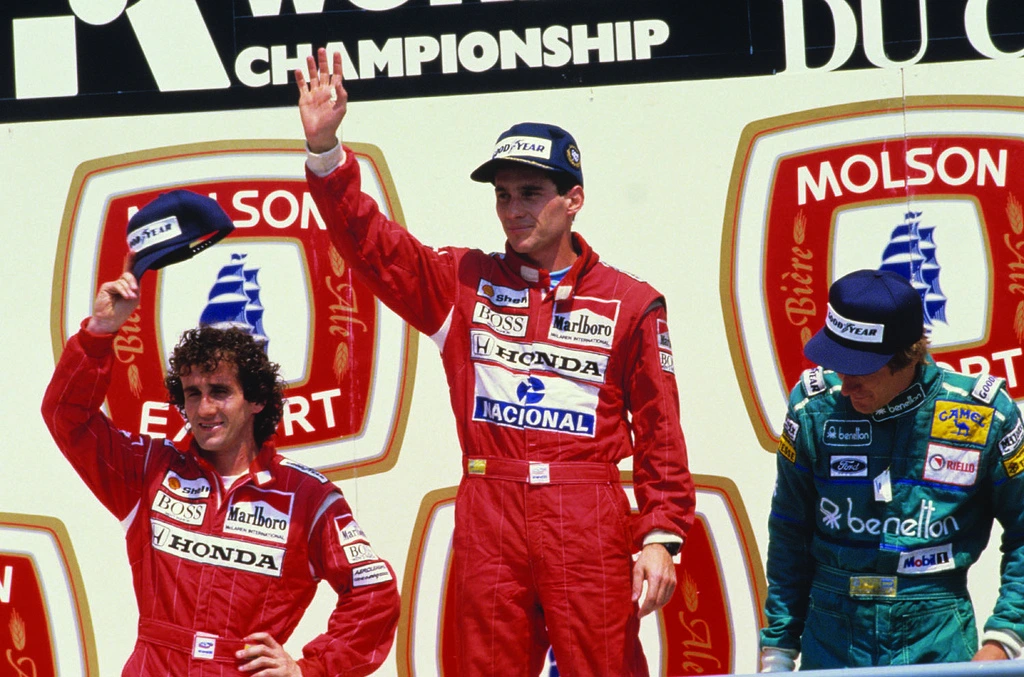
McLaren paired two of the era’s strongest drivers in 1988. The car won 15 of 16 races, while Senna and Prost fought for the championship.
The rivalry combined contrasting styles and political influence. Senna was celebrated for qualifying speed and commitment. Prost built races through calculation and efficiency.
Tension increased after disputes over racing agreements. In Japan in 1989, they collided at the chicane while fighting for the title.
Prost retired from the race. Senna continued and won on the road, but officials disqualified him for rejoining incorrectly. Prost secured the championship.
The lesson is not simply that teammates can crash. McLaren had two drivers powerful enough to challenge the team’s authority.
For broader historical context, see our guide to the best F1 drivers of all time.
Vettel vs. Webber: Why “Multi 21” Still Matters
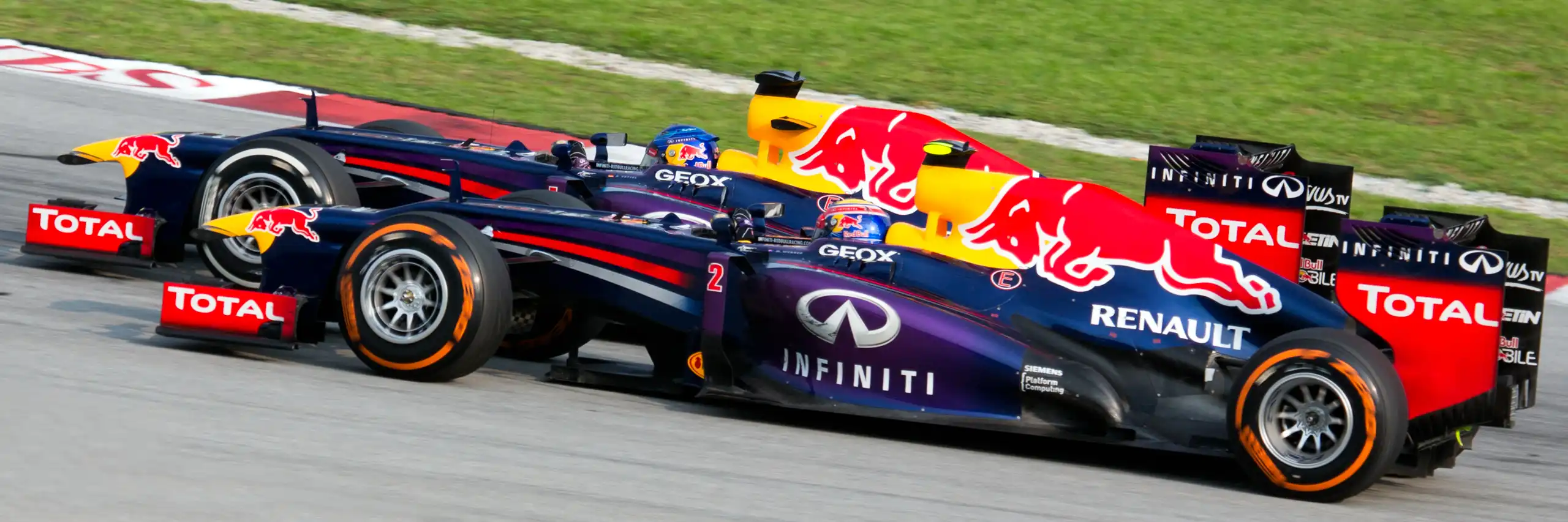
Red Bull’s “Multi 21” instruction told Vettel to remain behind Webber in Malaysia in 2013. The team wanted to protect a one-two finish after the final pit stops.
Vettel ignored the order and passed his teammate for victory. The move delivered maximum personal points but damaged trust inside the team.
The conflict did not begin that day. Earlier incidents had already shaped how both drivers viewed fairness and support.
Therefore, Multi 21 shows the limit of radio authority. A team order works only when the driver accepts the relationship behind it.
Read our Red Bull Racing guide for more background on the team’s driver structure.
Hamilton vs. Rosberg: Friendship Under Championship Pressure
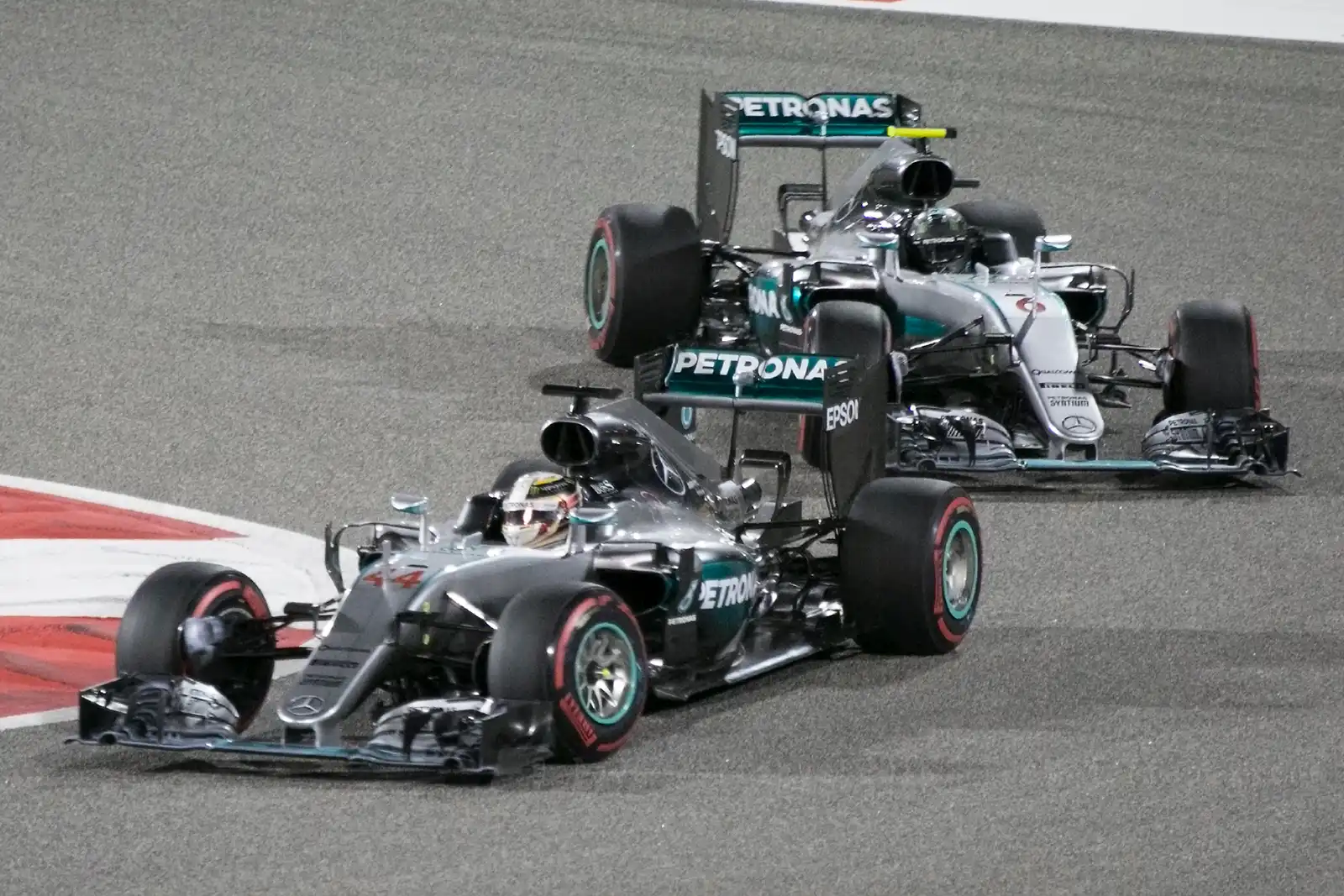
Hamilton and Rosberg knew each other from junior racing. That history did not prevent their Mercedes partnership from becoming increasingly tense.
They fought for championships from 2014 through 2016. Contact in Belgium in 2014 damaged the relationship, while later incidents forced Mercedes to strengthen its racing rules.
In Spain in 2016, both cars retired on the first lap after colliding for the lead. They made contact again on the final lap in Austria.
Mercedes still allowed them to race, although the rules of engagement became stricter. The team had to balance sporting credibility against the risk of losing both cars.
Rosberg won the 2016 championship by five points. Mercedes won 19 of 21 races, with Hamilton taking 10 victories and Rosberg nine.
The rivalry proves that equal status can produce extraordinary performance. It can also demand constant management when both drivers believe the title is theirs.
Norris vs. Piastri: The Modern Teammate Battle
Both are race-winning McLaren drivers with championship ambitions. Their rivalry centers on qualifying, strategy priority and the team’s effort to preserve fair racing while protecting points.
McLaren’s recent pairing shows how a modern team can manage rivalry without immediately choosing a permanent number one.
Piastri won in Hungary in 2024 after Norris followed the instruction to restore the race order. The radio exchange was tense, yet the team completed a one-two finish.
Later in 2024, McLaren discussed greater support for Norris as his championship chance improved. Piastri accepted that he might help under the right circumstances.
The pressure continued in 2025. Their Canadian Grand Prix battle ended when Norris hit Piastri and retired.
Norris accepted blame immediately. That response helped the team contain the incident instead of creating a public war.
McLaren kept both drivers for its 2026 car launch. The decision reflects their speed and the belief that strong competition can remain productive.
“Papaya rules” are McLaren’s internal racing principles. The phrase does not mean the drivers never attack each other. It means they must protect the team while racing.
Modern management relies on transparency. Both drivers need to understand why the other car receives a pit call, tow or championship priority.
Other Rivalries That Changed Teams
Mansell vs. Piquet at Williams
Nigel Mansell and Nelson Piquet shared a highly competitive Williams during 1986 and 1987. Their relationship included sharp public comments and internal political tension.
The team’s equal-driver approach gave both a championship opportunity. However, divided points helped Alain Prost take the 1986 title before Piquet won in 1987.
Alonso vs. Hamilton at McLaren
Fernando Alonso arrived at McLaren in 2007 as the reigning double champion. Rookie Lewis Hamilton immediately matched his pace and challenged the expected hierarchy.
The partnership became strained through qualifying disputes and championship pressure. Both finished one point behind champion Kimi Räikkönen.
Ricciardo vs. Verstappen at Red Bull
Daniel Ricciardo and Max Verstappen produced fast, aggressive racing at Red Bull. Their 2018 Azerbaijan collision removed both cars.
The crash illustrated how repeated close fighting can become predictable. Once neither driver yields, the team must intervene earlier.
Leclerc vs. Sainz at Ferrari
Charles Leclerc and Carlos Sainz often ran closely during their Ferrari partnership. Different strengths produced tight qualifying and race comparisons.
The rivalry remained largely professional, although strategy and track-position disputes created tense moments. It showed that conflict does not need to become personal.
How F1 Teams Manage Two Competitive Drivers
Teams define racing rules, review incidents with data, explain strategy decisions, separate engineering groups and adjust freedom when championship risk increases.
Rules of Engagement Must Be Specific
“Do not crash” is not enough. Drivers need clear instructions about first laps, late braking and attacking after pit stops.
Some teams prohibit risky moves in specific corners. Others require the following driver to return a position after contact.
Strategy Must Follow a Known Principle
Track position usually controls pit priority. Any exception needs a clear competitive reason.
Drivers accept difficult calls more easily when the same rule applies to both sides of the garage.
Incidents Need Fast, Honest Review
The team should examine telemetry before blaming either driver. Public emotion can harden positions before the facts are clear.
A fair internal judgment protects trust. It also tells the drivers what behavior will be accepted next time.
Championship Priorities Should Not Arrive Too Early
Early team orders can damage morale and waste a second driver’s title chance. Delaying too long can cost the championship leader vital points.
Management therefore watches probability, not just the current standings. Reliability and car performance influence the timing.
The Team Principal Sets the Culture
A weak leader allows drivers and engineers to create separate camps. A strong leader supports competition but defends the team’s final authority.
The best environment makes both drivers believe they can succeed. It also makes clear that neither can damage the organization without consequences.
When Teammate Rivalry Helps the Team
Internal competition can raise the performance ceiling. Each driver pushes braking points, setup direction and preparation.
A strong teammate also reveals hidden speed in the car. Engineers can investigate why one side gains time and improve both packages.
Rivalry keeps drivers accountable. A poor weekend cannot be blamed entirely on machinery when the other car performs well.
Commercially, close battles create attention. Fans compare qualifying records and follow the championship story.
Most importantly, two fast drivers score constructors’ points. A team with one star and one weak second car can lose the championship.
When Teammate Rivalry Becomes Harmful
Competition becomes harmful when drivers stop trusting each other or the team. Every strategic call then looks political.
Repeated collisions create direct costs. They also force conservative racing rules that reduce performance.
Engineers may become defensive about their driver. Information sharing slows, and setup discussions lose objectivity.
Public criticism damages sponsors and morale. It can also make contract negotiations harder because neither driver wants to remain.
A toxic pairing may still win races. However, the team spends energy controlling conflict instead of improving the car.
Key distinction: Healthy rivalry asks, “How can I become faster?” Harmful rivalry asks, “How can I stop the other driver from succeeding?”
Why Fans Care So Much About Teammate Battles
Fans rarely know the exact performance difference between two teams. The teammate comparison feels more direct and understandable.
It also combines sport with personality. Both drivers wear the same colors, yet only one can lead the garage.
Historic rivalries add memory to modern racing. Every tense radio message recalls Senna-Prost, Multi 21 or Hamilton-Rosberg.
Teammate battles also shape future lineups. A driver who wins the internal contest may become a champion, team leader or transfer target.
That makes every qualifying session part of a longer career story. The result matters beyond the grid position.
F1 Teammate Battle FAQs
Why do F1 drivers have teammate battles?
The teammate is the closest benchmark because both drivers use the same team’s machinery. They also compete for strategy priority, contracts, upgrades and championship status.
Are F1 teammates allowed to race each other?
Yes. Most teams allow racing under agreed rules. The pit wall can intervene when contact risk, strategy or championship priorities threaten the team’s result.
Do F1 teammates drive identical cars?
They use the same basic design, but setup, component age, damage and upgrade timing can differ. Those details can change how each car performs.
Why do F1 teams use team orders?
Orders protect constructors’ points, manage different tire strategies, avoid collisions and support the driver with the strongest championship chance.
Conclusion: The Teammate Is Partner, Rival and Benchmark
So, why do F1 drivers have teammate battles?
The teammate shares the same opportunity. Both drivers receive the team’s car, people and competitive ambition.
That makes the comparison more direct than any other rivalry. Qualifying shows peak speed, while races expose tire management and judgment.
The battle also reaches beyond lap time. Drivers compete for pit priority, upgrades, technical influence and contract security.
Teams encourage that pressure because it can improve performance. Two strong drivers push each other and score more constructors’ points.
However, the same rivalry can become expensive. Contact removes cars, consumes budget and damages trust.
Team orders exist to control that risk. They may protect a one-two finish, return a position changed by strategy or support a title contender.
History shows how difficult the balance can become. Senna and Prost overwhelmed McLaren’s internal peace while fighting for championships.
Vettel ignored Red Bull’s Multi 21 instruction because trust had already weakened. Hamilton and Rosberg needed tighter rules as their Mercedes title fight intensified.
Norris and Piastri offer a modern version. They have faced tense strategy calls and contact, yet McLaren continued with both drivers into 2026.
The deciding factor is not whether teammates fight. Competitive drivers will always fight.
The real question is whether the rivalry remains useful. Healthy competition improves speed and accountability.
Uncontrolled conflict divides the garage and turns every decision into a political argument.
Great teams set clear rules, explain difficult calls and judge incidents with evidence. Great drivers race hard while respecting the complete organization.
Ultimately, the teammate is the only rival who can take the same car and prove they used it better. That is why the battle matters every weekend.
Sources and Fact-Checking
This article was checked against current FIA regulation listings, official Formula 1 historical reporting and official McLaren material available on July 26, 2026. The source list is static and contains no interactive verification feature.