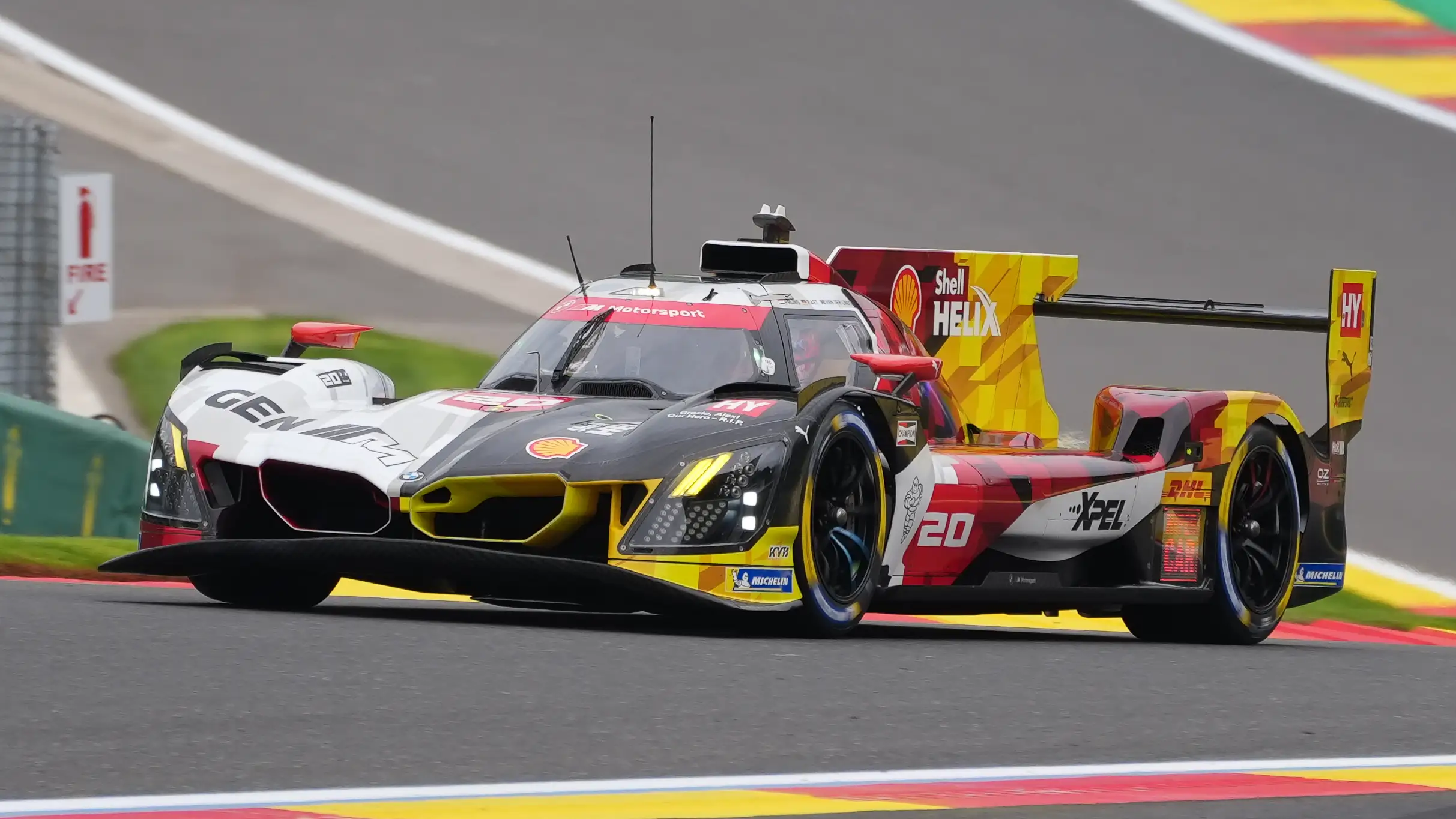
F1 vs WEC: What’s the Difference?
Formula 1 chases the fastest possible lap with one driver. The World Endurance Championship asks several drivers, several classes and one car to manage speed for hours.
Formula 1 is a single-class Grand Prix championship focused on maximum lap performance. WEC is multi-class endurance racing where Hypercars and LMGT3 cars share the track, crews rotate drivers, refuel and manage races lasting from six to 24 hours.
F1 vs WEC is a comparison between two world championships that use advanced race cars for very different jobs.
Formula 1 compresses the contest. One driver attacks a race of roughly 305 kilometers in a bespoke open-wheel car.
WEC expands the contest. A crew shares one closed-cockpit car while faster Hypercars and slower LMGT3 machines compete at the same time.
Therefore, an F1 car is built to produce the quickest possible lap. A WEC car must deliver repeatable pace through fuel stops, traffic and changing temperatures.
The FIA World Endurance Championship also includes the 24 Hours of Le Mans. However, WEC is not simply another name for Le Mans.
Le Mans is one round of the championship. The regular 2026 WEC field uses Hypercar and LMGT3, while LMP2 returns as an additional class at Le Mans.
Current news makes the comparison especially timely. BMW won the 2026 Rolex 6 Hours of São Paulo with Kevin Magnussen, Raffaele Marciello and Dries Vanthoor.
Meanwhile, Toyota still led BMW by five points in the Hypercar manufacturers’ standings after the Brazilian round. The next race was scheduled for Circuit of the Americas in September.
Formula 1 also entered a new technical era in 2026. Active front and rear aerodynamics work with a much more powerful electrical system and sustainable fuel.
Both championships now treat hybrid efficiency as a performance tool. Yet F1 spends energy to maximize a short Grand Prix, while WEC manages energy across long stints.
This guide compares F1 vs WEC cars, classes, speed, engines, aerodynamics, qualifying, pit stops, driver changes, traffic, Balance of Performance and strategy.
The Quick Answer: F1 Is the Faster Lap, WEC Is the Longer Puzzle
An F1 car is faster over a conventional circuit lap. It is lighter, produces more downforce and uses a stronger power-to-weight ratio. A WEC Hypercar gives away peak lap speed to gain reliability, efficiency, traffic stability and serviceability.
Formula 1 wins the stopwatch comparison. A current F1 car brakes later and carries more speed through medium and fast corners.
However, WEC asks the car to remain competitive for six hours or longer. At Le Mans, the same machine races through an entire day and night.
That changes every design decision. Hypercars carry headlights, wipers, doors and enclosed cockpits.
Moreover, WEC teams refuel and change drivers. Mechanics can repair major damage and return the car to the race.
F1 strategy is shorter and sharper. One mistimed stop can lose the Grand Prix within seconds.
WEC strategy contains more moving parts. Fuel windows, tire life, driver rotations and class traffic interact for hours.
For readers who need the starting point, Formula 1 is the FIA’s single-seater Grand Prix championship built around constructor-developed cars.
F1’s Main Goal
Extract maximum legal performance from one car and one driver across a short Grand Prix.
WEC’s Main Goal
Keep a shared car fast, efficient and repairable across a long multi-class endurance race.
The Key Difference
F1 rewards peak pace. WEC rewards the best average result from pace, reliability and teamwork.
An F1 car is judged by how little performance it leaves unused. A WEC car is judged by how much performance it can repeat without breaking.
F1 vs WEC Comparison Table
| Category | Formula 1 | FIA WEC | What It Means |
|---|---|---|---|
| Championship format | Single-class Grand Prix series | Multi-class endurance championship | WEC has separate overall and class battles |
| 2026 regular classes | One Formula 1 class | Hypercar and LMGT3 | LMP2 appears at Le Mans, not every WEC round |
| Drivers per car | One | Normally three | WEC setup must suit a complete crew |
| Car design | Bespoke open-wheel constructor car | Closed-cockpit LMH/LMDh prototypes and GT3-based cars | WEC contains more vehicle types |
| Race start | Standing start at most Grands Prix | Rolling start | WEC organizes two classes and larger speed differences |
| Race duration | Usually 90 minutes to two hours | Six or eight hours, 24 hours at Le Mans, or the distance-based Qatar 1812 km | WEC performance changes through several phases |
| Refueling | Banned during the race | Central to every stint | Fuel windows shape WEC strategy |
| Routine tire stop | Yes | Often combined with fuel, but tires may be double-stinted | WEC may skip tires to save stationary time |
| Driver changes | No | Yes | Rest, seat fit and human scheduling become strategic |
| Qualifying | Q1, Q2 and Q3 | Class qualifying and Hyperpole | WEC awards separate class poles |
| Passing environment | Cars have broadly similar speed | Hypercars repeatedly catch LMGT3 traffic | Closing-speed judgment defines endurance racecraft |
| Performance balancing | No Balance of Performance | BoP in Hypercar and LMGT3 | Different WEC concepts share a controlled window |
| Repairs | Major repairs normally end a competitive result | Garage repairs can keep a car in contention | Serviceability is part of WEC car design |
| Primary strategic focus | Tires, track position and short neutralizations | Fuel, tires, drivers, traffic, weather and reliability | WEC has more variables; F1 has less time to recover |
What Is the FIA World Endurance Championship?
WEC stands for the FIA World Endurance Championship. It is the top global sports-car endurance series and includes the 24 Hours of Le Mans within an international calendar.
The FIA World Endurance Championship began in its current form in 2012. It continues the tradition of earlier international sports-car championships.
The series visits Europe, the Americas, Asia and the Middle East. Race lengths vary, which forces teams to adapt their planning.
In 2026, the season used an eight-round structure. Qatar opened the campaign before Imola, Spa, Le Mans and São Paulo.
The remaining rounds included Circuit of the Americas, Fuji and Bahrain. Therefore, teams faced heat, altitude changes, night running and several circuit styles.
WEC Is More Than Le Mans
Le Mans is the most famous WEC round. However, championship points also come from every other event.
A team can win Le Mans and still lose the world title. Consistency across the season matters, just as it does in Formula 1.
Conversely, the Le Mans result carries extra prestige and a larger points opportunity. That makes it both a championship round and a stand-alone career target.
The Regular WEC Field Has Two Classes
Hypercar fights for overall victory. LMGT3 creates a separate competition for production-based GT machinery.
LMP2 is not part of every 2026 WEC round. It joins at Le Mans because the event can support a larger, three-class field.
This detail matters for SEO comparisons. “F1 vs WEC” describes the whole championship, while F1 vs Le Mans describes one exceptional 24-hour race.
F1 Car vs WEC Hypercar and LMGT3
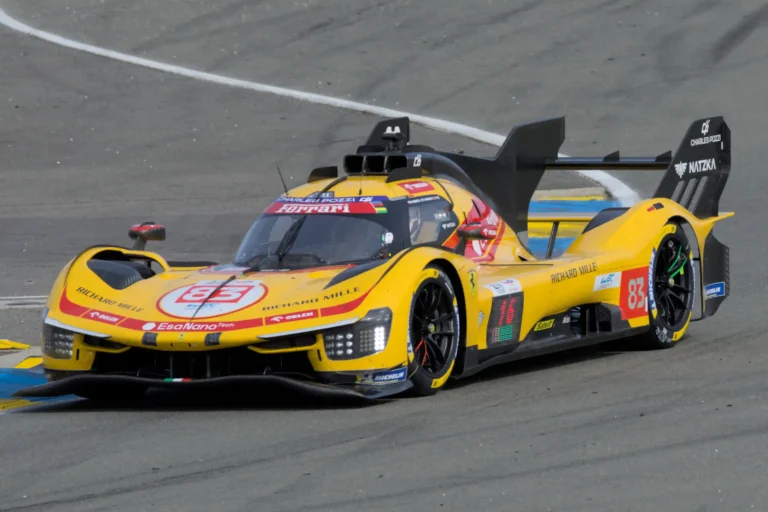
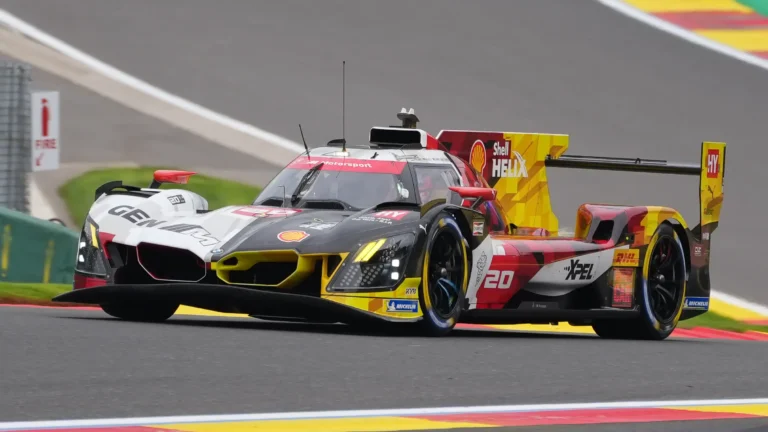
WEC uses Hypercars for the overall victory and LMGT3 cars for a separate class contest. Hypercar includes LMH and LMDh prototypes, while LMGT3 is based on the FIA’s global GT3 platform.
Formula 1 Uses One Technical Category
Every F1 team builds a single-seater to the same regulatory framework. However, each constructor designs its own chassis and aerodynamic surfaces.
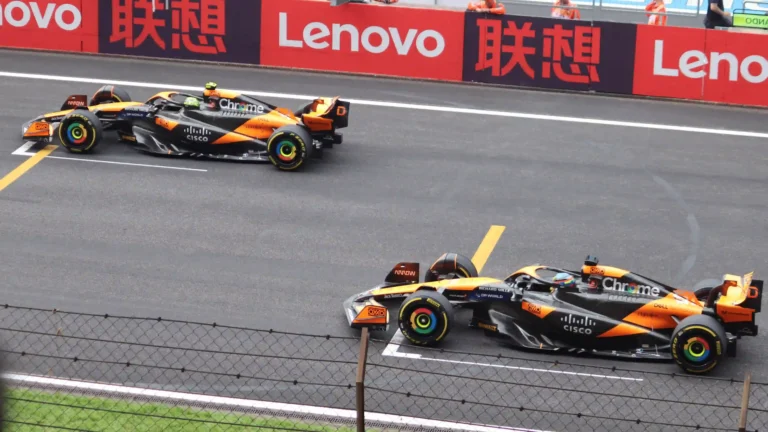
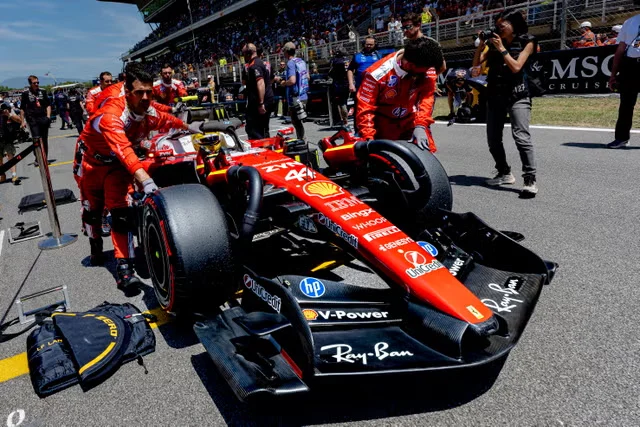
The exposed wheels, open cockpit and narrow body produce a distinctive shape. The Halo protects the driver’s head without enclosing the cockpit.
Teams build floors, wings, sidepods and suspension layouts around maximum lap performance. The result is described in more detail in the Formula 1 race-car guide.
Hypercar Includes LMH and LMDh
LMH allows a manufacturer to create a bespoke prototype or a competition car linked to a road-going hypercar concept. Hybrid power is optional under the current framework.
LMDh uses one of four approved chassis bases. Manufacturers add their own engine and styling while using common hybrid hardware.
Both platforms compete together through Balance of Performance. This system enables a V12 Aston Martin, turbocharged prototypes and several hybrid layouts to share one class.
LMGT3 Starts With Recognizable Road Cars
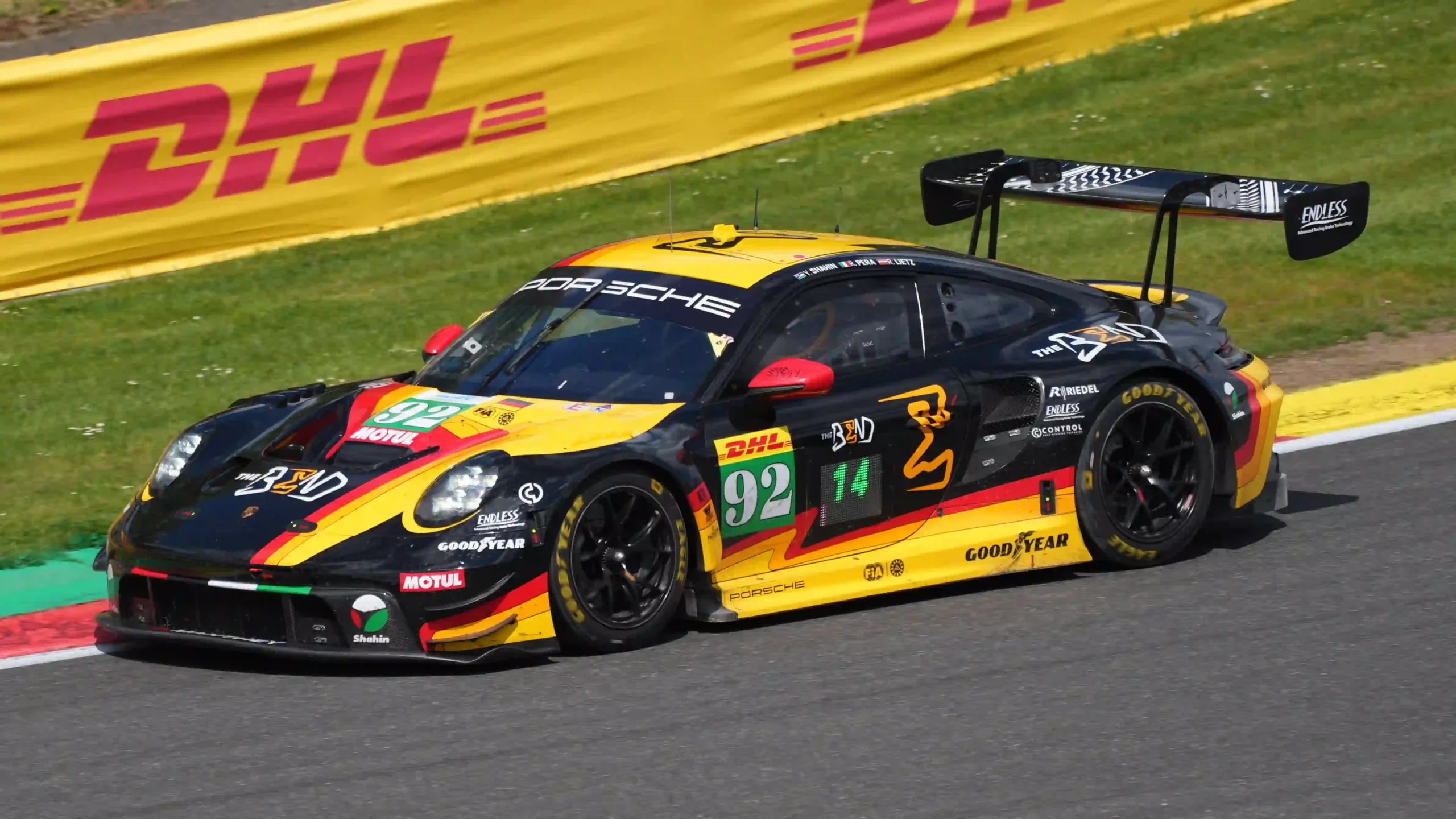
LMGT3 cars come from global GT3 models. The field includes familiar shapes from Porsche, Corvette, BMW, Ford, Ferrari and other brands.
They use WEC-specific identification and sporting rules. Goodyear supplies the category, while private teams and Pro-Am lineups remain central.
These cars are slower than Hypercars. Nevertheless, their class race can be just as close and strategically complex.
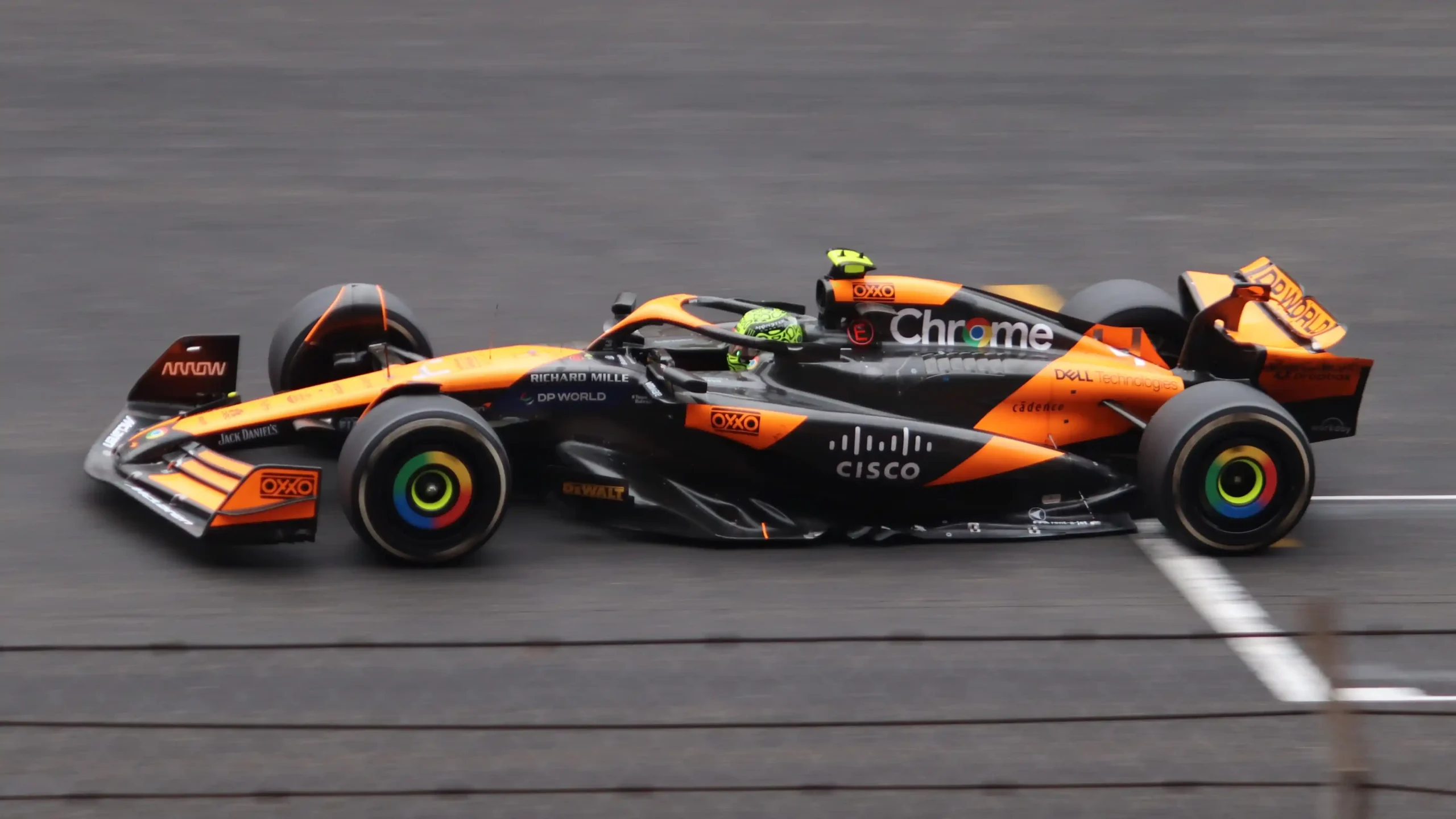
Which Is Faster: F1 or WEC?
Yes. An F1 car is faster over a complete circuit lap because it weighs less, develops greater downforce and has a stronger power-to-weight ratio. A Hypercar can reach very high straight-line speed but gives priority to endurance efficiency.
F1 Wins Under Braking and Through Corners
Top speed can make the comparison look close. Hypercars can exceed 200 mph at suitable circuits, while F1 cars can run beyond 230 mph in low-drag conditions.
However, the larger gap appears before the corner. F1’s low mass, carbon brakes and aerodynamic load create much shorter braking zones.
The car also changes direction faster. Its tires remain loaded by a floor and wings designed to produce substantial downforce.
As a result, the F1 car gains time in almost every corner. The difference compounds throughout a lap.
WEC Race Pace Is Not Qualifying Pace
A Hypercar driver may avoid the absolute limit early in a stint. Tire life and energy consumption often matter more than one fast lap.
Traffic also changes the average. A prototype can lose several seconds while passing LMGT3 cars at an awkward section.
Therefore, one clean WEC qualifying lap does not describe the pace required over six hours. Endurance speed is measured through consistency.
The separate guide to Formula 1 top speed explains why speed-trap figures and lap times are different metrics.
F1 Power Unit vs WEC Hybrid and Non-Hybrid Systems
Every 2026 F1 car uses a 1.6-liter turbo V6 with a powerful MGU-K and sustainable fuel. WEC Hypercars may use several engine layouts, and the class includes both hybrid and non-hybrid concepts.
Formula 1 Standardizes the Architecture
The 2026 F1 power unit combines a turbocharged V6 with a 350kW MGU-K. The electrical share is much larger than in the previous era.
The MGU-H disappeared. Therefore, braking recovery and battery deployment became more visible parts of racing.
All power-unit manufacturers use advanced sustainable fuel. The detailed process appears in the site’s F1 ERS explainer.
WEC Allows Manufacturer Identity
Hypercar engines reflect brand choices. Aston Martin uses a naturally aspirated V12, while several rivals use turbocharged V6 or V8 engines.
Hybrid LMH cars may drive the front axle electrically above a regulated deployment speed. LMDh uses a common rear-axle hybrid system.
Other Hypercars compete without hybrid propulsion. BoP controls the performance outcome rather than forcing one architecture.
Energy Per Stint Matters More Than Peak Power
WEC officials monitor torque and energy use. Event-specific tables define the permitted performance window.
A car that spends energy too quickly may need additional saving. That loss can erase any advantage from stronger acceleration.
Consequently, endurance engineers chase the best combination of power, fuel use and tire life. The fastest setting is not always the quickest race strategy.
F1 Active Aero vs WEC Efficiency
F1 creates more downforce and uses active front and rear wing elements in 2026. WEC Hypercars use homologated bodywork designed for efficient speed, cooling, stability in traffic and consistent performance across long races.
F1 Uses the Entire Car to Produce Grip
The floor and diffuser create a large share of F1 downforce. Front and rear wings then balance the car.
Active elements switch between lower-drag and higher-load configurations in designated sections. Overtake Mode provides an extra electrical advantage when eligibility conditions are met.
This system is part of the broader technical reset covered in the 2026 F1 regulations guide.
Hypercar Aerodynamics Are Homologated
WEC manufacturers cannot continuously redesign every surface. The FIA and ACO measure the car within a defined aerodynamic performance window.
That approach controls cost and supports styling freedom. A manufacturer can create a recognizable shape without gaining an unlimited aero advantage.
Closed wheels also reduce drag compared with F1’s exposed tires. However, Hypercars carry broader bodywork, cockpit structures and cooling systems.
Traffic Stability Is Essential
A Hypercar repeatedly leaves the ideal line to pass GT traffic. The aero balance must remain predictable while following or moving through dirty air.
One nervous moment can damage the car or end a class battle. Therefore, stable behavior may be worth more than a small peak-downforce gain.
The physics behind both cars are explained in the site’s guides to downforce and slipstreaming.
F1 Grand Prix vs WEC Endurance Race
An F1 Grand Prix usually covers slightly more than 305 kilometers with one driver. A WEC event runs against a time or distance target, uses several drivers and includes separate Hypercar and LMGT3 competitions.
Formula 1 Uses a Fixed Grand Prix Distance
Most F1 races cover the least number of laps exceeding 305 kilometers. Monaco uses a shorter distance because of its low average speed.
The race usually lasts between 90 minutes and two hours. A red flag can extend the overall event window.
Because the field is one class, the lead is simple. First car on the road is the overall leader.
WEC Uses Timed and Distance-Based Formats
Many WEC rounds last six or eight hours. Qatar uses a distance title, while Le Mans runs for 24 hours.
The car that completes the greatest distance in the time wins. However, separate winners exist for Hypercar and LMGT3.
This creates two championships on the same circuit. A GT car can finish far behind the overall winner yet take a major class victory.
WEC Changes From Afternoon to Evening
Long races move through different track conditions. Tire temperatures and grip can change sharply after sunset.
Driver visibility also changes. Headlights, glare and traffic become part of racecraft.
F1 has night races under floodlights. WEC often relies more heavily on the car’s own lights and a changing natural environment.
F1 Q1, Q2 and Q3 vs WEC Hyperpole
F1 uses three knockout sessions for one class. WEC separates Hypercar and LMGT3 qualifying, then uses Hyperpole to decide the leading grid positions in each category.
F1 Qualifying Is a Repeated Elimination Test
Every driver begins in Q1. The slowest cars are eliminated before Q2, and the fastest group advances to Q3.
Traffic, tire warm-up and track evolution shape the session. One driver controls the complete qualifying result for each car.
The format is covered fully in the racing qualifying guide.
WEC Qualifying Creates Separate Class Poles
Hypercar and LMGT3 qualify for different class positions. The quickest Hypercar takes overall pole.
The best LMGT3 starts at the front of its own category, even though Hypercars remain ahead on the combined grid.
Driver-rating rules can influence who qualifies an LMGT3 entry. This places pressure on amateur-rated drivers as well as professionals.
Traffic Remains a Major Variable
A clean lap is difficult when two classes share the circuit. A Hypercar may catch a GT car at the worst possible corner.
Teams search for open track but also watch slipstream opportunities. The balance between clean air and a tow changes by circuit.
F1 Pit Stops vs WEC Refueling and Driver Changes
F1 stops mainly to change tires and can service four wheels in about two seconds. WEC stops revolve around refueling, then may include tires, a driver change, cleaning, adjustments and repairs.
F1 Separates Fuel From Tire Strategy
Race refueling is banned in Formula 1. Every car starts with enough fuel to reach the finish.
As a result, pit timing focuses on tire degradation, traffic and neutralizations. The undercut can gain track position immediately.
The reasoning behind the rule appears in why F1 banned refueling.
WEC Stints Begin With Fuel
A WEC team calculates how many laps one energy allocation can support. That number creates the basic pit window.
The car can then take tires or continue on the same set. Double stinting saves time when the tire remains competitive.
Driver changes may happen during the same visit. Mechanics also clean lights, windscreen and cooling openings.
Garage Repairs Are Part of the Race
WEC cars can enter the garage for substantial repairs. Bodywork, suspension and other components may be replaced.
The clock never stops. Therefore, the team compares repair time with the positions still available.
An F1 car losing several garage laps has almost no route back. A long endurance race can still reward a repaired car.
More general procedures are covered in how motorsport pit stops work.
F1 Strategy vs WEC Endurance Strategy
WEC contains more total strategic variables because teams manage fuel, tires, driver rotations, traffic, repairs, weather and reliability for several hours. F1 strategy is more compressed, so one error often has a faster and harsher consequence.
Formula 1 Strategy Is Immediate
An F1 strategist watches tire pace, pit loss and gaps to rivals. A decision can produce an undercut within one lap.
Safety Cars and Virtual Safety Cars change the cost of stopping. A late neutralization can reverse the race order.
There is little time to recover. A wrong compound may destroy the result before conditions improve.
WEC Strategy Works in Layers
Fuel sets one rhythm. Tire life creates another, while driver regulations create a third.
A team may double stint tires to save pit time. However, the next driver must accept the older set.
Meanwhile, traffic changes the value of clean air. A team may stop early to avoid a dense GT pack.
Reliability Is a Strategic Choice
Endurance drivers may avoid aggressive curb use. Engineers can reduce performance to protect temperatures or fuel consumption.
Those choices cost small amounts of lap time. Yet they can prevent a long repair later.
Consequently, the best WEC strategy often looks conservative until the final hour. Then the race can turn into a sprint.
Multi-Class Traffic: WEC’s Defining Skill
Hypercars and LMGT3 cars compete simultaneously for separate results. Hypercars must pass responsibly, while LMGT3 drivers hold predictable lines and continue their own class battles.
Closing Speed Creates Constant Decisions
A Hypercar can catch an LMGT3 car quickly on a long straight. The prototype driver must predict where the GT car will brake.
Passing immediately may save time. Waiting one corner may avoid contact.
These decisions repeat throughout every stint. Traffic management can separate equally fast Hypercars.
LMGT3 Cars Are Racing Too
The slower-class driver is not required to disappear. That car may be defending a class lead.
Predictable movement is safer than a sudden act of courtesy. Therefore, the faster driver carries much of the passing responsibility.
Traffic Luck Never Fully Disappears
One car may clear traffic before a fast sequence. Its rival may arrive behind the same group at corner entry.
The time difference can be several seconds. Over a long race, luck moves around, but it can still decide a close finish.
Balance of Performance: The Biggest Regulatory Difference
No. Formula 1 uses one technical rulebook and a financial cap but does not adjust cars to equalize performance. WEC uses Balance of Performance to bring different Hypercar and LMGT3 concepts into controlled performance windows.
F1 Lets Competitive Gaps Develop
Every constructor must meet the same technical regulations. A better design can create a large advantage.
Rivals must respond through development. The FIA does not add weight because one car wins several races.
The cost cap limits defined spending. However, it does not directly equalize lap time.
WEC Balances Different Concepts
Hypercar includes LMH and LMDh machinery with different engines and hybrid layouts. BoP can adjust weight, power and energy-related parameters.
LMGT3 also uses BoP because road-based GT3 cars begin with different dimensions and engines. The goal is competitive convergence.
BoP does not make every car identical. Setup quality, tire use, reliability and execution still decide races.
Why Fans Debate BoP
Supporters value manufacturer variety and close racing. Critics dislike adjustments that can appear to influence competitive order.
Both views contain some truth. WEC could not combine so many concepts without a balancing framework.
However, transparency remains important. Fans want confidence that adjustments reflect data rather than results alone.
F1 Driver vs WEC Driver Crew
Endurance events are too long for one driver to complete safely and consistently. Crews rotate to manage fatigue, heat, darkness and regulated driving-time limits.
F1 Builds Around One Driver
One driver qualifies and races the car. The seat, pedals and control layout are fitted specifically.
A teammate uses another chassis. Therefore, no driver needs to compromise cockpit fit.
WEC Drivers Share Everything
Three drivers share the seat position, steering controls and setup. Seat inserts help different body sizes fit safely.
One driver may prefer a sharp front end. Another may need stronger rear stability in traffic.
The final setup must serve the crew. It may not be perfect for any single driver.
Rest Becomes Part of Performance
Drivers debrief, eat, hydrate and sleep between stints. They may return to a colder or wetter circuit.
A strong endurance driver resets quickly. Night vision and traffic judgment matter as much as raw pace.
Former F1 competitors often move successfully into endurance racing, as shown in the site’s 2026 former-F1-driver Le Mans report.
F1 Tires vs WEC Double Stints
F1 chooses among nominated Pirelli compounds and usually changes tires for performance. WEC teams may keep one set across two fuel stints because avoiding a tire change can save more time than fresh rubber gains.
Formula 1 Uses Compound Choice
Pirelli selects three dry compounds for each weekend. Drivers normally use at least two slick compounds in a dry Grand Prix.
The soft tire offers more short-run grip. Harder tires generally provide longer life.
Strategy compares lap-time gain with pit loss. Tire warm-up can make an undercut or overcut more attractive.
WEC Measures Tires Against Fuel Cycles
Michelin supplies Hypercar, while Goodyear supplies LMGT3. Teams judge whether a set can survive another complete fuel stint.
Skipping tires reduces stationary time. However, the driver leaves with less grip and greater puncture risk.
Night temperatures can extend tire life or make warm-up difficult. Therefore, the same compound may behave differently across one race.
Reliability and Repairability
WEC cars operate continuously for many hours and must tolerate repeated fuel stops, driver changes, traffic and changing temperatures. F1 cars also face strict component-life rules, but a single Grand Prix is much shorter.
Heat Builds Across Hours
Brakes, engines and hybrid systems create continuous thermal stress. Cooling must work in clean air and heavy traffic.
A small temperature rise can predict a larger problem. Engineers monitor trends rather than waiting for failure.
Service Access Saves Results
Endurance bodywork uses quick-release fasteners. Mechanics prepare complete replacement sections before the race.
A damaged nose or rear deck can be changed quickly. Deeper repairs may still return the car to competition.
That serviceability adds weight and complexity. Nevertheless, it is essential for a long race.
F1 Reliability Is Managed Across a Season
Formula 1 power-unit components must last multiple events under allocation limits. Gearboxes and other parts also have controlled usage.
However, the car is not designed for a continuous 24-hour event. Its cooling and mechanical margins target a different duty cycle.
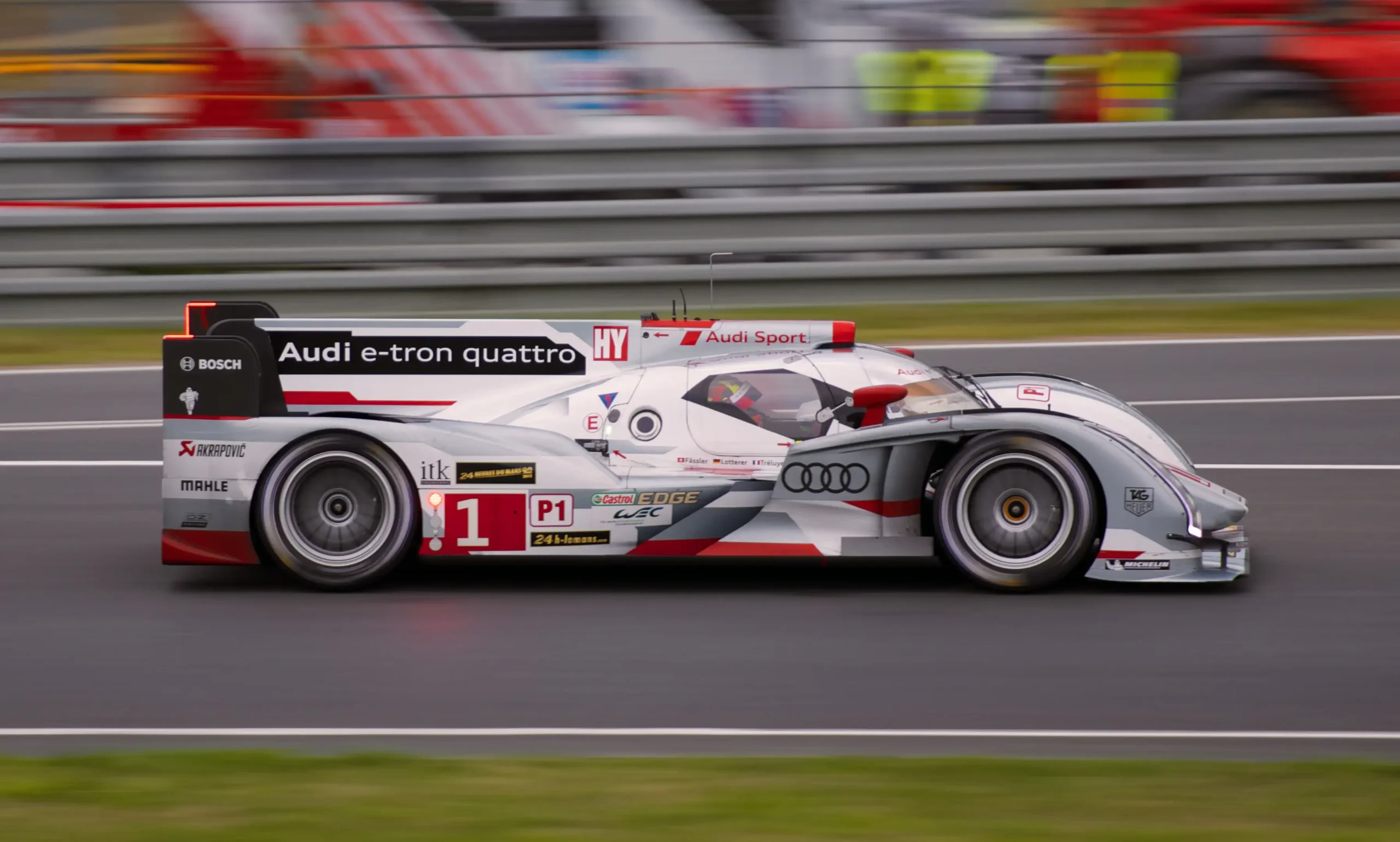
Safety Car, VSC, Full Course Yellow and Slow Zones
Both reduce speed without immediately bunching the field. F1 uses a driver-specific delta around the lap, while WEC applies an endurance-specific controlled-speed procedure and can also use Slow Zones at selected circuits.
Formula 1 Uses Safety Car and Virtual Safety Car
A physical Safety Car gathers the field. A Virtual Safety Car keeps cars separated while drivers follow a target delta.
Both reduce pit-stop loss. Therefore, a neutralization can transform strategy.
The complete process is explained in the Safety Car guide.
WEC Needs Flexible Local Procedures
Long circuits can make a full neutralization inefficient. Slow Zones reduce speed in a defined section while racing continues elsewhere.
Full Course Yellow controls the entire field. A major incident may still require a Safety Car or red flag.
Class position complicates every restart. Hypercars and LMGT3 cars may be spread across several parts of the lap.
F1 Halo vs WEC Closed Cockpit
Both use carbon-fiber survival structures, HANS devices, harnesses and strict FIA crash testing. F1 protects an open cockpit with the Halo, while Hypercars use enclosed cockpits, roofs, doors and endurance-specific visibility systems.
F1 Protects the Driver in an Open-Wheel Car
The Halo diverts large debris and another car away from the head. Crash structures absorb energy around the survival cell.
Wheel tethers reduce detached-wheel risk. The driver remains secured by a six-point harness.
WEC Adds Enclosed-Cockpit Challenges
The roof and windscreen protect against weather and debris. However, doors and extraction paths must remain usable after an impact.
Headlights and rain lights are essential for visibility. Hybrid cars also require high-voltage safety procedures.
Multi-Class Closing Speed Creates Unique Risk
An F1 crash usually involves cars with similar performance. WEC incidents can begin with a Hypercar closing rapidly on an LMGT3 car.
Night, spray and traffic reduce reaction time. Predictable driving becomes part of the safety system.
Common causes appear in the motor-racing crash guide.
Physical and Mental Demands
Formula 1 Produces Higher Peak G-Force
F1 drivers experience stronger braking and cornering loads. Neck and core strength are essential.
The cockpit is hot, and the driver cannot relax. Every lap requires precise steering, braking and energy control.
WEC Produces Repeated Fatigue
One endurance stint may feel less violent than an F1 Grand Prix. However, drivers return several times across a long event.
Sleep quality, nutrition and hydration affect later performance. A mistake at dawn can erase hours of perfect driving.
Moreover, traffic creates constant mental work. The driver must judge closing speeds while managing fuel and tires.
F1 vs WEC Costs and Manufacturer Freedom
Formula 1 generally requires the larger annual budget because each constructor develops a unique car throughout a long season. Factory WEC Hypercar programs remain expensive, but homologation and LMDh common components reduce continuous development.
F1 Runs a Continuous Development Race
Teams operate wind tunnels, simulation groups and manufacturing departments. Upgrades arrive throughout the season.
The financial regulations limit defined spending. However, power units and several major costs follow separate treatment.
WEC Offers Two Hypercar Routes
LMH allows greater design freedom. LMDh reduces cost by using an approved chassis base and common hybrid system.
Both still require engines, software, testing and a large race operation. Spare parts must support long repairs.
LMGT3 Expands Customer Participation
Private teams can buy established GT3 machinery. That lowers the entry barrier compared with a factory Hypercar.
Pro-Am lineups also connect professional racing with funded amateur drivers. This structure gives WEC a broader team ecosystem.
Sustainable Fuel and Road-Car Relevance
F1 Uses a Single Sustainable-Fuel Direction
The 2026 power units run on advanced sustainable fuel. Electrical output also increased sharply.
F1 presents the formula as a laboratory for efficient hybrids and drop-in fuel technology. The technology could serve vehicles beyond racing.
WEC Tests More Powertrain Concepts
WEC combines several combustion engines, hybrid systems and non-hybrid Hypercars. Manufacturers can link the program to different road-car strategies.
Long races expose efficiency and thermal management under real endurance conditions. That makes the championship useful for durability development.
Logistics Still Matter
Neither championship becomes low-impact through fuel alone. Freight, aviation and event operations remain significant.
Therefore, sustainability claims should include the complete championship footprint. Vehicle technology is only one part.
Current 2026 F1 and WEC News
BMW Won the Rolex 6 Hours of São Paulo
BMW M Team WRT’s #15 M Hybrid V8 won at Interlagos on July 12. Kevin Magnussen, Raffaele Marciello and Dries Vanthoor shared the car.
The result was BMW’s second victory in three races after its Spa success. It also reduced Toyota’s manufacturers’ lead to five points.
BMW therefore left Brazil with 127 points against Toyota’s 132. Ferrari held third with 88.
Team Turkey by TF Won LMGT3
The #34 Corvette Z06 GT3.R took the São Paulo LMGT3 victory. Salih Yoluç, Peter Dempsey and Charlie Eastwood finished 8.108 seconds ahead of the #69 BMW.
The result followed TF Sport’s Le Mans class victory. It also demonstrated how driver order and tire strategy can shape LMGT3.
The 2026 Grid Features 14 Manufacturers
The championship entry brought together Alpine, Aston Martin, BMW, Cadillac, Corvette, Ferrari, Ford, Genesis, Lexus, McLaren, Mercedes-AMG, Peugeot, Porsche and Toyota.
At Imola and São Paulo, the field contained 17 Hypercars and 18 LMGT3 cars. That variety is one of WEC’s clearest advantages over a single technical class.
The Future Hypercar Platform Changes in 2030
The FIA, ACO and IMSA announced one two-wheel-drive hybrid platform for 2030. Manufacturers will still choose bespoke or common-chassis routes.
The plan aims to keep technical identity while simplifying convergence. It also shows that the current LMH-LMDh era is still evolving.
For current model context, see the WEC Hypercar comparison.
Final Verdict: Which Championship Wins Each Category?
Formula 1 wins when the question asks for the fastest complete racing car. Its performance is more concentrated and more extreme.
WEC wins when the question asks for strategic variety. The championship combines several cars, several drivers and several races within one event.
Neither discipline is a slower version of the other. They reward different engineering priorities.
F1 removes uncertainty by maximizing performance. WEC accepts uncertainty and builds the car to survive it.
F1 vs WEC FAQs
What is the main difference between F1 and WEC?
F1 is a single-class Grand Prix championship built around maximum lap speed. WEC is multi-class endurance racing with driver changes, refueling and races lasting several hours.
Which is faster, an F1 car or a WEC Hypercar?
An F1 car is faster over a complete lap because it is lighter and produces more downforce. A Hypercar sacrifices peak speed for efficiency, reliability and long-race performance.
Does WEC use Balance of Performance?
Yes. WEC uses BoP in Hypercar and LMGT3 to balance different vehicle concepts. Formula 1 does not adjust cars through BoP.
Why does WEC use several drivers in one car?
Endurance races are too long for one driver to complete safely. Crews rotate to manage fatigue, changing conditions and driving-time regulations.
Conclusion: F1 Chases Peak Performance, WEC Chases Complete Performance
The F1 vs WEC comparison begins with a clear speed result. Formula 1 is faster over one lap.
The car is lighter and produces more aerodynamic load. It also has a stronger power-to-weight ratio.
However, WEC measures speed across a much longer period. A Hypercar must remain effective through traffic, fuel stops and repeated driver stints.
That difference explains the cars. F1 uses an open-wheel single-seater with active aerodynamics.
WEC uses closed-cockpit prototypes and production-based LMGT3 cars. Headlights, wipers and rapid repairs are essential.
The championships also organize competition differently. Formula 1 runs one class.
WEC runs Hypercar and LMGT3 together. LMP2 joins the championship field at Le Mans.
Therefore, WEC creates separate overall and class winners. A GT car can take a major victory without challenging the leading Hypercar.
Powertrain rules reveal another contrast. Every F1 car uses a turbo V6 hybrid architecture.
WEC allows several engine layouts. The Hypercar class includes LMH, LMDh, hybrid and non-hybrid concepts.
Balance of Performance makes that variety possible. Weight, power and energy parameters can shape the competitive window.
Formula 1 rejects that approach. Teams compete directly under one technical rulebook and financial rules.
Consequently, an exceptional F1 design can dominate. WEC tries to keep several manufacturer concepts close enough to race.
Race formats change strategy even more. F1 normally covers slightly more than 305 kilometers.
WEC runs for six hours or longer. Le Mans extends the contest to 24 hours.
F1 bans refueling. Tire timing and track position therefore dominate most strategy calls.
WEC refuels throughout the race. Teams also decide when to change tires and drivers.
A tire can remain on the car for two fuel stints. Skipping the change may save more time than fresh grip gains.
Traffic is WEC’s unique test. Hypercars repeatedly catch LMGT3 cars.
Every pass requires judgment. The slower car may be fighting for its own class lead.
F1 drivers pass rivals with broadly similar braking points. WEC drivers manage large closing speeds in daylight, darkness and rain.
Reliability also becomes a performance category. A WEC car must tolerate several hours of vibration, heat and curb strikes.
Repairability matters as much as prevention. Modular bodywork and fast access can save a race.
Formula 1 components still need strong life. However, one Grand Prix presents a shorter continuous duty cycle.
The human challenge follows the same pattern. F1 produces greater peak g-force.
WEC adds repeated fatigue and changing conditions. Drivers must rest, return and adapt.
The latest 2026 results show the championship’s depth. BMW won São Paulo and moved within five points of Toyota.
Racing Team Turkey by TF won LMGT3 with Corvette. Different lineups and strategies produced separate class stories.
That is the central answer. Formula 1 concentrates excellence into one car, one driver and one short race.
WEC spreads excellence across classes, crews and hours. It rewards the package that remains useful for the longest time.
Formula 1 is the sharper sprint. WEC is the broader examination.
Together, they represent two of the most sophisticated ways to define a world-class racing car.
Sources and Fact-Checking
This article was checked on July 31, 2026 against current FIA, Formula 1 and FIA WEC material. Current standings and São Paulo results describe the championship after the July 12 race.