Why Did F1 Ban Active Suspension?
The system made cars faster by holding their aerodynamic platform in the perfect position. It also drove costs upward and pushed the driver-aid debate to breaking point.
Formula 1 banned active suspension for 1994 to curb an expensive electronic arms race and return more control to drivers. Williams’ dominance made the issue impossible to ignore, but the rule targeted a broad group of driver aids.
At its best, active suspension made an F1 car behave like an aerodynamic machine mounted on four computer-controlled hydraulic rams.
The system could resist pitch under braking. It could reduce squat under acceleration and limit roll through corners.
Most importantly, it held the floor, wings and diffuser inside a narrow ride-height window. Therefore, engineers could design more aggressive aerodynamics.
Lotus pioneered the idea in Formula 1 during the early 1980s. However, the first versions were heavy and difficult to perfect.
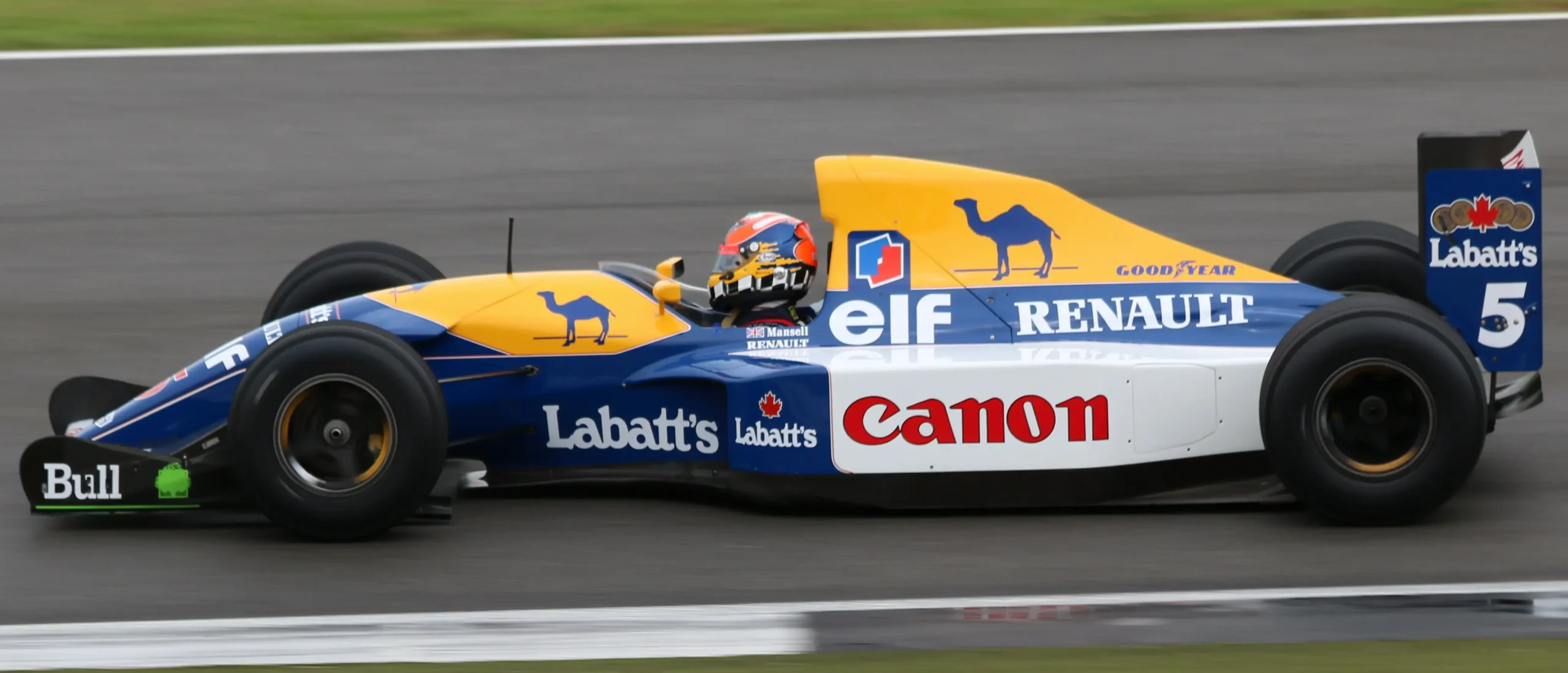
Williams later turned active ride into a championship weapon. The FW14B dominated 1992, while the FW15C pushed electronic control even further in 1993.
Then the technology vanished. The FIA grouped active suspension with traction control, anti-lock brakes and other electronic driver aids.
The ban took effect for the 1994 season. Consequently, teams returned to passive springs, dampers and mechanical geometry.
That simple timeline creates several myths. Some fans believe the FIA acted only to stop Williams.
Others assume active suspension was banned because it caused crashes. Neither explanation tells the whole story.
So, why did F1 ban active suspension when it was one of the sport’s cleverest inventions?
The answer combines cost, driver influence, regulation and competitive politics. Safety mattered, but it was not the main published reason.
The Direct Answer: F1 Wanted Lower Costs and More Driver Control
The FIA banned it during a wider crackdown on electronic driver aids. Officials wanted to limit spending and answer criticism that computers were taking too much control away from drivers.
The active suspension ban did not arrive alone. Traction control and anti-lock braking were also prohibited for 1994.
Launch control and other automatic functions faced tighter restrictions. Meanwhile, semi-automatic gearboxes remained legal.
Formula 1’s official regulation history describes two main pressures. Costs were rising, and critics believed drivers were becoming a smaller part of performance.
That is the core answer to why did F1 ban active suspension. The governing body wanted to reset the balance between engineering and human control.
Williams had shown what a mature active system could achieve. Therefore, every serious rival needed a major electronics and hydraulics program.
Smaller teams faced a growing disadvantage. Even well-funded teams could spend heavily without matching Williams’ software knowledge.
The ban also simplified enforcement on paper. However, policing electronic systems remained difficult throughout 1994.
Active suspension was not banned because it was ineffective. It was banned because it was becoming too effective, too expensive and too influential in the argument over who should control the car.
What Was Active Suspension in Formula 1?
Active suspension uses powered actuators, sensors and computer control to change the suspension’s response while the car is moving.
A passive suspension reacts to forces through springs, dampers and mechanical linkages. It cannot decide to raise or lower one corner.
An active system can make that decision. Sensors measure movement, load and driver inputs.
A control computer then commands hydraulic actuators. Consequently, the car can resist unwanted pitch, roll and ride-height change.
It Controlled the Car’s Platform
“Platform” means the chassis position relative to the road. Aerodynamic surfaces perform best within specific heights and angles.
If the nose dives, the front wing and floor see a different airflow. If the rear squats, diffuser performance also changes.
Active suspension reduced those movements. Therefore, the aerodynamic map became more consistent.
It Was More Than Adjustable Damping
Modern road cars may use adaptive dampers. Those systems alter damping force but usually retain conventional springs.
Full active suspension can apply force to move the car. That difference matters when discussing the F1 active suspension ban.
It Did Not Drive the Car by Itself
The driver still steered, braked and accelerated. However, the computer managed a major part of chassis behavior.
That is why the “driver aid” label remains debated. The system did not choose the racing line, but it removed setup compromises.
Readers new to the sport can start with what Formula 1 is and how an F1 car works.
Active Suspension in F1: The Key Timeline
| Year | Car or Rule | Why It Mattered |
|---|---|---|
| 1983 | Lotus Type 92 | Lotus raced an early full-active system, proving the concept but exposing weight and reliability problems. |
| 1987 | Lotus 99T | A more mature system helped Ayrton Senna win at Monaco and Detroit. |
| 1987 | Williams FW11B | Williams began racing its simpler ride-height-control approach. |
| 1992 | Williams FW14B | Active ride became central to one of Formula 1’s most dominant championship cars. |
| 1993 | Williams FW15C | The system was integrated with advanced electronics, ABS and automated setup control. |
| 1994 | Driver-aid ban | Active suspension, traction control and ABS disappeared under new rules. |
| 2014 | FRIC controversy | Teams removed interconnected hydraulic systems after the FIA questioned their aerodynamic purpose. |
| 2026 | Current regulations | Powered suspension devices and self-levelling feedback systems remain forbidden. |
The timeline explains why the question why did F1 ban active suspension cannot begin with Williams alone. Lotus started the story almost a decade earlier.
Lotus Pioneered Active Ride Before Williams Perfected It
Lotus pioneered the technology and first raced it on the Type 92 in 1983. The team later developed the 1987 Lotus 99T into the first active-suspension F1 car to win Grands Prix.
Lotus engineers understood the value of a controlled platform during the original ground-effect era. Underbody aerodynamics were extremely sensitive to ride height.
However, conventional suspension allowed the car to pitch and roll. Lotus wanted the floor to remain stable while the wheels followed bumps.
The Type 92 Was an Early Experiment
The 1983 Type 92 used hydraulic actuators to synthesize suspension behavior. Computing power was limited by modern standards.
The system was also heavy. In addition, hydraulic demand consumed power and created reliability concerns.
Lotus briefly raced the idea before shifting development toward road-car research. Yet the concept remained alive.
The Lotus 99T Brought Active Ride Back
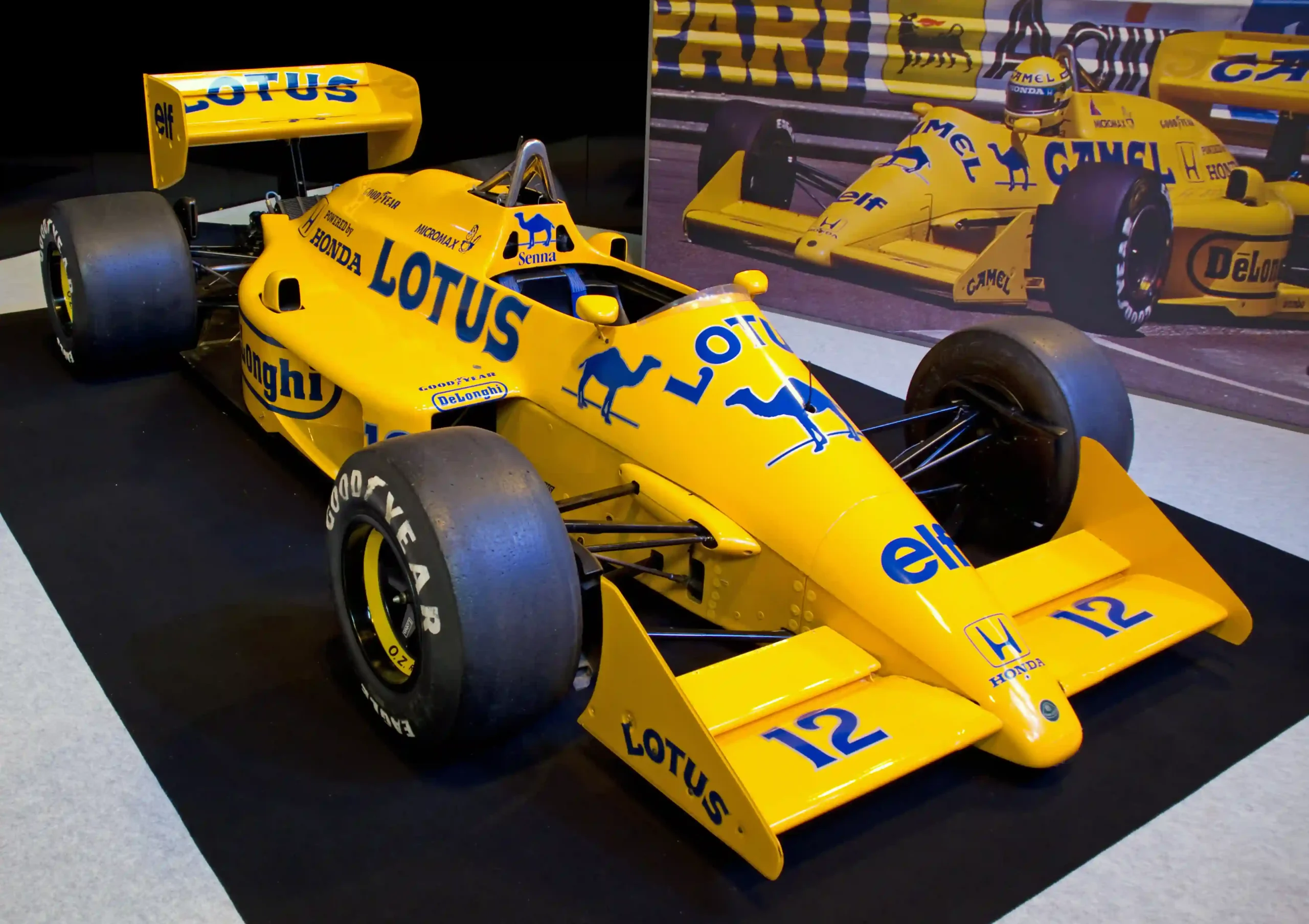
Lotus returned to active suspension in 1987. The yellow Honda-powered 99T used a more mature computer-controlled system.
The car could remain flatter over bumps. It could also preserve tire contact and run less wing on some circuits.
Senna Won at Monaco and Detroit
Ayrton Senna won the 1987 Monaco Grand Prix in the 99T. He then won on Detroit’s bumpy street circuit.
Those tracks highlighted the system’s strengths. Active ride helped the chassis cope with bumps and changing surfaces.
However, the Lotus was not the season’s dominant car. Williams-Honda had a stronger overall package.
Early Active Suspension Still Had Weaknesses
The system added weight and consumed hydraulic power. Drivers also reported unusual feedback.
Hydraulic faults could leave the car resting on support springs. Therefore, reliability remained a serious engineering challenge.
The Lotus story shows why why did F1 ban active suspension is not simply a tale of easy computer assistance. The technology took years of failure and development.
How F1 Active Suspension Worked
Sensors measured the car’s movement and loads. A computer then controlled hydraulic actuators at each corner to maintain programmed ride heights and chassis attitudes.
The exact systems differed between teams. Lotus pursued a fuller active approach, while Williams focused strongly on ride-height control.
However, the core loop remained similar. Sensors supplied information, software interpreted it and hydraulics applied force.
Braking Normally Makes the Nose Dive
Weight transfers forward under braking. A passive car compresses the front suspension and extends the rear.
Active ride could oppose that motion. Therefore, front-wing and floor performance stayed closer to the design target.
Acceleration Normally Makes the Rear Squat
Rear suspension compresses when torque reaches the tires. That changes rake and diffuser position.
The system could support the rear. As a result, the car remained more stable during corner exit.
Cornering Normally Produces Roll
Lateral load pushes the car toward the outside wheels. Body roll changes camber and aerodynamic attitude.
Active suspension resisted that movement. It could also tune the balance for different corner types.
The Computer Could Use Track-Specific Maps
Teams programmed targets for each circuit. More advanced versions could change settings around the lap.
The FW15C even automated adjustments that drivers had controlled manually on the FW14B. Consequently, the car could continually seek its preferred platform.
For supporting concepts, see what car handling means, how grip works and oversteer versus understeer.
Williams Turned Active Suspension Into a Championship Weapon
The FW14B combined active suspension with Adrian Newey’s aerodynamics, a Renault V10, traction control and a semi-automatic gearbox.
Williams had experimented with active ride during the 1980s. However, the 1992 FW14B delivered the breakthrough.
The car began as an active-suspension adaptation of the 1991 FW14. It became so effective that Williams delayed its intended replacement.
The Aerodynamics Were Designed Around Platform Control
Adrian Newey recognized that active ride offered more than mechanical comfort. It allowed aerodynamic surfaces to operate in a narrow range.
Engineers could make the front wing and diffuser more aggressive. They no longer needed stable performance across large pitch changes.
Learn why that matters in the downforce guide, the F1 diffuser explainer and the archive feature on angle of attack.
The Car Could Reduce Drag on Straights
The FW14B could lower its rear and stall the diffuser. That reduced drag and improved straight-line speed.
The driver activated the change. Therefore, the suspension also became an aerodynamic control device.
Mansell Extracted the Performance
Nigel Mansell trusted the car’s delayed-feeling response on corner entry. Riccardo Patrese found that sensation harder to accept consistently.
Mansell won nine races in 1992. Williams won 10 of 16 and secured both championships.
The Numbers Were Extraordinary
Mansell took 14 pole positions. Williams started from pole at 15 of 16 events.
The team also set the fastest individual lap on every Grand Prix weekend. Consequently, rivals faced a complete performance deficit.
The FW14B answered the engineering question. It also intensified the political question: why did F1 ban active suspension if the system represented legitimate innovation?
The FW15C Was the Peak of the Electronic-Aid Era
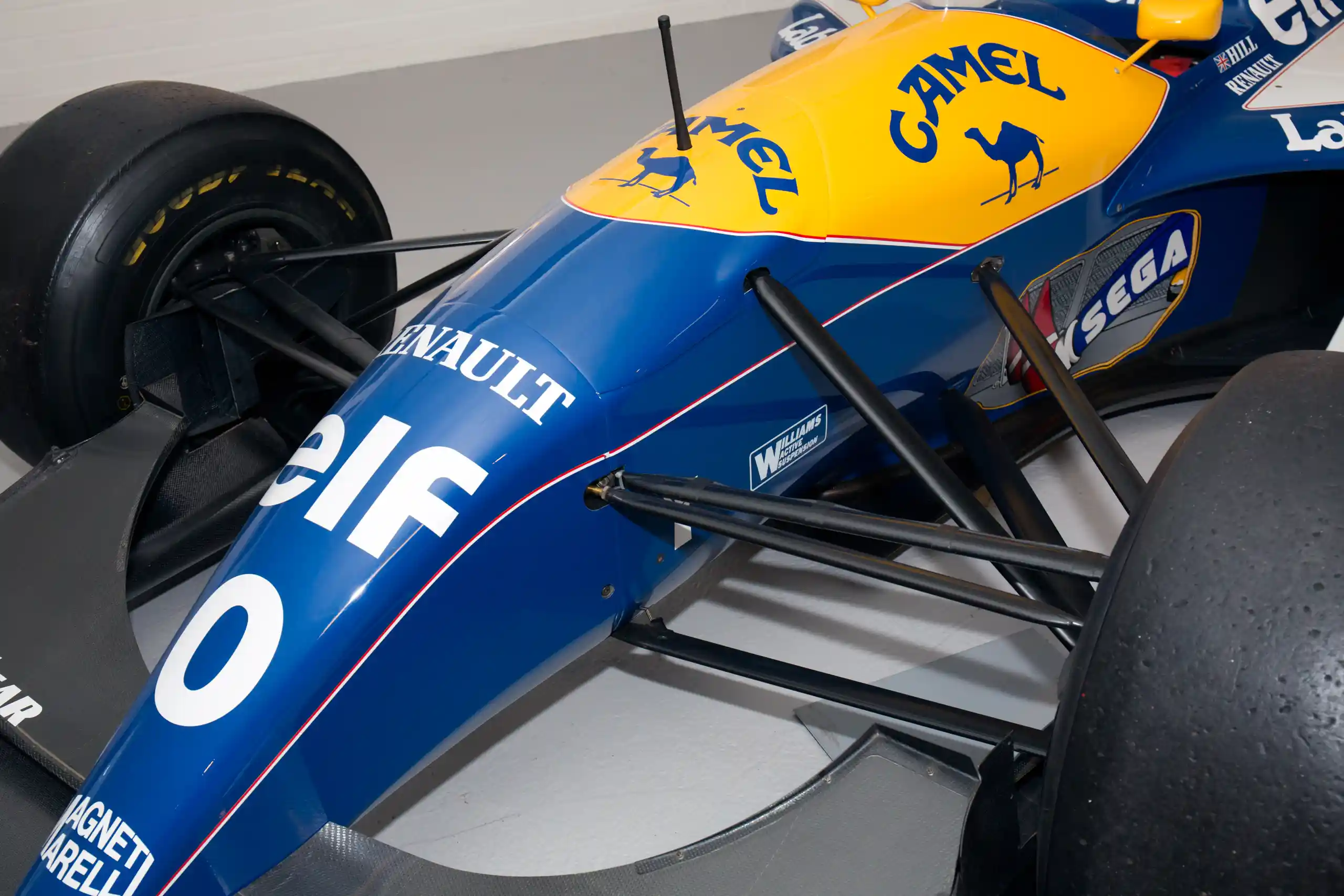
The 1993 car combined active ride, traction control, ABS, power steering, automated setup changes and selectable automatic shifting.
The FW15C was designed around active suspension from the start. That distinguished it from the adapted FW14B.
Paddy Lowe developed much of the control software. Patrick Head and Adrian Newey led the wider technical program.
Hydraulic Actuators Controlled Every Corner
The computer reacted to measured loads. Hydraulic pressure lengthened or shortened the actuators.
That kept the car in its most efficient aerodynamic position. Formula 1’s technical analysis described the advantage as worth whole seconds over conventional suspension.
The Setup Could Change Between Corners
The FW14B gave drivers some ride-height control through cockpit adjustments. The FW15C automated more of that process.
The car could continually alter its platform. Therefore, one mechanical compromise no longer had to cover the entire lap.
ABS Arrived During the Season
Williams added anti-lock braking from the French Grand Prix. The car also used traction control and electronic braking assistance.
Drivers could select manual or automatic gear shifting. Paddle controls still allowed immediate manual intervention.
See how paddle shifters work for the transmission background.
Not Every Driver Loved the Feel
Alain Prost disliked the lack of traditional feedback. Active control could make the car feel detached from normal suspension movement.
That criticism matters. Faster technology does not always create clearer communication between car and driver.
The FW15C Defined the Ban Debate
Williams won both 1993 championships. The car became the clearest example of electronics shaping performance.
By mid-1993, the FIA had already announced the next reset. The question why did F1 ban active suspension was now inseparable from the FW15C.
The Four Main Reasons Behind the Active Suspension Ban
Cost Escalation
Software, sensors, hydraulics and testing created a major development program that smaller teams could not match.
Driver Influence
The FIA wanted drivers to manage more of the car’s changing balance without automatic chassis correction.
Regulatory Control
Electronic systems were difficult to inspect because performance depended on software as well as visible hardware.
Fourth factor: Williams’ dominance created urgency. It did not prove the rule was written for one team, but it showed how large the advantage could become.
Reason One: The FIA Wanted More Control Back in the Driver’s Hands
The FIA classified it with driver aids because it automatically controlled chassis attitude and removed handling compromises that a driver would otherwise manage.
The label remains controversial. Active suspension did not steer or select braking points.
However, it changed the car’s response without direct driver action. The system could keep the platform flat while the driver concentrated on the racing line.
Drivers Normally Adapt to Weight Transfer
With passive suspension, braking changes front grip and aerodynamic balance. Acceleration then creates a different response.
Drivers must anticipate those movements. Active control reduced the size of the change.
Setup Compromise Is Part of Driving
A passive car may work well in fast corners but struggle over bumps. Engineers and drivers accept a compromise.
Active ride could offer different behavior at different points. Therefore, one setup no longer defined the complete lap.
The Driver Still Needed Courage and Precision
The system did not make Grand Prix racing easy. Drivers still faced enormous speed, braking loads and narrow limits.
Nevertheless, the FIA believed computers were taking a growing share of control. That concern is central to why did F1 ban active suspension.
Reason Two: Active Suspension Created an Expensive Arms Race
Yes. Formula 1’s official history identifies spending as a major reason for the 1994 driver-aid ban.
A competitive system required more than four actuators. Teams needed hydraulic hardware, sensors, control electronics and sophisticated software.
They also needed specialists who understood vehicle dynamics and real-time control. Consequently, the technology favored large budgets.
Testing Costs Grew Rapidly
Engineers had to map the system for each circuit. They also needed track testing to confirm computer models.
Private testing was far less restricted than today. Therefore, wealthy teams could run extensive development programs.
Reliability Required Expensive Redundancy
A hydraulic leak or sensor fault could destroy the car’s balance. Teams needed robust parts and backup logic.
That meant more design, inspection and data analysis. The cost continued even after the concept worked.
Rivals Could Not Ignore Williams
Once the FW14B dominated, every rival needed a response. Refusing to develop active ride risked permanent defeat.
As a result, the spending race would have accelerated. The FIA chose to stop it before the technology became universal.
Cost Was Not a Temporary Excuse
Formula 1 continued restricting active and interconnected suspension concepts later. That pattern shows a long-term policy.
The governing body repeatedly treated suspension as a mechanical system, not an unlimited aerodynamic control platform.
Reason Three: Electronic Systems Were Difficult to Police
The same hardware could perform different functions through software, while legal and illegal control logic could be difficult to separate.
A mechanical part can often be measured directly. Software may behave differently under specific conditions.
Therefore, inspectors needed code, data and functional tests. That made enforcement slower and more disputed.
One Hydraulic System Could Serve Several Purposes
A suspension system could improve ride, mechanical grip and aerodynamics. The function depended on programming.
That blurred regulatory categories. Was it suspension, an aerodynamic device or a driver aid?
Hidden Functions Became a Political Concern
Teams protected software as valuable intellectual property. Rivals suspected systems they could not see.
Consequently, trust declined. The 1994 season included repeated arguments about electronic legality beyond suspension.
A Clear Ban Was Easier to Write Than a Performance Limit
The FIA could have limited response speed or hydraulic force. However, teams would optimize around any threshold.
A broad prohibition simplified the principle. It did not eliminate every enforcement challenge.
For the modern electronics foundation, read what an ECU does in F1.
Was Active Suspension Banned Because It Was Dangerous?
A failure could cause an abrupt change in ride height or handling, but safety was not the main published reason for the 1994 ban.
Powered suspension carries unique failure modes. A pressure loss can make the car drop onto backup springs.
A faulty sensor can command the wrong response. At high speed, any sudden platform change is serious.
Lotus Experienced Hydraulic Problems
The 99T suffered faults during the 1987 season. At Hockenheim, hydraulic trouble left Senna’s car riding extremely low.
He still finished, but his lap times fell sharply. The incident showed that failure did not always mean immediate retirement.
Williams Also Had Occasional System Errors
The FW15C’s technology was highly developed, not infallible. Incorrect behavior could surprise the driver.
However, conventional suspension can also fail. A broken wishbone or damper may be equally dangerous.
The Ban Was Announced as a Sporting and Cost Measure
Official F1 histories emphasize spending and the driver’s role. Therefore, calling it a pure safety ban is misleading.
Safety formed part of the background concern over speed and complexity. It was not the complete answer to why did F1 ban active suspension.
General accident factors still depend on specific mechanical, circuit and driver circumstances.
Did the FIA Ban Active Suspension Just to Stop Williams?
Williams’ success accelerated the political pressure, but the 1994 rules removed several electronic aids across the entire grid.
It is easy to understand the suspicion. Williams won both championships in 1992 and 1993.
The FW15C was the most complete electronic-aid car. Meanwhile, several rivals had not reached the same level.
Williams Lost More Than Most
The FW14B and FW15C were developed around controlled ride height. Their aerodynamics assumed a narrow operating window.
When active ride disappeared, Williams needed more forgiving airflow. That transition proved difficult.
The Rule Was Broader Than Williams
Traction control and ABS also disappeared. Other teams used or developed those systems.
Therefore, the regulation cannot be described accurately as a single-team technical ban. It was an electronic reset.
Political Motives Are Hard to Separate
Dominance always affects Formula 1 politics. Rival teams lobby, and regulators respond to the championship’s direction.
However, there is no need to invent a secret explanation. The public concerns over cost and driver influence were already substantial.
The Best Answer Is Nuanced
Did Williams’ dominance matter? Absolutely.
Was Williams the only target? No. That distinction gives the most credible answer to why did F1 ban active suspension.
What Happened When Active Suspension Disappeared in 1994?
Williams had to redesign its car around passive suspension, which forced the aerodynamics to operate across a wider range of ride heights.
The 1994 FW16 evolved from cars designed around active ride. However, its passive platform moved much more.
That exposed aerodynamic behavior the previous cars had avoided. The early FW16 was difficult and sensitive.
A Passive Car Needs a Wider Aerodynamic Window
The nose dives under braking and the rear squats under power. The floor must continue working through those changes.
Williams initially ran aerodynamics that were too sensitive. Later bodywork and floor changes improved stability.
The Driver Felt More Chassis Movement
Steering and braking inputs now produced larger attitude changes. Drivers needed to manage those movements directly.
The same applied throughout the field. Every team relearned passive platform control.
The Ban Did Not End Williams’ Success
Williams still won the 1994 Constructors’ Championship. It also remained a title-winning force later in the decade.
Therefore, active suspension was not the only source of its strength. The team still had strong aerodynamics, engines and engineering depth.
The 1994 Tragedies Must Not Be Reduced to One Rule
The loss of active ride affected handling. However, it would be wrong to use that fact as a simple explanation for the San Marino tragedy.
Serious accidents involve specific mechanical, circuit and impact circumstances. The ban alone does not establish causation.
Modern survival structures are covered in the F1 monocoque guide.
What Replaced Active Suspension in Formula 1?
Teams use passive springs, dampers, torsion bars, heave elements and suspension geometry to control pitch, roll and ride height.
The ban did not stop suspension innovation. It changed the tools engineers could use.
Modern systems still pursue the same goal: stable aerodynamics with enough compliance for tires and bumps.
Torsion Bars Replace Traditional Coil Springs
Many F1 cars use torsion bars inside the chassis. A rotating bar provides the spring force.
Rockers and pushrods or pullrods transfer wheel motion inward. This packaging protects airflow around the car.
Heave Springs Control Both Wheels Together
A third element responds when both wheels move in the same direction. That helps resist dive and squat.
Separate anti-roll elements manage opposite wheel movement. Therefore, engineers can tune heave and roll differently.
Geometry Creates Anti-Dive and Anti-Squat
Suspension pickup points can redirect braking and acceleration forces. Fixed geometry reduces chassis movement without powered control.
The current rules explicitly permit fixed anti-dive, anti-squat and anti-lift effects. However, they tightly limit ride-height changes created through steering kinematics.
Dampers Remain Highly Sophisticated
Passive does not mean simple. Damper valves can produce different forces at different shaft speeds.
Teams tune bump, rebound and frequency response carefully. Yet the damper cannot use a powered feedback loop to choose a new state.
Mechanical Balance Still Shapes Aerodynamics
Engineers accept a larger ride-height range than active ride allowed. They design the floor and wings to remain stable within it.
That compromise is part of modern F1 engineering. It also explains why suspension geometry remains so secretive.
FRIC, Mass Dampers and the Search for Active-Ride Benefits
No. FRIC linked front and rear suspension hydraulically, but teams described it as passive because it did not require electronic feedback control.
Teams kept searching for legal platform control after 1994. Several systems approached the boundary between suspension and aerodynamics.
Renault’s Mass Damper Targeted Chassis Oscillation
A suspended weight inside the nose helped reduce vertical vibration. That stabilized tire contact and the aerodynamic platform.
The FIA later treated the system as a movable aerodynamic device. Consequently, Renault removed it during 2006.
FRIC Connected Front and Rear Suspension
Front-and-Rear Interconnected Suspension used hydraulic networks to manage pitch. Mercedes and other teams developed advanced versions.
In 2014, the FIA questioned whether some systems primarily influenced aerodynamics. Every team removed FRIC before the German Grand Prix.
The 2015 Rules Separated the Axles
Later regulations required front suspension to respond only to front-wheel loads. The rear system faced the same restriction.
That limited hydraulic interconnection. It also closed another route toward passive self-leveling behavior.
DAS Showed That Suspension-Adjacent Innovation Continued
Mercedes introduced Dual Axis Steering in 2020. Drivers moved the steering wheel fore and aft to alter front-wheel toe.
The system was legal for one season under that rule set. It was then prohibited by revised regulations.
Read the DAS system explainer for the full mechanism.
Active Suspension vs Passive F1 Suspension
| Feature | Active Suspension | Modern Passive Suspension |
|---|---|---|
| Energy source | Powered hydraulic or electronic actuation | Mechanical spring, damper and tire forces |
| Ride-height control | Can target programmed values while moving | Changes naturally with load and geometry |
| Feedback loop | Uses sensors and software | No powered self-levelling feedback |
| Aerodynamic platform | Maintained inside a narrow window | Designed to work across wider movement |
| Setup compromise | Can vary response around the lap | One mechanical setup covers the lap |
| Cost and complexity | Very high | Still advanced, but less electronically complex |
| Current legality | Forbidden | Required under the 2026 framework |
The comparison provides a simple answer to why did F1 ban active suspension. The active system removed limits that the FIA wanted every team and driver to manage.
What the 2026 FIA Suspension Rules Say
No. Article C10.2.4 forbids any powered device capable of altering a suspension system’s configuration or performance.
The current rules are more detailed than the simple 1994 ban. They define how suspension may respond and what connections are prohibited.
No Powered Suspension Device
The technical regulations forbid powered devices that alter suspension configuration or performance. That directly rules out classic active ride.
No Adjustment While the Car Is Moving
Teams cannot adjust the suspension system while the car is in motion. Therefore, a driver cannot select a different mechanical suspension state during a lap.
No Self-Levelling or Feedback Ride-Height Control
The rules also prohibit ride-height control through self-levelling systems or feedback loops. This wording closes the central function of active suspension.
Front and Rear Axles Must Remain Independent
Each axle must respond only to wheel loads from that axle. The regulations also restrict coupling between suspension elements.
Fixed Anti-Dive and Anti-Squat Remain Legal
Mechanical geometry may influence the reaction to braking and acceleration forces. These effects must remain fixed.
Therefore, modern cars can resist dive without a computer. They cannot adapt that response through active control.
Why Does F1 Allow Active Aero but Ban Active Suspension?
No. Active aero moves permitted front and rear wing elements in defined zones, while active suspension would control the chassis and wheel movement.
The distinction can seem inconsistent. Formula 1 now allows moving wings but still forbids powered ride-height control.
Active Aero Has a Narrow, Defined Function
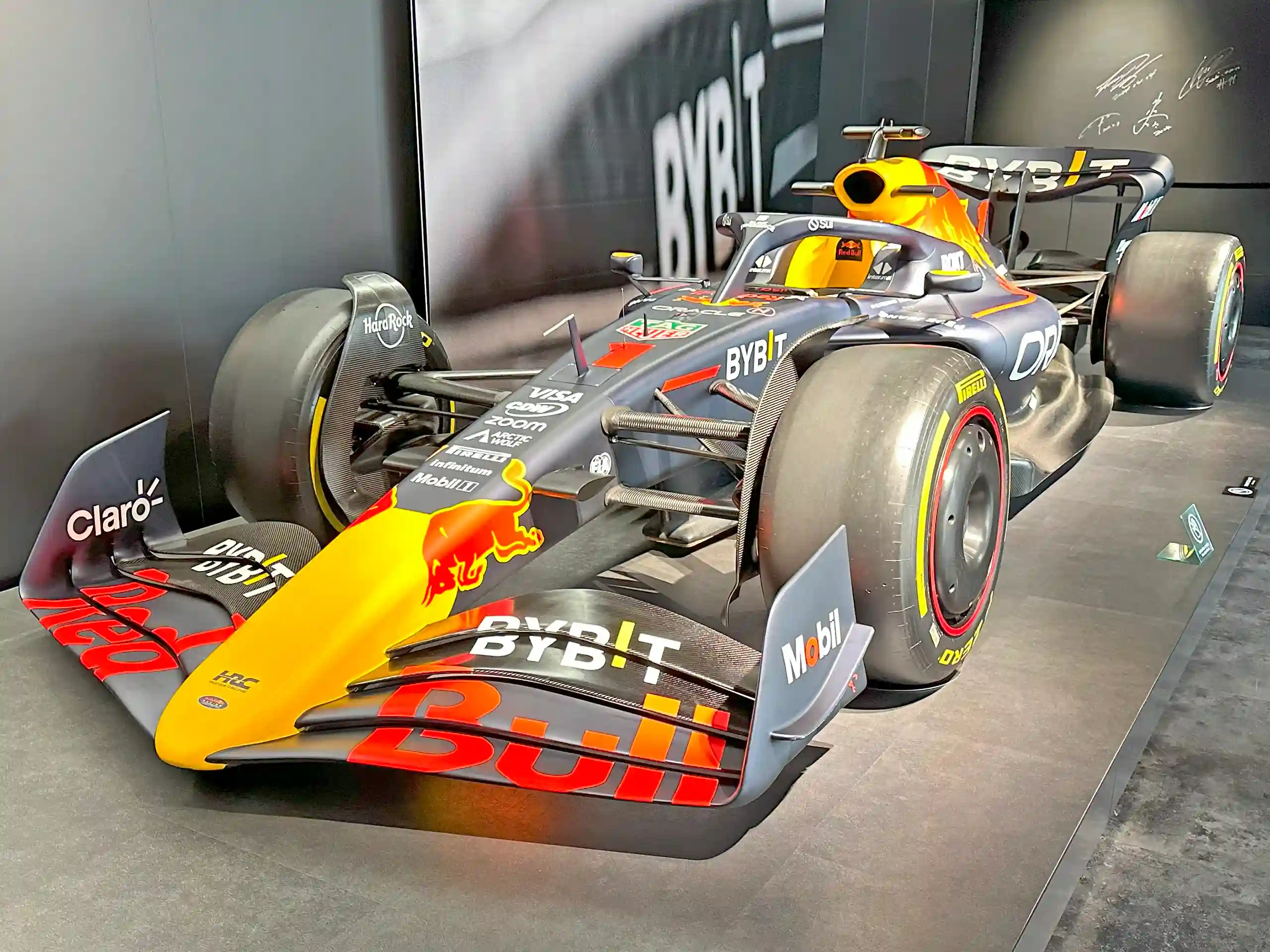
In 2026, front and rear wing flaps switch between Corner Mode and Straight Mode. Every driver can use the system at designated points.
Early development language called the settings X-Mode and Z-Mode. Current Formula 1 terminology uses Straight Mode and Corner Mode.
The Wing Movement Is Heavily Prescribed
The FIA defines the permitted devices, positions and activation areas. Therefore, the system is easier to standardize and inspect.
Active Suspension Would Affect Every Corner Continuously
A ride-control computer could react to braking, steering, bumps and acceleration. Its influence would cover the entire lap.
That creates a much larger software-development battlefield. Consequently, the old cost and policing concerns would return.
Active Aero Supports the 2026 Energy Concept
Lower drag on straights helps cars use electrical energy efficiently. High-downforce settings then restore cornering grip.
The wider rules are explained in the F1 2026 regulations guide.
Could Active Suspension Return to Formula 1?
A return is technically possible, but it would require the FIA to rewrite the suspension rules and accept a new cost and software-control framework.
Modern electronics could make active ride lighter and more reliable than the 1990s systems. It could also reduce bouncing and harsh mechanical setups.
However, better technology does not remove the sporting questions. It may intensify them.
A Standard System Could Limit Costs
The FIA could mandate common actuators, sensors and software. That would stop teams designing unlimited systems.
However, standardization would reduce engineering freedom. Formula 1 would need to decide whether the benefit justified the complexity.
It Could Improve Ride and Tire Contact
Active control could let wheels follow bumps while keeping the chassis stable. Drivers might gain confidence on street circuits.
The car could also run softer without sacrificing platform control. That may reduce some tire-load spikes.
It Could Create Another Aerodynamic Arms Race
Even with common hardware, teams would optimize control maps and aerodynamic surfaces around the system. Software would become a major performance field.
Therefore, the competitive spending might simply move from hardware to simulation and code.
Safety Benefits Would Need Careful Evaluation
A controlled platform could reduce bottoming and violent bouncing. However, actuator or software failures would create new risks.
A safe return would require fail-safe modes and extensive testing. It would not be a simple bolt-on technology.
Current Policy Points in the Opposite Direction
The 2026 regulations contain detailed anti-active-suspension wording. That suggests no near-term return.
Formula 1 has chosen active wings for efficiency while keeping suspension passive. Therefore, the answer to will F1 bring back active suspension remains “not under the current rules.”
F1 Active Suspension: Advantages and Disadvantages
Advantages
- Stable ride height and aerodynamic balance
- Less pitch, roll and squat
- Better control over bumps and curbs
- Potentially lower drag on straights
- Reduced setup compromise around a lap
- More consistent tire contact
Disadvantages
- High development and testing cost
- Complex software and hydraulic hardware
- New failure modes at high speed
- Less traditional chassis feedback
- Difficult regulatory inspection
- Greater performance gap between budgets
The technology offered real engineering value. That is exactly why the FIA had to make a policy choice.
Leaving active ride unrestricted would have changed the nature of Formula 1. Banning it preserved a defined role for passive chassis behavior.
Common Myths About the F1 Active Suspension Ban
“Active Suspension Was Banned Only Because Williams Won”
Misleading. Williams’ dominance increased pressure, but the FIA banned a broad collection of electronic aids.
“The System Drove the Car Automatically”
False. Drivers still controlled steering, brakes and throttle. The system automated chassis attitude.
“Active Suspension Was Purely a Mechanical-Grip Device”
False. Its largest value came from maintaining an efficient aerodynamic platform.
“The Ban Was Mainly a Safety Response”
Misleading. Failures carried risk, but official explanations emphasize cost and driver influence.
“Modern F1 Cars Use Hidden Active Suspension”
False. The regulations explicitly prohibit powered devices, moving adjustments and self-levelling feedback loops.
“Active Aero Means Active Suspension Is Legal Again”
False. The permitted wing system has a separate rule framework and a much narrower function.
“Passive Suspension Is Simple”
False. Modern kinematics, dampers and heave systems remain extremely sophisticated.
Brake attitude also interacts with chassis balance. Read the F1 brake-balance guide for that driver-controlled element.
F1 Active Suspension FAQs
Why did F1 ban active suspension?
Formula 1 banned it for 1994 during a wider crackdown on electronic driver aids. The main goals were controlling costs and restoring more driver influence.
Did the FIA ban active suspension to stop Williams?
Williams suffered most because its cars were designed around active ride. However, the FIA removed several electronic aids across the full grid.
Do modern F1 cars use active suspension?
No. The 2026 regulations forbid powered suspension devices, adjustments while moving and self-levelling ride-height feedback systems.
Could active suspension return to Formula 1?
Only after a major rule change. A standardized system could reduce costs, but current policy keeps suspension passive while allowing active wing elements.
Conclusion: Active Suspension Was Banned Because It Changed the Balance of F1
So, why did F1 ban active suspension?
The FIA wanted to stop an expensive electronic arms race. It also wanted drivers to manage more of the car’s changing behavior.
Lotus had introduced the idea in 1983. The first systems proved ambitious, heavy and difficult to trust.
The Lotus 99T showed the technology’s potential in 1987. Ayrton Senna won at Monaco and Detroit.
However, Williams transformed active ride from an experiment into a complete performance philosophy. The FW14B used it to stabilize Adrian Newey’s aerodynamics.
Nigel Mansell then dominated 1992. Williams won 10 races and started from pole at all but one event.
The FW15C went further in 1993. It integrated active ride with traction control, ABS and automated setup changes.
That car showed what Formula 1 could become if electronic control continued without restriction. The engineering was remarkable.
Yet the cost of competing would have risen sharply. Every rival needed software, hydraulics and extensive testing.
Meanwhile, critics believed drivers were becoming less important. The car corrected pitch, roll and ride height automatically.
The driver still needed elite skill. However, the system removed compromises that had traditionally shaped car control.
Williams’ dominance increased the urgency. Still, the 1994 rules did not target one car alone.
The FIA also banned traction control and anti-lock brakes. Therefore, the change represented a broad electronic reset.
Safety added context, but it was not the main published explanation. Active systems could fail, just like passive components.
The primary arguments remained cost and driver influence. Enforcement also became difficult when software determined hidden functions.
After the ban, teams returned to passive platform control. Springs, dampers, torsion bars and heave elements became the main tools.
Engineers still chased stable ride height. Mass dampers and FRIC later tested the border between suspension and aerodynamics.
The FIA repeatedly closed systems that acted mainly as aerodynamic control devices. That policy continues today.
The 2026 rules forbid powered suspension devices. They also ban adjustment while moving and self-levelling feedback loops.
Fixed anti-dive and anti-squat geometry remains legal. Therefore, teams can control movement mechanically but not adaptively.
Formula 1 now permits active front and rear wings. However, active aero and active suspension are not the same.
The wing system operates within defined zones and positions. Full active ride would influence every braking zone, corner and bump.
A future return remains technically possible. Modern electronics could create a lighter and safer system.
Nevertheless, the old questions would return immediately. Who controls the car, how much should teams spend, and how can the FIA police the software?
That is the lasting answer to why did F1 ban active suspension. The technology was not rejected because it failed.
It was banned because it succeeded so completely that Formula 1 had to decide what kind of championship it wanted to be.
Sources and Fact-Checking
This article was checked against official Formula 1, FIA and Lotus material available on July 29, 2026. Current-rule references use the FIA 2026 Formula 1 Technical Regulations, Section C, Issue 19, published June 25, 2026.