How Paddle Shifters Actually Work
Two levers behind the steering wheel, a transmission control unit, and a shift that happens in milliseconds. Here’s exactly what’s happening every time you pull a paddle — and how to use them like the engineers intended.
How Paddle Shifters Actually Work
What happens, in milliseconds, every time you pull one of those levers behind your steering wheel.
Pull the right paddle and the car upshifts. Pull the left one and it drops a gear, often with a sharp little blip of the throttle thrown in for free. It feels almost magical — no clutch pedal, no gear lever, just two flicks of your fingers and the transmission obeys instantly. But there’s nothing magical about it at all. It’s a tightly engineered chain of sensors, software, and hydraulics that traces its roots directly back to Formula 1 pit lane.
Paddle shifters are now fitted to everything from family hatchbacks with a CVT to million-dollar hypercars with a seven-speed dual-clutch gearbox, and the basic idea is identical across all of them: let the driver choose the gear, while the car still handles the mechanical part of actually changing it. Let’s open up the steering column, the gearbox, and the control unit in between, and see exactly how that happens.
Paddle shifters are small levers mounted behind the steering wheel that send an electronic signal — not a mechanical pull — to the car’s transmission control unit (TCU) when you flick them. The TCU decides whether the requested shift is safe, then commands the automatic, dual-clutch, or CVT transmission to change gear, usually in a fraction of a second. You’re choosing the gear; the computer and the hydraulics are still doing the actual mechanical work.
What Are Paddle Shifters, Exactly?
Paddle shifters are a pair of small, usually curved levers fixed directly behind the steering wheel — one on the left, one on the right — that let the driver change gear manually without taking either hand off the wheel and without operating a clutch pedal. In nearly every modern application, the right paddle requests an upshift and the left paddle requests a downshift, a convention so consistent across manufacturers that it has effectively become a global standard.
The key thing to understand from the very start is that a paddle shifter is not connected to the gearbox by a cable, rod, or any other mechanical linkage. Pulling it does not physically move anything inside the transmission. Instead, the paddle is a switch. Pulling it sends an electrical signal — these days almost always digital, over the car’s internal network — to a computer called the transmission control unit, or TCU, which decides what to do next.
This single fact explains almost everything else in this guide. Because the paddle is electronic rather than mechanical, the car’s computer always has the final say. It can refuse a downshift that would over-spin the engine, refuse an upshift that would stall it, and blend the gear change with throttle and clutch control so smoothly that the driver barely notices the machinery working underneath.
Paddle shifters are most commonly found alongside three different types of transmission underneath: torque-converter automatics with a manual mode, dual-clutch transmissions (DCTs), and CVTs that simulate fixed gear steps. We’ll walk through how each one actually responds when you pull a paddle in the Transmission Types section below.
How Paddle Shifters Work, Step by Step
It feels instant from the driver’s seat, but a paddle-shift request actually triggers a short, precisely ordered chain of events. Here’s what happens between the moment you pull the paddle and the moment the new gear is engaged.

This is the single most important concept in this entire article: pulling a paddle doesn’t force a gear change. It tells the TCU what you want. The computer always retains a veto — and that veto is precisely what stops paddle shifters from being able to damage the engine or gearbox through driver error.
The Transmission Types Paddle Shifters Actually Control
Paddle shifters look identical from the driver’s seat regardless of what’s bolted to the engine behind them. But the mechanical response to your input is genuinely different depending on which of three main transmission families the car uses.
Dual-clutch transmissions (DCT)
A dual-clutch transmission uses two separate clutch packs, each connected to its own set of gears — one clutch handles odd gears (1, 3, 5…), the other handles even gears (2, 4, 6…). While you’re driving in third gear, the transmission has already pre-selected fourth on the other clutch, waiting. When you pull the upshift paddle, the gearbox simply swaps which clutch is engaged — one opens as the other closes, almost simultaneously. That overlap is why DCTs can shift so quickly, often in under 200 milliseconds, with barely any interruption in power delivery.
Torque-converter automatics with manual mode
Many everyday automatics use a traditional torque converter and a planetary gearset, but add paddle shifters as an optional manual-override layer (often badged “Tiptronic,” “Steptronic,” or simply “Manual Mode”). Pulling a paddle here sends the same electronic request to the TCU, which then commands hydraulic solenoids to change which set of clutch packs and bands are engaged inside the gearbox. It’s mechanically closer to a conventional automatic than a DCT, so shifts are generally a little slower and softer, but the paddle control logic — request, verify, execute — is the same.
CVTs with simulated gears
A continuously variable transmission (CVT) has no fixed gears at all — it uses a belt or chain running between two variable-diameter pulleys to provide an infinite range of ratios. A CVT genuinely has nothing to “shift” into. When a CVT-equipped car offers paddle shifters, the computer is simulating a fixed number of gear steps by locking the pulley ratio at specific points, purely so the car feels and sounds more like a conventional geared transmission. It’s a software illusion layered on top of mechanically different hardware — but it gives the driver the same paddle-based control they’d expect.
| Transmission | What Actually Moves | Typical Shift Feel | Common In |
|---|---|---|---|
| Dual-Clutch (DCT) | Pre-selected gear’s clutch closes as the other opens | Extremely fast, firm, minimal interruption | Performance cars, modern hot hatches |
| Torque-Converter Automatic | Hydraulic clutch packs and bands inside the gearset | Smooth, slightly slower than a DCT | Mainstream automatics with manual mode |
| CVT (Simulated Gears) | Pulley ratio locked at a software-defined point | Software-simulated “steps,” no real gear change | Crossovers, compact cars, some hybrids |
| Automated Manual (AMT) | A robotic actuator operates a conventional clutch and gear selector | Can feel abrupt; cheaper to produce than a DCT | Budget performance cars, some motorsport |
It’s worth noting what paddle shifters are not: they don’t turn an automatic into a true manual transmission, and they don’t add a clutch pedal. For a deeper look at what genuinely separates the two, see our dedicated guide on what the “S” mode on a gear shift actually changes inside the gearbox.
Inside the Electronics: How the Car Decides “Yes” or “No”

The transmission control unit doesn’t work alone. It’s in constant, high-speed communication with the engine control unit (ECU), and often with the anti-lock braking and stability-control systems too, all sharing data over the vehicle’s internal network. This is what allows the system to protect itself from driver mistakes in real time.
Three protective checks run on essentially every paddle-shift request:
- Over-speed protection: if pulling the downshift paddle would send the engine past its rev limiter once the gear engages, the TCU simply ignores or delays the request until road speed drops enough to make it safe.
- Stall protection: if an upshift would drop engine RPM so low the engine might stall or labour dangerously, most systems will hold the current gear or intervene with throttle blending.
- Stability intervention: on cars with electronic stability control, an aggressive downshift mid-corner that could unsettle the chassis may be smoothed, delayed, or softened by the system.
This is also where rev-matching comes in — one of the most satisfying parts of using paddle shifters. On a downshift, the ECU automatically raises engine speed to meet the lower gear’s higher RPM before the clutch fully engages, producing that sharp throttle “blip” you hear and feel. It’s the electronic equivalent of a skilled manual driver heel-and-toeing through a downshift, except it happens with millisecond precision every single time.
A paddle shifter doesn’t make you faster than the computer — it lets you tell the computer where, on the road, you’d like the shift to happen. The car still does the technical work; you’re providing the judgement of timing.
This division of labour — driver judgement, computer execution — is exactly why paddle shifters are now found in everything from family crossovers to Formula 1 cars, and why they’ve become such a key part of modern engine and transmission management generally.
From F1 Cockpits to Family Cars: A Short History

Paddle shifters weren’t invented for comfort — they were invented to solve a racing problem. Formula 1 drivers in the 1980s had to take one hand off the wheel mid-corner to operate a conventional gear lever, costing precious time and stability at exactly the moment they could least afford either.
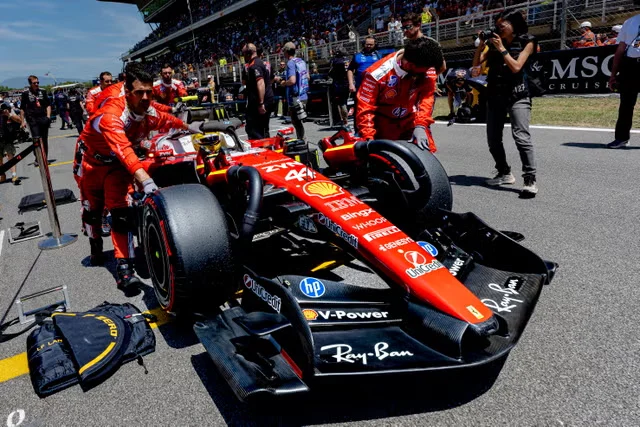
Ferrari introduced the first electronically controlled semi-automatic paddle-shift gearbox in Formula 1 in 1989, allowing drivers to change gear with a flick of a finger while keeping both hands on the wheel through corners. The advantage was significant enough that the technology spread rapidly through the rest of the grid over the following seasons, and paddle-operated sequential gearboxes have remained standard in F1 ever since.
It then took roughly a decade for the concept to migrate to production cars. Ferrari again led the way on the road, fitting an electrohydraulic paddle-shift system to a road car in the late 1990s, marketed under the name “F1” gearbox to directly trade on its motorsport heritage. Other performance manufacturers followed through the 2000s, and once dual-clutch transmission technology matured and became cost-effective to produce at scale, paddle shifters spread well beyond performance cars into mainstream automatics and even CVT-equipped vehicles.
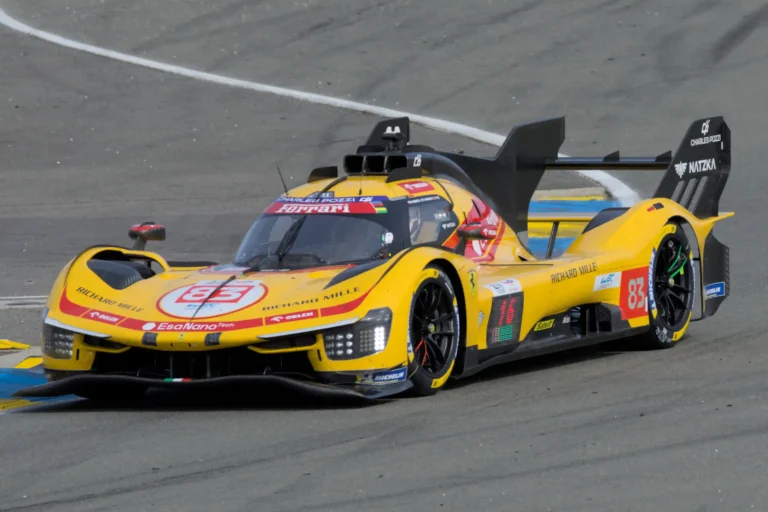
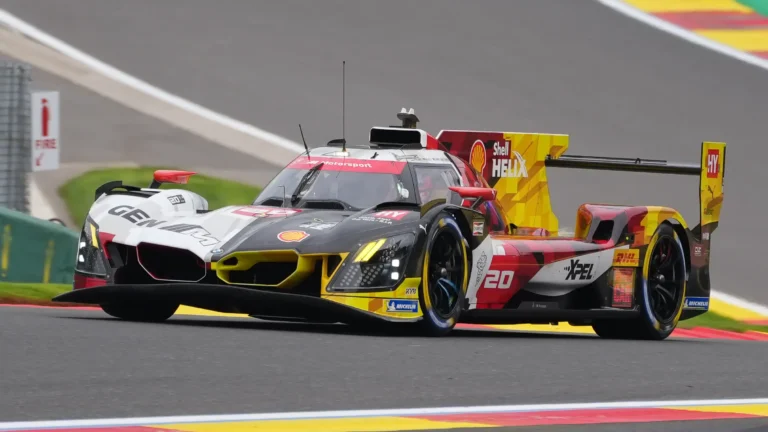
That lineage is part of why paddle shifters still feel distinctly motorsport-flavoured even on an everyday car. The hardware has changed dramatically, but the core idea — change gear instantly, without leaving the steering wheel — hasn’t moved an inch since its racetrack origins. You can see this same philosophy still at work in modern Formula 1 and in endurance and GT3 racing, where sequential paddle-shift gearboxes remain the standard.
How to Use Paddle Shifters Correctly
Most drivers either ignore paddle shifters entirely or use them constantly without much thought. Both miss the point. Paddle shifters are a tool for specific situations where you want more control over engine RPM than a fully automatic mode would choose on its own.
Braking into a corner
Pulling the downshift paddle while braking drops the transmission into a lower gear before you need the power, using engine braking to help slow the car and putting you in the right gear to accelerate hard out of the corner the instant you’re ready.
Overtaking on the move
Rather than waiting for a fully automatic transmission to decide it’s time to downshift, pulling the paddle yourself drops a gear instantly, putting the engine into its strongest part of the rev range right when you need maximum acceleration to complete a pass.
Engine braking on long descents
Holding a lower gear manually on a long downhill stretch uses the engine’s natural resistance to help control speed, reducing how much you need to rely on the brakes — important for preventing brake fade on extended mountain descents.
Towing, snow, and low-grip conditions
Manually selecting a higher gear at low speed reduces wheel torque and can help prevent wheel slip when pulling away on snow, ice, or loose surfaces — something a fully automatic mode may not anticipate as quickly as the driver can.
In virtually every modern vehicle, no — the transmission control unit’s rev-limit and stall protections (covered in the Electronics section above) prevent paddle requests from over-revving the engine or damaging the gearbox. The system will simply decline a shift it judges unsafe rather than executing it anyway.
Where paddle shifters add the least value is in routine, low-effort daily driving — accelerating gently away from a junction or cruising at a steady speed on the motorway is something the automatic transmission’s own programming will almost always handle as well as, or better than, manual paddle input. They’re a tool for moments that demand precise control, not a replacement for the car’s own logic the rest of the time.
Paddle Shifters vs a True Manual Transmission
It’s tempting to think of paddle shifters as “manual transmission, minus the clutch pedal.” That’s a useful first impression, but the two systems differ in some important ways once you look underneath.
This is exactly why motorsport adopted paddle shifters so readily — they remove the mechanical limitation of a human operating a clutch pedal at the limit of grip, while still giving the driver direct say over which gear is engaged. The same trade-off is one reason paddle shifters and DCTs have become so closely associated with high-performance turbocharged engines, where shift speed directly affects acceleration and lap time.
It’s also worth understanding how this connects to raw output: a faster shift doesn’t add power or displacement, but it does reduce the time the engine spends out of its useful torque band during a gear change — which is precisely why race engineers chase shift speed so aggressively.
Frequently Asked Questions
Reference
The Bottom Line on Paddle Shifters
Paddle shifters aren’t a mechanical shortcut to manual driving — they’re an electronic request system sitting on top of an automatic, dual-clutch, or CVT transmission, giving the driver direct say over gear selection while the car’s computer still manages the safety, timing, and mechanical execution of every shift.
That’s exactly why they work so well: instant response when you want control, full protection against an unsafe shift, and decades of motorsport-honed engineering quietly running underneath two small levers you barely notice are there.