Introduction
Most drivers know that engine oil is important. They know it needs to be changed periodically, and they know running an engine without oil is a very bad idea. However, many people do not actually understand what engine oil does or why it is so critical to engine survival.
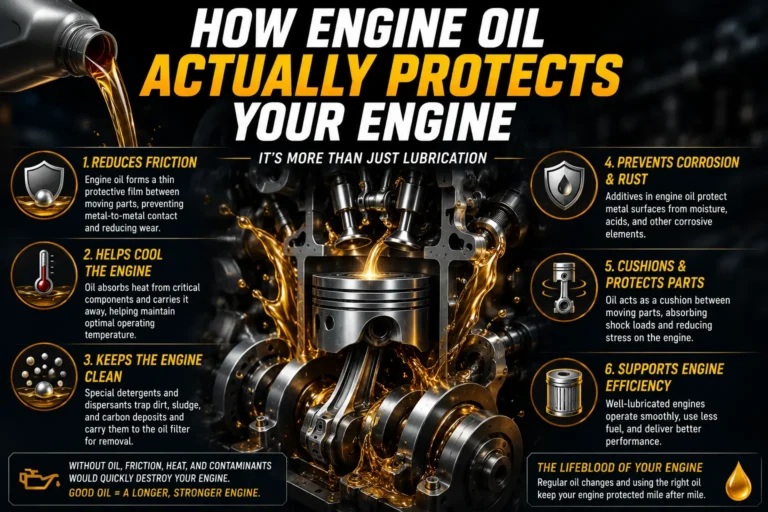
Some imagine engine oil simply makes parts “slippery.” While lubrication is certainly one of its most important jobs, modern engine oil performs many other functions. It cools components, prevents corrosion, removes contaminants, protects against wear, and helps engines operate efficiently under extreme conditions.
The truth is that your engine could not survive more than a few minutes without oil. Every second your engine is running, hundreds of metal components are moving at incredible speeds. Pistons travel up and down thousands of times per minute, crankshafts rotate continuously, and camshafts open and close valves with precise timing.
Without proper lubrication, these metal parts would grind against one another and rapidly destroy themselves.
Understanding how engine oil works helps drivers appreciate why regular oil changes matter and why choosing the correct oil is essential for engine longevity.
What Happens Inside an Engine?
Before discussing engine oil, it helps to understand the environment inside an engine.
An internal combustion engine is essentially a controlled explosion machine.
Every time fuel burns inside a cylinder:
- Temperatures can exceed 2,000°C
- Pressures rise dramatically
- Components move at extremely high speeds
- Metal surfaces are subjected to enormous stress
Inside the engine:
- Pistons slide inside cylinders
- Connecting rods transfer force
- Crankshafts rotate
- Camshafts control valve timing
- Bearings support rotating assemblies
All these parts must work together smoothly.
Without protection, friction would quickly destroy them.
For a deeper understanding of engine operation, readers can explore HowStuffWorks – How Car Engines Work.

The Biggest Enemy: Friction
Friction occurs whenever two surfaces move against each other. Rub your hands together rapidly. The warmth you feel is friction generating heat. Now imagine metal rubbing against metal thousands of times every minute.
Without lubrication:
- Heat rises dramatically
- Surfaces wear rapidly
- Components seize
- Engine failure occurs
Engine oil acts as a protective barrier between moving surfaces.
Instead of metal touching metal, the surfaces glide on a thin film of oil.
This dramatically reduces friction and wear.
Engine Oil Creates a Protective Film
One of the most important jobs of engine oil is creating a microscopic protective layer between components.
This oil film separates:
- Bearings and crankshafts
- Pistons and cylinder walls
- Camshafts and lifters
- Timing components
Even though these parts appear to touch, a thin layer of oil prevents direct metal-to-metal contact.
Think of ice skating. The skater glides smoothly because a thin layer reduces resistance. Engine oil performs a similar function inside the engine. Without this protective film, engine wear would increase exponentially.
Engine Oil Helps Cool the Engine
Many people assume coolant performs all engine cooling. While coolant handles most temperature control, engine oil also plays a major cooling role. As oil circulates throughout the engine, it absorbs heat from:
- Pistons
- Bearings
- Valve train components
- Turbochargers
The oil then transports this heat away from critical areas. This prevents localized overheating and helps maintain stable operating temperatures.
In high-performance and turbocharged engines, oil cooling becomes even more important because certain components experience extreme temperatures.
Engine Oil Cleans the Engine
Combustion creates byproducts.
Even a healthy engine generates:
- Carbon particles
- Soot
- Dirt
- Metal debris
If these contaminants remained inside the engine, they would accelerate wear. Modern engine oils contain detergents and dispersants designed to suspend contaminants.
Instead of sticking to components, debris remains suspended in the oil until it reaches the oil filter. The filter captures these particles and prevents them from circulating through the engine. This cleaning action helps maintain efficiency and protects internal components.
Engine Oil Protects Against Corrosion
Engines encounter moisture in several ways. Water vapor can form during combustion. Condensation may occur during temperature changes. Moisture and metal rarely mix well. Left unprotected, metal surfaces can corrode or rust.
Modern engine oils contain additives that protect internal engine parts from oxidation and corrosion. These additives form protective barriers that help prevent chemical damage.
This is especially important for vehicles that sit unused for extended periods.
Engine Oil Cushions Engine Components
Every combustion event creates a sudden shock load. When fuel ignites, enormous force pushes the piston downward. Engine oil helps absorb and distribute these loads.
This cushioning effect reduces stress on:
- Bearings
- Crankshafts
- Connecting rods
- Camshaft components
Although the oil film is incredibly thin, it provides a surprisingly effective protective cushion. This helps extend component life and improve reliability. To understand why crankshaft forces matter so much, it helps to understand how torque works in an engine.
How Oil Reaches Every Part of the Engine
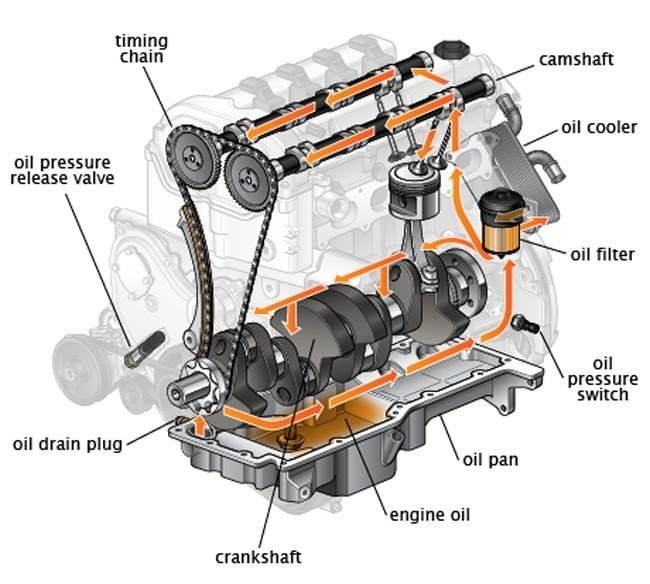
Many people imagine oil simply sitting in the bottom of the engine. In reality, modern engines use a pressurized lubrication system.
The process works like this:
- Oil sits inside the oil pan.
- An oil pump draws oil from the pan.
- The oil passes through a filter.
- Pressurized oil flows through internal passages.
- Critical components receive lubrication.
- Oil drains back into the pan.
- The cycle repeats continuously.
This circulation can occur hundreds of times every minute. Without proper oil pressure, engine protection disappears almost instantly.
Why Engine Oil Breaks Down Over Time
Engine oil does not last forever.
Over time, oil experiences:
- Heat exposure
- Oxidation
- Contamination
- Shear stress
As oil ages:
- Additives become depleted
- Viscosity changes
- Cleaning ability decreases
- Protective properties weaken
Eventually, the oil can no longer provide adequate protection. This is why manufacturers specify oil change intervals. Ignoring these intervals increases the risk of engine wear and damage.
Understanding Oil Viscosity
Viscosity refers to oil thickness.
You may have seen oil grades such as:
- 0W-20
- 5W-30
- 10W-40
These numbers indicate how the oil behaves at different temperatures. Using the wrong viscosity can reduce protection and affect engine performance at all RPM ranges.
A properly selected viscosity ensures:
- Fast cold-start lubrication
- Stable protection at high temperatures
- Consistent oil pressure
Using the wrong viscosity can reduce protection and affect engine performance.
For more information about lubrication technology, visit Mobil – Motor Oil Basics.
How Engine Oil Protects Turbochargers
Turbochargers operate under extremely demanding conditions.
A turbocharger can spin at over 200,000 RPM while being exposed to intense exhaust heat.
Engine oil protects turbochargers by:
- Lubricating bearings
- Removing heat
- Reducing friction
- Preventing wear
Without proper lubrication, turbocharger failure can occur rapidly. This is one reason modern turbocharged vehicles often have strict oil quality requirements.
Learn more about turbocharger technology from Garrett Motion – Turbo Technology Center.
What Happens When an Engine Runs Low on Oil?
Low oil levels are extremely dangerous.
When oil drops below safe levels:
- Lubrication decreases
- Oil pressure falls
- Temperatures increase
- Friction rises dramatically
Drivers may notice:
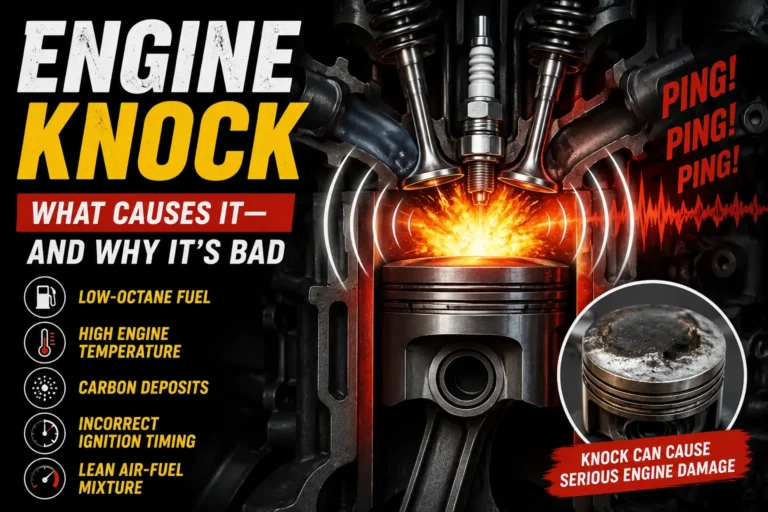
- Engine knocking
- Warning lights
- Reduced performance
- Excessive noise
If ignored, severe engine damage can occur.
In extreme cases:
- Bearings fail
- Pistons seize
- Connecting rods break
- Complete engine replacement becomes necessary
Why Regular Oil Changes Matter
Oil changes are among the cheapest forms of preventative maintenance.
Fresh oil restores:
- Lubrication quality
- Cleaning ability
- Corrosion protection
- Heat management
Regular oil changes help:
- Extend engine life
- Improve efficiency
- Reduce wear
- Protect expensive components
Compared to the cost of rebuilding an engine, routine oil service is remarkably inexpensive.
Synthetic vs Conventional Oil
Modern vehicles increasingly use synthetic oil.
Synthetic oils offer:
- Better temperature stability
- Improved wear protection
- Enhanced cold-start performance
- Longer service intervals
Conventional oils remain effective but generally provide less protection under extreme conditions.
For many modern engines, especially turbocharged designs, manufacturers specifically recommend synthetic oil.
Conclusion
Engine oil is far more than a slippery liquid sitting inside the crankcase. It acts as the engine’s primary protection system by reducing friction, preventing wear, absorbing heat, cleaning contaminants, fighting corrosion, cushioning moving parts, and protecting critical components such as turbochargers and bearings.
Without engine oil, an engine would quickly overheat, experience severe friction, and ultimately destroy itself.
Every second an engine runs, thousands of moving components rely on a microscopic oil film to survive. This is why proper oil selection, maintaining correct oil levels, and following recommended oil change intervals are among the most important aspects of vehicle maintenance.
Understanding how engine oil actually protects your engine helps drivers appreciate that this simple fluid is one of the most advanced and essential components in any modern vehicle.