Why Do Dragsters Use Nitromethane?
Top Fuel does not choose nitromethane because it holds more energy per pound than gasoline. It chooses nitro because each cylinder can burn far more fuel with the air available.
Top Fuel dragsters use nitromethane because the fuel carries oxygen within its chemical structure. Therefore, the engine can burn a much greater mass of fuel with each intake charge than a gasoline engine can. That extra fuel creates enormous cylinder pressure and more than 11,000 horsepower.
Nitromethane turns a familiar V8 engine cycle into the most concentrated power event in professional motorsport.
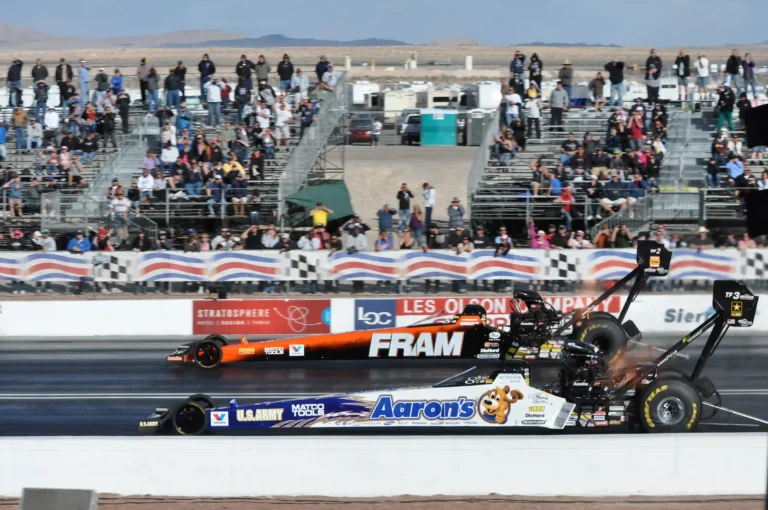
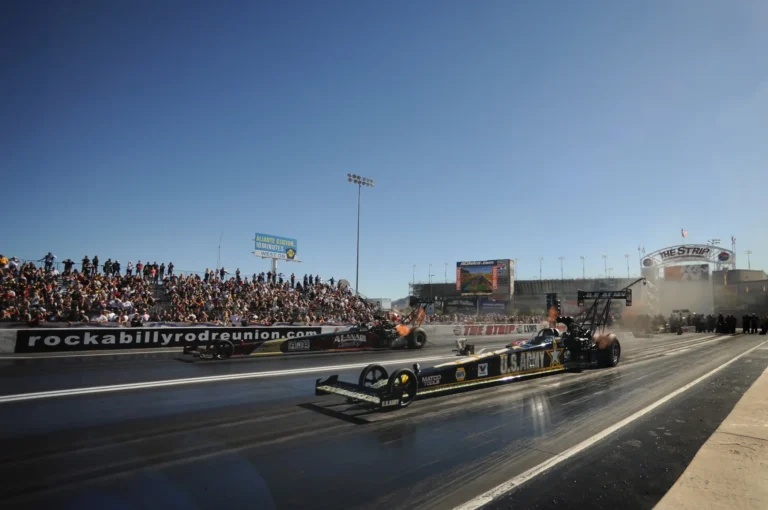
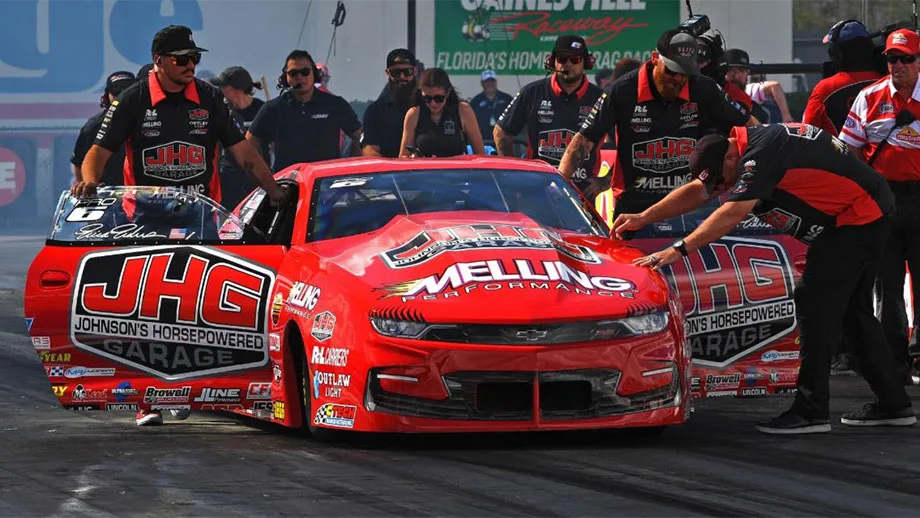
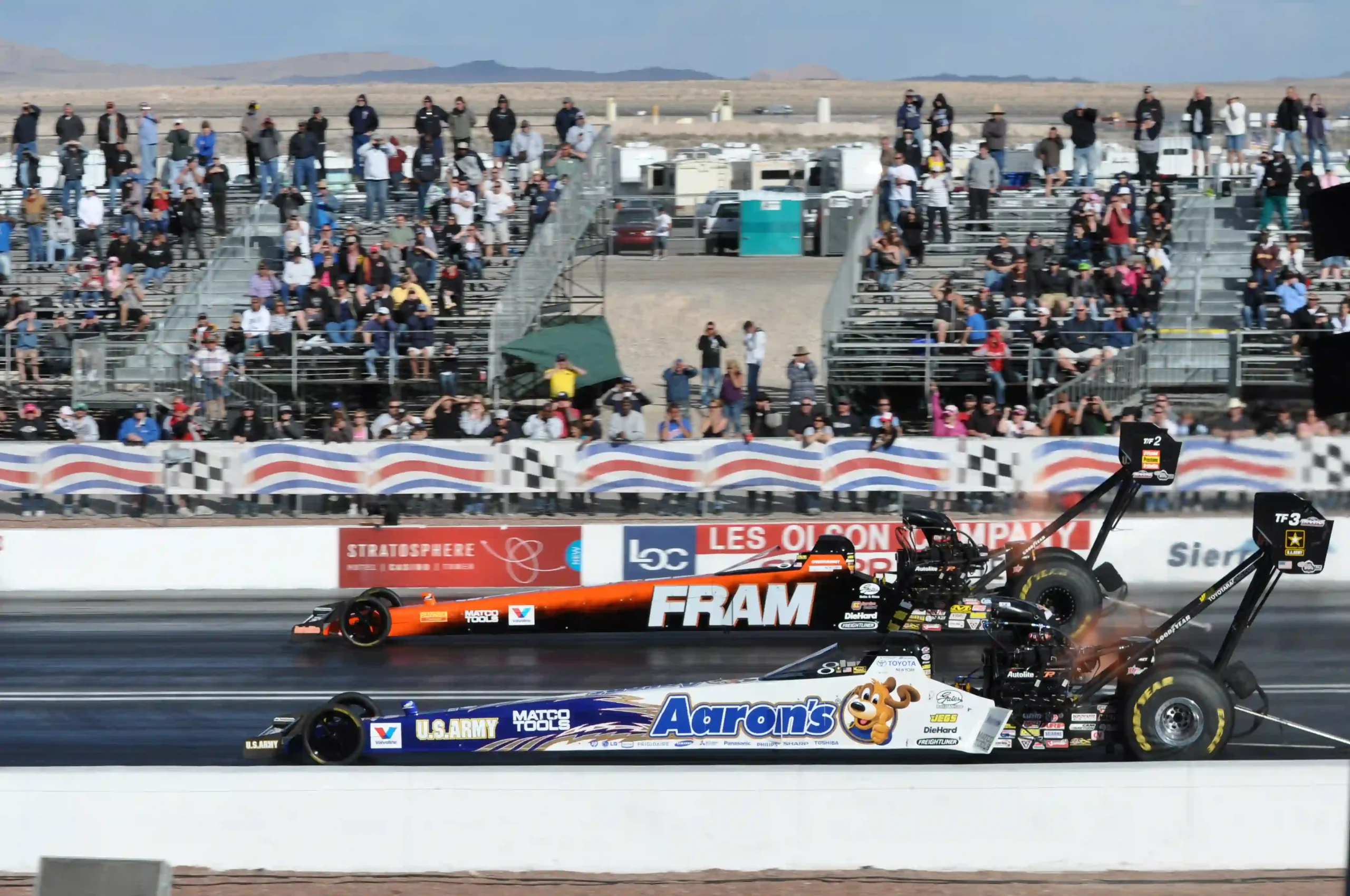
NHRA describes modern Top Fuel dragsters as 11,000-horsepower machines. They can cover 1,000 feet in less than 3.7 seconds and exceed 330 mph.
The engine remains limited to 500 cubic inches, or about 8.2 liters. However, a 14-71 Roots supercharger and mechanical fuel injection transform its output.
NHRA also states that a Top Fuel car can burn up to 15 gallons of nitromethane during a single run. That volume sounds wasteful until the chemistry is understood.
Nitromethane does not win because each pound contains the most energy. Gasoline actually carries more energy per pound.
Instead, nitromethane wins because a cylinder can burn much more of it. Its molecule contains oxygen, so the engine needs far less atmospheric air per pound of fuel.
Consequently, the engine releases more total energy during each power stroke. The piston receives a much larger pressure load.
That pressure creates the acceleration, header flames and physical shock felt in the grandstands. It also creates extreme engine wear.
Still, an important correction comes first. Not every dragster uses nitromethane.
Top Fuel dragsters use supercharged nitro engines. Meanwhile, many Sportsman dragsters use gasoline, and Top Alcohol Dragsters may use supercharged methanol or injected nitromethane.
Therefore, the title question really means: Why do the fastest fuel dragsters use nitromethane? This guide follows the answer from chemistry to the finish line.
The Quick Answer: Nitro Lets the Engine Burn More Fuel
Nitromethane needs much less outside air for combustion than gasoline because its molecule already contains oxygen. A Top Fuel cylinder can therefore burn several times more fuel mass during each cycle. The larger fuel mass releases more total energy inside the cylinder, even though nitromethane has lower energy per pound than gasoline.
Every piston engine needs fuel and oxygen. The intake system usually limits how much oxygen reaches the cylinder.
Gasoline depends almost entirely on oxygen from the air. Therefore, a gasoline engine cannot simply add unlimited fuel.
Too much gasoline creates an over-rich mixture that will not burn efficiently. The extra liquid does not produce useful pressure.
Nitromethane changes the balance. Its oxygen atoms reduce the amount of outside air required for each pound of fuel.
As a result, much more fuel mass can enter the same cylinder. A large supercharger adds even more air, allowing still greater fuel flow.
The engine converts that fuel mass into heat and pressure. Pressure acting on the piston creates torque at the crankshaft.
The distinction between torque and horsepower matters here. Torque is twisting force, while horsepower describes how quickly the engine performs work.
Fuel Carries Oxygen
Nitromethane contributes oxygen from inside its molecule, reducing dependence on intake air.
More Fuel Can Burn
The cylinder can process a much larger fuel mass during every four-stroke cycle.
Pressure Creates Acceleration
More burned fuel raises cylinder pressure and produces the torque that drives the rear tires.
The secret is not that one drop of nitromethane is magical. The secret is that a Top Fuel engine can burn a flood of it during every second of the run.
Not Every Dragster Uses Nitromethane
No. Top Fuel uses supercharged nitromethane engines. However, many dragsters use gasoline or methanol. NHRA Top Alcohol Dragsters may run either a supercharged methanol engine or an injected nitromethane combination.
The word dragster describes a vehicle layout, not one fuel. Long-wheelbase race cars compete in several classes.
Top Fuel represents the fastest professional dragster category. Its supercharged nitro engine defines the class’s sound and acceleration.
Top Alcohol Dragsters look similar, but their engine choices differ. Supercharged entries burn methanol and use three forward speeds.
Injected nitromethane Top Alcohol combinations do not use a supercharger. They also compete under separate weight and performance rules.
Meanwhile, Top Dragster is a bracket category with diverse engines. Many entries use racing gasoline, methanol or other class-legal combinations.
Pro Stock does not use nitromethane. NHRA specifies gasoline for that highly developed, naturally aspirated class.
Therefore, Top Fuel dragster and dragster are not interchangeable terms. The site’s overview of NHRA drag racing explains the wider category structure.
| NHRA Category | Typical Fuel | Induction | Main Difference |
|---|---|---|---|
| Top Fuel | Nitromethane blend | Roots supercharger and mechanical injection | Built for maximum acceleration over 1,000 feet |
| Funny Car | Nitromethane blend | Roots supercharger and mechanical injection | Uses a similar 500-cubic-inch engine under a full body |
| Top Alcohol Dragster | Methanol or injected nitromethane | Supercharged methanol or naturally aspirated injected nitro | Different combinations receive different rules |
| Top Alcohol Funny Car | Methanol | Supercharged | Uses a lower-power alcohol combination |
| Pro Stock | Spec gasoline | Naturally aspirated electronic injection | Rewards high-rpm engine development without nitro |
Nitromethane Chemistry in Plain English
Yes. Its molecular formula is CH₃NO₂, so every molecule contains one carbon atom, three hydrogen atoms, one nitrogen atom and two oxygen atoms. Those oxygen atoms reduce the amount of outside air needed for combustion.
Nitromethane is the simplest primary nitroalkane. At room temperature, it is a colorless liquid with a strong chemical odor.
The molecule contains a nitro group attached to methane. That structure gives it properties unlike gasoline hydrocarbons.
Gasoline molecules contain carbon and hydrogen but almost no useful internal oxygen. Consequently, their combustion depends heavily on atmospheric air.
Nitromethane contributes part of its own oxygen requirement. It still needs outside oxygen for efficient engine combustion, but it needs much less.
The chemical formula for nitromethane.
Two oxygen atoms travel into the cylinder with each molecule.
Less required air means the cylinder can accept much more fuel.
An Idealized Combustion Equation
A simplified complete-combustion equation is: 4 CH₃NO₂ + 3 O₂ → 4 CO₂ + 6 H₂O + 2 N₂.
This equation is idealized. A real Top Fuel engine also produces carbon monoxide, nitrogen oxides, unburned fuel and other compounds.
Still, it shows the central point. Four nitromethane molecules need only three outside oxygen molecules in the simplified reaction.
By contrast, hydrocarbon fuels require much more oxygen from the intake charge. That difference controls fuel mass and power potential.
Nitromethane Is Not Simply More Explosive Gasoline
Public descriptions often call nitromethane explosive. However, engine use depends on controlled combustion rather than a free-standing detonation.
The primary performance advantage is oxygen balance. Its ability to burn in huge quantities matters more than a simple explosiveness label.
Moreover, nitromethane has lower energy per pound than gasoline. The engine overcomes that disadvantage by burning far more of it.
The basic piston cycle remains familiar. Readers can review how a four-stroke engine works before following the specialized Top Fuel process.
Why the Air-Fuel Ratio Changes Everything
Pure nitromethane has an idealized stoichiometric air-fuel ratio of about 1.7 parts air to one part fuel by mass. Gasoline is roughly 14.7 to one. Actual Top Fuel engines run much richer because fuel also cools the engine and the tune targets maximum cylinder pressure.
The idealized ratio explains why Top Fuel fuel systems appear enormous. Gasoline needs nearly fifteen pounds of air for each pound of fuel.
Pure nitromethane needs only about 1.7 pounds of air per pound of fuel in the simplified calculation.
Therefore, the same intake-air mass can support many times more nitromethane than gasoline. The cylinder receives a much larger total charge mass.
Actual race engines do not operate at an ideal laboratory ratio. They run rich for cooling, combustion control and component survival.
That rich mixture can include liquid droplets during parts of the cycle. Mechanical injection delivers the required volume rather than chasing street-car atomization.
Why Lower Energy Density Still Produces More Power
One pound of gasoline contains more chemical energy than one pound of nitromethane. That fact often creates confusion.
However, an engine does not compare one pound against one pound. It compares how much fuel can burn with the oxygen entering the cylinder.
A gasoline cylinder burns a small fuel mass with a large air mass. A nitro cylinder can burn several fuel units with similar intake air.
Consequently, the total released energy per cycle becomes much larger. More energy means more pressure on the piston.
The relationship between cylinder size and charge capacity appears in how engine displacement affects performance.
| Fuel | Approximate Ideal Air-Fuel Ratio | Drag-Racing Effect | Power Character |
|---|---|---|---|
| Gasoline | About 14.7:1 | Needs a large air mass for a small fuel mass | High energy per pound, but airflow limits quantity |
| Methanol | About 6.4:1 | Allows more fuel and strong charge cooling | Excellent for supercharged alcohol combinations |
| Nitromethane | About 1.7:1 | Allows exceptional fuel mass for available air | Highest total cylinder energy for Top Fuel use |
Important: These ratios describe simplified complete combustion. Real race mixtures depend on blend percentage, temperature, pressure, distribution and the desired tune-up.
How Nitromethane Becomes 11,000 Horsepower
A Top Fuel engine combines a large Hemi V8, a 14-71 Roots supercharger, mechanical multi-port injection, dual magnetos and a nitromethane-rich blend. The blower supplies huge airflow, while nitromethane lets the engine burn enough fuel to create extraordinary cylinder pressure.
Power begins with airflow. The supercharger forces air through the injector hat and intake manifold.
The fuel system then adds nitromethane through multiple nozzles. NHRA’s published technical comparison lists mechanical injection and pump capacity reaching 115 gallons per minute at the specified test speed.
Dual magnetos provide ignition energy to sixteen spark plugs. Two plugs serve each cylinder because the mixture is dense and difficult to ignite uniformly.
Combustion pressure pushes eight forged aluminum pistons downward. Aluminum rods transfer that force to a steel crankshaft.
The crankshaft also drives the supercharger. Therefore, part of the engine’s gross output powers its own air pump.
After those losses, enormous torque reaches the clutch and rear axle. The multistage clutch controls how quickly the tires receive that force.
The car can accelerate at roughly five times gravity during its hardest phase. Meanwhile, the rear wing and exhaust direction help keep the slicks loaded.
The exact race length is explained in how far Top Fuel cars race.

The Nitro Hemi Is Built Around the Fuel
A conventional gasoline engine cannot safely use a Top Fuel nitromethane load. A nitro engine needs purpose-built pistons, rods, crankshaft, block, heads, ignition, fuel delivery, sealing, lubrication and containment systems.
The engine’s basic design traces to the Chrysler 426 Hemi. Modern Top Fuel parts, however, are specialized racing components.
Billet aluminum blocks and heads contain huge cylinder pressure. Steel main caps and fasteners hold the crankshaft inside the block.
Forged aluminum pistons tolerate heat and absorb shock. Aluminum rods cushion the crankshaft but follow strict inspection schedules.
Large valves move the dense mixture into and out of each cylinder. A roller camshaft controls those valves through pushrods and rocker arms.
The engine has no conventional radiator. Its brief operating time and enormous fuel flow manage heat differently from a road engine.
The fundamental layout still belongs to the broader family described in how car engines work.
Compression Ratio Is Only Part of the Pressure Story
People often focus on static compression ratio. However, supercharger boost and fuel mass dominate the real cylinder charge.
The blower increases air density before the intake valve closes. The fuel system then adds a massive liquid volume.
Ignition timing controls when pressure rises. Too much advance can load the piston before the crank reaches the correct angle.
Therefore, crew chiefs tune pressure over time rather than chasing one compression number.
No Conventional Multi-Speed Transmission
A multistage centrifugal clutch links the crankshaft to the rear end. Timers control its progressive application.
That system keeps the engine in a narrow rpm range. It also lets the clutch slip while the tires accept more power.
The general mechanical principle appears in how a clutch works.
Why Top Fuel Needs a Mechanical Fuel System
An engine-driven mechanical pump sends fuel through a barrel valve, distribution system and many injector nozzles. The system adds more fuel as the throttle opens and engine speed rises. Crew chiefs alter nozzle sizes and bypass flow to tune individual cylinders.
Electronic street injectors focus on precision at low volume. Top Fuel must move a vastly larger quantity in a few seconds.
Therefore, the system uses mechanical pumps and calibrated passages. Fuel pressure follows pump speed and restriction.
Nozzles sit above the supercharger and near the intake ports. This arrangement divides fuel across the incoming air stream.
Individual cylinder tuning matters because airflow is not perfectly equal. One cylinder may naturally run richer than another.
Crew chiefs change nozzle areas to balance those differences. They also use bypass circuits to shape flow during the run.
The Barrel Valve Connects Throttle and Fuel
The barrel valve meters fuel as the throttle opens. It must maintain enough flow at idle, during the burnout and at full power.
A Top Fuel engine cannot stumble when the driver stages. However, it also cannot receive full fuel volume at idle.
Consequently, flow changes rapidly as the butterflies open. The transition must match ignition timing and clutch load.
Fuel Data Is Read After Every Pass
Teams record fuel pressure and engine rpm. Spark plugs and piston surfaces then show how each cylinder burned.
A clean trace can still hide a nozzle issue. Therefore, crews inspect filters, lines and fittings during the turnaround.
One small restriction can create a lean cylinder. In a nitro engine, that problem can melt a piston within seconds.
Why Nitromethane Still Needs a Supercharger
Nitromethane reduces the amount of outside air needed, but it does not eliminate that need. The blower forces more air into the cylinders, which lets the fuel system add even more nitromethane. The systems multiply each other’s power potential.
A 14-71 Roots blower sits above the intake manifold. Belt drive connects it directly to the crankshaft.
Large rotors move air rather than compressing it internally like some modern superchargers. Pressure develops because the engine cannot accept the delivered volume instantly.
The blower may move around 3,500 cubic feet per minute in NHRA’s published comparison. That airflow supports the fuel rate.
However, the supercharger requires substantial power to turn. The engine spends hundreds of horsepower driving it before the rear wheels receive torque.
This parasitic loss would be unacceptable in many road cars. In Top Fuel, the extra cylinder charge more than repays it.
The difference between crank-driven and exhaust-driven boost is covered in supercharger versus turbocharger.
Why a Turbocharger Is Not Used
A turbocharger needs exhaust flow and time to build boost. Top Fuel demands immediate airflow at the starting line.
Furthermore, the exhaust uses individual short pipes. Those headers are optimized for pressure release and chassis effect.
A Roots blower delivers predictable air from the first throttle movement. That consistency helps teams tune the clutch and fuel curve.
Nitromethane Is Part of the Cooling System
Yes. The huge fuel flow absorbs heat as liquid fuel warms and evaporates. A rich mixture also lowers component temperature compared with a lean tune. This cooling effect helps a waterless Top Fuel engine survive its short run.
Top Fuel engines do not carry the radiator, coolant passages and water pump expected in a street car. Weight and complexity would not suit the duty cycle.
Instead, the fuel charge absorbs heat. Evaporation cools the incoming air and the surfaces it contacts.
Rich combustion also limits peak temperatures. Therefore, the fuel curve protects pistons, valves and plugs while producing power.
However, cooling has a boundary. Too much fuel can extinguish the flame or collect as liquid.
Too little fuel removes cooling and raises temperature. A lean cylinder can scuff or melt its aluminum piston.
That narrow window explains why distribution receives so much attention. Every cylinder needs enough fuel to stay cool but not enough to stop ignition.
Fuel Can Harm Lubrication
Liquid fuel can wash oil from the cylinder wall. It may also enter the crankcase and dilute the lubricant.
Consequently, crews drain the oil after every pass and inspect bearings. Fresh oil begins the next run with known viscosity.
The general role of lubricant appears in how engine oil protects an engine.
Why Top Fuel Uses Dual Magnetos and 16 Spark Plugs
The dense, fuel-rich charge is difficult to ignite quickly and evenly. Two powerful magnetos feed sixteen spark plugs, giving each cylinder two flame-starting points and greater reliability under extreme pressure.
A street ignition system would struggle with Top Fuel pressure and fuel density. The spark can be quenched before stable combustion develops.
Dual magnetos generate very high ignition energy without depending on a conventional alternator. Each cylinder receives two plugs.
The flame fronts spread through the large Hemi chamber. Two ignition points shorten the distance each front must travel.
Moreover, redundancy matters. If one plug weakens, the second may keep the cylinder firing.
The plugs still live a harsh life. Electrodes can erode significantly during one pass.
Crews remove and read them immediately. A wet plug suggests an over-rich cylinder, while damaged electrodes show excessive heat.
Ignition Timing Shapes Cylinder Pressure
Firing too early creates pressure while the piston is still approaching top dead center. That load can damage pistons, rods and bearings.
Firing too late wastes energy into the exhaust. It can also increase visible header flames.
Therefore, timing balances power and survival. The correct setting changes with air density, grip and fuel flow.
The broader issue appears in what causes engine knock.
Why Top Fuel Dragsters Shoot Flames
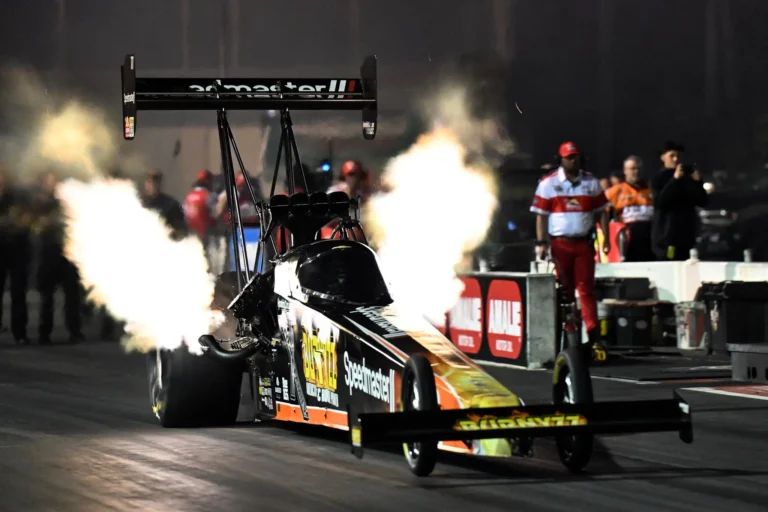
Top Fuel engines run extremely rich, and combustion continues as hot exhaust leaves the cylinder. Short individual headers expose that afterburning process, producing visible flames. At night, normal flames show whether all eight cylinders are firing consistently.
The flames are not decorative. They reveal what happens after the exhaust valve opens.
Some fuel continues burning in the header. Hot gases and unburned material create bright plumes during full power.
The pipes are short and open. Therefore, no muffler or long exhaust system hides the combustion.
At night, a healthy engine shows eight strong flames. Crew chiefs and photographers can spot a missing cylinder by its weak header.
The exhaust also creates a small downward and rearward force. Teams design pipe direction within rules to manage loading and safety.
The V8 firing order shapes the rhythm of those pulses. The guide to why V8 and V12 engines sound different explains the broader acoustic effect.
Rich, Lean and Dropped Cylinders
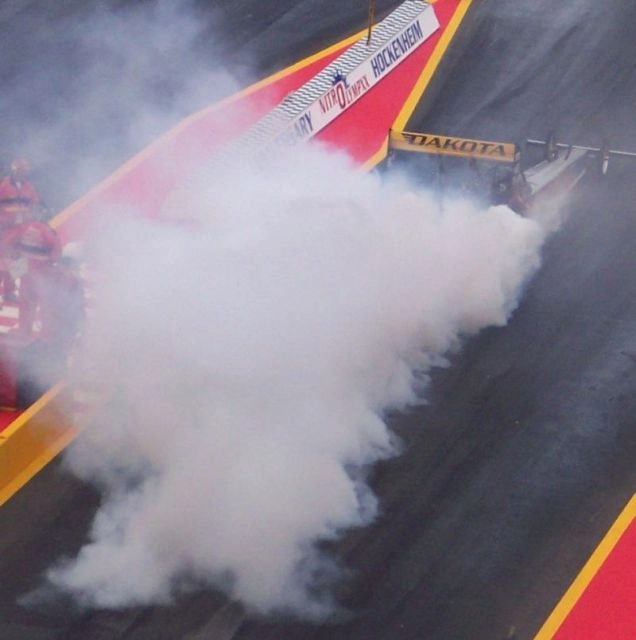
A rich mixture lets the engine burn huge fuel mass while using evaporation for cooling. However, excessive richness can extinguish the spark and drop a cylinder, while a lean mixture removes cooling and can melt a piston.
Top Fuel tuning lives between two dangers. The engine needs enormous fuel flow for power and temperature control.
However, a cylinder can receive more liquid than its plugs can ignite. NHRA calls the result a dropped cylinder.
The cylinder stops producing normal power. Raw fuel then moves through the chamber and header.
Meanwhile, the remaining cylinders continue firing. The crankshaft receives an uneven series of torque pulses.
A dropped cylinder can slow the car without destroying the engine. Several dropped cylinders can create severe imbalance and raw-fuel accumulation.
Lean Is the Opposite Failure
A lean cylinder receives too little fuel for its air and timing. Fuel cooling decreases immediately.
Piston temperature rises around the crown and ring land. Aluminum may scuff against the liner or begin melting.
Oil can then enter the cylinder and burn in the exhaust. White or gray smoke often signals more than a simple mixture error.
Hydraulic Lock Comes From Liquid Fuel
Gas compresses, but liquid nitromethane does not compress enough for normal piston travel. A fuel-filled cylinder can bend a rod.
Crews rotate the engine backward after a run to drain trapped liquid. This procedure helps protect the next startup.
Why Nitromethane Is Hard on Engines
The fuel allows exceptional cylinder pressure, while its volume can disturb lubrication and create liquid-fuel hazards. Pistons, rods, bearings, plugs, gaskets and valvetrain parts are inspected after every pass because small damage can become catastrophic.
Nitromethane does not automatically destroy an engine. A correct tune can complete a clean pass with reusable major parts.
Nevertheless, every run consumes component life. Cylinder pressure stretches rods, loads bearings and tries to lift the heads.
The crankshaft twists under firing pulses. Meanwhile, the clutch changes load as it progressively locks.
Tire shake can send vibration through the driveline. Wheelspin can unload the engine and cause a rapid rpm increase.
If the tires regain grip suddenly, the crankshaft receives an abrupt load change. Therefore, track conditions affect survival.
The danger of excessive rpm is explained in what engine redline means.
Why Engines Are Opened After Every Pass
Crews remove the cylinder heads and oil pan. They inspect bearings, pistons, rods, plugs and sealing surfaces.
Some parts return to service, while others are replaced by damage or planned run count. The whole engine is not automatically discarded.
The cost structure is covered in how much a Top Fuel engine costs.
Containment Reduces the Consequences
NHRA requires manifold burst panels and supercharger restraints. Engine diapers help contain oil and fragments below the crankcase.
Fuel and ignition shutoffs reduce energy after a failure. Parachutes slow the car while the driver maintains a straight path.
These systems do not make nitromethane harmless. Instead, they manage a known risk created by extreme power.
Why NHRA Limits Professional Nitro to 90 Percent
NHRA reduced the maximum concentration for Top Fuel and Funny Car to 90 percent in 2000 after several explosive engine failures during 1999. The rule reduced power potential and became part of a wider safety strategy.
Professional nitro racing once used higher concentrations. However, rising performance increased cylinder pressure and failure severity.
NHRA’s historical review says the sanctioning body imposed a 90-percent limit following several explosive failures in 1999.
The remaining portion includes methanol. Teams must use a legal blend and pass technical inspection.
Fuel concentration is only one control. NHRA also regulates displacement, supercharger design, overdrive, rpm and safety hardware.
Consequently, Top Fuel performance comes from optimizing within a controlled package. Teams cannot simply pour in more nitro.
Why Methanol Is Included
Methanol is also an oxygenated racing fuel. It has strong cooling properties and burns differently from nitromethane.
In a Top Fuel blend, it reduces nitromethane concentration and changes combustion behavior. Exact tuning still depends on weather and engine setup.
The blend should not be confused with Top Alcohol. That category’s supercharged engines use methanol under different rules.
Nitromethane vs Gasoline and Methanol
Nitromethane offers the greatest Top Fuel power potential because it needs the least outside air per pound of fuel. Methanol provides excellent cooling and allows more fuel than gasoline, while gasoline suits classes that value efficiency, high rpm and longer component life.
| Property | Gasoline | Methanol | Nitromethane |
|---|---|---|---|
| Fuel-bound oxygen | Very little | Yes | Yes, with much lower outside-air demand |
| Ideal air-fuel ratio | About 14.7:1 | About 6.4:1 | About 1.7:1 |
| Fuel mass for a given air mass | Lowest | Much higher | Highest |
| Charge cooling | Moderate | Strong | Strong at Top Fuel flow rates |
| Typical NHRA use | Pro Stock and Sportsman classes | Top Alcohol and alcohol classes | Top Fuel, Funny Car and injected nitro |
Gasoline Supports Efficiency and High-Rpm Precision
Gasoline carries strong energy per pound. It also works with familiar electronic injection and ignition systems.
However, airflow limits how much gasoline can burn in each cylinder. That restriction keeps total cylinder energy below Top Fuel levels.
Methanol Sits Between Gasoline and Nitro
Methanol contains oxygen and needs less air than gasoline. It also provides excellent evaporative cooling.
Supercharged alcohol engines can produce major power with longer service intervals than professional nitro combinations. Still, they cannot match Top Fuel fuel mass.
Nitromethane Wins the Shortest Race
Top Fuel needs maximum acceleration, not fuel economy or road mileage. Nitromethane fits that narrow mission.
Therefore, its disadvantages become acceptable. Fuel cost, wear and maintenance matter less than winning a three-second race.
Why Nitromethane Is Not a Street-Car Fuel
Nitromethane requires a specialized engine, enormous fuel delivery, aggressive maintenance and careful handling. It is inefficient for road use, produces hazardous exhaust compounds and can damage an ordinary gasoline engine almost immediately.
A street car must start in cold weather, idle smoothly and travel hundreds of miles between fuel stops. Top Fuel meets none of those priorities.
Nitromethane consumption would make range impractical. A 15-gallon pass covers only the burnout, staging and 1,000-foot acceleration sequence.
The fuel system would overwhelm a normal engine. Street pistons, rods, bearings and head bolts cannot contain Top Fuel pressure.
Furthermore, nitromethane has health and handling hazards. Federal chemical data describes toxic exposure concerns and potentially violent decomposition under severe heat or contamination.
Road emissions would also be unacceptable. Combustion can create nitrogen oxides, carbon monoxide and unburned fuel.
Therefore, nitromethane belongs in a controlled racing environment. Trained teams store, transfer and inspect it under strict procedures.
Octane Booster Does Not Create Nitromethane
Octane rating measures resistance to knock in a gasoline-style test. It does not measure the oxygen balance that makes nitromethane powerful.
Adding octane booster cannot reproduce nitro fuel flow. The engine architecture and chemical mixture remain entirely different.
How Nitromethane Changed Drag Racing
Hot rodders adopted nitromethane during the early 1950s while searching for greater speed. NHRA banned nitro from 1957 through 1962 amid safety and cost concerns, then brought it back for the 1963 Winternationals before Top Fuel became a regular category in 1964.
Nitromethane reached hot rodding after earlier industrial and motorsport uses. Racers quickly discovered that small percentages increased power.
As mixtures grew stronger, speeds rose rapidly. Chrysler Hemi engines became central because their chambers and bottom ends handled the new loads well.
However, safety equipment and organization lagged behind performance. NHRA responded with the famous nitro ban beginning in 1957.
The ban did not end experimentation everywhere. Independent tracks and racers continued developing fuel combinations.
Nitro returned to NHRA national competition at the 1963 Winternationals. Don Garlits won the newly formed Top Fuel class.
The fan response was overwhelming. Top Fuel became a regular national category in 1964.
Why the Ban Mattered
The 1957-1962 period forced racers to develop gasoline combinations. It also gave safety rules time to mature.
When nitro returned, the class had clearer structure. Fire-resistant suits, parachutes and improved chassis design followed.
Later decades added rear-engine layouts, blower restraints, engine containment and sophisticated fuel shutoffs.
The sport did not make nitromethane safe by weakening it completely. It built systems around the fuel’s known risks.

The 2026 Context: Nitro Remains Central to NHRA
NHRA’s 75th-anniversary historical coverage in 2026 placed the first Top Fuel race among the sport’s defining moments.
The feature recalled the 1957-1962 ban and the category’s return at the 1963 Winternationals. That history still explains the modern class.
Current public NHRA specifications continue to describe Top Fuel as an 11,000-horsepower, 500-cubic-inch, nitromethane-powered category.
The fuel remains central because no alternative creates the same combination of immediate torque, noise, flame and acceleration under current rules.
Meanwhile, the season demands repeated qualifying and elimination runs. Current dates appear in the 2026 NHRA schedule.
Every event asks the same engineering question. How much nitromethane can the engine burn without dropping a cylinder, melting a piston or overpowering the rear tires?
That balance separates a winning tune from a spectacular failure. Consequently, fuel control remains as important as fuel choice.
Common Nitromethane Myths
These myths often come from treating fuel as one number. Real power depends on airflow, fuel mass, pressure, timing and mechanical strength.
Nitromethane works because the entire car is designed around it. The fuel, blower, clutch, tires and chassis form one system.
Nitromethane Drag-Racing FAQs
Why do Top Fuel dragsters use nitromethane?
Nitromethane contains oxygen within its molecule. Therefore, each cylinder can burn much more fuel mass than it could with gasoline, creating exceptional pressure and power.
Do all dragsters use nitromethane?
No. Top Fuel uses supercharged nitro engines, but many dragsters use gasoline or methanol. Top Alcohol Dragsters may use supercharged methanol or injected nitromethane.
How much nitromethane does a Top Fuel dragster use?
NHRA states that a Top Fuel dragster can burn up to 15 gallons during a single run.
Why is Top Fuel limited to 90-percent nitromethane?
NHRA imposed the 90-percent limit in 2000 after several explosive engine failures in 1999. The rule became part of the category’s wider safety controls.
Conclusion: Nitromethane Wins Because the Cylinder Can Burn More of It
Why do dragsters use nitromethane? The answer is not simply that nitro is a stronger version of gasoline.
Nitromethane’s formula, CH₃NO₂, includes oxygen inside the fuel molecule. Therefore, the engine needs far less outside air for each pound of fuel.
That chemistry lets a Top Fuel cylinder accept an enormous fuel mass. A 14-71 blower adds the air needed to support even more fuel.
Mechanical injection delivers the blend through many nozzles. The system can move fuel at rates measured in dozens of gallons per minute.
Dual magnetos and sixteen spark plugs ignite the dense charge. Eight pistons convert the resulting pressure into crankshaft torque.
The engine can then produce more than 11,000 horsepower from 500 cubic inches. A Top Fuel car uses that output to exceed 330 mph.
Nitromethane also helps cool the engine. Its liquid flow absorbs heat as the fuel warms and evaporates.
However, the cooling benefit brings risk. Excess fuel can extinguish a plug or collect as liquid inside a cylinder.
Too little fuel creates the opposite danger. A lean cylinder loses cooling and can melt an aluminum piston.
Therefore, the crew chief does not simply add the maximum fuel possible. Every cylinder receives a carefully balanced share.
The supercharger remains essential because nitromethane still needs outside oxygen. More airflow supports more fuel mass and power.
The clutch also matters. It controls how quickly the engine’s torque reaches the rear tires.
Without controlled slip, the slicks would spin or shake. Either condition can damage the engine and waste the fuel’s power.
Not every dragster uses nitromethane. Many Sportsman cars use gasoline, while Top Alcohol combinations use methanol or injected nitro.
Top Fuel chooses supercharged nitromethane because its rules reward maximum acceleration. Fuel economy and long service life are secondary.
NHRA limits professional nitro concentration to 90 percent. The rule followed engine failures and remains part of a wider technical package.
That package includes engine containment, burst panels and blower restraints. Modern systems manage risks that early racers faced with little protection.
The history explains the spectacle. Nitro pushed speeds so rapidly that NHRA banned it from 1957 through 1962.
When the fuel returned at the 1963 Winternationals, fans embraced Top Fuel. The category became a permanent national attraction.
More than six decades later, the reason has not changed. Nitromethane lets the engine burn the greatest practical fuel mass in the shortest race.
That mass becomes pressure. Pressure becomes torque, and torque becomes the most violent standing-start acceleration in motorsport.
In simple terms, Top Fuel does not use nitromethane because one gallon contains more energy. It uses nitromethane because the engine can burn a flood of it before the finish line.
Sources and Fact-Checking
This article was checked on July 31, 2026 against official NHRA technical and historical material plus the U.S. National Library of Medicine’s PubChem record. Race-engine mixtures differ from simplified laboratory calculations.
- NHRA: Current Top Fuel, Funny Car, Pro Stock and Top Alcohol class descriptions
- NHRA: Published Top Fuel engine, blower, fuel-pump and ignition specifications
- NHRA: Nitro percentage reduction, safety-rule history and technical changes
- PubChem: Nitromethane molecular formula, physical description and hazard summary