Why Horsepower Is More Than Just a Number
Horsepower is one of the most misunderstood yet widely used terms in automotive performance. People often associate it with speed alone—assuming more horsepower automatically means a faster car. While that is partially true, the real meaning of horsepower goes much deeper.
In engineering terms, horsepower is a unit of power that measures how quickly work is done. It does not describe force alone, and it does not describe speed alone—it combines both into a single measurable value. This is why horsepower is so important in cars, motorcycles, aircraft, and even industrial machines.
To understand horsepower properly, you need to understand a simple idea:
👉 Engines don’t just produce force—they produce force over time.
That “over time” is what makes horsepower meaningful.
1. The Origin of Horsepower: Why It Exists
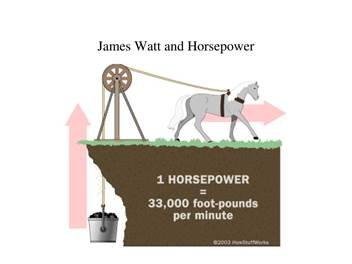
The term “horsepower” was created in the late 1700s by engineer James Watt, who is also known for improving the steam engine during the Industrial Revolution.
At that time, people relied heavily on horses for labor—pulling carts, lifting water, and moving machinery. Watt wanted to sell steam engines, so he needed a relatable comparison. He estimated how much work a strong horse could do in a given time and used that as a reference.
He defined:
- 1 horsepower = the ability to lift 550 pounds by 1 foot in 1 second
This definition was not perfect scientifically, but it became a practical way to compare machines with animal power. Even today, the term remains, despite modern engines being far more complex than horses.
2. What Horsepower Actually Means in Physics
Horsepower is a unit of power, and power in physics is defined as:
👉 Power = Work ÷ Time
This means:
- Work = force applied over distance
- Time = how fast the work is done
So horsepower measures how fast energy is being converted into motion.
An engine does not just generate force; it repeats combustion cycles thousands of times per minute. Horsepower measures the combined effect of all those cycles over time.
In simple terms:
👉 Torque is effort
👉 Horsepower is how fast that effort is applied
3. Understanding Engine Power Production
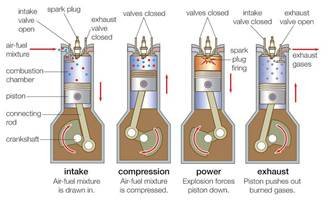
Inside every engine, power is created through a repeating process called the four-stroke cycle:
- Intake – air and fuel enter the cylinder
- Compression – mixture is compressed
- Combustion – spark ignites mixture
- Exhaust – gases are expelled
Each combustion event pushes a piston downward, creating mechanical force. This force rotates the crankshaft, which eventually turns the wheels.
But here is the key insight:
👉 One explosion is not enough to move a car fast
👉 Thousands of explosions per minute create usable power
Horsepower measures how effectively an engine performs this process over time.
4. The Relationship Between Torque and Horsepower
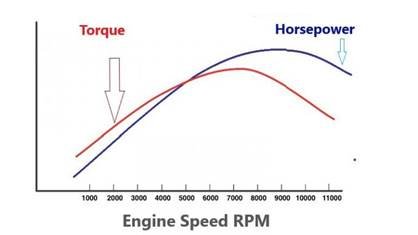
To understand horsepower deeply, you must understand torque.
Torque:
Torque is the twisting force generated by the engine. It is what pushes the crankshaft to rotate.
Horsepower:
Horsepower is how quickly that torque is applied over engine speed (RPM).
This relationship is expressed mathematically as:
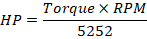
This equation shows something very important:
- If torque increases → horsepower increases
- If RPM increases → horsepower increases
- Best performance comes from a balance of both
This is why high-performance engines are designed not only for strength but also for high rotational speed.
5. Why Horsepower Increases with RPM
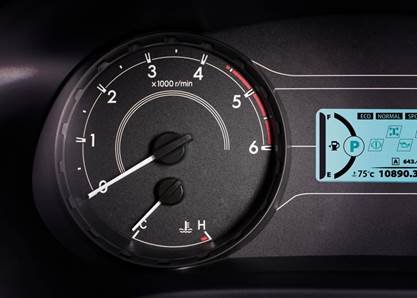
Horsepower increases as engine RPM rises because the engine is completing more combustion cycles per minute.
At low RPM:
- Fewer combustion events
- Lower power output
At high RPM:
- More combustion events per second
- Higher total energy output
However, engines cannot increase RPM infinitely because:
- Mechanical stress increases
- Heat builds up
- Airflow becomes limited
- Fuel efficiency drops
This is why every engine has a redline, which is the safe maximum RPM limit.
6. How Horsepower Is Measured in Real Life
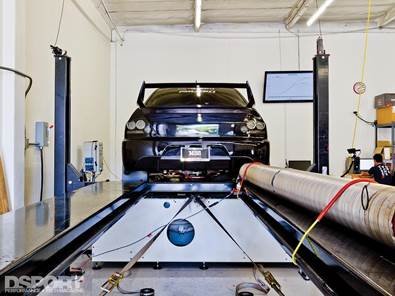
Horsepower is measured using a machine called a dynamometer (dyno).
The process works like this:
- The car is placed on rollers
- The engine is run through different RPM levels
- Torque is measured at each stage
- Horsepower is calculated using the formula
There are two types of horsepower:
1. Crank Horsepower
- Measured at the engine output
- Does not include drivetrain loss
2. Wheel Horsepower
- Measured at the wheels
- More realistic for real driving
Wheel horsepower is always lower because energy is lost through:
- Gearbox friction
- Differential resistance
- Wheel drag
7. Why Horsepower Is Important in Cars
Horsepower plays a major role in:
1. Acceleration
Higher horsepower allows a vehicle to reach higher speeds faster.
2. Top Speed
At high speeds, air resistance increases dramatically, and horsepower is needed to overcome it.
3. Performance Consistency
Cars with higher horsepower maintain speed better under load.
However, horsepower alone does not define a fast car. Other factors matter:
- Vehicle weight
- Tire grip
- Gear ratios
- Aerodynamics
A lightweight car with moderate horsepower can outperform a heavy car with higher horsepower.
8. Common Misconceptions About Horsepower
Misconception 1: Horsepower = Speed
Not true. Horsepower affects speed potential, not guaranteed speed.
Misconception 2: More Horsepower Always Means Better Car
Not necessarily. A poorly tuned high-horsepower car can be inefficient or hard to control.
Misconception 3: Torque and Horsepower Are the Same
They are related but not the same. Torque is force, horsepower is power over time.
9. Real-Life Analogy for Easy Understanding
Imagine two people pushing a car:
- Person A pushes very hard but slowly
- Person B pushes moderately but very fast
Horsepower is like measuring who can move the car faster over time.
So:
- Torque = strength of push
- Horsepower = how fast that push is repeated
10. Why Modern Engines Focus on Horsepower
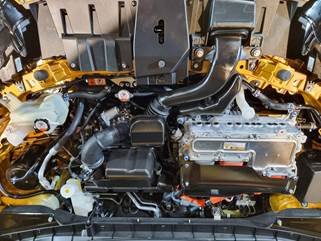
Modern automotive engineering focuses heavily on horsepower because it reflects real-world performance potential.
However, today’s engines are not built just for power. They must also meet:
- Fuel efficiency standards
- Emission regulations
- Compact design requirements
This is why turbocharged engines are becoming more common. A small turbo engine can produce high horsepower while using less fuel compared to older large engines.
Conclusion: What Horsepower Really Means
Horsepower is not just a marketing number or a performance bragging right. It is a fundamental engineering measurement that describes how quickly an engine can convert fuel energy into motion.
In simple terms:
👉 Horsepower = speed of doing work
👉 Not just strength, not just speed, but both combined
That is why it remains one of the most important performance metrics in the automotive world.
Whether it is a small city car or a supercar, horsepower tells the story of how efficiently an engine can turn controlled explosions into movement.
External References