Ferrari’s Next F1 Engine Upgrade Explained:
What It Means for the 2026 Title Fight
Ferrari is preparing its most significant power unit step in years. Here’s exactly what’s changing under the new regulations, how it compares to Red Bull and Mercedes, and what it would actually take to turn that upgrade into a genuine championship run.
What’s changing under the new power unit rules — and what it would take to challenge for the title.
Ferrari is heading into the most significant power unit reset Formula 1 has seen in a decade. Therefore, this isn’t a routine mid-season tweak — it’s a full rebuild of how the Scuderia’s engine generates and deploys power, timed to land exactly when the championship picture resets under new regulations.
The 2026 rules rebalance the entire hybrid system, removing the MGU-H and pushing electrical power output to roughly half of total performance. As a result, every manufacturer effectively starts from a new baseline. For Ferrari, that’s both an opportunity and a risk. Below is a full breakdown of what’s actually changing, how Ferrari’s approach compares to Red Bull and Mercedes, and what realistically needs to happen for this upgrade to translate into title contention.
Team: Scuderia Ferrari · Team Principal: Frédéric Vasseur
Drivers: Charles Leclerc, Lewis Hamilton
Regulation: 2026 F1 power unit overhaul — 50/50 hybrid split, no MGU-H, 100% sustainable fuel
Main rivals: Red Bull Racing, Mercedes-AMG Petronas
Ferrari’s engine department in Maranello has spent the better part of two seasons preparing for this regulation shift. Meanwhile, the team’s on-track form has remained competitive without quite closing the gap to the very front of the grid. Consequently, the 2026 power unit becomes the clearest opportunity Ferrari has had in years to reset that gap entirely.
What Ferrari’s Engine Upgrade Actually Changes
The single biggest change under the 2026 regulations is the power split itself. Current hybrid units run roughly 80% combustion and 20% electrical output. However, the new rules push that balance to approximately 50/50, meaning the electric motor contributes as much raw power as the combustion engine for the first time in the sport’s history.
That shift forces every manufacturer, Ferrari included, to rethink energy deployment strategy from the ground up. Therefore, Ferrari’s upgrade isn’t just about squeezing more horsepower from the combustion side — it’s about building software and hardware that can deploy a much larger electrical contribution without compromising battery state across a full race distance.
The MGU-H allowed engines to recover heat energy from the turbocharger and eliminate lag almost entirely — Ferrari and Mercedes both built genuine technical advantages around it. Removing it under the 2026 rules levels that specific advantage industry-wide. For the underlying mechanics, our glossary breaks down how the Energy Store works in F1 and what ERS actually does across a lap.
Ferrari has reportedly prioritized a combustion-efficient core engine design, betting that strong baseline thermal efficiency will matter more once every manufacturer is working with a similar electrical power ceiling. Whether that bet proves correct depends heavily on how well their software team manages the dramatically increased battery deployment demands across a full grand prix distance.
How Much Performance Could Ferrari Actually Gain?
It’s tempting to treat any major engine upgrade as an automatic championship swing. However, the honest picture is more complicated. Because every manufacturer faces the same regulatory reset simultaneously, Ferrari’s gains are relative — what matters isn’t how much faster their 2026 engine is than their 2025 unit, but how it compares to what Red Bull and Mercedes build under the identical rules.
Historically, regulation resets have rewarded manufacturers with the strongest simulation and software development pipelines, not necessarily the biggest factory budgets. Ferrari’s recent investment in dedicated hybrid software talent suggests they understand this. Nevertheless, translating simulation gains into raceday reliability remains the harder half of the challenge.
“The chassis and aerodynamics will matter just as much as the power unit in 2026. A great engine in a car that can’t deploy it consistently still loses races.”
— Independent F1 Technical AnalystReliability is the area worth watching most closely. A power unit that wins the simulator but suffers cooling or deployment failures on track erases any theoretical advantage immediately. Therefore, Ferrari’s preseason and early-season reliability data will tell us more about genuine 2026 form than any single dyno number Maranello publishes.
Ferrari vs Red Bull and Mercedes Under the New Rules
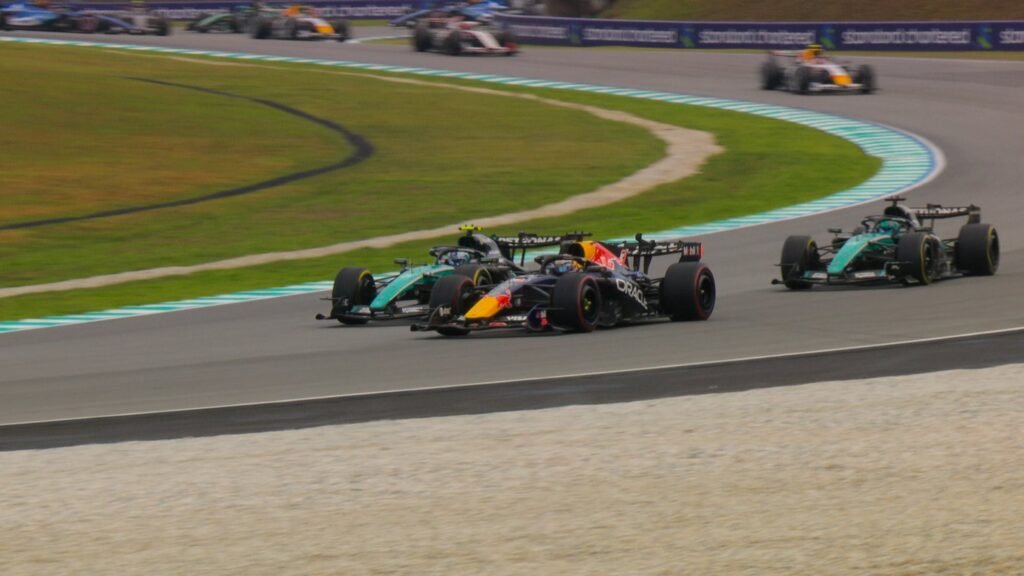
Red Bull enters 2026 in an unusual position — partnering with Ford on an in-house power unit programme rather than buying an engine outright, a significant strategic departure from their previous Honda relationship. Meanwhile, Mercedes continues to lean on its long-standing hybrid development advantage, an area where the Brackley team has historically led the field.
| Manufacturer | 2026 Power Unit Approach | Key Strength Entering 2026 |
|---|---|---|
| Ferrari | Combustion-efficient core, rebuilt deployment software | Thermal Efficiency Focus |
| Red Bull Ford | New in-house power unit programme with Ford | Fresh Architecture |
| Mercedes | Extending long-running hybrid development lead | Hybrid Software Pedigree |
Each approach carries real risk. Red Bull’s new partnership means building institutional knowledge essentially from scratch, while Mercedes must prove their hybrid expertise transfers cleanly to a power unit with a much larger electrical contribution than before. Ferrari’s path — leaning on combustion efficiency while playing catch-up on deployment software — sits somewhere between the two in terms of risk profile.
A power unit advantage means little without an aerodynamically efficient chassis to exploit it. Ferrari’s 2026 car concept needs to convert any engine gains into actual lap time. For background on this relationship, see our explainer on what downforce actually does and how car engines work at a fundamental level.
What Ferrari Actually Needs to Win the 2026 Title
An engine upgrade alone has never won Ferrari a championship, and 2026 won’t be different. Charles Leclerc and Lewis Hamilton give Ferrari a driver lineup capable of converting a competitive car into race wins — but only if the car itself is genuinely competitive across an entire season, not just in isolated sessions.
Win Probability Factors Entering 2026
⚠ Weighting reflects general championship-winning factor analysis, not official team data.
Therefore, the honest answer is that Ferrari’s engine upgrade gives them a fair shot at returning to genuine title contention — but it’s a necessary condition, not a sufficient one. Red Bull and Mercedes face their own version of this same challenge, which is precisely why 2026 is shaping up as one of the most unpredictable regulation resets in years.
Ferrari’s combustion-efficiency-first approach is a reasonable bet given the regulation framework, but the deployment software rebuild remains the biggest unknown. If Maranello nails energy management early in 2026, Leclerc and Hamilton both have the raceday pedigree to convert that into a genuine title fight. If not, expect another season of being close but not quite there — a pattern that’s defined Ferrari’s recent F1 history. For full driver context, see how Leclerc’s career has progressed in our archive of the best F1 drivers of all time.
Frequently Asked Questions
Authoritative Sources & Further Reading
The bottom line on Ferrari’s 2026 engine bet
Ferrari’s next engine upgrade is real, significant, and tied directly to the biggest regulation reset Formula 1 has undergone in years. However, it’s not a guarantee of anything on its own. Every manufacturer resets together in 2026, which means Ferrari’s actual competitive position will only become clear once cars hit the track under genuinely equal rules.
What we do know is that Ferrari has the driver lineup, the financial resources, and a clear technical philosophy heading into the new era. Whether that’s enough to finally close the gap to Red Bull and Mercedes is the story the entire 2026 season will tell.
Continuing coverage of Ferrari’s 2026 development and the full title fight throughout the season is available at worldofspeed.org.