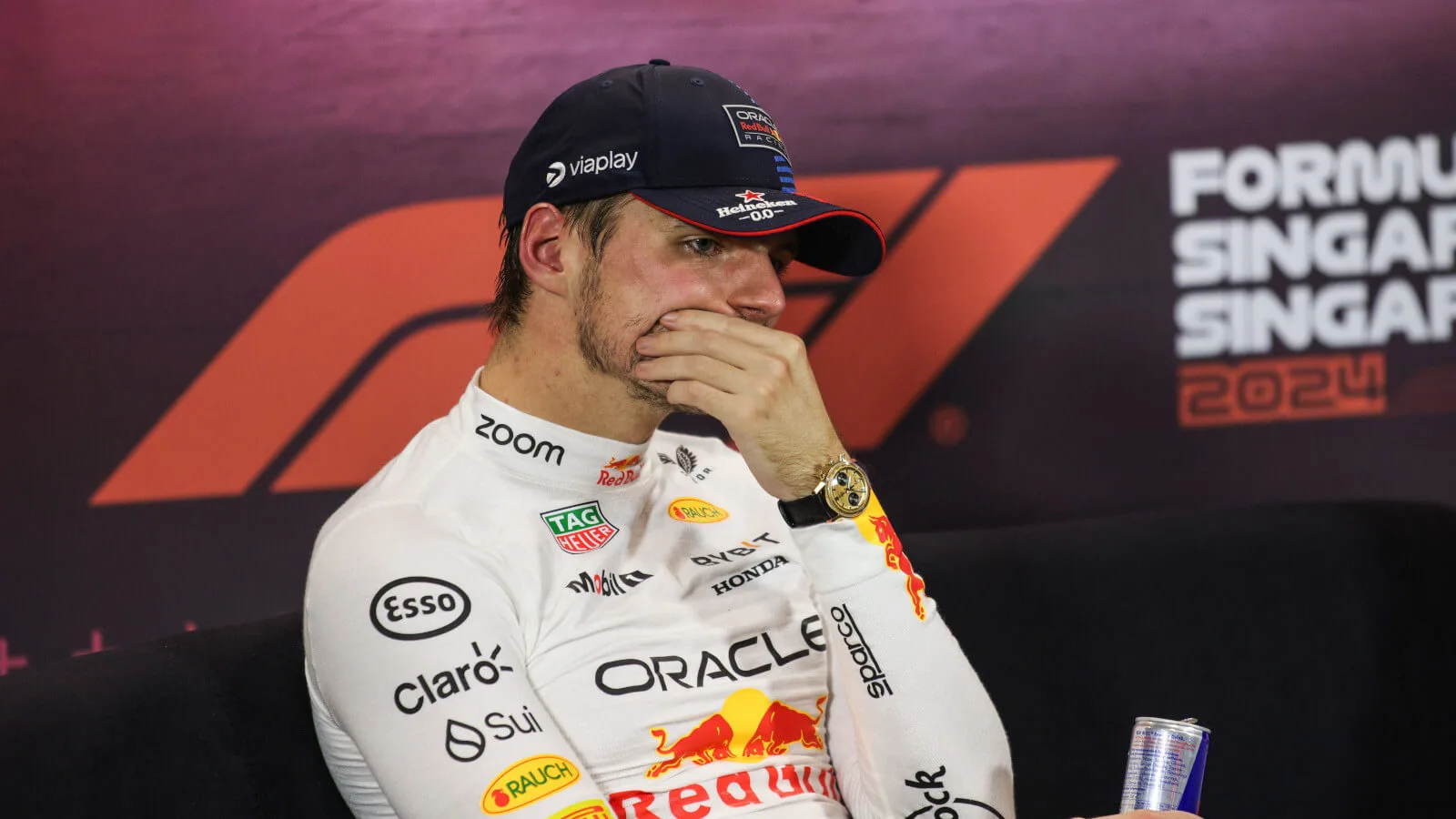
Is Max Verstappen Planning an F1 Exit? The Rumors Explained
A miserable Red Bull season, open retirement talk, a triggered exit clause, and the most powerful team in the paddock waiting in the wings. Here is everything confirmed, everything rumored, and what comes next for Formula 1’s four-time champion.
Is Verstappen Planning an F1 Exit?
Exit clause triggered, retirement threatened, Mercedes watching. The full story explained.
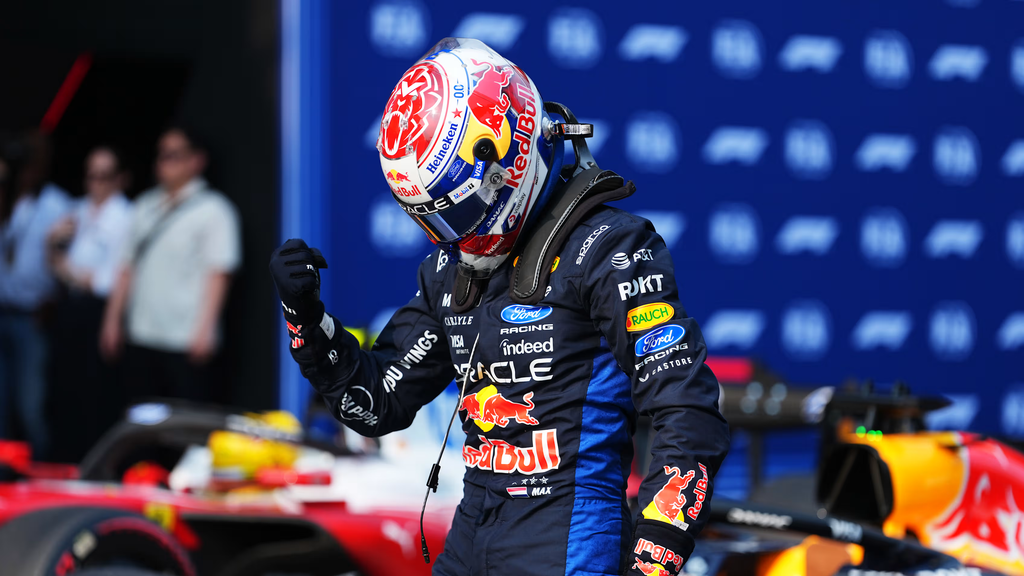
Max Verstappen has not announced his departure from Formula 1. However, the evidence building around him in June 2026 paints one of the most uncertain pictures in his entire career — and perhaps in F1’s modern era.
A dismal Red Bull season, regulations he publicly describes as “not fun” and a “joke,” a performance exit clause that has now become mathematically active, and multiple public comments about retirement. Furthermore, Red Bull’s own shareholders are split on how to handle his escape route. Meanwhile, Mercedes leads both championships with arguably the most dominant car since 2014. The Verstappen situation is the paddock’s biggest story — and it is getting more complicated by the week.
What Is Actually Happening with Verstappen Right Now?
The short answer is this: Max Verstappen has not announced he is leaving Red Bull or retiring from Formula 1. However, the combination of on-track performance, public statements, and contractual developments has created a situation that is genuinely unprecedented in his career.
Verstappen sits seventh in the 2026 F1 drivers’ championship — 101 points behind championship leader Kimi Antonelli after Round 7 at the Barcelona-Catalunya Grand Prix. Red Bull fourth in the constructors’ standings, behind McLaren, Ferrari and Mercedes. Max Verstappen finished fourth at Barcelona and admitted the team remain behind the leading three. The gap to the front is not small. Moreover, it is structural — the 2026 car is simply not competitive against the new-regulation benchmark-setters.
Furthermore, this follows a 2025 season in which Verstappen missed out on a fifth world championship by just two points, despite Red Bull’s struggles. He survived a performance exit clause attempt that year, staying inside the top three heading into the summer break. In 2026, that escape is no longer available to him — and the paddock knows it. For a full picture of where F1 stands this season, our live standings page is updated after every race.
Verstappen is third on F1’s all-time race winners list with 71 — only Lewis Hamilton (105) and Michael Schumacher (91) have more. He turns 29 in September 2026. There is no shortage of years left in his career. The question is not about ability — it is about whether he is willing to endure a sport he is currently not enjoying, in a car that cannot win.
What Verstappen Has Said Publicly
Verstappen has been consistently open about his frustration. After the Japanese Grand Prix, he told the BBC he was “thinking about everything inside this paddock” and questioned whether F1 was worth continuing. His exact words were direct: “I want to be here to have fun and have a great time and enjoy myself. At the moment that’s not really the case.”
“I have a lot of other projects anyway that I have a lot of passion about. The GT3 racing. Not only racing it myself but also the team.”
These are not the words of a driver going through a minor rough patch. They reflect a deeper disillusionment — one that has been building since the 2026 regulations were finalised. Sources told ESPN that Verstappen is leaning more toward a sabbatical rather than a full-blown retirement — but there’s never a guarantee of a return once a driver leaves. Moreover, the options available to him outside Formula 1 — GT3 racing, endurance events, Le Mans — are genuine competitive alternatives for a driver of his calibre. He has already raced at the Nürburgring 24 Hours twice. Read our full report on Verstappen’s GT3 adventures and what they reveal about where his passion currently sits.
The Exit Clause — What It Says, and Why It Has Now Activated
Verstappen’s Red Bull contract formally runs to the end of the 2028 season. However, that deal contains performance-related exit clauses — a fact his own manager, Raymond Vermeulen, confirmed publicly. Vermeulen told Sport Bild: “Our contract runs until the end of 2028. Of course, contracts always contain exit clauses, but we’ve never had to make use of them so far.”
The 2026-specific clause is understood to be directly tied to his championship position. The exit clause for 2026 is that he can leave if he is not in the top two of the drivers’ championship by the time of the summer break. With Verstappen currently 60 points behind second-place Lewis Hamilton in the drivers’ championship, it is now impossible for him to be in the top two by July 1, and even a win in Austria would only lift him to a maximum of fourth.
Therefore, the clause has effectively triggered. However, triggering a clause and choosing to act on it are two entirely different things. Moreover, Bild reports that even within Red Bull’s own shareholder structure, opinions are split on how to handle the situation — with the Thai stakeholder considering buying out the exit clause to prevent a premature departure, while CEO Oliver Mintzlaff is not keen, arguing Verstappen currently lacks any viable alternatives at top teams.
The buyout option is not straightforward either. Neutralising Verstappen’s contract clause through a buyout would reportedly set the team back by an amount in the low double millions — a sum Mintzlaff would prefer to reinvest into other areas of the Red Bull project. Furthermore, buying out the clause doesn’t actually address the underlying problem: a car that is not competitive against Mercedes, Ferrari and McLaren. Money can close a legal loophole; it cannot close a 101-point gap in the championship.
Red Bull’s New Leadership — A Reset or Just a Change?
One significant development in 2026 has been the departure of Christian Horner as Red Bull team principal and his replacement by Laurent Mekies, the former Racing Bulls boss. Verstappen said the arrival of Mekies provided the team with an opportunity to reset and challenge some of the ways it had previously operated. He told the media he likes how Mekies works — “constantly asking the right questions” — and that their technical conversations go “a bit deeper” than before.
Red Bull boss Laurent Mekies told media: “We have a lot of work to do, but I’m sure by the time we give him a fast car, he will be a much happier Max.” That is the team’s entire strategy right now: fix the car, retain the driver. However, in the current competitive landscape, that is an enormous task. The history of Red Bull Racing has been shaped by periods of dominance followed by competitive collapse — and right now, they are firmly in the latter category. Read more about the team’s full story on our Red Bull Racing hub page.
The 2026 Regulations — Why Verstappen Hates Them
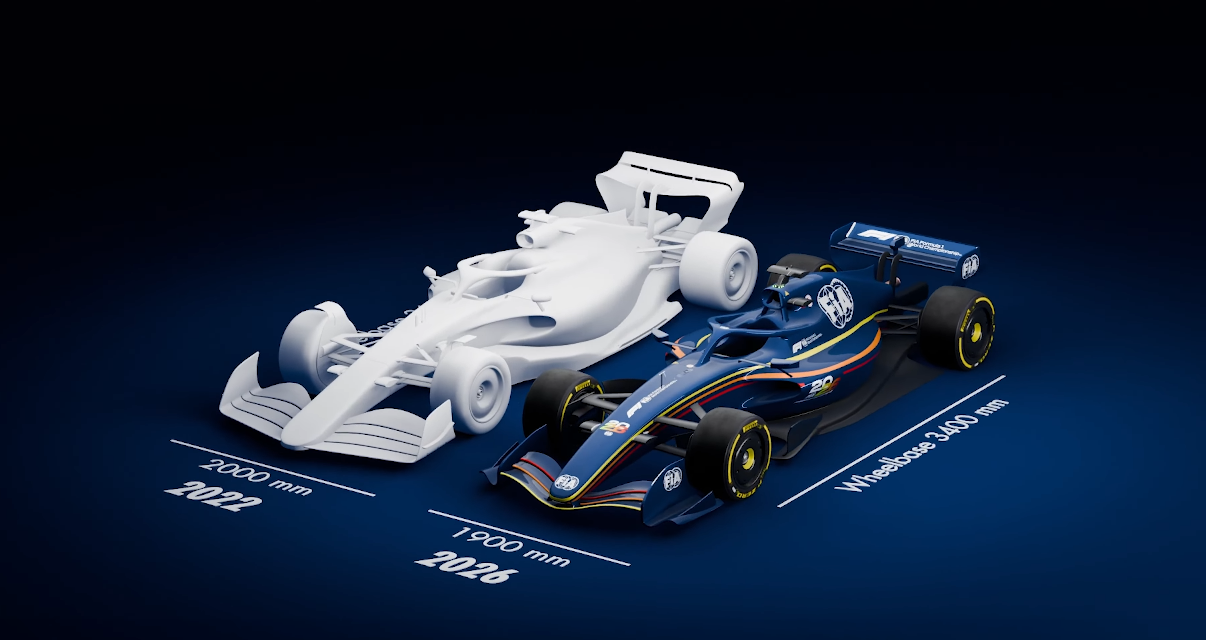
To understand the full depth of Verstappen’s frustration, you need to understand what changed in 2026. F1 introduced entirely new technical regulations — the biggest single overhaul since 2022 — featuring revised power unit specifications, active aerodynamics, and a new energy deployment philosophy. The cars look different, behave differently, and reward different driving styles.
Verstappen has been the grid’s most vocal critic from the start. He called the new cars similar to Mario Kart, labelled them “anti-racing,” and said driving them “doesn’t feel natural to a racing driver.” After the Chinese Grand Prix, he called the situation “a joke.” He is not alone — reigning champion Lando Norris said F1 had gone from its best cars in 2025 to its worst in 2026, while Fernando Alonso called the series “the battery world championship.” However, no driver has been as vocal, or as unhappy, as Verstappen.
The key issue is energy management. Extreme lifting and coasting through high-speed corners — essential for charging batteries — is so severe that Alonso suggested his hospitality chef could drive his car without any issue. For a driver like Verstappen, whose entire driving identity is built on commitment and precision at high speed, a car that demands artificial restraint is fundamentally at odds with why he races. To understand more about upcoming F1 2027 regulation changes and how the sport plans to address these criticisms, see our dedicated explainer. The sport’s governing body, the FIA — explained in detail on our glossary page — is reportedly considering a revised 60/40 combustion-to-electric split from 2028.
Verstappen has stated a 60/40 split between the combustion engine and battery would be the minimum requirement for him to remain in the sport. The FIA is currently planning to introduce such a balance from 2028. That two-year gap is precisely why the short-term picture looks bleak — even if the long-term regulations satisfy him, two seasons of painful, unenjoyable racing remain between here and that point.
The Story So Far — Key Moments in the Verstappen Saga
What Happens Next? The Three Scenarios Explained
Scenario 1 — He Stays at Red Bull
The most likely outcome, based on available evidence, remains Verstappen seeing out his 2026 season at Red Bull. His manager has repeatedly affirmed loyalty. New team principal Laurent Mekies is focusing entirely on building a faster car, and ESPN sources note that Verstappen’s affinity for the Red Bull company — which gave him his route into Formula 1 — runs very deep. Moreover, the options elsewhere are narrower than they appear. For more on how Verstappen first joined the grid, our complete biography covers his path to F1 from the very beginning.
Scenario 2 — He Moves to Mercedes
The glamour option, and the one that keeps Wolff awake at night wondering if he can finally make it happen. Toto Wolff is a long-time admirer of Verstappen and still regrets being beaten to his signature by Red Bull years ago. Mercedes has the most dominant car in 2026 — the obvious case for a fifth title that Red Bull cannot currently offer. However, Wolff has stated his “absolute priority” is with his current drivers, and said there is a 90–95% chance his team continues with Antonelli and Russell. Furthermore, pushing out a driver mid-season to accommodate Verstappen is extremely complicated contractually. Nevertheless, this scenario cannot be ruled out.
Scenario 3 — Sabbatical or Retirement
ESPN sources suggest Verstappen is leaning toward a sabbatical rather than full retirement, though they stress there is no guarantee of a return once a driver leaves F1. He has already expressed desire to race at Le Mans and compete in GT3. The nature of Red Bull’s F1 contracts also means he could step away from racing while still honoring his deal with the company as an ambassador or in another role — and sources told ESPN that option would also be open to him. This is a real path, not just a negotiating tactic. The greatest F1 drivers of all time have all faced this crossroads — the question is never talent, always motivation.
With the exit clause now active after July 1, Verstappen can theoretically announce a departure at any point. Bild reports the clause can be invoked until October 2026 — giving him time to assess Red Bull’s performance trajectory through the summer races. Therefore, the Austrian Grand Prix weekend is the next major date to watch — read our full Austrian GP 2026 preview for what is shaping up to be the most consequential race weekend of the season politically, not just competitively. The key decision timeline we mapped out in a previous report remains the most accurate guide to when this will be resolved.
- ESPN — “Why new rules have Verstappen on the brink of walking away from F1” (April 2026)
- ESPN — “Max Verstappen considering retiring from F1 at end of 2026” (March 2026)
- GPFans — “F1 insider claims Verstappen exit clause now ‘impossible’ for Red Bull to block” (June 2026)
- GPFans — “Red Bull chiefs split in bid to block Max Verstappen exit clause” (June 2026)
- RacingNews365 — Verstappen manager provides F1 contract update (June 2026)
Frequently Asked Questions — Max Verstappen F1 Exit Rumors
Bottom line: Watch Austria, then Hungary
The Austrian Grand Prix — Red Bull’s home race — and the Hungarian Grand Prix that follows it are the events that will define this story. If Red Bull cannot show genuine performance progression in front of their home crowd, and if Verstappen’s own mood in post-race press conferences darkens further, expect the decision to come before the summer break.
The clause is active. The options exist. The driver is unhappy. What happens next depends on whether Max Verstappen’s loyalty to the team that made him outweighs his desperate need to feel the joy of winning again. Keep following World of Speed’s live F1 coverage for every development as this story moves toward its conclusion.