Inside IndyCar’s Hybrid Challenges:
What Teams Are Saying in 2026
Failures at Detroit, Indianapolis, and Long Beach have depleted the spare unit supply. IndyCar just cut energy limits by 16%. Scott Dixon wants them gone. Here is the full picture.
Inside IndyCar’s Hybrid Challenges:
What Teams Are Saying
Failures at Detroit, Indy, and Long Beach have depleted spare unit supply. IndyCar just cut energy limits by 16%. The full picture.
IndyCar’s hybrid system was supposed to be a 60-horsepower boost. Instead, it has become the defining technical crisis of the 2026 season — with failures shutting down race-leading cars, spare unit supplies running critically low, and the series now cutting energy limits by up to 16% for the remainder of the year.
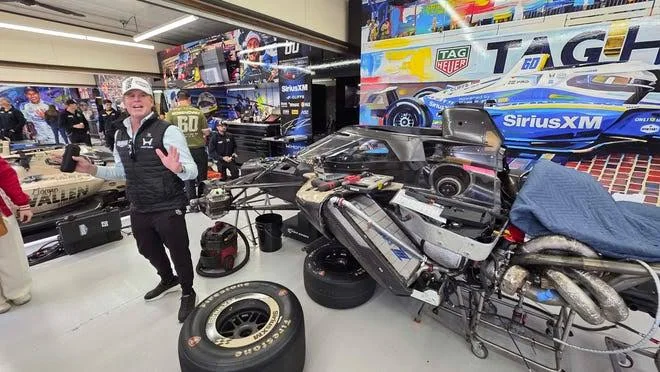
The IndyCar hybrid powertrain has been in use since mid-2024. However, 2026 has exposed just how fragile the system remains under sustained racing load. Heading into Road America, teams, drivers, and engineers are openly questioning whether the technology is ready — and some are calling for it to be removed entirely.
How the IndyCar Hybrid System Actually Works
The IndyCar hybrid system is an Energy Recovery System made up of two main components. The Motor Generator Unit (MGU) is manufactured by Chevrolet and Ilmor in collaboration with Empel. The Energy Storage System (ESS), which stores the recovered energy, is produced by Honda Racing Corporation USA and Skeleton Technologies using supercapacitor technology. Both Honda and Chevrolet teams use the same jointly developed hybrid package.
Drivers access the boost via a steering wheel button. When deployed, the system delivers an additional 60 horsepower on top of the existing 2.2-litre twin-turbocharged V6 engine output. Energy is recovered through regenerative braking and other deceleration phases, then stored in the ESS supercapacitor pack located between the engine and transmission. The amount deployable per lap is governed by a series-mandated energy limit expressed in kilojoules, which varies by circuit type.
Furthermore, the supercapacitor design — rather than a conventional lithium-ion battery — is notable. Supercapacitors charge and discharge extremely quickly, making them well-suited to the short, sharp bursts that racing requires. However, they also operate under intense thermal loads, and heat management is where the current reliability problems have taken hold.
Unlike the lithium-ion battery packs used in Formula E or road-going hybrids, IndyCar’s ESS uses supercapacitors — a technology Honda’s engineers have identified as particularly useful for rapid-burst energy applications. The tradeoff is thermal sensitivity: supercapacitors degrade faster under sustained high temperatures, which is exactly what six consecutive race weekends in summer conditions produce. To understand how engine load affects performance, that thermal pressure multiplies considerably on ovals where throttle is applied for nearly the full lap.
The Failures That Broke the 2026 Season
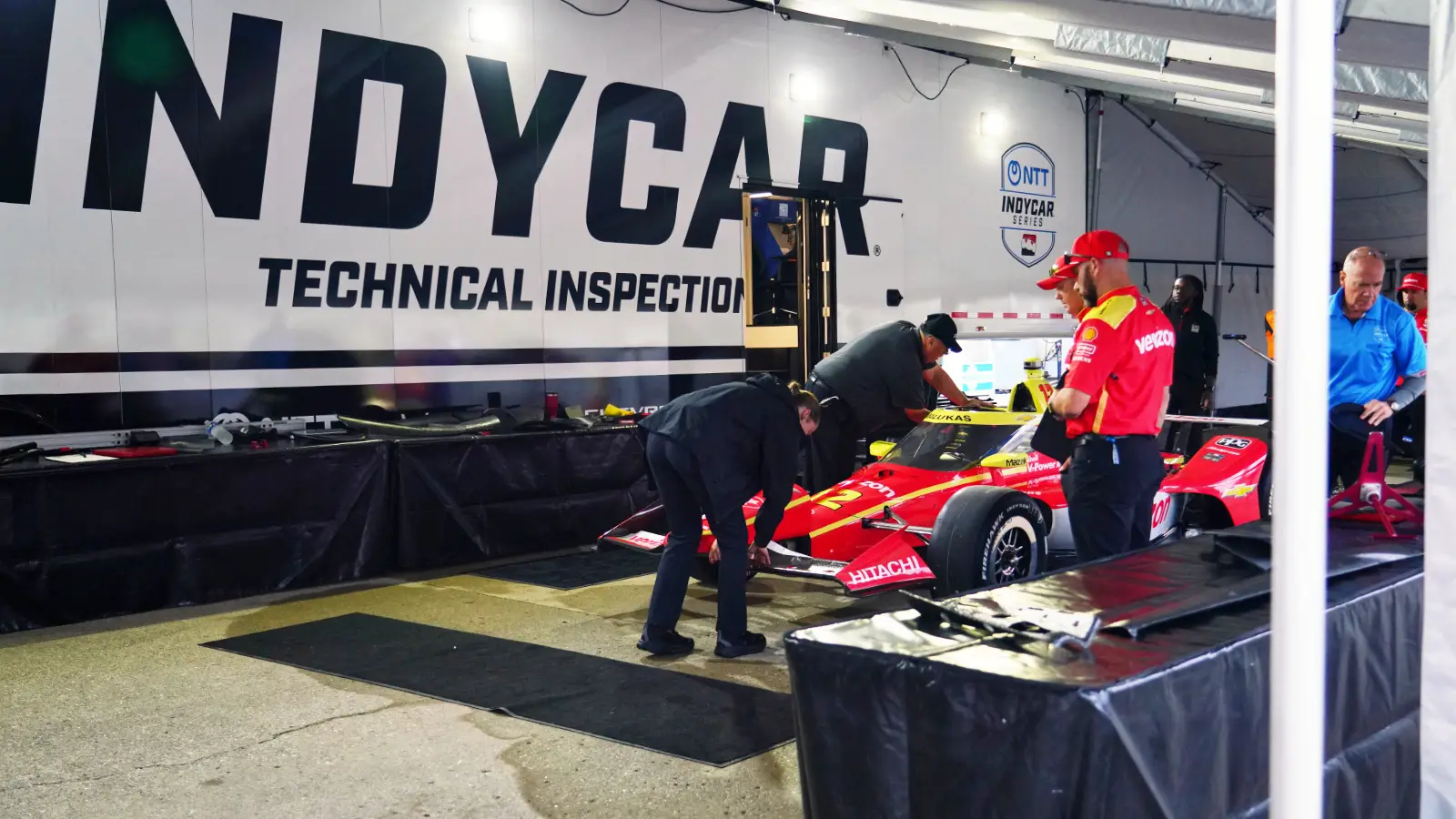
IndyCar’s hybrid system has produced failures across the first nine rounds of the 2026 championship — and the consequences have ranged from reduced performance to engines shutting off entirely during races. The severity has not been uniform. Some cars can continue at reduced pace when the hybrid fails, while others suffer a complete powertrain shutdown. Both outcomes have cost drivers significant results.
| Driver | Event | Failure Type | Race Impact |
|---|---|---|---|
| Alexander Rossi | Sonsio GP, IMS Road Course | Immediate hybrid shutdown | DNF |
| Scott Dixon | Detroit Grand Prix | ESS failure → engine shutdown | 24th |
| Alex Palou | Post-Detroit inspection | Excessive MGU wear found | Unit replaced |
| Multiple drivers | Long Beach GP | Various unit failures in practice/race | Supply alert |
What Drivers and Teams Are Actually Saying
The paddock has not been quiet. Drivers from multiple teams have gone on record with their frustrations — and some of the language has been unusually direct for a sport where engineers typically choose careful words about technical partnerships.
“I think if you did a poll of the drivers or a WhatsApp group, I think it’d be 100%, get rid of them.”
— Scott Dixon, six-time IndyCar champion, Chip Ganassi Racing · Bommarito Automotive Group 500, 2026Dixon’s statement is the most damning. However, it came with a caveat that points to the commercial reality: “But there’s bigger things than us, and I don’t know what to tell you about that.” The hybrid system was agreed jointly by Honda and Chevrolet — both manufacturers have significant investment in the technology, and Honda in particular is widely understood to have been the principal advocate for its introduction.
Moreover, Alexander Rossi was equally blunt after his Sonsio Grand Prix retirement. After walking across the IMS pit lane to his timing stand, he told media: “It’s pretty annoying to have failures on the car because of a product we didn’t ask for that doesn’t improve the racing.” His radio comment to his crew — “Thanks, Honda” — was pointed enough that it drew immediate attention from reporters covering the paddock.
Not every driver response has been negative. Dreyer & Reinbold Racing’s Conor Daly acknowledged the strategic dimension the hybrid opens up, saying: “I think there’s a lot of complicated ways that you’re going to try to do to find point-02 of a mile an hour.” IndyCar increased minimum deploy settings for 2026, eliminating the previous year’s conservative “trickle deploy” method and forcing teams to find new creative approaches. For a full breakdown of how IndyCar’s race scoring works, including the points impact of DNFs, see our explainer.
Alex Palou: The Counterpoint
Interestingly, the driver who has benefited most during the hybrid era is the one most cautious about calling for its removal. Alex Palou — who has won three consecutive IndyCar championships and leads the 2026 standings — told reporters he would prefer to race without the hybrid system, but acknowledged it is “probably not what the manufacturers want.” That calculation reveals where the real power sits: not with the drivers, but with the engine suppliers whose road-car programmes benefit from hybrid development data.
Honda Racing Corporation USA president David Salters addressed this directly ahead of the Indianapolis 500: “At the start, people said you’ll never be able to use a hybrid at the Indy 500.” Honda views the IndyCar programme as a direct technology pipeline for its road-car hybrid development — and the supercapacitor research in particular has drawn interest from parent company engineers in Japan and Ohio. That commercial logic makes it difficult to imagine the system being withdrawn, regardless of driver sentiment.
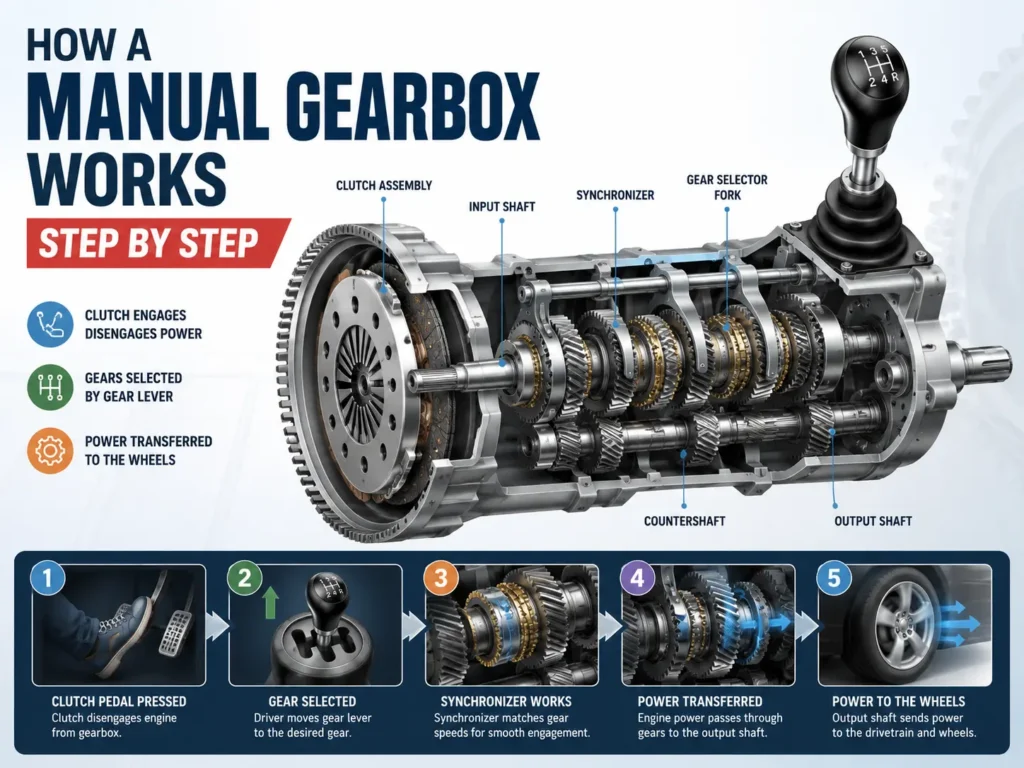
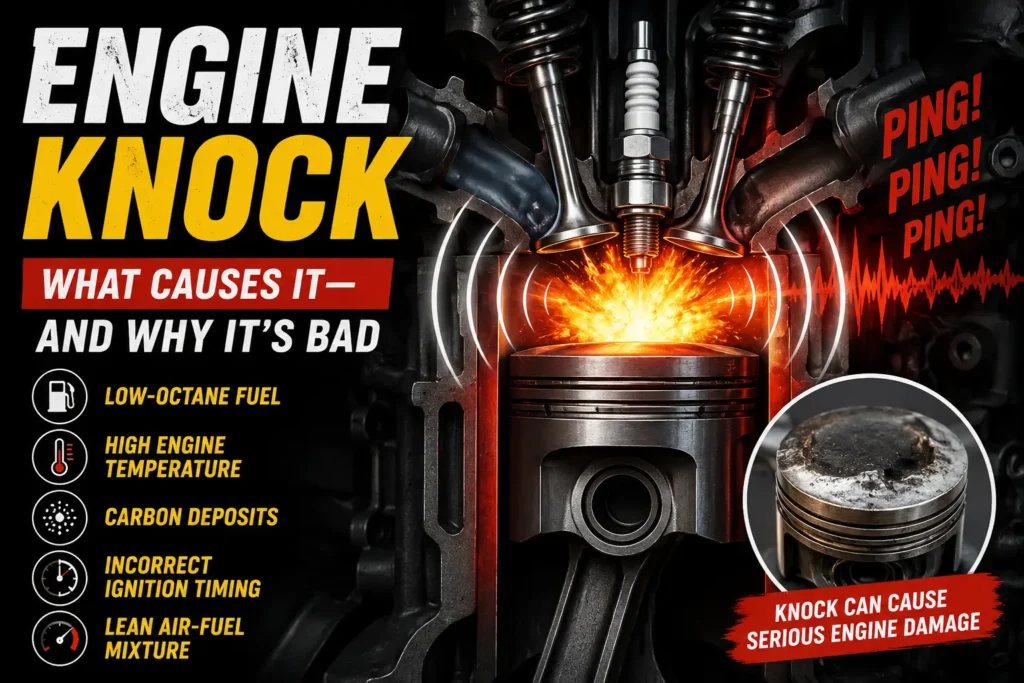
For context on how race car engines work, and the challenge of integrating recovery systems under racing loads, it helps to understand how extreme the thermal environment inside a race powertrain actually is — especially on ovals where the throttle barely closes.
Alexander Rossi on Qualifying Strategy
Before the failures became the dominant story, Rossi had offered a useful window into how much the hybrid already shapes team strategy. Speaking ahead of Indy 500 qualifying, he explained: “They took away the way that everyone was kind of doing it last year. So it’s going to force people to be creative. You can have the car balance perfect and the trim level perfect, and if your hybrid strategy is not, that can be the difference between third and 15th.”
That one quote captures the dual nature of the system’s challenge. On one hand, it adds a genuine strategic layer that rewards engineering intelligence. On the other, it adds a component that can fail — and when it does, the race ends before the driver has had any say in the matter. As a parallel, consider how pit strategy in racing can also swing results by 10 or more positions; the hybrid’s qualifying impact described by Rossi operates on a similar scale.
How IndyCar Has Responded
IndyCar’s response to the reliability crisis has been measured and pragmatic. Following failures across the first nine rounds, the series announced a per-lap energy limit reduction ahead of Road America. The new limit of 535 kJ per lap represents a 16% cut from the 600 kJ applied over the same race the previous year — and a significantly larger reduction from the 715 kJ permitted in 2025.
In a statement to IndyStar, IndyCar confirmed the reasoning: “After review, IndyCar is reverting to the validated electricity flow average as introduced in 2024 and for the start of the 2025 season for this weekend’s event at Road America. The move is aimed to help reduce thermal load and aging of the ESS cells, which will help with robustness of the hybrid power unit, stabilise system fallout and assist with unit supply.”
The reduction was also partly a supply decision. A two-week break before Road America was specifically arranged to allow Ilmor Engineering — the series’ hybrid service provider — time to rebuild inventory. Prior to the break, teams had been instructed to share spare units with each other to keep everyone on the grid. One team gave its spare to Ganassi for Dixon’s replacement; another surrendered its unit for Palou’s MGU swap. That kind of forced sharing is unsustainable across six consecutive race weekends.
Teams have warned privately that if the current failure rate continues through the back half of the season — which features six consecutive race weekends — there may not be enough operational hybrid units to outfit the entire field. IndyCar says the energy reduction, combined with the two-week inventory rebuild, addresses this concern. The series added it will re-evaluate further cuts after Road America.
Andretti Global team principal Ron Ruzewski offered the most measured team response to the energy cut, noting the reduction should not have a significant impact on lap times. That assessment is broadly shared across the paddock — the real losses are in the qualifying deployment ceiling rather than race pace, where teams already managed energy conservatively in response to the reliability concerns.
Furthermore, IndyCar made a rule change at the start of 2026 that has added a parallel strategic dimension: the series mandated that street course events must use one set of primary compound tyres and two sets of softer alternates — an increase from the previous single-alternate requirement. That decision was made partly in response to feedback that the hybrid system’s added weight was accelerating tyre wear. To understand the relationship between downforce, weight, and tyre life in open-wheel racing, it is worth noting that every kilogram added to the floor of the car has a measurable effect on how quickly rubber wears.
How the Hybrid Changes Race Strategy
Even setting aside the failures, the hybrid system has fundamentally changed how IndyCar races are run. The key challenge differs significantly depending on circuit type — and teams have had to build entirely new engineering frameworks for each category.
| Circuit Type | Hybrid Challenge | Typical Strategy |
|---|---|---|
| Superspeedway (Indy 500) | Near-full throttle all lap — minimal regen opportunity | Creative burst deployment through corners to maintain average speed |
| Road Course | Multiple braking zones for regen; varied lap structure | Regen on straights, deploy through corners or on straights for push-to-pass effect |
| Street Course | Tight barriers amplify weight penalty; tyre wear accelerated | Conservative deployment; tire strategy adjusted for increased degradation |
| Short Oval | High thermal load; limited regen on banking | Lower energy limits set by series; managed deployment to protect ESS |
The Indy 500 deployment question has been particularly striking. In 2026, IndyCar increased the minimum deploy setting, ending the conservative “trickle deploy” approach that most teams adopted in 2025. As Rossi noted, a car with perfect balance and trim can still qualify significantly further back if the hybrid deployment plan is suboptimal. Some teams explored regenerating energy on the straightaways and deploying it through corners — an inversion of the intuitive approach that reflects how much engineering creativity the system demands.
Meanwhile, the weight challenge on street circuits has been the subtler but equally important problem. The hybrid unit adds mass to the rear of the Dallara DW12 chassis, shifting weight distribution in ways that accelerate tyre degradation on abrasive temporary surfaces. IndyCar’s two-alternate-tyre rule change for street events in 2026 is a direct acknowledgement of this. Understanding how car racing works at the strategic level requires factoring in components that rarely make headlines — and tyre management driven by powertrain weight is one of them.
Looking forward: IndyCar’s new Dallara IR-28 chassis, arriving in 2028, will use a 2.4-litre twin-turbocharged V6 paired with a hybrid powertrain. The technology is staying. The question is whether the reliability problems are solvable before the end of the current DW12 era, or whether the series simply manages them down to an acceptable level while waiting for the clean-sheet redesign.
The Sonsio Grand Prix at Road America (June 28) marks the first race under the new 535 kJ energy limit. It’s a 4.014-mile, 14-turn road course where deployment strategy is complex — multiple braking zones create regen opportunities, but the long straights also demand precise deployment timing. Follow the full IndyCar 2026 schedule and IndyCar race today coverage on World of Speed.
Frequently Asked Questions
A note on this story
All driver quotes in this article are sourced from on-record statements reported by IndyStar, RACER, Motorsport Week, and IndyCar’s official paddock briefings. The energy limit figures (535 kJ at Road America vs 600 kJ in 2025) are confirmed by IndyCar’s official statement to IndyStar.
The hybrid story is ongoing. IndyCar has said it will re-evaluate the energy limit reduction after Road America. This article will be updated as further official statements are issued and race results come in.