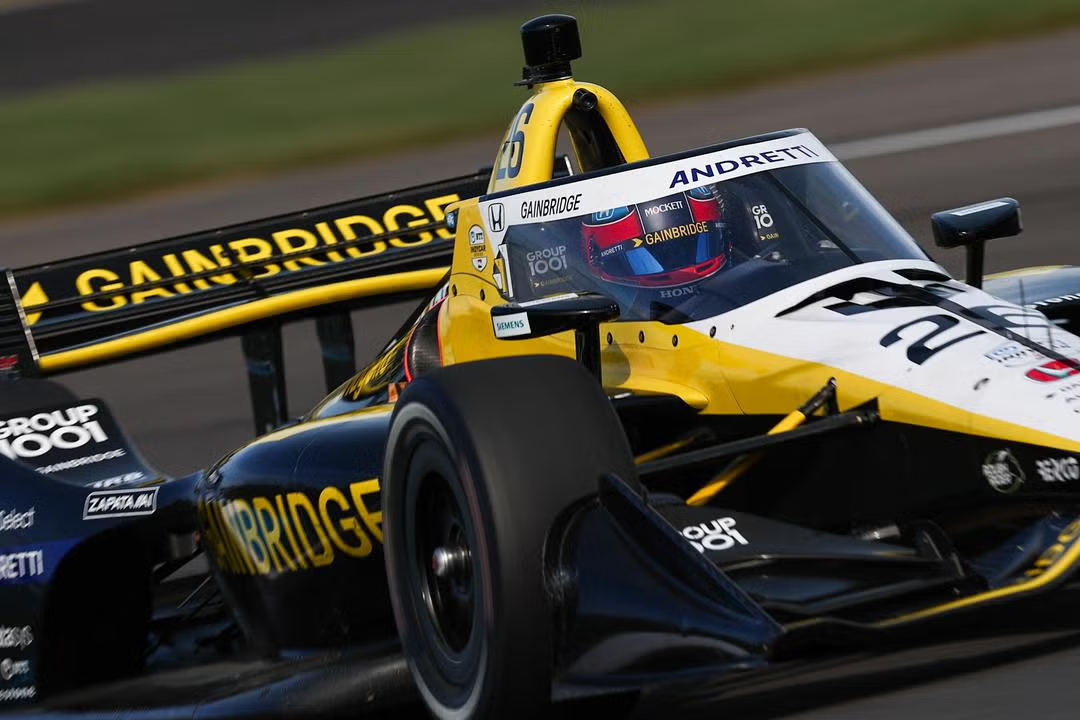
IndyCar’s Future Engine & Hybrid
Developments: Everything We Know
From the first hybrid laps at Mid-Ohio in 2024 to the 2.4-litre V6 era arriving in 2028 — IndyCar is in the middle of the most significant powertrain transformation in its modern history. Here is the full story, with all the confirmed data.
IndyCar’s Future Engine & Hybrid Developments
From 2024’s first hybrid laps to the 2028 engine era — the full technical roadmap.
IndyCar does not move quickly on engine regulations. The 2.2-litre twin-turbocharged V6 that powers every car on the grid today first appeared in 2012. It was still there in 2026, wearing a brand-new hybrid system strapped into its bellhousing. That combination tells you everything about how the series approaches change: carefully, collaboratively, and only when the technology is ready.
However, the pace of development is accelerating dramatically. A brand-new chassis and a larger 2.4-litre hybrid V6 are confirmed for 2028. Honda and Chevrolet have both signed long-term commitments. A second-generation hybrid system — targeting double the power and longer deployment windows than Version 1 — is already in the procurement process. The IndyCar engine story is about to get a great deal more interesting.
The Current Engine: A 2.2-Litre V6 That Refuses to Age
Every car on the NTT IndyCar Series grid runs a 2.2-litre twin-turbocharged V6 engine supplied by either Honda or Chevrolet. These are the same displacement engines that debuted in 2012 — though they share little else with those originals beyond the basic architecture. Fourteen years of development have transformed what was already a high-output racing engine into something considerably more refined.
The technical specification is tightly controlled. Cylinder bore is capped at 95mm. Maximum RPM is 12,000, with a 12,200 RPM limit during overtaking. Each engine uses direct fuel injection, two Borg-Warner turbochargers, drive-by-wire throttle, and a series-spec McLaren Electronics Engine Control Unit (ECU).
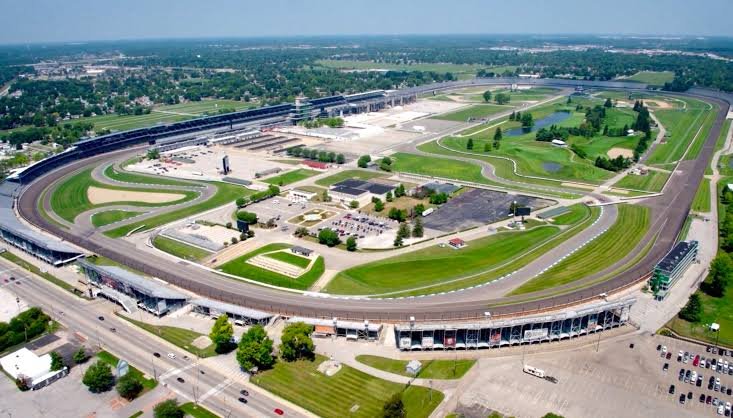
Horsepower varies by track type. IndyCar controls output through boost pressure limits — so the same engine produces different numbers depending on whether it’s running on an oval, a street circuit, or a permanent road course. On a superspeedway like Indianapolis, the engine runs approximately 575 horsepower under reduced boost to manage tyre wear and fuel consumption across 500 miles. On a road course, teams run more boost and extract significantly more.
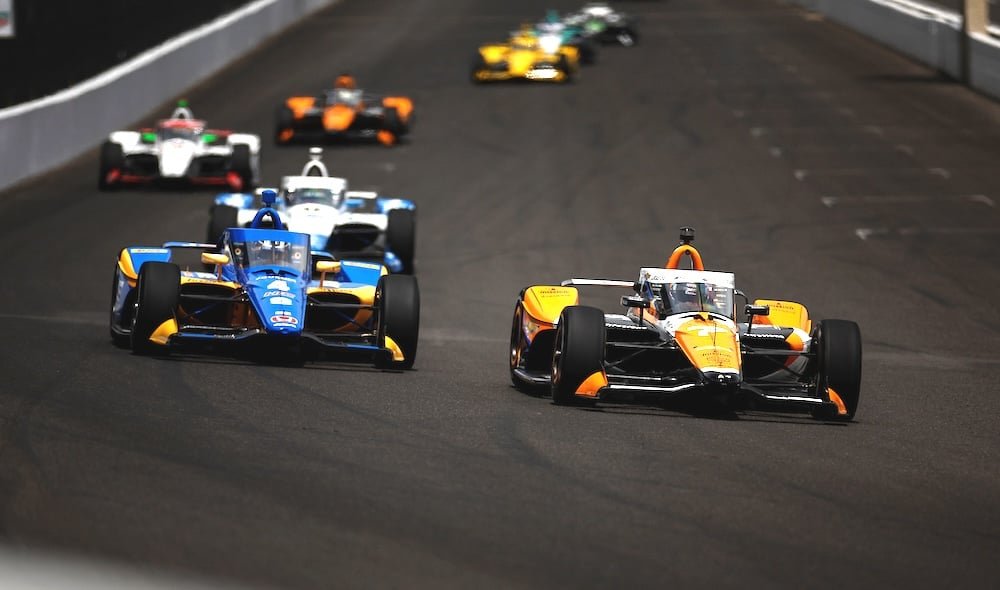
Despite being older, the engine remains genuinely competitive because the spec chassis levels the playing field. Neither Honda nor Chevrolet can win through pure horsepower dominance. Races are consequently decided by driver skill, team strategy, and the small margins available in areas where the rules allow tuning. Understanding how turbocharged engines differ from naturally aspirated designs explains why this twin-turbo architecture was chosen in the first place — boost pressure is far easier to regulate than naturally aspirated power curves.
The Version 1 Hybrid System: How It Works
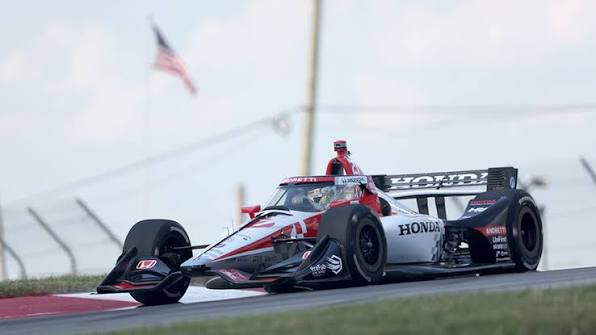
The IndyCar hybrid system made its race debut at Mid-Ohio on July 5-7, 2024, after one of the longest development cycles in modern motorsport. It had been announced in 2019, delayed by the pandemic, delayed again by supply chain issues, and then handed off from IndyCar management to Honda and Chevrolet themselves to rescue in December 2022.
By the time it reached competition, over 23,518 testing miles had been completed among 28 IndyCar drivers across ovals, road courses, and street-circuit-style surfaces. The result was an extremely reliable unit. There were almost no significant failures on debut weekend, which was remarkable given how novel the integration was.
Motor Generator Unit (MGU)
The MGU captures kinetic energy under braking and converts it into electrical energy. It also works in reverse — deploying stored electrical energy as additional horsepower on driver demand. Built by Empel, the current MGU is actually capable of delivering over 100HP instantaneously, but Version 1’s energy storage limits prevent sustained delivery at that level.
Energy Storage System (ESS)
The ESS uses ultracapacitors rather than conventional lithium-ion batteries. The reason: space. The existing Dallara DW12 chassis left very little room in the bellhousing for energy storage, and ultracapacitors charge and discharge far faster than batteries — ideal for short, high-power bursts. The trade-off is lower total storage capacity.
Deployment — No Time Limit
Unlike the traditional push-to-pass button, the hybrid system has no cap on total deployment time per race. Drivers can use it continuously whenever the ESS holds a charge, opening up new strategic dimensions around energy management, overtaking windows, and defensive driving.
Bellhousing Location
Both the MGU and ESS fit inside the bellhousing — the mechanical connector between the engine and the gearbox. This location was chosen because it required no fundamental changes to the existing DW12 chassis architecture, keeping costs manageable and development timelines realistic.
“The IndyCar-specific hybrid power unit will bring a new and exciting element to the NTT IndyCar Series with additional energy and overtake options. We cannot wait to see the start of this new era.”
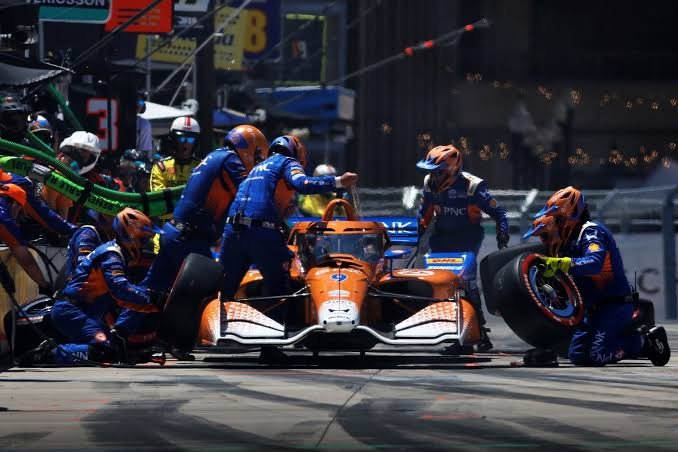
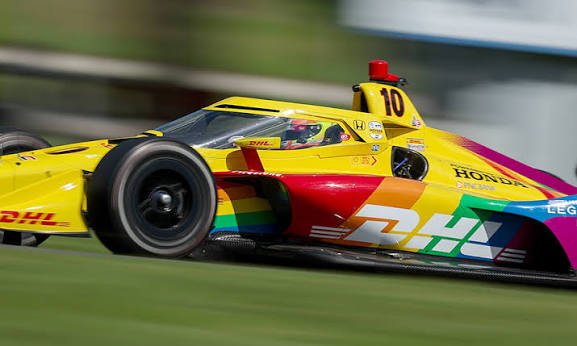
The Development Timeline: A Five-Year Journey to the Grid
The path from “IndyCar will have hybrid power” to “IndyCar does have hybrid power” took exactly five years, three major delays, one pandemic, a supply chain crisis, and an unexpected joint-development agreement between two competing manufacturers. It is, genuinely, one of the more complex engineering stories in recent American motorsport.
Hybrid Version 2: What’s Coming in 2028
IndyCar’s Version 2 hybrid is not simply a refresh of what arrived at Mid-Ohio in 2024. It is a fundamental upgrade in ambition. IndyCar’s Senior VP of Competition and Operations, Mark Sibla, told RACER Magazine that the series wants nearly double the peak power output and significantly longer deployment windows from the new unit.
Specifically, the targets for V2 are:
- Peak ERS power up to 120HP — approximately double the effective output of Version 1
- Deployment duration target of 10 seconds per charge — double the roughly five seconds available from V1’s ultracapacitor ESS
- Higher total energy storage — more stored energy means more frequent deployment opportunities per lap
- Reduced ESS weight — the new technology offers higher storage capacity in a lighter package
“With the hybrid, we are currently looking at a 60-volt-or-less system, but substantially more on the energy storage. Version 2 is: ‘OK, we’ve had a lot of learnings. Let’s keep the reliability. But boy, there’s some new technologies out there that maybe give us more energy storage and make this more impactful.'”
The Version 1 ESS used ultracapacitors because they were the only energy storage technology that could physically fit within the DW12’s bellhousing space. However, the new 2028 chassis is being designed from the ground up to integrate the hybrid system properly. That unlocks access to better battery technologies that offer far more energy density — meaning more power stored in a smaller space.
Sibla noted that two vendor groups had moved to the front of the procurement process as of early 2026, both proposing similar solutions with slightly different technical approaches. Both would reduce ESS weight while delivering substantially greater storage capacity. This is a direct benefit of designing the 2028 car around the hybrid system, rather than retrofitting hybrid technology into an existing chassis. Understanding what horsepower figures actually mean in practice helps contextualise exactly how significant a jump from 60HP to 120HP of hybrid boost truly is at racing speeds.
The 2028 Engine: 2.4L V6, New Chassis, Bigger Everything
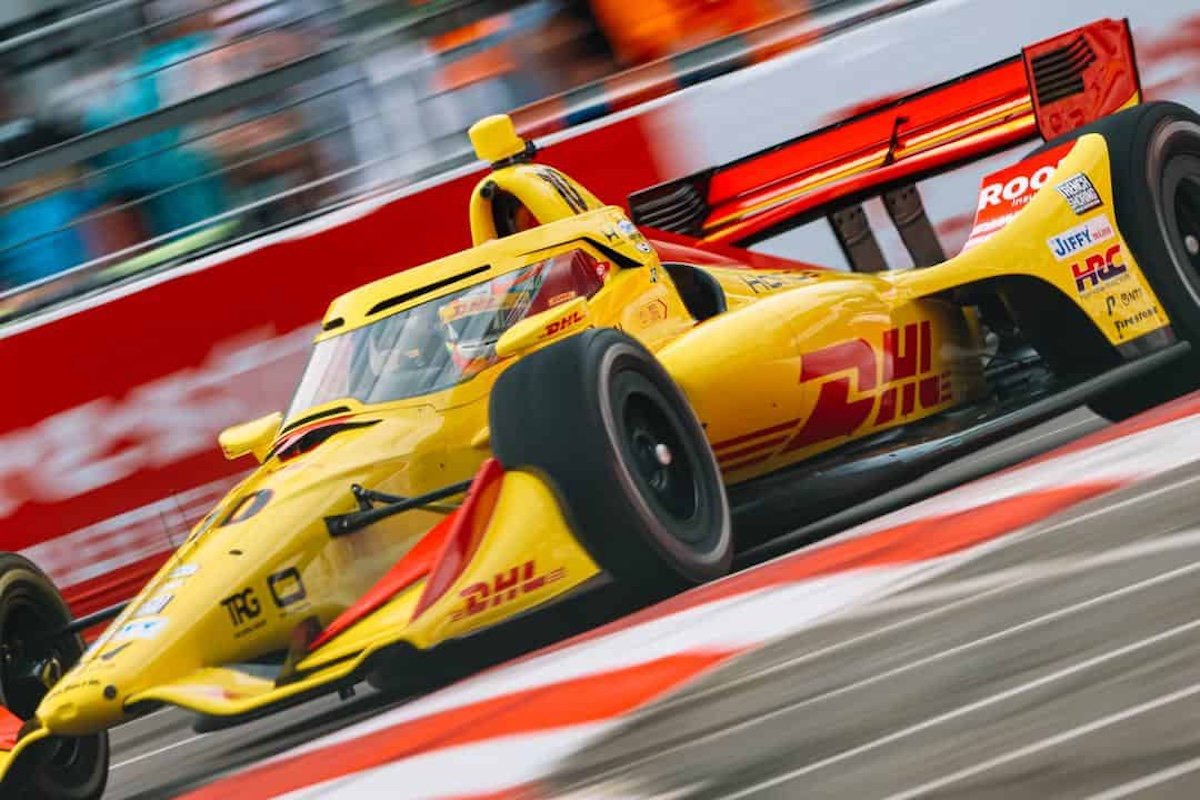
IndyCar confirmed in 2025 that a completely new chassis — the Dallara IR28 — would debut in 2028, paired with the long-awaited 2.4-litre twin-turbocharged V6 engine. This is the biggest engineering reset the series has undertaken since the current DW12 chassis arrived in 2012.
The new car is being designed around three core pillars: competition quality, powertrain integration, and safety. This time, crucially, the hybrid system is being built into the architecture from day one rather than bolted in as an afterthought. That single change unlocks almost everything else that is improved about the new package.
The IR28 will be 85 to 100 pounds lighter than the current platform. It features an integrated aeroscreen designed as part of the chassis rather than retrofitted. The cockpit ergonomics are redesigned for driver comfort and visibility. Performance Friction Corporation remains the exclusive brake supplier. Early-phase testing begins in 2026, with full grid implementation in 2028.
The 2.4-litre displacement increase sounds small in absolute terms. However, at the tight bore and stroke specifications IndyCar runs, the additional displacement — combined with revised turbocharger configurations and a new hybrid integration that delivers more electrical boost — will produce meaningfully more total power. Honda’s 2.4L V6 will be developed and built entirely within the United States by Honda Racing Corporation USA. Chevrolet has confirmed the same architecture.
Moreover, both manufacturers will receive their own single-car factory team charter starting in 2028 — meaning Honda and Chevrolet will each field a full-season factory-backed entry of their own for the first time. This has significant implications for how the manufacturer competition unfolds, as both brands will now have direct skin in the game on the racing side as well as the engineering side. Follow the IndyCar schedule to track testing milestones as they arrive through 2026 and 2027.
Honda vs Chevrolet: The Long-Term Commitments
One of the most significant announcements of the 2026 off-season came in February, when both Honda and Chevrolet formally committed to the NTT IndyCar Series through 2028 and beyond. That commitment is not trivial. Running competitive IndyCar engine programmes costs each manufacturer in the eight-figure range annually, covering engine production, development, parts supply to over a dozen teams, and field support at every round.
For Chevrolet, the decision reflects the consistent presence the brand has maintained in IndyCar since returning as a full factory partner. GM President Mark Reuss emphasised the technology transfer angle: racing the hybrid V6 in IndyCar generates real data and real engineering learnings that feed back into Chevrolet’s road car development, particularly in hybrid and electrification programmes.
“This extension paves the way for the NTT IndyCar Series to continue to grow and for us to further maximise technology transfer from race to road. The addition of a charter allows Chevrolet to join with other stakeholders to continue to make the series even stronger.”
Honda’s commitment is equally significant, particularly after the manufacturer had explored an entry into NASCAR that would have required substantial additional resources. Honda Racing Corporation President David Salters highlighted over thirty years of continuous IndyCar presence and the franchise charter system as genuine differentiators that made the long-term commitment straightforward. Currently, Honda supplies Andretti Global, Chip Ganassi Racing, Meyer Shank, Rahal Letterman Lanigan, and Dale Coyne. Chevrolet supplies Team Penske, Arrow McLaren, Ed Carpenter Racing, AJ Foyt Racing, and Juncos Hollinger Racing.
IndyCar has also confirmed it has held discussions with other unnamed automotive manufacturers. While none have committed, the fact that the series designed the 2028 powertrain regulations with input from OEMs beyond Honda and Chevrolet suggests the door is genuinely open for a third engine supplier entering alongside the 2028 rules. That would be the most significant competitive development the series could announce before the new era begins.
Sustainable Fuel and IndyCar’s Electrification Strategy
IndyCar’s approach to sustainability is rooted in the pragmatic reality of what a 500-mile oval race demands. The series has run on an E85 ethanol blend (85% ethanol, 15% gasoline) for years — fuel that is sourced from American corn farmers and produced domestically. This matters both for environmental credentials and for the political reality of a series whose biggest event takes place in Indiana farm country.
The ethanol blend gives IndyCar a compelling sustainability story that does not require abandoning the internal combustion engine. Ethanol burns cleaner than pure gasoline, is renewable when sourced from agricultural feedstocks, and supports American agricultural supply chains. Combined with the hybrid ERS system that reduces net fuel consumption per lap, IndyCar can legitimately argue it operates a cleaner powertrain than it did a decade ago.
The short answer is not in the foreseeable future. IndyCar’s identity is inseparable from the sound, speed, and endurance of its turbocharged engines. The physics of 500-mile oval racing at 230 mph make current EV battery technology completely impractical for competitive use. The hybrid approach — internal combustion plus an energy recovery system — represents the realistic bridge between traditional racing and a more sustainable future, and it is the direction IndyCar is firmly committed to. For comparison, Formula E’s fully electric approach involves completely different racing formats, distances, and entertainment models.
Looking ahead, IndyCar is expected to explore higher-content sustainable fuel blends for the 2028 era — potentially pushing toward second-generation biofuels with lower lifecycle carbon emissions than corn-derived ethanol. The specifics of fuel regulations for the new engine era have not yet been finalised. However, the direction is clearly toward reducing the carbon intensity of the racing fuel itself, complementing the efficiency gains the hybrid system already delivers.
Frequently Asked Questions
- IndyCar.com — Official hybrid era debut announcement, Mid-Ohio 2024
- IndyCar.com — 2028 new car announcement (June 2025)
- RACER Magazine — IndyCar 2028: The Hybrid System (January 2026)
- RACER Magazine — IndyCar 2028: The New Engine Formula Explained
- FOX Sports — Honda & Chevrolet commit to 2028 IndyCar engine (February 2026)
- IndyCar.com — Official Hybrid Power Unit technical overview
The IndyCar engine story is just getting started.
From the 23,518 testing miles that preceded Mid-Ohio’s 2024 hybrid debut, to the Version 2 system targeting 120HP and 10-second deployment, to the all-new Dallara IR28 and 2.4-litre V6 arriving in 2028 — IndyCar is in the middle of its most ambitious technical transformation in over a decade.
Honda and Chevrolet are both committed. The hybrid is working. The new chassis is coming. And for the first time, both manufacturers will field their own factory teams, raising the competitive stakes higher than they have been since the series first introduced the engine competition format. Watch the 2026 and 2027 testing windows closely — the data that emerges from those sessions will set the tone for everything that follows.