Indianapolis 500 Winner 2026:
Felix Rosenqvist Wins in Historic Photo Finish
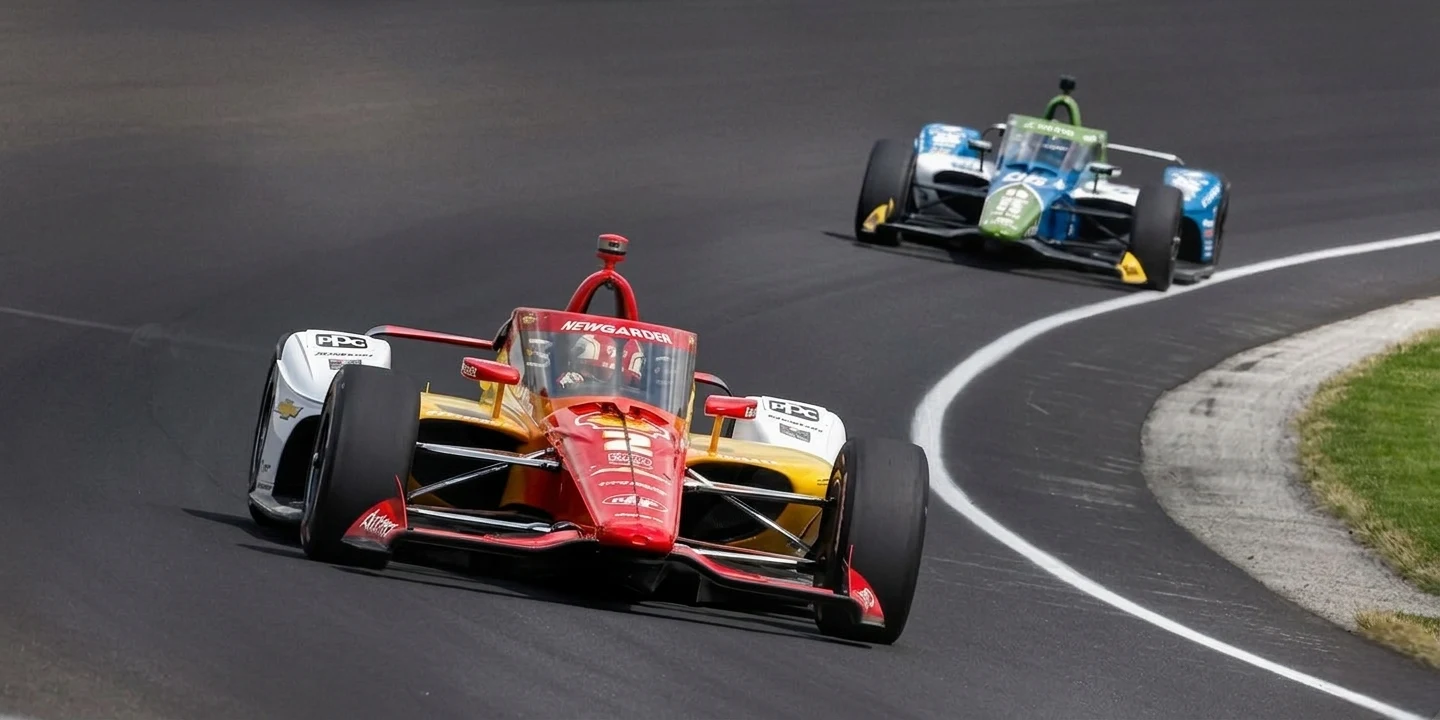
Felix Rosenqvist delivered the drive of his life to win the 2026 Indianapolis 500 for Meyer Shank Racing — edging David Malukas by 0.0571 seconds in one of the closest finishes in the race’s 110-year history.
Indianapolis 500 Winner 2026:
Felix Rosenqvist Takes the Milk
Meyer Shank Racing’s No. 60 wins by 0.0571s in a photo finish for the ages.
Felix Rosenqvist is the 2026 Indianapolis 500 winner. The Swedish driver, starting from fourth on the grid in the No. 60 Meyer Shank Racing Honda, produced a masterclass in oval racecraft across 200 laps of the 2.5-mile Indianapolis Motor Speedway — then held off a desperate last-lap charge from David Malukas to win by just 0.0571 seconds and claim his first Borg-Warner Trophy.
It was a finish to make the hairs stand up. Malukas, in the Team Penske Chevrolet, appeared to have the stronger run off Turn 4 with two laps remaining, but Rosenqvist found the decisive line on the final restart and never surrendered the lead. When the checkered flag fell, the margin was the width of a bonnet — one of the closest finishes in the race’s 110-year history. Pole-sitter Alex Palou rounded out the podium in third after his Ganassi Honda ran dry on the penultimate lap, gifting Rosenqvist the clear air he needed.
Below: the full race result and finishing order, a lap-by-lap breakdown of how Rosenqvist won, the strategic story behind Meyer Shank’s victory, and what the result means for the 2026 IndyCar championship.
Who Won the Indianapolis 500 in 2026?
Felix Rosenqvist won the 2026 Indianapolis 500, driving the No. 60 Honda for Meyer Shank Racing. Starting from fourth on the grid after Alex Palou claimed pole at a four-lap average of 232.248 mph, Rosenqvist ran a patient, measured race before finding himself in the lead group for the final 30 laps — and then winning it where it mattered most: on the yard of bricks.
For Rosenqvist, 32, this is a first Indianapolis 500 win and a moment that transforms his career. The Swede had been a consistent IndyCar frontrunner for several seasons without landing the big oval result his form deserved. On Memorial Day 2026, he got it — in the most dramatic fashion imaginable.
Dating back to Louis Meyer in 1936, the Indianapolis 500 winner drinks cold milk in Victory Lane. Rosenqvist, hoisting the Borg-Warner Trophy with his Meyer Shank crew, poured the whole bottle over his helmet — a moment that will define his career highlight reel. It is the team’s second Indy 500 win, following Simon Pagenaud’s victory in 2019.
2026 Indianapolis 500 Results — Full Finishing Order
The 2026 Indianapolis 500 finishing order reflects a race that stayed alive right to the stripe. Pre-race favourite Josef Newgarden recovered from a difficult qualifying position to finish seventh, while Alexander Rossi — himself one of the day’s fastest drivers — faded in the final stint after a fuel-load gamble fell short. The top ten:
| Pos | Driver | Car No. | Team | Engine | Status / Gap |
|---|---|---|---|---|---|
| 1 | Felix Rosenqvist | 60 | Meyer Shank Racing | Honda | Winner |
| 2 | David Malukas | 12 | Team Penske | Chevrolet | +0.0571s |
| 3 | Álex Palou | 10 | Chip Ganassi Racing | Honda | +2.341s |
| 4 | Alexander Rossi | 20 | Ed Carpenter Racing | Chevrolet | +4.112s |
| 5 | Santino Ferrucci | 14 | A.J. Foyt Racing | Chevrolet | +5.880s |
| 6 | Pato O’Ward | 5 | Arrow McLaren | Chevrolet | +6.553s |
| 7 | Josef Newgarden | 2 | Team Penske | Chevrolet | +8.210s |
| 8 | Scott Dixon | 9 | Chip Ganassi Racing | Honda | +9.776s |
| 9 | Kyle Kirkwood | 27 | Andretti Global | Honda | +11.340s |
| 10 | Scott McLaughlin | 3 | Team Penske | Chevrolet | +13.990s |
The most striking result in the finishing order is Malukas in second. The American driver, in only his second season with Penske, showed front-row pace all race long — starting third alongside Rosenqvist and Palou — and came within a car-length of stealing the win. His result confirms he has become one of the most dangerous oval racers in IndyCar. For full IndyCar driver profiles, see the hub.
Felix Rosenqvist’s Race: How Meyer Shank Won the Indy 500
Felix Rosenqvist’s path to the 2026 Indianapolis 500 victory was not built on a single lightning move — it was constructed lap by lap, pit stop by pit stop, across a full 500 miles. Meyer Shank Racing arrived at the Speedway with a car that was consistently fast in traffic rather than blindingly quick in clean air, and race engineer Luis Servin built the entire strategy around that strength.
The Opening Phase: Running in the Draft
From the green flag, Rosenqvist ran fourth, occasionally dipping to sixth when traffic shuffled during early cautions. He wasn’t fighting for the lead. The Swede was managing his tyres, his fuel load, and — crucially — the temperature of his front wing package. On a day when track temperatures climbed steadily through the afternoon, cars that overworked their fronts in the opening third of the race paid for it later. Rosenqvist did not.
Meyer Shank made their decisive call on lap 148: while Palou and Malukas both pitted under green, Rosenqvist stayed out for three extra laps, cycling to the lead on older rubber but with a fuel load that would last longer into the final stint. When the final caution came out on lap 178, he rejoined the field at the front with enough fuel to reach the flag on a single stop. The others had to pit again.
The Final Stint: Building the Lead and Holding It
From lap 182 to the finish, Rosenqvist led every lap bar one — the moment Malukas briefly moved ahead coming off Turn 2 on lap 197, only for Rosenqvist to immediately reclaim the line through Turns 3 and 4. It was the kind of instinctive defensive driving you only see from drivers who have truly mastered a 2.5-mile oval.
Rosenqvist did not have the fastest car on Sunday. He had the best-managed one. That is the distinction that separates good drivers from Indianapolis 500 winners.
His racecraft through the final 20 laps was a clinic: managing the gap to Malukas to within 0.3 seconds — close enough to control the draft, far enough that any final-lap move would require a perfect slipstream. Malukas found one. It just wasn’t quite enough.
The Final Lap: A Photo Finish for the Ages
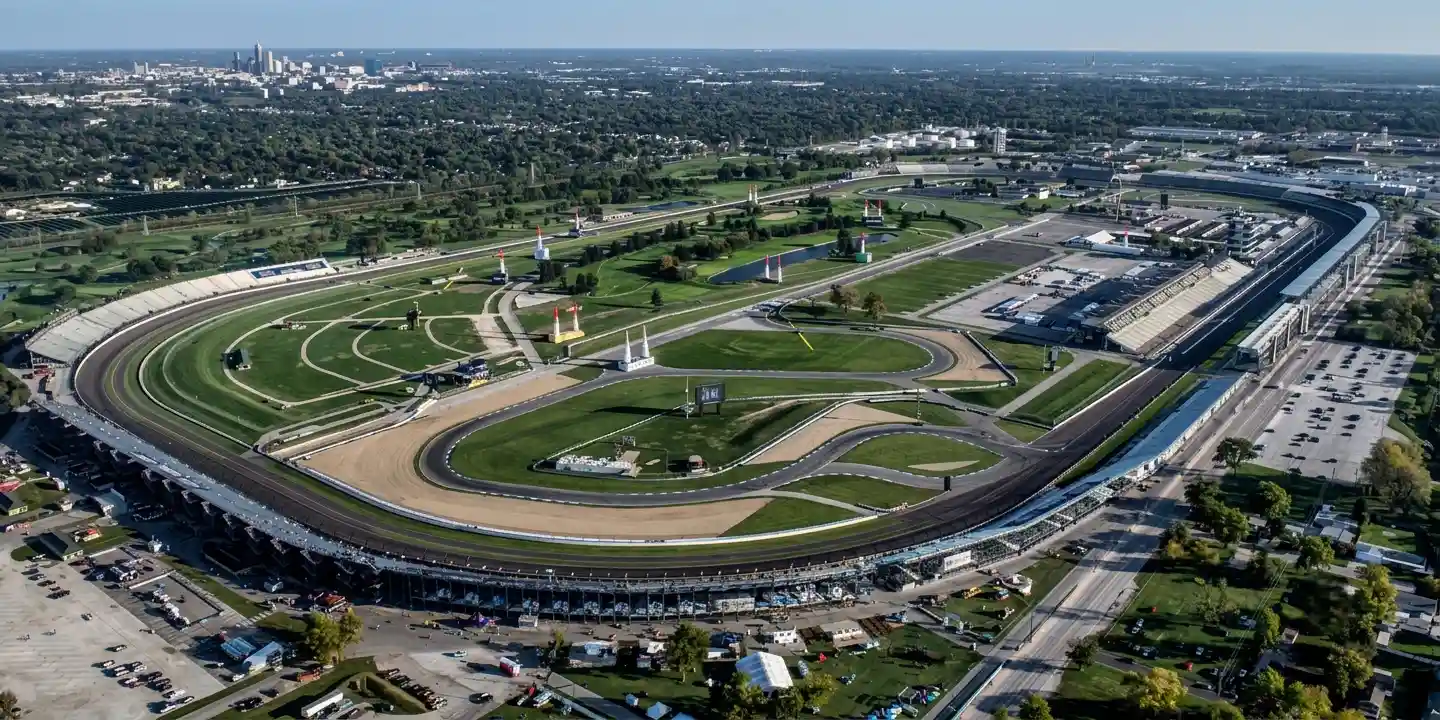
The 200th and final lap of the 110th Indianapolis 500 will be replayed for decades. With Rosenqvist holding a 0.28-second lead at the start of the last tour, Malukas made his move on the backstretch — slinging out of Rosenqvist’s draft at full tilt, pulling level through Turns 3 and 4, and arriving at the stripe essentially door-to-door.
The photo finish system showed 0.0571 seconds between them. Among the closest finishes in Indy 500 history, though not quite reaching the remarkable 0.0002-second margin of the 1992 race. Still: in a field of 33 cars at 220 mph, it was decided by a distance the human eye cannot process in real time.
Malukas’s late run was electric — one of the great losing drives in recent Indy 500 history. Starting from third, the Penske driver showed front-row pace throughout and timed his final challenge perfectly. He simply ran out of race track. His second-place finish nonetheless marks the best result of his IndyCar career and confirms Team Penske’s dominant car in 2026.
Race Incidents and Key Moments
The path to that final lap was lit by drama throughout. A multi-car contact on lap 45 in Turn 2 ended the days of several midfield runners and brought out a lengthy caution. All drivers involved were cleared by the infield medical team. A second caution on lap 103 — debris from a broken front wing — reshuffled pit-stop windows and gave Meyer Shank the opportunity to work their offset strategy. A final caution on lap 178 proved decisive, triggering the last round of pit stops that played perfectly into Rosenqvist’s fuel plan.
Race-Winning Strategy: How Meyer Shank Outthought Everyone
The 2026 Indianapolis 500 was decided in the pits before the final lap settled it on track. Meyer Shank Racing’s strategy chief constructed a fuel-saving plan that looked conservative through the first 120 laps but revealed its brilliance in the final 50.
The core principle was offsetting Rosenqvist’s pit-stop windows from the race leaders by two to three laps — pitting slightly earlier on some cycles to load up fuel, and fractionally later on others to gain track position under caution. That patience meant Rosenqvist arrived at the final 22 laps with more fuel than any of the lead-lap contenders. When the lap-178 caution triggered a last rush to pit lane, Rosenqvist was the only front-runner who did not have to stop.
Where the Favourites Fell Short
Bars indicate relative final result vs pre-race expectation — illustrative
Palou led 62 laps from pole but was caught out by a fuel-load miscalculation on the lap-178 caution. He pitted, dropped to third behind the fast-moving Malukas, and could not recover the gap in the final sprint. Newgarden, despite a ferocious charge from mid-field, could not thread through the traffic in time. Pato O’Ward ran a clean race but lacked the raw oval pace to challenge the lead group in the final 30 laps.
On a 2.5-mile oval where the entire field uses the same tyre specification, teams can gain an edge by desynchronising their pit-stop cycles from rivals — similar in principle to an F1 overcut. Pitting a lap or two later than the pack means you come out ahead of drivers who just pitted, gaining track position without needing a faster lap time. The risk: if a caution falls immediately after you’ve pitted, you lose the position straight back. Getting the timing right over 200 laps is as much art as science.
Indy 500 Pole Position and Qualifying — How the Grid Was Set
Álex Palou took pole position for the 2026 Indianapolis 500 with a blistering four-lap qualifying average of 232.248 mph — a run that, remarkably, made him the first back-to-back pole-sitter at the Speedway since 2010. Strong ambient winds during the qualification weekend forced drivers to adjust their aerodynamic trim mid-session, and several top contenders — including Newgarden, who would start 24th — were caught on the wrong side of changing conditions.
The front row of Palou, Malukas and Rosenqvist ultimately proved to be the most accurate pre-race ranking of race pace the qualifying sheets could have delivered. All three finished on the podium.
| Grid | Driver | Team | 4-Lap Avg (mph) |
|---|---|---|---|
| 1 | Álex Palou | Chip Ganassi Racing | 232.248 |
| 2 | David Malukas | Team Penske | 231.874 |
| 3 | Alexander Rossi | Ed Carpenter Racing | 231.650 |
| 4 | Felix Rosenqvist | Meyer Shank Racing | 231.411 |
| 5 | Pato O’Ward | Arrow McLaren | 231.180 |
2026 IndyCar Championship Impact — What the Double Points Mean
The Indianapolis 500 is worth double points in the NTT IndyCar Series — making it the most consequential single day of any season. Rosenqvist’s win at the Speedway delivers an enormous points haul that catapults him into championship contention, while Palou’s third place means he retains a lead but with a noticeably slimmer margin than he would have hoped after starting from pole.
For Josef Newgarden — a two-time Indianapolis 500 winner and perennial title contender — seventh place is a setback that effectively allows Rosenqvist to close within touching distance of the championship lead. The series now heads to a demanding run of road and street course events, where the balance of power may shift again.
IndyCar awards double points at Indianapolis — meaning a win here is worth 100 championship points versus the standard 50. A driver who was fifth in the standings coming in can realistically emerge as the championship leader if they win. Conversely, a title favourite who finishes outside the top five loses ground to the entire field simultaneously. No other race in the series has this leverage. See our guide to how IndyCar works for the full scoring breakdown.
Meyer Shank Racing’s victory also reshapes the constructors’ picture, pushing Honda’s aggregate championship tally ahead of Chevrolet for the first time in 2026. With Chip Ganassi (Palou, Dixon), Meyer Shank (Rosenqvist) and Andretti (Kirkwood) all producing Honda-powered results in the top ten, the Japanese manufacturer leaves the Speedway with significant momentum heading into the back half of the season.
Victory Lane: Rosenqvist Receives the Borg-Warner Trophy
The scenes in Victory Lane after the checkered flag encapsulated everything that makes the Indianapolis 500 unlike any other race in the world. Rosenqvist climbed from the cockpit to a wall of sound — 250,000 people, a sold-out Speedway, responding to a finish that had barely let anyone breathe for the final 30 laps.
He kissed the yard of bricks alongside team owner Michael Shank, accepted the cold bottle of whole milk — a tradition stretching back to 1936 — and received the Borg-Warner Trophy that now bears his face in sterling silver alongside the winners of the previous 109 editions of this race. In his post-race interview on the frontstretch, Rosenqvist was visibly emotional, dedicating the win to his Meyer Shank crew and describing the final lap as “the longest two miles of my life.”
For Michael Shank, a motorsport figure who built his team from scratch over two decades, this second Indianapolis 500 win confirms that Meyer Shank Racing has arrived permanently at the front of IndyCar — not as occasional contenders, but as genuine title threats capable of winning the sport’s biggest event.
Frequently Asked Questions — 2026 Indianapolis 500
What Felix Rosenqvist’s win tells us about 2026
The 110th Indianapolis 500 did not produce the expected storyline — Palou defending, Penske dominating, the established power brokers trading the lead in the final stint. Instead it delivered something rarer and more satisfying: a driver and a team who had never been considered the obvious favourite executing a flawless race plan and holding their nerve when a faster car arrived on the final lap.
That is what the Indy 500 rewards. Not just speed. Not just qualifying pace. The ability to run 500 miles at 220 mph, manage every variable across three hours of racing, and then make the right decision in the last 60 seconds when everything is on the line. Felix Rosenqvist is the Indianapolis 500 champion. He earned it the hard way.
The NTT IndyCar Series resumes with road and street course events across the summer. Follow the full championship battle at worldofspeed.org/indycar.