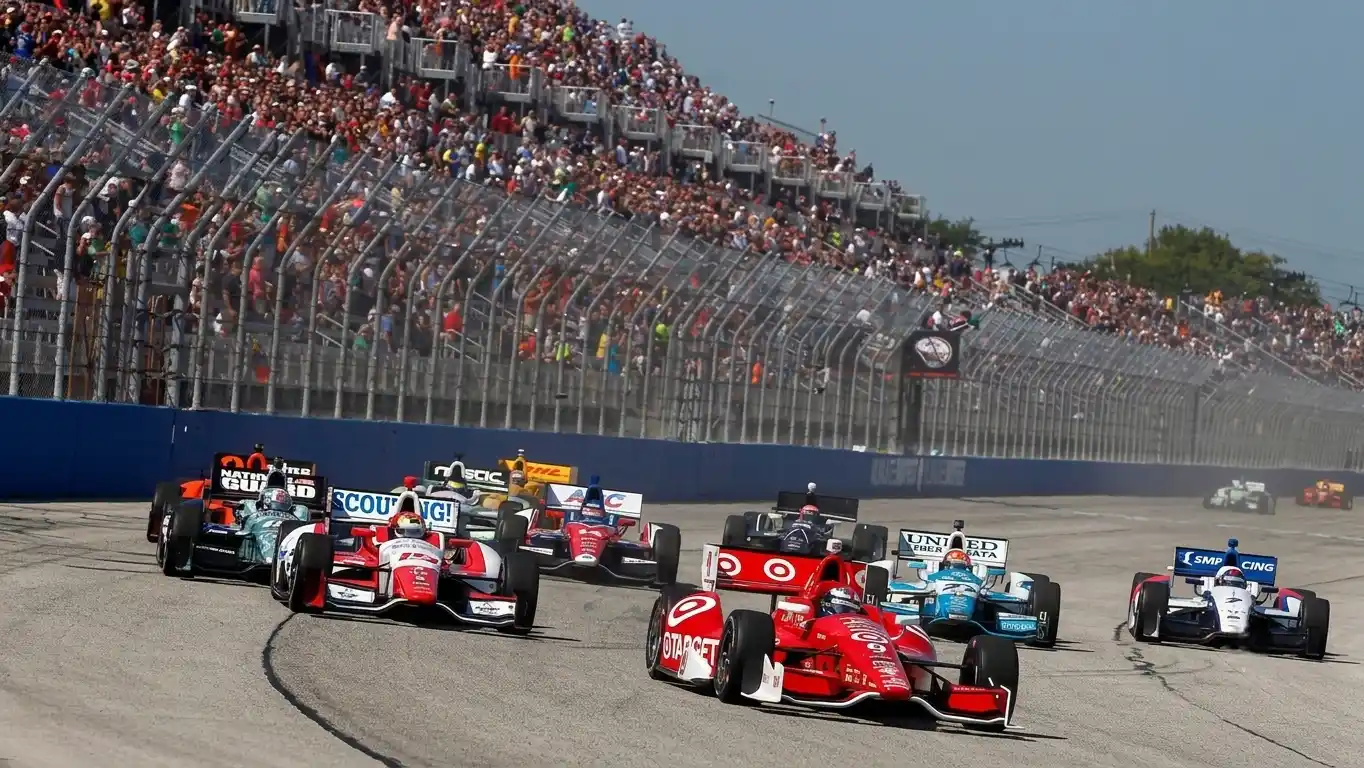
IndyCar Road America 2026:
Results, Standings & Full Recap
The NTT IndyCar Series returns to America’s National Park of Speed — 4.048 miles, 14 turns, and a championship battle that will be settled or blown wide open in the Wisconsin woods this weekend.
IndyCar Road America 2026:
Results, Standings & Recap
Round 10 at Elkhart Lake — championship standings, strategy and full race report.
Road America doesn’t do quiet weekends. The 4.048-mile natural terrain circuit carved through the forests and farmland of Elkhart Lake, Wisconsin, is the longest road course on the NTT IndyCar Series calendar — and one of the most unforgiving. Cars hit 200 mph on the back straight. The Kink arrives blind at full throttle. Canada Corner has ended championship campaigns in a single misjudged brake marker. This is where the best drivers in American open-wheel racing earn their reputation or lose it.
Round 10 of the 2026 IndyCar season, the XPEL Grand Prix at Road America, runs June 19–21. With Alex Palou leading the championship coming in but the title fight far from settled, every lap here carries real consequences. This page covers the pre-race championship picture, the circuit breakdown, the strategic variables that will decide the result, and the key storylines across the weekend — and will be updated with full results, classification and championship implications the moment the checkered flag falls on Sunday June 21.
NTT IndyCar Series — Championship Standings Entering Round 10
Alex Palou arrives at Road America as the championship leader after a dominant victory on the streets of Detroit earlier in the 2026 season. The Chip Ganassi Racing driver has been the most consistent performer across the year’s varied circuit mix — road courses, street circuits, and the oval at Indianapolis — but with 14 rounds still to run after this weekend, nothing is settled. The gap at the top is real, but a single mechanical failure or racing incident at Elkhart Lake could tighten the title race significantly.
| Pos | Driver | Team | Mfr | Points | Status |
|---|---|---|---|---|---|
| 1 | 🏆 Alex Palou | Chip Ganassi Racing | Honda | 273 | LEADER |
| 2 | David Malukas | Team Penske | Chevy | 236 | Contender |
| 3 | Pato O’Ward | Arrow McLaren | Chevy | 188 | Contender |
| 4 | Kyle Kirkwood | Andretti Global | Honda | 224 | Podium Threat |
| 5 | Scott Dixon | Chip Ganassi Racing | Honda | 167 | Title Fight |
| 6 | Josef Newgarden | Team Penske | Chevy | 167 | — |
| 7 | Will Power | Team Penske | Chevy | 112 | — |
| 8 | Colton Herta | Andretti Global | Honda | 154 | — |
| 9 | Christian Lundgaard | Meyer Shank Racing | Honda | 195 | — |
| 10 | Marcus Ericsson | Andretti Global | Honda | — | — |
Points as of the NTT IndyCar Series standings entering the Detroit Grand Prix weekend. Ericsson’s exact total was not available in source data.
A race win at Road America is worth 50 points. Pole position adds 1 point; fastest lap adds 2 (if in the top five at finish). Given Palou’s lead, the drivers most dangerous to him aren’t just those with pace — they’re the ones who can score a win here while he has any kind of trouble. For how open-wheel championship points systems are structured, see our racing championships scoring explainer.
Road America — America’s National Park of Speed
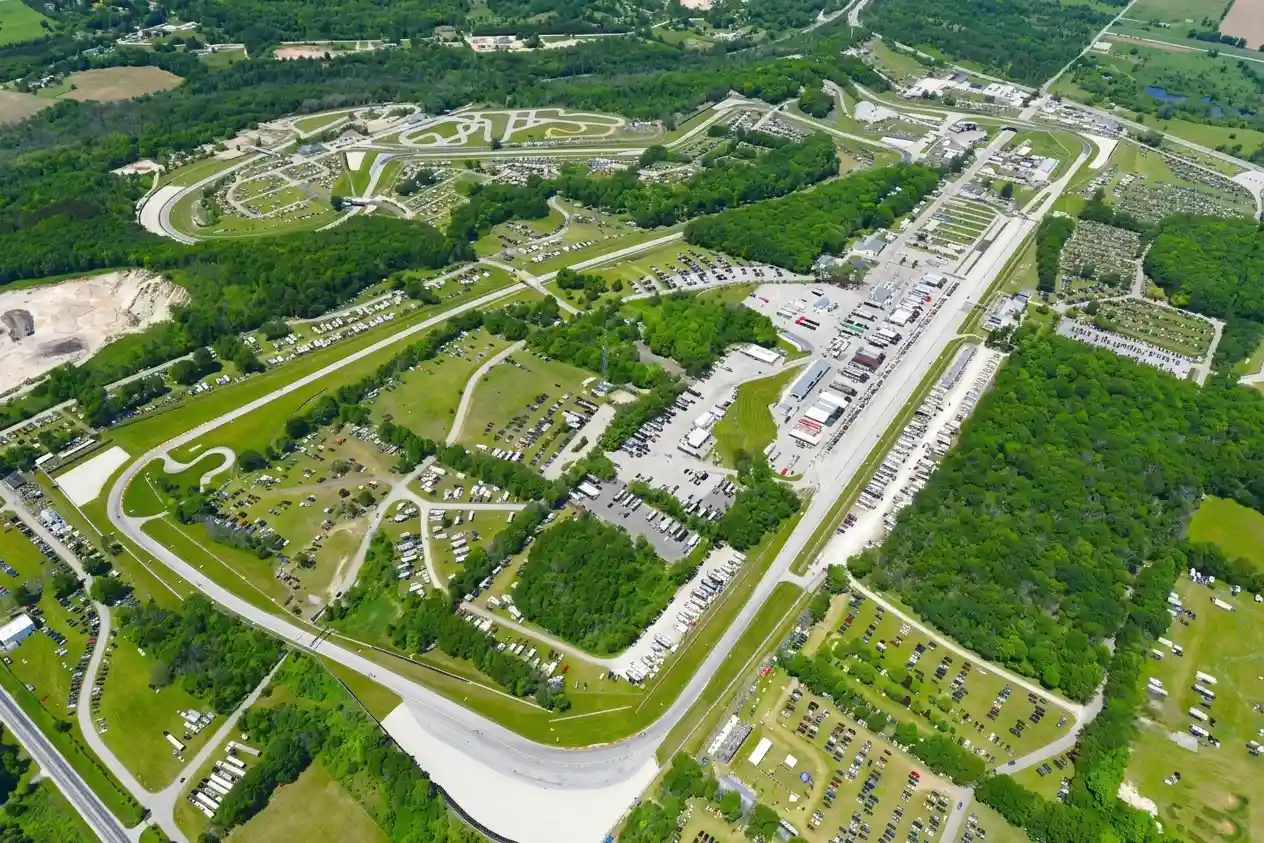
Road America is unlike anything else on the IndyCar calendar. It was built in 1955 on the natural contours of the Wisconsin countryside — no artificial chicanes to slow things down, no purpose-built run-off to forgive mistakes. The circuit flows over blind crests, through dipping compressions and rising sweepers that load the suspension in ways simulators still can’t fully replicate. When drivers say this place demands commitment, they mean it in the most literal sense: there are corners here where you find out who actually trusts their car and who doesn’t.
The Corners That Define the Race
Length: 4.048 miles (6.515 km) · Turns: 14 · Race distance: 55 laps (222.6 miles) · Surface: Tarmac over natural terrain · Location: Elkhart Lake, Wisconsin · Elevation change: Approx. 160 ft across the lap · Opened: 1955
Race Strategy — Tires, Fuel & the Pit Window
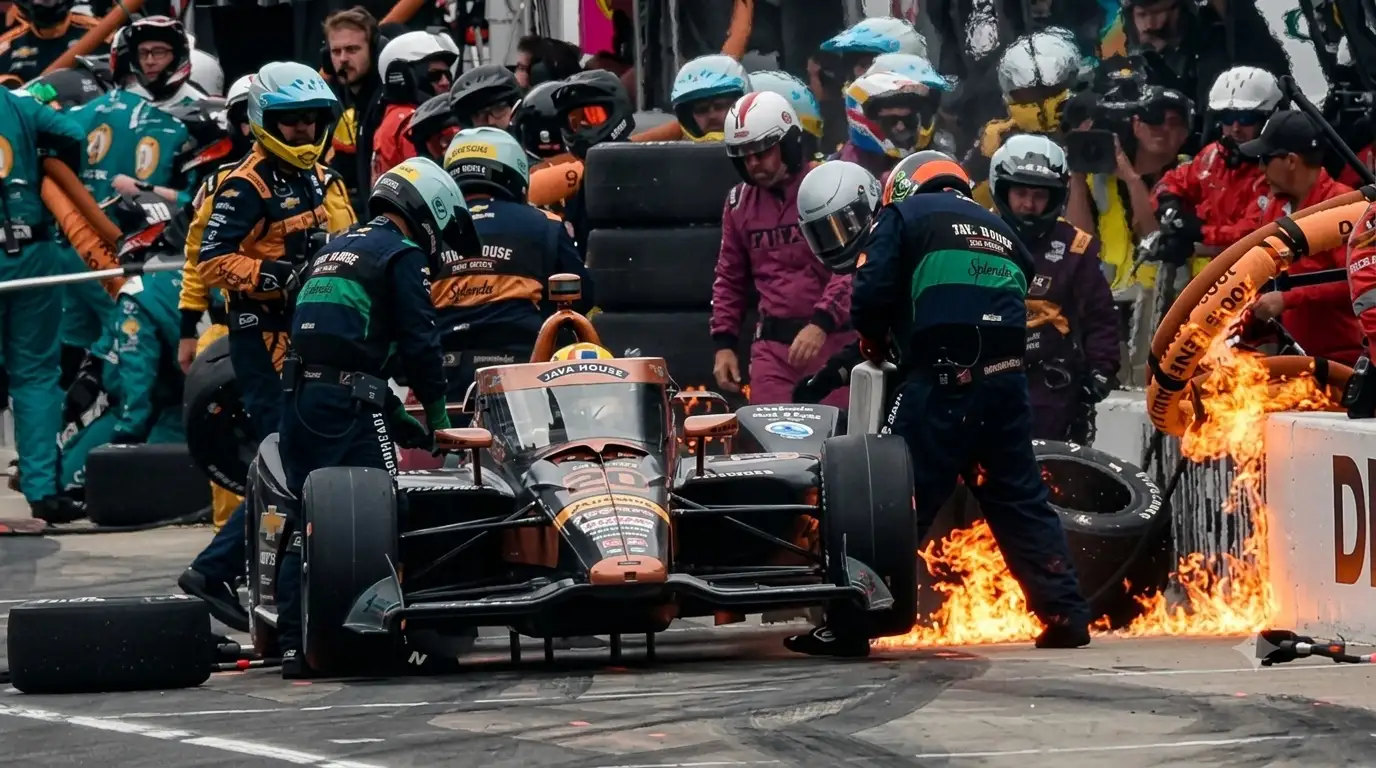
Road America is one of the most strategically complex rounds on the IndyCar calendar. The 4-mile lap distance means a standard race distance produces fewer pit stops than shorter circuits — but the tire degradation compounds through each stint in a way that makes the timing of those stops as important as the pace between them. Teams spend the entire Friday practice building their tire degradation models, and the engineers who get it right gain positions that no on-track pass could recover.
The Tire Decision: Alternate vs Primary
IndyCar’s tire regulations at Road America present teams with one of their clearest strategic splits of the season. The ● Alternate (red sidewall, softer compound) generates more grip per lap but degrades meaningfully across a 15–18 lap stint in warm conditions. The ● Primary (black sidewall, harder compound) is slower but holds its performance window across 20–25 laps — and at a 4-mile circuit, those extra laps without a pit stop are worth as much as two or three tenths of lap time in clear track position terms.
Fuel Mileage: The Hidden Variable
Road America’s long straights burn fuel at a rate that makes every lap a fuel calculation. Teams running at full push pace consume their allocation faster — meaning a driver who appears to be conserving fuel might actually be building a strategic option to run a shorter final stint on fresh rubber. The gap between a driver running hard and one managing fuel is sometimes visible in the sector times at the Kink and along the back straight, but it’s deliberately obscured by teams who know their rivals are watching the same data feeds.
In past editions, teams have occasionally stretched a stint by managing throttle usage through the back section of the lap — specifically the Carousel and the Hurry Downs — to buy an extra lap before pitting. A car that appears to lose pace mid-stint at Road America is not always degrading its tires; it may be saving fuel for a longer out-lap after a late caution period. This is why understanding pit stop timing is as important as understanding tire strategy at this circuit.
Push-to-Pass: IndyCar’s Overtaking Weapon
Unlike Formula 1, IndyCar gives each driver a fixed allotment of push-to-pass seconds — a burst of extra power (typically 40–60 extra horsepower) that can be deployed in short increments at the driver’s discretion. At Road America, the main straight is the obvious activation point, turning the Turn 1 braking zone into a two-car battle where the attacking driver controls their advantage by how many seconds of push they deploy and when. Managing the allotment across 55 laps is a strategic conversation in itself. Drivers who burn their push-to-pass defending early can find themselves powerless in the final 15 laps when the championship positions are being settled. For context on how IndyCar racing differs from other open-wheel championships, see our IndyCar overview.
Expected Strategy Probability
Key Storylines at Road America 2026
Palou Defending — Or Adding to the Lead?
Alex Palou won the IndyCar championship in 2021 and 2023. He arrived at Road America as the series leader and the driver everyone else is chasing. What makes the championship conversation genuinely interesting this year is the quality of the names behind him. David Malukas at Team Penske, Pato O’Ward at Arrow McLaren, and Kyle Kirkwood — all legitimate race winners who have shown the pace to beat Palou on their best days. A win here for any of them, combined with a difficult weekend for the Ganassi driver, would reopen a title race that has looked like it might be drifting toward a coronation.
Road America has a habit of producing the most dramatic championship swing of any road course on the calendar. Canada Corner alone has rewritten title races three times in the last decade.
The Honda vs Chevrolet Manufacturer Battle
The manufacturer war between Honda Racing Corporation and Chevrolet runs at a different frequency to the driver championship — quieter, less visible in the headlines, but tracked just as closely by the engineers who build these engines. At Road America’s two long straights, top-end horsepower is the deciding factor in straight-line battles. Honda has traditionally performed strongly at this circuit; Chevrolet’s advantage has historically come at oval tracks. A Road America result that swings the manufacturers’ standings significantly would send a message about which engine programme has genuinely found its footing in the 2026 specification. For a broader comparison of how IndyCar and F1 programmes differ technically, our IndyCar vs F1 comparison covers the key differences.
The Emerging Generation — Kirkwood and Herta
Kyle Kirkwood and Colton Herta represent the clearest evidence that the next generation of American open-wheel talent is ready to challenge the established order. Kirkwood’s fourth place in the standings coming in is the highest any driver born in the 2000s has sat at this point of an IndyCar season in several years. Herta, the Andretti Global driver who has been arguably the most exciting overtaker in the series over the past two seasons, arrives at Road America knowing it’s a track that suits his aggressive, commitment-required style. These are the two drivers most likely to produce something genuinely memorable on Sunday — particularly if a caution period scrambles the strategic deck late in the race.
Fast Six Qualifying — Where the Race Begins
IndyCar’s Fast Six qualifying format — where the top six from the earlier rounds compete in a final shootout for pole — makes Saturday’s qualifying session at Road America far more than a grid-positioning exercise. The pole sitter here controls Turn 1 in a way that shapes the entire first stint. At a 4-mile circuit where track position is genuinely hard to recover once lost in traffic, qualifying P1 can be worth half a second a lap in clear air versus fighting through backmarkers mid-stint. Understanding how racing drivers qualify and the strategic implications of grid position gives a much clearer picture of how Sunday’s race will unfold. This section will be updated with the full qualifying result and pole sitter time after Saturday’s Fast Six session.
Road America History & IndyCar Heritage
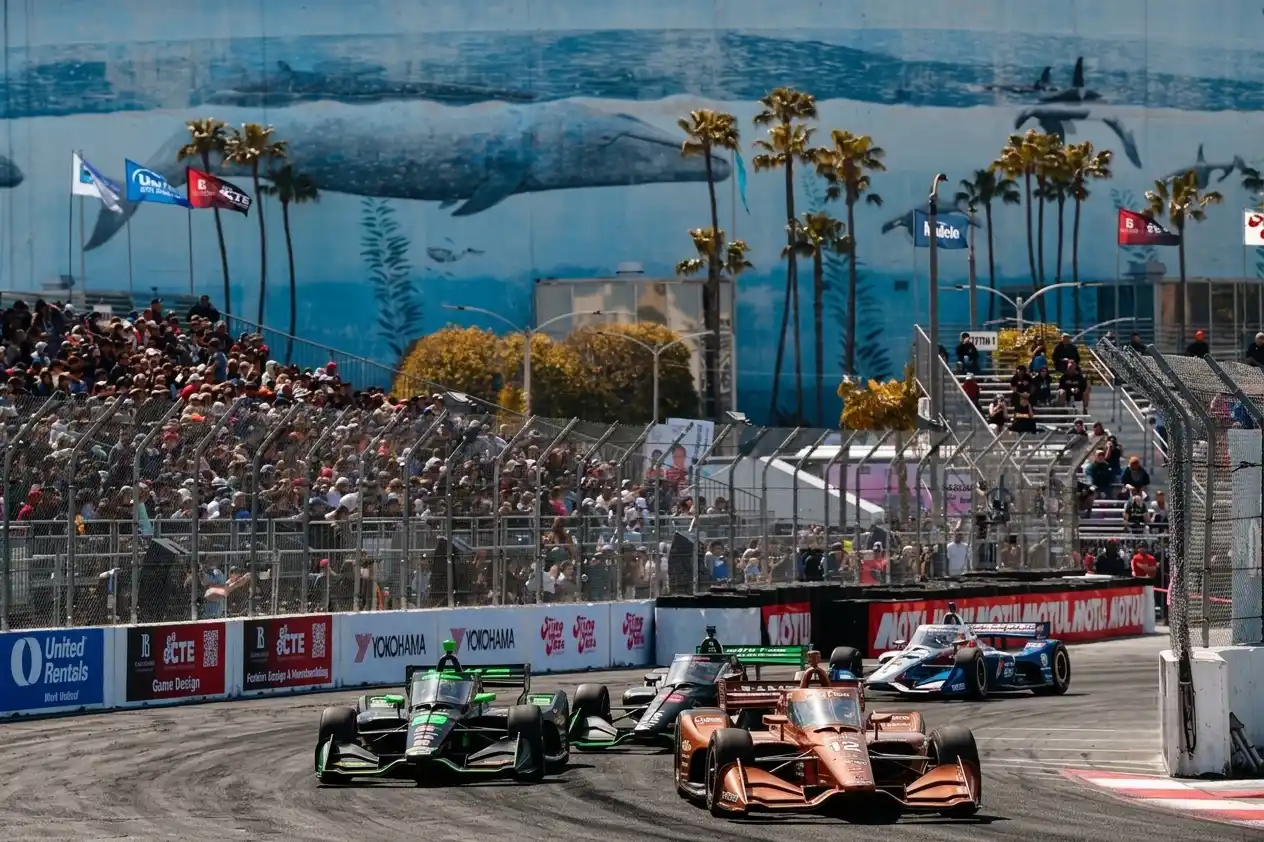
Road America opened in 1955 and has been one of the defining venues in American motorsport ever since. The circuit’s construction was driven by a group of Wisconsin racing enthusiasts who wanted a permanent home for road racing in the Midwest — and what they built, using the natural terrain of the Kettle Moraine region, turned out to be a masterpiece of circuit design that still rewards the same skills — commitment, patience, mechanical sympathy — that it did when the first cars ran here in the Eisenhower era.
For those interested in the broader history of American motorsport that Road America sits within, the Mario Andretti profile in our archive covers the career of one of the drivers most associated with Road America’s golden era. Our collection of most Indy 500 wins all time also contextualises the era when Road America was one of several permanent road courses challenging the open-wheel establishment.
Race winner and winning margin · Full top-10 classification with points awarded · Pole position and fastest lap holders · Championship standings update after Round 10 · Key incidents and caution periods · Strategy breakdown — who won and lost on the pit wall · Driver of the Race performance analysis. For IndyCar live race timing, follow the official IndyCar timing platform during the event.
Frequently Asked Questions — IndyCar Road America 2026
Why Road America always delivers
There are circuits on the IndyCar calendar that produce technically excellent races. Then there’s Road America, which produces something different — races where the result feels earned in a way that a smooth, safe, purpose-built venue simply can’t replicate. The blind crests, the 200 mph straight, Canada Corner waiting at the end of it all — these aren’t features of a track. They’re the character of a place that has been testing drivers since 1955 and hasn’t changed its opinion of who’s actually fast since then.
The 2026 edition arrives at precisely the right moment in the championship. Tight enough at the top to matter, diverse enough in the field that the winner won’t be obvious from the pre-race headlines. The strategy call at lap 28 will tell you as much about who wins this race as the qualifying lap on Saturday afternoon. Watch both with equal attention.
Full race report, classification and championship update published here within 30 minutes of the checkered flag on Sunday 21 June.