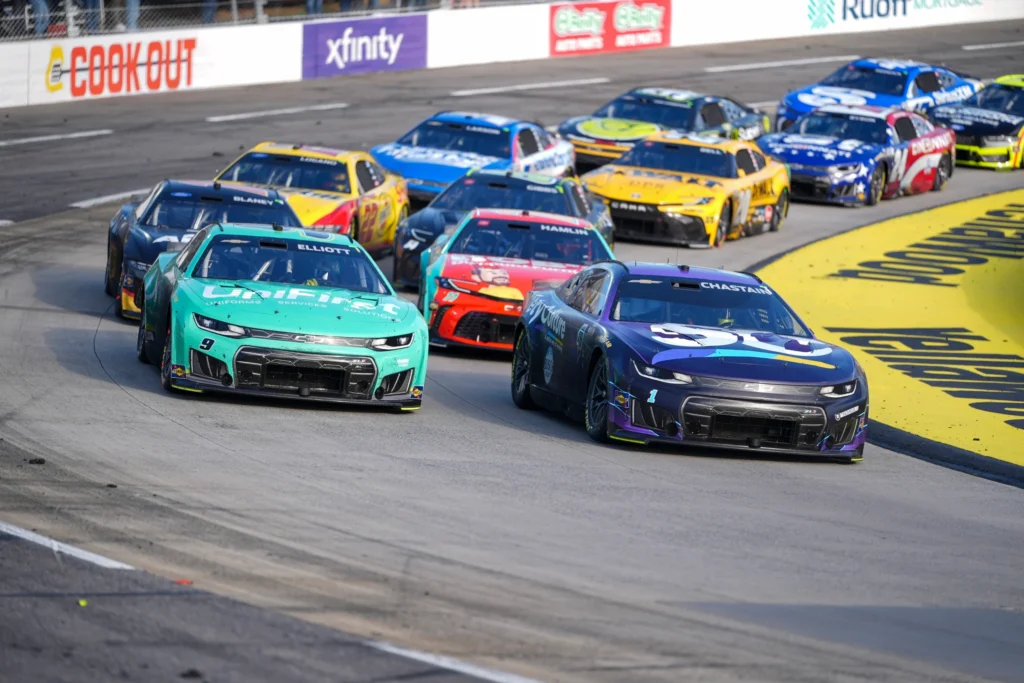
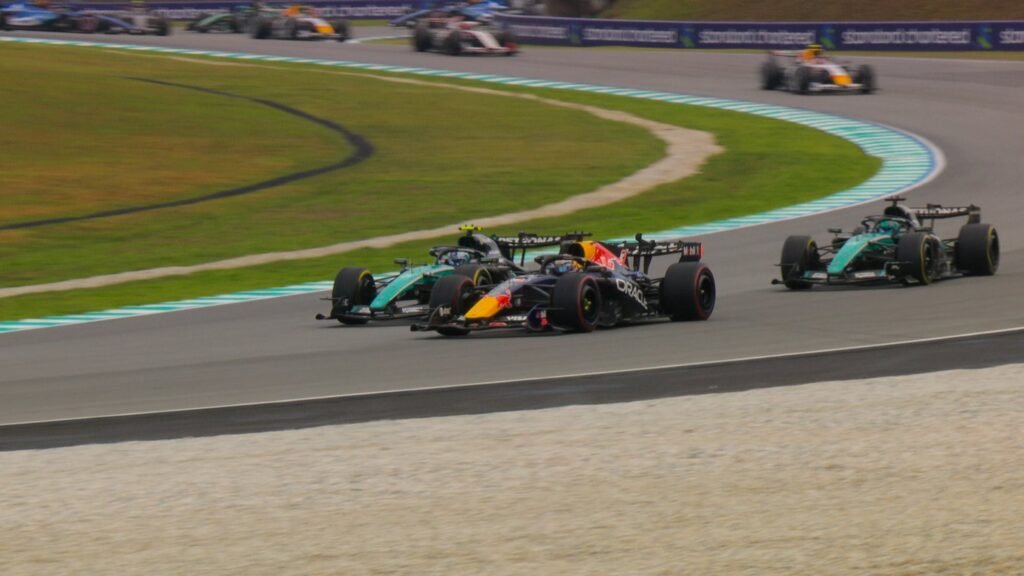
When you hear a V8 engine rumble next to a V12 engine screaming smoothly, you are not just hearing two different cars—you are hearing two different patterns of combustion physics. Both engines burn fuel and air to create power, but the way they time those burns completely changes the sound.
Engine sound is not random noise; it is a structured sequence of pressure waves created by explosions inside cylinders. The difference between a V8 and a V12 comes down to how many explosions happen, how evenly they are spaced, and how the engine balances those forces.
What Actually Creates Engine Sound
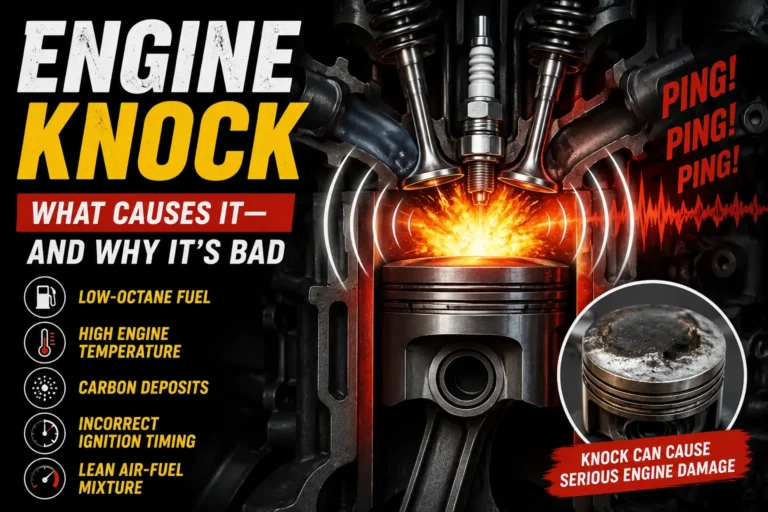
Every engine sound begins with combustion. Inside each cylinder, fuel and air are compressed and ignited, creating a small explosion. This explosion pushes a piston down, producing power. At the same time, it creates a pressure wave that travels through the exhaust system.
These pressure waves are what we hear as engine sound. So, in simple terms:
👉 Engine sound = repeated explosions + timing + exhaust shaping
The difference between engines is not the explosion itself, but the rhythm of those explosions.
Understanding V8 and V12 Layouts
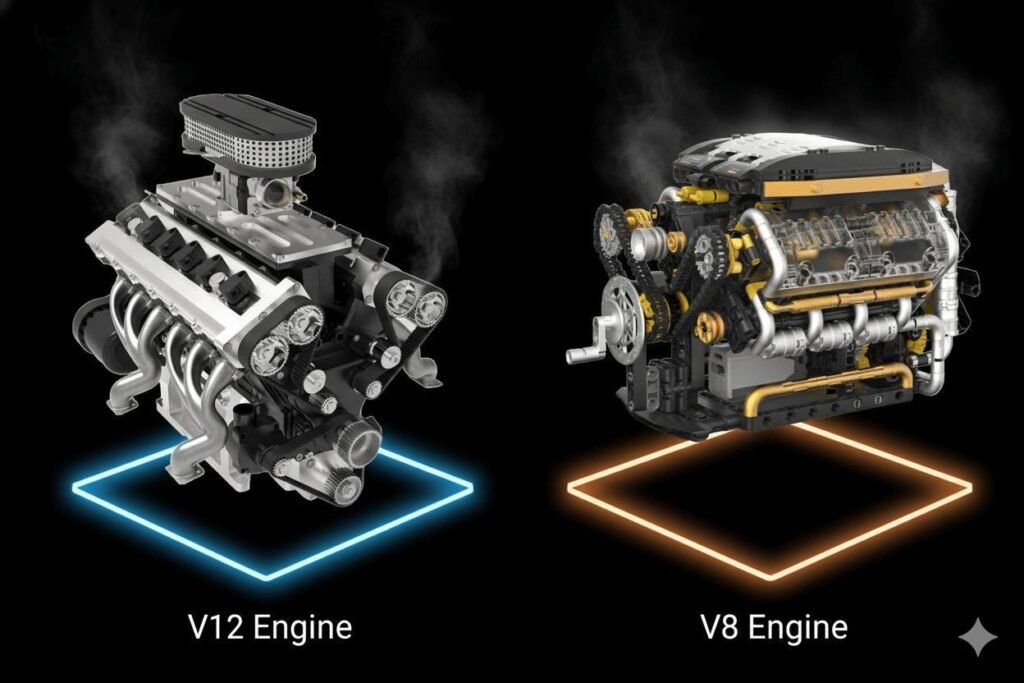
A V8 engine has 8 cylinders arranged in two banks of four. A V12 engine has 12 cylinders arranged in two banks of six. Both use a V-shaped layout to keep the engine compact.
However, the key difference is not the shape—it is the number of cylinders:
- V8 = fewer combustion events per cycle
- V12 = more combustion events per cycle
More cylinders mean more frequent power strokes, which directly affects sound smoothness and frequency.
Firing Order — The Hidden Rhythm of Engines
Each cylinder does not fire randomly. It follows a precise sequence called the firing order. This determines how evenly power pulses are delivered.
In a V8 engine, firing intervals are more spaced out. This creates gaps between pressure pulses, which your ears interpret as a deep “boom… boom… boom” rhythm.
In a V12 engine, firing events are extremely evenly spaced. There are so many cylinders firing that the gaps almost disappear, producing a continuous “flowing tone” instead of separate beats.
So the real difference is:
- V8 → separated beats
- V12 → continuous wave
Why V8 Sounds Deep and Aggressive
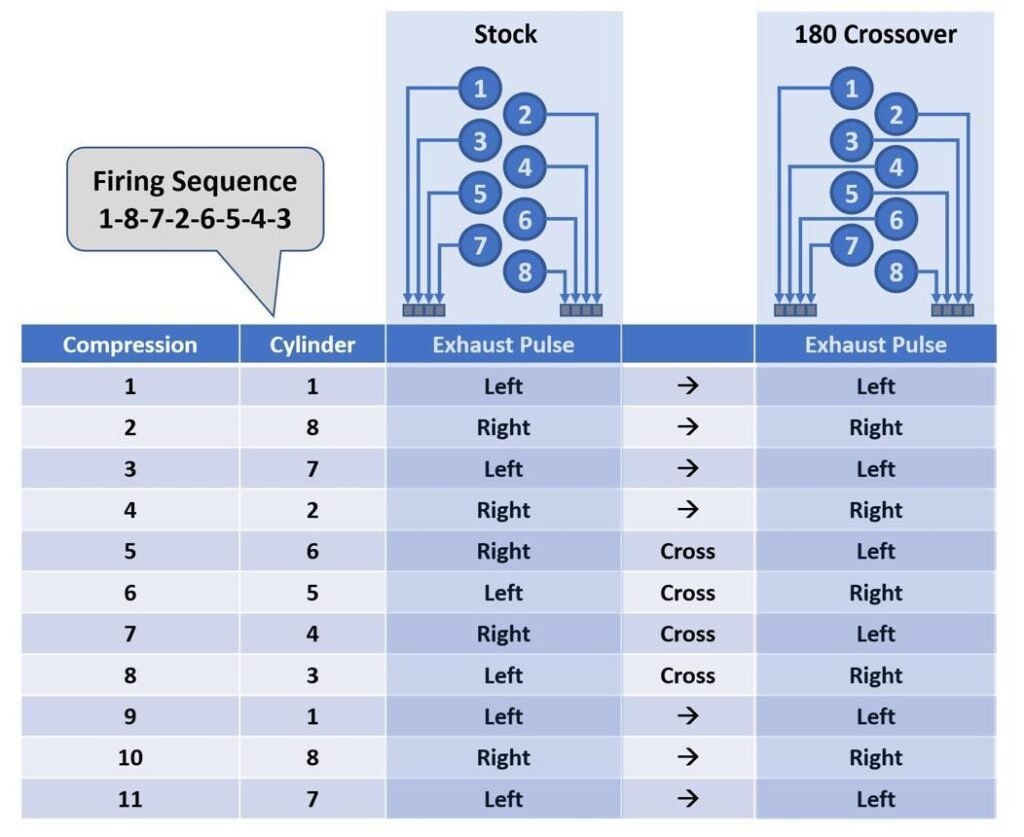
A V8 engine produces fewer combustion events per second compared to a V12. This means each explosion carries more “space” around it in the sound pattern. That spacing creates low-frequency sound waves, which humans perceive as deep and powerful.
In many V8 designs, especially cross-plane crankshafts, the exhaust pulses are not perfectly symmetrical. This uneven spacing adds extra vibration and character to the sound.
That is why a V8 feels:
- Deep
- Heavy
- Rhythmic
- Slightly rough or “burbling”
It sounds like a strong heartbeat rather than a continuous tone.
Why V12 Sounds Smooth and Exotic
A V12 engine has twice the number of cylinders per bank compared to a V8, which means combustion events happen more frequently and more evenly. Because of this, the pressure waves overlap smoothly instead of standing apart.
This creates a sound that is:
- High-frequency
- Extremely smooth
- Continuous
- Almost musical
Mechanically, a V12 is also more balanced. The internal forces cancel each other better, reducing vibration. Less vibration means cleaner sound transmission through the exhaust system.
This is why V12 engines sound like a “symphony” rather than a rhythm.
The Physics of the Difference (Simple Version)
At a physics level, engine sound depends on:
- Frequency (how often explosions happen)
- Amplitude (how strong each explosion is)
- Timing (spacing between explosions)
A V8 produces:
- Lower frequency
- Stronger individual pulses
- More spacing
A V12 produces:
- Higher frequency
- Smaller individual pulses
- Very tight spacing
So the ear hears two completely different experiences even though both engines are doing the same job.
Simple Analogy
Think of drums:
- A V8 is like a drummer hitting hard beats with pauses in between
- A V12 is like a fast drum roll where individual hits blend into one smooth sound
Both are music—but the style is completely different.
Conclusion
The difference between a V8 and a V12 sound is not about which is “better.” It is about engineering design choices that affect timing, balance, and airflow dynamics.
A V8 engine is designed to feel raw, emotional, and powerful.
A V12 engine is designed to feel smooth, refined, and musical.
In the end, engine sound is not just noise—it is mechanical rhythm shaped by physics, and each engine type tells its own story through that rhythm.
External References