Formula E Unveils 21-Race Calendar and New Sprint Format for the Gen4 Era
COTA, Zandvoort, and Brands Hatch join the grid. A 30-minute sprint race debuts. The most ambitious season in championship history starts December 2026 in Jeddah — under the lights.
Formula E Unveils 21-Race Calendar and New Sprint Format
COTA, Zandvoort, and Brands Hatch join the grid for the Gen4 era — the biggest season in championship history.
Formula E and the FIA have confirmed a record-breaking 21-race calendar for the 2026-27 season — the first of the Gen4 era — validated by the FIA World Motor Sport Council. It is the longest schedule in the championship’s history.
Three marquee new venues join the grid: Circuit of The Americas in Austin, MASCOT Zandvoort in the Netherlands, and Brands Hatch as the new home of the London E-Prix. Alongside the expanded calendar, a new race format called E-PrixUnleashed makes its debut — a 30-minute performance sprint designed to run the Gen4 cars at their absolute limit. Below is the full breakdown: every race date, how the new format works, what changes the Gen4 car brings, and what all of this means for the championship.
The Story at a Glance
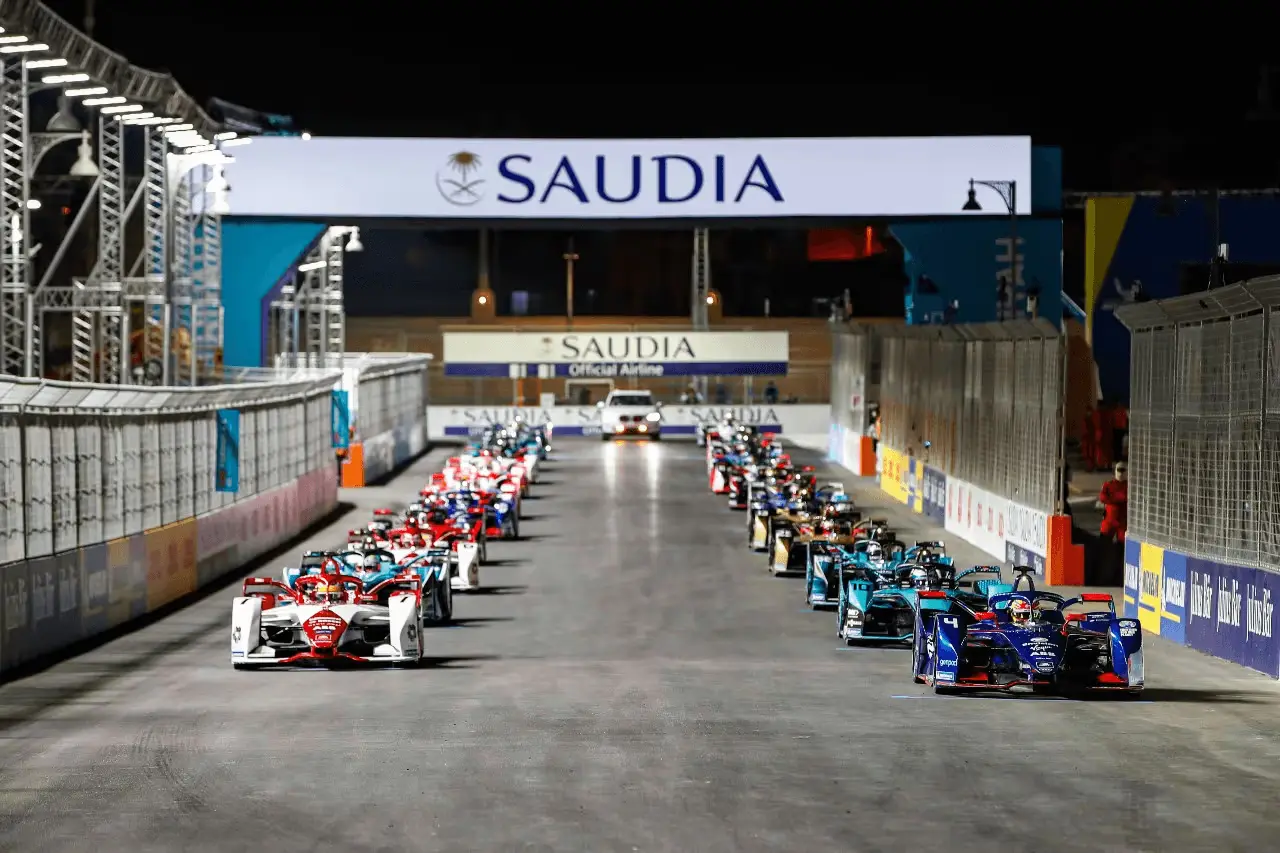
Formula E’s biggest season ever is now official. Twenty-one races across 13 cities, opening in Jeddah on the evening of 18 December 2026 — the championship’s first-ever night-race season opener. The campaign then sweeps through the Americas, Asia, and Europe before concluding in Tokyo on 25 July 2027. It is a massive step up from the current season’s 17 races at 11 venues.
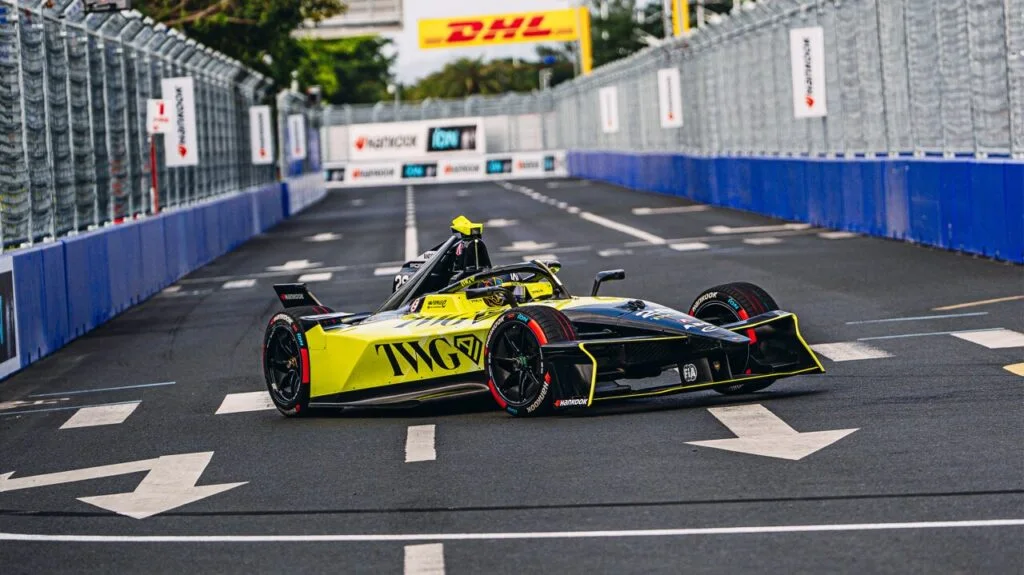
Moreover, the whole thing is built around a car that will redefine what electric racing looks like. The Gen4 challenger produces 600kW of peak power with active all-wheel drive — a package that Formula E’s own technical team estimates will be around 7-8 seconds per lap faster than the outgoing Gen3 Evo. Therefore, the series has redesigned its race weekend around what that car can actually do. That is where the E-PrixUnleashed format comes in.
The ABB FIA Formula E World Championship’s 2026-27 season has been formally validated by the FIA World Motor Sport Council. The full calendar and the new E-PrixUnleashed sprint format are now official. This is the most extensive schedule in the 12-year history of the championship. Source: fiaformulae.com official announcement
The Full 2026-27 Formula E Gen4 Calendar
Every round on the calendar has been deliberately selected to give the Gen4 car the room it needs. The shift toward faster permanent circuits is intentional — as FIA Senior Circuit Sport Director Marek Nawarecki explained at the announcement, the Gen4’s increased power output and new bodywork require venues capable of handling that performance safely. Furthermore, Formula E has structured the calendar into continental clusters to reduce freight mileage and keep the championship’s sustainability credentials credible.
| # | Event | Circuit | Date 2026/27 | Format |
|---|---|---|---|---|
| 1–2 | Jeddah E-Prix DH | Jeddah Corniche Circuit, Saudi Arabia | 18–19 Dec 2026 | Night Opener |
| 3 | Mexico City E-Prix | Autódromo Hermanos Rodríguez | 16 Jan 2027 | Single |
| 4 | Austin E-Prix NEW | Circuit of The Americas (COTA) | 6 Feb 2027 | Single |
| 5 | Miami E-Prix | Miami International Autodrome | 20 Feb 2027 | Single |
| 6 | São Paulo E-Prix | Anhembi Sambadrome Circuit | 13 Mar 2027 | Single |
| 7 | Sanya E-Prix | Haitang Bay Circuit, China | 17 Apr 2027 | Single |
| 8–9 | Berlin E-Prix DH | Tempelhof Airport Street Circuit | 8–9 May 2027 | Unleashed |
| 10–11 | Monaco E-Prix DH | Circuit de Monaco | 15–16 May 2027 | Unleashed |
| 12–13 | London E-Prix NEW HOME | Brands Hatch, UK | 29–30 May 2027 | Unleashed |
| 14–15 | Zandvoort E-Prix NEW | MASCOT Zandvoort Circuit, NL | 18–19 Jun 2027 | Unleashed |
| 16–17 | Madrid E-Prix DH | Circuito de Madrid Jarama-RACE | 26–27 Jun 2027 | Unleashed |
| 18–19 | Shanghai E-Prix DH | Shanghai International Circuit | 10–11 Jul 2027 | Unleashed |
| 20–21 | Tokyo E-Prix DH | Tokyo Street Circuit | 24–25 Jul 2027 | Unleashed |
DH = Double-Header weekend · Single-header events feature one traditional 45-minute E-Prix · Double-header weekends feature one E-PrixUnleashed sprint plus one traditional E-Prix · Source: Formula E official announcement
“We are incredibly proud to unveil our biggest and most ambitious calendar to date. Every stop on this calendar has been chosen to deliver maximum sporting drama.”
— Alberto Longo, Co-Founder & Chief Championship Officer, Formula EE-PrixUnleashed: How the New Sprint Format Works
The most significant structural change arriving with the Gen4 era is not just the car — it is how that car will be raced. Formula E has introduced E-PrixUnleashed, a 30-minute performance sprint that will run alongside the traditional E-Prix at each of the eight double-header weekends. This is Formula E’s answer to a question that has been building for several seasons: what happens when you remove the energy constraints entirely and simply let the cars run flat-out?
The traditional E-Prix continues to exist and remains central to the championship. However, the sprint format is designed to showcase something the standard race cannot — pure, continuous 600kW performance with no interruption for PIT BOOST strategy or energy saving. Consequently, the two formats are genuinely different experiences, not just the same race cut to different lengths.
- 30 minutes duration
- 600kW available continuously throughout
- No PIT BOOST — pure performance focus
- Higher-downforce bodykit specification
- 450kW base power, 600kW via ATTACK MODE
- Run at 8 double-header weekends only
- Designed to showcase Gen4 raw speed
- ~45 minutes duration
- 450kW base power, 600kW via ATTACK MODE
- PIT BOOST fast-charging pit stop included
- Low-downforce bodykit specification
- Energy management and strategy remain key
- All 13 venues host this format
- Classic Formula E racing identity preserved
Which Weekends Get the Sprint?
Eight of the 13 weekends are confirmed as double-headers for the Gen4 era opener. These are Jeddah, Berlin, Monaco, Brands Hatch, Zandvoort, Madrid (Jarama), Shanghai, and Tokyo. At each of these, Saturday’s race is the E-PrixUnleashed sprint and Sunday’s is the traditional 45-minute E-Prix. The five single-header events — Mexico City, COTA, Miami, São Paulo, and Sanya — run the standard format only.
The E-PrixUnleashed sprint uses a higher-downforce specification bodykit, designed to give the cars maximum mechanical grip for the flatter-out sprint. The standard E-Prix runs the low-downforce setting. This means each double-header weekend is technically as well as strategically distinct — teams must optimise two different setups across the same event. For more on how downforce affects racing, read our guide to what downforce is and why it matters.
From a championship-points perspective, both race formats award points to the top 10 finishers. Additionally, points remain available through qualifying — specifically for progressing from the group stage, winning duels, and taking pole position. The points system therefore rewards consistent weekend performance, not just race-day results.
Three New Venues: COTA, Zandvoort, and Brands Hatch
The three new venues on the Gen4 calendar share a common thread — they are all world-class permanent circuits with the speed capacity to let Formula E’s most powerful car run without compromise. This reflects a deliberate strategic shift. As the Gen4 car reaches genuine 205mph capability, city-centre street circuits with tight corners and minimal run-off present real safety questions that permanent venues are better equipped to answer.
Circuit of The Americas — Austin, Texas (February 6, 2027)
COTA is Formula E’s first-ever visit to the Circuit of The Americas, one of the most celebrated permanent circuits in global motorsport and the long-standing home of the United States Formula 1 Grand Prix. The 5.5km circuit’s mix of high-speed sweeps, technical infield sections, and the iconic hairpin at Turn 12 will present the Gen4 car with a genuinely varied challenge. Furthermore, the Austin race is a single-header event, meaning fans get the full 45-minute strategic E-Prix without the sprint format alongside it.
MASCOT Zandvoort Circuit — Netherlands (June 18-19, 2027)
Zandvoort’s return to international motorsport consciousness since hosting Formula 1’s Dutch Grand Prix has made it one of the most watched circuits in Europe. Its banking at the Arie Luyendyk corner and the Hugenholtzbocht create a unique layout that favors mechanical grip and precise car balance — exactly the conditions where the Gen4’s active all-wheel drive system should excel. Zandvoort gets a double-header, so both the sprint and feature formats will run there. For a feel for how racing strategy unfolds on circuits like this, our guide to how racing championships are scored gives useful context.
Brands Hatch — United Kingdom (May 29-30, 2027)
The most historically significant addition. Brands Hatch carries more motorsport heritage than almost any other circuit on the calendar — it hosted the British Grand Prix on multiple occasions and has been a cornerstone of British club racing for generations. However, as The Race notes, Brands Hatch is not a typical Formula E circuit. The tight Indy loop and the demanding Grand Prix loop present very different challenges from the flat street circuits the series has traditionally favoured. The E-PrixUnleashed sprint there will be one of the most watched races of the season.
Formula E has grouped the 2026-27 calendar into distinct continental clusters — Americas (Mexico, COTA, Miami, São Paulo), Asia (Sanya), Europe (Berlin, Monaco, Brands Hatch, Zandvoort, Madrid), and Asia Pacific (Shanghai, Tokyo) — specifically to reduce freight mileage and lower the championship’s carbon footprint. Alberto Longo confirmed this was a core design criterion for the schedule. It is consistent with the series’ broader mission as a sustainable motorsport platform. For more on what Formula E is and what it stands for, our explainer covers the fundamentals.
The Gen4 Car: What Makes It Different
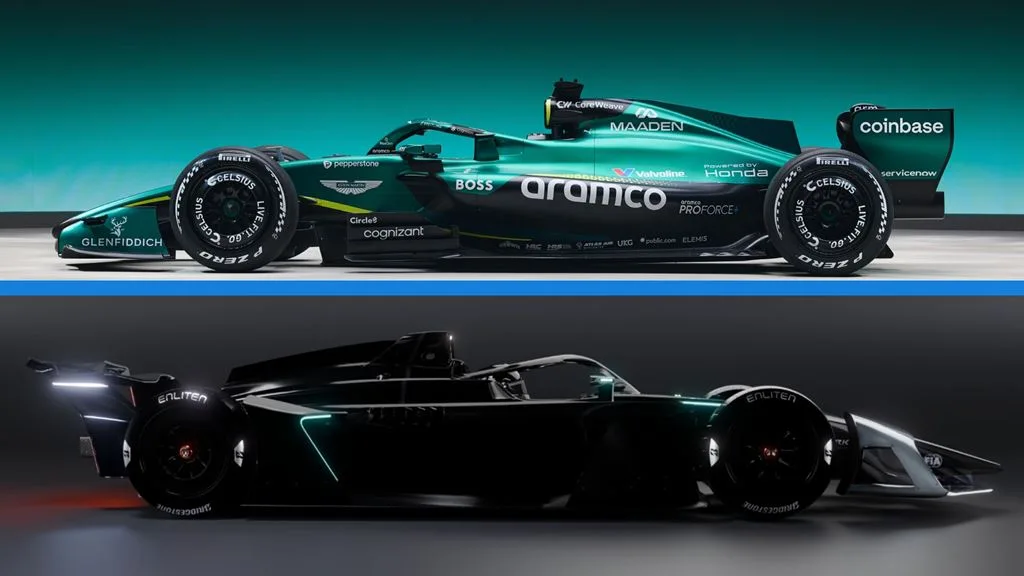
The Gen4 car represents the largest technical leap in Formula E’s history. Everything about it — the power output, the drivetrain, the aerodynamic package, the tyres — has been redesigned around a single objective: make Formula E’s cars fast enough that they can no longer be mistaken for anything other than a top-level single-seater series. The numbers make the point plainly. The Gen4 produces 600kW at peak, equivalent to more than 815 horsepower, with active all-wheel drive available throughout the race — not just on corner exit, but continuously. For comparison, how fast Formula E cars go under the current Gen3 Evo will look very different once the Gen4 era begins.
| Specification | Gen3 Evo (Current) | Gen4 (2026-27) |
|---|---|---|
| Peak Power | 350kW | 600kW |
| Drivetrain | Rear-wheel drive (front regen only) | Active all-wheel drive throughout race |
| Regeneration | 250kW front / 350kW rear | 700kW combined |
| Attack Mode Power | 400kW | 600kW |
| Estimated Lap Time Advantage | Baseline | ~7-8 seconds faster per lap |
| Top Speed (Estimated) | ~320km/h | ~330km/h (205mph) |
The aerodynamic package also changes depending on the race format. Double-header weekends see the E-PrixUnleashed sprint run with a higher-downforce bodykit, while the standard E-Prix across all events uses a low-downforce setup. This means Gen4 teams must be capable of preparing two meaningfully different car configurations within the same race weekend — a logistics and engineering challenge that adds a new dimension to the team battle. To understand more about how downforce and aerodynamics shape racing outcomes, our slipstream explainer and angle-of-attack guide are worth reading alongside this.
New Manufacturers for the Gen4 Era
The start of the Gen4 era coincides with a significant shift in the manufacturer lineup. Opel joins as a new entrant, bringing German engineering to an increasingly diverse field. The full Gen4 manufacturer grid currently includes Porsche, Jaguar, Nissan, Citroën, Mahindra, Lola Cars, and Opel — seven manufacturers in total. Meanwhile, the departure of certain manufacturers from the Gen3 era makes way for new competition dynamics. For context on how electric vehicle technology relates to the broader automotive landscape Formula E inhabits, our piece on how different single-seater series compare is a useful reference point.
What This Really Means for Formula E
The 2026-27 calendar announcement is not simply a list of race dates. It is a statement about what Formula E wants to be in its next chapter. The series has consistently had to manage a tension between its city-centre identity — the races-in-the-streets-of-the-world concept that made it distinctive — and the practical reality that as the cars get faster, the venues need to be able to absorb what those cars can do. The Gen4 era resolves that tension by embracing it rather than fighting it.
Bringing COTA, Zandvoort, and Brands Hatch into the rotation is a meaningful signal. These are circuits with significant global reputations outside of Formula E — circuits that F1 fans, IndyCar fans, and endurance racing fans already recognise and follow. Consequently, they pull Formula E into a wider motorsport conversation it has sometimes struggled to join. If the Gen4 car delivers on its performance promise, those circuits will give it the stage it needs. As RacingNews365 reports, two of the new venues — COTA and Zandvoort — are current Formula 1 circuits, which is no accident.
The E-PrixUnleashed format is the other strategic bet. Formula E’s energy management racing has always divided opinion — purists argue it is the smartest form of motorsport, sceptics argue it produces too much invisible racing where the drama is only legible to those who understand the energy picture. The sprint format sidesteps that debate entirely for eight races per season. It gives broadcasters and casual fans a simpler entry point — flat out, fastest to the line — while preserving the strategic identity of the series for the other races.
Formula E CEO Jeff Dodds indicated at the calendar announcement that 21 races is close to the ceiling for the foreseeable future — “maybe it changes to 22 from 21 over the next few years, but broadly the number is a number that everyone’s comfortable with,” he told media. That is important context. This is not a series chasing calendar inflation for its own sake. The 21-race schedule has been agreed with teams, manufacturers, and media partners as a sustainable operating model for the Gen4 era. For a broader view of where Formula E sits in the hierarchy of motorsport series, our analysis is worth reading alongside this announcement. External source: RACER’s full coverage of the announcement
There are legitimate questions outstanding. Sanya, São Paulo, and Tokyo have all been flagged by observers as tracks that may struggle to contain Gen4 machinery given their limited run-off areas. At genuine 205mph capability, the margin for error shrinks considerably. However, Formula E and the FIA have confirmed those tracks have been evaluated under the new technical framework, so the series is satisfied they can operate safely. It remains something to watch as the season approaches.
Finally, the arrival of Opel as a manufacturer entrant underlines that Formula E’s pitch to road-car brands remains credible. The active all-wheel drive system on the Gen4 car is not just a performance feature — it is a direct technology testbed for the kind of sophisticated EV drivetrains that manufacturers like Opel are deploying in road vehicles. That connection between racing and road relevance has always been Formula E’s strongest commercial argument. The Gen4 era makes it more visible. For context on EV technology progression, see our coverage of what Formula E racing represents for electric vehicle development.
“The tracks are faster, the competition is fiercer, and we cannot wait to get this historic season underway.”
— Alberto Longo, Formula E Co-Founder & Chief Championship OfficerFrequently Asked Questions
Verified Sources for This Article
All race dates, format details, and quotes in this article are drawn from official confirmed sources. For the primary FIA and Formula E announcements, see: