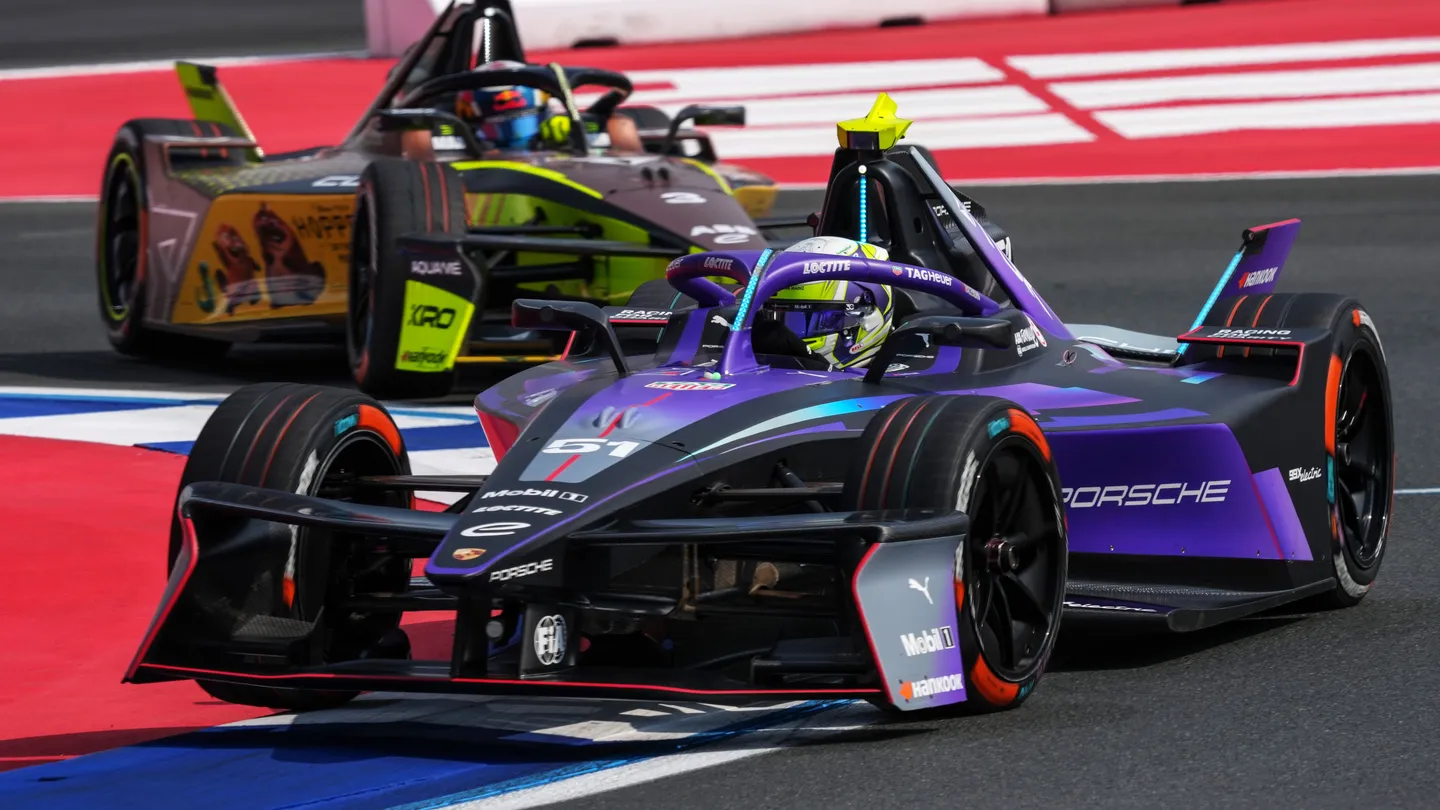
Formula E 2026 Race Weekend Guide:
Schedule, Start Times, TV & Live Stream
Everything you need for the 2026 ABB FIA Formula E World Championship — the full season calendar, race weekend timetable, broadcast guide by country, live stream options, team lineup, and the format explained for every level of fan.
Formula E 2026:
Schedule, TV & Stream Guide
Full season calendar, race weekend times, and where to watch Formula E live in 2026.
The 2026 ABB FIA Formula E World Championship is electric racing at its most intense — urban street circuits, centimetre-precise walls, and single-car qualifying battles that sort the grid in under three minutes per driver. If you’ve clicked this page, you want to know when it’s on, how to watch it, and what actually happens across a Formula E race weekend. All of that is here.
This guide covers the complete 2026 Formula E schedule, the race weekend timetable session by session, every broadcast partner by territory, all live stream options for cord-cutters, the full team and driver lineup, and a plain-English explanation of the format including Attack Mode — the mechanic that makes Formula E tactically unlike anything else in motorsport. Whether you’re a first-time viewer or a returning fan who just needs the TV listings, read on.
What Is Formula E? The Quick Briefing
Formula E is the ABB FIA Formula E World Championship — the only FIA World Championship contested entirely by fully electric single-seater cars. Since its debut season in 2014-15, the series has grown from a curiosity into a globally recognised championship with ten manufacturer-backed teams and races on temporary street circuits in some of the world’s most recognisable city locations.
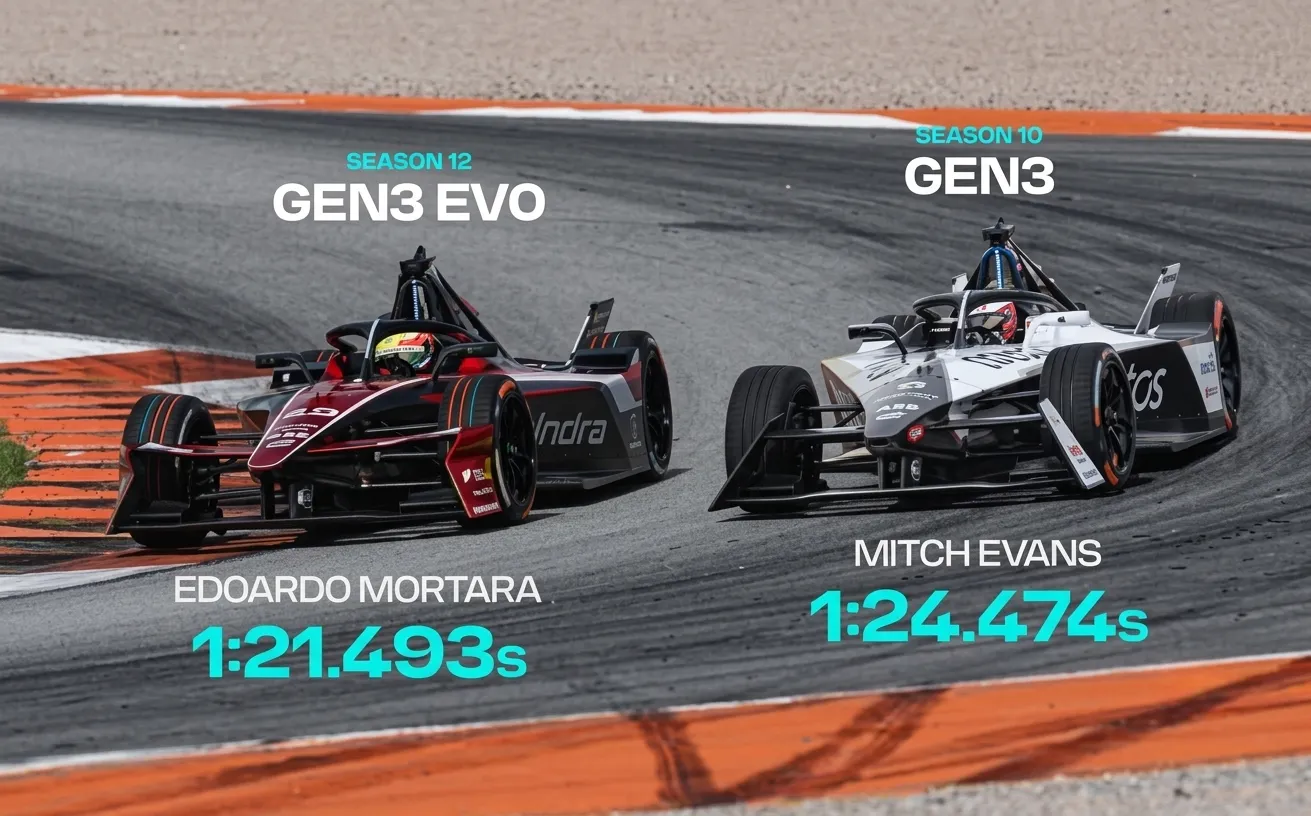
In 2026, the series runs its Gen3 Evo car — the third generation of the series-standard chassis, updated with additional power and improved regenerative braking performance. The Gen3 Evo produces 350kW in race trim and can recover up to 40% of its energy through braking regeneration. Therefore, energy management is as important as outright pace — making Formula E’s strategic layer more complex than it appears from the outside. Furthermore, the cars produce genuine acceleration. The 0-100 km/h time sits at 1.86 seconds, faster than almost every road-going production car on the market.
The championship format runs across a single-day race weekend — no multi-day commitments for fans. Practice, qualifying, and the race all happen within the same 24-hour window. This compressed format is deliberate. Formula E targets urban audiences and ticketing structures that allow spectators to attend a complete racing event in one Saturday or Sunday rather than committing to a full Grand Prix weekend.
No — Formula 1 cars are significantly faster in outright terms, with top speeds above 360 km/h and lap times shaped by massive aerodynamic downforce. However, on the tight city street circuits where Formula E races, the gap is less dramatic. Formula E’s 280 km/h top speed is a genuinely rapid number in a narrow urban canyon. For a full comparison, our dedicated guide on whether Formula E is faster than Formula 1 breaks down every performance dimension.
Formula E 2026 Season Calendar — All Rounds
The 2026 ABB FIA Formula E World Championship calendar spans four continents and sixteen E-Prix events across a season running from January through July. Several cities host double-header weekends — two races on consecutive days — which compact the calendar while providing twice the championship points in a single trip for fans and teams alike.
Formula E’s city circuit locations are chosen for their civic visibility as much as their racing suitability. Consequently, circuits in central locations like Monaco, Jakarta, and Tokyo place electric racing in front of audiences who might otherwise never attend a motorsport event. Meanwhile, double-headers in Berlin and London give hardcore fans their best value for money on the European leg of the season.
| Round | E-Prix | Location | Date | Format |
|---|---|---|---|---|
| 1 | Diriyah E-Prix | Riyadh, Saudi Arabia | 25–26 Jan 2026 | Double |
| 2 | São Paulo E-Prix | Brazil | 1 Feb 2026 | Single |
| 3 | Mexico City E-Prix | Mexico | 15 Feb 2026 | Single |
| 4 | Tokyo E-Prix | Japan | 14 Mar 2026 | Single |
| 5–6 | Misano E-Prix | Italy | 4–5 Apr 2026 | Double |
| 7 | Monaco E-Prix | Monte Carlo | 2 May 2026 | Single |
| 8 | Jakarta E-Prix | Indonesia | 6 Jun 2026 | Single |
| 9–10 | Berlin E-Prix | Germany | 20–21 Jun 2026 | Double |
| 11 | London E-Prix | United Kingdom | 27 Jun 2026 | Single |
| 12 | Seoul E-Prix | South Korea | 11 Jul 2026 | Single |
| 13–14 | Portland E-Prix | USA (Season Finale) | 25–26 Jul 2026 | Double · Final |
The 2026 season finale at Portland International Raceway marks Formula E’s return to the United States for the first time in several seasons. Portland’s permanent road course hosts a temporary circuit configuration designed to blend the series’ signature city-racing character with the tighter, more technical layout fans associate with Formula E’s best events. For Formula E’s previous Miami appearance and the broader US expansion picture, see our feature on Formula E Miami.
Formula E Race Weekend Schedule — Session by Session
Formula E race weekends operate on a compressed single-day format — a deliberate design choice that makes the event accessible to casual fans and urban audiences. However, the intensity per session is correspondingly higher. Practice is shorter than any other top-level motorsport series. Qualifying is a head-to-head duel format. The race itself runs to a 45-minute countdown rather than a fixed lap count. Moreover, Attack Mode activations must happen during the race, adding a strategic layer that doesn’t exist in Formula 1 or IndyCar.
Here is the complete Formula E race day timetable in local time (European events) with key conversion times for global viewers.
Race Start Times by Major Timezone
| Session | London (BST) | New York (ET) | Los Angeles (PT) | Tokyo (JST) | Sydney (AEST) |
|---|---|---|---|---|---|
| Free Practice | 07:00 | 02:00 | 23:00 (prev.) | 15:00 | 16:00 |
| Qualifying | 10:00 | 05:00 | 02:00 | 18:00 | 19:00 |
| E-Prix Race | 15:00 | 10:00 | 07:00 | 23:00 | 00:00 +1 |
Formula E event start times shift significantly depending on the city and its local timezone. Asian races (Tokyo, Jakarta, Seoul) run at different local times that may appear very different from the European norm listed above. Always confirm the exact schedule on the official Formula E website before the event weekend. Our dedicated Formula E schedule page keeps all dates updated throughout the season.
How Formula E Qualifying Works
Formula E’s qualifying format is genuinely unique among top-level motorsport. Rather than the graduated elimination sessions used in Formula 1 — Q1, Q2, Q3 — Formula E splits drivers into two groups for an initial timed stage. Each group runs on track simultaneously for about fifteen minutes, setting their best lap times. The four fastest drivers overall then advance to a knockout duel round.
In the duels, drivers face each other head-to-head in a single timed lap with a competitive response lap from the opponent. The winners progress through semi-finals to the final, which sets the pole position. Consequently, pole position in Formula E is earned through direct head-to-head competition rather than simply setting the fastest lap. This format rewards both raw pace and nerve under direct pressure. For more context on how qualifying works across motorsport, our explainer on how racing drivers qualify covers the different formats used by each series.
How to Watch Formula E 2026 — TV & Live Stream Guide
Formula E 2026 broadcast rights are split across multiple platforms and territories, reflecting the series’ global footprint and its relatively young broadcast structure compared to Formula 1 or NASCAR. The good news for fans is that free-to-air coverage exists in several major markets, and the official Formula E YouTube channel streams qualifying and race highlights internationally for free.
Moreover, the series’ own digital infrastructure — including the Formula E app and the official website — provides live timing, telemetry, and radio feeds for every session throughout the season. However, for the full broadcast with commentary and multi-camera coverage, you’ll need a broadcaster partnership in your territory. Here is the breakdown by region.
For cord-cutters in the United States, Paramount+ is the most comprehensive single-subscription option covering the full 2026 Formula E calendar. In the United Kingdom, combining Channel 4’s free-to-air events with the official Formula E app provides complete coverage at no additional cost beyond the app’s free timing service. For the complete guide on how to watch Formula E, our dedicated page covers every territory and updates when broadcast deals change.
Formula E’s free YouTube highlights and the official app’s live timing mean fans in any territory can follow every session without a broadcast subscription — but the full race experience belongs to whoever holds your regional rights.
Formula E 2026 — Teams & Driver Lineup
Ten teams contest the 2026 ABB FIA Formula E World Championship. Several carry direct manufacturer backing from major automotive companies using Formula E as a technology development platform for electric road cars. Others run as independent constructor-team partnerships with manufacturer powertrain supply agreements. The manufacturer presence — which includes Porsche, Jaguar, Nissan, DS Automobiles, and Mahindra — gives the series credibility that independent racing series rarely achieve at this scale.
Furthermore, the driver market in Formula E is genuinely competitive at the front. Several champions of other series have graduated to the series or crossed over from Formula 1, bringing established star power alongside electric-racing specialists who have built careers entirely within the championship. Consequently, the grid quality in 2026 is arguably the deepest in the series’ history.
| Team | Powertrain | Driver 1 | Driver 2 |
|---|---|---|---|
| Porsche Motorsport | Porsche | Pascal Wehrlein | Antonio Felix da Costa |
| Jaguar TCS Racing | Jaguar | Mitch Evans | Nick Cassidy |
| DS Penske | DS Automobiles | Jean-Eric Vergne | Stoffel Vandoorne |
| Envision Racing | Jaguar | Sebastien Buemi | Robin Frijns |
| Nissan Formula E Team | Nissan | Sacha Fenestraz | Oliver Rowland |
| ERT Formula E Team | Porsche | Jake Hughes | Norman Nato |
| Andretti Global | Porsche | Jake Dennis | André Lotterer |
| Mahindra Racing | Mahindra | Lucas Di Grassi | Edoardo Mortara |
| Neom McLaren FE | Nissan | Sam Bird | Rene Rast |
| Maserati MSG Racing | Maserati | Maximilian Gunther | Jehan Daruvala |
The Neom McLaren Formula E Team represents McLaren’s continued presence in electric racing, operating as a partner to the main Formula 1 programme. For the full story of McLaren’s involvement in Formula E and what their withdrawal from certain commitments meant for the team structure, our feature on McLaren’s Formula E withdrawal explains the background. For a complete look at all Formula E teams, our dedicated team guide covers every constructor.
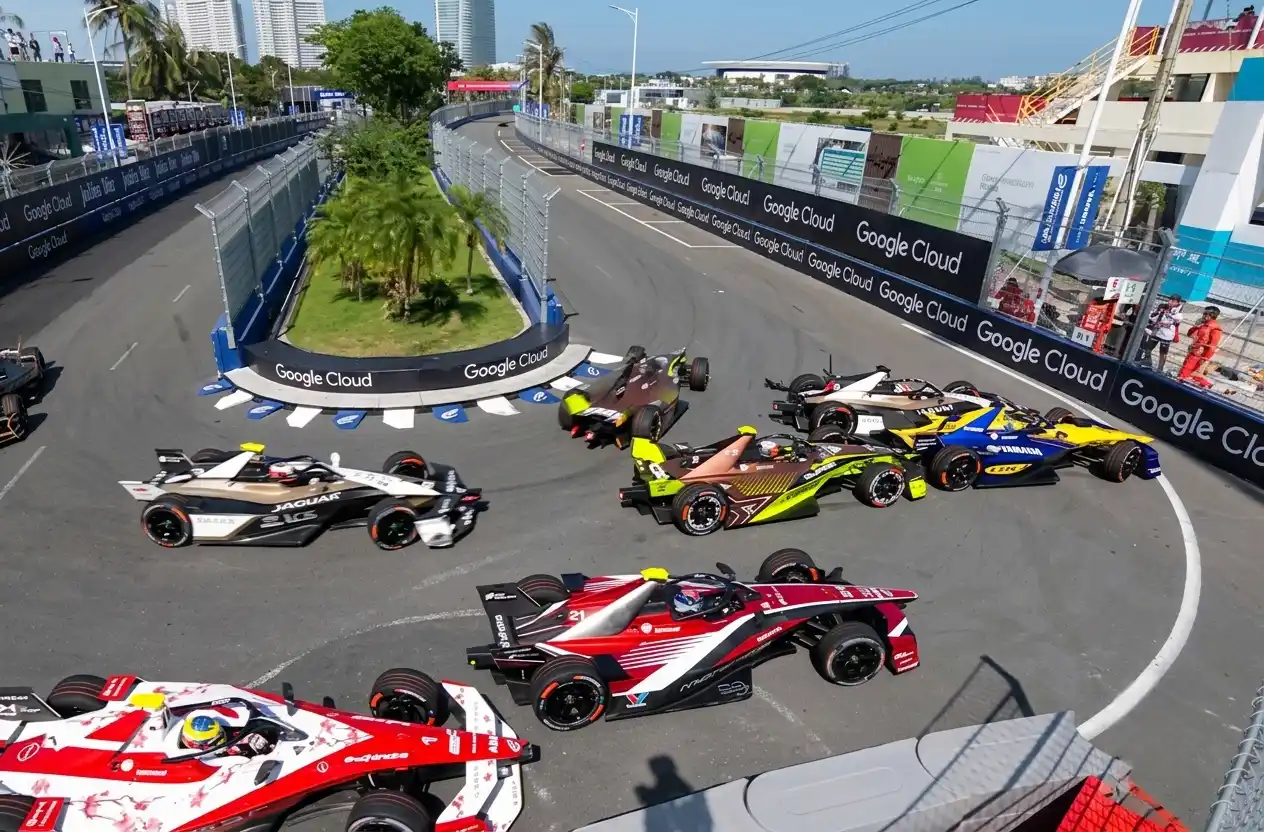
Formula E Format Explained: Attack Mode, Energy Management & Fanboost
If you’re new to Formula E, the race format contains several elements that don’t exist in any other top-level motorsport series. Understanding them changes the experience from confusing to genuinely absorbing. Therefore, here is the complete plain-English breakdown of every unique mechanism in play during a 2026 Formula E race.
Attack Mode — The Game-Changer
Attack Mode is Formula E’s signature competitive mechanism. During the race, each driver must activate Attack Mode a set number of times — typically twice — by voluntarily driving through a designated off-line section of the circuit called the Attack Mode activation zone. Crucially, driving through this zone costs track position because it’s not the racing line. However, the reward is a temporary power boost: an additional 50kW above normal race power for a defined period, giving the driver a genuine speed advantage over rivals who have already used their activation.
Consequently, the strategic question of when to take Attack Mode — and when to use the power advantage most effectively — shapes the second half of every race. A driver who takes Attack Mode behind the leader can use the extra power to close and potentially overtake. Meanwhile, a driver who holds Attack Mode in reserve creates uncertainty for the drivers around them. For the complete explainer on how this works, our guide on what is Attack Mode in Formula E covers every detail.
Energy Management — The Hidden Battle
Formula E cars carry a fixed energy allocation for the race. Teams cannot refuel. Therefore, every joule spent at maximum power in the opening laps is a joule unavailable for the closing stages. Energy management is a constant, race-long calculation that runs in parallel with the on-track wheel-to-wheel battle. Moreover, regenerative braking — the ability to recover energy through the braking system — adds another variable. Drivers who brake more efficiently recover more energy and can therefore afford to run at higher power for longer. Understanding what downforce does and how slipstream works helps contextualise why energy conservation through aerodynamic advantage matters so much in Formula E’s tight street circuits.
Race Power Levels
| Mode | Power Output | When Available | Duration |
|---|---|---|---|
| Normal Race Mode | 300 kW | Throughout the race | Continuous (energy managed) |
| Attack Mode | 350 kW | After activation zone pass | 4 minutes per activation (×2) |
| Qualifying Mode | 300 kW | Qualifying session only | Single flying lap |
Furthermore, Formula E operates a sophisticated safety car protocol. The Full Course Yellow (FCY) system slows all cars to a fixed maximum speed limit without deploying a physical safety car, preserving track positions more cleanly than a traditional safety car period. Consequently, FCY periods can be shorter and less disruptive to race strategies than conventional safety car deployments seen in Formula 1 or IndyCar. For the broader context of how safety cars work in racing, our explainer covers every variant used across major series.
Frequently Asked Questions
Your Formula E 2026 viewing kit — everything in one place
The 2026 ABB FIA Formula E World Championship offers the tightest, most technically distinctive racing on the global motorsport calendar. Sixteen E-Prix rounds across four continents, a format that fits inside a single day, and a grid of genuinely competitive manufacturer-backed teams make it worth your attention whether you’re a converted fan or a first-time viewer looking for something new.
Use the schedule table above to plan your season. Bookmark the broadcast section for your territory. Set an alarm for qualifying — it’s genuinely exciting in its head-to-head duel format — and tune in for the race knowing that Attack Mode activations will shuffle the order in the second half in ways that no other series can replicate. For live timing on race day, open the Formula E app alongside your broadcast and follow the energy numbers. That’s when the real picture of who has managed their race correctly becomes clear.
For updated schedules, results, and standings throughout the 2026 season, visit the official Formula E website and our Formula E schedule hub here on World of Speed.