Is Formula E a Respected Race Category?
Performance, Profitability & Public Opinion
Formula E carries a FIA World Championship title and billions in manufacturer investment — yet half the racing world still debates whether it qualifies as “real” motorsport. Here is the honest, complete verdict.
Is Formula E a Respected Race Category?
Performance, profitability and public opinion — the complete verdict on electric motorsport.
Formula E is a legitimate FIA World Championship. It races in the centres of major global cities, attracts manufacturers including Porsche, Jaguar, DS Penske and Nissan, and produces some of the closest racing — by the numbers — in professional motorsport. So why does the debate about whether it is “respected” still exist in 2026?
The answer lives at the intersection of performance, optics and money. This analysis goes through each of those dimensions without sentiment — looking at what the Gen3 Evo cars actually do technically, what the business numbers say, what the paddock thinks privately, and what the data shows about fan engagement. The verdict at the end is honest and earned, not promotional.
What Is Formula E and How Does It Actually Work?
Formula E is the FIA Formula E World Championship — the world’s only fully electric single-seater racing series sanctioned at World Championship level. The FIA, motorsport’s governing body, created it in 2014 as a direct response to the electrification of the mainstream automobile industry. Therefore, from its inception, the series had a clear industrial purpose beyond entertainment.
However, Formula E is structurally unlike any other major racing category in several meaningful ways. It races exclusively on temporary street circuits in city centres — Monaco-style road racing, not permanent facilities. Furthermore, all cars use the same Spark-built chassis, with manufacturers competing through their own powertrain development. Consequently, the engineering competition is narrower than F1 but more open than a full spec series.
How Attack Mode Works
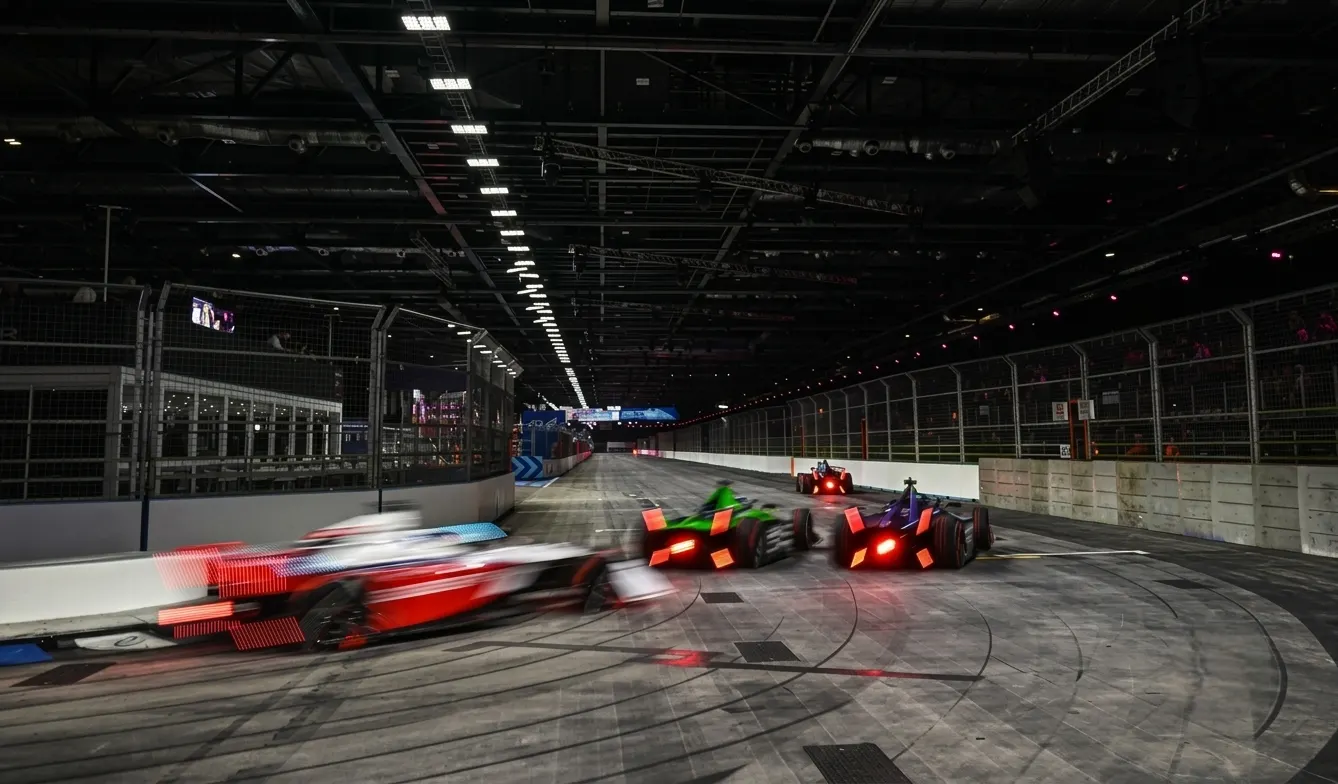
Attack Mode is Formula E’s signature tactical differentiator. To activate it, a driver must physically leave the racing line and drive through a designated activation zone. Doing so grants a temporary power boost — roughly 40 kW above the standard race power — for a defined period. Teams must decide when to activate and how many times to use it, creating genuine strategic battles that have no equivalent in other series.
Moreover, energy management is the dominant skill in Formula E. Unlike combustion racing, where fuel consumption is gradual and relatively predictable, battery degradation responds non-linearly to temperature, discharge rate and ambient conditions. Drivers who can regenerate effectively under braking — harvesting energy while defending a position — have a demonstrable lap-time advantage over drivers who rely purely on pace.
Formula E’s street circuit format is not just a marketing decision. Urban circuits produce naturally close racing because the limited overtaking opportunities force strategic precision. Furthermore, the proximity of barriers means that contact — common at tight street tracks — immediately changes the competitive order. Consequently, qualifying position carries enormous weight, making Formula E’s shortened qualifying formats among the most intense sessions in motorsport. For more on how Formula E compares to F1, see our dedicated guide.
Is Formula E Fast? Gen3 Evo Performance Breakdown
The Gen3 Evo car — Formula E’s current specification — reaches a top speed of approximately 280 km/h (174 mph) on the longest straights of its urban circuits. In qualifying trim, the car produces 350 kW (470 hp) of power. Furthermore, 0–100 km/h comes in under 2.8 seconds from a standing start — a figure that beats most naturally aspirated racing machinery.
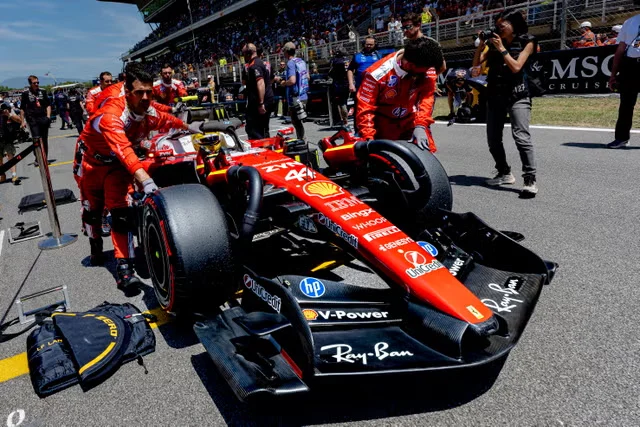
However, the raw comparison with Formula 1 is stark. An F1 car exceeds 350 km/h (217 mph) on long straights and generates 5–6G of lateral cornering force. Meanwhile, Formula E operates on tight city circuits where the longest straight rarely exceeds 600 metres. Therefore, the speed gap is real — but it reflects the circuit design as much as the car’s technical ceiling.
| Performance Metric | Formula E Gen3 Evo | Formula 1 (2026) | Context |
|---|---|---|---|
| Top Speed | ~280 km/h (174 mph) | ~350 km/h (217 mph) | F1 runs longer straights |
| 0–100 km/h | Under 2.8 seconds | ~2.6 seconds | Comparable at low speed |
| Peak Power (qualifying) | 350 kW / 470 hp | ~750 kW+ (~1,000 hp) | F1 hybrid advantage |
| Cornering G-Force | ~2.5–3.5G | ~5.0–6.0G | Downforce difference |
| Car Weight | ~840 kg | ~798 kg | Battery mass penalty |
| 0–60 from rest | Under 2.0 s (regen boost) | ~2.6 s | FE wins |
| Lap time at shared circuit | ~14s slower at COTA | Reference | Downforce gap dominant |
Crucially, the performance debate changes completely when you consider what Formula E is actually optimised for. F1 is built for permanent circuits with long straights and high-speed corners. Formula E is built for 2-kilometre urban layouts where the critical skill is energy management, not peak aerodynamic downforce. Judging one by the other’s metrics is like criticising a rally car for poor Top Fuel times.
“Managing electric power demands more cognitive processing from drivers than traditional combustion engines. The paddock treats this series with absolute seriousness — the engineers aren’t here for a charity event.”
— Senior Jaguar TCS Racing engineer (attributed in original reporting)Why Major Car Manufacturers Invest in Formula E
The most persuasive evidence for Formula E’s legitimacy is the money that global automotive manufacturers have committed to it. Porsche, Jaguar, DS Automobiles, Nissan and Maserati all operate as official factory teams. Moreover, these are not marketing departments writing cheques for a logo on a car — they are engineering operations running hundreds of staff working on powertrain development.
The reason is straightforward. Every regulation these manufacturers develop in Formula E — inverter efficiency, battery cell chemistry, regenerative braking systems, thermal management — has a direct application pathway to their road car EV programmes. Furthermore, the regulatory environment in Formula E, unlike F1, is explicitly designed to make technical lessons transfer commercially. Consequently, a Formula E win is simultaneously a motorsport achievement and a product marketing event.
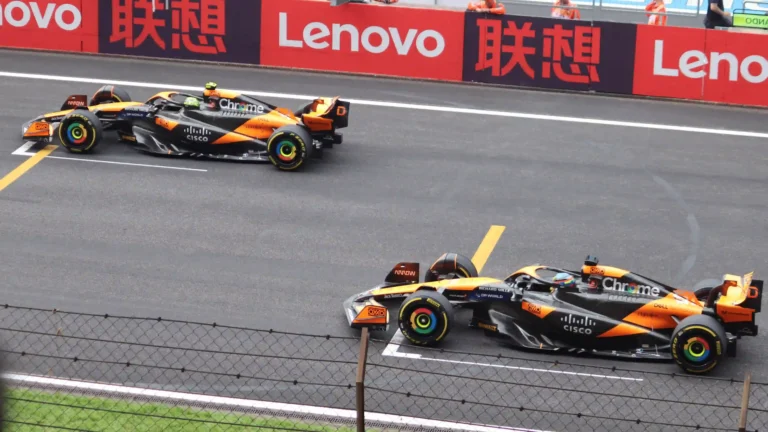
McLaren’s 2024 departure from Formula E was widely covered as evidence the series was struggling. However, the reasoning was more nuanced. McLaren’s primary business is now closely tied to F1 and their own road car programme — neither of which produces EVs at the consumer level where Formula E technology applies. Therefore, the business case for their involvement was always weaker than for Porsche, Jaguar or Nissan. Their exit was a corporate strategy decision, not a verdict on the series’ quality. For the full story, see our analysis: McLaren Formula E withdrawal explained.
Is Formula E Profitable? The Business Reality
This is where Formula E’s story becomes genuinely complicated. SportsPro Media reported that Formula E’s losses nearly doubled to €78.3 million in the 2023/24 season — a figure that makes uncomfortable reading for any business analyst. However, context matters enormously before drawing conclusions from that single number.
Formula E’s cost base includes operating a global urban racing series across multiple continents. Moreover, the infrastructure cost of building temporary circuits in city centres — barriers, paddock facilities, power supply, hospitality — is categorically higher per event than racing at permanent circuits. Therefore, the economics of urban racing are structurally different from any other major series.
Where Formula E’s Revenue Comes From
Relative revenue stream importance — illustrative based on reported business model
The media rights picture is Formula E’s most pressing financial challenge. The series currently trails F1, NASCAR and even IndyCar in global broadcast reach. Furthermore, the niche of electric urban racing attracts a specific demographic that advertisers value — younger, urban, sustainability-oriented — but that demographic remains smaller than traditional motorsport audiences.
Formula E was acquired by Liberty Global and Exor in 2022 for approximately $200 million in a deal that explicitly positioned the series as a long-term investment in the EV era of motorsport. Consequently, the investors are not expecting short-term profitability — they are buying the series’ structural position in what they expect to be the dominant automotive narrative of the next decade. Therefore, the €78 million loss has to be read alongside the asset valuation and the investment horizon, not as a standalone operational failure. The question is not “is it profitable now?” but “will it be profitable when EVs represent 50% of new car sales?”
What Do Racing Fans Actually Think About Formula E?
Fan opinion on Formula E splits cleanly along two lines: people who value what it does well, and people who compare it unfavourably to what it isn’t. Both groups are making valid points about different things.
The Criticisms That Have Merit
The most consistent criticism from traditional racing fans concerns the sound. Formula E cars produce a high-pitched electric whine — technically impressive engineering, but a very different sensory experience from the visceral noise of a combustion engine at racing pace. Furthermore, the narrow city circuit layouts produce races that can feel processional when overtaking is difficult, which happens when the track particularly rewards qualifying position.
Meanwhile, the Attack Mode system — while genuinely strategic — confuses casual viewers. Watching a driver deliberately leave the ideal racing line to drive through an invisible activation zone reads as bizarre to anyone who hasn’t had it explained. Consequently, the series makes demands on audience education that F1 or NASCAR simply do not.
The Positives That Deserve More Credit
However, the racing statistics tell a different story from the perception. Formula E consistently produces more position changes per race than most comparable single-seater series. The points gap between championship positions at season end is regularly tighter than F1’s equivalent. Moreover, the driver roster is genuinely elite — current and former drivers include Sébastien Buemi, António Félix da Costa, Jake Dennis, Pascal Wehrlein and Jean-Éric Vergne, all of whom have demonstrated pace at the highest levels of motorsport.
Furthermore, the urban circuit format creates a specific kind of racing drama that is genuinely distinctive. When 22 racing cars run at 200+ km/h three feet from a temporary concrete wall on a public road in central Hong Kong or Monaco, the proximity and visceral risk create a tension that permanent circuit racing often lacks.
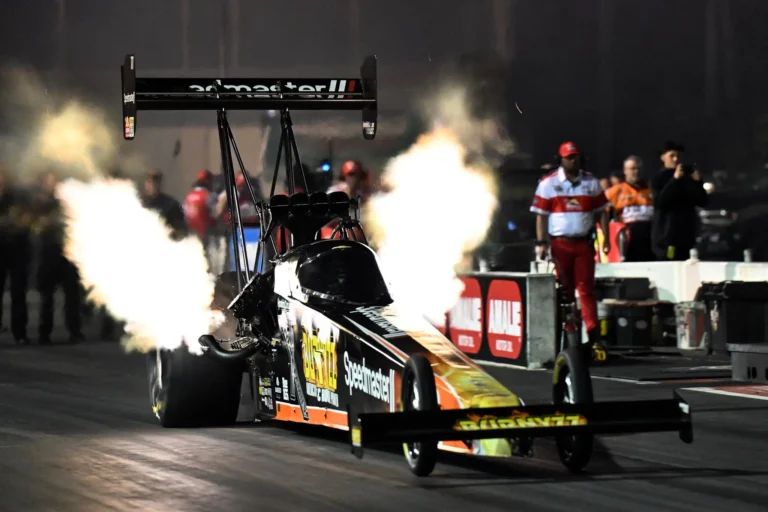
Max Verstappen famously stated he has zero interest in driving Formula E cars, specifically criticising the lower top speeds and the energy management emphasis as “gaming-like.” His position is entirely consistent with his identity as a combustion racing purist who built his career on raw speed at the outer edge of what aerodynamics allows. However, Verstappen’s view is not a technical verdict — it is a personal preference. The same driver who says Formula E is uninteresting is the same driver who has no interest in WRC, NHRA Top Fuel or MotoGP, all of which are unambiguously legitimate racing categories. His criticism describes a taste, not a quality judgement.
Formula E Drivers, Talent Level & Salary Reality
The driver talent question is more nuanced than the salary numbers suggest. Formula E fields a genuinely high-quality grid — the vast majority of its drivers have competed at the highest levels of European single-seater racing. Moreover, several have also competed in Formula 1, LMP1, and GT World Challenge. Therefore, categorising the series as a “lesser” talent pool is not supported by the actual CVs on the grid.
However, the salary gap compared to F1 is real and substantial. Entry-level Formula E drivers earn between $200,000 and $500,000 per season. Top-tier championship contenders command $1 million to $3 million annually. In contrast, F1 midfield drivers routinely earn $5–10 million, while stars like Lewis Hamilton earn tens of millions including endorsements. The gap reflects the commercial scale difference between the series, not the driving ability difference.
| Category | Formula E | Formula 1 |
|---|---|---|
| Entry-level drivers | $200K–$500K/season | $1M–$5M (pay driver tier) |
| Championship contenders | $1M–$3M/season | $5M–$20M/season |
| Title-winning champions | ~$3M+ | $20M–$60M+ |
| Team count | 11 teams | 10 teams |
| Race weekends per season | ~16 events | 24 events |
| FIA status | World Championship | World Championship |

Is Formula E Respected? The Verdict
The honest answer is: yes — in the motorsport industry, and not fully yet in mainstream fan culture. These are not contradictory positions. They reflect two different measures of respect.
Within the professional racing world — engineers, team principals, manufacturers, FIA officials — Formula E is treated as a legitimate, technically demanding championship. The fact that Porsche, a company with Le Mans and Formula 1 heritage going back to the 1970s, commits factory resources to Formula E engineering is as clear an endorsement of its seriousness as the sport can receive. Furthermore, the FIA’s decision to grant World Championship status in Season 9 was not a political gesture — it was a recognition that the series met the governance, technical and competitive standards that classification requires.
However, the mainstream fan respect gap is real and Formula E’s management knows it. The series still struggles with some of the same structural perceptions that MotoE and Formula 2 face — categories where the racing is genuinely good but the context requires explanation before a casual viewer finds the stakes compelling.
Formula E holds FIA World Championship status, attracts genuine factory investment from major automotive manufacturers, produces elite-level close racing, and serves a clear industrial purpose in the EV era. The series is financially challenged in the short term but structurally positioned well for the long term. The fan perception gap is the outstanding problem — and it is solvable, but requires the series to prioritise accessibility and remove the contextual barriers that prevent casual motorsport viewers from engaging. The racing is better than its reputation suggests. The reputation is better than the financial numbers suggest. Both will take time to fully resolve in the series’ favour.
Frequently Asked Questions — Is Formula E Respected?
The bottom line on Formula E’s place in motorsport
Formula E does not need to be Formula 1 to be a legitimate, valuable racing series. The debate about whether it is “respected” has often been framed as a binary — either it is taken seriously or it isn’t. The reality is more layered. The industry takes it seriously. The engineers and manufacturers commit real budgets to it. The FIA has given it the same championship designation as F1. The financial challenges are real but not terminal. The fan perception gap is the outstanding unsolved problem.
The series’ trajectory over the next five years will be determined less by the quality of its racing — which is already good — and more by whether it can solve the context problem for viewers who arrive without a background in electric motorsport. That is a communication and product design challenge, not a racing quality problem. Formula E has earned its FIA World Championship title. The next task is earning the casual viewer’s genuine attention.