How Does Formula 1 Make Money?
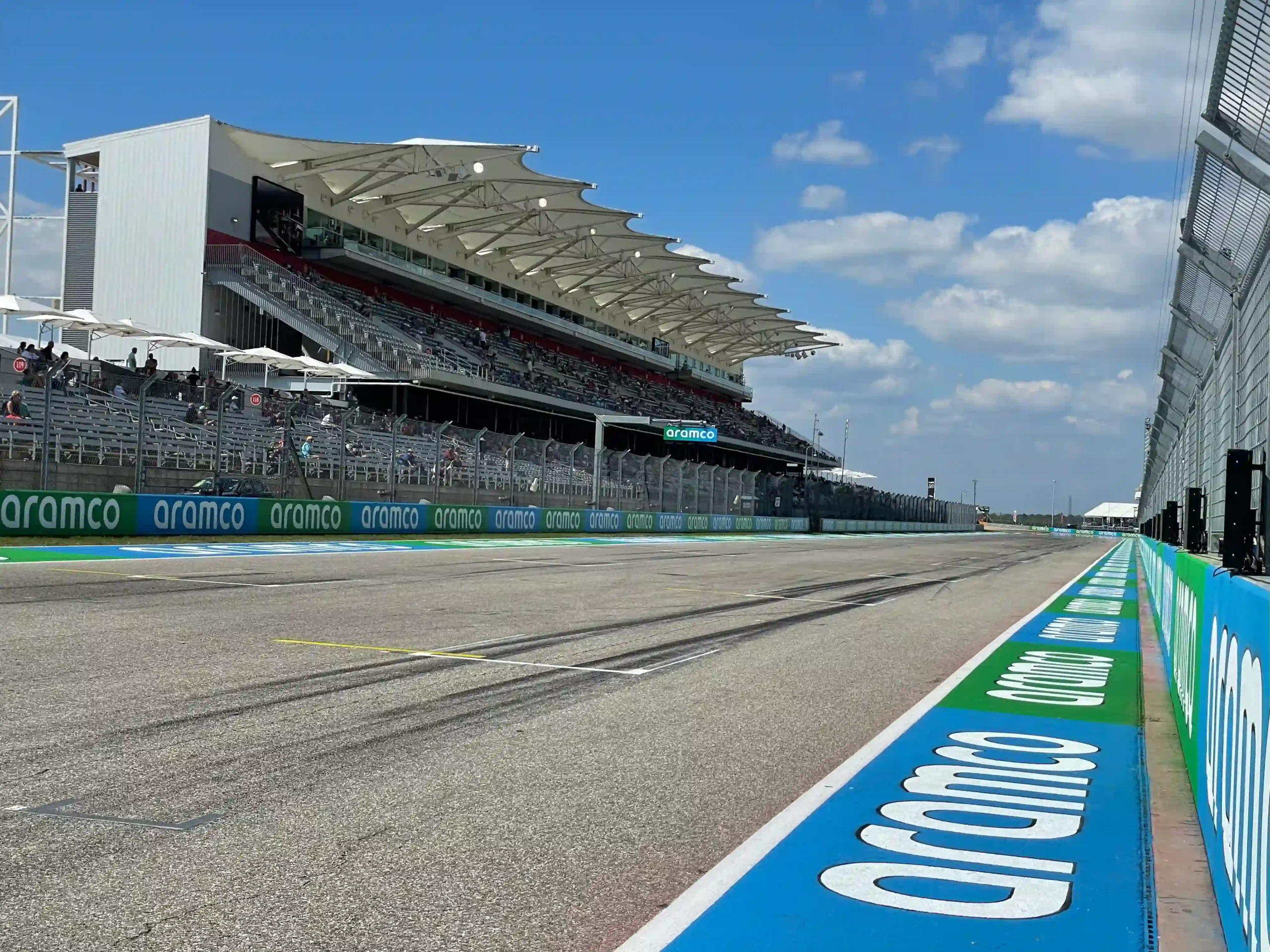
Every Grand Prix is a live broadcast, destination event, sponsorship platform and premium hospitality business operating at the same time.
Formula 1 makes money mainly from media rights, race-promotion fees and sponsorship. It also earns revenue from Paddock Club hospitality, licensing, freight services, support championships, digital products and its directly promoted Las Vegas Grand Prix.
Formula 1 sells much more than 24 Sunday races.
It sells live sports rights to broadcasters. It also sells cities a place on the world championship calendar.
Meanwhile, global brands buy access to the audience. Corporate guests pay for premium hospitality above the pit lane.
Formula 1 also licenses its name, archive and intellectual property. Games, merchandise, productions and digital products create additional income.
In 2025, Liberty Media reported $3.873 billion of Formula 1 revenue. That compared with $3.411 billion in 2024.
The largest individual stream was media rights. However, race fees, sponsorship and other operations each supplied major shares.
Formula 1 then paid $1.4 billion to the teams during 2025. Those payments help fund the constructors that create the sporting product.
Therefore, the answer to how does Formula 1 make money involves an ecosystem. The championship, promoters, teams, broadcasters and sponsors control different commercial rights.
Understanding those boundaries prevents common mistakes. Formula 1 does not automatically keep every ticket dollar or every team-merchandise sale.
This guide follows the money from a fan’s screen and grandstand seat to Formula 1 and the teams.
Formula 1’s Latest Revenue Numbers
Formula 1 generated $3.873 billion in 2025. Liberty Media reported $632 million of operating income and $946 million of Adjusted OIBDA for the year.
The 2025 result represented strong growth. Total Formula 1 revenue increased by $462 million from the previous year.
Primary revenue reached $3.086 billion. Other Formula 1 revenue added another $787 million.
However, revenue is not profit. Formula 1 paid teams, produced broadcasts, operated hospitality and delivered events.
Its cost of motorsport revenue reached $2.581 billion, excluding one-time Concorde incentive payments. Selling, general and administrative expense added $346 million.
After depreciation and other reported items, operating income was $632 million. Adjusted OIBDA reached $946 million.
| Financial Measure | 2025 | 2024 | Change |
|---|---|---|---|
| Primary Formula 1 revenue | $3.086 billion | $2.757 billion | Up $329 million |
| Other Formula 1 revenue | $787 million | $654 million | Up $133 million |
| Total Formula 1 revenue | $3.873 billion | $3.411 billion | Up $462 million |
| Adjusted OIBDA | $946 million | $791 million | Up $155 million |
| Operating income | $632 million | $492 million | Up $140 million |
| Team payments | $1.400 billion | $1.266 billion | Up $134 million |
The First Quarter of 2026
Liberty Media’s latest available quarterly report showed $617 million of Formula 1 revenue for January through March 2026. That was 53% above the same quarter in 2025.
Operating income reached $107 million, while Adjusted OIBDA was $172 million. Nevertheless, the quarter included three races instead of two.
Formula 1 also recognizes season-based revenue around the calendar. Therefore, one quarter should not be multiplied by four to predict the full year.
These figures answer part of how does Formula 1 make money. The next question is who owns the rights being sold.
Who Owns Formula 1 and Its Commercial Rights?
Liberty Media owns Formula 1 as a subsidiary. The FIA owns the world championship and granted Formula 1 exclusive commercial rights through the end of 2110 under long-term agreements.
Formula 1 is both a sporting championship and a commercial business. Those functions belong to different organizations.
The FIA regulates sporting, technical and safety matters. It also approves the championship calendar.
Formula 1 controls the commercial exploitation of the championship. Liberty Media owns that Formula 1 business.
The commercial-rights arrangement runs through December 31, 2110. Consequently, Formula 1 can negotiate media, promoter and sponsorship agreements over long time horizons.
Liberty Media Does Not Own the Teams
Formula 1 has no direct ownership interest in the competing teams. Each constructor is a separate business.
The teams employ their drivers and fund their own operations. They also sell their own sponsorship and merchandise rights.
This separation matters when answering how does Formula 1 make money. Central Formula 1 revenue is not the same as Ferrari, McLaren or Red Bull revenue.
Read what the FIA does and what Formula 1 is for the sporting structure.
Formula 1’s Business Model at a Glance
The three primary streams are media rights, race promotion and sponsorship. Hospitality, licensing, freight, support series, television production and Las Vegas activities form the other-revenue category.
Formula 1 divides revenue into primary and other categories. Primary revenue comes directly from commercializing the championship.
In 2025, media rights supplied 31.3% of total revenue. Race promotion contributed 26.7%, while sponsorship added 21.7%.
Other revenue supplied the remaining 20.3%. That category included hospitality, freight and licensing.
| Revenue Stream | Share of 2025 Revenue | Approximate Value | What Formula 1 Sells |
|---|---|---|---|
| Media rights | 31.3% | About $1.21 billion | Broadcast, streaming, F1 TV and archive rights |
| Race promotion | 26.7% | About $1.03 billion | Rights to stage and promote Grands Prix |
| Sponsorship | 21.7% | About $840 million | Global partnerships, advertising and event rights |
| Other revenue | 20.3% | $787 million reported | Hospitality, freight, licensing, support series and Las Vegas activities |
Financial context: The first three dollar figures are calculations from Liberty Media’s reported percentages and total revenue. They are approximate rather than separately reported line items.
1. Media Rights and F1 TV
Formula 1 licenses live races, practice, qualifying, highlights and related content to broadcasters by country or region. It also earns subscription revenue from F1 TV and licenses archive, radio and ancillary media rights.
Media rights were Formula 1’s largest revenue source in 2025. They accounted for 31.3% of total revenue.
Broadcasters buy defined territories, languages and platforms. A deal may cover television, streaming, highlights and digital services.
Formula 1’s broadcast agreements usually last three to five years. Fees often increase during the contract.
In 2025, the business held more than 50 broadcast agreements worldwide. Those contracts covered free-to-air, pay television and digital platforms.
The World Feed Is a Product
Formula 1 produces the international television feed seen by broadcasters. That requires cameras, audio, graphics, timing and a large production team.
Local broadcasters then add commentary and studio coverage. Therefore, Formula 1 sells a complete live-sports product rather than camera access alone.
F1 TV Creates Direct Subscription Revenue
F1 TV allows Formula 1 to sell directly to viewers in supported markets. Premium tiers add onboard cameras, team radio and data tools.
Liberty Media said F1 TV subscription revenue continued growing in 2025. However, it does not publish a complete subscriber count in its annual report.
The 2026 United States Deal
Apple became Formula 1’s exclusive U.S. broadcast partner from 2026 under a five-year agreement. The package includes every practice, qualifying session, Sprint and Grand Prix.
F1 TV Premium remains available in the United States through an Apple TV subscription. This structure combines a major media-rights deal with Formula 1’s direct product.
Formula 1 also renewed long-term Sky agreements in 2026. The UK and Ireland deal runs through 2034, while Italy continues through 2032.
See where to watch Formula 1 for the viewing side of those agreements.
2. Grand Prix Hosting and Race-Promotion Fees
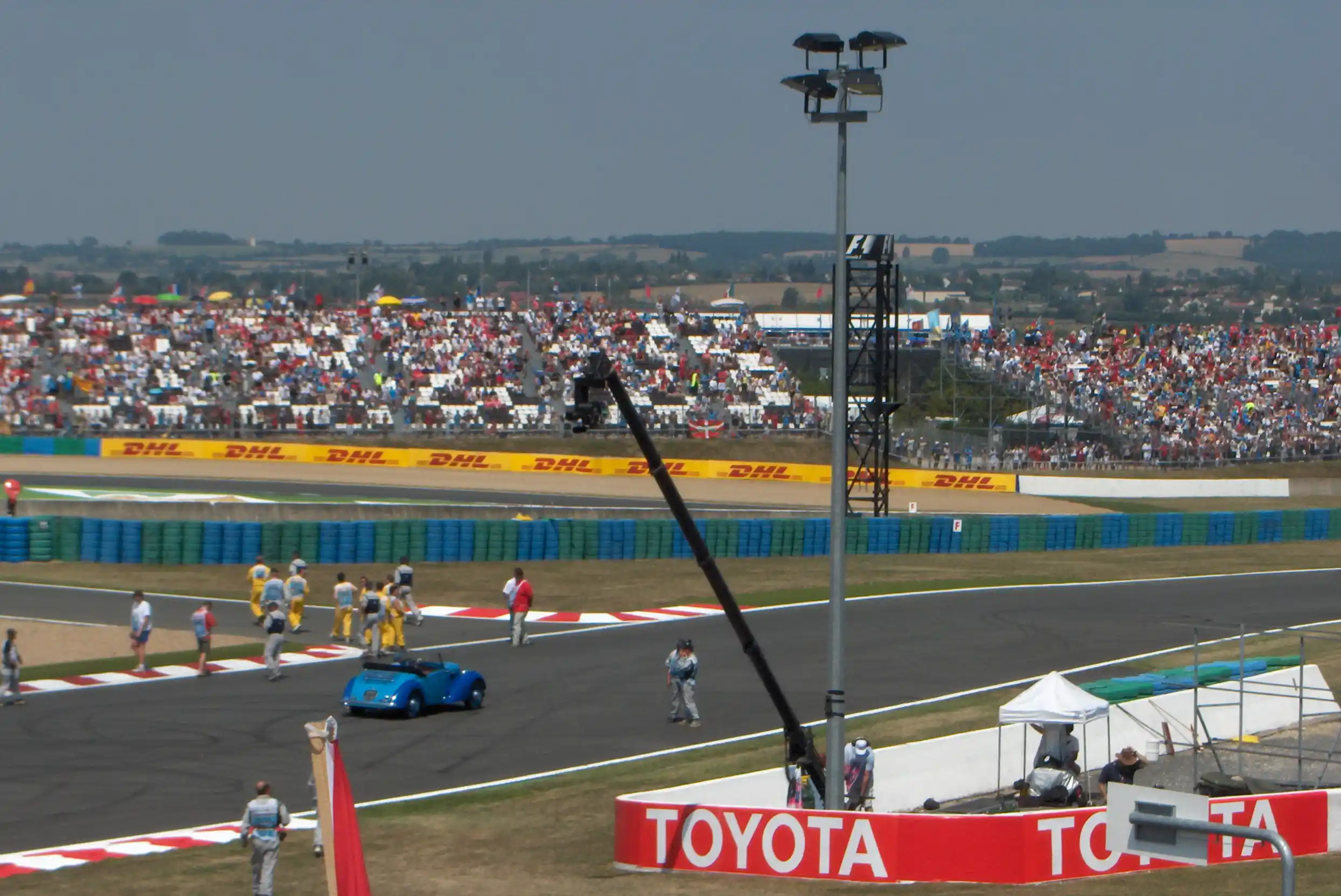
A local promoter pays for the right to stage a Grand Prix on the championship calendar. The promoter usually earns from tickets, local hospitality, concessions and sponsorship while carrying the event’s operating risk.
Race-promotion revenue supplied 26.7% of Formula 1’s total 2025 revenue. It was the second-largest stream.
Promoters include circuit owners, automobile clubs, event companies and government-backed organizations. They negotiate contracts for a calendar slot.
Initial agreements usually last three to seven years. Renewals can be longer or shorter depending on the market.
Many contracts include annual increases. Liberty Media says those escalators can follow inflation or fixed rates up to 5% per year.
Why a City Pays Formula 1
A Grand Prix attracts visitors, television exposure and corporate activity. Host regions can treat the race as tourism and place marketing.
However, the economic benefit does not automatically make the promoter profitable. Temporary circuits and large entertainment programs can cost heavily.
Who Keeps the Ticket Money?
The local promoter normally sells grandstand and general-admission tickets. It also often keeps concessions, parking and secondary hospitality revenue.
Formula 1 receives the contracted promotion fee and selected commercial rights. The exact split varies by event.
This distinction is central to how does Formula 1 make money. A sold-out race helps the promoter and supports future fee negotiations, but ordinary ticket sales do not always flow directly to Formula 1.
Read what “Grand Prix” means in F1 and review the 2026 Formula 1 schedule.
3. Sponsorship and Advertising
Formula 1 sells global partnerships, official-supplier status, event title rights, trackside advertising, digital inventory and brand activations. Central F1 sponsorship is separate from sponsorship sold by individual teams.
Sponsorship reached 21.7% of total Formula 1 revenue in 2025. That was up from 18.6% in 2024.
The increase came from new sponsors, higher existing fees and digital-advertising growth. Formula 1’s partner portfolio had also expanded sharply.
The championship counted 27 partners in 2025, compared with 12 in 2020. Recent agreements brought luxury, technology, food and consumer brands into the sport.
What a Global Partner Buys
A partner may receive trackside branding, digital content and hospitality. It can also activate inside fan zones and business events.
Some brands sponsor a specific asset. Examples include timing, Sprint, logistics or event naming rights.
Race Title Sponsorship
A company can attach its name to a Grand Prix title. The package creates broadcast mentions and signage across the weekend.
Formula 1 acquires many of these circuit commercial rights through promoter agreements. In a few cases, a promoter may receive commission for introducing a local sponsor.
Formula 1 Sponsors and Team Sponsors Are Different
A global Formula 1 partner buys rights from the championship. A team sponsor buys rights from a constructor.
The same brand can sometimes work across both levels. However, the contracts and commercial inventory remain separate.
For team-level examples, see the history of Red Bull Racing and Ferrari through the decades.
4. Paddock Club and Premium Hospitality
Formula 1 sells Paddock Club access and other premium experiences at most races. Packages combine viewing, catering, pit-lane access and corporate entertainment at prices well above standard admission.
Hospitality sits inside Formula 1’s other-revenue category. It became an important growth engine in 2025.
Liberty Media reported higher attendance and revenue from the Paddock Club and other premium offerings. That helped other revenue rise to $787 million.
The Paddock Club typically sits above the team garages or near the pit lane. It combines race viewing with food, drinks and business access.
Corporate Buyers Matter
Many guests attend through sponsors, suppliers or business partners. Therefore, hospitality strengthens sponsorship as well as ticket revenue.
A brand can host clients, reward employees and arrange meetings during the race weekend. The value extends beyond the view of the track.
Formula 1 Experiences Adds Premium Access
Official experience packages can include pit-lane walks, guided tours and appearances. These products turn limited access into sellable inventory.
Not every event uses the same commercial arrangement. Local promoters and teams also sell their own hospitality products.
Consequently, the phrase “F1 hospitality revenue” can describe several separate businesses. Formula 1’s central Paddock Club is only one layer.
5. The Las Vegas Grand Prix Is a Different Business
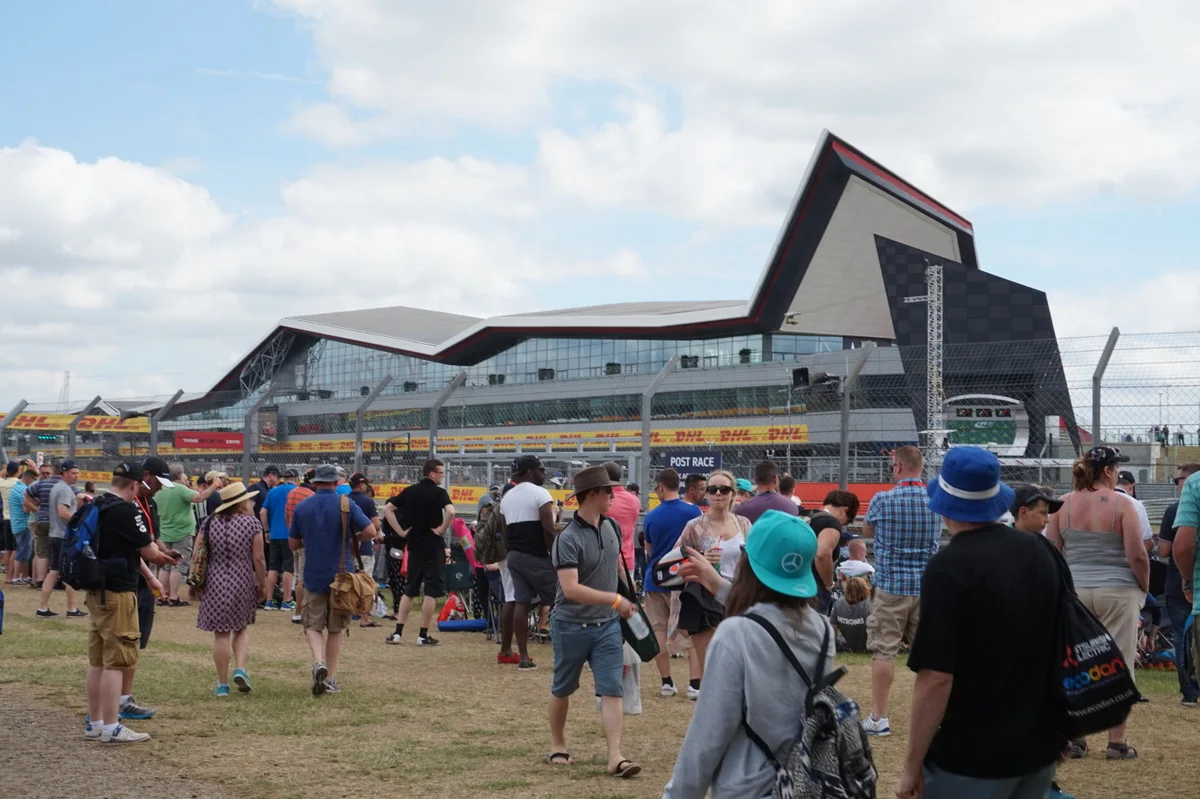
Formula 1 directly promotes the Las Vegas Grand Prix. It therefore recognizes ticketing, sponsorship and hospitality revenue while also carrying the costs of building and operating the event.
Most Grands Prix have an independent local promoter. Las Vegas changed that model.
In 2025, Las Vegas was Formula 1’s only directly promoted Grand Prix. Formula 1 controlled the event’s main commercial operation.
As a result, grandstand and general-access tickets entered Formula 1’s race-promotion revenue. Hospitality and experiences also flowed into its reported results.
Direct Promotion Creates More Revenue and More Risk
Formula 1 can keep more event income when it acts as promoter. However, it must also pay for circuit construction, staffing and delivery.
Liberty’s financial statements list Las Vegas event costs among the largest components of other motorsport expenses.
Grand Prix Plaza Extends the Business
Formula 1 also earns revenue from activities at Grand Prix Plaza in Las Vegas. These include karting, events and other activations.
Therefore, the Las Vegas investment operates beyond the race weekend. It creates a year-round physical location for the brand.
Las Vegas shows the difference between collecting a hosting fee and owning the event economics. Direct promotion raises the upside, but it also puts the operating risk on Formula 1.
6. Licensing, Merchandise, Gaming and Entertainment
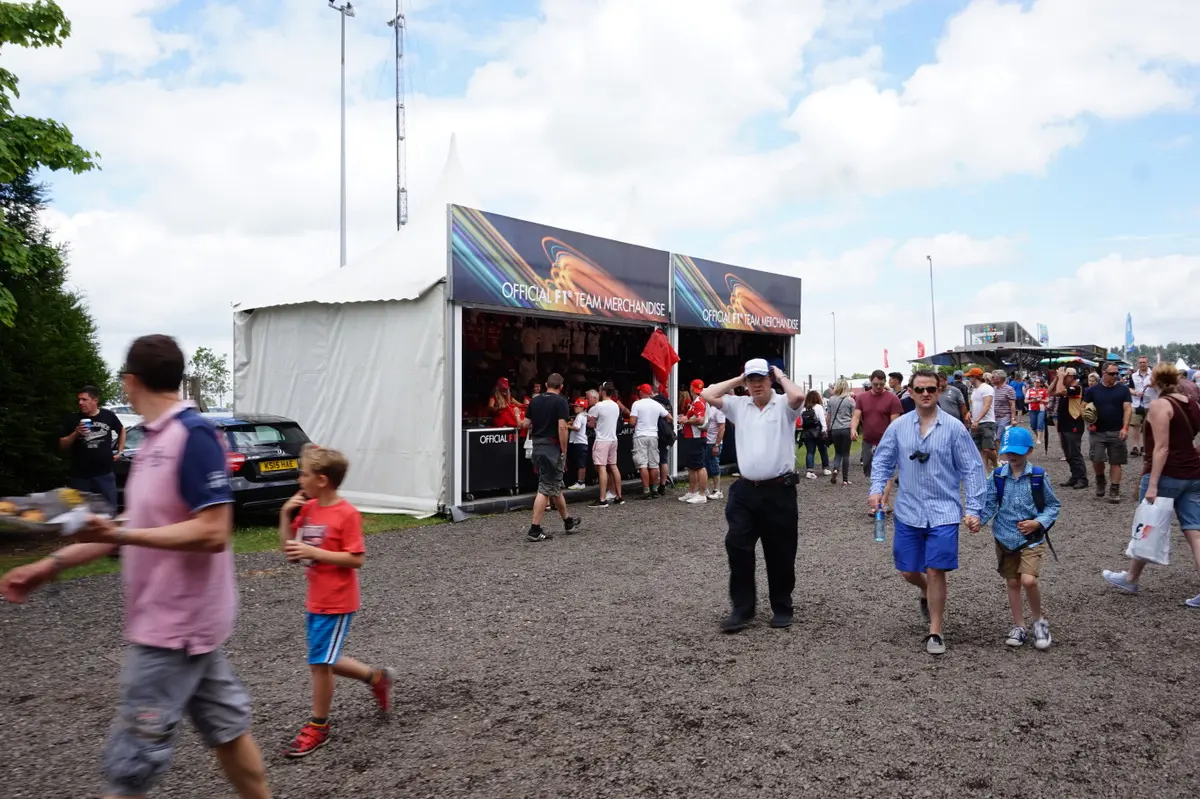
Yes. Formula 1 licenses its trademarks and intellectual property for merchandise, games, collectibles, productions and other consumer products. Teams and drivers also control separate merchandise rights.
Formula 1 owns a large trademark portfolio. That includes the F1 name, logo and many official event titles.
Licensees pay for permission to use those rights on approved products. Formula 1 can receive royalties, minimum guarantees or other fees.
Official Games and Esports
The official Formula 1 video game uses championship teams, drivers and circuits. That commercial relationship turns sporting data and intellectual property into gaming revenue.
Esports adds sponsorship and digital engagement. It also keeps the championship active between race weekends.
Merchandise Is Split Across Rights Holders
Formula 1 earns from centrally licensed products and its official retail operation. However, a Ferrari cap or McLaren shirt can primarily support the team and its licensees.
Driver-branded products may involve another rights arrangement. Therefore, not every item carrying an F1 connection becomes central Formula 1 revenue.
Film and Archive Rights
Formula 1 licenses archive footage and production access. Liberty Media reported one-time media-rights revenue associated with the 2025 release of F1 The Movie.
The film’s global box office does not equal Formula 1 revenue. Nevertheless, the project created licensing income and promoted the sport to new audiences.
Licensing income grew during 2025. It contributed to the rise in other Formula 1 revenue.
7. Freight, Support Series and Other Revenue
Formula 1 earns additional revenue from freight and travel services, F2, F3 and F1 Academy, television production, licensing, hospitality and activities at Grand Prix Plaza.
Formula 1 coordinates a global freight operation for teams and other participants. It charges for facilitating shipment outside Europe.
However, freight revenue includes pass-through costs. Higher freight income can arrive alongside higher transport expense.
Support Championships
Formula 1 holds commercial rights to Formula 2 and Formula 3 through 2041. It also operates F1 Academy.
Those series create revenue from event participation, cars, parts, services, broadcasting and sponsorship. They also strengthen the driver-development ladder.
Production and Digital Services
Formula 1 performs television production and post-production work. It also operates websites, apps and social content.
Some digital content builds audiences rather than generating a direct subscription. Nevertheless, that audience raises the value of sponsorship and media rights.
Why “Other Revenue” Matters
Other revenue supplied 20.3% of the 2025 total. Therefore, it was nearly as large as sponsorship.
The category also grew faster than many fans realize. Hospitality, licensing and Las Vegas activities drove the increase.
How Formula 1 Pays the Teams
Formula 1 reported $1.4 billion in team payments for 2025, excluding $50 million of one-time Concorde incentive payments. The precise allocation to each constructor is not fully public.
The teams create the sporting product that Formula 1 sells. Therefore, a large share of commercial revenue returns to them.
Team payments increased by $134 million in 2025. Liberty linked the rise to higher Formula 1 revenue and variable prize-fund calculations.
The Concorde Agreement
The Concorde Agreement governs the commercial relationship between Formula 1, the FIA and the teams. A new agreement covers the 2026 through 2030 seasons.
It provides prize-fund payments based on Constructors’ Championship performance and other principles. Liberty specifically mentions longer-term success and heritage.
Why Public Prize-Money Tables Are Estimates
Formula 1 publishes team-payment totals, but not a complete audited allocation by constructor. The Concorde terms remain commercially sensitive.
Consequently, media tables often model the distribution. They should not be treated as official invoices.
Championship Position Still Matters
Constructors’ results affect future commercial payments. A higher finish can therefore strengthen both prestige and cash flow.
Follow the Formula 1 standings and see how qualifying shapes the competitive weekend.
How F1 Teams Make Money Separately
Teams earn commercial payments from Formula 1, sell their own sponsorship and merchandise, receive manufacturer or owner funding and may supply power units, gearboxes or technical services.
A constructor has a different business model from the championship. Formula 1 sells the series, while the team sells its competitive identity.
Title sponsors pay for prominent branding on the car and team name. Smaller partners buy selected positions, content and hospitality.
Manufacturer and Owner Funding
A works team can receive money from an automotive manufacturer. The company may value technology, marketing and employee development.
Independent teams can rely more heavily on owners, investors and commercial payments. The cost cap has made those businesses easier to forecast.
Customer Components
Power-unit manufacturers charge customer teams under supply agreements. Some constructors also sell permitted gearboxes, suspension components or technical services.
Those arrangements create revenue and reduce the customer’s development burden.
Merchandise and Hospitality
Teams sell branded clothing, collectibles and corporate packages. They may also create factory experiences and digital memberships.
Driver popularity can raise those sales. However, the drivers receive salaries directly from teams, not central Formula 1.
Read how much F1 drivers make and view the 2026 teams list.
How Money Moves Through a Grand Prix
Formula 1 receives hosting, media, sponsorship and selected hospitality income. The promoter usually keeps ordinary ticket and local event revenue, while teams receive central payments and sell their own sponsorship.
| Participant | Main Income | Main Costs |
|---|---|---|
| Formula 1 | Media rights, promoter fees, sponsorship, Paddock Club, licensing | Team payments, production, hospitality, logistics, event operations |
| Race promoter | Tickets, local sponsorship, concessions, local hospitality | Hosting fee, circuit preparation, staffing, entertainment, security |
| F1 team | Central payments, team sponsorship, owner funding, merchandise | Car development, salaries, racing, factories and travel |
| Broadcaster | Subscriptions, advertising and distribution value | Media-rights fee, production and presentation |
| Sponsor | Brand exposure, hospitality and business relationships | Rights fee and activation spending |
That layered model explains how does Formula 1 make money without owning every circuit or team. It monetizes the championship’s central rights.
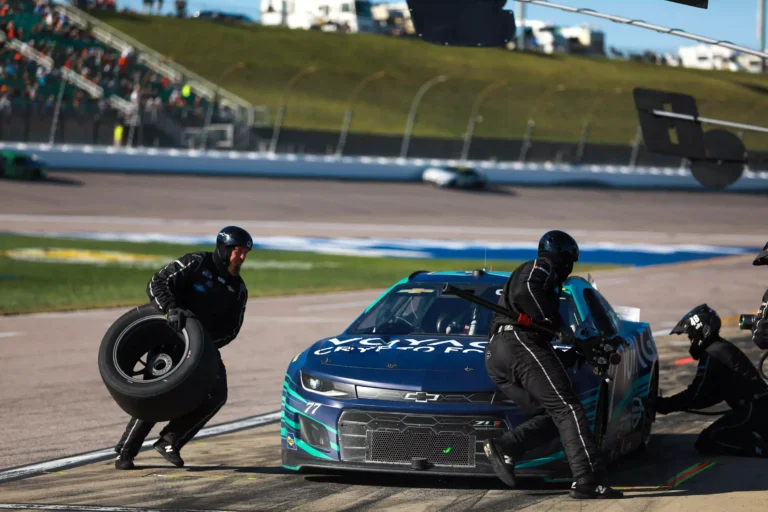
For the sporting operation behind the commercial show, read how F1 pit stops work and how racing simulators developed.
Is Formula 1 Profitable?
Formula 1 reported $632 million of operating income and $946 million of Adjusted OIBDA on $3.873 billion of 2025 revenue. Those measures are different and should not be used interchangeably.
Formula 1 is profitable, but the accounting requires context. Adjusted OIBDA removes items such as depreciation, amortization and stock compensation.
Operating income includes more of those costs. Therefore, it is lower than Adjusted OIBDA.
Team Payments Are the Largest Expense
Formula 1 paid teams $1.4 billion in 2025. That was more than half of its $2.581 billion cost of motorsport revenue.
The remaining costs included Las Vegas, hospitality, freight, television production and support championships.
Revenue Growth Does Not Flow Straight to Profit
A new sponsor creates servicing and activation costs. More Paddock Club guests require food, staff and space.
Similarly, freight revenue can rise because Formula 1 passes increased transport costs to customers. The gross revenue grows, but so does expense.
Seasonality Changes Quarterly Results
Formula 1 recognizes much of its revenue around race events. The first quarter usually contains fewer races.
Therefore, quarterly comparisons depend on calendar order. A race moving between March and April can shift substantial revenue.
Why Formula 1 Revenue Has Grown
Revenue has grown through higher contract fees, expanding F1 TV subscriptions, new sponsors, premium hospitality, licensing, strong attendance and greater demand for race slots and media rights.
Formula 1’s 2025 global fanbase reached 827 million. The organization reported 12% year-over-year growth.
Season attendance reached a record 6.7 million. Nineteen events sold out, while several races set new attendance records.
More Fans Raise Several Revenue Streams
A larger audience makes broadcast rights more valuable. It also improves sponsor exposure and ticket demand.
Meanwhile, younger digital fans support F1 TV, social content, gaming and licensing. Formula 1 reported 114.5 million social followers in 2025.
Long-Term Contracts Add Predictability
Media, promoter and sponsorship contracts often contain annual increases. Therefore, Formula 1 can grow revenue without adding a race every year.
Demand also helps during renewals. Several cities can compete for limited calendar space.
The United States Became a Major Growth Market
Austin, Miami and Las Vegas gave Formula 1 three U.S. races. The Apple TV agreement created another major American commercial platform from 2026.
The U.S. fanbase continued expanding, while television and digital engagement rose. This matters because American sports-media and sponsorship markets are large.
Entertainment Projects Expand Reach
Drive to Survive introduced new viewers to the personalities behind the racing. F1 The Movie continued that entertainment strategy in 2025.
However, audience growth matters more than one production fee. New fans can later buy subscriptions, tickets, merchandise and sponsor products.
Why Formula 1 Teams Became More Valuable
Team values have risen even though the constructors remain costly to operate. The cost cap is a major reason.
Before financial regulations, a wealthy rival could spend almost without limit. Owners faced uncertain losses.
The cap made performance spending more predictable. Meanwhile, central Formula 1 revenue and team payments continued rising.
Scarcity Supports Franchise Value
There are only 11 teams in 2026. Entry requires sporting approval, capital and compliance with the championship structure.
Therefore, buying an existing team can provide access that is difficult to reproduce. Scarcity supports valuations.
Commercial Growth Improves the Investment Case
More sponsors and viewers raise team income. Better cost control can convert that income into financial stability.
However, a team’s exact profit remains private unless its corporate accounts provide detail. Results also vary between works and independent constructors.
See why F1 cars cost so much for the expense side of the equation.
What Can Reduce Formula 1 Revenue?
Race cancellations, weak promoter finances, media-market changes, sponsor restrictions, economic downturns and transport disruption can reduce revenue. The business also depends on maintaining an attractive championship.
A cancelled race affects several streams at once. Formula 1 can lose promoter, sponsorship, hospitality and media income.
Broadcast contracts can include minimum event requirements. Liberty says those minimums typically range from 14 to 16 Formula 1 events.
Promoter Risk
A promoter must finance the event and pay Formula 1. Weak ticket sales or public opposition can threaten renewal.
Street races carry special risk because they require temporary construction and city coordination.
Media Risk
Consumer viewing habits continue changing. Formula 1 must balance pay television, free exposure and direct streaming.
A high-value exclusive deal can raise revenue. However, reduced reach can weaken long-term fan growth.
Sponsor Risk
Advertising laws vary across countries. Restrictions on alcohol, gambling or other sectors can reduce available inventory.
Formula 1 also needs to protect brand reputation. A commercial partner can create risk if its conduct conflicts with the sport.
Sporting Quality Matters
Fans buy drama, speed and recognizable personalities. A predictable or controversial championship can weaken demand.
Therefore, sporting decisions have commercial consequences. Revenue ultimately depends on compelling competition.
Common Myths About Formula 1 Revenue
“Formula 1 Keeps Every Ticket Dollar”
Usually false. Local promoters normally sell standard tickets and keep that revenue.
Formula 1 directly recognizes ticket sales at its self-promoted Las Vegas event.
“Television Is Formula 1’s Only Major Business”
False. Media rights were the largest 2025 category, but they represented 31.3% of total revenue.
Race promotion, sponsorship and other revenue together supplied more than two-thirds.
“Prize Money Goes Only to the Champion”
False. Formula 1 distributes payments across the teams under Concorde arrangements.
Performance matters, but other principles can also influence the fund.
“All F1 Merchandise Revenue Goes to Formula 1”
False. Central Formula 1, teams, drivers, retailers and licensees can control different rights.
The exact money flow depends on the product and contract.
“Revenue and Profit Mean the Same Thing”
False. Formula 1 generated $3.873 billion of 2025 revenue.
Its reported operating income was $632 million after substantial costs.
“More Races Always Mean More Profit”
Not necessarily. A race can add promoter and media revenue, but it also increases production, freight and staffing costs.
Calendar order and event ownership also affect the financial result.
How Formula 1 Could Make More Money in the Future
Formula 1 has room to grow through media renewals, F1 TV, sponsorship, premium hospitality, licensing and year-round experiences. Growth still depends on fan demand, calendar quality and economic conditions.
Future media agreements will remain central. Formula 1 can combine traditional broadcasters with direct digital products.
New languages and regional F1 TV features can expand subscription reach. Meanwhile, free content can attract first-time viewers.
Premium Experiences Can Expand
Hospitality demand remained strong in 2025. Formula 1 can add suites, themed products and corporate events.
However, premium growth must not push ordinary fans away. A healthy grandstand audience supports the television product.
Licensing Can Operate All Year
Games, films, collectibles and retail do not depend on a race being held that week. They can monetize the brand during the off-season.
Grand Prix Plaza offers a similar year-round opportunity in Las Vegas. More permanent experiences could follow in other markets.
Commercial Growth Must Support the Teams
The teams need enough revenue to remain competitive and stable. Formula 1’s product weakens if constructors cannot survive.
Therefore, future Concorde arrangements will continue balancing central profit and team payments.
A useful comparison is IndyCar versus Formula 1, where technical and commercial structures differ.
Formula 1 Revenue FAQs
How does Formula 1 make money?
Formula 1 makes money mainly from media rights, race-promotion fees and sponsorship. It also earns from hospitality, licensing, freight, support series and its Las Vegas event.
How much revenue did Formula 1 make in 2025?
Liberty Media reported $3.873 billion of Formula 1 revenue for 2025. Operating income was $632 million, while Adjusted OIBDA reached $946 million.
Who keeps Formula 1 ticket revenue?
Local promoters usually sell and retain ordinary ticket revenue while paying Formula 1 a hosting fee. Formula 1 recognizes ticket revenue from the directly promoted Las Vegas Grand Prix.
How much did Formula 1 pay its teams in 2025?
Formula 1 reported $1.4 billion in team payments, excluding $50 million of one-time Concorde incentive payments. Individual allocations are not fully public.
Conclusion: Formula 1 Sells a Global Championship in Several Different Ways
So, how does Formula 1 make money?
The largest source is media rights. Broadcasters and digital platforms pay to deliver races, qualifying, practice and related content.
F1 TV adds direct subscription income. Archive footage and production rights create further media revenue.
Race promoters provide the second major stream. They pay for the right to stage a Grand Prix on the championship calendar.
Promoters usually keep ordinary ticket sales and local event income. Formula 1 receives the contracted fee and selected commercial rights.
Las Vegas is the major exception. Formula 1 directly promotes that race and recognizes ticketing, sponsorship and hospitality revenue.
Sponsorship forms the third primary stream. Global partners buy branding, digital content, hospitality and event activation rights.
Premium experiences also matter. Paddock Club growth helped Formula 1’s other revenue reach $787 million in 2025.
Licensing turns the F1 name into games, merchandise, collectibles and entertainment. Freight and support championships add more income.
In total, Formula 1 generated $3.873 billion during 2025. Media rights supplied 31.3%, race promotion 26.7% and sponsorship 21.7%.
The business then returned major money to the competitors. Team payments reached $1.4 billion before one-time Concorde incentives.
The teams build their own commercial operations around those payments. They sell sponsorship, merchandise, hospitality and technical services.
Formula 1 itself remains separate from the constructors. Liberty Media owns the commercial business, while the FIA regulates the championship.
The 2026 commercial picture remained strong. First-quarter Formula 1 revenue reached $617 million, although calendar timing helped the comparison.
Ultimately, how does Formula 1 make money has no single answer. The sport monetizes the same weekend through screens, host cities, brands, guests and licensed products.
That diversity makes Formula 1 more resilient than a business dependent on ticket sales alone.
It also explains why every race is more than a sporting event. Each Grand Prix is one stop in a year-round global media and entertainment company.
Sources and Fact-Checking
This article was checked against official Liberty Media and Formula 1 material available on July 27, 2026. Private hosting fees, individual sponsorship values and team-by-team prize allocations were not presented as confirmed figures.
- Liberty Media 2025 Form 10-K: Formula 1 revenue mix, operating results, commercial rights and team payments
- Liberty Media: Formula 1 first-quarter 2026 financial and operating results
- Formula 1: 2025 season review, audience growth, attendance and commercial partnerships
- Formula 1: Apple becomes exclusive United States broadcast partner from 2026