What Is Formula 1? The Complete Guide to F1 Racing
Formula 1 is the fastest, most technologically advanced motorsport on the planet. This guide covers everything — the cars, the rules, the teams, the race weekend format, the points system, and why hundreds of millions of people around the world follow it every season.
What Is Formula 1? The Complete Guide to F1 Racing
The fastest, most technically advanced motorsport on the planet — explained clearly from the beginning.
Formula 1 (F1) is the highest class of international single-seater, open-wheel auto racing in the world. Sanctioned by the Fédération Internationale de l’Automobile (FIA), it is the premier global motorsport series. Ten constructor teams — each fielding two drivers — compete across a season of Grand Prix races held at circuits on every inhabited continent. The name “Formula 1” refers to the set of technical regulations (the “formula”) all cars must follow, with “1” designating it as the top tier of the open-wheel racing ladder. In 2026, the championship runs 24 races across 21 countries.
If you have stumbled across Formula 1 for the first time — perhaps through a Netflix documentary, a friend’s recommendation, or a race result trending on social media — you have arrived at the right place. Formula 1 is genuinely unlike any other sport on the planet. It combines cutting-edge engineering, strategic thinking, raw driver talent, global showmanship, and genuine physical danger at 370 km/h.
However, it can also feel impenetrable from the outside. The cars look futuristic and alien. The rules can seem complex. The terminology — DRS, ERS, undercut, parc fermé — sounds like a foreign language. Therefore, this guide starts from zero and builds up to a complete picture of what Formula 1 is, how it works, and why it captivates roughly 1.5 billion viewers across more than 200 countries every season.
What Is Formula 1? The Full Explanation
Formula 1 is the highest class of international single-seater, open-wheel auto racing in the world. It is the pinnacle of motorsport — the sport’s equivalent of the NBA, the Premier League, or the NFL. The best drivers, the most advanced cars, and the largest commercial machine in racing all converge in a single global championship that runs from March to December every year.
The word “formula” refers to the set of technical regulations that all competing cars must follow. These regulations define everything — engine displacement, aerodynamic dimensions, weight limits, fuel chemistry, and safety systems. “1” simply designates it as the top tier of the open-wheel racing pyramid, sitting above Formula 2, Formula 3, and various junior categories.
Why Is It Called Formula 1?
When the FIA established the World Drivers’ Championship in 1950, they needed a name that distinguished the top class from the existing Formula 2 and Formula 3 categories. The “formula” was a set of specifications every car had to meet. The “1” indicated the highest, most demanding specification level. As a result, the name has remained unchanged for 76 years, even as the cars themselves have transformed beyond recognition multiple times.
Formula 1 is governed by the Fédération Internationale de l’Automobile (FIA), the international body that also oversees WRC, Formula E, and road safety globally. The FIA writes and enforces the technical and sporting regulations. The commercial rights are held by the Formula One Group, which is owned by Liberty Media, an American entertainment company that acquired F1 in 2017. The CEO of the Formula One Group is Stefano Domenicali, a former Ferrari team principal. For more on the difference between the FIA and FIFA, see our FIA vs FIFA explainer. Additionally, you can read the official FIA overview at FIA.com.
As of 2026, Formula 1 runs 24 races across 21 countries on every inhabited continent. Each race — called a Grand Prix — takes place at a purpose-built racing circuit or a temporary street circuit laid out through city streets. The season runs roughly from early March to late November, giving teams and drivers only a brief winter break before preparations for the following season begin.
A Brief History of Formula 1
Formula 1’s first official World Championship race took place on May 13, 1950, at Silverstone in England. Giuseppe Farina won the opening race and went on to become the inaugural World Drivers’ Champion, driving an Alfa Romeo. Juan Manuel Fangio subsequently dominated the 1950s, winning five championships with three different teams — a record that stood for over 40 years.
The 1960s brought British innovation to the fore. Teams like Lotus and Cooper introduced rear-engine layouts, fundamentally changing how F1 cars were designed. Moreover, the decade was marked by genuine tragedy — the sport lost multiple beloved drivers to accidents that would not be survivable today. Consequently, safety began its long, painful journey toward becoming Formula 1’s defining priority.
The Eras That Defined the Sport
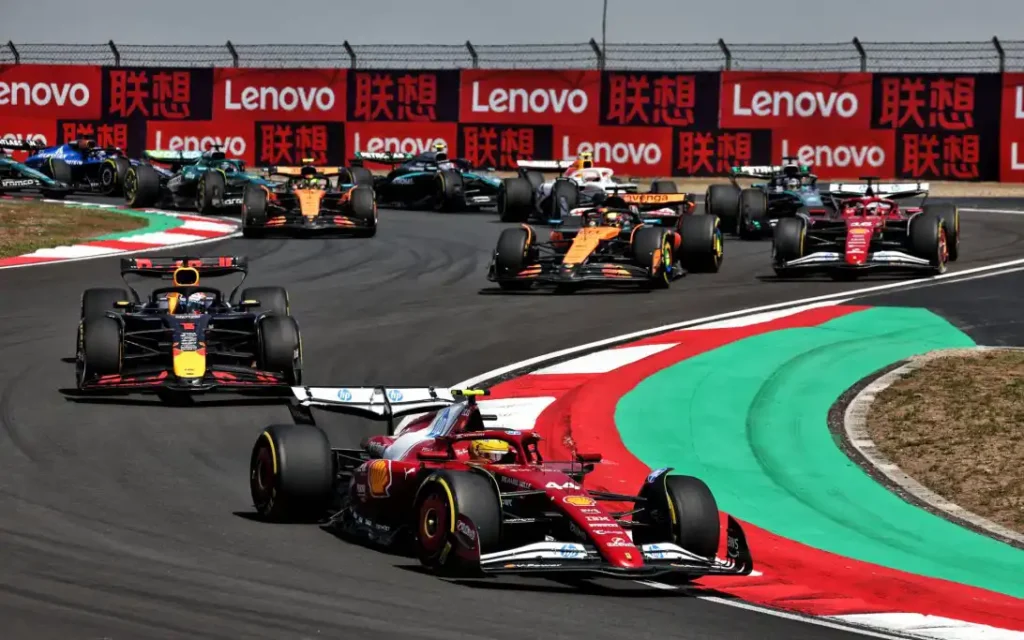
The 1970s saw the emergence of aerodynamic innovation — ground-effect cars created entirely new performance boundaries. The 1980s delivered the turbo era, with cars producing over 1,400 horsepower in qualifying trim. Furthermore, this decade introduced legendary rivalries — Senna versus Prost is still referenced as the template for all racing rivalries that followed.
The 1990s brought Michael Schumacher, who would define the next decade-plus of Formula 1 with seven World Championships. Meanwhile, the 2000s saw unprecedented team dominance by Ferrari under Schumacher and then Red Bull under Vettel. Subsequently, Lewis Hamilton arrived and broke almost every record the sport had, winning seven World Championships — equalling Schumacher — before moving to Ferrari in 2025. For more on Hamilton’s extraordinary career, see our Lewis Hamilton career feature.
Today’s Formula 1 bears little resemblance to the cars of 1950, but the core competition — the fastest drivers, the fastest machines, the fastest pit stops — remains exactly the same.
The Formula 1 Car: Engineering’s Most Extreme Machine
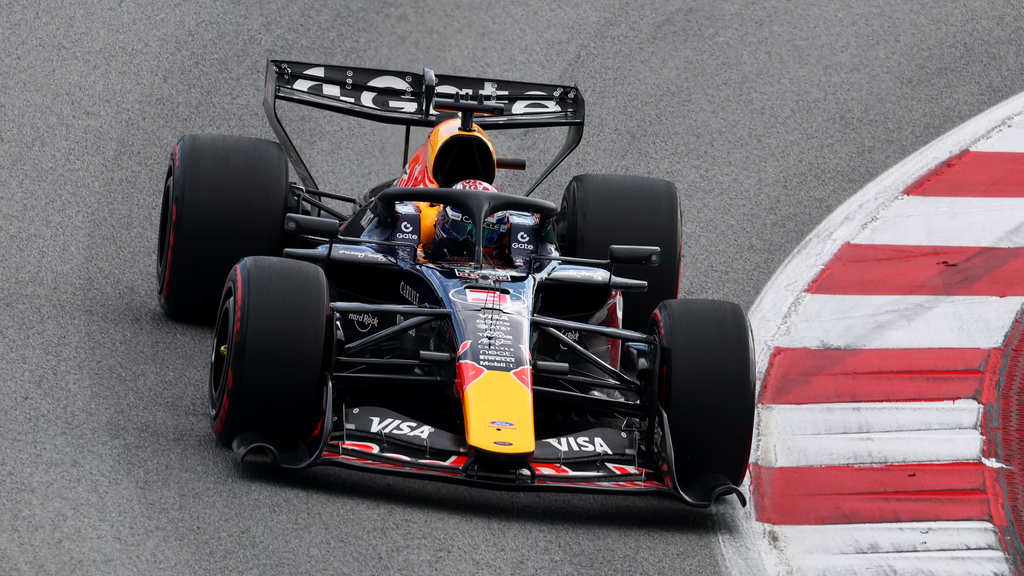
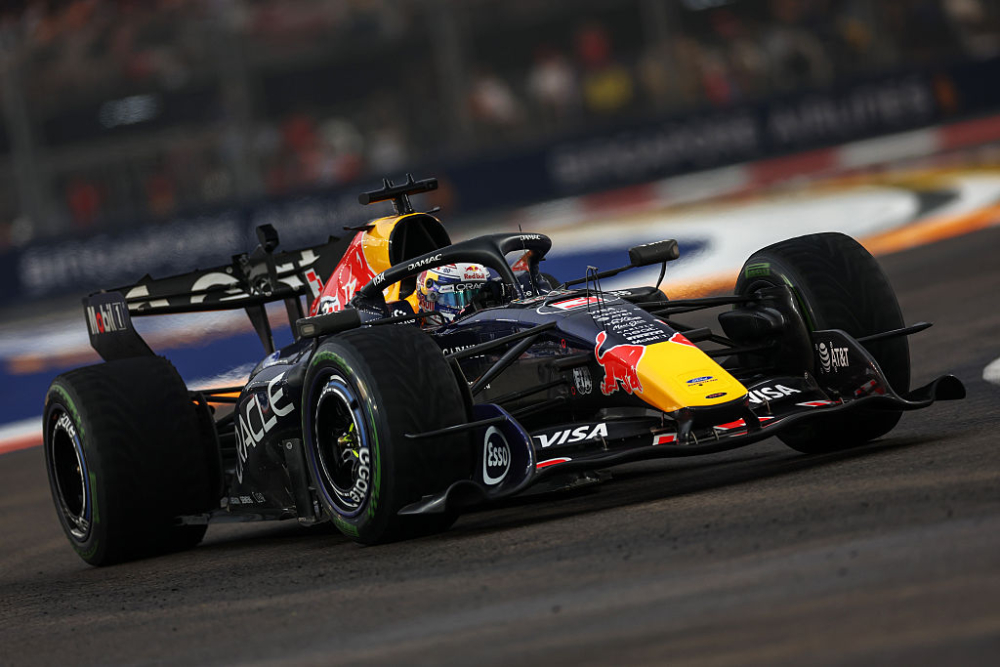
A Formula 1 car is the most technologically sophisticated land vehicle built for competition. It accelerates from 0 to 100 km/h in under 2.5 seconds, corners at forces exceeding 6G, and brakes from 300 km/h to standstill in about 2.9 seconds. Furthermore, it generates more aerodynamic downforce than its own weight — meaning at sufficiently high speed, it could theoretically drive upside down on a ceiling and stick.
Each car is a handcrafted, unique piece of engineering. Teams employ hundreds of aerodynamicists, engineers, and designers. Consequently, a complete 2026 F1 car costs approximately $12–15 million to construct, with the power unit alone representing a significant portion of that total. For a detailed breakdown, see our how much does an F1 car cost explainer.
🔴 Power Unit
The 2026 F1 power unit is a 1.6-litre turbocharged V6 hybrid producing roughly 1,000 hp total — split approximately 50/50 between the internal combustion engine and the electrical Motor Generator Units (MGU-K). The MGU-H was removed from 2026 regulations. Additionally, all cars run on 100% sustainable fuel as of 2026. For the full breakdown, read our ERS in F1 explainer.
🔵 Aerodynamics
F1 cars generate downforce through an intricate system of wings, diffusers, floor elements, and body surfaces. Moreover, the 2022 regulation overhaul switched cars to ground-effect aerodynamics, allowing them to follow each other more closely. The cars also feature DRS — Drag Reduction System — which opens a slot in the rear wing to reduce drag and increase speed on straights. See our what is DRS in F1 explainer.
🔴 Chassis & Safety
The survival cell (monocoque) is constructed from carbon fibre, capable of withstanding enormous impact forces. Furthermore, the Halo — a titanium structure around the cockpit — has saved multiple drivers’ lives since its introduction in 2018. Every car also carries an ERS energy store, a complex tyre management system, and over 300 sensors transmitting live data to the team. Read more about the Halo in F1.
🔵 Tyres
Pirelli is the exclusive tyre supplier. Cars run on slick (no tread) tyres in dry conditions — compound types ranging from the hardest (C1) to the softest (C5). In wet conditions, teams switch to intermediate or wet tyres. Tyre strategy — when to change to fresher rubber — is one of the most important tactical decisions in any race. For more, see our prime and option tyre guide.
On the fastest circuits, F1 cars exceed 370 km/h (230 mph) on straights. At Monza — F1’s fastest circuit — drivers regularly break 360 km/h during practice. However, raw top speed is only part of the story. The ability to carry extraordinary speed through corners — sometimes exceeding 270 km/h at circuits like Silverstone’s Maggotts complex — is what truly separates F1 from all other forms of racing. For the full speed breakdown, see our how fast can an F1 car go guide.
Teams, Drivers and the Constructors’ Championship
Ten constructor teams compete in Formula 1, each fielding exactly two cars and two drivers. The teams — called constructors — design and build their own chassis. However, most buy their power units from one of the four engine manufacturers currently supplying the grid. Furthermore, each team competes not just for the Drivers’ Championship (won by the individual driver) but also for the Constructors’ Championship (won by the team with the most combined driver points).
The Constructors’ Championship carries enormous commercial significance. The prize money distributed at season’s end is tied directly to the constructor standings, with higher-placed teams receiving substantially more funds. Consequently, team bosses often make difficult strategic calls that prioritise the team’s points over an individual driver’s race result.
For a complete breakdown of all 2026 teams, driver lineups and car numbers, see our F1 teams list 2026 and our F1 2026 drivers guide. For a deep dive into the most successful team in championship history, read our Red Bull Racing team profile. Additionally, our best F1 drivers of all time feature covers the sport’s greatest champions in detail.
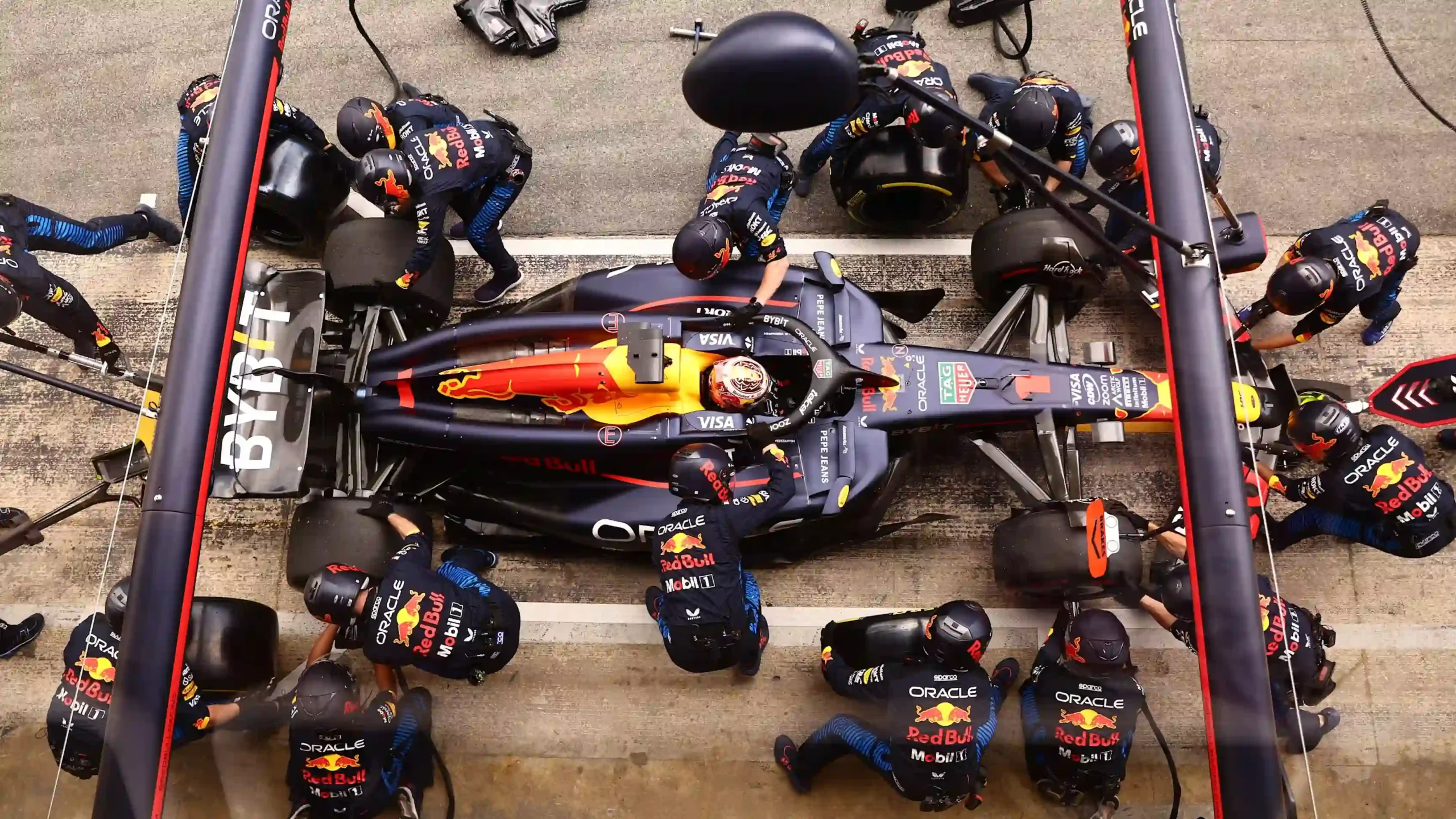
F1 drivers are among the most physically and mentally demanding athletes in professional sport. They endure sustained G-forces of 4–6G through corners, cockpit temperatures exceeding 50°C, and must maintain precise focus for up to two hours while managing tyre degradation, fuel loads, pit stop timing, and radio communications with their engineer. Furthermore, the physical fitness demands — particularly in neck and core strength — require year-round specialist training.
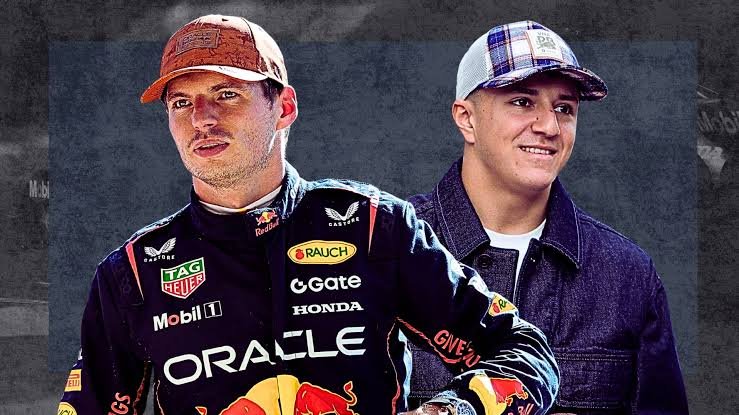
The most successful drivers in F1 history include Michael Schumacher (7 titles, 91 wins), Lewis Hamilton (7 titles, 103 wins), and Max Verstappen, who won three consecutive championships from 2021 to 2023. To learn more about how Hamilton and Verstappen compare, our feature Hamilton vs Verstappen career comparison goes deep into both legacies.
How a Formula 1 Race Weekend Works
A Formula 1 race weekend runs across three days — Thursday or Friday through Sunday — and follows a structured sequence of sessions that build from practice to the main race. Moreover, some events now include a Sprint Race format on Saturday, which adds an additional short race before the main Grand Prix. Here is exactly how a standard weekend unfolds.
| Session | Duration | What Happens |
|---|---|---|
| Free Practice 1 (FP1) | 60 min | Teams set up the car, collect data, run through tyre compounds |
| Free Practice 2 (FP2) | 60 min | Race simulation runs, fuel mapping, aero fine-tuning |
| Free Practice 3 (FP3) | 60 min | Final prep before qualifying — short runs, setup tweaks |
| Qualifying (Q1-Q2-Q3) | 60 min | Three-phase knockout session to determine the starting grid |
| 🏁 Grand Prix (Race) | ~2 hours | Minimum 305 km or two hours (whichever comes first) |
How Does F1 Qualifying Work?
Qualifying is a three-phase knockout session. In Q1 (18 minutes), all 20 cars attempt their fastest laps and the five slowest are eliminated — they start from 16th to 20th. In Q2 (15 minutes), the remaining 15 cars compete and the five slowest are eliminated, starting 11th to 15th. Finally, Q3 (12 minutes) determines the top 10 starting positions. The fastest lap in Q3 earns pole position. For a full explainer, see our F1 qualifying explained guide and our how racing drivers qualify overview.
Pole position is the most coveted single-lap achievement in motorsport. It means you start the race first, from the cleanest racing line, with no traffic ahead of you.
What Happens During a Race?
The Grand Prix itself is the race. Cars line up on the grid in the order determined by qualifying. After a formation lap, the starting lights illuminate in sequence — five lights on, then off — and the race begins simultaneously for all cars. Each car must make at least one compulsory pit stop during the race and use at least two different tyre compounds in dry conditions.
Pit stops — where mechanics change all four tyres in under 2.5 seconds — are one of the most spectacular moments in any race. Moreover, the timing of pit stops is where race strategy plays out most visibly. Teams use the undercut (pitting before a rival to gain track position through faster lap times on fresh tyres) or the overcut (staying out longer to clear traffic). For the full strategy breakdown, see our undercut and overcut in F1 guide and our pit stops explained feature.
Safety Car periods, Virtual Safety Cars, and red flags can all affect the race. When a Safety Car is deployed, cars must slow to a prescribed speed. Consequently, teams often use these windows for free pit stops, since the time lost is much less than under normal racing conditions. For more on how these procedures work, see our safety car in racing explainer.
The Formula 1 Points System Explained
Points are awarded to the top 10 finishers in every Grand Prix. The winner collects 25 points. An additional bonus point is awarded for the fastest lap, but only if the driver setting it finishes in the top 10. Consequently, every single position on the final lap of a race can have championship significance.
| Finish | Position | Points |
|---|---|---|
| 🥇 | 1st Place (Winner) | 25 points |
| 🥈 | 2nd Place | 18 points |
| 🥉 | 3rd Place | 15 points |
| 4 | 4th Place | 12 points |
| 5 | 5th Place | 10 points |
| 6 | 6th Place | 8 points |
| 7 | 7th Place | 6 points |
| 8 | 8th Place | 4 points |
| 9 | 9th Place | 2 points |
| 10 | 10th Place | 1 point |
| + | Fastest Lap (top 10 only) | 1 bonus point |
Points accumulate over the entire season. The driver with the most points at the end of the final race wins the Drivers’ Championship. Simultaneously, the team with the highest combined total of both their drivers’ points wins the Constructors’ Championship. Furthermore, Sprint Races — short, approximately 100km races on Saturday at selected events — award a smaller points allocation (8 down to 1 for the top 8 finishers) and add an extra dimension of championship tension at those events. For the complete points system breakdown, see our dedicated F1 points system explained guide. And for up-to-date 2026 standings, our live F1 championship standings page is updated after every race.
Formula 1 Technology: Where Racing Meets the Future
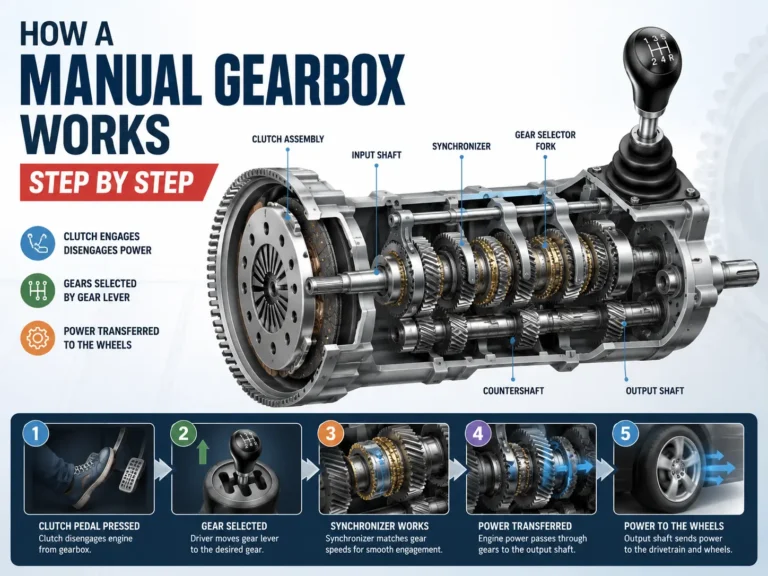
Formula 1 has always served as a technology laboratory for the automotive industry. Innovations that first appeared on F1 cars — semi-automatic gearboxes, carbon fibre construction, traction control, advanced aerodynamics — have subsequently found their way into road cars. Furthermore, the 2026 regulations introduced 100% sustainable fuel across the entire grid, accelerating real-world development of carbon-neutral fuels that could eventually power ordinary vehicles.
DRS — Drag Reduction System
DRS allows a driver to open a flap in the rear wing while on designated straights, reducing aerodynamic drag and increasing top speed by roughly 10–15 km/h. It can only be used when a driver is within one second of the car ahead at the DRS detection point. Consequently, it makes overtaking easier without making it automatic — the defending driver must still be outpaced for the position to change. For the complete technical explanation, see our what is DRS in F1 guide and our broader downforce explainer.
ERS — Energy Recovery System
The ERS harvests energy from two sources: braking (via the MGU-K) and heat from the turbocharger (via the MGU-H, which was removed for 2026). The harvested electrical energy is stored in a battery and deployed to give the driver an additional power boost — up to 120kW — at strategic moments during the lap. Moreover, in 2026, the electrical component now contributes approximately 50% of total power output, making it fundamentally important to both lap time and race strategy. Our ERS in F1 explained guide covers the full system.
Every F1 car transmits over 150,000 data points per second to the factory and trackside engineers. Teams monitor hundreds of sensor readings simultaneously — engine temperatures, tyre pressures, aerodynamic loads, fuel burn rates, driver inputs. As a result, teams often know a mechanical problem is developing before the driver feels it. For more on how race timing and live data works, see our race timing explained guide. The official technical regulations are also published by the FIA on their official website.
Formula 1 vs IndyCar vs NASCAR vs Formula E
Formula 1 often gets compared to other top-tier motorsport series. However, the differences are significant. Each series represents a distinct philosophy of what racing should be. Here is a direct comparison.
| Series | Car Type | Top Speed | Key Distinction |
|---|---|---|---|
| Formula 1 | Open-wheel · Custom chassis | ~370 km/h | Global · Maximum tech freedom · Both road and street circuits |
| IndyCar | Open-wheel · Spec chassis | ~380 km/h (ovals) | USA-focused · Oval + road courses · More uniform equipment |
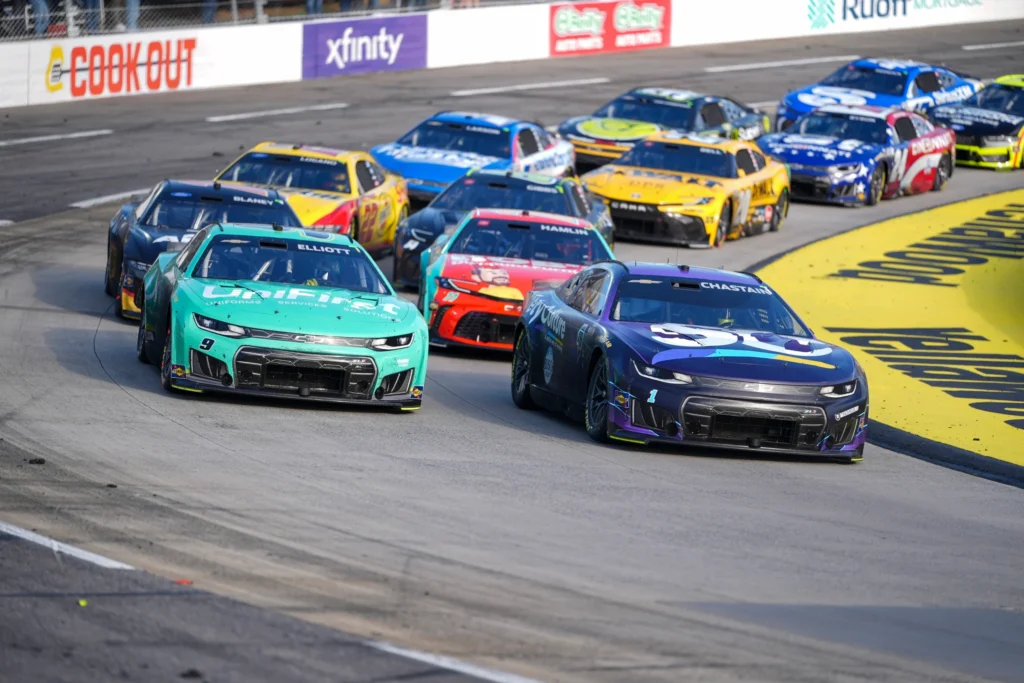
| NASCAR | Stock car · Spec series | ~320 km/h | USA-based · Oval-dominated · Drafting and contact racing |
| Formula E | Open-wheel · Full electric | ~280 km/h | City street circuits only · 100% electric · Attack Mode |
The primary distinction that separates Formula 1 from everything else is its combination of global scope, technical freedom, and outright performance. IndyCar cars are actually faster on oval tracks due to slipstreaming effects, but F1 cars are faster on road circuits. Furthermore, F1’s technical freedom — where teams design their own cars from scratch within the regulations — creates a level of engineering variation and innovation found nowhere else. For a detailed head-to-head, see our IndyCar vs F1 comparison and our look at Formula E vs Formula 1 speeds.
How to Start Watching Formula 1
Formula 1 is available on multiple platforms worldwide. The broadcast arrangements vary by country, but here are the main options for 2026.
- UK: Sky Sports F1 carries all live sessions. Channel 4 airs highlights after each race.
- USA: Apple TV+ now holds live broadcast rights for the 2026 season for all sessions and races.
- Global: F1 TV Pro is the official streaming service, offering live coverage in most countries, plus onboard cameras, live team radio, and historical archives.
For the complete broadcast guide by country, plus information on how to stream free or legally, see our F1 live stream guide and our detailed where to watch Formula 1 guide.
Which Race to Watch First?
If you are completely new, start with the Monaco Grand Prix. It is the most famous race in the world — a street circuit through the principality of Monaco that has barely changed since the 1950s. The streets are impossibly narrow, overtaking is nearly impossible, and qualifying is everything. Consequently, strategy, precision and drama are guaranteed in a way no other race delivers. For background, see our what is a Grand Prix explainer.
The Belgian Grand Prix at Spa-Francorchamps is a second essential choice — a full-length traditional circuit with a legendary section called Eau Rouge/Raidillon that has produced some of the most dramatic moments in motorsport history. Additionally, the British Grand Prix at Silverstone — home of the very first F1 World Championship race in 1950 — delivers reliably spectacular racing and passionate crowds. For the 2026 race calendar and sessions times, see our full F1 2026 schedule.
Authoritative Sources & Verified External Links
What Is Formula 1 — Frequently Asked Questions
Ready to start watching?
Formula 1 rewards time and attention like few other sports. The more you understand — the strategy calls, the team dynamics, the tyre degradation curves, the history between drivers who have raced each other since karting — the more gripping every single race becomes. A race that looks like a processional victory on the surface often conceals three or four different stories playing out simultaneously beneath it.
Start with qualifying on Saturday. Understand where everyone starts and why. Then follow Sunday’s race lap by lap. Within two or three weekends, you will find yourself tracking the championship battle, anticipating the pit stop windows, and arguing about whether your favourite driver was robbed of a victory by a strategic call you disagree with. That is the point at which Formula 1 has you — and it very rarely lets go.