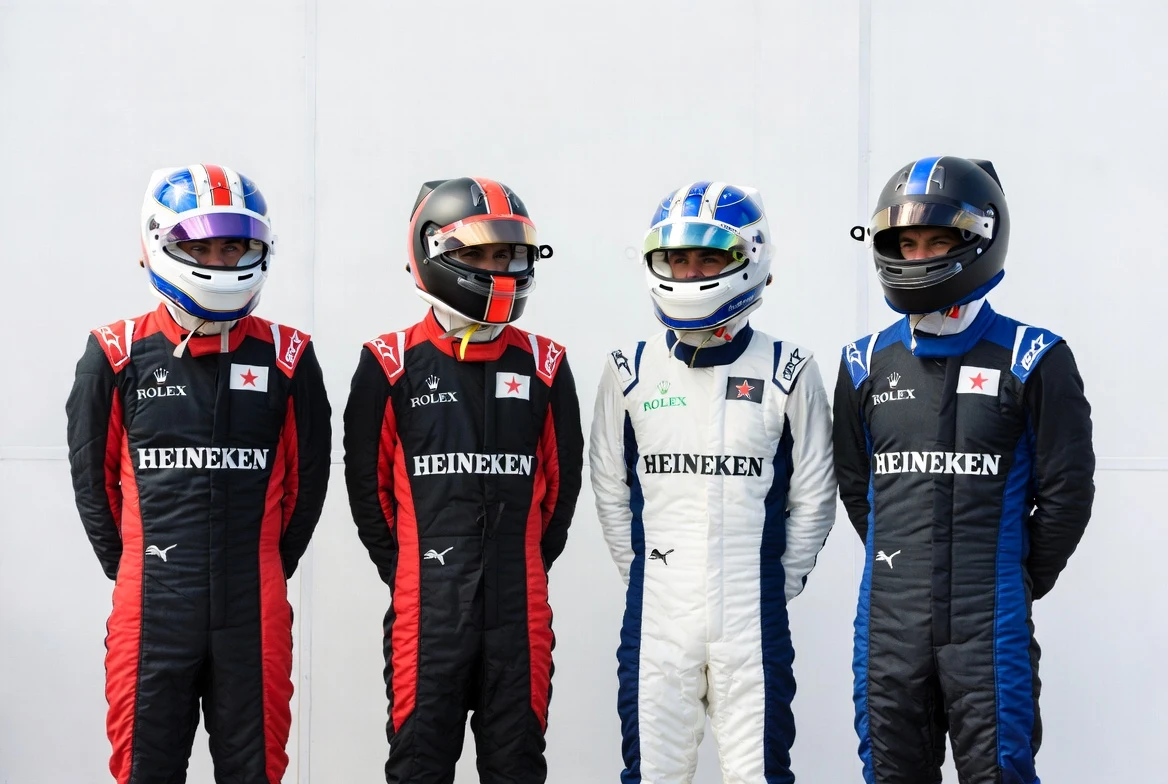
Formula 1 2026 Drivers:
Full Lineup, Teams & Predictions
Every confirmed seat across all 11 teams for F1’s biggest regulation reset in a generation — plus Cadillac’s historic debut and the championship predictions that matter heading into March.
F1 2026 Drivers: Full Lineup & Predictions
Every confirmed seat across all 11 teams, plus Cadillac’s historic debut season.
Formula 1’s 2026 grid is complete, and it arrives alongside the most sweeping technical reset the sport has seen in over a decade. New power unit rules, active aerodynamics, and a brand-new American manufacturer have reshaped the paddock. However, the driver market settled relatively quietly compared to previous silly seasons, with most major names staying put.
This guide breaks down every confirmed seat across all 11 teams, the storylines that matter most heading into the season, and where the championship picture realistically stands once the lights go out in Australia.
The Complete 2026 Formula 1 Driver Lineup
Every seat for the 2026 season is now locked in. Red Bull and Racing Bulls were the final dominoes to fall, confirming their pairings only after a season-long shuffle that ended Yuki Tsunoda’s run as a full-time race driver. Below is the full team-by-team breakdown.
| Team | Driver 1 | Driver 2 | Status |
|---|---|---|---|
| McLaren | Lando Norris | Oscar Piastri | Unchanged |
| Ferrari | Lewis Hamilton | Charles Leclerc | Unchanged |
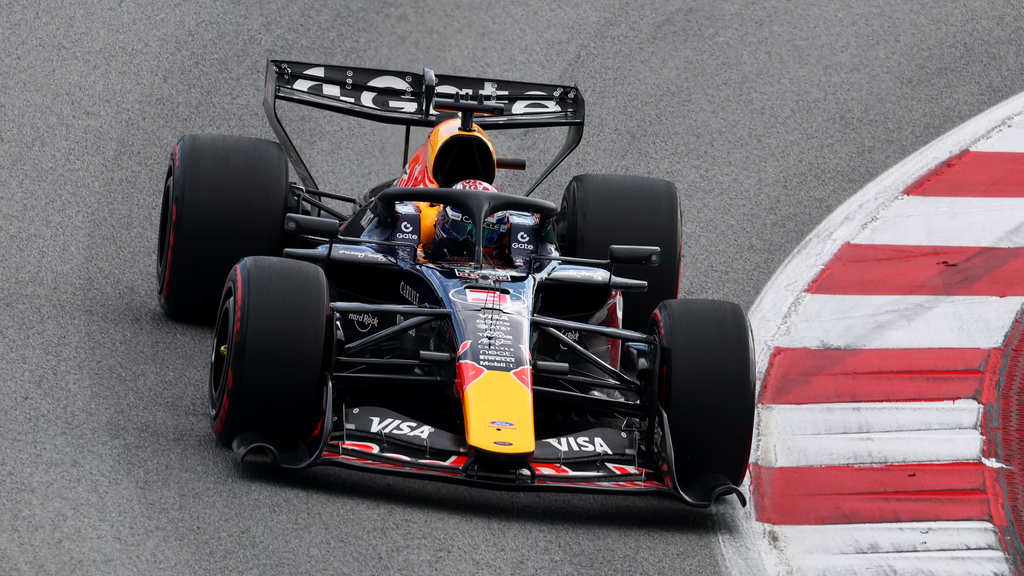
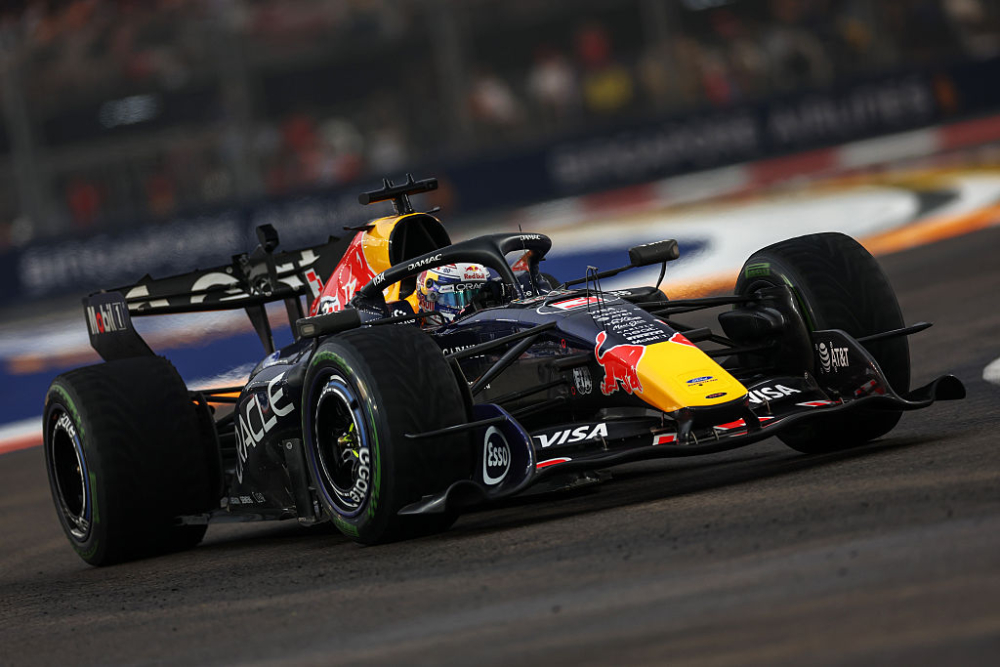
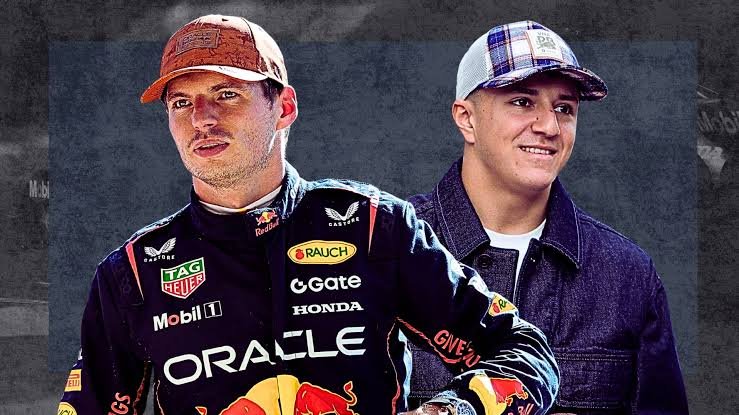
| Red Bull Racing | Max Verstappen | Isack Hadjar | New Pairing |
| Mercedes | George Russell | Kimi Antonelli | Unchanged |
| Aston Martin | Fernando Alonso | Lance Stroll | Unchanged |
| Williams | Alex Albon | Carlos Sainz | Unchanged |
| Audi (Sauber) | Nico Hülkenberg | Gabriel Bortoleto | Unchanged |
| Alpine | Pierre Gasly | Franco Colapinto | New Pairing |
| Haas | Esteban Ocon | Oliver Bearman | Unchanged |
| Racing Bulls | Liam Lawson | Arvid Lindblad | New Pairing |
| Cadillac | Sergio Pérez | Valtteri Bottas | New Team |
Yuki Tsunoda loses his full-time race seat after five seasons in F1, moving into a reserve and test role across the Red Bull programme. Isack Hadjar takes his place alongside Max Verstappen, becoming the Dutchman’s sixth different teammate since Daniel Ricciardo left in 2018. For more on Verstappen’s career timeline, see when Max Verstappen joined F1.
The Title Contenders: McLaren, Ferrari, Red Bull, Mercedes
McLaren — Lando Norris & Oscar Piastri
Norris arrives as reigning World Champion after finally converting years of front-running pace into a title in 2025. Therefore, McLaren walks into the new regulatory era as the team every rival is benchmarking against. Piastri, meanwhile, led the championship for much of last season before fading late, and he has unfinished business heading into 2026.
The pairing remains intact and contractually committed, which matters enormously given how disruptive the new technical rules could be to the competitive order. McLaren’s car concept philosophy has been the class of the field for two straight seasons, but a full regulation reset often resets the pecking order too. Whether their aerodynamic and power unit department can carry that advantage into the new ruleset is the central question of the team’s season.
Ferrari — Lewis Hamilton & Charles Leclerc
Hamilton’s first season in red carried enormous weight, and the move finally delivered when he won his first race for the Scuderia. Moreover, that victory came alongside an all-British podium, the first the sport had seen since 1968 — a result that instantly justified the gamble both parties took on the switch. His second season now arrives with the new rules essentially levelling the playing field for engine and chassis concepts simultaneously.
Leclerc’s long-term commitment to Ferrari through at least 2029 gives the team rare stability at a moment when nearly every rival outfit overhauled some part of its driver lineup or technical leadership. Consequently, Ferrari heads into 2026 with arguably the most experienced, highest-pedigree pairing on the entire grid. The question is whether the team can finally build a car worthy of both drivers simultaneously, something it has struggled with across recent seasons.
Red Bull Racing — Max Verstappen & Isack Hadjar
Verstappen’s seat next to him has become, in Christian Horner’s words, the hardest in Formula 1 — and Hadjar is now the sixth driver to occupy it since 2018. The Frenchman earned the promotion off the back of a genuinely strong rookie campaign, including a maiden podium at the Dutch Grand Prix and the measure of his Racing Bulls teammate in qualifying throughout the year.
Red Bull also enters 2026 with an entirely new power unit relationship, switching to its own Red Bull Ford Powertrains operation after splitting from Honda. That is arguably a bigger variable for the team’s competitiveness than the driver change itself. Tsunoda, meanwhile, moves into a reserve and test role after underperforming relative to Verstappen across his five-year F1 career — a career that began at the team’s junior squad and ends, for now, without a 2026 race seat.
Mercedes — George Russell & Kimi Antonelli
Mercedes took longer than most teams to formalise its 2026 lineup, with contract paperwork delaying the announcement until October. Team principal Toto Wolff was clear throughout that retaining both drivers was always the plan, however, and the confirmed pairing reflects genuine confidence in what Antonelli showed during his rookie year — three podium finishes that suggested he can carry serious weight for the team going forward.
Russell, for his part, walks into the new regulations as one of the bookmakers’ favourites for the title. With the engine and chassis rules resetting simultaneously, Mercedes’ deep power unit knowledge could translate into an early-season advantage if the new hybrid architecture rewards manufacturers with the strongest electrical systems integration. For background on how F1 engine regulations work, see our how car engines work explainer and the comparison piece on V6 vs V8 vs V10 vs V12 vs V16 engine architectures.
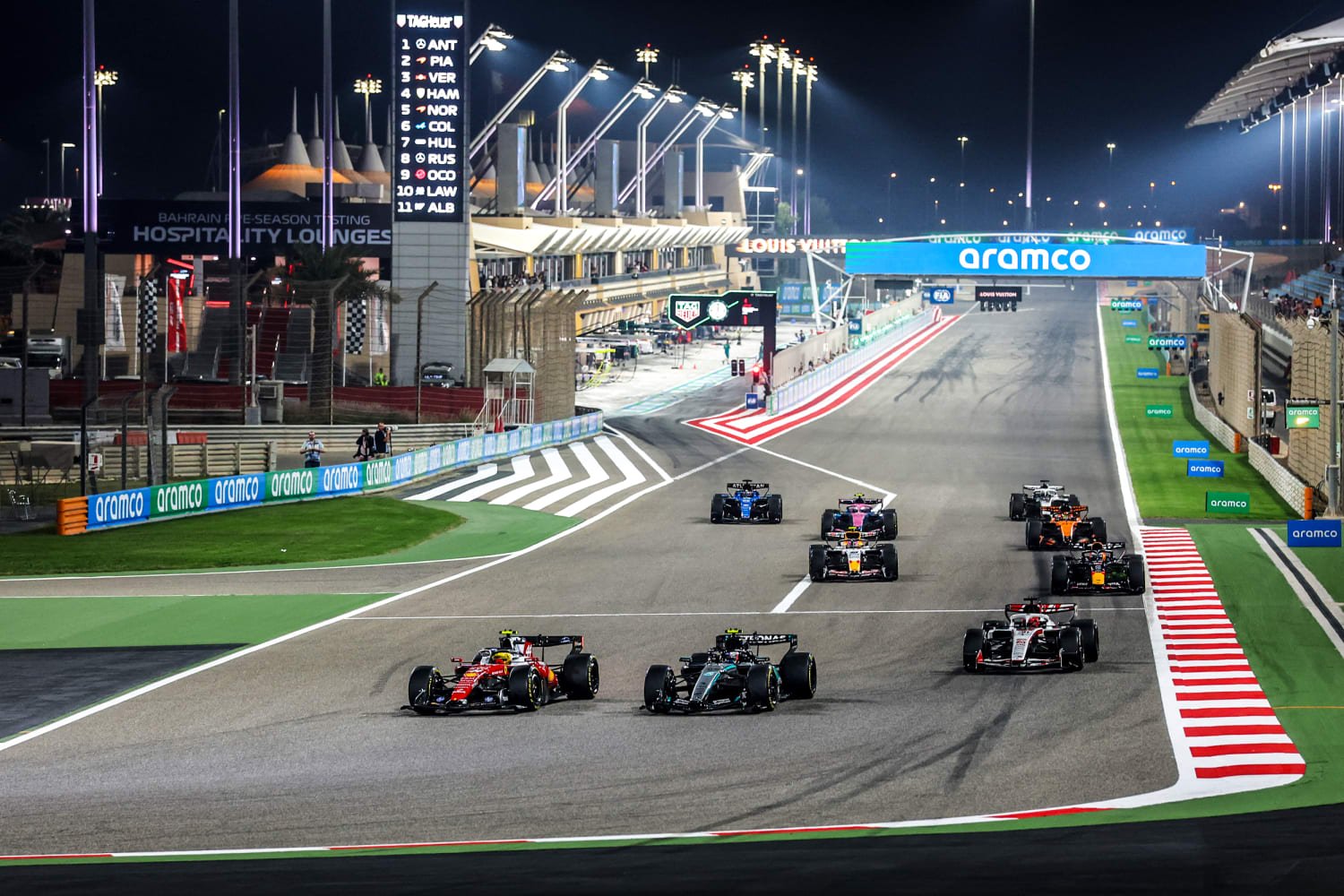
The Midfield Battle: Aston Martin, Williams, Audi, Alpine, Haas, Racing Bulls
Aston Martin — Fernando Alonso & Lance Stroll
Aston Martin enters 2026 carrying heavier expectations than perhaps any midfield team on the grid. Adrian Newey, the most decorated car designer in modern Formula 1 history, takes full ownership of a car concept for the first time since joining the team. Furthermore, the squad switches to Honda power for 2026, adding another major variable to an already significant year of change.
Alonso, now the most experienced driver on the entire grid, returns for a fourth season hoping his persistence finally pays off with machinery worthy of his ability. Stroll continues for a fifth consecutive season alongside him, giving the team continuity precisely when the technical side is in maximum flux.
Williams — Alex Albon & Carlos Sainz
Williams retains its 2025 pairing, with both drivers under multi-year contracts that gave the team rare stability during a year when nearly every rival was negotiating new deals. Albon has become the clear technical reference point inside the team, consistently extracting more from the car than its raw competitive position would suggest. Sainz, meanwhile, brings race-winning Ferrari pedigree and a mentoring presence that Williams has lacked in recent seasons.
Audi (Sauber) — Nico Hülkenberg & Gabriel Bortoleto
Audi’s full manufacturer entry retains the existing Sauber driver pairing, ensuring continuity through a transition that otherwise touches almost every part of the operation — new ownership, new factory investment, and a completely new power unit programme. Hülkenberg provides veteran ballast for a team in major transition, while Bortoleto continues developing after a rookie campaign that showed clear promise.
Alpine — Pierre Gasly & Franco Colapinto
Alpine’s 2026 lineup was the last midfield seat to be finalised, with Colapinto securing the full-time drive after beating Paul Aron to the seat. The Argentine’s path here was unusual: he initially stepped in mid-2025 to replace Jack Doohan, used that opportunity to establish himself, and ultimately earned the permanent contract on merit rather than simply inheriting it.
Gasly leads the team as its senior driver, and the pairing gives Alpine a blend of established race craft and a young driver with something to prove. The team’s switch to customer Mercedes power for 2026, after years running its own Renault-badged engines, is arguably as significant a story as the driver lineup itself.
Haas — Esteban Ocon & Oliver Bearman
Haas retains its full 2025 driver pairing, giving the American-owned team continuity as it adapts to the new regulations. Ocon brings experience accumulated across stints with multiple front-running teams, while Bearman, who impressed during his initial substitute outings before earning a full-time seat, continues to develop into one of the grid’s more highly regarded younger drivers.
Racing Bulls — Liam Lawson & Arvid Lindblad
Racing Bulls continues its role as Red Bull’s primary talent pipeline. Lawson retains his seat after a turbulent 2025 that saw him bounced between the senior team and the junior outfit within the same season, while Lindblad steps up from Formula 2 as the only true rookie on the entire 2026 grid. As a result, the sister team carries unusually high developmental stakes this year — both drivers are essentially auditioning for future opportunities at the senior team.
A full regulation reset historically scrambles competitive order more than any other type of rule change. Teams that nail the new aerodynamic and power unit concepts early can leapfrog established front-runners, while teams that misjudge the new rules can fall from contender to backmarker within a single season. For context on how regulation changes have shaken up grids historically, our what is the FIA explainer covers how technical rules get set.
Cadillac’s Historic F1 Debut: Pérez & Bottas
Cadillac’s arrival on the 2026 grid marks the first American manufacturer entry into Formula 1’s modern era, and the team made its intentions clear immediately by assembling a pairing built entirely around experience rather than speculative potential. Pérez returns to a race seat after departing Red Bull, brining genuine championship pedigree and a track record of race wins to a brand-new operation that needs every ounce of credibility it can get in its first season.
Bottas joins him in a similarly experienced role, rejoining the grid after time away from a full-time race seat. Both drivers understand exactly what a brand-new operation needs in its debut year: steady feedback, realistic expectations, and the patience to build a competitive package across multiple seasons rather than expecting instant results. Neither driver carries the kind of ego that derails a young team’s development programme, which appears to have been the deciding factor in Cadillac’s recruitment approach.
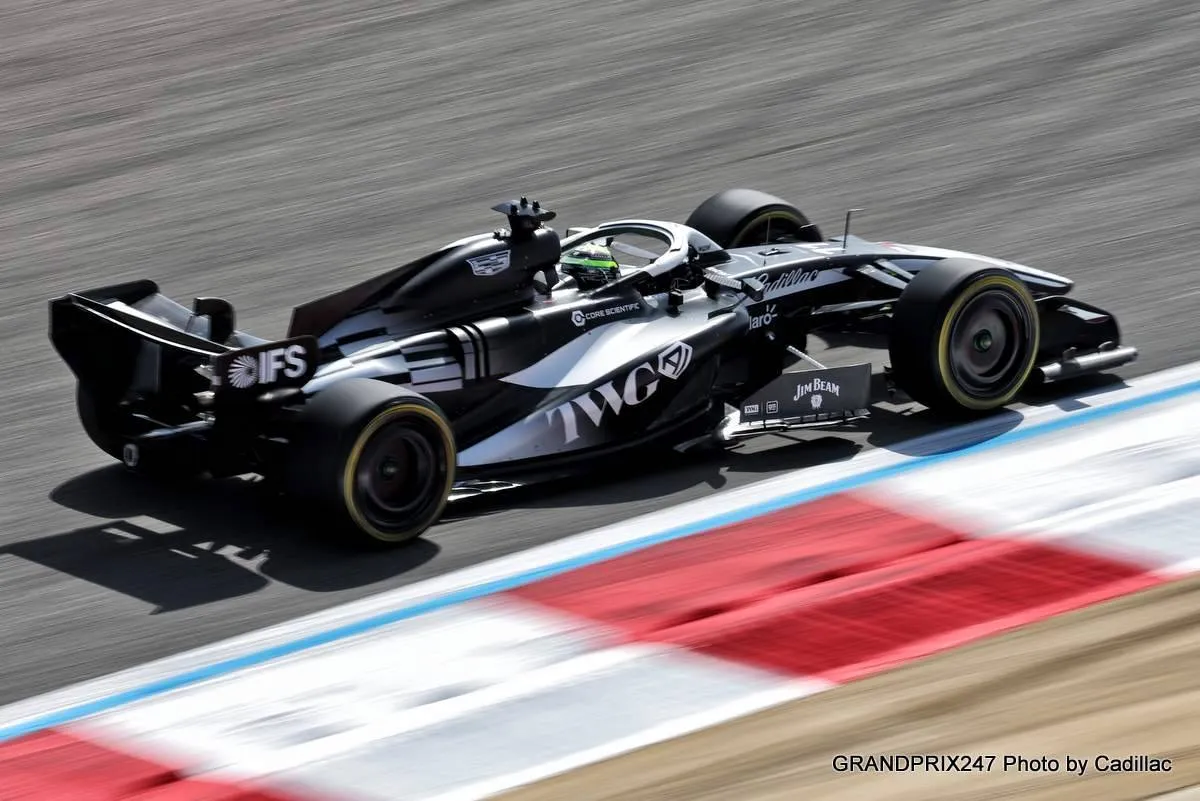
Building an entirely new Formula 1 operation from scratch is an enormous undertaking — factory infrastructure, wind tunnel time, simulator development, and recruiting hundreds of specialist engineers all happen simultaneously under intense time pressure. Therefore, expectations for Cadillac’s competitive pace in year one should remain modest regardless of how much investment the operation carries. The team’s long-term ambitions, however, are considerably larger than a single debut season suggests, with American manufacturer backing bringing resources that few new entrants in F1 history have matched.
Rookie Watch: Arvid Lindblad’s Fast-Tracked Debut
Arvid Lindblad stands alone as the single rookie driver across the entire 2026 field — every other seat change involves a driver who has already raced in Formula 1. That makes his story this season’s most closely watched development narrative, particularly given how young he is stepping into the sport.
The 18-year-old, who holds British and Swedish nationality with Indian heritage through his mother, earned his promotion from Formula 2 off the back of a race-winning campaign. Moreover, Red Bull’s junior programme has a strong recent record of fast-tracking talent directly into competitive seats, and Lindblad’s promotion follows that exact pattern. He partners Lawson at Racing Bulls, inheriting the seat vacated by Hadjar’s promotion to the senior team.
Lindblad’s situation is unusual even by F1’s compressed development standards — an 18-year-old jumping straight from F2 into a regulation-reset season, learning a brand-new car architecture at the exact same time as every veteran on the grid. There’s no easy comparison point because nobody else is starting from zero in quite the same way this year.
What makes his debut particularly demanding is the timing. Every driver on the 2026 grid is learning new aerodynamic philosophy, new power unit characteristics, and new driving techniques simultaneously. Consequently, Lindblad doesn’t have the usual rookie disadvantage of facing experienced drivers who already understand the car — everyone is starting from a similar knowledge baseline, which could meaningfully narrow the typical rookie performance gap.
2026 Championship Predictions: Who Has the Edge?
Predicting outcomes under a full regulation reset is genuinely difficult, since the competitive order from 2025 carries far less predictive weight than usual. However, a few factors point toward likely frontrunners heading into the season opener in Australia.
Norris arrives as defending champion with a car concept that dominated the previous regulation cycle, but McLaren must prove that advantage transfers to fundamentally different aerodynamic rules. Mercedes’ power unit pedigree makes Russell and Antonelli a genuine threat if the new hybrid architecture rewards electrical systems integration the way many engineers expect. Meanwhile, Ferrari’s Hamilton-Leclerc pairing offers the most experienced one-two punch on the grid, assuming the team finally delivers a chassis that matches their combined ability.
Red Bull’s switch to its own Ford-badged power unit is the single biggest unknown of any front-running team. Verstappen remains capable of extracting championship-level results from almost any reasonably competitive package, but Hadjar’s adaptation curve alongside him adds genuine uncertainty to the team’s points-scoring consistency across the full season.
Expect a genuinely unpredictable opening third of the season as every team interprets the new rules differently. The first four to five races will likely reshuffle the competitive order more than any preseason testing data suggests. By the European leg of the season, the true pecking order should be clearer. For live race-by-race coverage as the season unfolds, see our when is the next F1 race page and the Formula 1 standings hub.
Frequently Asked Questions
Why the 2026 grid matters beyond the names on the seats
What makes this driver market genuinely significant isn’t the volume of changes — by historical standards, relatively few seats actually moved. Instead, it’s the timing. Every driver, from four-time champion Verstappen to debut rookie Lindblad, walks into the same fundamentally new technical rulebook simultaneously. Experience advantages that normally separate veterans from newcomers shrink considerably when nobody has raced the new cars competitively before.
Cadillac’s arrival adds a layer most regulation resets don’t have: an entirely new constructor building infrastructure from zero while every established rival reworks existing systems. Therefore, 2026 carries two separate stories worth following closely — the championship battle among the established order, and how quickly an eleventh team can find its footing in the most disruptive rules cycle Formula 1 has introduced in years.
Bookmark our 2026 F1 schedule and live standings tracker to follow how this story unfolds from Australia onward.