V6 vs V8 vs V10 vs V12 vs V16:
The Complete Performance Breakdown
Every cylinder count explained — power, torque, top speed, fuel economy, sound, and real-world character. The nerdy details that actually matter when choosing an engine.

V6 vs V8 vs V10 vs V12 vs V16: Complete Performance Breakdown
Power, torque, speed, fuel economy, sound — every metric that separates these engine types, explained in plain terms.
Every car review throws around the same shorthand — “twin-turbo V8 with 650 horsepower” or “naturally aspirated V12 producing a glorious soundtrack.” Most of us know the basics: V8 means eight cylinders, V12 means twelve. But what do those numbers actually mean for how a car drives, performs, sounds, and costs you in fuel? That’s where it gets genuinely interesting.
This is a full performance comparison of V6, V8, V10, V12, and V16 engines — covering power, torque, displacement, acceleration, top speed, fuel economy, emissions, sound character, weight, and real-world cost. We’ve updated the original 2023 article with 2025–26 data points, new examples from the latest generation of high-performance cars, and a cleaner breakdown of where each engine type wins and where it loses. Whether you’re choosing a car, settling a debate, or just going deep on the engineering — this is where you get the full picture.
Quick Comparison — At a Glance
| Metric | V6 | V8 | V10 | V12 | V16 |
|---|---|---|---|---|---|
| Cylinders | 6 | 8 | 10 | 12 | 16 |
| Power (HP) | 172–485 | 495–797 | 500–645 | 563–830+ | 1,000+ |
| Torque (lb-ft) | 173–500 | 429–707 | 354–600 | 480–663 | 1,000+ |
| Displacement (L) | 2.0–4.0 | 4.0–6.2 | 5.0–8.4 | 5.0–6.75 | 13.6 |
| 0–60 mph (sec) | 2.9–7.5 | 2.0–3.8 | 2.7–4.9 | 2.7–5.1 | N/A |
| Top Speed (mph) | 107–176 | 172–211 | 153–205 | 155–221 | 232 |
| CO₂ Emissions (g/km) | 162–246 | 277–294 | 344–489 | 306–545 | N/A |
| Fuel Economy (mpg) | 18–23 | 15–19 | 12–15.9 | 11–17 | ~7.7 |
| RPM Range | 5800–7100 | 6000–7500 | 5600–8700 | 5500–8800 | ~5800 |
| Engine Weight (lbs) | 361–450 | 400–700 | 620–712 | 462–772 | N/A |
🔵 Blue = best in metric · 🟠 Orange = worst in metric · Data reflects 2025–26 production and limited-production vehicles. V16 figures based on Cadillac Sixteen concept and aftermarket builds.
The pattern is consistent: adding cylinders increases raw power, torque, and top speed — but also raises weight, emissions, fuel consumption, and cost. The V16 wins every performance metric that can be measured, but it disappeared from production years ago for exactly the reasons that table reveals. The real question isn’t which engine is most powerful — it’s which configuration best matches what you actually need the car to do.
To understand how a car engine works before diving deeper into the V-config specifics, our explainer covers the fundamentals from combustion to crankshaft. And if you want to understand the four-stroke cycle that all of these V engines share, see our guide to how a 4-stroke engine works.
Power & Torque: Where the Numbers Get Interesting
Horsepower and torque are the two numbers manufacturers lead with in every press release, and they’re both real but also easily misread. Power (HP) determines your top speed and high-rpm performance. Torque (lb-ft) is the pulling force — it’s what you feel at low speeds, what tows heavy loads, and what gives a car that physical sensation of being shoved back in the seat under acceleration. More cylinders typically deliver more of both, but the relationship is not linear once forced induction enters the picture.
Power (Horsepower) Comparison
Notice that the V8 outperforms the V10 in maximum power output on this chart. That’s not a mistake — it’s the turbocharger effect. The Dodge Challenger Hellcat Redeye’s supercharged 6.2-litre V8 produces 797 HP while most V10s — which are typically naturally aspirated — cap out around 640–645 HP. This is the central insight of modern engine design: forced induction can overcome the raw cylinder-count disadvantage. A well-engineered, twin-turbocharged V6 like the one in the Ford GT produces around 660 HP — more than most naturally aspirated V10s ever managed.
The same principle applies to torque. The Hellcat Redeye’s supercharger pushes torque to 707 lb-ft — well above what any production V12 delivers. Meanwhile, the V12 in the Ferrari 812 Competizione, being naturally aspirated, produces around 530 lb-ft. You get more torque from the V12 at higher revs with a singing soundtrack, but the supercharged V8 hits you harder at lower rpm. Neither is wrong — they’re just different tools.
The most significant development since 2023 has been the hybrid integration of V engines. Ferrari’s SF90 Stradale pairs a twin-turbo V8 with three electric motors for a combined 986 HP — approaching V16 territory from a V8 platform. Ferrari has also confirmed the V12 will continue in the Purosangue and 12Cilindri hybrids. Meanwhile, Lamborghini’s Urus Performante hybrid and the Revuelto supercar’s V12-hybrid system push V12 output past 1,000 HP when electric assist is included. The “more cylinders = more power” rule still holds for naturally aspirated engines, but hybrid V8s and V12s are now occupying the same stratosphere.
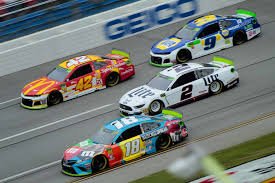
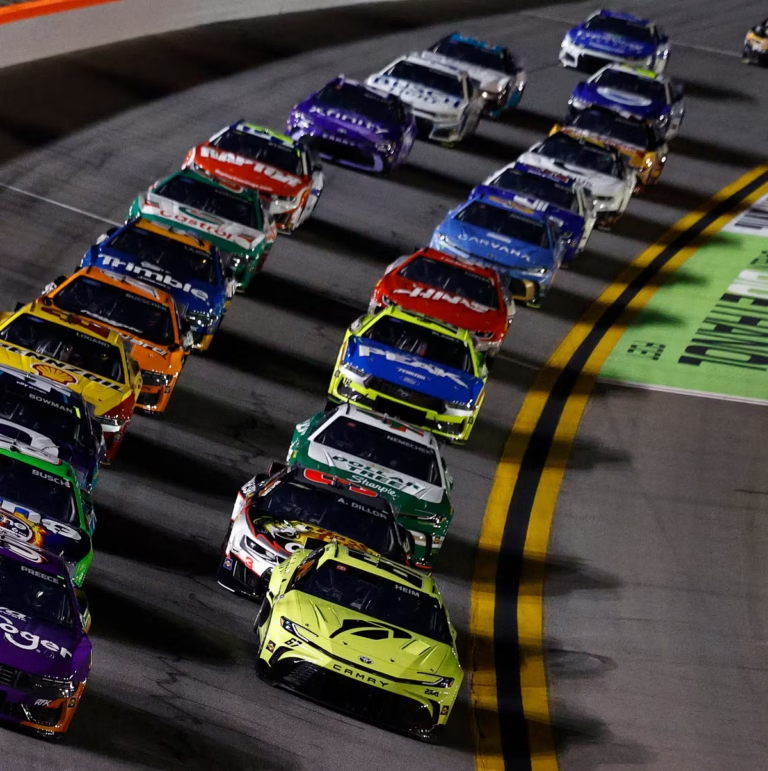
For context on what this looks like on a race circuit, see our breakdown of V engine performance in racing and the explainer on turbo vs naturally aspirated engines.
Torque Comparison
| Engine | Torque Range | Peak torque typical RPM | Best for |
|---|---|---|---|
| V6 | 173–500 lb-ft | 2,500–4,500 rpm | Daily driving, light towing |
| V8 | 429–707 lb-ft | 3,200–5,000 rpm | Heavy towing, drag racing, muscle cars |
| V10 | 354–600 lb-ft | 4,000–6,500 rpm | Sustained high-speed driving |
| V12 | 480–663 lb-ft | 4,500–7,000 rpm | Grand touring, luxury sports |
| V16 | 1,000+ lb-ft | ~3,000 rpm | Concept only — maximum everything |
HP = Torque × RPM ÷ 5,252. This formula is why high-revving naturally aspirated V10s and V12s can produce good power figures despite modest torque — they spin faster. V8s with forced induction produce massive torque at lower rpm, which feels more dramatic in everyday driving. V10s tend to reward you at the top of the rev range. Understanding this relationship explains why an F1 V6 turbo can produce over 1,000 HP from just 1.6 litres, while a 6.5-litre naturally aspirated V12 in the Ferrari 812 “only” produces around 820 HP — the smaller engine spins at extreme rpm with turbo pressure, the larger one breathes freely and naturally but is capped by physics.
Speed & Acceleration: 0–60 and Top Speed

0–60 mph Acceleration
This is the number everyone quotes and the one that most often surprises people. The V8 holds the advantage in 0–60 time over V10, V12, and most V6s. How? Because the V8 is the cylinder configuration that gets forced induction most commonly and most aggressively. The Dodge Challenger Hellcat reaches 60 mph in under 3.4 seconds. Meanwhile, the Lamborghini Huracán’s naturally aspirated V10 needs about 2.9 seconds — which is faster, but that’s the top-tier variant. The average production V10 sits around 4.5 seconds. The average supercharged or twin-turbo V8 beats 3.8 seconds comfortably.
| Engine | 0–60 Range | Notable Fast Example | Time |
|---|---|---|---|
| V6 | 2.9–7.5 sec | Ford GT (twin-turbo V6) | 3.1 sec |
| V8 | 2.0–3.8 sec | Dodge Challenger Hellcat Redeye | 3.4 sec |
| V10 | 2.7–4.9 sec | Lamborghini Huracán EVO | 2.9 sec |
| V12 | 2.7–5.1 sec | Ferrari 812 Competizione | 2.85 sec |
| V16 | N/A (concept) | Cadillac Sixteen (concept) | Est. sub 4.0 sec |
Top Speed
Top speed is where the V12 reasserts itself over the V8. The V12’s naturally aspirated configuration, combined with its ability to sustain high revs for longer without the thermal stress that turbocharged engines experience at sustained maximum output, gives it a top speed ceiling that the V8 typically can’t match. The Lamborghini Aventador S reached 221 mph. The Ferrari 812 GTS hits around 211 mph. Meanwhile, the fastest production V8s — the Dodge Viper ACR with its V10 notwithstanding — typically peak around 200–205 mph before aerodynamic and thermal limits intervene.
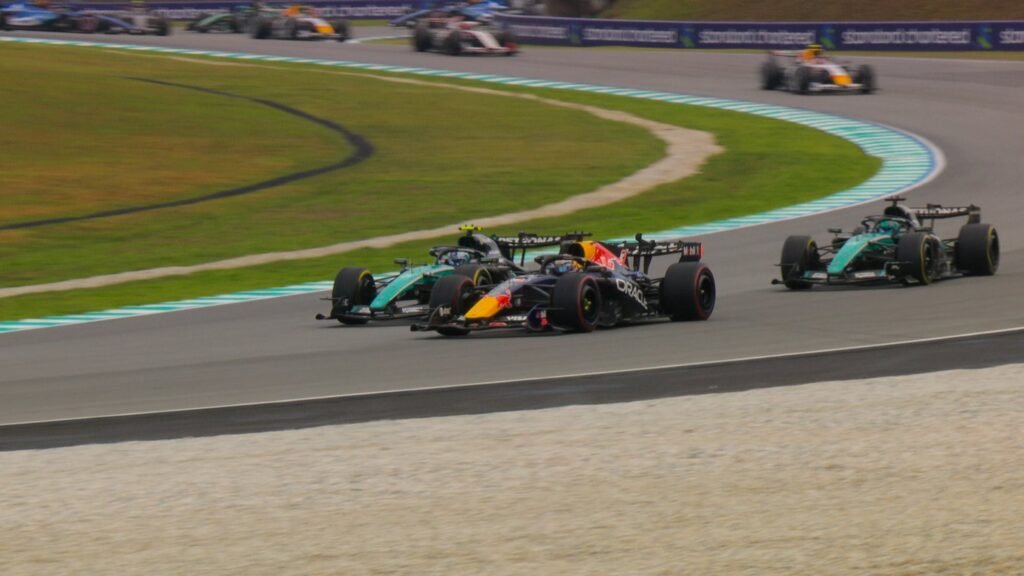
In professional motorsport, the cylinder count story gets completely rewritten. Formula 1 uses a 1.6-litre turbocharged V6 hybrid producing over 1,000 HP — more power per litre than any of the V12s or V10s that preceded it. The FIA mandated the change in 2014 specifically for efficiency, not power reduction. For more on why F1 made this switch and what those engines actually do, see our pieces on ERS in F1 and energy store systems. IndyCar runs a naturally aspirated V6 with an entirely different character — see our IndyCar guide for how that compares.
Fuel Economy & Emissions: The Real Cost of Cylinders
Every additional cylinder burns more fuel per cycle. That’s not a design flaw — it’s physics. A V12 needs to fire twelve cylinders per combustion sequence. A V6 fires six. The V6’s natural advantage in fuel economy is significant: 18–23 mpg versus 11–17 for the V12. On a 500-mile road trip, that difference in a V12 versus a V6 is roughly 10–15 additional gallons of fuel.
| Engine | Fuel Economy (mpg) | CO₂ Emissions (g/km) | Regulation Outlook |
|---|---|---|---|
| V6 | 18–23 mpg | 162–246 | Compliant in most markets |
| V8 | 15–19 mpg | 277–294 | Under pressure, especially in EU |
| V10 | 12–15.9 mpg | 344–489 | No new V10 sedans or SUVs since ~2020 |
| V12 | 11–17 mpg | 306–545 | Surviving only as hybrid or ultra-luxury |
| V16 | ~7.7 mpg | N/A | Production ceased — concept only |
Cylinder Deactivation — The Manufacturer’s Answer
Both GM and Mercedes-AMG have applied cylinder deactivation technology to their V8 and V12 engines, allowing the engine to shut down half its cylinders under light load — turning a V8 into an effective V4 at cruise speed, or a V12 into a V6. The Mercedes-AMG S 65’s V12 uses this system. Cadillac’s AFM (Active Fuel Management) on its V8 trucks drops to four cylinders on the highway. In real-world testing, these systems recover 4–8% of fuel economy compared to the same engine without deactivation — meaningful, but not enough to close the gap to a properly designed V6 or 4-cylinder turbo unit.
Europe’s Euro 7 emissions standard and the UK’s 2035 ICE ban have effectively ended development of new naturally aspirated V10 and V12 engines. Every major manufacturer now pairs these configurations with hybrid systems just to keep them in production.
If you want a new V10 or naturally aspirated V12 today, you’re buying from a shrinking list. Lamborghini’s Huracán V10 has been replaced by the Temerario with a turbocharged V8 hybrid. The Aventador’s V12 lives on in the Revuelto — but with hybrid assistance. BMW confirmed its S85 V10 (from the original M5) will not return. Aston Martin’s Vanquish uses a twin-turbo V6. The era of the big naturally aspirated V engine in new production cars is closing — which makes the remaining examples more historically significant, not less. For more context, see our analysis of American muscle car engines and the history of Ferrari engines through the decades.
Sound & Character: The Most Subjective Metric That Isn’t
Engine sound is often dismissed as subjective, which is fair for preferences — but the acoustic physics are not subjective at all. The dominant frequency of an engine’s exhaust note is determined by its firing frequency, which is a direct function of cylinder count and RPM. At 5,000 rpm, these are the dominant frequencies each engine type produces:
| Engine | Dominant Frequency at 5,000 rpm | Character | Iconic Sound Example |
|---|---|---|---|
| V6 | ~275 Hz | Smooth, rhythmic — can be sporty but lacks bass depth | Ford GT (muted but purposeful) |
| V8 | ~367 Hz | Deep, authoritative, thunderous at low rpm | Dodge Challenger Hellcat, Ford Mustang GT500 |
| V10 | ~459 Hz | Sharp, mechanical scream — the motorsport soundtrack | Lamborghini Huracán, BMW M5 (E60), Dodge Viper |
| V12 | ~550 Hz | Smooth, refined, high-pitched — silk wrapped in thunder | Ferrari 812, Lamborghini Aventador |
| V16 | ~734 Hz | High-frequency screamer — rarely heard outside a test facility | BMA H16 concept, early Cadillac builds |
The V8’s dominance in popular car culture comes partly from this frequency hitting a particularly pleasing acoustic range — around 367 Hz at typical driving rpm is right in the zone where human hearing is most sensitive. The V10’s scream is higher-pitched, more mechanical, and most commonly associated with the unforgettable sound of 2000s Formula 1 — those 19,000 rpm naturally aspirated V10s screamed at frequencies approaching 950 Hz. If you’ve heard one at full chat, you haven’t forgotten it.
The V12 does something different. Its firing sequence is so closely spaced and even that the exhaust note becomes almost artificially smooth — the sound of mechanical precision rather than mechanical fury. Ferrari and Lamborghini have tuned their V12s to preserve a specifically high-frequency character without the harshness that would come from a less refined design. Our piece on why a V8 sounds different from a V12 breaks this down in more acoustic detail.
Turbocharging any of these engine types fundamentally changes the sound character. The turbo acts as a muffler — it silences the intake roar and replaces it with a whooshing, spooling quality. This is why turbocharged V6s rarely sound as distinctive as naturally aspirated ones, and why the shift to forced induction across the industry has made exhaust notes more homogeneous. Ferrari has resisted this trade-off with its naturally aspirated V12 lineup for exactly this reason. Porsche’s naturally aspirated flat-six is a famous counterexample — some engine sounds are worth protecting at the cost of ultimate peak power. Our turbo vs naturally aspirated explainer discusses this trade-off in full.
Famous Cars by Engine Type — 2026 Edition
The names below carry weight. Every one of these cars was built around the character of its engine — the cylinder count isn’t incidental, it’s the mechanical soul of the machine. The World of Speed Museum has hosted exhibitions featuring several of these cars directly, including a Ferrari 812 display and a 1964-and-a-half Mustang with its original V6. Seeing those two cars side by side — a 6-cylinder that helped define an era, and a 12-cylinder that represents the pinnacle of a different one — is where this comparison stops being abstract.
| Engine | Famous Cars (2025–26) | Configuration | Status |
|---|---|---|---|
| V6 | Ford GT, Maserati MC20, Alfa Romeo Stelvio Quadrifoglio, Acura NSX (prev gen) | Twin-turbo 3.5–3.9 L | Active — widely available |
| V8 | Dodge Challenger Hellcat Redeye, Ford Mustang Dark Horse, Ferrari 296 GTB*, BMW M3/M4, Corvette Z06, McLaren 750S | Supercharged, twin-turbo, N/A variants | Active — most common high-perf config |
| V10 | Lamborghini Huracán (final gen), Audi R8 (final gen), BMW M5 E60 (classic), Dodge Viper (discontinued) | N/A 5.2–8.4 L | Being phased out — no new V10 sedans |
| V12 | Ferrari 812 Competizione, Lamborghini Revuelto (hybrid V12), Rolls-Royce Phantom, Aston Martin DB12 (V8 now, V12 in Valkyrie), Mercedes-AMG SL 73 4MATIC+ | N/A or twin-turbo + hybrid | Active but shrinking — mostly ultra-luxury |
| V16 | Cadillac Sixteen (concept only), BMA H16 project builds | 13.6 L N/A | No production — concept and custom only |
For those who want to explore the museum connections: the Ferrari exhibition at World of Speed showcased the V12 Ferrari 812 SuperFast, one of the last great naturally aspirated 12-cylinder road cars. Our Mustang exhibition traced the V6’s role in making the original Mustang accessible to a generation of buyers who couldn’t afford the V8. And the Famous Race Car Drivers section of the museum covers the men who drove V10 and V12 machinery at the absolute limit of what was physically possible.
Lamborghini confirmed in 2023 that the Huracán’s successor — the Temerario — uses a twin-turbo V8 hybrid instead of the V10. Audi ended R8 production in 2024, taking the last German mainstream V10 with it. The Dodge Viper’s V10 is also discontinued. What’s left? A handful of continuation cars and collector editions. If you want a new naturally aspirated V10, you’re buying from existing dealer stock. The clock has run out. See mid-century motorsports for context on how engine evolution has repeatedly forced this kind of generational shift throughout racing and automotive history.
Weight, RPM & Price: The Practical Decisions
Engine Weight
An engine’s weight directly affects handling balance, which is why sports car engineers obsess over it. The V6’s advantage here is significant: at 361–450 lbs, it’s the lightest configuration by a substantial margin, which is why mid-engine sports cars like the Ferrari 296 GTB and the new Lamborghini Temerario use turbocharged V8s — compact enough to sit behind the driver without shifting the weight distribution rearward too aggressively. A V12 at 462–772 lbs puts enormous mass into the nose of a front-engined car, which is why Rolls-Royce, Bentley, and Ferrari engineer their entire suspension and chassis geometry around managing that weight. The Revuelto’s V12 sits centrally in the car specifically because no other placement would keep the handling acceptable.
| Engine | Weight (lbs) | Weight Impact on Car |
|---|---|---|
| V6 | 361–450 lbs | Easiest to engineer around — sports cars, SUVs, trucks all viable |
| V8 | 400–700 lbs | Heavier but manageable in most layouts |
| V10 | 620–712 lbs | Forces long engine bays — one reason Lamborghini moved away |
| V12 | 462–772 lbs | Demands a purpose-built chassis — adds to overall vehicle weight significantly |
| V16 | N/A | Concept engineering only — mass would make most chassis impractical |
RPM — Does It Matter?
All five engine types operate across a broadly similar RPM range (5,500–8,800 rpm at the top end), which means RPM alone isn’t a useful differentiator between them. What matters is where in the RPM range the power and torque are delivered. A turbocharged V8 might produce 90% of its torque below 3,000 rpm — which is why it feels effortlessly powerful in traffic. A naturally aspirated V10 might need 7,000 rpm to fully come alive — which is why the driver experience is more involving but less immediately accessible. Neither is superior — they serve different purposes and different drivers.
Price — The Other Reason V10s and V12s Are Disappearing
A V12 or V10 engine costs considerably more to manufacture, maintain, and certify for emissions than a V6 or V8. The manufacturing complexity — more cylinder bores, more valves, longer crankshafts, more exhaust headers — is compounded by the emissions certification cost, which increases sharply above six cylinders under EU and CARB regulations. This is why a V6 sedan starts at $27K while a V12 Ferrari starts above $300K. The price premium is partially the brand and the exclusivity, but it’s also the genuine engineering cost of that many cylinders built to the tolerances required. See our guide to how much an F1 car costs for context on what extreme precision engineering actually costs at scale.
Final Verdict: Which Engine Should You Choose?
| Your Priority | Best Engine | Why |
|---|---|---|
| Daily driving efficiency | V6 | Best mpg, lowest emissions, widest vehicle availability |
| Towing and hauling | V8 | Maximum low-rpm torque in a package that fits trucks and SUVs |
| Track-day sports car | V8 or V6 turbo | V8 for character; V6 turbo (Ford GT, MC20) for weight advantage |
| Outright acceleration | V8 | Forced induction V8s win the 0–60 battle at every price point |
| Top speed | V12 | 221 mph from the Aventador S — nothing in production beats it |
| Ultimate soundtrack | V10 (N/A) | Irreplaceable high-rpm scream — but you’ll need to buy used |
| Luxury grand touring | V12 | Smoothest delivery, most refined character, most exclusive |
| Future-proofing | V6 or V8 hybrid | Only configurations receiving continued development investment |
If you’re buying today: V6 and V8 options are abundant across every segment. V10 means used market only — the last new ones were 2024 Audi R8s and Lamborghini Huracáns. V12 in production form means Ferrari, Lamborghini Revuelto, Rolls-Royce Phantom, or Mercedes-AMG GT 73 4MATIC+ — all north of $200,000. V16 is not a production option at any price. The practical choice for most buyers in 2026 is between a turbocharged V6 and a V8 — with the decision driven by what you want the car to feel like, not by what’s numerically superior on paper.
For the racing world’s current engine philosophy, our pieces on ERS systems in F1, IndyCar’s V6 formula, and the NHRA’s supercharged V8 dominance show how different motorsport categories have arrived at completely different answers to the same question.
Frequently Asked Questions
The bottom line on cylinder counts in 2026
The answer to “which V engine is best” has always depended on context — but in 2026, the context has shifted sharply. You can no longer simply buy a V10 or a new naturally aspirated V12 in a mainstream sports car. Those configurations are becoming historical artifacts, preserved in collector editions and museum exhibitions. What’s left is a V6-or-V8 world for most buyers, with hybrid assistance beginning to blur even those distinctions.
If we had to give one recommendation: the turbocharged V8 remains the most complete package — performance, sound, torque, and relative efficiency in a single configuration that fits everything from trucks to track-day weapons. But if you have the means and the occasion for a naturally aspirated V12, buy it. Those engines are being counted out one production run at a time, and no simulation or electrification is going to replicate what a 9,000 rpm V12 does to the air around it.
Updated figures, corrections, and additional engine examples will be added to this guide as new cars are announced. Leave a comment below with your own V engine experience — and whether the numbers match what you felt behind the wheel.