What Is Formula E Racing?
Complete Beginner Guide to Electric Motorsport
Formula E is the world’s highest class of fully electric open-wheel racing. This guide explains exactly how it works — the cars, the rules, Attack Mode, Pit Boost, qualifying, and everything else you need to start watching and understanding it.
What Is Formula E Racing?
Complete Beginner Guide to Electric Motorsport
Everything you need to know about Formula E — how it works, the cars, rules, and how to start watching.
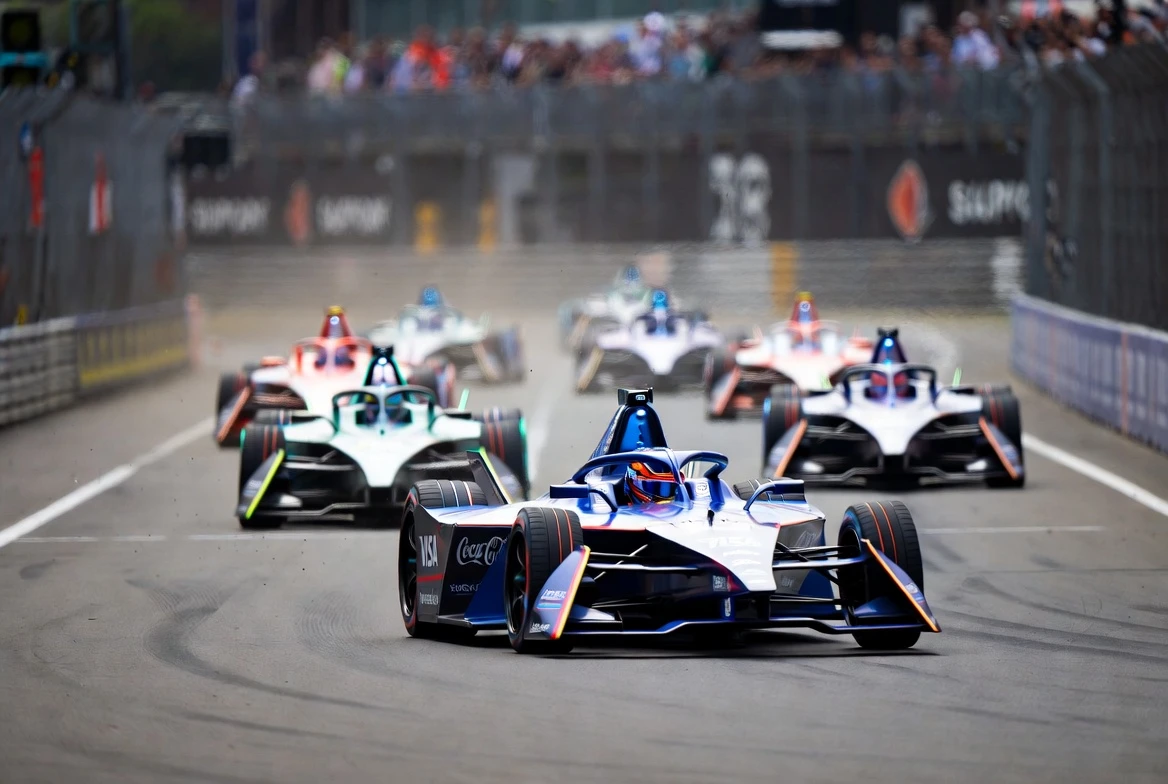
Formula E racing is the ABB FIA Formula E World Championship — a fully electric open-wheel motorsport series that has raced in the centres of the world’s greatest cities since 2014. It is not a smaller version of Formula 1. It is a different sport entirely, with its own cars, its own rules, its own qualifying format, and its own strategic tools that have no equivalent anywhere else in motorsport.
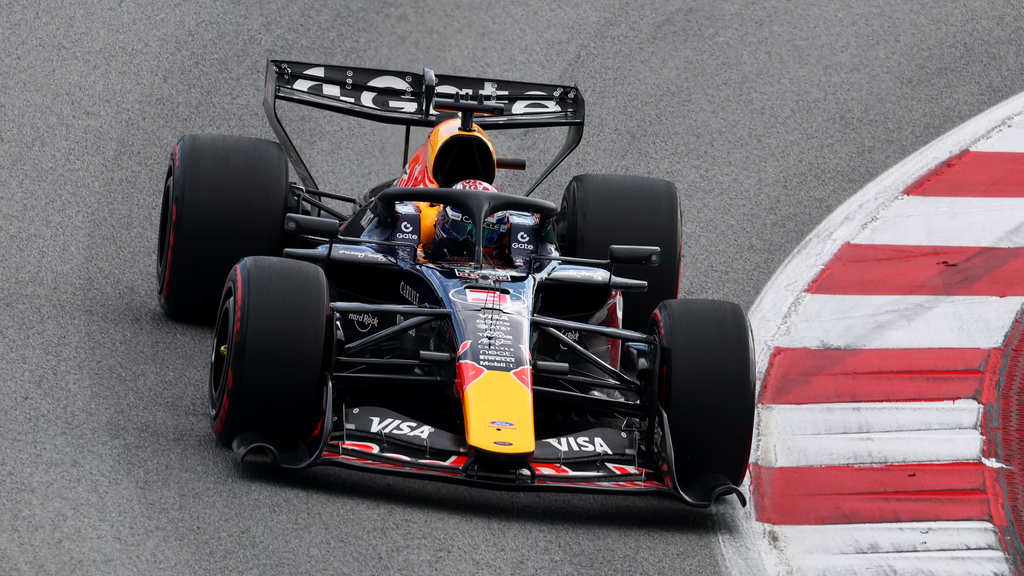
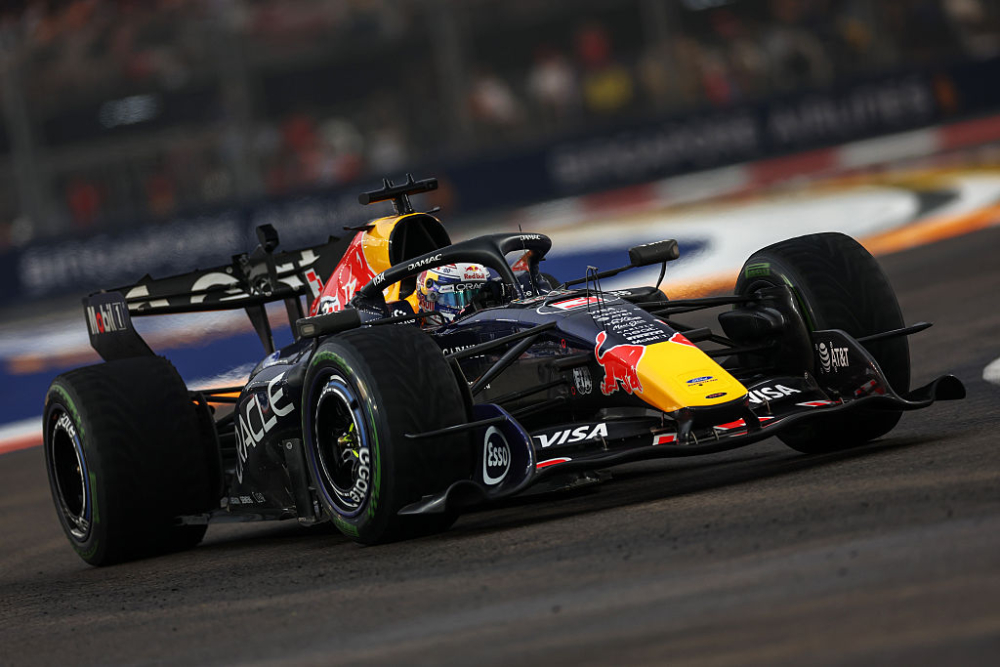
In its 2025–26 season (Season 12), Formula E runs 20 drivers across 10 manufacturer-backed teams, using the Gen3 Evo — the fastest-accelerating FIA single-seater ever built. The car reaches 100 km/h from a standstill in 1.86 seconds, roughly 30% faster than a current Formula 1 car off the line. It does this purely on electricity, with no combustion engine, no exhaust noise, and no fossil fuel consumption during the race.
This guide explains everything from scratch: what Formula E is, how races work, what Attack Mode and Pit Boost do, who competes, how qualifying works, and how it compares to Formula 1. Read it once and you will have everything you need to follow the championship properly.
Formula E is the ABB FIA Formula E World Championship — the world’s highest class of fully electric open-wheel single-seater racing. Founded in 2014, it competes on temporary city-centre street circuits worldwide. The current car is the Gen3 Evo, which accelerates 0–100 km/h in 1.86 seconds and reaches a top speed of 322 km/h (200 mph). Key features include Attack Mode (a push-to-pass power boost), Pit Boost (a mandatory mid-race 30-second fast charge at 600 kW), and a unique head-to-head Duels qualifying format. In 2025–26, 10 teams — including Jaguar, Porsche, Nissan, Andretti, and Citroën — compete for the Drivers’, Teams’, and Manufacturers’ World Championships.
What Is Formula E Racing?
Formula E — officially the ABB FIA Formula E World Championship — is the highest class of open-wheel single-seater racing for fully electric cars. It is sanctioned by the FIA (Fédération Internationale de l’Automobile), the same governing body that oversees Formula 1, and it has held official FIA World Championship status since 2020.
The concept was proposed by FIA president Jean Todt and developed by Spanish entrepreneur Alejandro Agag, who remains the championship’s Chairman. The inaugural race took place in Beijing in September 2014. Since then, Formula E has grown from a novelty curiosity into a major global motorsport series contested by manufacturers including Porsche, Jaguar, Nissan, and — from Season 12 — Citroën. As of 2025–26, Formula E is in its 12th season and the final year of the Gen3 Evo technical regulations before the revolutionary Gen4 car arrives for 2026–27.
Understanding what Formula E represents requires letting go of how other racing series work. It does not operate like Formula 1 — it does not operate like any other motorsport. The races are shorter, the qualifying is completely different, the strategic tools have no parallel elsewhere, and almost everything happens in the compressed environment of a city-centre street circuit in a single day. That compactness is intentional. Formula E was built to be urban, accessible, and sustainable.
Why Does Formula E Race on Street Circuits?
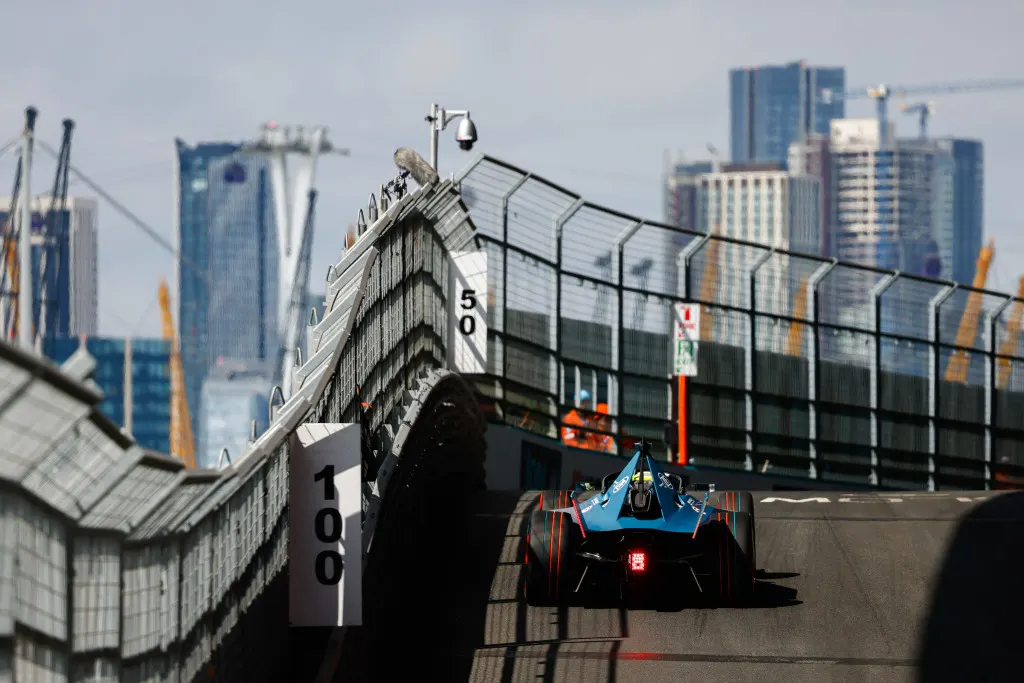
The choice of city-centre street circuits is not just logistics — it is the entire philosophy of the series. Formula E was created to demonstrate electric vehicle technology in the places where it matters most: dense urban environments. Racing on the streets of Sao Paulo, Monaco, Berlin, Tokyo, Jakarta, and London puts electric performance in front of millions of people who might never visit a dedicated racing circuit.
Moreover, city circuits eliminate the need for a permanent racing facility, which reduces the environmental footprint of hosting an event. Circuits are assembled from temporary barriers on existing public roads, raced, and then removed — leaving no permanent trace. The tracks themselves typically measure between 1.9 and 3.4 km, making them genuinely tight, technical, and difficult to overtake on without the tools Formula E provides. To understand how temporary street circuits compare to permanent facilities in terms of safety car usage and flag regulations, both are used in Formula E exactly as they are in any other FIA series.
All Formula E operations target 100% renewable energy for car charging — using sources including solar, wind, and biofuels at each event. Every supplier must complete a life-cycle assessment of their products. Battery cells are selected from ethical and sustainable mining sources. The Gen3 Evo chassis incorporates recycled carbon fibre and natural materials such as linen. Hankook tyres are made from 35% recycled and sustainable materials. Formula E holds FIA 3★ Environmental Accreditation certification.
How Does Formula E Work?
Formula E has three strategic tools that define how races are won and lost: Attack Mode, Pit Boost, and energy management. Understanding all three turns an apparently confusing race into a genuinely compelling chess match at 300 km/h. For a broader look at how car racing strategy works in general, the principles apply here too — but Formula E adds layers that no other series has.
What Is Attack Mode in Formula E?
What Is Pit Boost in Formula E?
Pit Boost — powered by Fortescue Zero — was introduced in Season 11 at the 2025 Jeddah ePrix and became a major feature of the racing format. It is a mandatory mid-race pit stop where all drivers must stop for 30 seconds to receive an ultra-fast charge at 600 kW. This delivers approximately 3.85 kWh of additional energy — around 10% of the car’s useable race energy — that drivers can deploy in the second half of the race.
The strategic complexity is significant. Drivers must stop when their state of charge is between 40% and 60%. However, when exactly within that window is entirely up to the team’s strategy. A driver who stops early carries more energy into the final laps. A driver who waits might gain track position — but risks running critically low on charge before the window closes. Furthermore, each team only has one charging rig, meaning teams with two drivers cannot charge both cars simultaneously. To understand how this compares to conventional pit stop strategy in other series, the Formula E version adds an energy management dimension that conventional refuelling stops never had.
Stop duration: 30 seconds minimum at the charging rig at 600 kW.
Energy gain: 3.85 kWh (approximately 10% of useable race energy).
State of charge window: Must stop when SoC is between 40% and 60%.
Crew limit: Maximum three team members during the stop — one with the lollipop, two holding the rig.
Attack Mode: In Pit Boost races, only one Attack Mode activation is required (reduced from two for Season 12).
Penalties: Any time penalties must be served before the car plugs in for Pit Boost.
Energy Management — The Hidden Battle in Every Formula E Race
Beyond Attack Mode and Pit Boost, Formula E drivers must manage their battery’s state of charge throughout the entire race. Unlike a combustion engine that can be pushed freely and refuelled, a Formula E car’s energy is finite and non-negotiable. Drivers who use too much power too early find themselves crawling in the final laps. Those who save too aggressively lose time earlier in the race.
This creates a visible phenomenon in every Formula E race: drivers intentionally slow down to save energy, then surge when a rival behind them gets close enough to try an overtake. Understanding how electric torque delivery works explains why Formula E cars can suddenly accelerate so violently from slow corners — instant torque with no mechanical lag is a fundamental property of electric motors. Similarly, slipstream effects on the tight street circuits mean energy saving and drafting interact in complex ways that neither drivers nor fans always predict correctly.
Formula E Gen3 Evo — How Fast Are Formula E Cars?
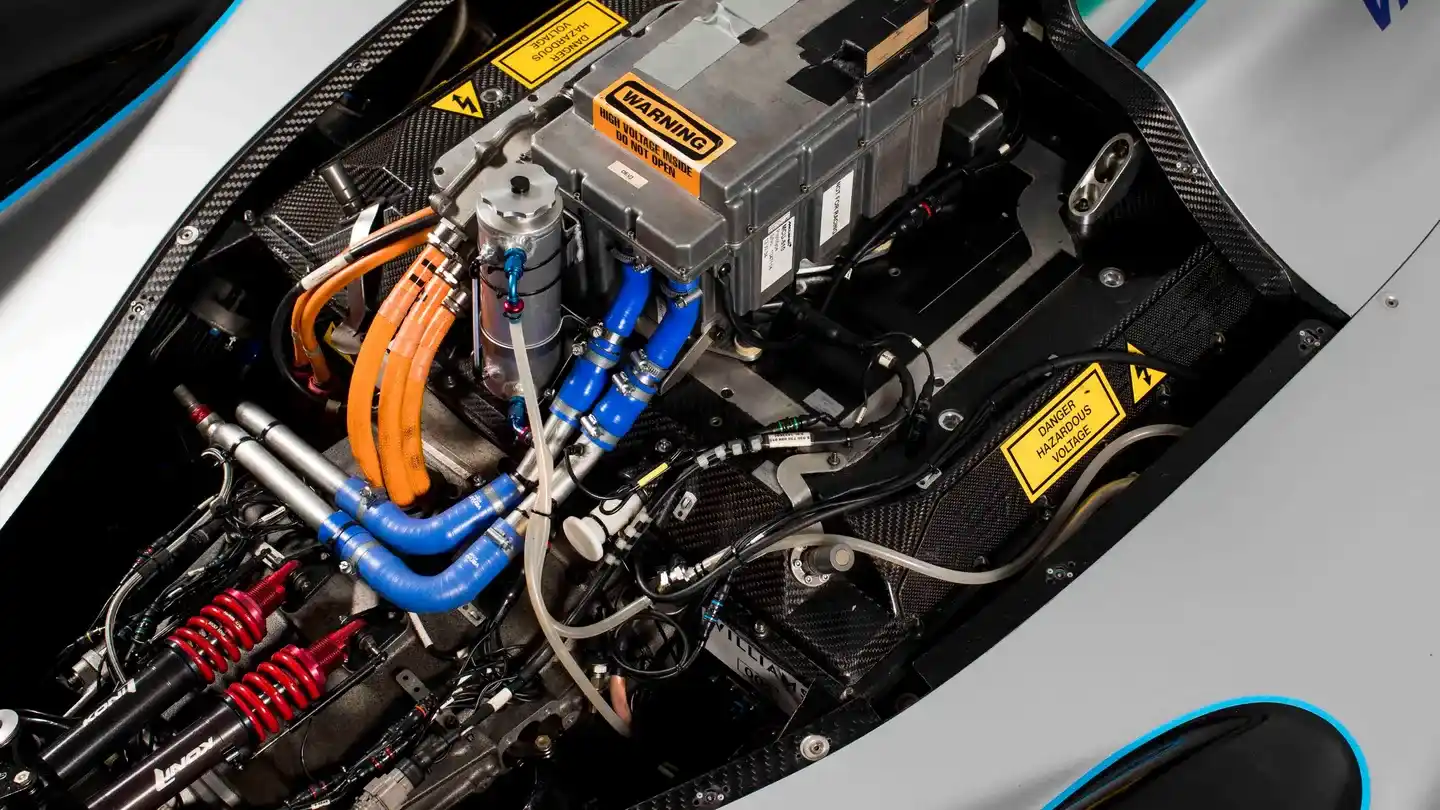
The current Formula E car is the Gen3 Evo, introduced for Season 11 (2024–25) as an upgraded version of the Gen3 that debuted in 2022–23. It is built on a chassis supplied by Spark Racing Technology. The battery — supplied by Williams Advanced Engineering — is designed to handle flash-charging at up to 600 kW, which is what makes Pit Boost possible. Tyres are supplied by Hankook, using all-weather iON compounds made from 35% recycled and sustainable materials.
The Gen3 Evo is confirmed as the fastest-accelerating FIA single-seater ever built. It covers 0–100 km/h in 1.86 seconds and 0–60 mph in 1.82 seconds. That is approximately 30% faster than the current Formula 1 car off a standing start — a statistic that surprises almost everyone who hears it for the first time. The reason is instant electric torque: an electric motor delivers maximum torque from zero rpm, with no turbo lag, no gear changes, and no mechanical losses at low speed. However, F1 cars remain substantially faster at sustained high speeds and on purpose-built circuits. For the full comparison, see is Formula E faster than Formula 1?
Gen3 Evo Full Technical Specifications
| Specification | Gen3 Evo (2024–25 / 2025–26) | Notes |
|---|---|---|
| Chassis | Spark Racing Technology | Identical for all teams (spec chassis) |
| Battery supplier | Williams Advanced Engineering | 55 kWh useable energy |
| Tyre supplier | Hankook iON all-weather | 35% recycled/sustainable materials |
| Race power output | 300 kW (402 hp) | Standard race mode |
| Attack Mode / Qualifying power | 350 kW (470 hp) | +50 kW via Activation Zone |
| Pit Boost charging rate | 600 kW | 30-second mandatory stop |
| Top speed (estimated) | 322 km/h (200 mph) | Verified by Formula E |
| 0–100 km/h | 1.86 seconds | Fastest FIA single-seater ever built |
| 0–60 mph | 1.82 seconds | ~30% faster than current F1 off the line |
| Weight (with driver) | 840 kg (1,851 lb) | 60 kg lighter than Gen2 |
| Wheelbase | 2,970 mm (117 in) | Reduced from Gen2’s 3,100 mm |
| Regenerative braking | Up to 600 kW | Recovers 40%+ of race energy from braking |
| Drivetrain | AWD (qualifying, race starts, Attack Mode) | First Formula E car with AWD capability |
Formula E cars recover over 40% of their race energy from regenerative braking — the process of converting kinetic energy back into electrical energy under deceleration. With up to 600 kW of regenerative capacity, the braking zones on street circuits are not just about slowing the car. They are energy harvesting opportunities. A driver who brakes later and harder harvests more energy per lap — but risks locking up or missing the apex. It is one of the many hidden technical battles invisible to viewers who are not looking for it. Understanding power and energy concepts in motorsport helps frame what regenerative braking achieves at race pace.
The Gen4 Car — What Comes Next for Formula E?
The Gen3 Evo era ends after Season 12 (2025–26). The Gen4 car was officially unveiled on 5 November 2025 and will debut for the 2026–27 season. It is a significant step up in every measurable dimension. Peak power reaches 600 kW (805 hp) in qualifying and Attack Mode, with 450 kW (603 hp) in race trim — a 50% power increase over the Gen3 Evo. The Gen4 also uses full-time all-wheel drive throughout the race, a 55 kWh useable energy battery from Podium Advanced Technologies, and up to 700 kW of regenerative braking. Formula E CEO Jeff Dodds confirmed that qualifying laps could be around five seconds faster than current Gen3 Evo times — putting Gen4 pace on par with Formula 2. For the latest on the Gen4 calendar and launch timeline, the confirmed manufacturer lineup includes Porsche, Nissan, Stellantis (DS Penske/Citroën), Jaguar, and Lola Cars.
Formula E Race Weekend Format Explained
Formula E’s race weekend format is deliberately compact. Most events take place in a single day — not across a traditional three-day motorsport weekend. The reason is simple: assembling and dismantling a temporary street circuit in the heart of a city cannot realistically close major roads for multiple days. Consequently, the format is tightly organised to deliver qualifying and racing in one concentrated package.
Formula E Qualifying Explained — The Duels Format
Formula E’s qualifying format is unlike anything else in motorsport. It abandons the standard Q1/Q2/Q3 structure entirely and uses a knockout Duels system that produces genuine head-to-head battles for pole position. Understanding how qualifying works in racing generally helps — but the Duels system takes the concept somewhere completely different.
Step 1 — Groups: 20 drivers are divided into two groups of 11, ranked by championship position. Each group runs a 10-minute session at 300 kW. The fastest four from each group advance.
Step 2 — Quarter-finals: The eight qualifiers (four per group) compete at 350 kW in individual head-to-head knock-out duels. Fastest time in each duel progresses.
Step 3 — Semi-finals: The four quarter-final winners race head-to-head. Winners progress to the Final Duel.
Step 4 — Final Duel: The two semi-final winners compete for Julius Baer Pole Position. The winner starts first. The runner-up starts second. Semi-finalists start third and fourth. Quarter-finalists fill positions 5–8.
Formula E Points System
Formula E uses the standard FIA points system — awarding points to the top 10 finishers in each ePrix. Additionally, 3 bonus points go to the Julius Baer Pole Position holder, and 1 bonus point goes to the driver with the TAG Heuer Fastest Lap — provided they finish in the top 10. For the full championship scoring breakdown, the system is consistent with other FIA series. Three separate championships run simultaneously: the Drivers’ Championship, the Teams’ Championship, and the Manufacturers’ Championship (introduced from Season 11, recognising the best performance from each powertrain manufacturer’s cars).
| Finishing Position | 1st | 2nd | 3rd | 4th | 5th | 6th | 7th | 8th | 9th | 10th | Pole | Fastest Lap |
|---|---|---|---|---|---|---|---|---|---|---|---|---|
| Points | 25 | 18 | 15 | 12 | 10 | 8 | 6 | 4 | 2 | 1 | +3 | +1 |
Formula E Teams and Drivers — Season 12 (2025–26)
The 2025–26 Formula E grid consists of 10 teams and 20 drivers. Every team is backed by a major automotive manufacturer — a key commercial argument for Formula E’s value as a technology proving ground. The series lost McLaren after Season 11 (the team withdrew to focus on its LMDh project), but gained Citroën Racing, who took over the Maserati MSG grid slot. Nick Cassidy secured Citroën’s first-ever Formula E win in just their second race in Mexico City. For a deeper look at all the Formula E teams, the full team-by-team breakdown covers every manufacturer’s history and powertrain approach.
The 2024–25 Champions
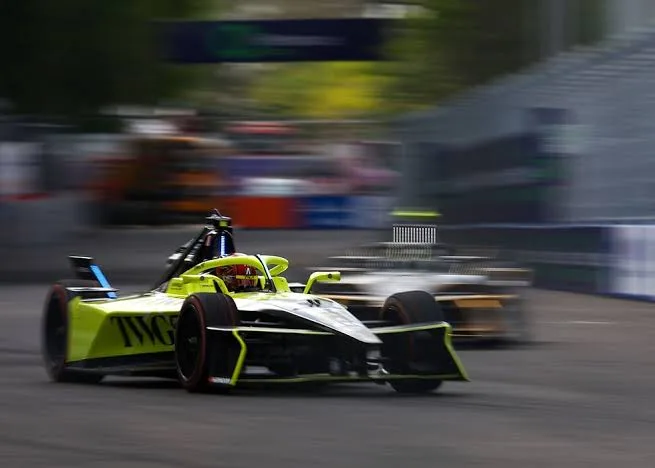
Oliver Rowland of the Nissan Formula E Team won the Season 11 Drivers’ Championship. The TAG Heuer Porsche Formula E Team won the Teams’ World Championship for the first time. Going into Season 12, Mitch Evans (Jaguar TCS Racing) leads the 2025–26 Drivers’ Championship standings. Pascal Wehrlein (Porsche) was the early championship leader before a puncture at Monaco dropped him back. The championship fight between Evans, Wehrlein, and several others has been defined by Attack Mode timing and Pit Boost strategy decisions. For the complete Season 12 drivers and teams preview, including powertrain analysis, all the details are covered.
Five different winners in the first five races of Season 12. Formula E’s title fight going into the second half is one of the most genuinely open championships in any form of motorsport right now.
Formula E vs Formula 1 — What’s the Difference?
This is the question almost every newcomer asks first. The honest answer is that Formula E and Formula 1 are very different sports that share a broad category name — open-wheel single-seater racing — and almost nothing else. Comparing them is genuinely useful for understanding what each series is. However, it is also a trap: thinking of Formula E as “slower F1” misses the point of what Formula E is trying to do. For a detailed breakdown of specific performance metrics, our Formula E vs Formula 1 speed comparison covers the numbers properly.
The key difference in philosophy: Formula 1 is about pushing the absolute limit of what a combustion-electric hybrid can do on purpose-built circuits. Formula E is about demonstrating what a fully electric racing car can do in urban environments, with strategic tools designed specifically for that context. Understanding how ERS works in F1 and what DRS does in F1 helps contextualise how different the energy management approaches are between the two series.
Furthermore, Formula E’s explicitly stated purpose is technology transfer to the road car industry. The specific areas of development that manufacturers invest in for Formula E — battery management, regenerative braking, powertrain software, and thermal management — are directly applicable to the electric road cars those same manufacturers sell to the public. Porsche, Jaguar, and Nissan all make road-going electric vehicles. Their Formula E programmes are laboratories for the technology inside them. Separately, understanding how EV batteries degrade on road cars shows why the battery management lessons from racing matter so much.
Where to Watch Formula E
Formula E is broadcast in over 150 countries. The exact broadcaster varies by region. In the United Kingdom, Sky Sports covers Formula E live. In the USA, CBS Sports has carried live coverage. Globally, the official fiaformulae.com website provides live timing, live race streams in some regions, and full race replays. For the dedicated how to watch Formula E guide, our step-by-step breakdown covers every country and streaming option for Season 12. Furthermore, the full Formula E 2025–26 schedule lists every upcoming ePrix date, location, and local broadcast time.
The official Formula E website offers live timing with an interactive real-time track map, the ability to follow individual drivers, standings, lap-by-lap reports, and full race highlights. This is the best free resource for following every session of every ePrix regardless of your location. Visit fiaformulae.com/calendar for the full Season 12 schedule.
Frequently Asked Questions — Formula E Racing
Is Formula E worth watching? Yes — but watch it for what it is
Formula E will never give you the raw, visceral spectacle of a 350 km/h flat-out lap through Maggotts and Becketts at Silverstone. That is not what it is trying to do. What it gives you instead is something genuinely different: tight, tactical racing on city streets where energy management, Attack Mode timing, and Pit Boost strategy combine into a race that is decided as much by intelligence as by raw speed.
In Season 12, with five different winners in the first five races and a championship fight between Mitch Evans, Pascal Wehrlein, and at least four other realistic title contenders, Formula E is delivering exactly what it promised when the lights first went out in Beijing in 2014. It is unpredictable, it is strategic, and it is racing on the streets of cities most motorsport fans have never seen a race car drive through at full speed.
For the full 2025–26 Formula E race schedule, the next ePrix details, and all championship standings, bookmark our dedicated Formula E section at worldofspeed.org.