What Is Attack Mode in Formula E?
The Complete Power Boost Guide
A full breakdown of the activation zones, the 50kW boost, the blue Halo lights, the mandatory usage rules, and how Attack Mode turned Formula E into a tactical chess match unlike anything else in motorsport.
What Is Attack Mode in Formula E?
The full power boost guide — activation zones, rules, lights and race strategy.
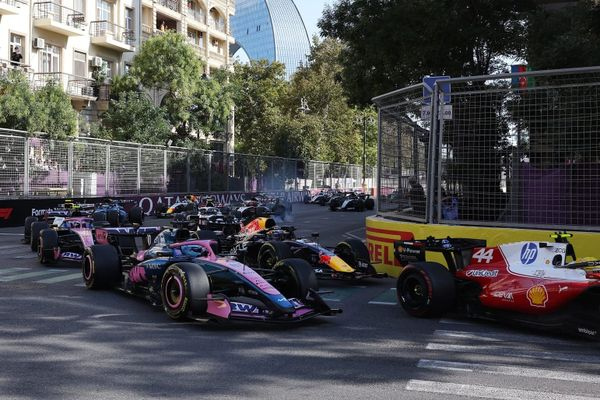
Formula E did something no other major racing series had tried before. Instead of just letting the fastest car win, it built a deliberate strategic puzzle directly into the rulebook. That puzzle is called Attack Mode, and it’s the single biggest reason Formula E races rarely turn into a single-file procession behind the leader.
In short, Attack Mode is a temporary, mandatory power boost that drivers unlock by steering off the racing line and through a specific zone on track. Get it right, and you gain a meaningful speed advantage for overtaking. Get it wrong, or time it badly, and you can hand a position straight back to a rival. This guide breaks down exactly how the system works, why the FIA built it this way, and what separates a smart Attack Mode strategy from a costly mistake.
What Is Attack Mode in Formula E?
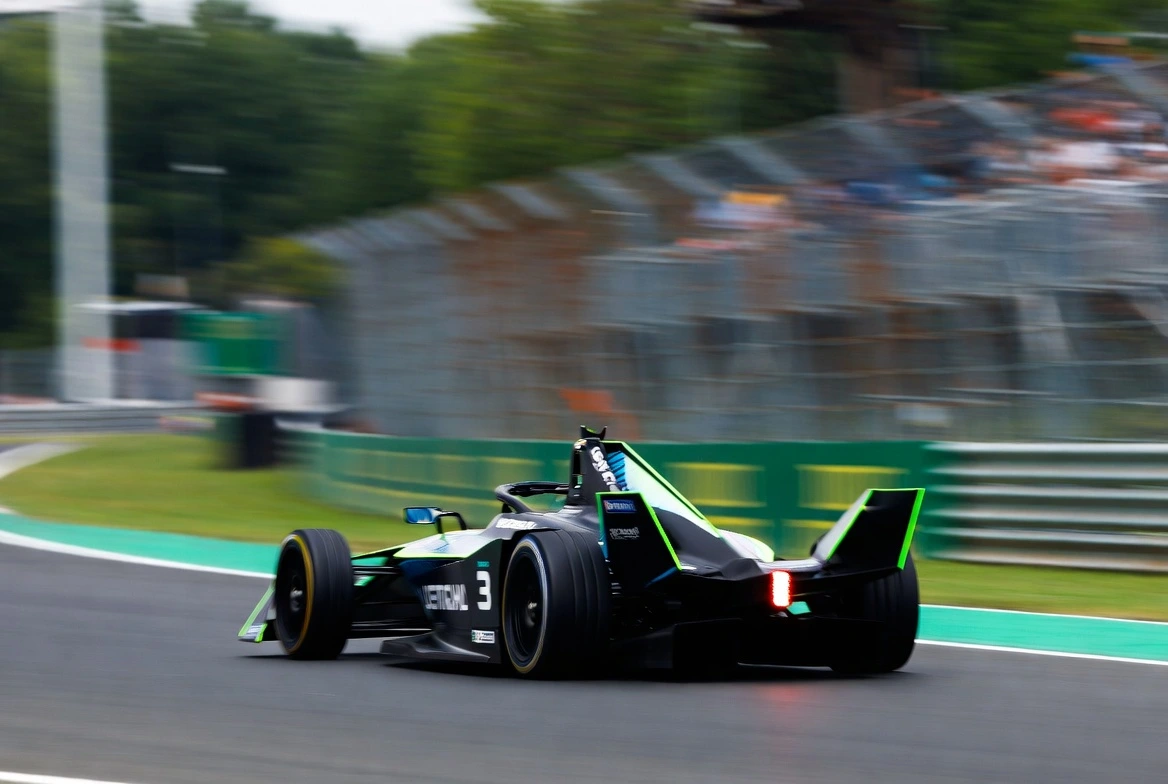
Attack Mode is a temporary, software-unlocked power increase available to every driver in the ABB FIA Formula E World Championship. During a standard race, the Gen3 Evo car runs at a base power output of 300kW. Activating Attack Mode bumps that figure to 350kW, handing the driver an immediate boost to acceleration and top speed for a limited window.
However, this isn’t a button you press whenever you fancy a bit more speed. Attack Mode is tied to a physical location on the circuit — the activation zone — and reaching it almost always means giving up the fastest line through a corner. Therefore, every activation involves a genuine trade-off: lose a fraction of a second now, gain a meaningful power advantage later.
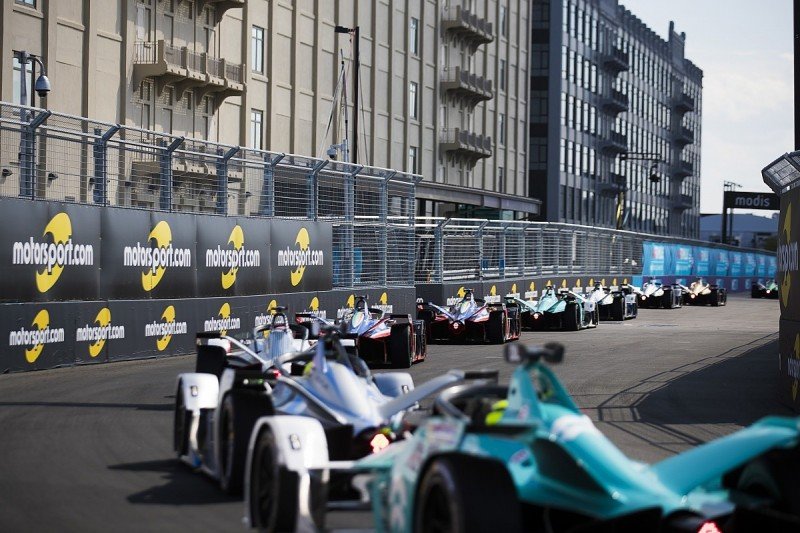
The FIA introduced this system specifically to prevent races from turning into a procession. In most racing series, the lead car has an unambiguous advantage: clean air, no obstruction, and the ability to control the pace. Formula E flips that dynamic on its head. Consequently, the race leader is often the driver under the most pressure, since they’re the one who has to figure out when to dive into the activation zone without losing the position they’re trying to defend.
Think of Attack Mode as a risk-for-reward gamble built directly into the track layout. A driver must first lose time by taking a deliberately slower line. In exchange, they unlock extra power that can be spent attacking a rival or building a gap. This single mechanic is why commentators frequently describe Formula E as “high-speed chess” rather than a straightforward race to the finish.
How Does Attack Mode Work? Step by Step
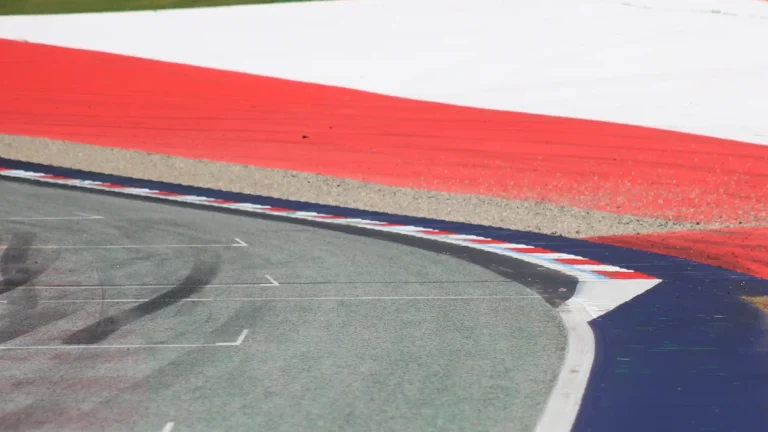
Understanding how Attack Mode actually functions requires looking closely at the track itself. Unlike a normal racing line, which always aims for the shortest, fastest path through a corner, the activation zone sits deliberately off-line. Drivers must consciously steer away from the quickest route in order to trigger it.
Last season, a lead strategist from a leading Formula E team explained that Attack Mode functions primarily as an “undercut” tool. In other words, even a few seconds of extra power can be the difference between finishing on the podium and slipping to a mid-pack result. As a result, teams run thousands of pre-race simulations purely to decide the optimal lap to attack early versus the lap to hold back and defend.
It isn’t just a button drivers can press whenever they want. Attack Mode is a physical location on the track that must be navigated — often at the direct cost of track position.
Attack Mode Rules: How Many Times Can Drivers Use It?
A frequent question among new Formula E fans is exactly how many times a driver can use Attack Mode during a single race. The honest answer is that it isn’t fixed — the FIA adjusts the exact requirements race by race. That said, some clear patterns have become standard across recent seasons.
Generally speaking, the regulations mandate two activations per race, with a specified total duration — for example, eight total minutes of boost. The driver can then choose how to split that allocation: two four-minute blocks, or perhaps a two-minute burst followed by a longer six-minute block, depending on that weekend’s specific rules.
- Mandatory usage: Every driver must use their complete Attack Mode allocation before the race finishes.
- Tactical timing restrictions: Attack Mode cannot be activated during a Full Course Yellow or while running behind the Safety Car.
- Activation count: Usually limited to two or three separate activations per race weekend.
- Late announcement: The FIA typically confirms the exact duration and activation count only one to two hours before the race starts.
If a driver fails to use their complete Attack Mode time before the chequered flag, they face serious penalties — typically a post-race time disqualification. This rule exists specifically to ensure the strategic element remains genuinely mandatory rather than optional, keeping the entertainment value consistent for fans watching at home and trackside.
Furthermore, drivers must arm the system via their steering wheel before physically entering the zone. Entering without arming it first means the sensors won’t trigger anything, regardless of how precisely the driver navigates the zone. Consequently, mastering the timing of the arming button is just as important as nailing the line through the zone itself.
Energy management adds another layer of complexity. Running at 350kW consumes the battery considerably faster than the standard 300kW mode. Therefore, if a driver pushes too aggressively during their attack phase, they risk running short on usable energy before the final lap — turning what should have been an advantage into a genuine liability.
Formula E LED Lights Meaning: How to Read the Halo
If you’re watching a Formula E race for the first time, the LED lights on each car’s Halo are your single best guide to understanding what’s actually happening on track. Since electric motors don’t produce the audible “revving” cue that combustion engines do, these lights provide the visual feedback fans and rivals need to track the action in real time.
This visual system matters more in Formula E than in almost any other racing category. Because the cars are relatively quiet compared to combustion-engine machinery, fans can’t rely on engine sound to sense when a driver has gained extra power. The blue lights fill that gap, delivering the same sense of heightened intensity that a roaring engine note provides elsewhere in motorsport.
Attack Mode vs Pit Boost (Attack Charge) — What’s the Difference?
As Formula E has moved through its 2025 and 2026 seasons, a new concept has entered the conversation: Pit Boost, also known as Attack Charge. Many newer fans confuse this with traditional Attack Mode, but the two systems function in fundamentally different ways — even though both ultimately deliver a power boost.
Attack Mode: The On-Track Version
This is the system already covered above — driving through a zone to unlock software-based power. It requires no physical stopping and exists primarily for immediate tactical overtaking during the race. It has been a Formula E staple since the Gen2 car era.
Pit Boost: The New Energy-Stop Innovation
Pit Boost involves an actual mid-race pit stop, where the car receives a rapid charge from a 600kW charger. In roughly 30 seconds, the car gains approximately 10% additional energy. Once the stop completes, the driver unlocks a period of enhanced power similar in feel to Attack Mode.
| Feature | Attack Mode | Pit Boost (Attack Charge) |
|---|---|---|
| Activation | On-track activation zone | Physical pit stop |
| Power delivered | 350kW boost | 350kW boost + extra energy |
| Primary purpose | Overtaking | Race-long energy management |
| Main risk | Losing track position | Pit lane exit traffic |
| Era introduced | Gen2, refined in Gen3 | Gen3 Evo, 2025–26 |
The strategic alternative this creates is genuinely significant. Teams must now decide between a “stay out and use the activation zone” approach or a “pit and charge” approach. While Attack Mode is fundamentally about track position, Pit Boost is about long-term energy management and overall race endurance.
The synergy between the two systems is where the real tactical depth lies. Taking a Pit Boost stop can drop a driver back roughly 20 seconds in the field. Afterward, they must rely on their remaining Attack Mode activations to slice back through traffic — adding a genuine sprint element to what was once a purely endurance-focused electric race.
How Attack Mode Changed Formula E Race Strategy
Before Attack Mode existed, the leading driver in a race could often manage their energy conservatively while staying comfortably in front. Attack Mode broke that processional pattern entirely, by giving every rival a genuine tool to force the leader into defending — or losing — their position.
The Undercut Tactic
If a driver finds themselves stuck behind a slower car, diving into the activation zone early is a common response. By gaining the extra 50kW ahead of schedule, they can post several fast sectors and complete the overtake right as their rival eventually takes their own activation.
Managing the Energy Delta
Energy management quietly decides as many races as raw speed does. Running at 350kW consumes the battery noticeably faster than standard mode. Leading teams have developed dedicated software that displays exactly how much energy a driver is losing per second while boosted, allowing for far more precise in-race decisions.
If a trailing driver notices the car ahead activating Attack Mode, they sometimes choose to tuck into the slipstream and conserve energy instead of matching the move immediately. In effect, they sacrifice time now in exchange for a power advantage saved for the final laps — a defensive read that experienced drivers make almost instinctively.
This layer of depth is precisely what separates elite Formula E drivers from the rest of the grid. Anyone can drive through an activation zone. Knowing exactly which lap to do it on, while accounting for tyre wear, rival energy levels, and remaining race distance, is a different skill entirely.
Attack Mode vs Formula 1’s DRS — Key Differences
Formula One uses the Drag Reduction System, or DRS, to assist overtaking. However, Formula E’s boost system operates on a fundamentally different principle. DRS simply opens a section of the rear wing to reduce drag on the straights. Attack Mode, by contrast, genuinely changes the electric motor’s power output — a far more significant intervention.
- Both offensive and defensive — usable at any time, regardless of gap to the car ahead
- Requires physically driving through an off-line zone
- Mandatory — drivers face penalties for not using their full allocation
- Increases actual motor power output by 50kW
- Tied directly to battery energy consumption
- Only usable when within one second of the car ahead, in designated zones
- Activated via a steering wheel button on the racing line itself
- Optional — no penalty for not using it
- Reduces aerodynamic drag rather than adding power
- No direct energy or fuel consumption penalty
This distinction matters enormously for how each series races. In F1, DRS reinforces existing track position — the chasing car gets help, but only when it’s already close enough to threaten a move. Read more in our breakdown of what DRS is and how it works in Formula 1. Formula E’s Attack Mode, in contrast, can be deployed by any driver at any point in the race, which is precisely why the leader is so often the one under the greatest pressure rather than the one benefiting most from their position.
For newer fans, Formula E is a world championship for all-electric race cars competing on temporary street circuits. Since there’s no internal combustion engine, the cars produce zero tailpipe emissions and a distinctive high-pitched whirring sound rather than a traditional engine roar. Races run for roughly 45 minutes plus one additional lap, and energy management is the single most important skill on the grid. Every car starts with an identical amount of electricity, and the driver who balances pace against energy harvesting through regenerative braking typically comes out on top. For broader context on how Formula E compares to other categories, see our analysis of whether Formula E is faster than Formula 1 and the full Formula E 2026 season schedule.
One genuinely innovative aspect of Attack Mode is how it solves what’s often called the “leader’s advantage” problem. In nearly every other racing category, being in first place is an unambiguous benefit. In Formula E, being in first place means carrying the heaviest burden of deciding exactly when to dive into the activation zone and risk that position. It’s a rule that’s since been studied by other series looking to boost their own entertainment value, and its legacy as the mechanism that turned Formula E into genuine high-speed chess is already well established.
Frequently Asked Questions
Authoritative Sources & Further Reading
Why Attack Mode remains one of motorsport’s smartest innovations
Attack Mode succeeds because it gamifies a genuinely high-stakes sport without ever compromising its competitive integrity. By forcing drivers off the racing line to access extra power, the FIA solved a problem that nearly every other racing series still struggles with: making the race leader’s position something to actively defend, rather than something to simply enjoy.
As Formula E continues into the Gen3 Evo era and beyond, expect Attack Mode and its newer Pit Boost companion to keep evolving. However, the core principle — risk now for reward later — is unlikely to change, because it’s precisely what makes Formula E unlike anything else on a starting grid.
Full Formula E race coverage, schedules, and technical explainers continue throughout the season at worldofspeed.org.