What Is Formula E?
Complete Guide to Electric Racing, Cars, Speed & Rules
Formula E is the world’s leading all-electric single-seater racing series — fought on city streets, powered entirely by battery technology, and designed to make the future of motorsport feel urgent and exciting right now.
What Is Formula E?
Complete Guide to Electric Racing, Cars, Speed & Rules
The complete beginner’s guide to the world’s premier all-electric racing series — cars, rules, Attack Mode, and more.
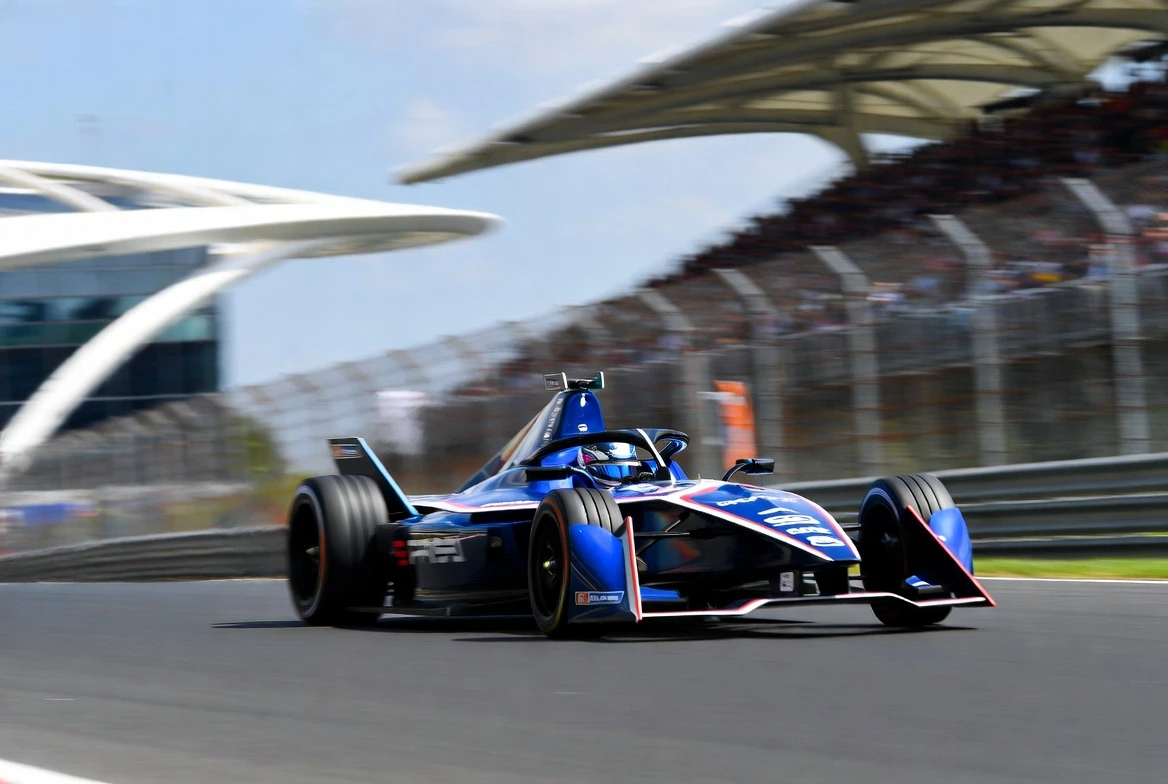
Formula E is the ABB FIA Formula E World Championship — the world’s first and premier all-electric open-wheel racing series. Founded in 2012 and racing since 2014, it pits 20 drivers from 10 teams on temporary street circuits in major global cities. The Gen3 Evo car reaches 322 km/h, accelerates 0–100 km/h in 2.8 seconds, and uses no gasoline. Unique rules like Attack Mode and the Pit Boost make energy strategy as important as outright pace.
Formula E is the answer to a question motorsport had been avoiding for decades: what does racing look like when the internal combustion engine is no longer the centrepiece? Since its inaugural race in Beijing in September 2014, the series has grown into a fully sanctioned FIA World Championship raced across five continents, backed by some of the biggest names in automotive manufacturing, and watched by a global audience that has grown steadily with every season.
This guide covers everything — what Formula E is, how the cars work, the unique rules that separate it from every other racing series, which teams and manufacturers compete, how it compares to Formula 1, and why it has become one of the most strategically complex championships in motorsport. If you’ve ever watched a Formula E race and wondered what was happening with Attack Mode or the Pit Boost stop, or you’re coming to the series fresh, this is where to start.
What Is Formula E? The Complete Definition
Formula E is the ABB FIA Formula E World Championship, a motor racing series sanctioned by the FIA — the Fédération Internationale de l’Automobile, the same governing body that oversees Formula 1 and the World Rally Championship. It is specifically designed for single-seater open-wheel racing cars powered entirely by electricity. No fuel. No combustion. Just battery energy converted directly into motion through electric motors.
The championship was founded in 2012 by Alejandro Agag and the Formula E Holdings group, with the first race taking place in Beijing, China, in September 2014. Since then, it has grown from an experimental fringe concept into a mainstream championship with a dedicated following, ten manufacturer-backed teams, and a calendar that covers cities from São Paulo to Monaco to Tokyo. It currently operates in its 12th season — referred to internally as the 2025–26 season.
The name follows the same naming convention as Formula 1 and Formula 2. “Formula” refers to the set of rules all cars must comply with — every car must be built to the same specification framework. “E” stands for electric. Together, the name signals a single-seater open-wheel racing series governed by rules that mandate all-electric powertrains.
However, Formula E isn’t just a technical exercise. What separates it from other electric motorsport projects is its racing philosophy. Every race takes place on a temporary street circuit in a major world city — Monaco, New York, London, Berlin, São Paulo — meaning the cars race where the people are, not in purpose-built facilities outside city limits. The message is deliberate: electric vehicles belong in urban environments, and racing them at speed through city streets proves that point more vividly than any advertising campaign could.
For a comparison with the world’s most famous racing series, see our full breakdown on is Formula E faster than Formula 1. For more background on the FIA’s role across motorsport, our FIFA and FIA explainer covers the distinction clearly.
The Formula E Car: Gen3 Evo Specifications Explained
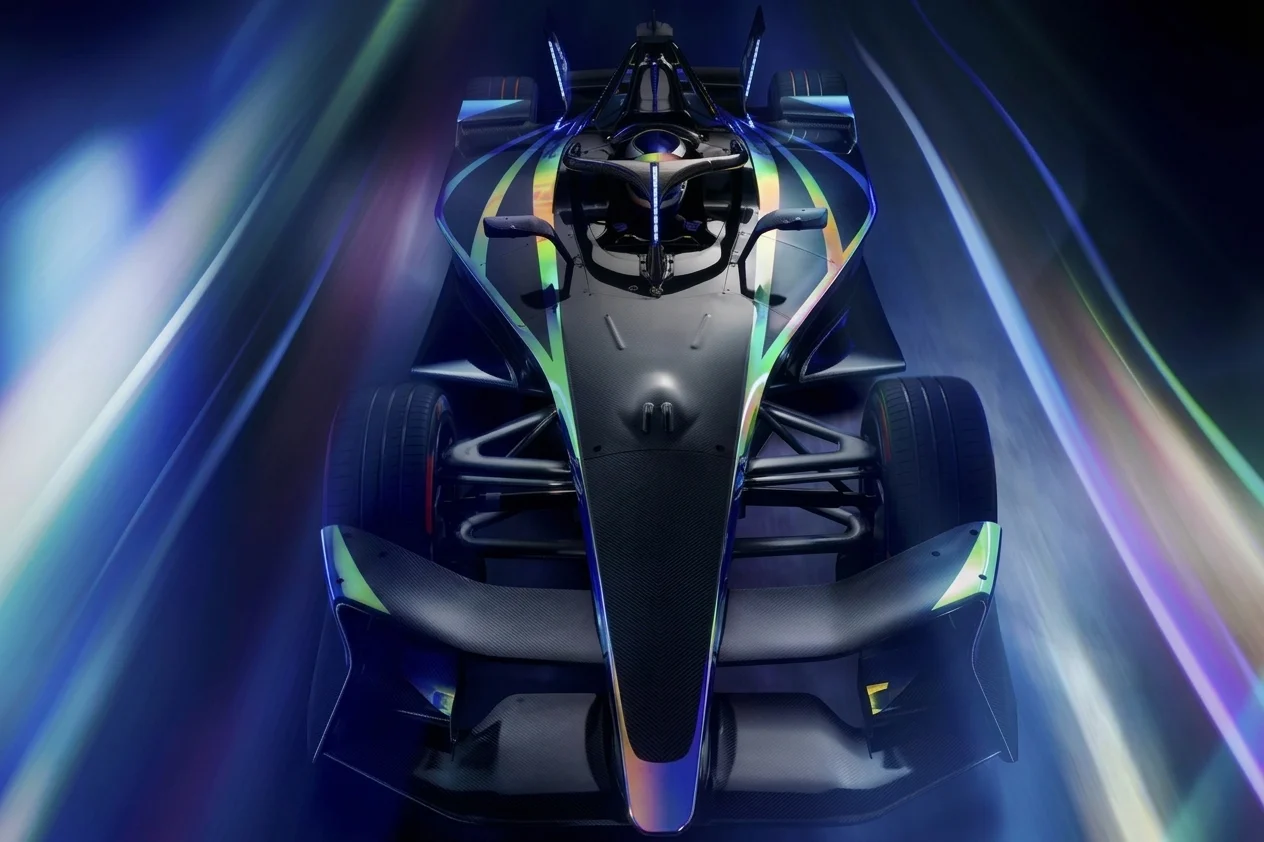
Formula E uses a spec chassis — meaning the car’s basic structure, monocoque, battery, and certain aerodynamic components are supplied to all teams from a single manufacturer. The current car, the Gen3 Evo, was introduced as an evolution of the Gen3 platform that launched in Season 9. It represents the final generation of Formula E cars before the entirely new Gen4 regulations arrive for Season 13.
However, within the spec framework, teams develop their own electric motors, inverters, gearboxes, and rear suspension components. This creates a genuine performance differential — some teams extract significantly more power and efficiency from the same battery than others, which is why the racing is genuinely competitive rather than a parade of identical machinery.
The Gen3 Evo produces more than double the power of the series’ original Gen1 car — which was capped at just 150 kW in race trim. Ten seasons of development, under real racing conditions on real city streets, have transformed Formula E’s technology dramatically.
How Does an Electric Racing Car Actually Work?
At its simplest, a Formula E car converts stored battery energy into rotational motion through an electric motor — the same principle as an electric road car, just at a level of performance that most production EVs won’t reach for decades. The key differences from a road EV are the sophistication of the energy management software, the speed and precision of the motor response, and the intensity of the regenerative braking system.
Regenerative braking is central to Formula E. When a driver lifts off or brakes, the motor reverses its function and acts as a generator, converting kinetic energy back into electricity that feeds the battery. In Formula E, drivers can recover significant energy this way on every lap, and managing how much to harvest versus how much to deploy is a continuous calculation throughout the race. It’s one of the reasons Formula E racing looks different to other forms of the sport — drivers modulate their energy use constantly, rather than simply going as fast as the mechanical limits allow.
For those interested in how electric powertrains compare to combustion engines at a fundamental level, our how car engines work guide and what is horsepower explainer provide useful grounding. The concept of regenerative braking connects directly to the ERS system in Formula 1, though the scale and application in Formula E is far more central to race strategy.
Formula E Rules Explained: Race Format, Points & Qualifying
Formula E races don’t run for a fixed number of laps. Instead, each race runs for a set time limit — typically 45 minutes plus one additional lap. When the timer expires, the leader completes one final lap to the chequered flag. This format is deliberately chosen because Formula E races on temporary circuits where the exact lap time can vary significantly from one circuit to another.
Furthermore, Formula E uses its own points system. The race winner receives 25 points, with a sliding scale down to 1 point for tenth place — the same structure as Formula 1. However, Formula E also awards a bonus point for pole position and a separate bonus point for the driver who sets the fastest lap during the race.
Qualifying Format
Formula E qualifying is unlike any other series. Rather than all cars going out simultaneously for a set number of flying laps, the field is divided into groups — each group gets a ten-minute window to set their fastest lap time. The fastest time overall earns pole position. A “duel” format is used for the very top of the order, where the four fastest drivers from the group stages face off in head-to-head single-lap showdowns to determine the top four grid positions.
Practice: One or two free practice sessions to set up the car and learn the circuit.
Qualifying: Group sessions (10 minutes each) → Duels for P1–P4 grid spots.
Race: 45 minutes + 1 lap, mandatory Attack Mode activation, one Pit Boost stop.
Points: 25-18-15-12-10-8-6-4-2-1 for P1–P10, plus bonus for pole and fastest lap.
For a comparison with how other series handle qualifying, see our how racing drivers qualify guide and how racing championships are scored.
One of the most significant rule changes for the 2025–26 season was the reduction in mandatory Attack Mode activations. Previously, drivers were required to use Attack Mode twice per race. In Season 12, that requirement has been reduced to once per race, which changes the strategic picture considerably — teams have more flexibility over when to sacrifice position by taking the activation zone off the racing line.
Attack Mode and Pit Boost: Formula E’s Unique Strategic Tools
What Is Attack Mode?
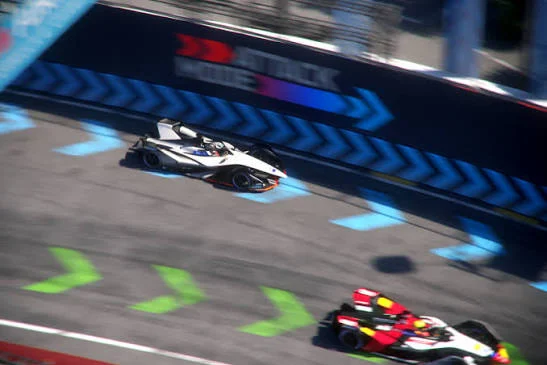
Attack Mode is Formula E’s version of DRS or push-to-pass — but significantly more strategic. When a driver wants to unlock the 50 kW power boost (from 300 kW to 350 kW), they must physically steer their car off the racing line through a designated activation zone on the track. The zone is positioned specifically off the optimal line, meaning taking Attack Mode always costs the driver some time — either by going wide into a slower part of the track or by losing ground to rivals who don’t activate at the same moment.
This creates genuine strategic depth. Activating first can give you the power boost while others are still on standard mode. However, it also reveals your hand. Waiting for a rival to activate first lets you match them. Timing your Attack Mode around a safety car restart, or just before a key overtaking opportunity, can completely change the race outcome. For a dedicated deep-dive, our Attack Mode in Formula E explainer covers every detail.
Standard power: 300 kW (≈402 bhp)
Attack Mode power: 350 kW (≈469 bhp)
Activation method: Steer through off-line zone painted on track
Mandatory uses: Once per race (reduced from twice in Season 12)
Duration: Varies — set by race organisers, typically 4–8 minutes total
What Is the Pit Boost Stop?
The Pit Boost is a mandatory stop where a driver pulls into a specifically equipped section of the pit lane to receive a direct energy top-up to their battery. This is not a battery swap — the car stays the same. Instead, a high-speed charging connection tops up the battery directly while the driver waits, typically for around 30 seconds. Moreover, the Pit Boost stop is only available in rounds where the track layout permits a pit lane stop — not every Formula E circuit has sufficient run-off for a safe mandatory stop.
The timing of the Pit Boost is a major strategic variable. Stopping early can allow a driver to “overcut” rivals — building a gap while others wait, then stopping later on fresher energy and emerging ahead. Stopping late can let a driver “undercut” by holding position until rivals have already made their stop. The dynamic mirrors tyre strategy in Formula 1, but the currency is energy rather than rubber compounds. For comparison, our how pit stops work in racing guide covers the broader strategy in all forms of motorsport.
Formula E Teams and Manufacturers — Who Competes?
One of the strongest signals of Formula E’s credibility is the roster of manufacturers who have committed serious engineering resources to it. At various points throughout the championship’s history, Audi, BMW, Mercedes, Porsche, Jaguar, Nissan, DS, Mahindra, Envision, Andretti, McLaren and Citroën have all competed — either as full manufacturers or as customer powertrain suppliers. That level of major-manufacturer involvement is rare in any racing series outside Formula 1.
Season 12 features ten teams: Jaguar TCS Racing, Nissan Formula E, Porsche Formula E, Mahindra Racing, Andretti Formula E, DS Penske, Citroën Racing, Cupra Kiro, Envision Racing, and Lola Yamaha ABT Formula E Team. Between them, they run 20 drivers. Each team operates two cars and develops its own powertrain within the spec chassis framework.
Manufacturers participate in Formula E for two primary reasons. First, it’s a competitive engineering testbed for electric powertrain technology — lessons learned developing racing motors and energy management software feed directly into road car EV development programs. Second, it’s a high-visibility platform in city centres, putting their brand in front of urban audiences who are exactly the target market for premium electric vehicles. The connection between Formula E technology and Formula E teams’ road car programs is explicit and intentional.
McLaren’s withdrawal from Formula E before Season 12 — announced in April 2025 to focus on LMDh sportscar racing — was a reminder that the series isn’t immune to commercial pressures. Nevertheless, the active roster for 2025–26 remains deep and genuinely competitive, with at least six different winners across the 11 completed rounds of Season 12. For more on the McLaren departure, see our full McLaren Formula E withdrawal explainer.
Season 12 is also the final year of the Gen3 Evo car. The Gen4 regulations arrive for Season 13, promising significantly more power, a new chassis design, and a further step change in the series’ performance ceiling. For those wanting to understand what’s next, our Formula E Gen4 calendar and preview covers the incoming changes.
Formula E vs Formula 1: How Do They Compare?
The comparison between Formula E and Formula 1 is the question that arises most frequently for fans new to electric racing — and the honest answer is that they’re different sports with shared DNA rather than direct competitors. Formula 1 is faster, louder, and more technically extreme in almost every measurable dimension. However, Formula E offers something Formula 1 cannot: racing in the heart of cities, with a level of strategic complexity built around energy that makes every lap a calculated decision.
| Category | Formula E (Gen3 Evo) | Formula 1 (2026) |
|---|---|---|
| Top Speed | ~322 km/h (200 mph) | ~380 km/h (236 mph) |
| 0–100 km/h | ~2.8 seconds | ~2.6 seconds |
| Race Power | 300–350 kW (electric) | ~1,000 kW+ (hybrid) |
| Car Weight | 840 kg min | ~800 kg min |
| Fuel Type | 100% battery electric | Sustainable fuel hybrid |
| Race Circuits | Temporary city streets | Permanent & street circuits |
| Race Length | 45 min + 1 lap | ~305 km / ~90 min |
| Tyre Changes | No (one set per race) | Yes (mandatory) |
| Engine Sound | High-pitched electric whine | High-rev combustion V6 hybrid |
| Seasons running | Since 2014 (Season 12) | Since 1950 |
Formula 1’s raw performance advantage is clear and significant. However, raw pace isn’t the only lens through which to judge a racing series. Formula E’s energy management battles, Attack Mode timing, and Pit Boost strategy create a different kind of tension — one that rewards intelligence and precision as much as aerodynamic performance. Many fans who follow both series describe them as complementary rather than competitive. For more on this comparison, see our dedicated is Formula E faster than Formula 1 comparison and the wider question of is Formula E a respected race category.
The other major difference is the sound. Formula 1 cars announce themselves with a high-frequency combustion howl that carries for miles. Formula E cars produce a distinctive high-pitched electric whine that is genuinely eerie at close range — completely different from combustion motorsport, and something that takes new fans a few laps to acclimatise to. The why a V8 sounds different from a V12 explainer offers context for why combustion engine sounds differ so fundamentally from electric motors.
Formula E History: From Beijing 2014 to Season 12
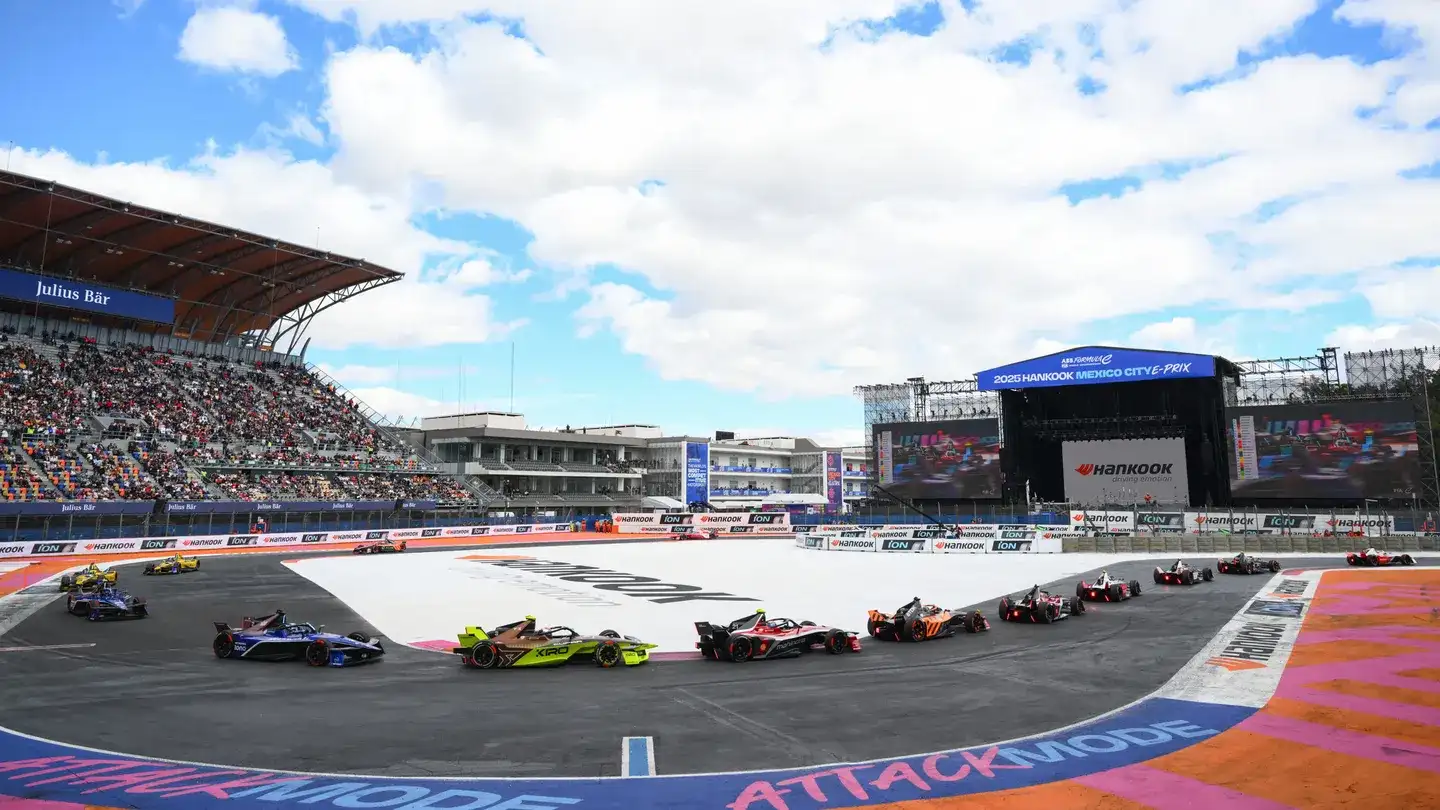
The idea for Formula E emerged in 2011, when the FIA was looking for ways to promote electric vehicle technology and give manufacturers a competitive platform to develop EV powertrains. Alejandro Agag’s Formula E Holdings won the right to organise the series, and the first team entries were confirmed in late 2013.
The inaugural season began in September 2014 in Beijing with a field of ten teams and 20 drivers. Lucas di Grassi of Audi Sport ABT won the first ever Formula E race — and remarkably, the Brazilian still competes in the championship in Season 12 with the Lola Yamaha ABT team, making him the only driver to have competed in every season of Formula E’s history.
Key Milestones
- Season 1 (2014–15): Nelson Piquet Jr. becomes the first Formula E world champion. Gen1 cars limited to 150 kW, only one set of tyres per race.
- Seasons 2–4 (2015–18): Car-swapping mid-race replaced by single-car races as battery technology improved. Gen1 power gradually increased.
- Season 5 (2018–19): Gen2 car introduced, doubling usable energy. Attack Mode replaces FanBoost. Jean-Éric Vergne wins back-to-back championships.
- Season 8 (2021–22): Formula E receives full FIA World Championship status — the same level as Formula 1 and WRC. Stoffel Vandoorne wins the title for Mercedes-EQ.
- Season 9 (2022–23): Gen3 car introduced with 350 kW qualifying power, front-wheel regeneration, and a new Pit Boost stop replacing car swaps entirely.
- Season 11 (2024–25): McLaren departs. Oliver Rowland wins the championship for Nissan.
- Season 12 (2025–26): Final year of Gen3 Evo. Gen4 regulations confirmed for Season 13. Mitch Evans leads the championship heading into the final stretch.
The progression from a 150 kW car in 2014 to a 350 kW Gen3 Evo in 2026 — with full FIA World Championship status secured along the way — represents one of the most significant evolutions in modern motorsport. For a broader perspective on how motorsport has changed across generations, our archive on the birth of racing simulators and the mid-century motorsports exhibit at the World of Speed Museum offer fascinating historical context.
- FIA Formula E — Official Championship Hub
- FIA — Formula E Technical Regulations
- Wikipedia — Formula E World Championship Overview
- Motorsport.com — Gen3 Evo Technical Specifications
- Wikipedia — Gen3 Formula E Car (all specs)
- Autosport — Formula E Rules & Attack Mode Explained
- RacingNews365 — What Is Attack Mode?
- BBC Sport — Formula E Championship News
Frequently Asked Questions — What Is Formula E?
The bottom line on Formula E
Formula E is not a lesser version of Formula 1 running on batteries. It’s a different sport with its own DNA — one where energy management replaces tyre strategy as the primary battleground, where city streets replace permanent circuits, and where the technology directly feeds back into the electric vehicles that more people will drive each year.
Whether you follow it for the championship battle (currently as tight as any in modern motorsport), the technology story, or simply the spectacle of 300 kW electric cars racing through city centres, Formula E has earned its place as a serious racing championship. The Gen4 era that arrives next season promises to make it faster, louder, and more visually dramatic still. This is a good time to start watching.