How Much Does a Formula E Car Cost?
Full 2026 Price Breakdown
A race-ready Gen3 Evo car costs between $800,000 and $1.2 million. However, that’s only the start. Here’s every dollar behind the world’s fastest all-electric race car — battery, powertrain, chassis, and full team budget explained.
How Much Does a Formula E Car Cost?
Battery, powertrain, team budget and the full Gen3 Evo price breakdown for 2026.
Formula E runs the most cost-controlled championship in top-level motorsport. Nevertheless, that doesn’t mean it’s cheap. A race-ready ABB FIA Formula E World Championship Gen3 Evo car carries a price tag of $800,000 to $1.2 million USD in 2026 — a figure that reflects genuine high-performance engineering while remaining a fraction of what Formula 1 demands.
However, that base price is just where the conversation starts. Once you add the season-long spare parts bill, the logistics of racing on six continents, the engineering team behind each car, and the manufacturer R&D investment in the electric powertrain, a Formula E team’s total annual budget sits between $13 million and $15 million. Furthermore, manufacturers like Porsche, Jaguar, and Nissan invest tens of millions more in powertrain development that never appears on a single car’s invoice.
This guide breaks it all down — every component, every generation’s price evolution, the team-by-team cost picture, and the head-to-head comparison with Formula 1 and IndyCar that puts those numbers in full context.
A Gen3 Evo car costs $800K–$1.2M to purchase. The battery alone accounts for $250,000–$300,000 of that. Add powertrain, season spares and operations and the total per-team annual budget reaches $13–15 million — roughly one-tenth of a Formula 1 team’s spend.
Formula E Car Price — What Does a Gen3 Evo Actually Cost?
The Formula E car price has evolved steadily across three generations of the series. When the championship launched in Season 1 (2014–15), the Gen1 cars cost approximately $500,000 each. However, teams needed two per driver because the battery couldn’t last a full race. That doubled the effective hardware cost immediately.
Today’s Gen3 Evo sits at the high end of the cost-controlled spectrum the FIA has deliberately built. The base car costs between $800,000 and $1.2 million. Furthermore, the FIA Financial Regulations strictly cap the price manufacturers can charge customer teams for powertrain components — currently around $450,000 for the combined motor, inverter, and gearbox assembly. Consequently, a customer team can budget relatively precisely for their hardware costs, unlike in Formula 1 where a single front wing can approach $200,000.
The ABB FIA Formula E World Championship was built from the start on the principle that cost control is fundamental to the championship’s survival. Unlike Formula 1, where teams can spend over $200 million annually, Formula E teams operate within an FIA-mandated cost framework. This keeps the grid diverse — ensuring that a team backed by Porsche competes on roughly equal terms with a manufacturer-backed Jaguar or Nissan entry. Furthermore, it makes the championship attractive to manufacturers as a technology showcase rather than a financial arms race.
Formula E Car Cost Breakdown — Every Component, Every Price
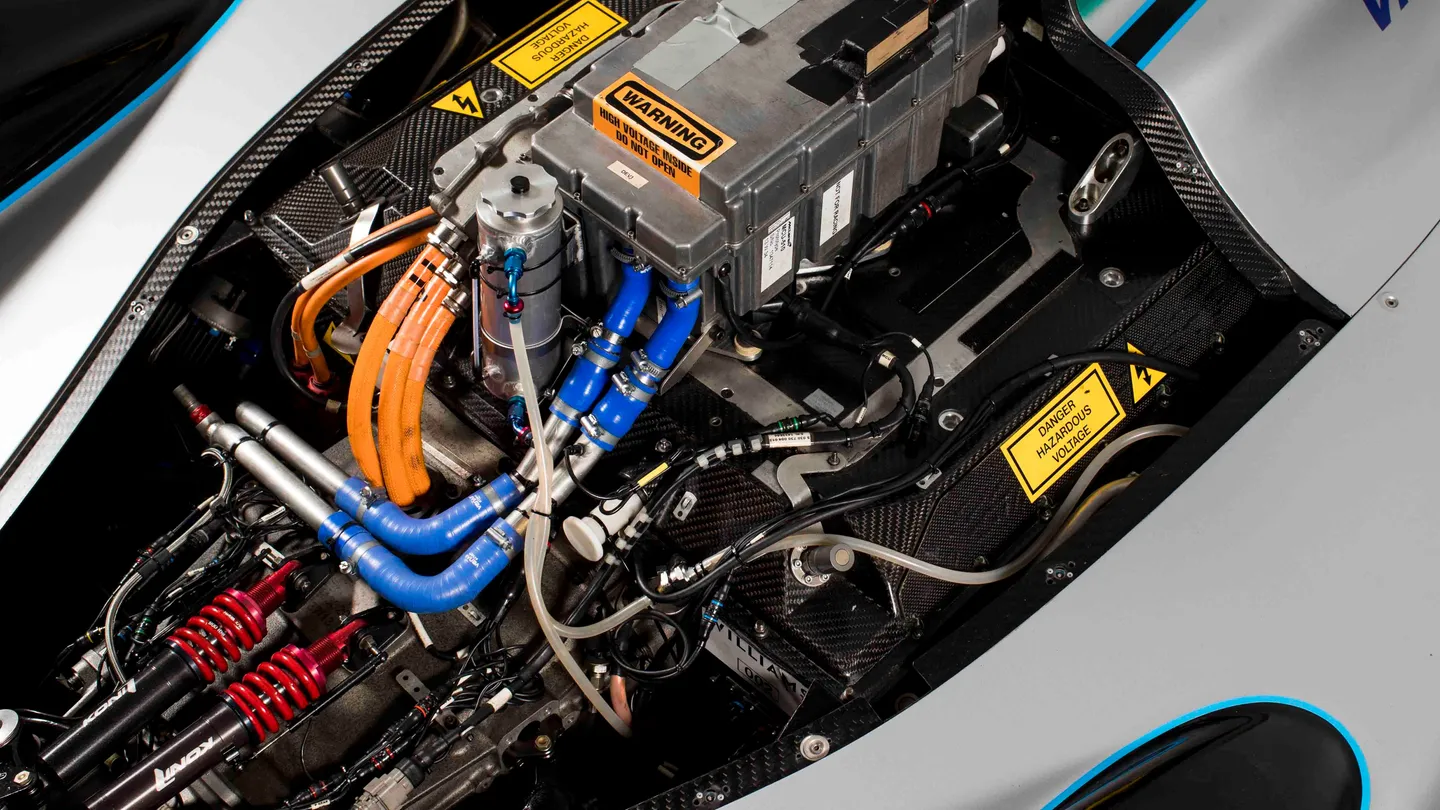
To truly understand the Formula E car cost breakdown, you need to separate the car into its “spec” components — standardised parts every team must use — and the “bespoke” parts where manufacturers differentiate. The spec parts keep the floor price manageable. The bespoke powertrain is where manufacturers invest their competitive budget.
Cost Share — Where the Budget Goes
Gen3 Evo Specifications — Performance Behind the Price
To justify the Formula E car cost, you have to look at what $1 million actually buys. The Gen3 Evo is the most energy-efficient racing car ever put into competition. Over 40% of the energy used during a race is generated by the car itself through regenerative braking. Consequently, the car is essentially refuelling every time the driver touches the brake pedal.
The Gen3 Evo’s 0–100 km/h time of 1.82 seconds is faster than any current road-legal production car. That kind of acceleration from a $1 million car is an engineering achievement that no other racing series offers at this price point.
Furthermore, the Gen3 Evo’s instant torque delivery from a standing start is the defining characteristic of the Formula E car’s performance envelope. At low speed on a street circuit — the environment Formula E is designed for — the electric powertrain’s advantage over a combustion engine is at its absolute maximum. However, at sustained high speeds above 200 km/h, the battery management trade-offs begin to cost lap time versus the theoretical maximum the motor could deliver on unlimited energy. This is the fundamental engineering tension at the heart of every Formula E race strategy, and it’s why software engineers are arguably the most important people in the garage.
Formula E Car Cost Through the Generations
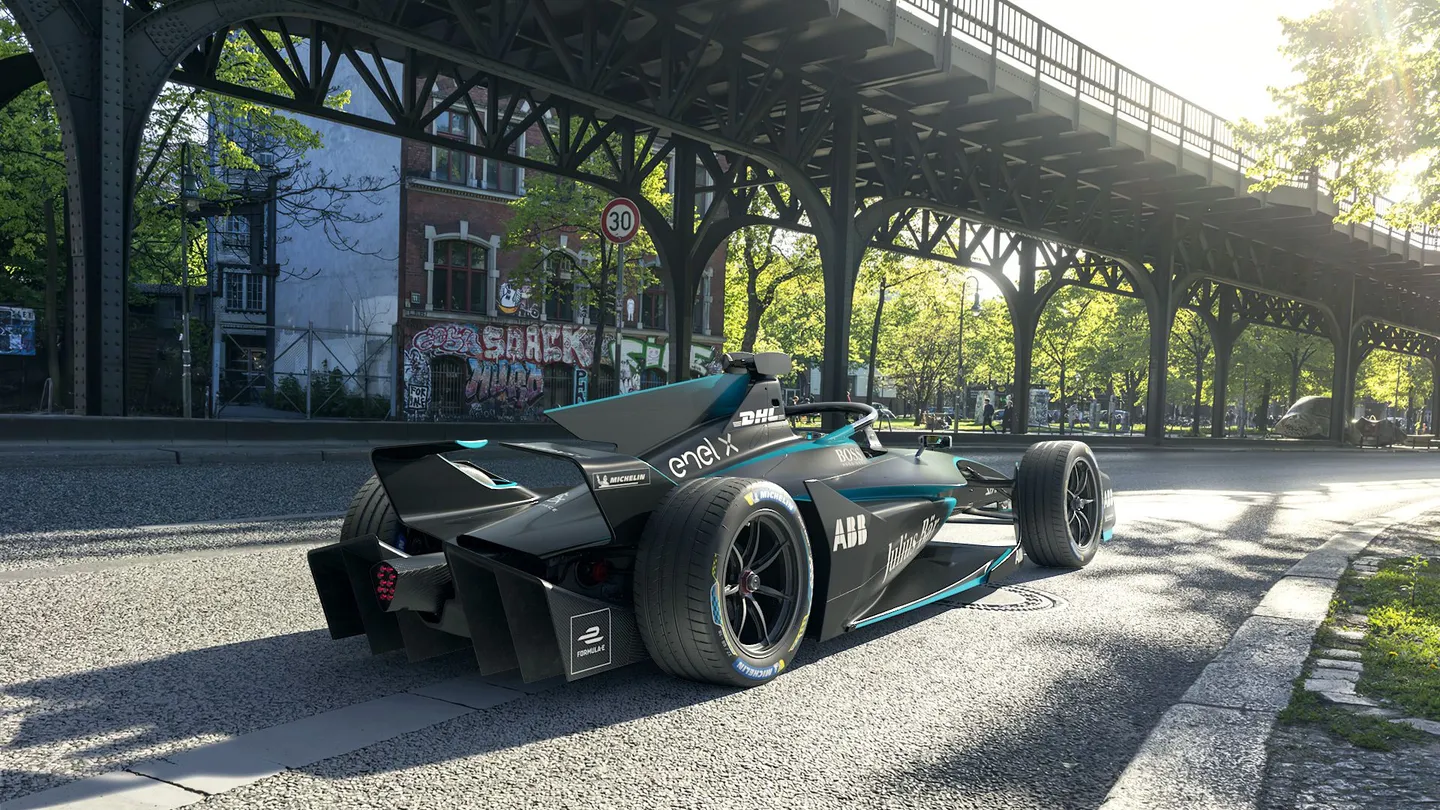
The cost of a Formula E car has risen with each generation, but the performance-per-dollar ratio has improved dramatically at every step. Furthermore, the introduction of each new generation has required teams to invest in entirely new spare parts inventories, training their mechanics on new components, and rewriting their energy management software from scratch. Consequently, the transition cost — beyond the headline price of the new car — is substantial.
| Generation | Seasons | Base Car Cost | Max Power | Key Change |
|---|---|---|---|---|
| Gen1 | 1–4 (2014–18) | ~$500,000 | 200 kW | Car swap mid-race; spec motor |
| Gen2 | 5–9 (2018–23) | ~$750,000 | 250 kW | Full race distance; bespoke powertrains |
| Gen3 | 9–10 (2023–24) | ~$900,000 | 350 kW | Front regen motor; Attack Charge |
| Gen3 Evo ★ | 11+ (2025–26) | $800K–$1.2M | 350 kW | Updated battery chemistry; refined aero |
Formula E vs Formula 1 vs IndyCar — Cost Comparison
The most common question about Formula E car price is how it compares to other major racing series. The answer is stark — Formula E is dramatically cheaper than Formula 1 and somewhat cheaper than IndyCar in terms of raw hardware. However, the comparison requires context, because the series operate fundamentally different technical philosophies.
| Category | Formula E (Gen3 Evo) | Formula 1 (2026) | IndyCar (2026) |
|---|---|---|---|
| Base car cost | $800K–$1.2M | $15–22M | $1–3M |
| Powertrain cost | ~$450K (capped) | $7–10M | ~$600K (lease) |
| Front wing cost | ~$10–15K | ~$200K | ~$30–50K |
| Annual team cap | ~$15M | $135–215M | ~$15–20M |
| Chassis type | Spec (Spark) | Bespoke per constructor | Spec (Dallara) |
| Top speed | 322 km/h | 360 km/h | 380+ km/h (oval) |
| 0–100 km/h | 1.82 sec | ~2.4 sec | ~2.0 sec |
| Powertrain type | 100% electric | Hybrid turbocharged V6 | Turbocharged V6 (Honda/Chevy) |
Formula 1 allows each constructor to design virtually every component of the car from scratch, which creates an aerospace-grade engineering arms race. Furthermore, the FIA changes F1 technical regulations frequently, forcing teams to scrap perfectly competitive designs. Additionally, F1’s power units cost $7–10 million each because they represent the absolute frontier of internal combustion hybrid engineering — decades of development, built to tolerances of microns. Formula E’s cost control works because the spec chassis eliminates wind tunnel spending, the capped powertrain price prevents a motor development war, and the standardised battery removes the most expensive single component from the competitive arena. For the complete F1 cost picture, see our Formula 1 car cost full breakdown.
Formula E vs IndyCar — The Closer Comparison
IndyCar uses a spec Dallara chassis, like Formula E uses the Spark tub. Therefore, both series control costs through standardising the primary structural component. However, IndyCar’s engine lease from Honda or Chevrolet costs approximately $600,000 annually — somewhat more than Formula E’s capped powertrain despite being a more established combustion technology. Furthermore, IndyCar teams face higher logistics costs from oval racing infrastructure.
Moreover, IndyCar doesn’t have the high battery replacement costs that occasionally spike a Formula E budget. A battery that’s damaged in a Formula E incident can represent a $250,000–$300,000 replacement cost — a significant hit to any team’s contingency budget. For a detailed comparison between IndyCar and F1, our guide covers the full technical and financial picture.
Formula E Team Budgets — What Does It Cost to Run a Full Season?
The Formula E team budget extends far beyond the car’s purchase price. Racing 16+ events across six continents requires moving two race cars, a full garage of equipment, dozens of engineers and mechanics, and a substantial spare parts inventory to every location. Furthermore, each team must maintain a real-time data analysis operation during races, often with engineers back at the factory monitoring telemetry simultaneously.
Car hardware: $1M–$1.2M per car × 2 cars = $2–2.4M · Spare parts: ~$2–3M (front wings, batteries, powertrain spares) · Logistics: $2–3M (cargo flights, hospitality, circuits) · Engineering staff: $4–5M (data engineers, mechanics, race strategists) · Driver salaries: $500K–$3M each (excluded from cap for top-tier drivers) · Total operating budget: $13–15M per season within FIA cap framework.
The FIA Financial Regulations cap total team expenditure (excluding marketing and top-three driver salaries) at approximately $13 million to $15 million per season. However, manufacturer teams invest additional tens of millions in powertrain R&D that occurs outside the race team budget — Porsche, Jaguar, and Nissan each run substantial engineering programmes that are classified as road-car development spending rather than racing costs.
| Team | Manufacturer | Powertrain Status | Estimated Season Budget |
|---|---|---|---|
| Porsche Formula E | Porsche AG | Full manufacturer (bespoke motor) | $14–15M + R&D |
| Jaguar TCS Racing | Jaguar Land Rover | Full manufacturer | $13–15M + R&D |
| Nissan Formula E | Nissan Motor Co. | Full manufacturer | $12–14M + R&D |
| Maserati MSG Racing | Maserati / Stellantis | Full manufacturer | $12–14M + R&D |
| Mahindra Racing | Mahindra Group | Full manufacturer | $11–13M + R&D |
| NEOM McLaren FE | McLaren Racing | Customer (Nissan powertrain) | $11–13M total |
It’s worth noting that McLaren’s withdrawal from Formula E — announced for Season 12 — removes one of the series’ highest-profile customer team operations. The McLaren Formula E withdrawal story illustrates the difficult financial calculus facing teams that don’t have a direct manufacturer road-car technology transfer justification for their investment. For teams like Porsche and Jaguar, the racing programme is fundamentally a marketing and R&D tool for their EV product lines. Without that strategic overlay, the financial case for participation is harder to sustain.
For Porsche, Jaguar, and Nissan, the Formula E car isn’t just a racing machine. It’s a mobile laboratory generating data that directly shapes the next generation of their road-going electric vehicles.
Frequently Asked Questions — Formula E Car Cost
Is a Formula E car expensive? The honest answer.
Compared to a road car, yes — $800,000 to $1.2 million is an extraordinary price for a machine you cannot register, insure, or drive to work. However, compared to every other form of world-championship motorsport, Formula E represents the most carefully controlled and deliberately accessible cost structure in open-wheel racing history.
Moreover, the Gen3 Evo delivers genuine world-class performance. A 0–100 km/h time of 1.82 seconds, a top speed of 322 km/h, and the ability to recover 40% of its own race energy make it one of the most technically impressive vehicles ever raced at any price point. Furthermore, the technology it generates — in battery chemistry, inverter efficiency, and thermal management — feeds directly into the electric vehicles that manufacturers like Porsche, Jaguar and Nissan will sell to consumers in the next three to five years.
In that context, the $1 million Formula E car isn’t just a race car. It’s a mobile R&D platform, a marketing vehicle, and a championship-level racing machine simultaneously. For manufacturers looking to demonstrate EV credibility on a global stage without spending $200 million annually, it remains the most compelling investment in motorsport today. For our complete Formula E 2026 race schedule and the full championship picture, see our dedicated series hub.