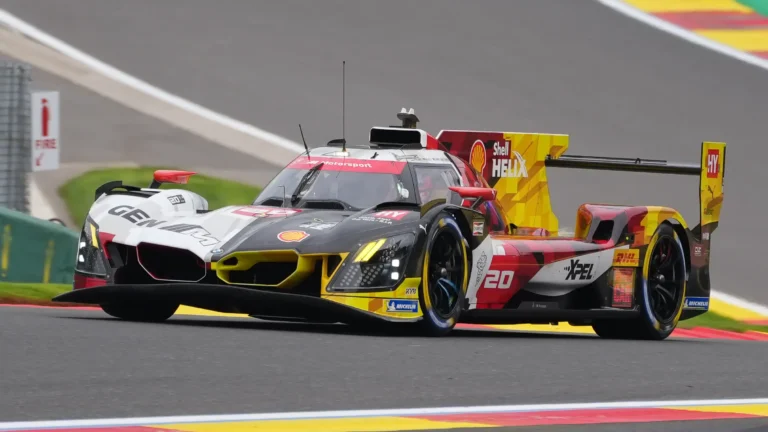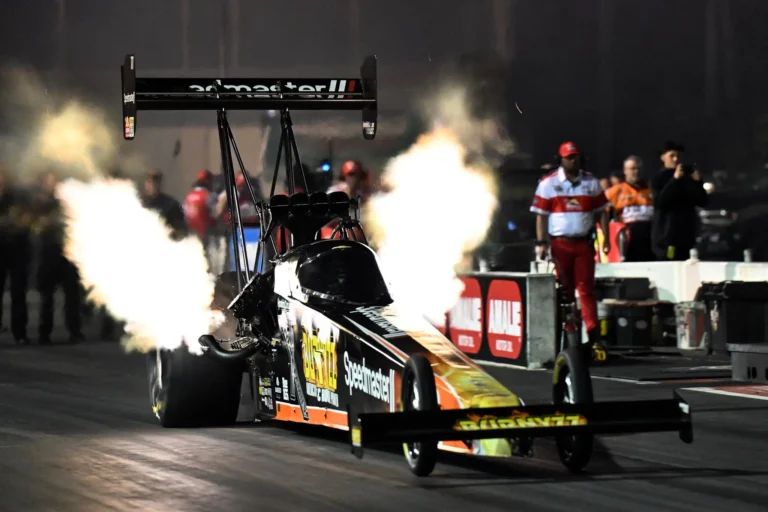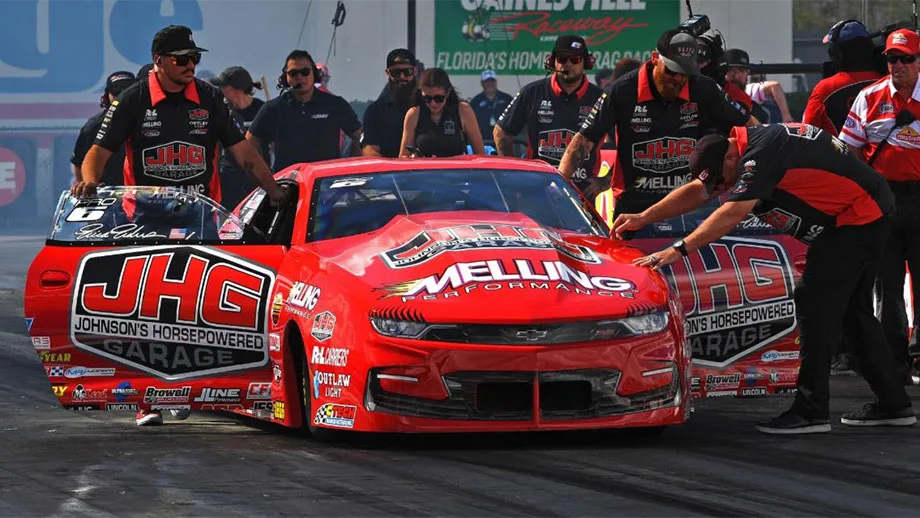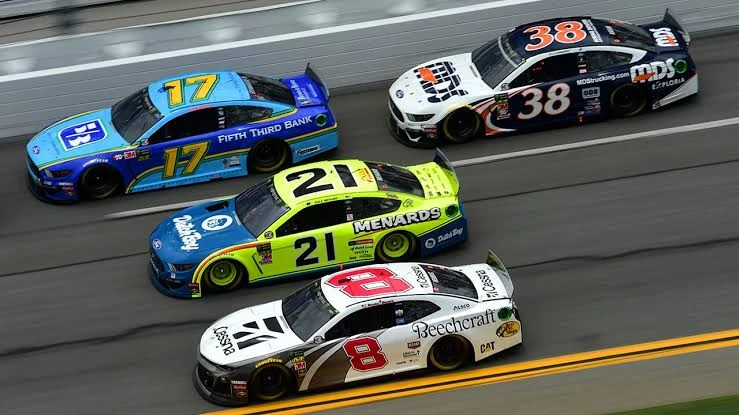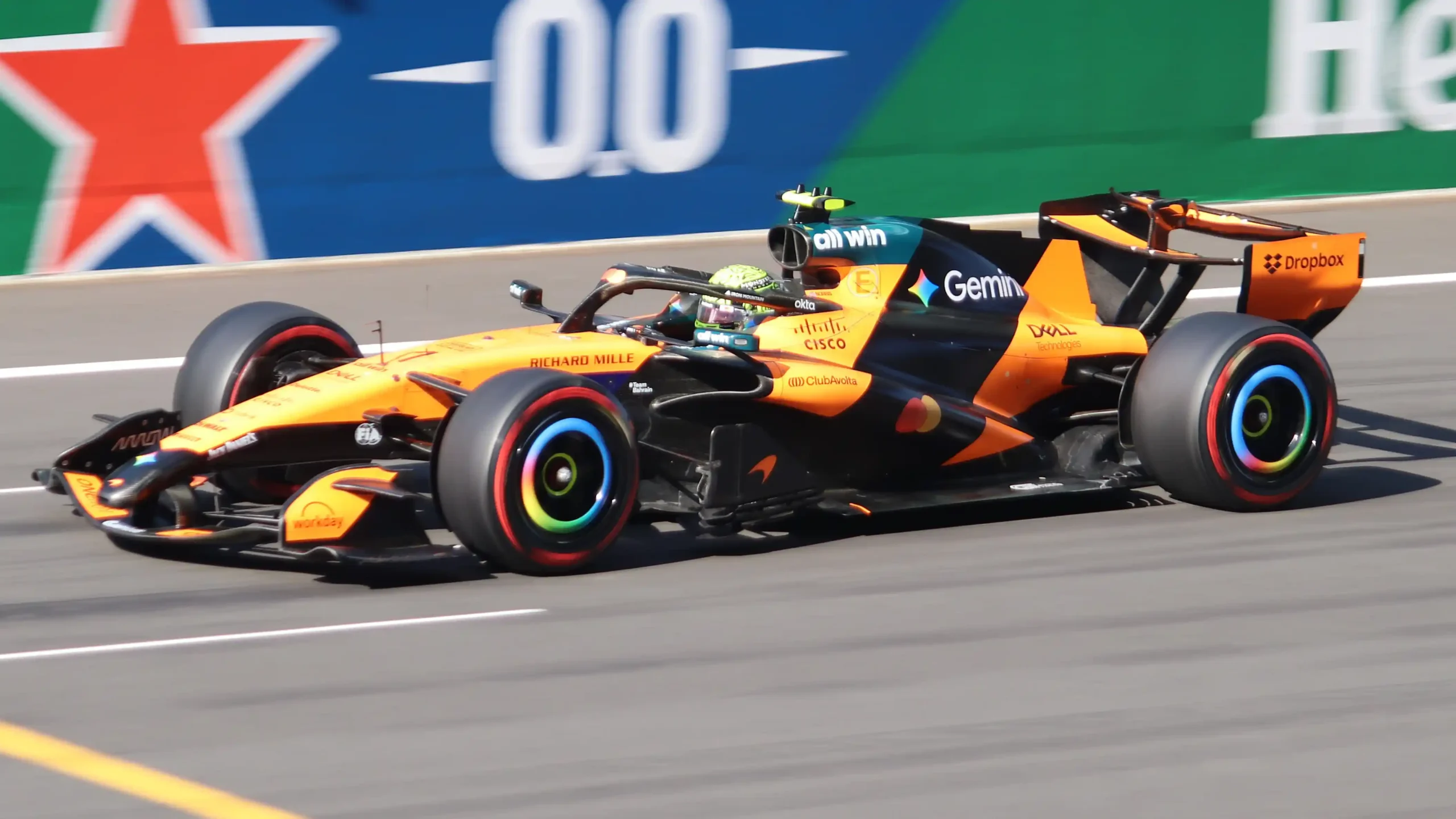
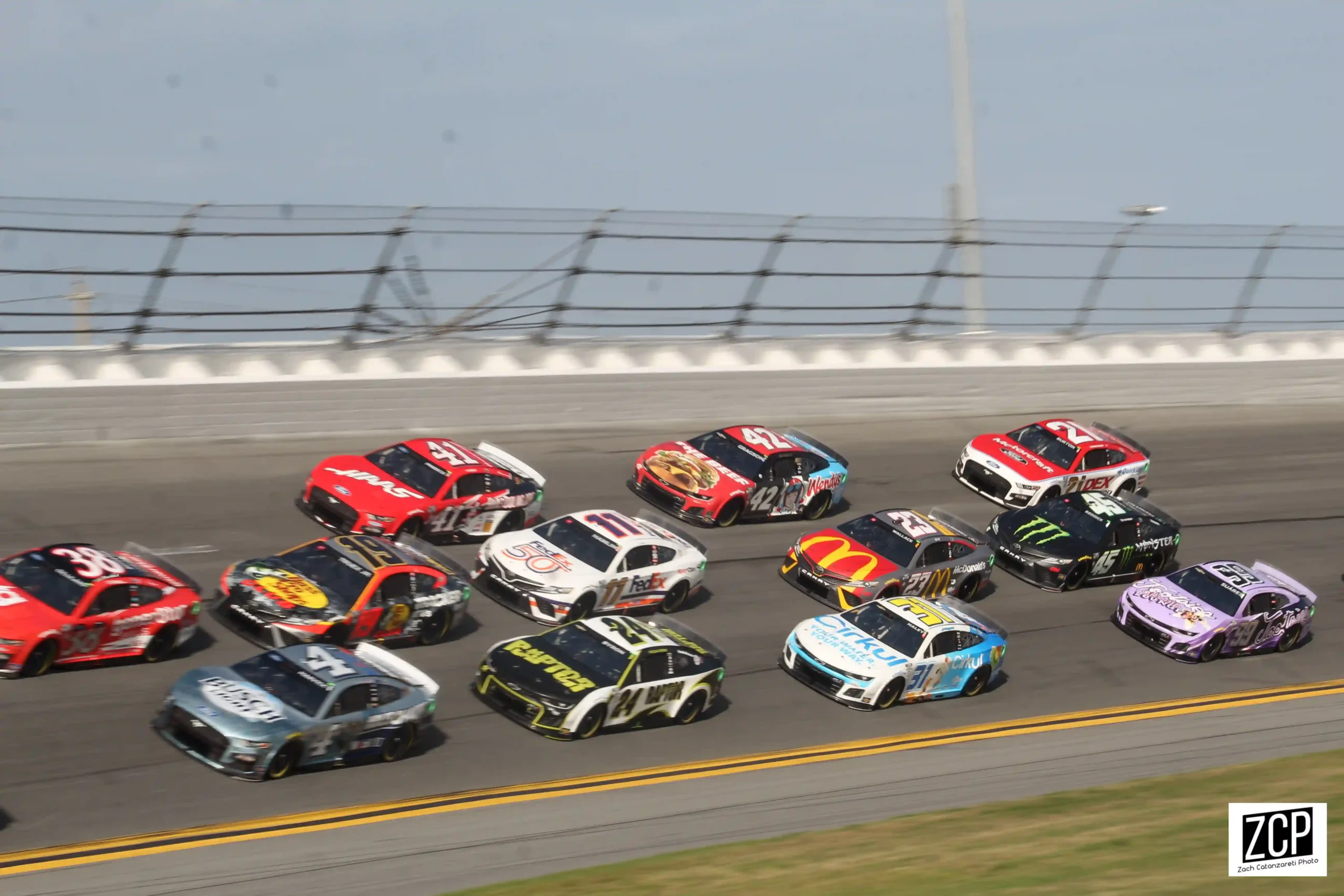
F1 vs NASCAR: Which Motorsport Is Better?
Formula 1 chases the fastest possible lap with bespoke hybrid machines. NASCAR builds drama through heavy stock cars, drafting, long races and close-quarters competition.
Formula 1 is better for advanced engineering, international circuits and outright road-course speed. NASCAR is better for pack racing, oval strategy, frequent lead changes and a traditional American race-day atmosphere. The right answer depends on what kind of competition you enjoy.
The F1 vs NASCAR argument is difficult because the two championships are designed to solve different racing problems.
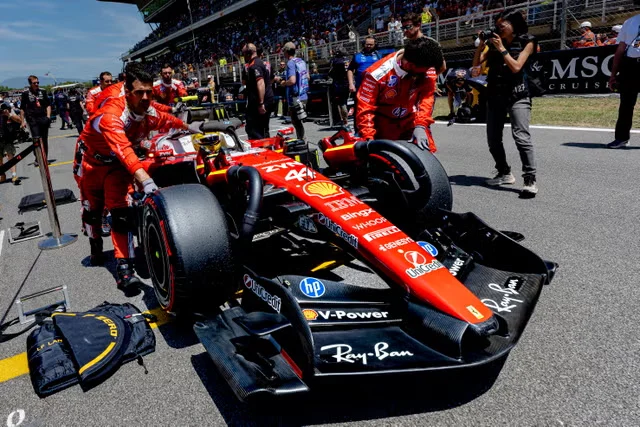
Formula 1 asks teams to create the fastest legal single-seater. Each constructor develops its own chassis, aerodynamics and detailed mechanical package.
NASCAR takes a different route. Its Cup Series uses a tightly controlled Next Gen platform, manufacturer-shaped bodywork and a rules structure built to keep the field closer.
Therefore, judging the series only by top speed misses the point. F1 cars dominate braking zones and high-speed corners.
Meanwhile, NASCAR cars race inches apart for long periods. Drafting, tire falloff, cautions and restarts repeatedly reshape the contest.
The contrast became even sharper in 2026. Formula 1 introduced smaller active-aero cars with far more electrical power.
NASCAR increased Cup horsepower to 750 at road courses and ovals shorter than 1.5 miles. It also replaced its elimination playoff with a 10-race Chase decided by cumulative points.
Those changes show what each series values. F1 continues to use technology as a central part of the sporting challenge.
NASCAR continues to tune a common platform around driver input, tire management and close competition. Both approaches can produce serious racing.
This complete Formula 1 vs NASCAR comparison covers the cars, engines, speed, tracks, race formats, qualifying, pit stops, safety, costs and driver skills.
The Quick Answer: F1 Wins Performance, NASCAR Wins Pack Racing
F1 is a global constructor championship based on lightweight open-wheel cars, advanced aerodynamics and road or street circuits. NASCAR is a U.S.-centered stock-car championship based on heavier closed-wheel cars, oval racing, drafting, refueling and controlled technical parity.
An F1 car is the more advanced and faster circuit machine. It has a carbon-fiber survival cell, a 1.6-liter turbo-hybrid power unit, active aerodynamics and carbon brakes.
A NASCAR Cup car is heavier and mechanically simpler. However, it is built to absorb contact, run in traffic and remain controllable through long oval races.
Formula 1 usually delivers a more precise contest. A few tenths in qualifying can decide the tactical shape of a Grand Prix.
NASCAR usually delivers more visible position changes. Cautions and double-file restarts can compress the field several times.
Therefore, F1 is better when the question is engineering depth or lap time. NASCAR is better when the question is sustained side-by-side racing.
F1’s Core Appeal
Technical innovation, global venues, extreme braking and cornering, strategic tire use and constructor identity.
NASCAR’s Core Appeal
Close packs, drafting, long-distance strategy, contact tolerance, restarts and strong regional traditions.
The Honest Verdict
Neither format replaces the other. They reward different skills and produce different kinds of tension.
The fairest F1 vs NASCAR comparison separates performance from entertainment. F1 builds the superior lap-time tool. NASCAR builds the more contact-tolerant racing platform.
F1 vs NASCAR Comparison Table
| Category | Formula 1 | NASCAR Cup Series | Advantage |
|---|---|---|---|
| Car type | Open-wheel, open-cockpit single-seater | Closed-wheel, roofed stock car | Different purposes |
| Chassis | Each constructor designs its own carbon-fiber car | Common Next Gen architecture with controlled suppliers | F1 for innovation; NASCAR for parity |
| 2026 power | 1.6-liter turbo V6 hybrid, more than 1,000 hp combined | 5.86-liter naturally aspirated pushrod V8; 750 hp at selected tracks | F1 power density; NASCAR sound and torque |
| Weight | About 770 kg minimum under 2026 rules | More than 3,200 lb before full race load | F1 |
| Top speed | Roughly 220 mph or more on suitable circuits | Near 200 mph in superspeedway competition | F1 overall |
| Cornering | Very high downforce and lateral load | Lower downforce, higher mass and smaller braking capability | F1 |
| Primary tracks | Road courses and street circuits worldwide | Ovals, road courses and selected street circuits in North America | F1 globally; NASCAR for oval variety |
| Starts | Standing starts for most Grands Prix | Rolling starts and double-file restarts | Preference |
| Refueling | Not allowed during the race | Central part of race strategy | NASCAR for fuel strategy |
| Passing aid | Overtake Mode and energy deployment in 2026 | Draft, side draft, bump draft and restart positioning | Different systems |
| Championship | Full-season points across every Grand Prix | 26-race regular season plus 10-race Chase in 2026 | Preference |
| Global reach | Large international calendar and audience | Strongest in the United States | F1 globally; NASCAR domestically |
F1 Car vs NASCAR Car: Two Completely Different Machines
An F1 car is a lightweight, mid-engine, open-wheel prototype built around aerodynamic downforce. A NASCAR Cup car is a front-engine, roofed stock car built around a common modular chassis, controlled parts and durability in close traffic.
Formula 1 Teams Are Constructors
Every Formula 1 team must design the listed parts that define its car. The survival cell, wings, floor, cooling layout and suspension packaging become part of the competitive contest.
That rule creates obvious visual differences. One team may use a narrow sidepod inlet, while another shapes the floor edge or rear suspension differently.
However, design freedom does not mean unlimited freedom. The FIA defines tight volumes, materials, tests and dimensions.
The result is controlled invention. Engineers search for lap time inside a dense rulebook.
NASCAR Uses a Common Next Gen Foundation
NASCAR’s Next Gen car debuted in 2022. Its symmetrical body, independent rear suspension, sequential five-speed transaxle and 18-inch center-lock wheels modernized the Cup platform.
Teams still prepare and tune their cars. Yet many components come from approved suppliers, which reduces the opportunity to build a completely different machine.
Manufacturer identity remains visible through approved Ford, Chevrolet and Toyota body shapes. Beneath those panels, however, the architecture is much more standardized than F1.
Covered Wheels Change the Way Drivers Race
F1’s exposed wheels make contact dangerous. A front tire can climb over another car’s rear tire, launching the car or breaking suspension.
NASCAR bodywork covers the wheels. Therefore, drivers can lean on rivals, side draft and survive smaller impacts.
That does not make contact harmless. It simply means the car is designed for a different level of physical racing.
Readers new to single-seaters can start with the Formula 1 beginner’s guide.
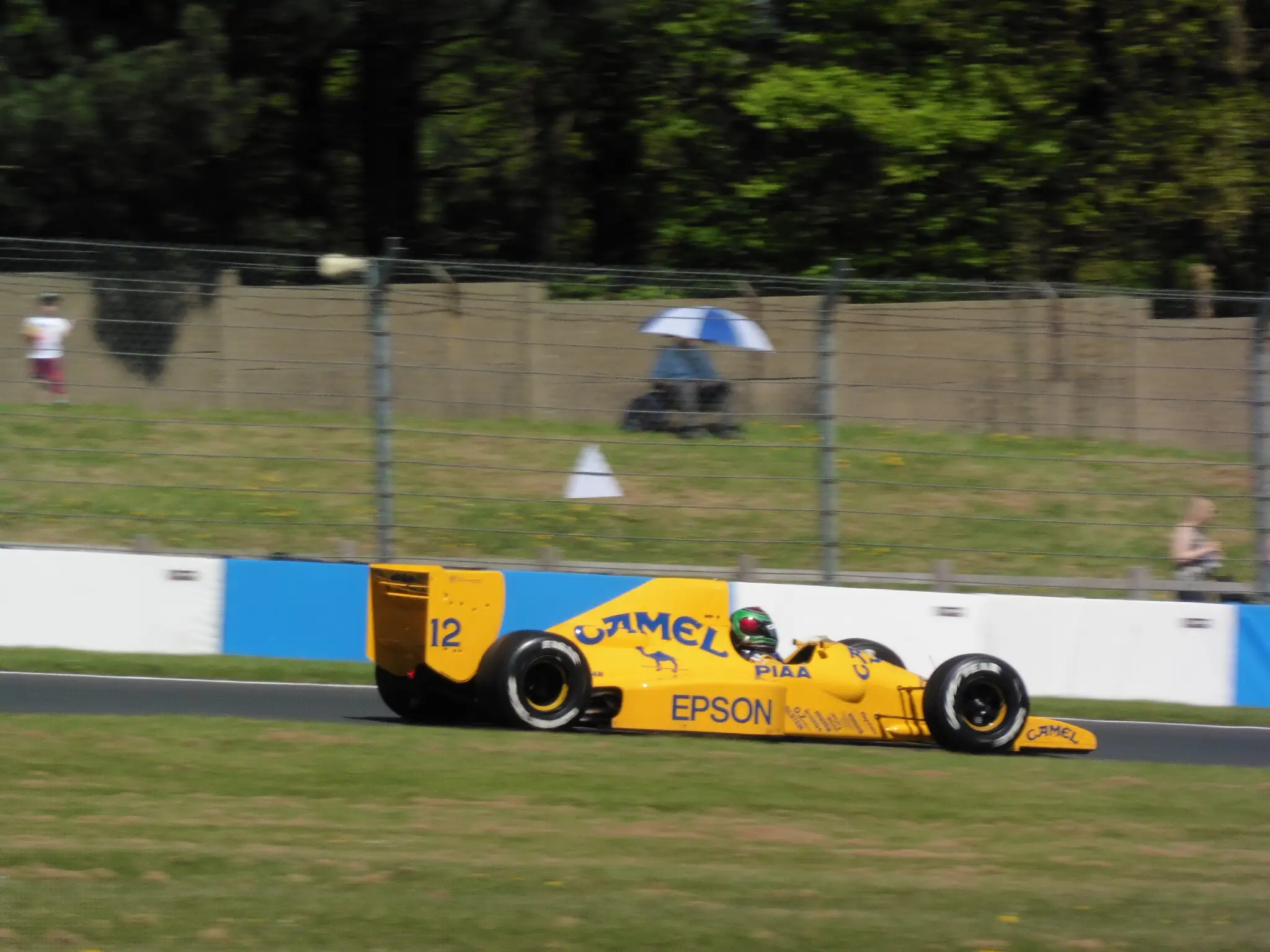
Which Is Faster: Formula 1 or NASCAR?
Formula 1 is faster around a conventional circuit. It accelerates harder, brakes much later and carries far more corner speed. NASCAR cars can approach 200 mph on superspeedways, but top speed alone does not offset their weight and lower downforce.
F1 Wins the Complete Lap
A modern F1 car can exceed 220 mph on a long straight. More importantly, it can convert that speed into a much shorter braking zone.
Carbon brakes, low mass and aerodynamic load let the driver stop with extraordinary force. The car then maintains high speed through medium and fast corners.
Consequently, an F1 car would defeat a Cup car by a large margin on the same road course. The advantage would grow at tracks with rapid direction changes.
NASCAR Speed Depends on the Draft
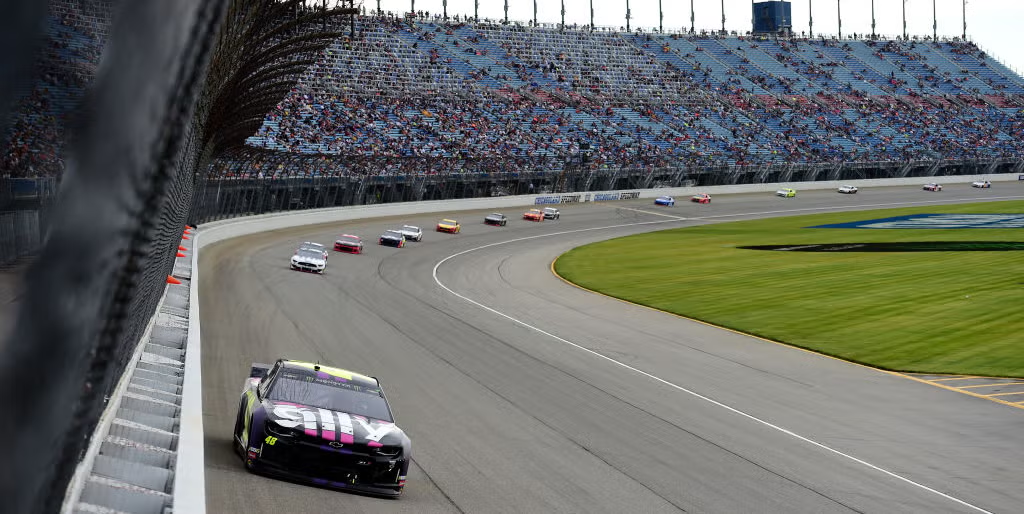
Daytona and Talladega create a different speed test. The banking lets drivers stay near full throttle, while the draft reduces aerodynamic resistance.
A following car gains speed in the low-pressure wake. Packs can therefore run near 200 mph for long periods.
However, NASCAR controls engine output and aerodynamics at superspeedways. The goal is not an unrestricted top-speed record.
Acceleration and Braking Tell the Real Story
F1 has a far better power-to-weight ratio. It also uses wider rear tires relative to its mass and deploys electric power instantly.
The NASCAR V8 delivers strong torque, but it must move a car roughly twice as heavy. In addition, its steel brakes and road-oriented proportions cannot match F1 stopping distances.
For separate performance guides, see how fast F1 cars go and how fast NASCAR cars go.
F1 vs NASCAR Engines: Hybrid V6 Against Pushrod V8
F1 uses a 1.6-liter turbocharged V6 hybrid with a powerful MGU-K and advanced sustainable fuel. NASCAR Cup cars use naturally aspirated 358-cubic-inch pushrod V8 engines with no race hybrid system.
Formula 1’s 2026 Power Unit
Formula 1 retained the 1.6-liter V6 architecture for 2026. However, the new package removed the MGU-H and increased the MGU-K’s maximum output to 350 kW.
The internal-combustion side is limited to roughly 400 kW. Combined output remains above 1,000 horsepower when the system can deliver its full electric contribution.
Energy recovery now affects every acceleration zone. Drivers and engineers decide when to recharge, conserve and deploy.
Furthermore, the cars run on advanced sustainable fuel. The rules aim to maintain performance while reducing reliance on fossil sources.
NASCAR’s Large Naturally Aspirated V8
The Cup engine uses a 358-cubic-inch, or roughly 5.86-liter, pushrod V8. It has no turbocharger and no electrical deployment.
The engine’s character is immediate and mechanical. Throttle position controls a broad torque curve, while the exhaust creates the deep sound associated with American stock-car racing.
For 2026, NASCAR raised target output to 750 horsepower at road courses and ovals shorter than 1.5 miles. That was an increase from the previous 670-horsepower baseline.
At larger tracks, NASCAR continues to use event-specific packages. Therefore, one horsepower number does not describe every Cup race.
Which Engine Is Better?
The F1 power unit is more efficient and technologically sophisticated. It extracts extreme performance from a small combustion engine and a large electrical system.
The NASCAR V8 is simpler, louder and easier for many fans to understand. It also places a direct premium on throttle control.
For basic engineering context, read how car engines work and what horsepower actually measures.
Aerodynamics: Downforce, Active Wings and Drafting
F1 uses complex wings, a carefully shaped floor and active aerodynamics to maximize downforce and reduce drag. NASCAR uses a splitter, flat floor, diffuser, body shape and rear spoiler, with drafting playing a much larger role in race tactics.
F1 Treats Airflow as a Complete Vehicle System
The front wing begins the airflow process. It controls pressure around the front tires and feeds the floor.
The floor then creates much of the car’s downforce. The diffuser expands the air at the rear, while the rear wing balances the car.
For 2026, movable front and rear wing elements introduced active aero. Straight settings reduce drag, while corner settings restore grip.
The old DRS concept therefore disappeared. Overtaking now relies more heavily on regulated electrical deployment.
NASCAR Aerodynamics Create Racing Tools
A Cup car has a front splitter, controlled underbody and rear spoiler. Its shape creates downforce, but it also produces a large wake.
On a superspeedway, that wake becomes useful. A following driver can draft forward and gain momentum.
Side drafting works differently. A driver moves close to a rival’s rear quarter to disturb airflow and slow the other car.
Bump drafting adds physical assistance. One driver gently pushes another to improve the pair’s speed, although poor contact can start a major crash.
Dirty Air Hurts Both Series
F1 cars lose front grip when they follow in turbulent air. NASCAR cars can also become unstable, especially when the front splitter loses clean airflow.
However, NASCAR drivers can use the wake tactically. F1 engineers mainly try to reduce its damage.
Read the downforce guide and the slipstream explainer for the core principles.
F1 vs NASCAR Tracks: Global Circuits Against Oval Variety
F1 races mainly on permanent road courses and temporary street circuits with varied corner sequences. NASCAR races mainly on ovals, but its calendar also includes road courses and street events.
Formula 1 Circuits Reward a Broad Technical Package
F1 visits high-downforce circuits, low-drag tracks, night races and demanding street courses. Each venue changes the ideal setup.
Monaco rewards mechanical grip and confidence near barriers. Monza rewards straight-line efficiency.
Suzuka and Silverstone expose aerodynamic balance through fast direction changes. Singapore tests cooling, concentration and traction.
Most venues meet FIA Grade 1 standards. Large runoff, TecPro barriers and detailed medical plans support the championship’s speed.
NASCAR Ovals Are Not All the Same
Calling every oval identical is a major mistake. Daytona and Talladega are long, steeply banked superspeedways built around drafting.
Martinsville is a short, flat paperclip. Bristol is a steep half-mile where traffic arrives almost immediately.
Darlington’s two ends have different shapes. Pocono uses three distinct corners inspired by other tracks.
Therefore, oval specialists must adapt to banking, tire load, lane evolution and changing traffic patterns.
NASCAR Also Races on Road and Street Courses
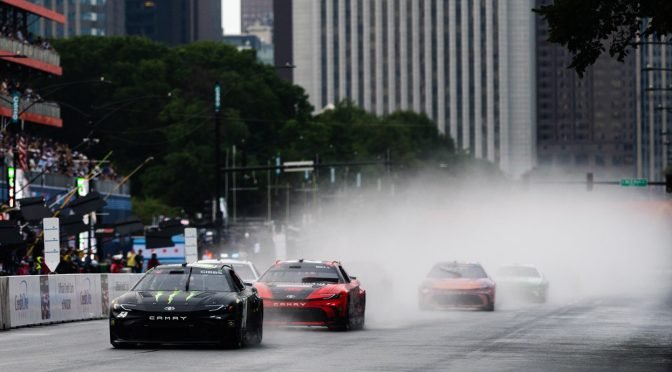
The Cup Series regularly visits road courses such as Sonoma and Watkins Glen. Recent schedules also expanded the street-racing idea.
Those events reveal the Next Gen car’s independent rear suspension and sequential gearbox. They also bring heavy braking and shifting into a championship known for ovals.
For the American roots of the series, read how moonshine culture influenced NASCAR.
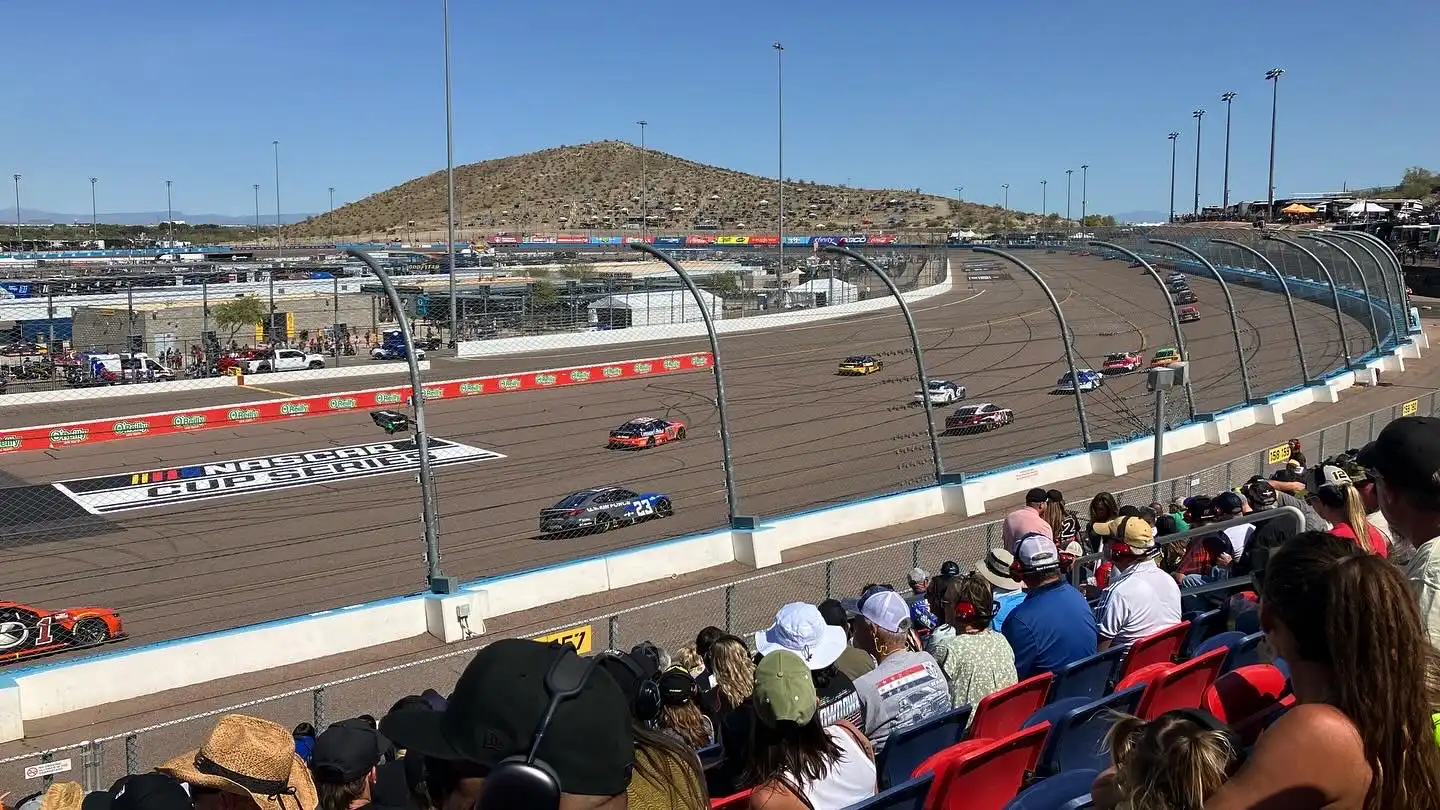
Race Formats: Grand Prix Flow vs Stages, Cautions and Overtime
An F1 Grand Prix usually runs to about 305 kilometers with a standing start and no scheduled stage cautions. A NASCAR race uses a lap count, rolling start, stages, refueling, full-course cautions and possible overtime.
Formula 1 Tries to Preserve Continuous Race Time
A standard Grand Prix runs the shortest number of laps exceeding 305 kilometers. Monaco is the major distance exception.
The race begins from a standing start after a formation lap. Drivers launch from individual grid boxes when the lights go out.
Safety Cars, Virtual Safety Cars and red flags interrupt the event when required. However, the race is not divided by planned competition cautions.
Strategy therefore develops through tire life, weather, traffic and the timing of genuine incidents.
NASCAR Uses Stages and Scheduled Breaks
Most Cup races are divided into three stages. The top ten at the end of the opening stages receive championship points.
Stage endings usually create caution periods. Teams then decide whether to pit, stay out or change only two tires.
Because the field closes behind the pace car, a large lead can disappear. That design repeatedly resets the tactical picture.
Overtime Protects a Green-Flag Finish
NASCAR can extend a race through overtime after a late caution. The field takes a green flag and then aims to reach the overtime line before another yellow.
If the leaders reach that point under green, the next flag ends the race. Consequently, a scheduled 400-mile race can run longer.
The 2026 Championship Formats Also Differ
F1 awards points throughout the season, and the highest total wins the championship. NASCAR returned to a Chase structure in 2026.
The top 16 Cup drivers after the 26-race regular season qualify. Points reset for the final ten races, then the highest total after the finale wins.
Race victories now pay 55 points, while stage points remain. That change rewards wins without using the previous win-and-in playoff rule.
For a wider rules overview, see how racing championships are scored.
F1 vs NASCAR Qualifying
F1 uses three knockout sessions called Q1, Q2 and Q3, with multiple cars on track together. NASCAR generally uses timed qualifying runs whose exact format changes by track type and event.
F1 Qualifying Is a Traffic and Tire Puzzle
Every driver competes in Q1. The slowest group is eliminated, then the process repeats in Q2.
The remaining ten drivers contest Q3 for pole position. Track evolution can make the final seconds decisive.
Drivers must prepare tires, build a safe gap and avoid impeding rivals. A minor error can erase the entire lap.
NASCAR Qualifying Changes With the Venue
Oval qualifying often emphasizes one or two timed laps. Superspeedway sessions can use multiple rounds.
Road-course qualifying may use groups because a longer lap limits the number of attempts. Special events can introduce unique procedures.
The qualifying lap also influences pit selection. A better stall can reduce delays during crowded stops.
Which Is Harder?
F1 asks for a perfect lap while managing traffic and tire temperature. NASCAR asks drivers to reach the limit quickly with very little preparation.
On an oval, the steering inputs may look small. Yet a tiny lift or poor line can decide the front row.
Learn more through the general qualifying guide.
Pit Stops and Strategy: Two Seconds vs Fuel-and-Tire Choreography
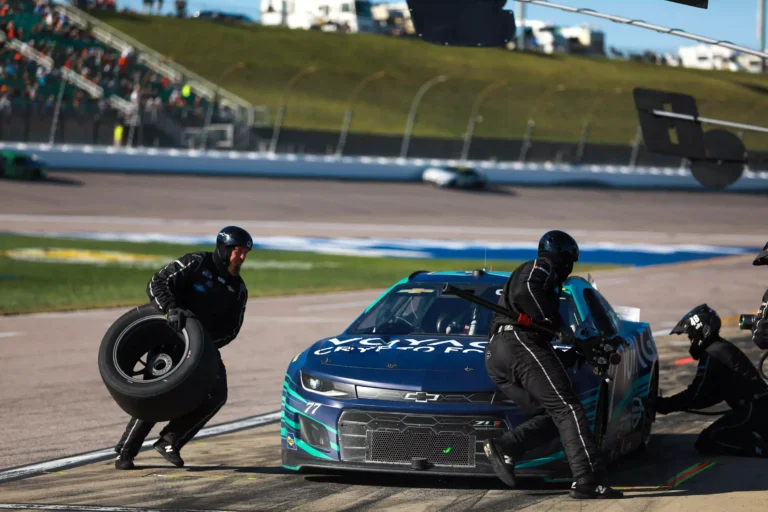
F1 uses many crew members to change four tires in roughly two seconds, with no race refueling. NASCAR uses a smaller over-the-wall crew to change tires, add fuel and make adjustments, so stops usually take much longer.
F1 Stops Are Built Around Minimum Stationary Time
Each wheel has a dedicated gun operator and tire handlers. Additional crew members lift the car and manage release safety.
The single wheel nut allows extremely fast changes. However, a loose wheel or unsafe release can produce penalties.
Teams can also change the front wing or adjust its flap. Those actions add time and are used only when necessary.
NASCAR Stops Combine Several Jobs
The crew changes tires and adds fuel through a gravity-fed can. It may also clean the windshield or repair body damage.
Two-tire stops trade grip for track position. Four-tire stops maximize performance but take longer.
A short fuel fill can gain time when the car needs only enough fuel to reach the finish. Meanwhile, a full stop protects against another caution cycle.
Caution Timing Dominates NASCAR Strategy
Pitting under green costs a full lap or more at some ovals. A caution immediately after a stop can trap a team.
Therefore, crew chiefs study fuel windows, tire falloff and the probability of a yellow. NASCAR strategy often resembles risk management under uncertainty.
F1’s Undercut Is More Powerful
Fresh tires can produce a fast out-lap. A driver pits first, gains time, then jumps the rival when the other car stops.
The overcut works when clean air or tire warm-up matters more. Both tactics depend on pit-lane loss and traffic.
See how pit stops work across motorsport.
F1 vs NASCAR Tires and Wheels
F1 uses Pirelli slick compounds, intermediates and wet tires, with compound rules shaping dry races. NASCAR uses Goodyear slicks developed for each track, with left- and right-side constructions often differing on ovals.
F1 Tires Are a Deliberate Strategic Variable
Pirelli selects three dry compounds for a weekend. Teams label them hard, medium and soft for that event.
Drivers in a dry Grand Prix usually must use at least two different slick compounds. As a result, most races require at least one stop.
Tire blankets preheat the tires under current rules. Drivers still need to manage surface and carcass temperatures.
NASCAR Tires Carry Unequal Loads
Oval racing places huge sustained load on the right-side tires. Goodyear therefore designs constructions for each track’s banking and surface.
Left-side and right-side tires may use different compounds and structures. Teams cannot simply swap them across the car.
Tire falloff often improves racing. A driver who saves rubber can attack late in a green-flag run.
Both Series Use 18-Inch Wheels
F1 moved to 18-inch wheels in 2022. NASCAR’s Next Gen car also introduced forged 18-inch wheels with one center lug.
The similar diameter hides major differences. F1 tires are open to airflow, while NASCAR tires sit beneath bodywork.
F1 vs NASCAR Safety: Halo, Survival Cell, Roll Cage and SAFER Barrier
Both use advanced safety systems designed for different crash patterns. F1 relies on a carbon-fiber survival cell, Halo, wheel tethers and deformable structures. NASCAR relies on a steel roll cage, energy-absorbing seat, window net, roof flaps and SAFER barriers.
Formula 1 Protects an Open Cockpit
The carbon-fiber survival cell surrounds the driver. Front, rear and side crash structures absorb energy outside that cell.
Halo protects the head from large objects and other cars. Wheel tethers reduce the chance of loose tires entering the cockpit area.
Drivers also use HANS, fire-resistant clothing, a six-point harness and a molded seat. The FIA tests the chassis before it can race.
NASCAR Protects a Roofed Cockpit
The driver sits inside a steel tube cage with impact foam and a containment seat. The seat supports the head, shoulders and pelvis.
A window net keeps limbs inside the cockpit. Roof flaps deploy during a spin to reduce aerodynamic lift.
SAFER barriers line many oval walls. Their steel-and-foam construction absorbs energy before the car reaches the concrete wall.
Crash Types Are Different
F1 accidents often involve high-speed impacts after a car leaves the racing line. Suspension parts and exposed wheels can separate.
NASCAR crashes can involve many cars because the field runs close together. A spinning car may receive several secondary impacts.
Therefore, a simple danger ranking is misleading. Each championship has developed safety around its own most likely failures.
Read how the F1 Halo works, what a safety car does and what causes racing crashes.
F1 Driver vs NASCAR Driver: Which Job Is Harder?
F1 creates greater peak braking and cornering loads, plus complex energy and tire management. NASCAR creates longer periods in traffic, extreme cockpit heat, repeated restarts and difficult drafting decisions. Each is hard in a different way.
F1 Demands High-Speed Precision
An F1 driver must place the car within centimeters while braking at several times the force of gravity. Steering inputs must remain smooth because sliding overheats the tires.
The driver also changes brake balance, differential settings and energy deployment. Those adjustments happen during a lap that leaves almost no spare attention.
Neck strength is crucial through fast corners. Aerodynamic load keeps rising with speed, so the hardest turns can create sustained lateral force.
NASCAR Demands Traffic Intelligence
A Cup driver may spend hours surrounded by cars. Mirrors, spotter calls and peripheral vision become essential.
At Daytona, the driver reads two lanes at once. A mistimed block can lose the lead or trigger a major crash.
Short tracks create another challenge. Braking, wheelspin, contact and lapped traffic repeat every few seconds.
Oval Racing Is Not Simply Turning Left
The line changes as rubber builds and the track temperature moves. A driver may run the bottom early and the wall later.
The car also changes through a fuel run. Rear grip fades, brake temperatures rise and the steering balance shifts.
Consequently, oval mastery requires patience and constant adaptation. The steering wheel moves less, but the judgment never stops.
Crossovers Prove the Skills Are Not Automatic
Several drivers have competed in both worlds. Juan Pablo Montoya won in F1 and NASCAR, while Mario Andretti won the F1 title and the Daytona 500.
However, success rarely transfers instantly. The braking references, tire behavior and racecraft are too different.
For broader history, visit the famous race-car drivers collection.
F1 vs NASCAR Costs and Team Budgets
Formula 1 is far more expensive at the top level because teams design and manufacture bespoke cars, employ large engineering staffs and travel globally. NASCAR is still costly, but standardized components and a domestic calendar reduce the scale.
Formula 1 Funds Continuous Development
An F1 team operates a factory, design office, simulation group, race team and manufacturing department. Wind-tunnel and CFD work continue through the season.
The FIA financial regulations limit defined spending. However, important exclusions mean total company costs remain above the cap figure.
Power-unit manufacturers operate under separate financial rules. A works program therefore represents a much larger industrial commitment than one race car.
NASCAR Buys More Common Components
The Next Gen platform uses approved suppliers for major assemblies. This reduces the number of unique parts that each team must design.
Yet a competitive Cup organization still needs engineers, simulators, pit crews, transporters, engines and multiple cars. Crash damage can also be severe.
Large teams operate several entries and support alliances. Smaller teams can race, but matching the largest organizations across a full season remains difficult.
Car Cost Is Only Part of the Budget
Fans often ask for one F1 car price or one NASCAR car price. That number can mislead because design, spares and staff create most of the true cost.
An F1 front wing may represent thousands of design hours. A NASCAR body clip may be cheaper, but repeated crashes and a 36-race points schedule consume inventory.
Popularity, Attendance and American Appeal
Formula 1 has the larger global audience and races across several continents. NASCAR remains one of the strongest motorsport properties in the United States, with deep regional loyalty and a long domestic schedule.
Formula 1 Has the Global Advantage
Formula 1 reported a global fanbase of 827 million after the 2025 season. It also reported a record 6.7 million combined season attendance.
The championship visits major markets in Europe, Asia, the Americas, the Middle East and Australia. That international footprint makes its stars globally recognizable.
F1 has also grown rapidly in the United States. Three U.S. Grands Prix and strong broadcast growth created a much larger American audience than a decade earlier.
NASCAR Has Deeper Weekly American Roots
NASCAR’s calendar is built around U.S. tracks and regional traditions. Daytona, Talladega, Darlington, Bristol and Martinsville carry identities beyond one event.
The schedule also creates repeated access. Fans can follow the same teams nearly every weekend from February into November.
Tailgating, camping and sponsor activation make the race weekend feel different from a Grand Prix. The atmosphere is less international and more connected to local motorsport culture.
Television Presentation Also Feels Different
F1 broadcasts focus on strategy, tire gaps and technical performance across a shorter race. NASCAR broadcasts cover longer events with more cautions and commercial breaks.
NASCAR spotter audio and crew-chief decisions add another layer. F1 radio highlights often emphasize engineering instructions and tire targets.
Which Series Has Better Racing?
Choose Formula 1 When You Value
- The fastest road-course cars in the world
- Constructor innovation and visible technical differences
- International circuits and global sporting culture
- Qualifying precision and strategic tire battles
- Shorter events with fewer scheduled interruptions
Choose NASCAR When You Value
- Close packs and frequent side-by-side racing
- Drafting, contact and restart aggression
- Long races with fuel and tire strategy
- Short tracks, superspeedways and oval variety
- A traditional American race-weekend atmosphere
Formula 1 can produce long strategic tension even when there are few passes. The gap between two drivers may shrink through tire life and pit timing.
NASCAR creates more obvious movement. However, some fans dislike stages or late cautions that erase a deserved lead.
Therefore, “better racing” depends on whether the viewer values continuity or repeated compression. Both systems create legitimate pressure.
Daytona 500 vs Monaco Grand Prix
| Feature | Daytona 500 | Monaco Grand Prix |
|---|---|---|
| Series | NASCAR Cup Series | Formula 1 |
| Track type | 2.5-mile high-banked superspeedway | Narrow temporary street circuit |
| Race distance | 500 miles before possible overtime | Shorter Grand Prix distance due low average speed |
| Start | Rolling | Standing |
| Key skill | Drafting, lane control and avoiding the pack crash | Precision, qualifying position and barrier confidence |
| Passing | Frequent, often multi-lane | Very difficult in dry conditions |
| Strategy | Fuel, tires, stages and late-race alliances | Tire timing, track position and Safety Car risk |
| Prestige | NASCAR’s signature race | F1’s most famous street race |
Daytona rewards cooperation until the final laps. Drivers need drafting partners, yet every partner is also a rival.
Monaco rewards individual precision. Qualifying becomes critical because passing space is almost nonexistent.
One race turns traffic into speed. The other turns walls into a test of accuracy.
What Changed in F1 and NASCAR for 2026?
Formula 1 Introduced a New Technical Formula
The 2026 F1 car became shorter and narrower. Active front and rear wings reduced drag on straights and restored downforce in corners.
The power unit kept its turbo V6 but removed the MGU-H. Electrical power rose dramatically through a 350 kW MGU-K.
Early-season feedback also led the FIA to refine energy-management parameters. Those changes aimed to reduce excessive harvesting and maintain stronger acceleration.
The official overview is available in the World of Speed 2026 F1 regulations guide.
NASCAR Increased Horsepower at Selected Tracks
Road courses and ovals shorter than 1.5 miles moved to a 750-horsepower target. NASCAR wanted more throttle control and greater tire falloff.
The change did not create a universal 750-horsepower package. Larger ovals and superspeedways retained separate configurations.
NASCAR Replaced the Elimination Playoff
The Cup Series returned to a ten-race Chase. The top 16 drivers qualify through regular-season points rather than an automatic win-and-in rule.
Wins now pay 55 points. The champion is the Chase driver with the highest total after the season finale.
Final Score: Which Motorsport Is Better?
Formula 1 is the better championship for viewers who admire technical innovation and maximum circuit performance. The machines are lighter, faster and more aerodynamically advanced.
NASCAR is the better championship for viewers who want prolonged traffic, tactical drafting and frequent changes in track position. Its cars can race closely and tolerate controlled contact.
For a U.S. fan, the best answer may be to watch both. F1 provides a global morning or afternoon event, while NASCAR often fills the later Sunday schedule.
The two championships do not compete by offering the same product. They succeed because they preserve different forms of racing.
F1 vs NASCAR FAQs
Which is faster, Formula 1 or NASCAR?
Formula 1 is much faster over a road-course lap because its cars brake later and corner harder. NASCAR cars can approach 200 mph in superspeedway packs, but their greater weight limits complete-lap performance.
Which is harder to drive, F1 or NASCAR?
Neither is universally harder. F1 demands greater peak g-force, braking precision and system management. NASCAR demands sustained traffic awareness, drafting skill, tire conservation and control of a heavier car.
Why does NASCAR refuel but Formula 1 does not?
NASCAR races are designed around several fuel windows and can run hundreds of miles longer. F1 banned race refueling after 2009, so each car starts with enough fuel to finish.
Which motorsport is better, F1 or NASCAR?
F1 is better for technology, global circuits and maximum road-course speed. NASCAR is better for pack racing, oval strategy, contact and American race-day culture.
Conclusion: F1 and NASCAR Are Better at Different Things
The F1 vs NASCAR debate has no useful answer until the viewer defines “better.”
If better means the fastest road-course car, Formula 1 wins clearly. Its low weight, powerful hybrid system, carbon brakes and advanced aerodynamics create a superior lap-time machine.
If better means sustained close racing, NASCAR often has the advantage. Its closed-wheel cars, controlled platform and oval rules support drafting and side-by-side battles.
Formula 1 also offers a stronger constructor contest. Each team develops a unique chassis within the FIA regulations.
NASCAR instead controls more components. Consequently, driver execution and setup work operate within a tighter technical range.
The engines express the same contrast. F1 uses a small turbo V6, advanced sustainable fuel and major electrical deployment.
NASCAR uses a large naturally aspirated V8. The sound is traditional, while the throttle response remains direct.
Track design changes the racing even more. F1 travels to road courses and street circuits around the world.
NASCAR builds its identity around superspeedways, intermediate ovals and short tracks. It also adds road and street courses for range.
Race formats then push the championships farther apart. F1 protects continuous competition whenever possible.
NASCAR uses stages, cautions and double-file restarts. Those features repeatedly compress the field and create new tactical decisions.
Pit stops follow the same philosophy. F1 changes four tires with extraordinary speed but does not refuel.
NASCAR combines tires, fuel and car adjustments. A crew chief can win by predicting the next caution.
Safety cannot be reduced to one winner. F1’s survival cell and Halo protect an open cockpit.
NASCAR’s roll cage, containment seat and SAFER barriers protect a driver inside a heavy closed car. Each system answers different crash patterns.
The driver comparison is also a draw. F1 produces higher cornering and braking loads.
NASCAR creates longer races in dense traffic. Drafting decisions can affect twenty cars at once.
Therefore, the most complete motorsport fan does not need to choose only one. F1 explains what happens when engineering freedom attacks lap time.
NASCAR explains what happens when a controlled platform attacks competition. Together, they show how many forms great racing can take.
Sources and Fact-Checking
This article was checked on July 30, 2026 against current FIA, Formula 1 and NASCAR material. The 2026 technical and championship changes were treated as current rules, not future proposals.