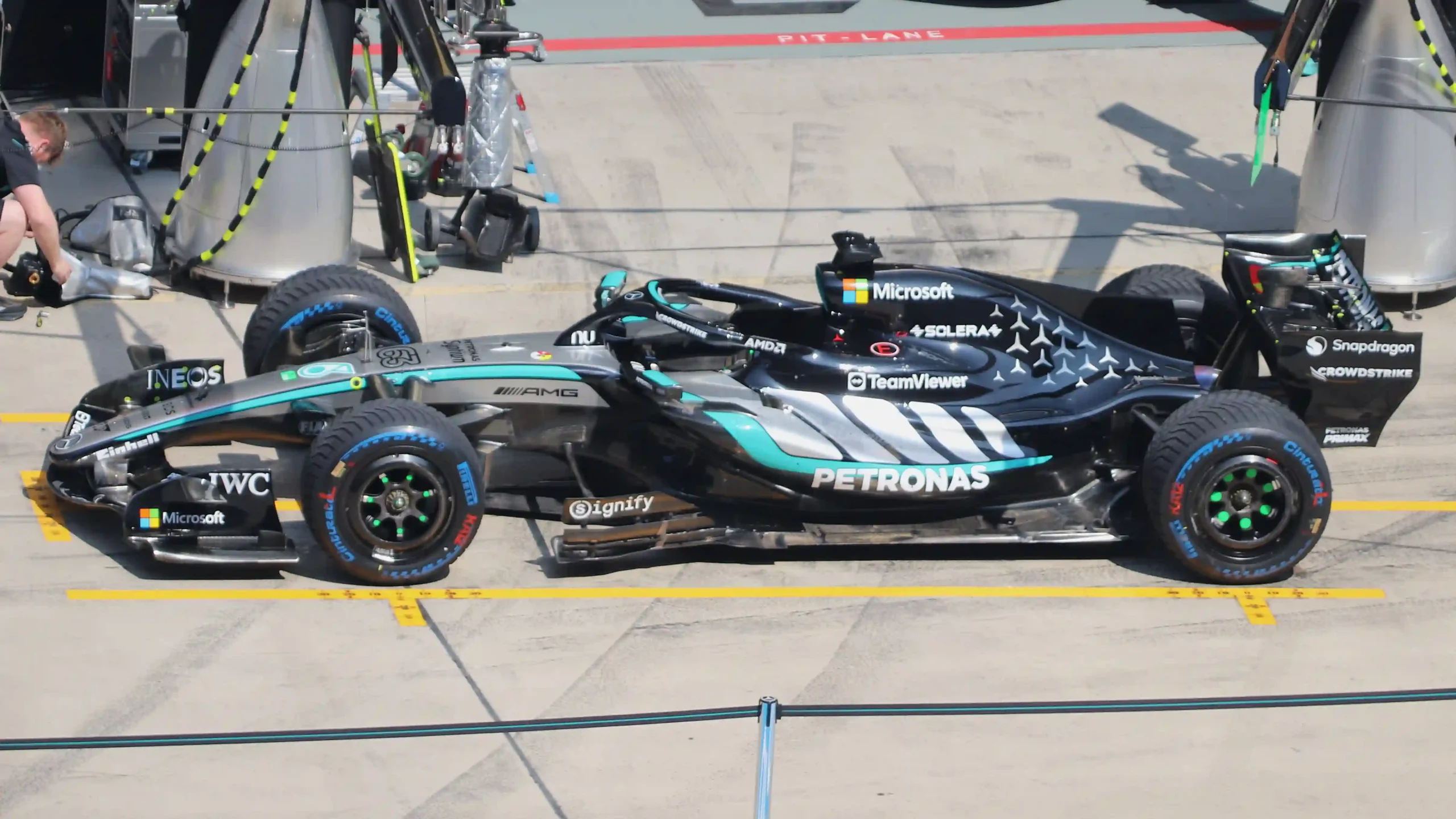
F1 2026 Regulations Explained: New Cars, Engines, Teams & What Changes for Fans
Smaller cars, moving wings, stronger electric power, sustainable fuel and a 22-car grid have changed how Formula 1 looks, sounds and races.
The sport introduced smaller 768kg cars, active front and rear wings, a 350kW MGU-K, Advanced Sustainable Fuel, Overtake Mode and an expanded 11-team grid.
The 2026 season did not bring one major rule change. It replaced the basic design language of the car and power unit at the same time.
The previous engine formula had lasted since 2014. Meanwhile, the ground-effect chassis rules had shaped the cars since 2022.
Formula 1 reset both areas together. Consequently, every team faced a new aerodynamic map, new energy strategy and new packaging challenge.
The cars became 100mm narrower and 200mm shorter between the axles. Their minimum weight fell from 800kg to 768kg.
Active aerodynamics arrived on both wings. Therefore, drivers now switch between high-downforce Corner Mode and low-drag Straight Mode.
DRS disappeared in its old form. However, the one-second concept survived through a new electrical passing aid called Overtake Mode.
The 1.6-liter V6 turbo remains. Yet the MGU-H is gone and the MGU-K now produces up to 350kW.
Every car also runs on Advanced Sustainable Fuel. In addition, the grid grew to 22 cars when Cadillac became the 11th team.
The rulebook has continued to evolve during the season. The FIA’s latest published 2026 sections were issued on June 25, 2026.
Those documents cover general, sporting, technical, financial and operational rules. Therefore, this guide separates the original design from later refinements.
The goal of this F1 2026 regulations explained guide is simple. It shows what changed, why it changed and what fans should watch.
The F1 2026 Regulations Explained in One Table
The headline changes are smaller cars, active aerodynamics, more electric power, no MGU-H, sustainable fuel, Overtake Mode and an 11-team grid.
| Area | 2025 Position | 2026 Position | Why Fans Should Care |
|---|---|---|---|
| Wheelbase | Maximum 3,600mm | Maximum 3,400mm | Cars occupy less track space and change direction more easily |
| Car width | 2,000mm | 1,900mm | More room for side-by-side racing |
| Minimum weight | 800kg | 768kg | More responsive braking and handling |
| Aerodynamics | Ground-effect tunnels and rear-wing DRS | Flatter floor and active front plus rear wings | Different cornering and straight-line behavior |
| Passing aid | DRS for eligible following cars | Overtake Mode through electrical energy | Energy strategy replaces a simple rear-wing advantage |
| Hybrid system | 120kW MGU-K plus MGU-H | 350kW MGU-K and no MGU-H | Battery deployment becomes central to racing |
| Fuel | E10 fuel with fossil content | Advanced Sustainable Fuel | No new fossil carbon in the approved feedstock pathway |
| Grid | 10 teams and 20 cars | 11 teams and 22 cars | More traffic, more eliminations and a new U.S. team |
The table captures the visible changes. However, the deeper story is how these systems interact.
A smaller car still needs sufficient energy. Active wings help it use that energy without wasting too much through drag.
Overtake Mode then adds a passing opportunity. Consequently, the 2026 package works as one system rather than separate ideas.
The 2026 car is not simply a lighter 2025 car. Its performance depends on the relationship between wing position, battery state, harvesting and straight-line deployment.
1. Smaller, Narrower and Lighter Formula 1 Cars
The maximum wheelbase fell by 200mm to 3,400mm, while overall width dropped by 100mm to 1,900mm.
Recent Formula 1 cars became extremely long. That helped package the floor, fuel cell and hybrid components.
However, drivers often described them as heavy in slow corners. The new “nimble car” concept targets that criticism.
A 3,400mm Wheelbase Changes Direction Faster
A shorter wheelbase usually improves rotation in tight corners. It also reduces the space needed when two cars run together.
Therefore, street circuits may feel less crowded. The change does not automatically guarantee overtaking, though.
The Car Is 1,900mm Wide
The overall width fell from 2,000mm to 1,900mm. Meanwhile, the floor became narrower too.
Consequently, drivers gain a little more usable track. Ten centimeters matters when two front wheels nearly touch.
The Minimum Weight Fell to 768kg
The 2025 minimum was 800kg. The 2026 target is 768kg, including the required car-and-driver calculation.
Teams still must build a safe hybrid car. Therefore, reaching the limit remains a serious engineering challenge.
Narrower Tires Reduce Weight and Drag
The 18-inch wheel diameter remains. However, front tires are 25mm narrower and rear tires are 30mm narrower.
The smaller contact patch can reduce grip. In addition, it changes tire warm-up and degradation behavior.
For the fundamentals, read how a Formula 1 race car works and what grip means in racing.
2. The Ground-Effect Concept Was Reworked
They still generate underfloor downforce, but the deep Venturi tunnels were replaced by a flatter floor and larger rear diffuser.
The 2022 rules placed huge importance on tunnels under the car. Air accelerated through those channels and created suction.
Teams later recovered much of the outwash that the rules tried to control. Therefore, following became harder again.
The Venturi Tunnels Are Gone
The 2026 floor is flatter. A larger diffuser still creates underbody load at the rear.
However, the car depends less on sealed tunnel performance. This should make the aerodynamic platform less sensitive.
Simpler Front Wings Target Cleaner Wake
The front wing uses fewer elements. Bargeboards return behind the front wheels, but they serve an inwash purpose.
Consequently, the rules try to keep tire turbulence closer to the car. That reduces the dirty air thrown toward a following driver.
Wheel Covers and Beam Wings Disappeared
Removing wheel covers reduces weight and changes wheel wake control. Beam wings below the rear wing are also gone.
Teams must therefore find load through the permitted surfaces. Development remains intense despite the simpler appearance.
Less Downforce Does Not Mean Slow Racing
The cars may produce less peak downforce than the mature 2025 generation. Yet lower mass and active aero recover performance elsewhere.
Moreover, lap time is not the only goal. The rules seek better racing in another car’s wake.
See what downforce is, how wing angle changes load and clean air versus dirty air.
3. Active Aero: Straight Mode and Corner Mode
The front and rear wing elements move between a high-downforce corner setting and a low-drag straight setting in designated zones.
Formula 1 had adjustable front wings in 2009 and rear-wing DRS from 2011. The 2026 system connects both ends of the car.
That balance is important. Opening only the rear wing can shift aerodynamic balance sharply.
Corner Mode Is the Default Grip Setting
In corners, the wing flaps sit in the closed position. This creates downforce and stabilizes the car.
Therefore, Corner Mode is not an overtaking tool. It is the normal high-load configuration.
Straight Mode Reduces Drag
In designated zones, the driver triggers the active system. Both wings flatten to reduce drag.
The system closes when the driver brakes or lifts. Distance-based safeguards can also force closure before a corner.
Every Driver Can Use Straight Mode
Old DRS required a driver to be within one second during races. Straight Mode is available to every car in approved zones.
Consequently, it is an efficiency device rather than a passing reward. Overtake Mode now supplies the passing advantage.
Track-Specific Safety Still Overrides the System
At Monaco in June 2026, active aero was disabled for safety. Cars remained in maximum-downforce Corner Mode.
This decision showed that the FIA can tailor operation to a circuit. Therefore, fans should check event-specific instructions.
4. Overtake Mode Replaced DRS as the Passing Aid
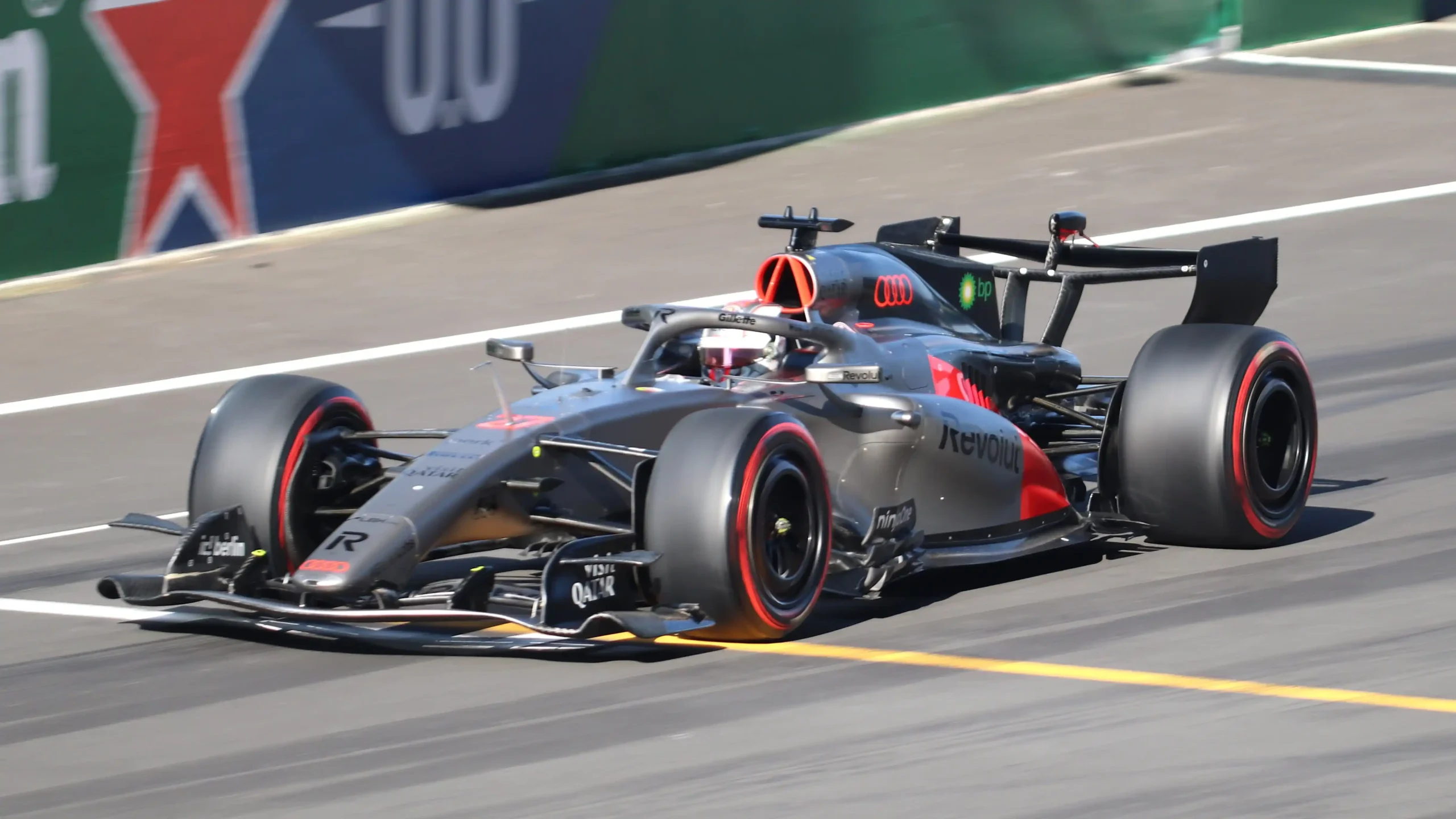
Overtake Mode replaced DRS as the advantage for a following car, while Straight Mode handles the low-drag wing configuration for everyone.
The difference between Straight Mode and Overtake Mode matters. Many early explanations treated them as one system.
However, they solve different problems. One reduces drag and the other changes electrical deployment.
The One-Second Detection Rule Survived
A driver must be within one second at the defined detection point. The benefit then becomes available on the following lap.
Therefore, timing matters. A driver can qualify for the mode without passing immediately.
The Following Car Receives an Extra Electrical Profile
Overtake Mode allows an additional +0.5MJ recharge allowance and a stronger deployment profile. This helps sustain speed longer.
The benefit becomes most useful on long straights. However, teams can plan its use around the whole lap.
It Does Not Open the Rear Wing
Straight Mode opens the active wings. Overtake Mode changes the energy available to the eligible attacker.
Consequently, the driver ahead can also run low drag. The passing difference comes from electrical energy.
Passing Is More Strategic
A driver may spend energy early to close the gap. Alternatively, the driver can save it for the main straight.
The defender also manages Boost. Therefore, an overtake becomes an energy contest rather than a simple wing opening.
Compare the systems with the traditional DRS guide and how a slipstream works.
5. Boost, Recharge and Super Clipping
It lets a driver manually request a team-defined maximum electrical deployment profile for attack, defense or lap time.
The new power unit stores only a finite amount of usable electrical energy. Therefore, deployment cannot stay at maximum forever.
Drivers and engineers must decide when to spend and when to harvest. This creates a new tactical layer.
Boost Can Attack or Defend
Unlike Overtake Mode, Boost does not require a one-second gap. A driver can use it whenever enough charge exists.
However, later in-season refinements capped the added race Boost effect. The aim was to control closing speeds.
Recharge Happens in Several Ways
The MGU-K recovers energy under braking. It can also harvest on part throttle or when the driver lifts early.
Much of the process is automated through ECU maps. Nevertheless, the driver still influences the state of charge.
Super Clipping Harvests at Full Throttle
Near the end of a straight, the MGU-K can reverse its role and harvest while the driver remains flat out. This is called super clipping.
The car may stop accelerating strongly during that phase. Therefore, the technique can look unusual on television.
Miami Refinements Reduced Excessive Harvesting
From Miami, maximum qualifying recharge fell from 8MJ to 7MJ. Peak superclip power rose from 250kW to 350kW.
The change shortened the harvesting period. In addition, it reduced the time drivers spent managing awkward energy behavior.
Learn the systems through the F1 ERS explainer, the energy-store guide and what the ECU controls.
6. New F1 Engines: More Electric Power, No MGU-H
They use a 1.6-liter turbo V6 hybrid with an approximately 400kW combustion contribution and a 350kW MGU-K.
The basic V6 format remains familiar. However, the balance between combustion and electric power changed dramatically.
The previous hybrid supplied roughly one-fifth of total output electrically. The 2026 target is close to an equal split.
The MGU-K Nearly Tripled in Power
Maximum MGU-K output rose from 120kW to 350kW. That is almost a 300% increase.
Consequently, battery condition can decide acceleration and defense. A weak state of charge becomes visible on long straights.
The MGU-H Was Removed
The MGU-H recovered energy from the turbo and could control turbo speed. It was complex and had little direct road use.
Removing it helped attract new manufacturers. However, it also reintroduced turbo-spool challenges.
The Combustion Engine Uses Energy Flow
The ICE contribution is around 400kW under the new concept. Fuel use is regulated through energy flow rather than only mass flow.
This matters because sustainable fuels can have different energy density. Therefore, the rule measures delivered energy more directly.
Reliability and Packaging Became New Battles
A stronger electrical system creates cooling demands. The battery, inverter and motor must remain within temperature targets.
Meanwhile, teams need compact bodywork. Power-unit packaging therefore affects aerodynamics more than fans may realize.
For background, read how car engines work and turbo versus naturally aspirated engines.
7. Advanced Sustainable Fuel Became Mandatory
Every team uses FIA-certified Advanced Sustainable Fuel made from approved non-fossil-carbon pathways and designed as a drop-in fuel.
The phrase “100% sustainable fuel” can be confusing. It does not mean the exhaust contains no carbon dioxide.
Instead, the carbon must come from sustainable sources rather than newly extracted fossil carbon. The lifecycle is independently certified.
Approved Sources Include Waste and Captured Carbon
Feedstocks can include municipal waste, non-food biomass and captured carbon. They must avoid direct competition with food production.
Therefore, the rule goes beyond blending ethanol into gasoline. The entire carbon pathway matters.
Drop-In Means No New Engine Concept Is Required
The fuel must work as a replacement for a fossil equivalent. It is tailored for racing but remains chemically relevant to road fuels.
Consequently, suppliers can test detergents, octane and distillation behavior. The technology may support existing vehicle fleets.
Performance Still Matters
Fuel companies compete within strict specifications. Combustion speed and energy density affect performance.
However, the FIA uses certification and sample matching. Teams cannot use unapproved exotic chemistry.
Fuel Is Only One Part of Net Zero
The race cars form a small share of Formula 1’s total footprint. Freight, facilities and fan travel also matter.
Nevertheless, the fuel rule provides a visible technical platform. It also keeps combustion research relevant.
8. The 2026 Teams and Power-Unit Suppliers
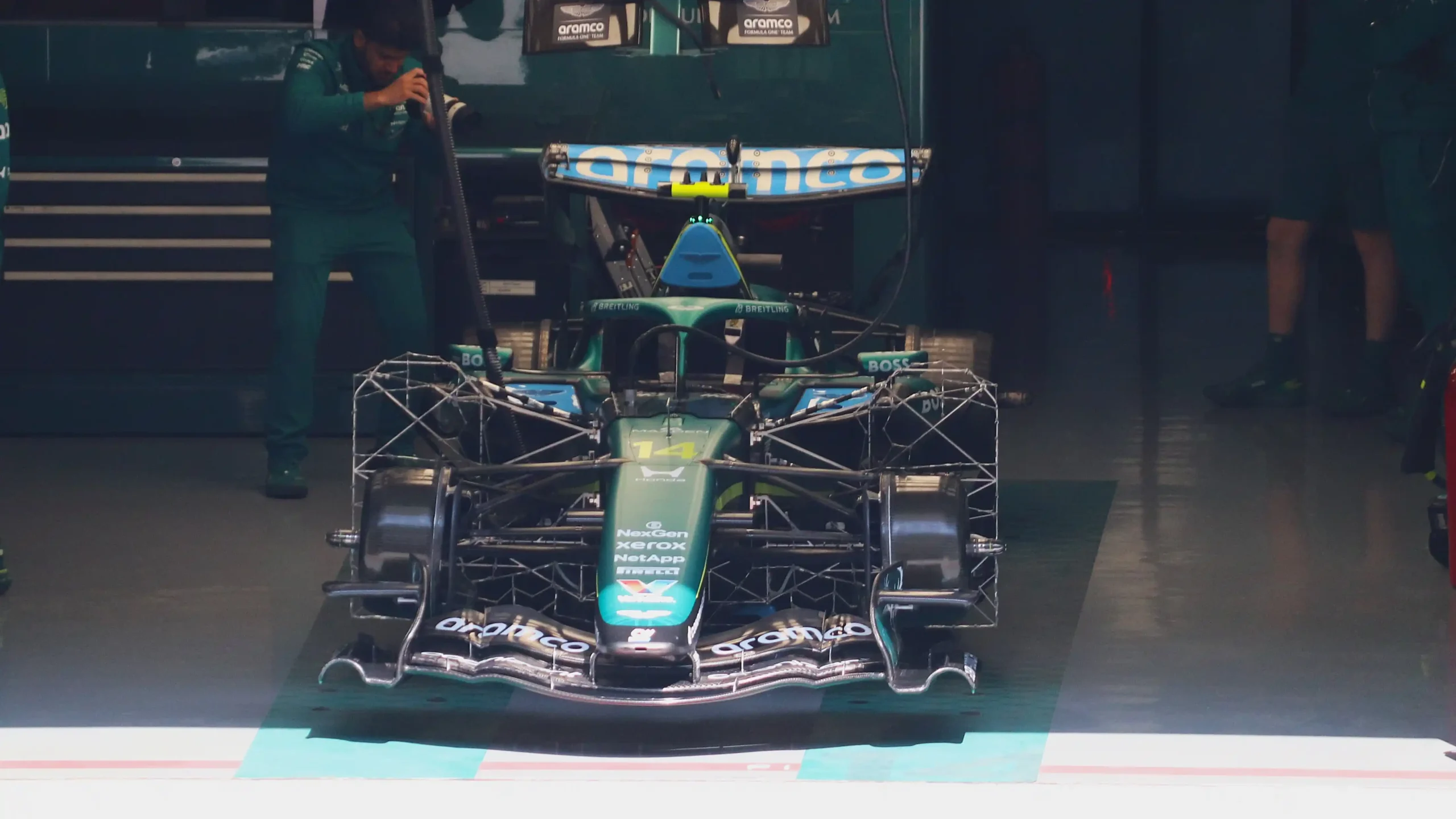
Eleven teams and 22 cars compete after Cadillac joined and Sauber became Audi’s works operation.
The regulation reset attracted new manufacturers. It also changed several existing partnerships.
Mercedes and Ferrari supply most of the field. Meanwhile, Audi, Honda and Red Bull Ford run focused works programs.
| 2026 Team | Power Unit | Major Change |
|---|---|---|
| Mercedes | Mercedes | Works team for the new power unit |
| Ferrari | Ferrari | Continues as works constructor and supplier |
| McLaren | Mercedes | Customer relationship continues |
| Red Bull Racing | Red Bull Ford Powertrains | First in-house Red Bull power-unit era |
| Racing Bulls | Red Bull Ford Powertrains | Shares the new Red Bull-Ford supply |
| Alpine | Mercedes | Stopped using a Renault works engine |
| Haas | Ferrari | Continues as a Ferrari customer |
| Audi | Audi | Sauber became Audi’s full works team |
| Williams | Mercedes | Continues the Mercedes partnership |
| Aston Martin | Honda | Exclusive works power-unit partnership |
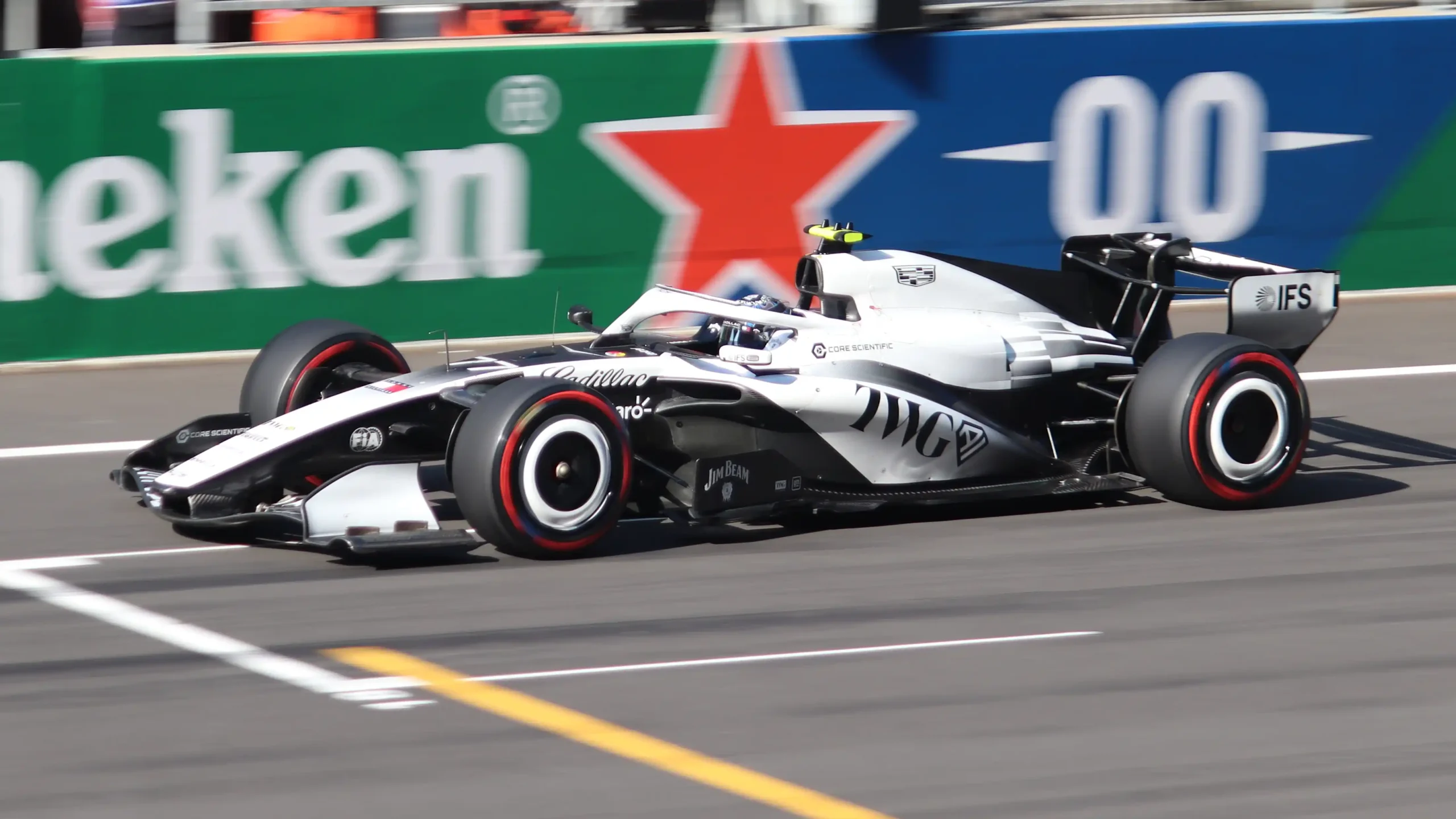
| Cadillac | Ferrari | New team; GM power unit planned for 2029 |
Audi Entered as a Full Works Team
Audi controls both chassis and power-unit development. Therefore, it can design the entire package around one concept.
The risk is equally complete. Every performance problem belongs to the manufacturer.
Red Bull Built Its Own Power-Unit Operation
Ford supports battery, motor, software and analytics work. The partnership supplies both Red Bull-owned teams.
Consequently, Red Bull no longer depends on an outside works supplier. That is a major strategic shift.
Honda Returned With Aston Martin
Honda left full manufacturer status after 2021, then returned for the new rules. Aston Martin became its exclusive works partner.
This gives the team bespoke integration. However, one-team supply also reduces comparison data.
Cadillac Expanded the Grid
Cadillac entered with Ferrari engines and gearboxes. General Motors plans its own power unit from 2029.
As a result, the team can learn F1 operations before becoming a complete works manufacturer.
See the full 2026 F1 teams list, the 2026 driver lineup and the Red Bull Racing profile.
9. Qualifying Changed for a 22-Car Grid
Six cars are eliminated in Q1 and six more in Q2, while the final 10 continue into a 13-minute Q3 session.
Cadillac’s arrival added two cars. Therefore, the knockout format needed a small numerical adjustment.
The three-session structure remains. Fans still get Q1, Q2 and the top-10 pole shootout.
Q1 Lasts 18 Minutes
All 22 cars begin the session. The slowest six are eliminated.
Consequently, 16 cars advance. Traffic management becomes even more important on short circuits.
Q2 Lasts 15 Minutes
Another six cars are eliminated. The remaining 10 reach Q3.
Teams must balance tire preparation with track position. A poorly timed run can meet a large queue.
Q3 Lasts 13 Minutes
The final group remains at 10 cars. However, the session is now 13 minutes.
Energy deployment also matters more than before. Drivers need a strong battery state for the decisive lap.
Sprint Qualifying Uses the Same Elimination Numbers
The expanded grid also affects SQ1 and SQ2. Six cars drop out in each early segment.
Therefore, casual viewers should remember one simple rule. Twelve cars leave before the final top-10 session.
Read F1 qualifying explained, what pole position means and how grid position works.
10. Race Starts Needed a New Turbo Procedure
Without the MGU-H to spin the turbo, drivers need extra time at high revs before the starting lights begin.
The previous MGU-H could manage turbo speed electrically. Removing it changed the launch preparation.
During testing, drivers had to hold high revs longer. Therefore, the FIA adjusted the start sequence.
A Five-Second Warning Precedes the Lights
Once the last car reaches its grid slot, drivers receive a warning. They then have five seconds to build revs.
The first red light follows afterward. This gives the turbo enough exhaust flow before launch.
Low-Power Starts Raised Safety Concerns
Early races showed how severe a weak launch could become. A slow car in the middle of the grid creates danger.
The FIA developed low-power start detection. The package includes automatic electrical assistance and warning lights in defined cases.
The Clutch Still Matters
Drivers control the launch through steering-wheel paddles and the clutch bite point. Electronics cannot perform a fully automatic start.
Therefore, reaction and technique still decide positions. The new procedure only prepares the turbo.
11. Safety Rules Became Tougher, Not Weaker
No. The FIA retained strict crash standards and strengthened areas including the roll hoop and two-stage nose structure.
Lower weight does not come from removing essential protection. Teams still face demanding homologation tests.
Moreover, the new electrical system creates additional high-voltage safety requirements.
The Roll-Hoop Test Increased
The required load rose from 16g to 20g. This follows lessons from serious rollover accidents.
Therefore, the structure above the driver must absorb more force. Weight reduction had to occur elsewhere.
The Nose Uses Two-Stage Impact Protection
A car can suffer an initial frontal impact and then strike another object. The old nose could detach after the first hit.
The new concept provides protection for a secondary impact. Consequently, the crash structure remains useful longer.
Electrical Isolation Is Critical
The energy store and control electronics operate at high voltage. Safety lights and isolation systems protect drivers and marshals.
Track workers need clear visual information after a crash. Learn more in the Halo safety guide and the monocoque explainer.
12. The Team Cost Cap Rose to $215 Million
The team cost cap is $215 million, while the revised power-unit manufacturer cap is $190 million after accounting rules changed.
Early summaries often listed a $130 million power-unit cap. That figure reflected the original planned baseline.
However, the financial treatment changed before the season. The revised 2026 manufacturer cap became $190 million.
Why the Team Cap Increased
The old headline cap was $135 million plus inflation. The 2026 figure rose to $215 million.
Several costs that previously sat outside the cap moved inside. Therefore, the increase is not an $80 million spending gift.
Capital Expenditure Treatment Changed
The separate capital expenditure cap was removed. Annual depreciation now enters the main calculation.
In addition, staff-time allocation rules became stricter. More shared work can count fully toward F1 costs.
Some Major Costs Remain Excluded
Driver salaries, the three highest-paid staff and race travel remain outside the team cap. Legal and marketing costs also have exclusions.
Therefore, total team spending still exceeds $215 million. The cap controls defined performance-related expenditure.
Power-Unit Manufacturers Have Catch-Up Mechanisms
Additional Development and Upgrade Opportunities can help a supplier with a measured performance deficit. Reliability allowances also exist.
Consequently, homologation does not permanently trap a weak manufacturer. The system seeks controlled convergence.
For financial context, see how much an F1 car costs.
13. The Rules Changed After Testing and Early Races
Yes. Stakeholders can agree amendments, which then require the appropriate FIA approval and publication process.
A regulation reset always creates unexpected behavior. Simulation cannot reproduce every racing situation.
Therefore, the FIA, F1, teams and power-unit manufacturers continued refining the package.
Compression-Ratio Enforcement Was Clarified
The power-unit compression ratio is limited to 16:1. The FIA approved a hot-and-cold measurement compromise from June 1, 2026.
For 2027, measurement moves to defined operating conditions. This addressed a major pre-season technical dispute.
Energy Management Was Adjusted From Miami
Maximum qualifying recharge fell from 8MJ to 7MJ. Peak superclip power rose to 350kW.
Meanwhile, race Boost was capped at an added 150kW. MGU-K deployment outside key acceleration zones was limited to 250kW.
The Aim Was More Flat-Out Driving
Long harvesting phases looked artificial and increased driver workload. The changes targeted two to four seconds of super clipping per lap.
Consequently, drivers could spend more qualifying time accelerating normally. Safety limits also reduced sudden closing speeds.
The Latest Rulebook Is Modular
The FIA now publishes the regulations in Sections A through F. The June 25 issues include technical, sporting, financial and operational updates.
Therefore, readers should use the current documents rather than an old single PDF. This F1 2026 regulations explained article reflects that evolving framework.
14. What Changes for Fans Watching at Home?
Fans will see active wings, SM boards, Overtake and Boost graphics, more battery strategy, 22 cars and different qualifying eliminations.
The cars still look like Formula 1 machines. However, several visual and strategic cues are new.
Understanding those cues makes the racing easier to follow. The broadcast must also explain energy state clearly.
SM Boards Replace Familiar DRS References
Trackside signs mark Straight Mode zones. There can be several zones around one lap.
Therefore, moving wings appear more often than old race DRS. Every driver can use the zones in suitable conditions.
Battery Graphics Matter More
A driver with low charge may become vulnerable before a braking zone. The car can also harvest at unexpected points.
Consequently, television graphics should show state of charge and Overtake eligibility. Radio messages often discuss energy targets.
The Sound and Launch Behavior Changed
The V6 remains, so the basic tone is familiar. However, MGU-H removal changes turbo behavior and start preparation.
Fans may hear longer pre-start revving. Electrical deployment can also change acceleration along a straight.
More Cars Create More Traffic
Twenty-two cars add two more stories and two more potential incidents. Qualifying track position becomes harder.
Moreover, Cadillac adds a major American identity. Audi brings another full manufacturer rivalry.
New Terms Need Clear Distinctions
Straight Mode is not Overtake Mode. Boost is not Overtake Mode either.
The simplest memory aid is this: wings reduce drag, Overtake rewards the close attacker and Boost spends saved energy.
Use the beginner’s Formula 1 guide and the 2026 F1 schedule while following the season.
15. Will the 2026 Regulations Produce Better Racing?
The rules create better tools for close racing, but circuit layout, tire behavior and team performance still decide the final spectacle.
Regulations can improve conditions. They cannot force two evenly matched cars to arrive together.
The 2026 package attacks several known problems. Smaller cars use less track space and the wake target limits outwash.
Active Aero Improves Efficiency
Cars can carry cornering downforce without paying the full drag penalty on straights. This helps the stronger electric system.
Consequently, the power unit and chassis support each other. Without active aero, energy demand would become much harder.
Overtake Mode Creates a New Delta
The following car receives a useful energy advantage. However, the defender can save Boost and position the car carefully.
Therefore, passing still requires judgment. The mode should create opportunities rather than automatic moves.
Narrower Tires Can Increase Driver Challenge
Less contact patch can make traction more difficult. That may create mistakes and different tire strategies.
However, poor tire behavior can also spread the field. Pirelli development remains crucial.
Early Racing Led to More Refinement
Stakeholders described the racing as positive and exciting while identifying energy-management problems. That is an important distinction.
The core concept remained. Refinements targeted qualifying behavior and extreme closing speeds rather than abandoning the rules.
Competitive Resets Reward Complete Organizations
A fast engine cannot rescue a weak chassis. Likewise, efficient aero cannot solve unreliable electrical hardware.
As a result, the regulation winners will be teams that integrate every system. That is the central lesson of the 2026 era.
Common Myths About the 2026 Formula 1 Rules
“DRS Still Exists Under a Different Name”
Not exactly. Straight Mode opens active wings for every car, while Overtake Mode provides the close follower’s electrical advantage.
“The 2026 Cars Are Fully Electric”
False. They retain a 1.6-liter turbo V6 and aim for roughly equal combustion and electric power contributions.
“Sustainable Fuel Produces No CO2”
False. The exhaust still contains carbon dioxide. The benefit comes from avoiding new fossil carbon through certified feedstocks.
“The Power-Unit Cost Cap Is $130 Million”
That was an earlier planned figure. The revised 2026 cap is $190 million after capital expenditure treatment changed.
“Active Aero Works at Every Circuit”
Not always. The FIA disabled it at Monaco for safety and kept cars in Corner Mode.
“Smaller Cars Automatically Guarantee More Overtaking”
No rule can guarantee passing. The smaller footprint improves opportunity, but tire grip and performance gaps still matter.
F1 2026 Regulations FAQs
What are the biggest F1 2026 regulation changes?
The cars are smaller and lighter, active wings replace old DRS operation, electrical output rises sharply, sustainable fuel is mandatory and Cadillac adds an 11th team.
What replaced DRS in Formula 1 in 2026?
Straight Mode handles low-drag wing movement for every car. Overtake Mode gives an eligible following driver an additional electrical energy profile.
What engine do 2026 Formula 1 cars use?
They use a 1.6-liter turbo V6 hybrid with a 350kW MGU-K. The MGU-H has been removed.
How many Formula 1 teams compete in 2026?
Eleven teams and 22 cars compete after Cadillac joined the championship and Sauber became Audi.
Conclusion: The 2026 Rules Changed the Whole Racing System
The easiest way to understand the F1 2026 regulations explained package is to stop viewing each rule alone.
The smaller car needs less space and carries less mass. However, it also produces less traditional aerodynamic load.
Active wings solve part of that compromise. Corner Mode creates grip, while Straight Mode reduces drag.
DRS no longer gives only the close follower a wing advantage. Instead, every car can use active aero in approved zones.
Overtake Mode provides the passing reward. It gives a driver within one second an extra electrical profile on the following lap.
Boost creates another layer. Drivers can spend stored energy for attack or defense.
Recharge keeps the system alive. Braking, lifting, part throttle and super clipping all recover energy.
The power unit makes those choices more important. The MGU-K increased from 120kW to 350kW.
Meanwhile, the MGU-H disappeared. That simplified the system but changed turbo behavior and race starts.
The combustion engine remains a 1.6-liter V6. Therefore, the cars are not electric racers.
However, the intended power balance is close to 50-50. Electrical management now shapes almost every straight.
Advanced Sustainable Fuel changes the carbon source. It also creates a development contest between fuel suppliers.
The chassis is 100mm narrower and uses a 3,400mm wheelbase. The minimum weight is 768kg.
Narrower tires reduce drag and mass. Yet they also challenge mechanical grip.
Audi entered with a complete works program. Red Bull Ford Powertrains began supplying both Red Bull teams.
Honda returned with Aston Martin. Alpine switched to Mercedes power.
Cadillac became the 11th constructor. It uses Ferrari power before General Motors’ planned 2029 unit.
The larger grid changed qualifying. Six cars now leave in Q1 and another six in Q2.
Q3 remains a top-10 shootout. However, it now lasts 13 minutes.
The cost framework changed too. The team cap rose to $215 million under revised inclusions.
The current power-unit manufacturer cap is $190 million. That replaces the earlier $130 million headline.
Safety remained central. Roll-hoop testing became stronger and the nose gained two-stage protection.
The regulations also evolved after the season began. Miami brought energy-management refinements.
Qualifying recharge fell to 7MJ. Super clipping became shorter and more powerful.
Race Boost and off-zone deployment received new limits. These changes targeted safety and more natural driving.
The FIA continued publishing updated sections through June 25. Therefore, fans should treat the rulebook as a live framework.
What changes for viewers? The wings move, SM boards appear and battery graphics matter more.
Twenty-two cars create more traffic. Audi and Cadillac add new manufacturer stories.
Ultimately, the F1 2026 regulations explained package rewards complete integration. Chassis, power unit, software and driver decisions must work together.
That is why the new era feels different. Formula 1 did not only redesign the car.
It redesigned how speed is created, stored and used.
Sources and Fact-Checking
This article was checked against official FIA and Formula 1 information available on July 28, 2026. The FIA’s current regulation page lists June 25 issues for Sections A through F. No separate “verify” button is included.