How Fast Do NASCAR Cars Go?
Top Speed, Average & Track Guide
NASCAR Cup Series cars hit 200 mph at Daytona. They crawl to 70 mph at Bowman Gray. Between those two extremes lies a decade of engineering decisions, safety trade-offs, and the specific physics of stock car racing. Here is the complete speed breakdown.
How Fast Do NASCAR Cars Go?
200 mph at Daytona. 70 mph at Bowman Gray. The complete track-by-track breakdown.
NASCAR Cup Series cars reach approximately 200 mph (322 km/h) at Daytona and Talladega — the fastest venues on the calendar. However, speed in NASCAR is never a single number.
It changes every week based on track type, banking angle, aerodynamic package, and the safety regulations NASCAR uses to keep 40 cars manageable at close quarters. Furthermore, the average race speed — accounting for caution laps, pit stops, and slower short-track events — sits between 150 and 180 mph across a full season. This guide breaks down the numbers track by track, explains what limits NASCAR’s top speed, and puts those figures alongside F1 and IndyCar for proper context.
How Fast Do NASCAR Cars Go on Average?
Understanding NASCAR average speed requires separating “qualifying pace” from “race pace.” These are two very different figures. During a qualifying lap, a driver runs flat out — no traffic, no fuel weight, no tyre conservation. However, during a 500-mile race, the story changes entirely.
On a fast intermediate track like Charlotte Motor Speedway, the average race speed lands between 150 and 170 mph. That figure incorporates green-flag laps at 185–190 mph, speed drops during yellow-flag caution periods (roughly 55–70 mph), and stationary time in pit lane. Consequently, no single lap time captures the full picture of how fast a NASCAR field actually travels over the course of an event.
“A car might average 180 mph over a lap — but that includes a spike to 195 on the straight and a drop to 165 in the centre of the turn. It’s that delta — the difference between the high and the low — that kills the tyres.”
— Veteran NASCAR tyre specialist, Charlotte Motor SpeedwayThree factors dictate these averages most directly. Track length matters first — longer circuits allow sustained high-throttle laps. Banking angle matters second — steeper turns carry more speed without requiring the driver to brake or lift. Caution frequency matters third — every yellow flag drags the average down significantly, as the entire field slows to pace-car speed for multiple laps.
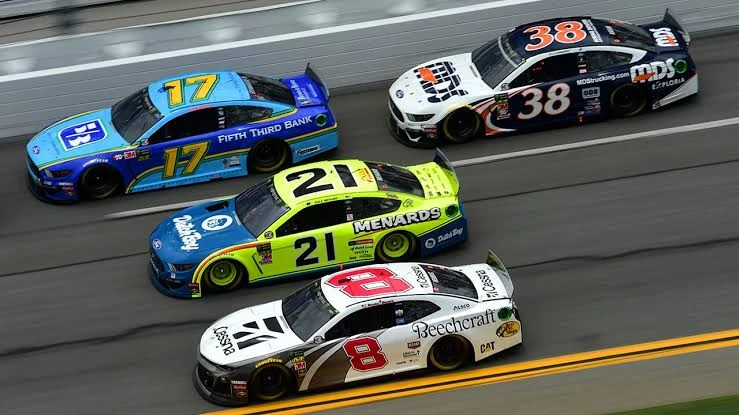
Moreover, NASCAR’s Next Gen car aerodynamic package directly influences average speeds. The series adjusts rear spoiler height and underbody aero specifically to regulate how tightly bunched the field runs. At superspeedways, that “pack racing” format keeps average speeds remarkably high even if individual top speeds are electronically constrained.
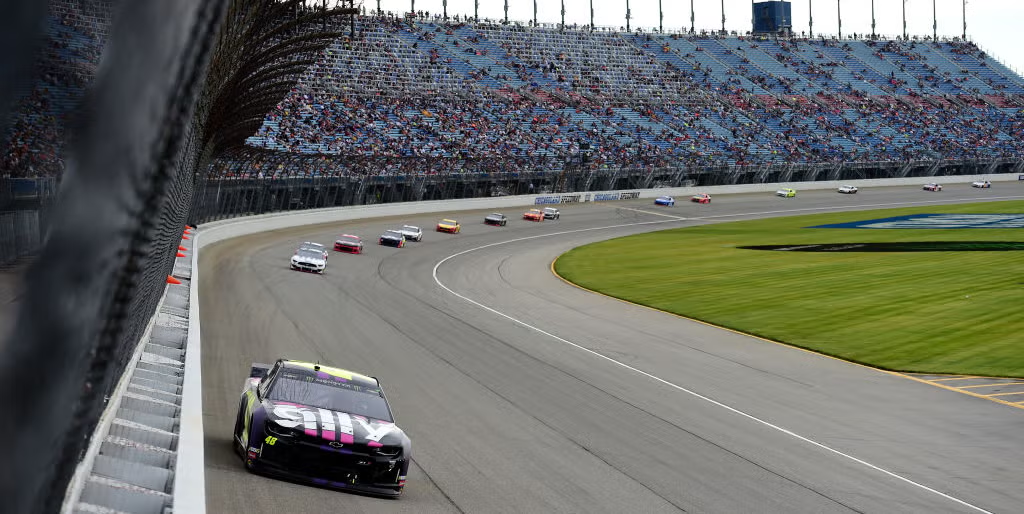
Superspeedways (Daytona, Talladega): 185–198 mph in the pack · Intermediate tracks (Charlotte, Las Vegas): 150–175 mph average · Short tracks (Bristol, Martinsville): 90–125 mph average · Road courses: 95–115 mph average. Each category uses a different aerodynamic and engine package.
NASCAR Top Speed — How Fast Can They Really Go?
In its current Next Gen configuration, the NASCAR Cup Series car runs a 5.86-litre V8 engine producing approximately 670 horsepower on most tracks. At superspeedways like Daytona and Talladega, a tapered spacer limits air intake and reduces output further. Therefore, the NASCAR top speed in a racing environment sits reliably around 195–200 mph (322 km/h) during pack racing conditions.
However, the mechanical reality is that the engine is capable of significantly more. Before the tapered spacer era, these cars produced over 800–900 horsepower. In unrestricted testing, a NASCAR Cup Series car has reached beyond 225 mph. Furthermore, Rusty Wallace’s famous unrestricted test at Talladega in 2004 produced a verified top speed of 228 mph on the backstretch — a number that illustrated exactly why the limits exist.
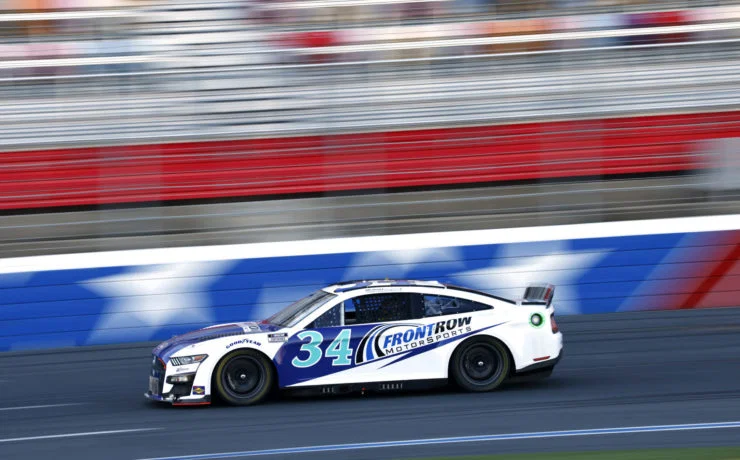
The reason NASCAR maintains the current 200 mph ceiling is straightforward physics. When a 3,400-pound stock car gets sideways at 210 mph, the body panels begin generating lift rather than grip. Consequently, the car can become airborne — turning what should be a wall-contact incident into a flying projectile aimed at catch fencing and grandstands. The 2026 aerodynamic flaps on the roof and bonnet are specifically designed to keep a spinning car earthbound, but they lose effectiveness above the current speed threshold.
The Next Gen car introduced independent rear suspension — a departure from the solid rear axle that defined stock car racing for decades. Engineers note that this change fundamentally altered cornering behaviour. Cars now stay flatter through turns, allowing higher mid-corner speeds, but the feedback drivers receive before losing grip is considerably less predictable than under the old setup. Therefore, the speed ceiling is partly a driver feedback issue, not just aerodynamics. For more on what causes crashes in motor racing, see our full explainer.
Fastest NASCAR Speed Ever Recorded — Bill Elliott, 1987
The fastest NASCAR speed ever officially recorded belongs to Bill Elliott — nicknamed “Awesome Bill from Dawsonville” — who clocked a qualifying lap of 212.809 mph at Talladega Superspeedway in 1987. That run remains the highest speed in NASCAR history during an official competitive session, nearly four decades after it was set.
Shortly after Elliott’s record, Bobby Allison suffered a catastrophic crash at Talladega in which his car became airborne and tore into the catch fence. The incident directly triggered NASCAR’s immediate introduction of restrictor plates. Therefore, Elliott’s record stands as a ghost of a “wild west” era the sport has deliberately moved past.
Elliott’s 212.809 mph qualifying lap at Talladega used an unrestricted engine configuration that no longer exists in Cup Series racing. Modern qualifying laps at Talladega run 180–190 mph because cars are tuned for pack drafting rather than solo speed. The gap between 1987’s record and current speeds is entirely the product of deliberate regulatory intervention — not a lack of mechanical capability.
Meanwhile, modern drivers rarely approach the 210 mph mark in any official session. Today’s qualifying laps at Talladega typically produce speeds around 180–185 mph for a solo run. Furthermore, the racing itself never sees those qualifying peaks — pack racing keeps speeds in the 192–198 mph range on race day, which is still physically extraordinary for a 3,400-pound vehicle.
NASCAR Speed by Track — The Complete Breakdown
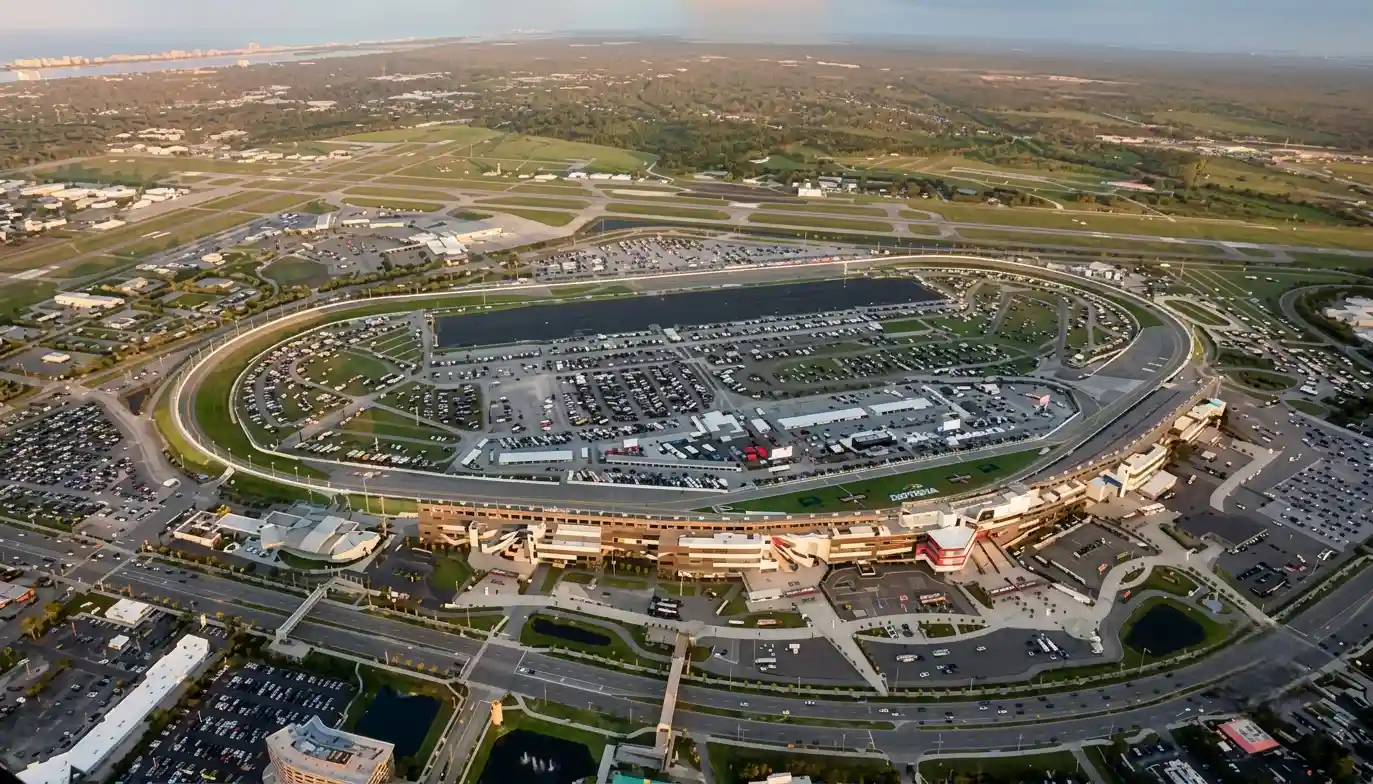
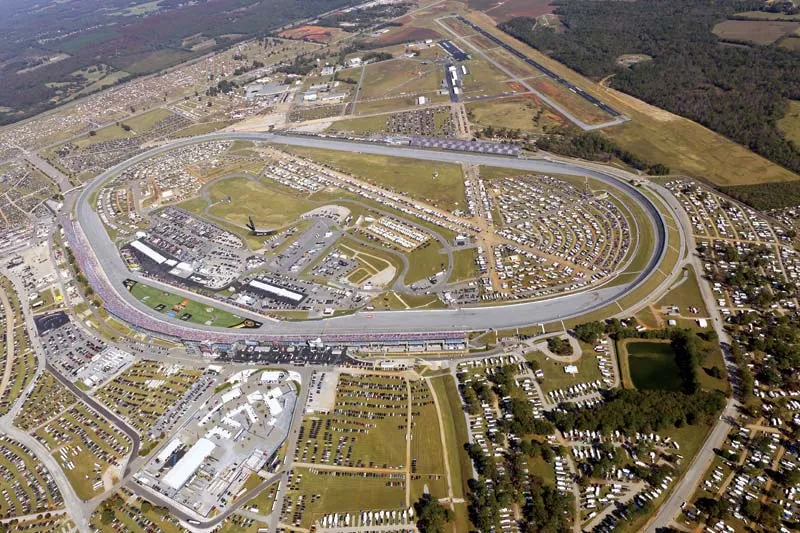
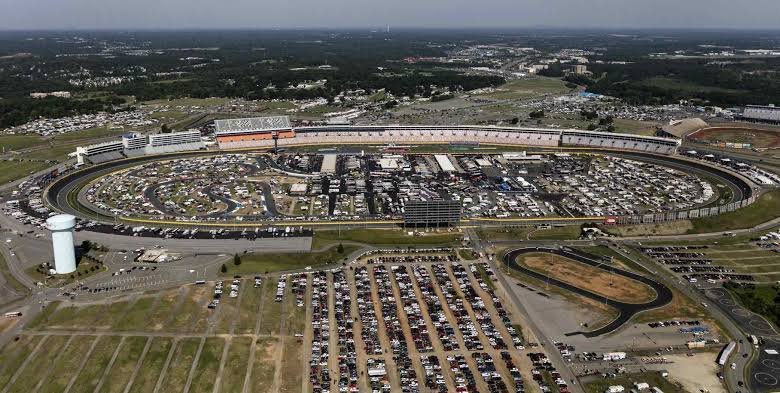
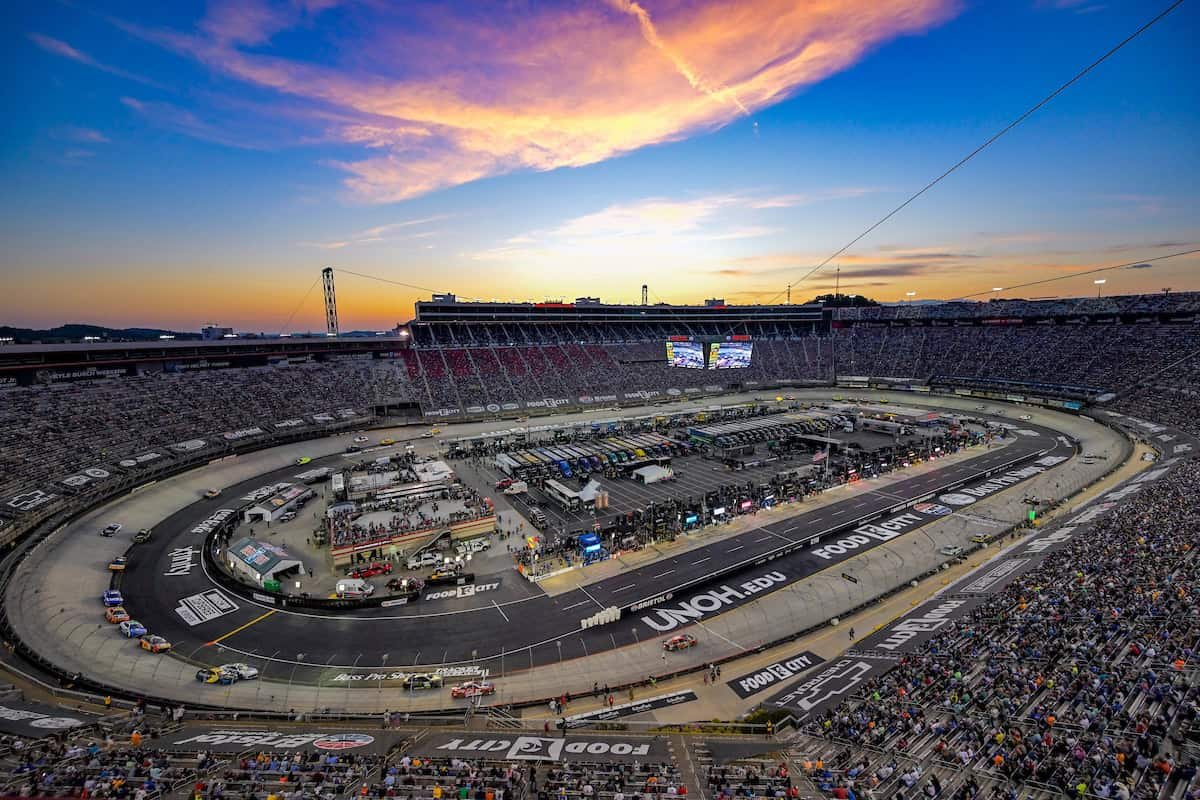
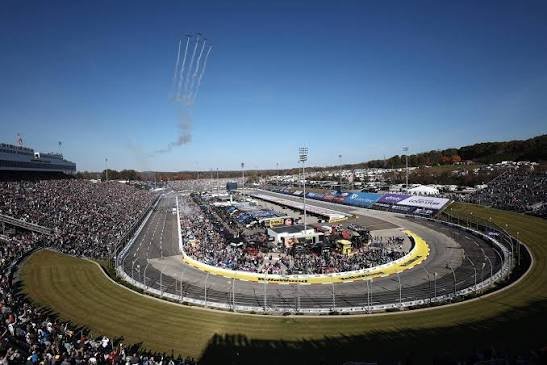
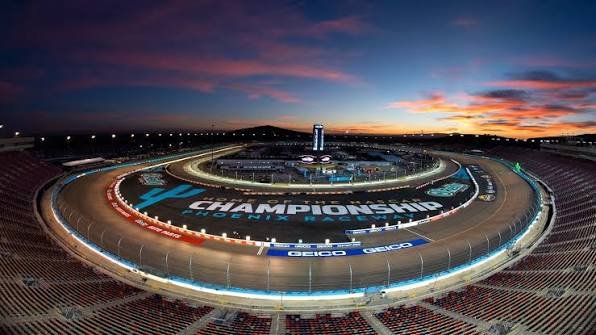
NASCAR races on circuits that range from 0.25-mile short ovals to 2.66-mile superspeedways. Consequently, how fast NASCAR cars go changes entirely from one weekend to the next. The answer is never a universal figure — it is always a function of where the race is being held.
Full NASCAR Speed Chart by Track Type
| Track | Type | Top Speed | Race Avg | Corner Speed | HP Package |
|---|---|---|---|---|---|
| Daytona International Speedway | Superspeedway | ~198 mph | 185–195 mph | 190 mph | 670 HP |
| Talladega Superspeedway | Superspeedway | ~200 mph | 185–198 mph | 190 mph | 670 HP |
| Charlotte Motor Speedway | Intermediate | ~190 mph | 155–170 mph | 165 mph | 750 HP |
| Las Vegas Motor Speedway | Intermediate | ~185 mph | 150–168 mph | 160 mph | 750 HP |
| Bristol Motor Speedway | Short Track | ~130 mph | 115–120 mph | 120 mph | 750 HP |
| Phoenix Raceway | One-Mile | ~140 mph | 120–135 mph | 95 mph | 750 HP |
| Martinsville Speedway | Short Track | ~120 mph | 85–100 mph | 65 mph | 750 HP |
| Bowman Gray Stadium | Quarter-Mile | ~90 mph | 70–90 mph | 65 mph | Reduced |
Corner Speed, Caution Pace & 0–60 mph Performance
How Fast Do NASCAR Cars Go Around Turns?
Corner speed in NASCAR is almost entirely determined by banking angle — the steeper the track surface through a turn, the more centrifugal force keeps the tyres planted, and therefore the less the driver needs to lift or brake. At Talladega’s 33-degree banking, cars maintain nearly 190 mph through the centre of the turn without the driver touching the brakes. The banking does the work that grip does on a flat surface.
Moreover, the Next Gen car’s independent rear suspension changed how cornering speed is generated and sensed. Previously, drivers relied on the solid rear axle “hopping” over track bumps to feel when grip was approaching its limit. The new setup stays flatter and more composed, which allows slightly higher mid-corner speeds. However, the reduced physical feedback means drivers have less warning before traction breaks down completely.
Mid-corner speed relative to superspeedway peak — banking angle is the primary variable
How Fast Do NASCAR Cars Go Under Caution?
Under a yellow flag, the pace car governs the entire field at approximately 55–70 mph on large superspeedways. On shorter tracks, that figure drops to 45–55 mph. The caution period creates two specific problems that teams must actively manage.
First, engine cooling becomes critical. At 55 mph, there is insufficient airflow through the grille and radiator ducts to properly cool a 750 HP V8. Consequently, teams monitor coolant temperatures closely and drivers may be instructed to hold slightly wider lines to maximise what little airflow is available. Second, tyre temperatures drop rapidly at caution pace — something that matters enormously on the restart when drivers need immediate grip from cold rubber.
Pit road speed limits in the 2026 NASCAR Cup Series sit between 35 mph and 55 mph depending on the facility layout and safety zone configuration. NASCAR’s timing system measures pit road speed to 0.1 mph accuracy. Therefore, exceeding the limit by even a fraction triggers a mandatory pass-through penalty — adding typically 12–20 seconds to a driver’s race time. The penalties are automatic and non-negotiable, making pit road speed discipline one of the most consequential driver responsibilities during a race weekend.
NASCAR 0–60 mph — How Quick is a Stock Car from Rest?
On a prepped surface with fresh Goodyear slick tyres, a Cup Series car reaches 60 mph from a standing start in approximately 3.4 to 3.7 seconds. That figure is genuinely rapid by road-car standards but slower than both Formula 1 (~2.6s) and modern electric sports cars (~2.0s).
The limitation is entirely traction. NASCAR cars are rear-wheel drive with 750 horsepower and weigh 3,400 pounds — nearly double an F1 car’s mass. Therefore, the tyres struggle to transfer the engine’s full torque output to the track surface without spinning. A 0–60 mph run in a NASCAR Cup car under race conditions involves carefully metering throttle application to avoid turning expensive Goodyear compounds into tyre smoke.
NASCAR vs Formula 1 — Speed Comparison 2026
The NASCAR vs Formula 1 speed comparison is genuinely useful for understanding what each series optimises for. F1 is faster in every measurable road-course category. However, NASCAR isn’t trying to compete on those metrics — it’s engineered for a completely different set of demands.
| Metric | NASCAR Cup Series | Formula 1 | IndyCar |
|---|---|---|---|
| Top Race Speed | ~200 mph (322 km/h) | ~220 mph (354 km/h) | 240 mph+ (oval) |
| 0–60 mph | ~3.4 s | ~2.6 s | ~3.0 s |
| Cornering G-Force | 2.5–3.0G | 5.0–6.0G | 3.0–4.0G |
| Horsepower | 670–750 HP | ~1,000 HP (hybrid) | ~750 HP |
| Car Weight | ~3,400 lbs | ~1,760 lbs | ~1,785 lbs |
| Braking (200–0 mph) | Long distance | Very short (carbon) | Short-medium |
Formula 1’s superior speed comes primarily from two sources: aerodynamic downforce and weight. An F1 car generates three to four times the downforce of a NASCAR car, allowing it to carry far more speed through corners. Furthermore, at roughly half the weight, F1’s power-to-weight ratio produces dramatically faster acceleration and braking performance.
Meanwhile, NASCAR fans often point out that the “slower” speeds of stock car racing produce better wheel-to-wheel racing precisely because the cars aren’t as aerodynamically sensitive to following another vehicle closely. An F1 driver touching wheels at race speed is a catastrophic incident; a NASCAR driver making door-to-door contact at Talladega is part of the sport’s fundamental character. The physics that limits top speed is the same physics that enables the contact racing.
Formula E’s Gen3 Evo machines complete a 0–60 mph sprint in under 2.0 seconds — faster than both NASCAR and F1 from rest. However, on a long superspeedway oval, a NASCAR car would eventually pass a Gen3 Evo comfortably. Formula E cars are capped at approximately 200 mph and struggle to sustain that speed for long durations due to battery thermal management. NASCAR’s 750 HP V8 can sustain 190+ mph for an entire 500-mile event. These series are optimised for fundamentally different things. For a full comparison of how fast Formula E cars go, see our dedicated guide.
Frequently Asked Questions — How Fast Do NASCAR Cars Go?
The final answer on NASCAR speed
NASCAR cars go exactly as fast as the regulations allow them to — and those regulations are set where they are for a specific reason. At 200 mph, a 3,400-pound stock car sits at the edge of what its aerodynamic safety systems can manage if something goes wrong. The tapered spacer isn’t slowing the cars down arbitrarily; it is the product of four decades of learning from incidents where faster cars became airborne with catastrophic consequences.
Meanwhile, within those limits, NASCAR produces speed that is genuinely extraordinary in real-world terms. Standing at the catch fence when a pack of 40 Cup cars hits the banking at Daytona — feeling the air displacement, hearing the frequency of 40 V8s at full cry, watching them pass in a blur that seems too fast to be real — is something no television broadcast communicates. Whether it’s 200 mph at Daytona or 75 mph at Bowman Gray, the speed is only one part of the story. The other part is what 40 drivers do with it on the same piece of asphalt at the same time.