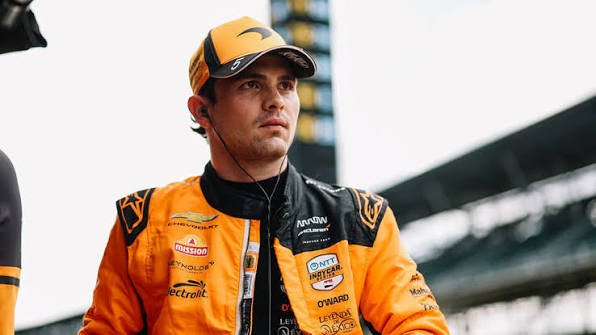
Pato O’Ward’s Title Hopes Are Fading —
But His Mid-Ohio Win Changed the Conversation
A 103-point deficit to Alex Palou tells one story. A hybrid-era milestone win at Mid-Ohio tells another. Here’s where O’Ward’s championship bid genuinely stands.
O’Ward’s Title Hopes Are Fading — But Mid-Ohio Changed Things
103 points back of Palou, but his Mid-Ohio win tells a different story.
Pato O’Ward’s 2026 IndyCar season has not gone the way anyone at Arrow McLaren expected. After a career-best runner-up championship finish in 2025, O’Ward entered this year as a legitimate title threat. Instead, he spent the season’s first half searching for his first podium, a drought that would have been unprecedented in his Arrow McLaren career had it continued.
Therefore, this is not a straightforward “championship bid strengthens” story. It’s more complicated, and more interesting, than that. O’Ward sits fifth in the standings, 103 points behind leader Alex Palou entering Road America — a gap larger than what’s available in a single race. However, his win at Mid-Ohio broke the drought and made history in the process. Here’s the honest picture of where his title hopes actually stand.
The Honest Points Picture
Let’s start with the number that matters most. Heading into Road America, O’Ward trailed championship leader Alex Palou by 103 points — a gap larger than what’s available to gain in any single race weekend, even with a win and every bonus point on offer. Kyle Kirkwood sits second, roughly 49 points behind Palou after the leader’s pit-lane fuel issue at World Wide Technology Raceway handed back a chunk of his cushion.
| Pos | Driver | Team | Gap to Leader |
|---|---|---|---|
| 1 | Alex Palou | Chip Ganassi Racing | Leader |
| 2 | Kyle Kirkwood | Andretti Global | -49 |
| 3 | — | — | — |
| 5 | Pato O’Ward | Arrow McLaren | -103 |
| 6 | Josef Newgarden | Team Penske | Climbing after WWT win |
A gap of this size, with roughly half the season’s races still remaining, is not insurmountable. However, it requires exactly what O’Ward himself has openly admitted his team doesn’t currently have: the consistent pace to win nearly every remaining race while hoping Palou and Kirkwood stumble. “We don’t have enough right now to take it to the guys that are charging forward in the championship,” O’Ward said ahead of the Sonsio Grand Prix in May. That’s about as direct as a driver gets about his own title chances.
“We’ve been working hard just to be at the level of being able to win every race, but we don’t have that. It’s not a reality. It’s still a work in progress. We’re behind on everything because it’s taken us a while to get into development.”
The Mid-Ohio Win That Changed the Narrative
Here is the part of O’Ward’s season that genuinely deserves the spotlight. After a stretch of strong-but-frustrating results — four separate fourth-place finishes among them — O’Ward broke through at the Honda Indy 200 at Mid-Ohio, holding off pole-sitter Alex Palou in the closing laps to take his second win of the year. Moreover, the victory carries historical weight beyond the points it delivered: O’Ward became the first driver to win a race in IndyCar’s new hybrid powertrain era.
That distinction matters. IndyCar’s hybrid system, introduced this season, fundamentally changed how energy deployment and regenerative braking factor into race strategy. Consequently, being the first driver to convert that new technology into a race win is a meaningful marker, regardless of where it leaves him in the standings. It also snapped what had threatened to become the first podium-less season of O’Ward’s Arrow McLaren career — a streak that had stretched deep into the schedule before Mid-Ohio broke it.
Pato O’Ward needed this. The Mexican driver, seeking his first win and podium finish of the season, arrived at Mid-Ohio under real pressure — and delivered the breakthrough his team had been chasing all year.
How the Season Has Actually Unfolded
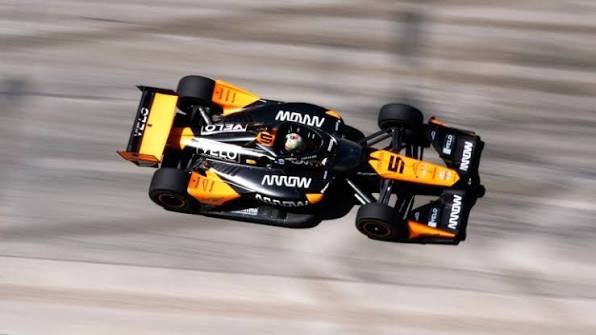
O’Ward’s 2026 didn’t start badly. He was competitive throughout the opening rounds, including the St. Petersburg season opener, but results kept landing just short of the podium. By the Acura Grand Prix of Long Beach in April, he had logged four top-five finishes in five races — genuinely strong consistency by any normal measure. However, none of those results were podiums, and in a season where Palou and Kirkwood were converting strong weekends into wins, consistency without victories meant falling further behind rather than closing the gap.
O’Ward’s Indianapolis 500 form is worth highlighting separately, since it’s been a consistent bright spot across his career even when his championship campaign has stalled elsewhere. He finished third in this year’s “500,” continuing a run that includes four top-six finishes in his last five Indy 500 starts and two runner-up results in the past three years. For context on what makes the Indianapolis 500 such a distinct challenge within the broader championship, see our Indianapolis 500 winners archive.
The Lundgaard Factor: A New Wrinkle at Arrow McLaren
One storyline that’s added real complexity to O’Ward’s season is happening inside his own team. Christian Lundgaard, his Arrow McLaren teammate, won the Sonsio Grand Prix at Indianapolis in May — and entered Road America among the favourites after that result, having claimed the team’s only other win of the season at the time. Therefore, for the first time since O’Ward joined Arrow McLaren in 2020, a teammate is genuinely threatening to become the team’s highest-scoring driver across a full season.
That matters beyond simple bragging rights. IndyCar’s competitive structure means engineering resources, strategy priority, and development focus can shift subtly toward whichever driver is delivering results. Consequently, Lundgaard’s emergence adds pressure that goes beyond the points gap to Palou — O’Ward is now also fighting to remain the unambiguous lead driver inside his own team, a position he’s held essentially uncontested for six seasons.
Unlike Formula 1’s strict hierarchical team structures, IndyCar teams generally give both cars equal strategic priority race to race. A competitive teammate genuinely accelerates car development through shared data, but it also means no driver can simply assume their team’s full resources are pointed in their favour. For more on how this differs from Formula 1’s approach, see our IndyCar vs F1 comparison.
What O’Ward Actually Needs From Here
Mathematically, a 103-point gap with roughly half the season remaining is not impossible to close — IndyCar history includes bigger turnarounds. However, doing so realistically requires several things to happen simultaneously, and O’Ward’s own comments suggest he understands exactly how demanding that combination is.
- Multiple race wins, not just top fives. Consistency alone, the hallmark of O’Ward’s season so far, mathematically cannot close a gap this size against two drivers who are also scoring strong points most weekends.
- Palou or Kirkwood needs a stumble. Palou’s WWT Raceway fuel issue already cost him 13 points to Kirkwood in a single race — the kind of swing O’Ward needs to start benefiting from directly.
- Continued development gains. O’Ward has been candid that Arrow McLaren has been “behind on everything” with development this season relative to Honda-powered rivals. Closing that technical gap is the actual root cause behind the points deficit.
- The Month of September swing. With ovals, road courses, and street circuits still to come, O’Ward’s strong history at mixed circuit types — particularly his Indianapolis form — gives him a realistic shot at stacking results if the car keeps improving.
Therefore, the more honest framing isn’t that O’Ward’s championship bid is “strengthening” in the way a single strong result might suggest. It’s that he has stopped the bleeding, snapped a genuinely concerning winless and podium-less stretch, and given himself something to build on heading into the second half. Whether that’s enough to mount a real title run depends almost entirely on whether Arrow McLaren can keep closing its development gap to Ganassi and Andretti.
The Drivers Actually Leading the Championship
Understanding O’Ward’s position requires understanding who’s actually ahead of him. Alex Palou is chasing a record-tying fourth consecutive NTT IndyCar Series championship and a fifth overall — a pursuit IndyCar itself has called arguably the top storyline of the season’s final stretch. His Chip Ganassi Racing team has been the benchmark operation all year, and Road America has historically been one of his strongest circuits, with three previous wins there since 2020.
Kyle Kirkwood’s Andretti Global campaign has been the most direct threat to Palou’s dominance, chipping away at the points lead whenever the Ganassi driver has stumbled. Meanwhile, Josef Newgarden’s win at World Wide Technology Raceway pulled him up to sixth in the standings — a reminder that the Team Penske veteran, despite a quieter start to his title defence, remains capable of the kind of result that reshapes the championship picture quickly. For a deeper look at how IndyCar’s points system rewards this kind of consistency versus pure win totals, see our explainer on how racing championships are scored.
With roughly half the 2026 season remaining, the championship realistically sits between Palou, Kirkwood, and whoever can string together the most wins down the stretch. O’Ward’s Mid-Ohio victory proves Arrow McLaren can win races when everything clicks — the question is whether they can do it often enough, soon enough, to matter for the title. Follow live developments on our IndyCar race today page and the full 2026 schedule.
Frequently Asked Questions
Verify This Information — High-Authority Sources
The honest verdict on O’Ward’s 2026 championship bid
Calling this a “strengthening” championship bid would oversell where things actually stand. A 103-point deficit with Palou chasing championship history is a steep, realistic mountain — and O’Ward’s own words make clear he understands that better than anyone. What’s true, and worth genuine attention, is that Arrow McLaren has stopped the season’s worst trend. The podium drought is over. The hybrid-era milestone is real. And a driver with O’Ward’s track record at Indianapolis and on mixed circuit types still has half a season to find more of what worked at Mid-Ohio.
The more honest story isn’t a title charge — it’s a team fighting its way back from a difficult development cycle, with one signature result to show it’s possible. Whether that becomes a genuine second-half surge or simply a highlight in an otherwise rebuilding season depends on whether Arrow McLaren can close the gap that’s defined their year so far.
Follow the rest of the 2026 IndyCar season with our full schedule and live race coverage.