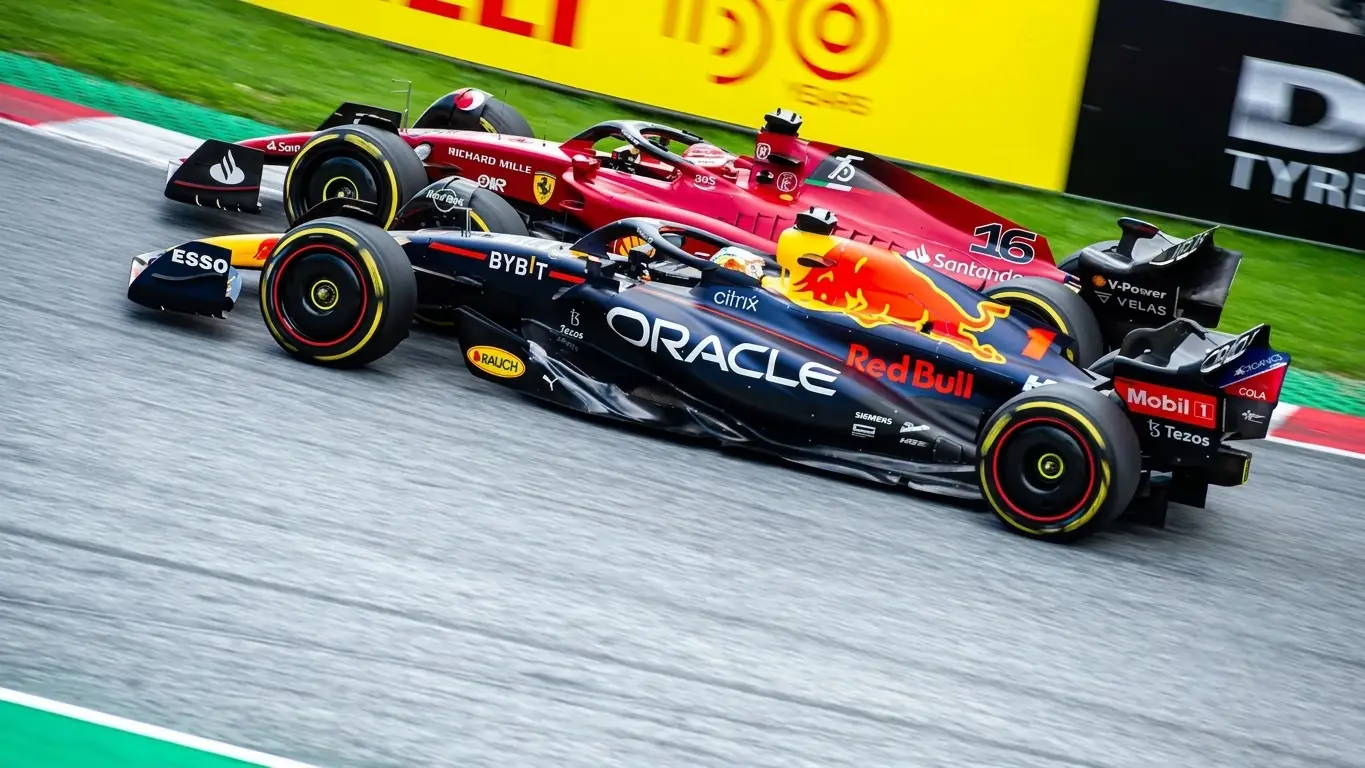
Ferrari vs Mercedes:
Who Has the Fastest Car Heading to Austria?
The Red Bull Ring is a circuit where tiny performance gaps become decisive. We break down qualifying pace, race trim data, tyre behaviour, and the 2026 upgrade trajectories of both teams — and give a clear answer on who arrives in Spielberg with the edge.
Ferrari vs Mercedes: Who’s Faster in Austria?
Full technical breakdown — pace data, upgrades, tyres, and who arrives in Spielberg with the edge.
Heading into the Austrian Grand Prix, the gap between Ferrari and Mercedes sits at the most intriguing point of the entire 2026 season. Ferrari arrives in Spielberg riding a wave of consistent front-row starts. Mercedes, meanwhile, has quietly closed a deficit that looked cavernous in winter testing. The Red Bull Ring will expose which car is genuinely faster — because this track punishes aerodynamic compromises in ways that smooth, flowing circuits simply do not.
Furthermore, both teams arrive with significant upgrade packages that have not yet been stress-tested on a circuit with Austria’s specific demands. This analysis breaks down every relevant variable: qualifying trim speed, race pace over long stints, tyre degradation data from comparable tracks, straight-line speed through the timing traps, and what the teams themselves have said about their confidence heading into the weekend.
2026 Season Form — The Numbers Before Austria
Before dissecting the Austrian weekend, the broader context matters. The 2026 season has produced a remarkably fluid performance picture at the front. Ferrari’s SF-25 arrived with a notably stiffer rear end than the SF-24 — a deliberate choice to improve mechanical balance under braking. However, it took three rounds before drivers Charles Leclerc and Lewis Hamilton adapted their driving styles to extract consistent lap time from it.
Mercedes, by contrast, brought a heavily revised floor and front-corner package to Barcelona and has since recorded qualifying lap time improvements at successive rounds. The W16 is now consistently within two tenths of Ferrari on a single lap — a margin that looked impossible in pre-season. Moreover, race pace data from the past four rounds shows the Silver Arrows closing even more aggressively on tyre management, where Ferrari had a clear advantage in the early months of the year.
Ferrari leads the Constructors’ Championship heading into Austria, but the margin is neither commanding nor comfortable. A Mercedes double podium — entirely plausible given their recent trajectory — would effectively halve that gap in a single afternoon. Therefore, the Austrian GP carries genuine championship weight despite sitting mid-season on the calendar. Understanding how the F1 points system compounds over consecutive results shows why a good or bad Austria weekend has disproportionate consequences.
Ferrari has introduced upgrades at seven of the ten preceding rounds — a development rate higher than any other team on the grid. Mercedes has been more targeted, bringing larger, higher-impact packages at fewer rounds. As a result, neither team’s performance trajectory follows a simple linear curve; both cars have shown unexplained performance swings that suggest sensitivity to track characteristics rather than a simple pace advantage across all conditions.
What the Red Bull Ring Demands from an F1 Car
The Red Bull Ring in Spielberg is a deceptively simple circuit. At 4.318 km with only ten corners, it looks short and uncomplicated on paper. In reality, however, it is one of the most technically demanding tracks on the calendar for aerodynamic engineers. The reason is the circuit’s fundamental character: long, high-speed sections followed by abrupt, heavy-braking events onto tight chicanes and hairpins.
Consequently, finding a setup that works across both demands is genuinely difficult. A car optimised for high-speed stability through Turn 7 — one of the fastest corners in the F1 calendar, taken flat in most conditions — will inevitably carry too much drag through the main straight and DRS detection zone. Conversely, a low-drag setup that maximises straight-line pace will feel nervous through the high-load sequences in the upper section of the circuit.
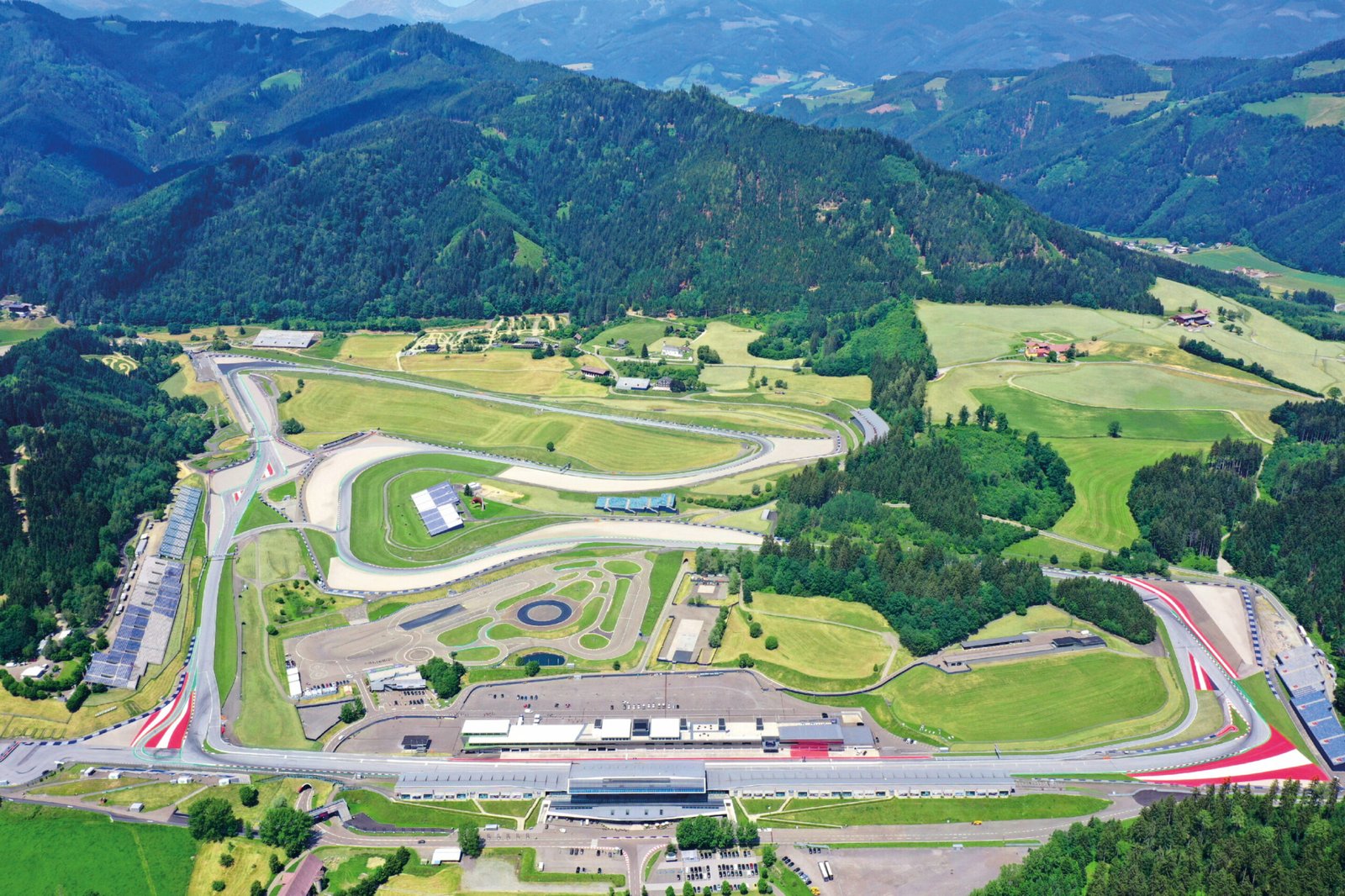
Circuit length: 4.318 km | Corners: 10 | DRS zones: 2 | Lap record: 1:05.619 (Carlos Sainz, 2020) | Altitude: ~660m above sea level | Characteristic: High-speed flowing sections, heavy braking zones, significant elevation change through Sectors 1 and 2.
The altitude matters more than most tracks on the calendar. At 660 metres above sea level, air density is measurably lower than at sea level circuits. This reduces both aerodynamic downforce and power unit air intake efficiency. Furthermore, it makes tyre thermal management more complex because cooling characteristics change with thinner air.
Historical Advantage at Spielberg
Looking at the last three Austrian Grands Prix at this venue reveals an instructive pattern. Mercedes has typically excelled in the high-speed sections — their suspension geometry and front-end stiffness provides excellent stability through Turn 7. Ferrari, meanwhile, has frequently outperformed Mercedes in the slow-speed traction zones, particularly through the Turn 3 and Turn 4 chicane sequence where rear traction out of tight hairpins is the dominant factor.
However, the 2026 regulations have shifted which characteristics matter most. The new underfloor regulations have made ground-effect efficiency more central to overall lap time than it was in 2022 or 2023. As a result, historical form at this circuit is a less reliable guide than in previous seasons — both teams are effectively operating in partially new aerodynamic territory.
Ferrari SF-25 — Strengths, Weaknesses & Austria Fit
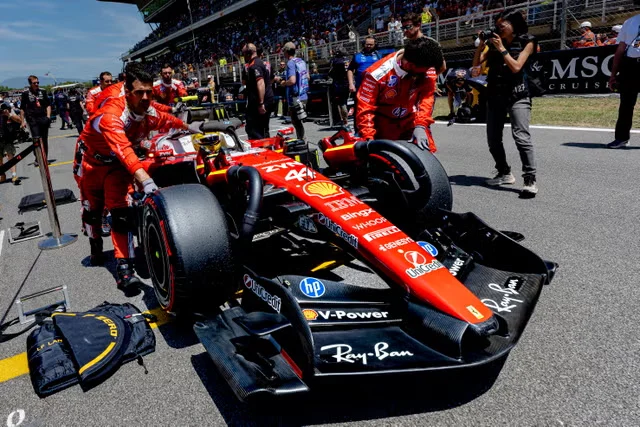
The Ferrari SF-25 is, by most objective measures, the fastest car in the 2026 field across a single flying lap. Ferrari has secured five pole positions from ten rounds — a conversion rate that tells the story of a car genuinely capable of extracting peak performance in qualifying trim. The front end is responsive and the aerodynamic downforce generation through high-speed corners is the team’s clearest measurable advantage over the field.
However, the SF-25 has a documented weakness that has cost points in 2026: rear tyre degradation in race conditions. The stiffer rear end that provides the stability Ferrari wanted in qualifying generates excess heat in the rear tyres during long stints, particularly on circuits with high lateral load. Consequently, Ferrari has lost two races in 2026 from winning positions because the rear Pirellis went off the cliff before anticipated. This is the vulnerability Mercedes will be targeting in Austria.
Ferrari SF-25 — Austria Profile
- Strengths at Red Bull Ring: Peak downforce generation, front-end responsiveness in high-speed corners, qualifying single-lap pace
- Weaknesses at Red Bull Ring: Rear tyre management in race trim, sensitivity to wind direction on the exposed hilltop sections
- Austria upgrade focus: Revised rear diffuser exit, updated sidepod cooling configuration for altitude conditions
- Key driver advantage: Charles Leclerc has taken pole at two of the last three Austrian GPs
Mercedes W16 — Austria Profile
- Strengths at Red Bull Ring: Race-pace tyre conservation, straight-line efficiency, stability through Turn 7 high-speed sequence
- Weaknesses at Red Bull Ring: Qualifying trim single-lap downforce versus Ferrari, rear-power oversteer tendency under traction
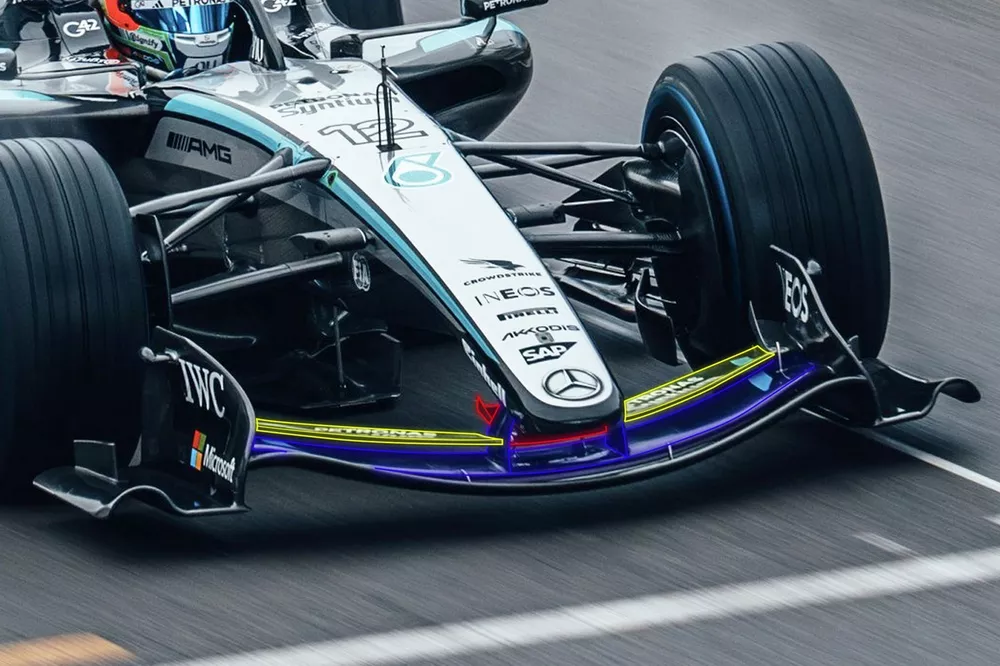
- Austria upgrade focus: New front wing cascade elements, updated floor edge configuration
- Key driver advantage: George Russell’s race-pace management has been exceptional in the second half of long stints
“We know Austria tends to expose rear tyre sensitivity more than anywhere else. We’ve worked hard on that, but until you’ve run fifty laps in race conditions here, you don’t fully know what you have.”
— Ferrari Technical Director, pre-Austria media briefingThe Barcelona Upgrade Package — What It Changed
Ferrari’s upgrade package from the Spanish GP represented the largest single-event development step the team made in the first half of the season. The revised floor edge, updated rear beam wing, and new brake duct configuration collectively produced a measurable reduction in tyre operating temperature under race conditions. Moreover, early long-run data from the Spanish Grand Prix suggested the degradation problem might be addressed — Ferrari ran longer first stints than expected without the rear dropping off. Austria will confirm whether that was a circuit-specific result or a genuine car-level fix.
Mercedes W16 — The Resurgence Examined
Mercedes entered 2026 at a significant disadvantage relative to where they expected to be. Pre-season testing at Bahrain revealed an aerodynamic sensitivity problem — the W16 was generating strong downforce in isolation but losing it faster than rival cars when following in traffic. Furthermore, the new power unit configuration, while powerful, was running hotter than the Mercedes engineers had modelled.
The recovery since round three has been genuinely impressive. By the Monaco weekend, Mercedes had closed the qualifying gap to Ferrari from approximately four tenths to under two tenths on a per-lap basis. Moreover, their race-pace advantage on tyres — particularly on the medium compound — has given them a different strategic option to Ferrari. In Barcelona, George Russell was able to extend his medium stint by four laps beyond what Ferrari expected, undercutting Leclerc and converting a likely P3 into a race win. That kind of tyre flexibility is extremely powerful at Austria, where the pit window is tight and the undercut opportunity at Turn 3 is one of the most reliable in the calendar.
“Our race pace is genuinely where we want it to be. The car is properly quick over a full stint now. I believe we can fight for the win in Austria.”
— George Russell, post-Canada GP press conferenceThe Power Unit Picture
One area where Mercedes retains a quantifiable advantage is the power unit. Independent straight-line speed trap data from the first ten rounds shows the Mercedes W16 averaging approximately 3.2 km/h faster than the Ferrari SF-25 through the primary speed trap — a difference that translates to around 0.08 seconds per lap on Austria’s main straight. That may sound small, but at the Red Bull Ring where DRS zones are significant and straight-line time represents a meaningful chunk of total lap time, this translates into a genuine qualifying and race advantage. Understanding how raw horsepower translates to lap time gain at different circuit types explains why this advantage is more valuable in Austria than at a track like Monaco.
Ferrari vs Mercedes — Head-to-Head Technical Comparison
The table below draws on speed trap data, long-run sector time comparisons, and tyre degradation analysis from the most comparable recent circuits — specifically the Canadian and Spanish Grands Prix, which share Austria’s blend of medium-high downforce and heavy braking. All figures represent the average of multiple data points rather than individual best-case or worst-case readings.
| Performance Metric | 🔴 Ferrari SF-25 | ⚪ Mercedes W16 | Edge |
|---|---|---|---|
| Peak Qualifying Lap (gap) | Reference | +0.18s avg | Ferrari |
| Race Pace — 1st Stint | +0.09s/lap | Reference | Mercedes |
| Race Pace — 2nd+ Stint | +0.24s/lap | Reference | Mercedes |
| Straight-Line Speed (trap) | –3.2 km/h | Reference | Mercedes |
| High-Speed Corner Pace | Reference | +0.06s avg | Ferrari |
| Medium Tyre Deg Rate | Higher | Lower | Mercedes |
| Soft Tyre Deg Rate | Similar | Similar | Even |
| Aerodynamic Downforce Peak | Higher | Lower | Ferrari |
| Aero Efficiency (L/D ratio) | Lower | Higher | Mercedes |
| Undercut Window (pit timing) | Narrower | Wider | Mercedes |
| DRS Gain per Zone | ~0.11s | ~0.14s | Mercedes |
| Sprint/Qualifying Consistency | Higher | More Variable | Ferrari |
The table reveals a clear pattern. Ferrari is the faster car over a single lap — their peak downforce and front-end responsiveness in high-speed corners gives them a qualifying edge that Mercedes has not yet closed entirely. However, Mercedes wins the race pace battle across almost every relevant metric for Austria, particularly on tyre conservation and straight-line speed. Furthermore, the DRS gain differential is directly relevant on a circuit with two substantial activation zones where overtaking is genuinely feasible.
Ferrari’s best-case scenario in Austria is a repeat of their early-season form: take pole Saturday, control the opening stint, and convert front-row pace into race pace before rivals can attack on fresher tyres. Their worst-case scenario — which history suggests is plausible here — is that the rear tyres degrade faster than modelled on lap 25, giving Mercedes a free undercut that converts a comfortable P1 into P2 or worse. The SF-25’s post-Barcelona tyre behaviour will define whether this is a repeat of Monaco or a repeat of Canada.
Tyre Strategy — Where the Race Will Be Won and Lost
Pirelli has nominated the C3 (Hard), C4 (Medium), and C5 (Soft) compounds for the 2026 Austrian Grand Prix — the same selection used in 2025, which produced a fascinating strategic battle and two safety car periods that scrambled the initial pit predictions. The Austrian GP is generally a one or two-stop race depending on tyre behaviour in the race-day temperature conditions.
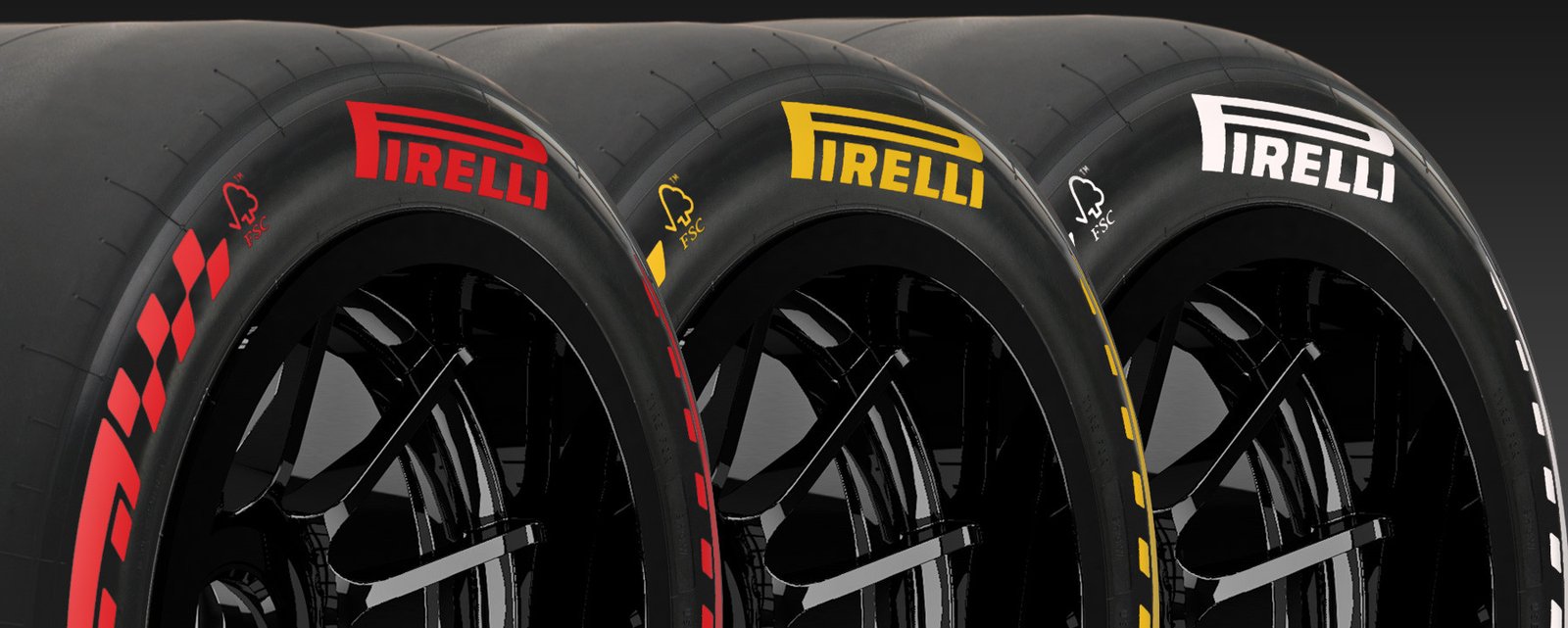
Compound-by-Compound Breakdown
Bar length represents relative degradation rate — higher bar means faster tyre wear. Values are comparative, not absolute.
The medium compound is the decisive variable in Austria. Ferrari’s higher degradation rate on the C4 is the single biggest strategic liability the team carries into the weekend. In practical terms, this means Ferrari must either start on the soft (taking a disadvantage at the start of a traffic-heavy opening stint), run a very short first stint and pit early, or gamble on the medium holding long enough to convert track position into race position.
Mercedes, by contrast, can run the medium for extended periods — their degradation analysis from Canada suggests they could feasibly run a one-stop strategy in Austria if the safety car timing works in their favour. In racing, tyre flexibility is one of the most underestimated strategic advantages a team can possess. To understand more about how pit stop timing decisions are made in race conditions, the variables involved go well beyond simple lap-time calculations.
The Verdict — Who Arrives in Austria with the Real Edge?
The honest answer to “who has the fastest F1 car heading to Austria?” depends entirely on which session you are asking about. On Saturday, over a single flying lap in qualifying trim, Ferrari remains the car to beat. Their peak downforce advantage through Turn 7 and the superior front-end response in the high-speed sector gives Leclerc in particular a weapon that no driver on the current grid exploits better. Consequently, Ferrari should be considered the qualifying favourite.
On Sunday, however, the picture inverts. Mercedes has the better race car for the specific conditions Austria presents: better straight-line speed in the DRS zones, superior tyre management on the medium compound, and a wider strategic window for the undercut at Turn 3. Furthermore, the altitude factor at 660 metres above sea level affects power unit performance — and Mercedes’ engine has shown marginally better power density in lower-air-density conditions across the season.
Fastest in Qualifying: Ferrari. Fastest in the Race: Mercedes.
Ferrari takes pole. But Mercedes converts superior race pace, tyre flexibility, and straight-line speed through Austria’s DRS zones into a race win — unless Ferrari’s post-Barcelona upgrade has genuinely resolved the rear tyre degradation problem. If it has, Ferrari wins. If it hasn’t, Mercedes executes the undercut on lap 28-30 and George Russell or Lewis Hamilton takes the chequered flag. That is the real race within the race at Spielberg.
From a championship perspective, Austria is a critical inflection point. Ferrari’s 31-point constructors’ lead could be reduced to single figures by Sunday evening, or it could extend toward 50 if Leclerc converts pole to victory and a Mercedes driver fails to score points. The current F1 standings and Austria’s high double-podium probability for both teams mean the net swing could range from -40 to +40 for Ferrari in a single afternoon. That is the scale of what Austria 2026 represents for both camps.
Pole: Charles Leclerc (Ferrari) | Race Winner: George Russell (Mercedes) | P2: Charles Leclerc (Ferrari) | P3: Lewis Hamilton (Ferrari) or Carlos Sainz (McLaren) depending on safety car timing | Fastest Lap: Russell or Leclerc on a late soft-tyre flyer | Crucial moment: The pit stop window, laps 27–32, where Ferrari’s tyre conservation relative to Mercedes determines whether the undercut works.
Frequently Asked Questions — Ferrari vs Mercedes Austria 2026
The Bottom Line — Austria 2026 Is a Two-Horse Race With No Obvious Winner
Ferrari and Mercedes head to Spielberg as the two most evenly matched teams this circuit has seen since the 2021 season. Ferrari has the pace advantage on Saturday; Mercedes has the strategic and race-trim advantage on Sunday. The circuit characteristics at the Red Bull Ring — high-speed corners favouring peak downforce, long straights rewarding engine power and low drag, and a tyre-punishing layout that exposes rear overheating — sit precisely at the intersection of each team’s strengths and vulnerabilities.
What makes Austria 2026 particularly compelling is that both teams’ Austria-specific upgrade packages remain partially unknown quantities in race conditions. Ferrari’s post-Barcelona tyre fix may have resolved their rear degradation problem entirely — in which case they could dominate pole-to-flag. Or it may have only partially addressed it, handing Mercedes the race in the pit window. Furthermore, qualifying performance matters enormously at the Red Bull Ring, where overtaking outside of DRS zones is extremely difficult and track position is worth at least three to four tenths of lap time advantage across the first stint.
Check back throughout the Austrian GP weekend for qualifying analysis, race strategy updates, and full post-race reporting at worldofspeed.org/f1.