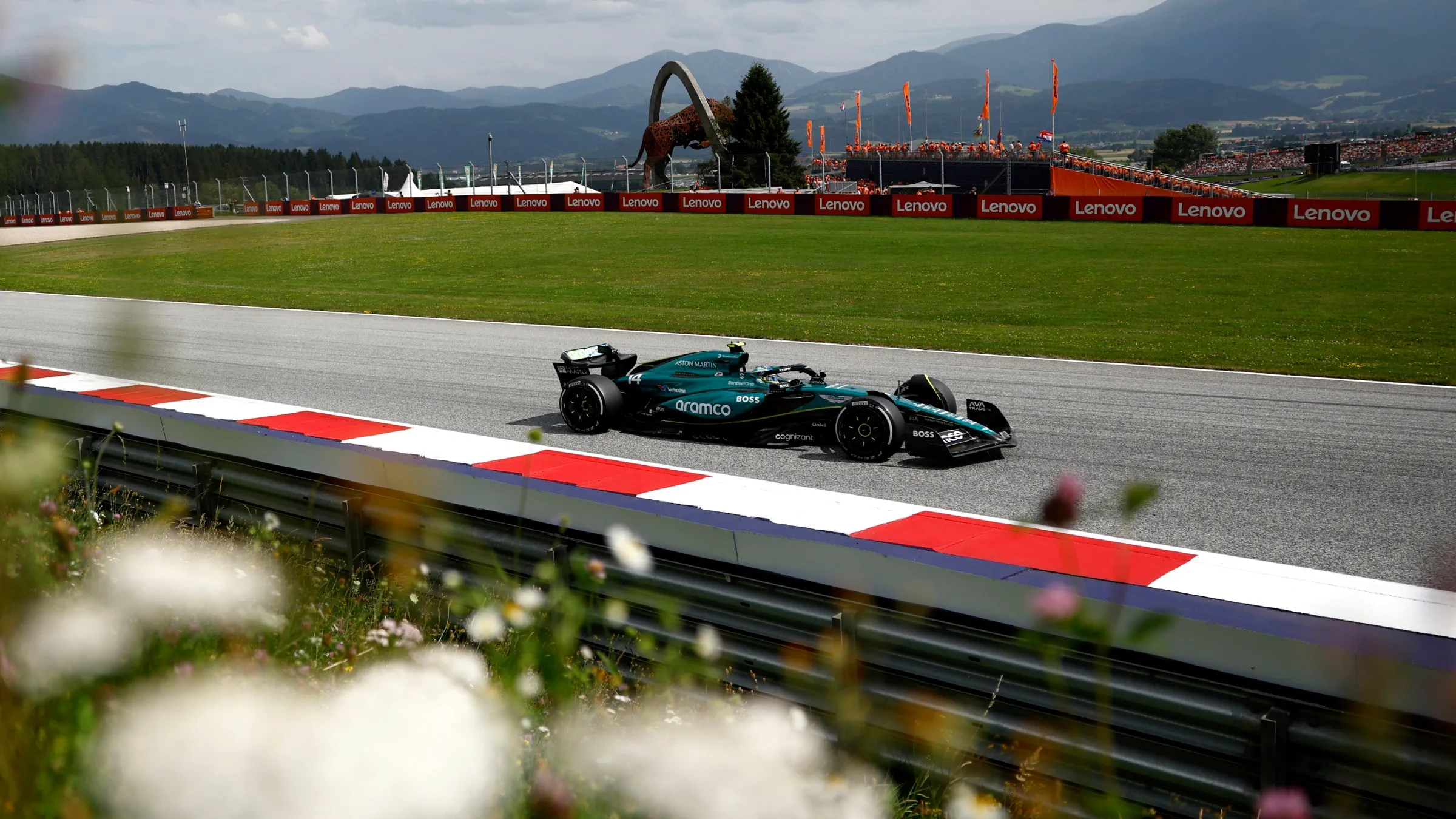
Austrian Grand Prix Preview:
Can Ferrari Maintain Momentum?
Ferrari arrives at the Red Bull Ring on the back of its strongest mid-season run in years. But Spielberg’s high-speed, low-downforce demands will test whether the SF-26 has genuine championship pace — or just peak-circuit form. Full preview, track analysis, strategy outlook, and race prediction.
Austrian GP Preview:
Can Ferrari Stay on Top?
Full track analysis, Ferrari form guide, strategy outlook and race prediction for the Austrian Grand Prix.
Ferrari’s Austrian Grand Prix momentum question isn’t hypothetical. The Scuderia has strung together its most consistent scoring run since the 2022 title fight, and heading into Spielberg they sit within striking distance of the constructors’ lead. The Red Bull Ring will be a genuine litmus test.
The circuit’s blend of brutal high-speed sweepers, hard braking zones, and back-to-back fast corners exposes cars that carry too much drag or run too soft on setup. Ferrari’s 2026 upgrade package has addressed both concerns. However, McLaren and Max Verstappen’s relationship with this track is a separate problem entirely — one Ferrari’s engineers will have studied very carefully this week.
Austrian Grand Prix 2026 — Key Storylines
Three storylines define the 2026 Austrian Grand Prix preview. First, Ferrari’s momentum is real — but the Red Bull Ring has historically rewarded high-speed downforce efficiency over raw cornering grip. Second, this is Max Verstappen’s home event in everything but name. Red Bull’s spiritual home in Spielberg draws the loudest orange crowd on the calendar, and Verstappen has won here four times. Third, McLaren quietly leads the constructors’ championship heading into Austria, and their MCL60’s low-drag characteristics suit this track extremely well.
Therefore, this weekend is the first proper opportunity in 2026 to see whether Ferrari’s upgrade pace is genuine across different circuit types — or whether it has been optimised for the medium-downforce layouts that dominated the last three race weekends. The answer will arrive quickly. The Red Bull Ring’s ten corners take under a minute to complete at racing pace.
Ferrari’s Momentum — What’s Actually Changed in 2026
Ferrari’s resurgence in 2026 is not a mirage. The Scuderia introduced a significant aerodynamic upgrade package before the Spanish Grand Prix, and the improvement in race pace has been measurable at every circuit since. The Spanish Grand Prix result was arguably Ferrari’s most complete team performance since Abu Dhabi 2022 — dominant in qualifying and strategically composed in the race itself.
However, the upgrade is not uniformly effective across all conditions. Ferrari’s new floor generates more downforce in the mid-speed range — Turns 7 to 9 at the Barcelona layout, for instance, or the Esses complex at Monaco. Consequently, the Red Bull Ring’s layout demands different qualities. Moreover, the two fastest sectors at Spielberg — the Jochen Rindt curve at Turn 3 and the high-speed entry to the Remus corner — put aerodynamic efficiency, not peak downforce, at a premium.
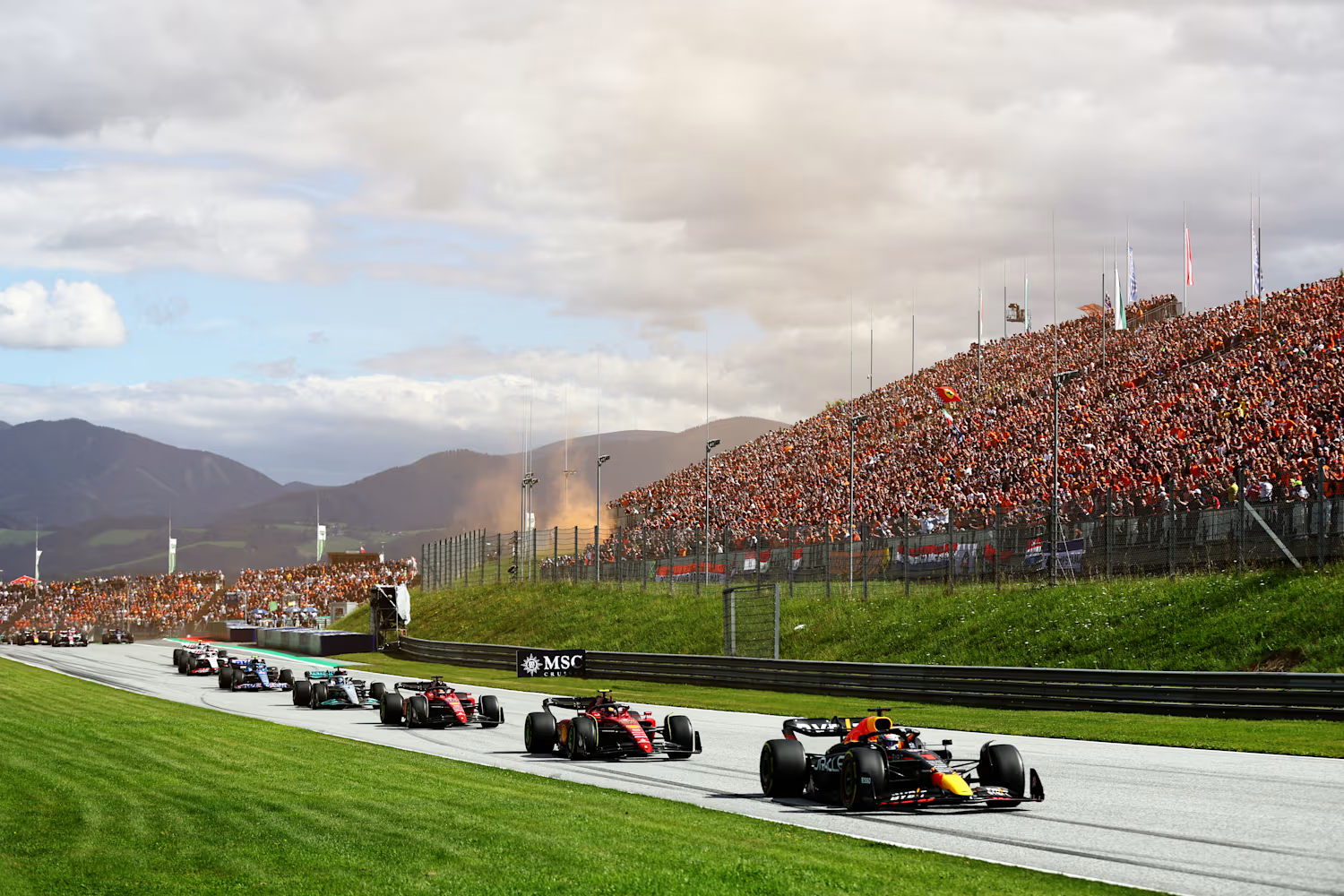
Charles Leclerc — the Red Bull Ring factor
Leclerc’s relationship with Spielberg has been complicated. He has qualified brilliantly here on multiple occasions — including a front-row start in 2022 — but race day tyre management has sometimes cost him. In 2026, however, Ferrari’s tyre management across a stint has improved considerably. The SF-26 runs notably cooler on its rear tyres through extended high-speed sequences than the previous-generation car. That is directly relevant at a circuit where three consecutive lap records fell in practice during last year’s event.
Lewis Hamilton — a circuit that suits his style
Hamilton’s move to Ferrari has been scrutinised all season, but Spielberg may be where his technical feedback most directly shapes Ferrari’s race result. Hamilton has historically been exceptional at circuits demanding strong front-end commitment on entry — exactly what Turn 3 and Turn 4 require at the Red Bull Ring. Furthermore, his feedback precision on tyre load management in the first stint has helped Ferrari’s strategists make earlier calls on undercut timing than they typically managed in 2025.
Ferrari’s pace in 2026 is built on a floor that generates more downforce in medium-speed corners. At Austria — where the fastest sectors are flat-out, high-speed sweepers — the question is whether that advantage translates, or whether McLaren’s low-drag architecture reclaims its natural home.
Ferrari has won the Austrian Grand Prix four times — most recently in 2003 with Michael Schumacher. The Scuderia has struggled at the Red Bull Ring in the recent hybrid era, typically qualifying well but losing ground to faster straight-line competitors during the race. A win in 2026 would be their first at this venue in over two decades. Ferrari’s complete F1 history →
Red Bull Ring Track Analysis — What Ferrari Needs to Win
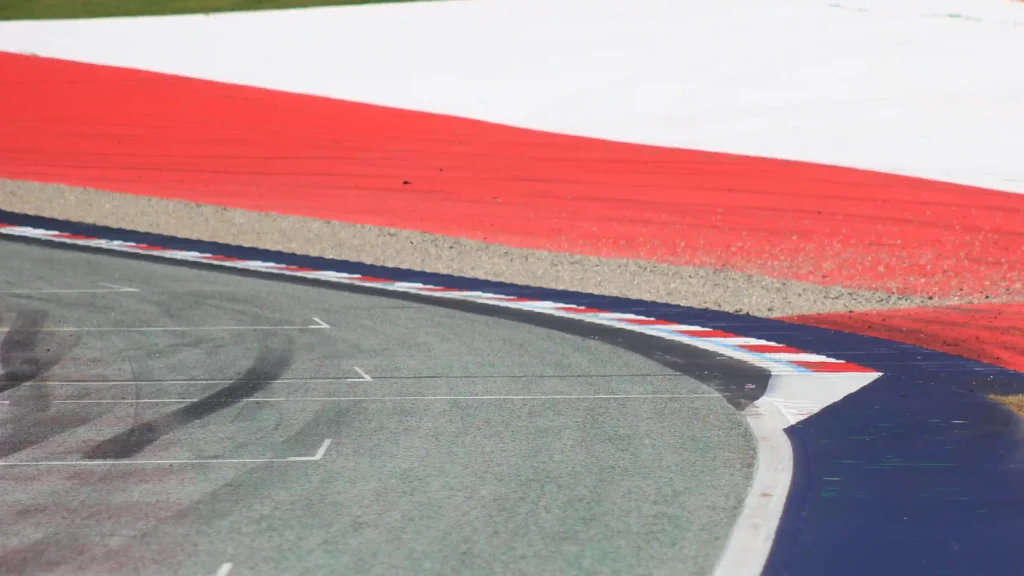
The Red Bull Ring in Spielberg is one of the shortest circuits on the Formula 1 calendar. At 4.318 km per lap over 71 laps, it delivers a compact race that regularly produces intense DRS-train battles and decisive undercut opportunities. The circuit sits at altitude — roughly 660 metres above sea level — which affects downforce levels, engine cooling requirements, and power unit deployment strategies differently from sea-level tracks.
The three sectors that decide the Austrian Grand Prix
| Sector | Key Corner(s) | What It Demands | Favours |
|---|---|---|---|
| Sector 1 | T1–T3 (Castrol/Jochen Rindt) | Flat-out high-speed commitment, minimal braking | Low drag · McLaren, Red Bull |
| Sector 2 | T4–T6 (Remus corner entry) | Traction out of slow hairpin, front-end stability | Mechanical grip · Ferrari, Red Bull |
| Sector 3 | T7–T10 (Power Zone) | Three DRS zones, power unit deployment at max energy | PU efficiency · Red Bull, Mercedes |
Sector 1 is where this Austrian Grand Prix preview question gets most interesting. The Jochen Rindt curve — a long, fast right-hander taken in 5th or 6th gear with minimal steering correction — rewards cars with clean, efficient aerodynamics. Too much drag here costs you 0.15 to 0.20 seconds per lap against the best low-drag setups. Over 71 laps, that deficit is race-defining.
Racing at altitude reduces air density. Consequently, downforce levels drop by approximately 3–4% compared to sea-level circuits. Teams run higher wing angles to compensate, which partially negates the low-drag advantage. However, the effect is non-linear — teams that arrive with the cleanest floor aerodynamics still extract a relative benefit, even with higher wing angles. Ferrari will need to find the right compromise between Sector 1 efficiency and the mechanical grip requirements of Sectors 2 and 3. Understanding downforce in F1 →
Three DRS zones make overtaking viable on the two main straights. As a result, qualifying position is less decisive here than at street circuits. You can make ground on race pace. That said, a front-row start still converts into a significant strategic advantage at a track where the safety car deployment rate is historically high — the Austrian Grand Prix has gone to safety car in four of the last six runnings.
The Rivals — McLaren, Verstappen, and the Dark Horses
Ferrari’s Austrian Grand Prix challenge does not come from one direction. McLaren brings the most efficient car on the current grid in low-to-medium drag configurations. Verstappen brings four Austrian Grand Prix victories, intimate track knowledge, and a Red Bull that — despite its mid-season difficulties — has never been truly absent from the front in Spielberg. Mercedes remains a strategic wildcard, and the revised paddock conversations around Hamilton specifically make this a race worth watching from the pit wall.
| Driver | Team | Austrian GP Record | 2026 Form | Assessment |
|---|---|---|---|---|
| Charles Leclerc | Ferrari | 2× front row · 0 wins | 3 podiums last 4 races | Favourite |
| Lewis Hamilton | Ferrari | 3 wins · Strong history | 2 wins in 2026 | Favourite |
| Lando Norris | McLaren | P2 2024 · Strong pace | Championship leader | Contender |
| Oscar Piastri | McLaren | P3 2024 · Improving | 3 wins in 2026 | Contender |
| Max Verstappen | Red Bull | 4× winner here | Inconsistent 2026 | Watch |
| George Russell | Mercedes | P2 2023 · Underrated | Solid midfield season | Dark Horse |
McLaren — the biggest threat to Ferrari
Lando Norris heads into Austria leading the drivers’ championship. McLaren’s MCL60 carries less drag than almost any car on the grid in its low-downforce configuration. Furthermore, the team’s tyre management over a long first stint has been the best on the grid in 2026. Therefore, even if Ferrari qualifies ahead, a McLaren undercut in the final third of the race remains a real threat.
Verstappen — never count him out at Spielberg
Max Verstappen’s four Austrian Grand Prix victories span three different eras of car regulations. He knows every millimetre of this track’s limits. Moreover, Red Bull has developed specific updates for Austria’s unique altitude demands that other teams will not have seen in practice until FP1 on Friday. Verstappen in Austria, whatever the car’s championship position, is always a threat. More on Verstappen’s F1 career →
Race Strategy — How the Austrian GP Will Be Won
Pirelli brings the C3, C4, and C5 compounds to Spielberg in 2026 — softer than recent seasons, which changes the strategic picture. The C5 soft tyre is fast in qualifying but degrades quickly in the race’s warm Austrian summer temperatures. Consequently, most teams will start on the medium C4 and target a one-stop strategy if the pace is achievable. However, the high degradation rate in the upper sector of the circuit means that the single-stop plan requires near-perfect tyre management across the first 35 laps.
The undercut is the primary weapon
At the Red Bull Ring, the undercut is historically the decisive strategic move. Because the track is short — under 90 seconds per lap — fresh-tyre advantage builds quickly. A car pitting two laps before its rival can recover the necessary gap within three to four laps on newer rubber. As a result, the team that blinks first and calls the undercut often takes the race lead.
Weather models for the Austrian Grand Prix weekend show a significant risk of afternoon thunderstorms on both Saturday and Sunday. The Red Bull Ring sits in a natural bowl that intensifies local weather systems. A wet qualifying session would reshuffle the grid completely — and could hand either Ferrari or Verstappen an unexpected advantage if their wet-setup balance proves superior. Monitoring the weather through Saturday morning is essential for any strategy read on race day. How F1 race timing and strategy works →
Ferrari’s strongest strategic card this weekend is their pit stop execution. The Scuderia has averaged sub-2.5 second stops in 2026 — consistently among the three fastest on the grid. At a circuit where the undercut dominates, a fast stop can manufacture a 1.5–2.0 second net gain over a rival who takes the same-lap decision but executes half a second slower. Those details compound quickly over a 71-lap race. How pit stops work in racing →
Austrian Grand Prix 2026 — Race Prediction
Ferrari can win this race. The SF-26 has the raw pace, the tyre management, and the strategic organisation to challenge on any circuit in 2026. However, Spielberg’s specific demands narrow that window. If Ferrari qualifies within 0.1 seconds of the McLarens, they can win. If McLaren gets a clear front row lockout, the undercut becomes the only viable route to victory — and that requires McLaren to make a first-stint error.
Our call: Leclerc takes pole by a narrow margin, benefiting from Ferrari’s strong front-end performance in the Remus and Rindt complex. Hamilton takes third or fourth. McLaren’s race pace, however, is superior over a full stint distance. Therefore, we expect Norris to lead after the pit stops, with Leclerc second and Piastri third.
If Ferrari scores a 1–3 result (Leclerc wins, Hamilton third), they close the constructors’ gap to McLaren by up to 22 points. That would put the Scuderia within one strong race of the lead. Conversely, if McLaren takes a 1–2, they could extend to a 40-point lead — likely decisive by season’s end given the number of remaining events. Austria, in that context, is genuinely pivotal. Current F1 2026 championship standings →
Frequently Asked Questions
The bottom line heading into Spielberg
Ferrari’s 2026 momentum is the most credible championship challenge the Scuderia has mounted since 2022. However, momentum at a medium-speed circuit and momentum at the Red Bull Ring are different things. The Austrian Grand Prix will tell us clearly whether the SF-26 is a genuine all-conditions weapon — or a car that needs the right track to unlock its best.
The smart money says McLaren leads on race pace. But smart money has been wrong about Ferrari this season. If Leclerc qualifies on pole and manages his first stint immaculately, the Scuderia has every tool needed to take a hugely significant Austrian victory. That is what makes this preview so genuinely difficult to call — and what makes the race itself worth watching in full.