Spanish Grand Prix 2026:
Barcelona Schedule, Circuit Guide & Full Race Preview
Everything you need heading into the 2026 Formula 1 Spanish Grand Prix at Circuit de Barcelona-Catalunya — session times, circuit breakdown, key battles, tyre strategy and how to watch.
Spanish Grand Prix 2026:
Barcelona Preview & Schedule
Session times, circuit guide, key battles and tyre strategy for the 2026 Barcelona GP.
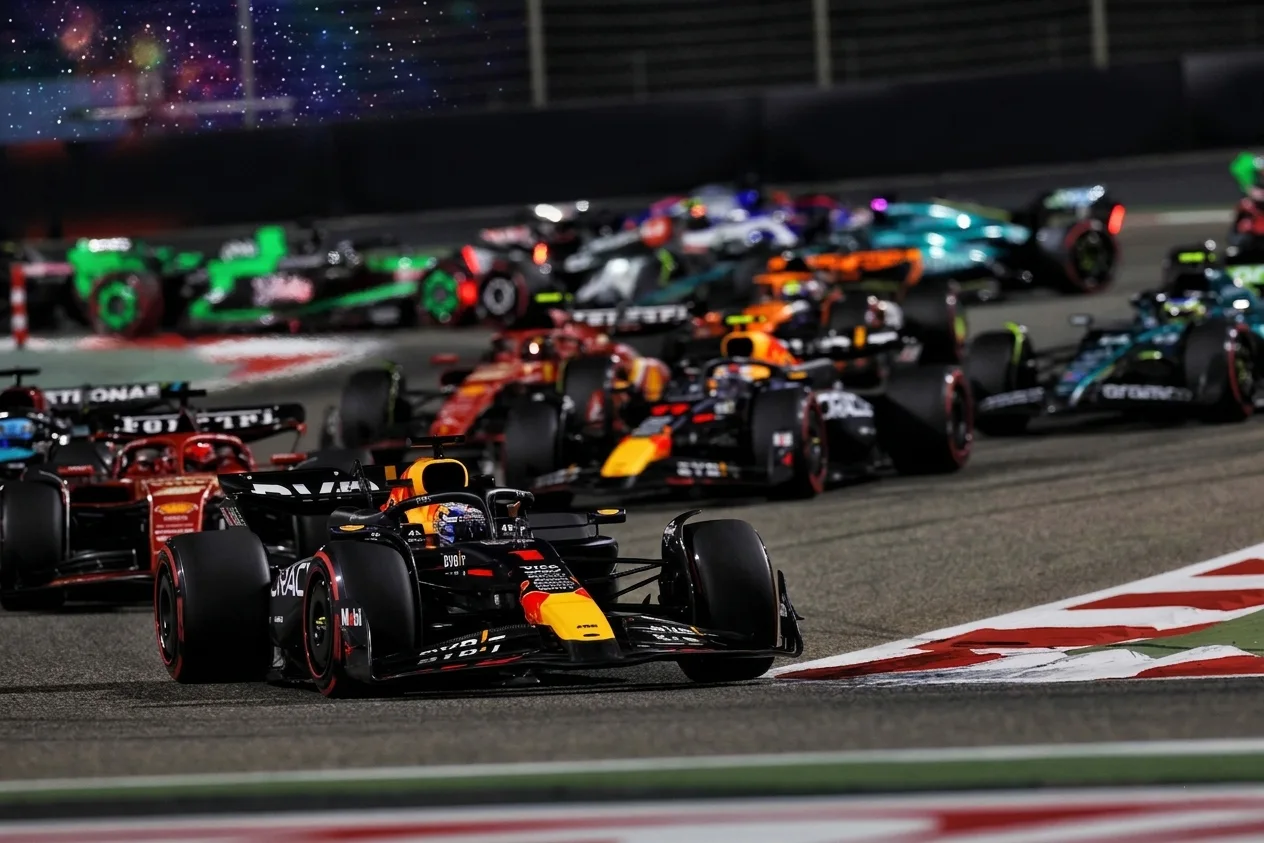
The 2026 Formula 1 Spanish Grand Prix takes place at Circuit de Barcelona-Catalunya from 12 to 14 June — and for the first time in the sport’s history, Spain will host two championship rounds in a single season. The F1 calendar returns to the familiar 4.657 km circuit north of Barcelona for Round 8, before moving to the brand-new MADRING venue in Madrid for Round 16 in September. Two Grands Prix, one country, one extraordinary season.
Barcelona is one of the most technically demanding circuits on the calendar — a track every engineer on the grid knows inside out from years of pre-season testing. That familiarity cuts both ways. It means teams arrive with deep data, but it also means there’s nowhere to hide if your car has a fundamental weakness in high-speed corners or rear tyre management. With the 2026 regulations — new 50/50 hybrid power units, no DRS, 100% sustainable fuel — still being fully understood, Barcelona will be the most revealing test of where the true power order actually sits.
This guide covers everything: the full session schedule with local and global times, the circuit lap by lap, the key storylines to follow across the weekend, tyre strategy, Spanish GP history, and how to watch wherever you are.
Full Weekend Schedule — Spanish Grand Prix 2026
All times below are Central European Summer Time (CEST / UTC+2) as Barcelona is in Spain. For BST (UK): subtract 1 hour. For ET (US East): subtract 6 hours. For IST (India): add 3.5 hours. For AEST (Australia East): add 8 hours.
The 2026 F1 season runs the standard three-day format at Barcelona — no Sprint weekend. That means two free practice sessions on Friday, a third on Saturday morning, qualifying Saturday afternoon, and the race on Sunday. See the full 2026 F1 calendar for every round’s format.
12 June
12 June
13 June
13 June
14 June
Circuit de Barcelona-Catalunya — Lap by Lap
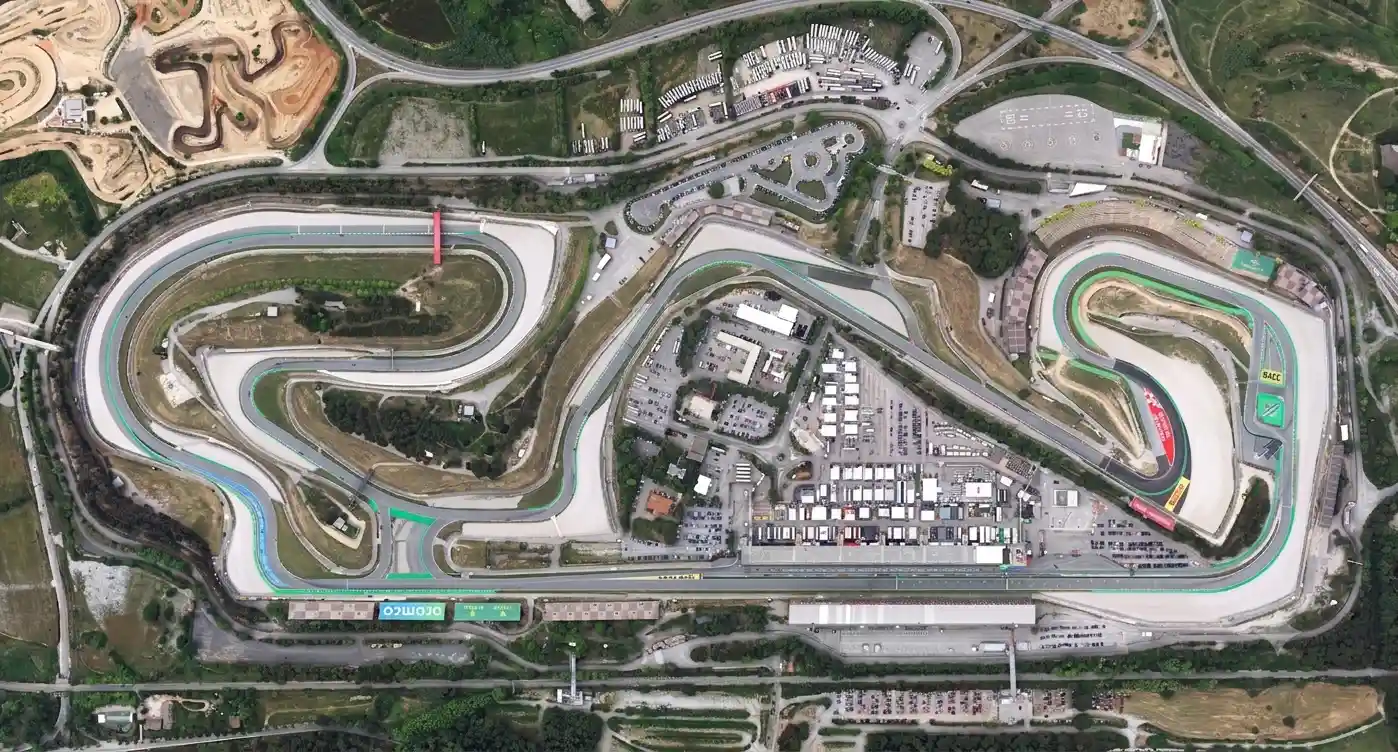
The Circuit de Barcelona-Catalunya sits in the hills of Montmeló, 30 km north of the city. It opened in 1991 in time for the Barcelona Olympics development programme, and hosted its first Formula 1 race that same year — the same afternoon Nigel Mansell and Ayrton Senna ran wheel to wheel down the main straight in one of the sport’s defining images. The track became F1’s primary winter testing venue through the 2000s and 2010s, which means engineers have more long-run data from Barcelona than anywhere else on the calendar.
That familiarity makes it both the most revealing and the most conservative of the season’s circuits. Teams rarely try genuinely experimental setups here because they know what works. But 2026 is different — the new ERS architecture and the removal of DRS have fundamentally changed how every car needs to be set up. Barcelona will expose which teams have genuinely solved the new technical formula and which are still chasing balance.
Circuit Fact File
| Stat | Figure | Context |
|---|---|---|
| Circuit length | 4.657 km | One of the longer technical layouts on the calendar |
| Race distance | 66 laps · 307.1 km | Just above the standard 305 km minimum |
| Corners | 16 | High-speed sweepers in S2; technical hairpins in S3 |
| Main straight | ~1,047 m | Primary overtaking opportunity — Turn 1 braking zone |
| First F1 race | 1991 | Mansell won; Senna retired — a classic debut |
| Pirelli compounds | C2 · C3 · C4 | Hard-Medium-Soft. Confirmed 2026 high-durability tire nomination. |
| F1 lap record | 1:15.743 (Oscar Piastri) | Set in 2025 — current benchmark on the chicane-free layout. |
The Sectors That Decide It
The lap at Barcelona splits neatly into three characters. Sector 1 is all about traction and front-end confidence — the long climb from the grid, the Turn 1/2 braking zone where most overtaking happens, and the fast sweep of Turn 3 where the car loads up at over 200 km/h. Getting Turn 3 right is essential for carrying speed into the long back straight.
Sector 2 is where championships are won and lost in qualifying. The quick left-hander at Turn 5, the medium-speed chicane at Turns 7/8, and the iconic Campsa corner at Turn 9 — a right-hander taken flat in the fastest cars — all require the car to generate maximum downforce from the new 2026 ground-effect floors. This is where the gap between a well-balanced car and a struggling one shows up most brutally in the sector times.
Sector 3 is a test of rear tyre preservation above all else. The sweeping left of Turn 12 and the final chicane before the main straight generate high lateral loads on the rear rubber. Teams that protect the rear tyre through the final sector can extend their first stint by two or three laps — and at Barcelona, where track position matters enormously, those extra laps before the first stop often determine the race result more than raw pace does.
Key Storylines to Follow This Weekend
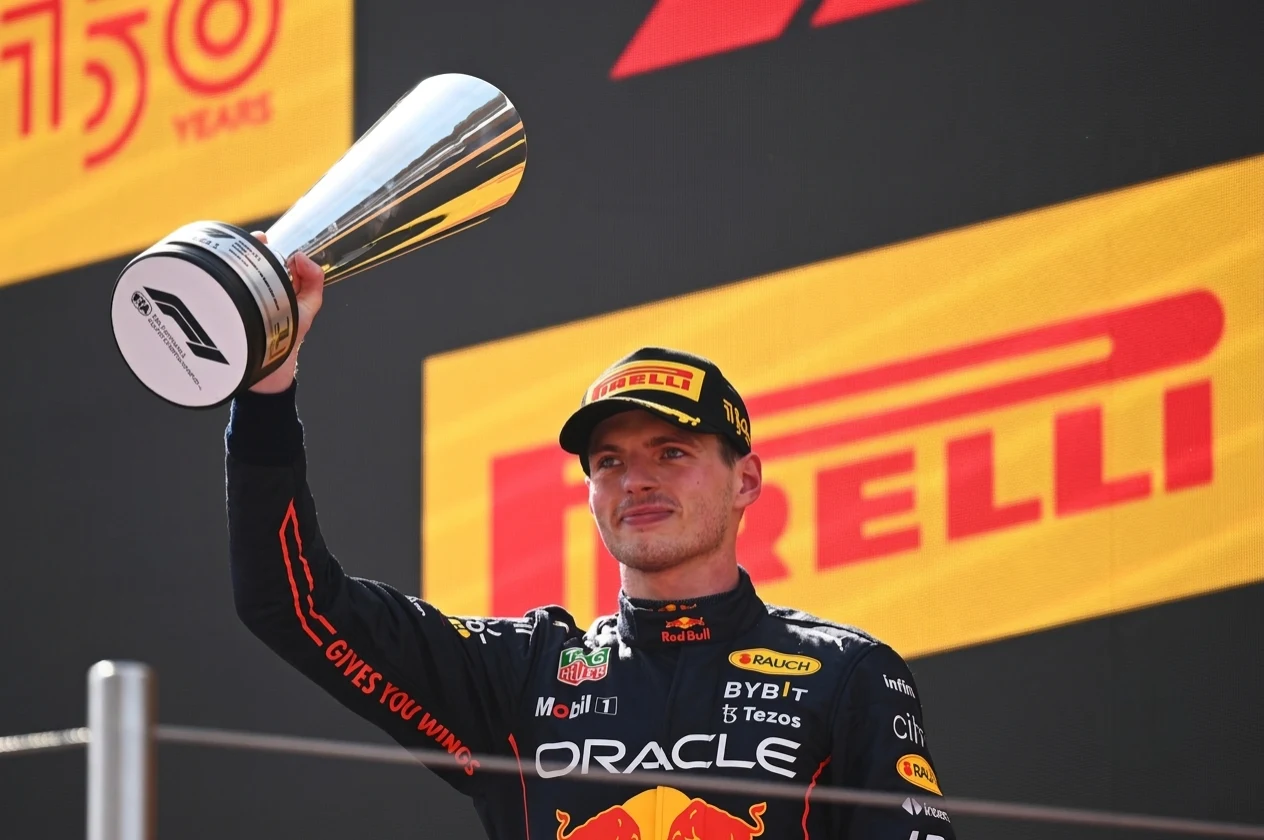
The 2026 Power Unit — Where Does Everyone Actually Stand?
Seven rounds into the 2026 season, the pecking order under the new 50/50 hybrid power unit regulations is still not fully resolved. Barcelona is the circuit most likely to give a definitive answer. The track’s combination of high-speed loads, a long main straight, and two DRS-free overtaking zones means power unit efficiency — the ratio of electrical energy deployment to combustion output — will be more exposed here than at any recent round.
New manufacturers Audi (via Sauber) and the Red Bull Ford unit are both approaching their first mid-season reference point. Teams running the updated 2026-spec engines will be watching their fuel-corrected long-run data from FP2 with particular attention. Circuit de Barcelona-Catalunya has always been the circuit where the gap between suppliers is most clearly visible over a race distance — and 2026 is the season where those gaps matter most.
Barcelona is the circuit where you can’t hide a power unit problem. The long runs in FP2 tell you everything the qualifying lap doesn’t.
The Championship Picture After Round 7
Heading into Barcelona, the championship battle is current Formula 1 Drivers’ Championship standings after the Canadian Grand Prix. The Spanish Grand Prix carries 25 points for a win and 18 for second — enough to meaningfully reshape the standings after seven rounds where consistency has been rewarded as much as outright victory. Track the live championship standings here.
For the constructors’ fight, Barcelona historically sorts teams into two strategic groups: those able to run a long first stint on the hard tyre and those forced into an early medium-to-medium two-stop. The teams that got their 2026 car’s rear tyre degradation under control over the winter will arrive here with a structural advantage that no pit-wall call can fully overcome. Understanding how pit stop strategy works is key to following the race as it unfolds.
Carlos Sainz on Home Soil
Few storylines in F1 carry as much emotional weight as a Spanish driver at the Spanish Grand Prix. Carlos Sainz has been the race’s unofficial ambassador since joining F1, and 2026 is his first full season with Williams after departing Ferrari. Barcelona is not just a home race for Sainz — it’s the circuit where he grew up watching his father compete. The crowd he draws to the grandstands at Circuit de Barcelona-Catalunya is unlike any other. Whether Williams’ 2026 car can give him the machinery to convert that emotional charge into points will be one of the weekend’s defining subplots.
The No-DRS Era at a Classic DRS Track
The removal of DRS — the rear wing system that opened a flap to reduce drag on straights — is one of the most significant 2026 regulation changes. Barcelona was historically a circuit where DRS made the main straight a pass-or-be-passed binary choice. Without it, and with the new active aerodynamics from the 2026 downforce regulations, overtaking will require either genuine pace differential or a tyre strategy advantage that puts a car’s rubber significantly ahead of the car it’s chasing. The midfield will be fascinating to watch — teams that perfect the undercut timing window will gain more positions than any on-track move.
Tyre Strategy at Barcelona — What to Expect
Barcelona has one of the most predictable tyre degradation profiles on the calendar — and one of the most punishing if you get the strategy wrong. The right rear tyre carries the brunt of the punishment, with the sustained cornering loads through Sectors 2 and 3 generating heat that builds progressively through each stint. Teams that run gentle, smooth setups through those sections can stretch a stint by four to six laps beyond a car that’s fighting its tyres.
Pirelli has nominated standard Pirelli tyre compound allocation for the Spanish Grand Prix (C2–C4 range used at Barcelona in recent seasons). C4 (Soft) is the Q3 tyre — all top-ten qualifiers must start on it. C3 (Medium) is the workhorse race compound. C2 (Hard) is the long-stint option, typically used by cars starting outside the top ten with free tyre choice. For a full breakdown of how F1 tyres work: prime and option tyres explained.
The Two Strategic Routes
One-stop (Medium–Hard): The preferred approach for a car with good rear tyre management. Typical pit window is laps 22–28 for the front-runners, earlier for drivers under pressure. The key risk is the hard tyre taking longer to come up to temperature on a Barcelona track surface that can be 20°C cooler than its peak — those first three laps out of the pit lane are dangerously exposed to an undercut.
Two-stop (Soft–Medium–Medium or Soft–Hard–Medium): More likely for teams starting lower on the grid or for cars that visibly struggle with rear tyre temperature. A two-stop can gain track position if the timing is aggressive, but it requires both stints to deliver strong pace — at Barcelona, where the safety car appears less often than on street circuits, a two-stop with one slow middle stint is almost always a race-losing strategy.
Strategy Probability Breakdown
⚠ Probabilities based on historical Barcelona strategy data — actual 2026 compound allocation pending Pirelli confirmation.
The undercut — pitting a lap or two before your rival to run fresh tyres and jump them in the pit lane — is the primary weapon at Barcelona because the main straight time advantage on new rubber over degraded rubber is significant. The window opens around lap 18–20 for the most aggressive teams. A car sitting two seconds behind the leader with four-lap-fresher tyres is not necessarily the car that will emerge behind after the stops. See our overcut and undercut explainer for how this works in practice.
Spanish Grand Prix History & Barcelona Records
The Spanish Grand Prix predates the modern Formula 1 World Championship altogether — the first race carrying the name was held in 1913 on the Sitges-Terramar circuit. The modern championship era brought the race to a succession of venues before settling at Circuit de Barcelona-Catalunya in 1991. Since then, the circuit has hosted one of the most reliably strategic rounds of every season, with the combination of high-speed and medium-speed corners producing a race that rewards engineering precision over brute force.
Michael Schumacher and Lewis Hamilton share the record for most wins at the Spanish Grand Prix with six each — a figure that underlines just how consistently dominant teams in their respective eras were able to exploit Barcelona’s sensitivity to aerodynamic and tyre management advantages. The best F1 drivers of all time have all won here, and the list of Spanish GP winners serves almost as a shorthand for championship pedigree. For historical context on the cars and constructors that shaped this race, the Ferrari through the decades archive covers the Scuderia’s extraordinary record in Spain.
The Race That Made Max Verstappen
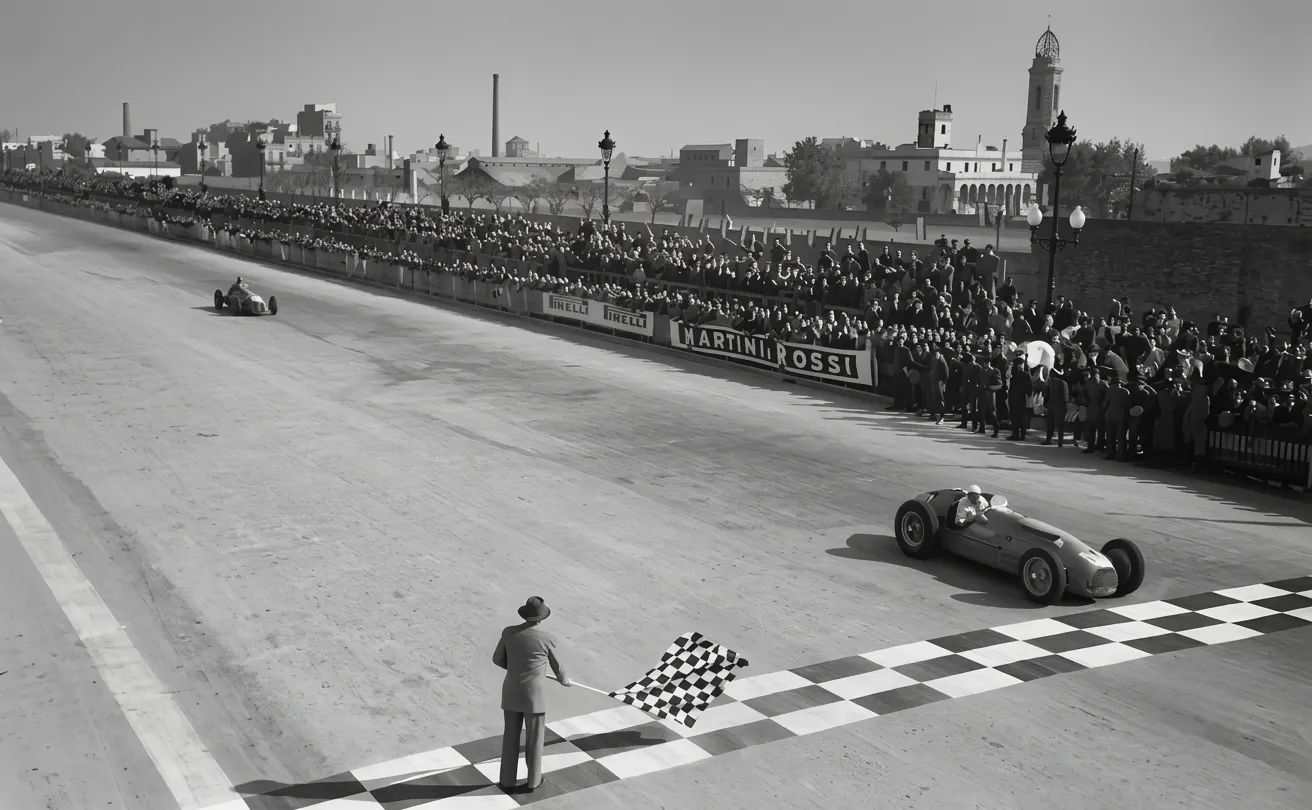
No moment in the modern history of the Spanish Grand Prix carries more symbolic weight than the 2016 race, where a sixteen-year-old Max Verstappen — promoted to Red Bull from Toro Rosso just that weekend — became the youngest winner in Formula 1 history. He didn’t just win: he managed tyres, handled traffic, held off Kimi Räikkönen in the closing laps, and delivered a drive of senior maturity. That race is the one most frequently cited when people explain who Verstappen is and where he came from. For the full story of his journey, see our Max Verstappen F1 career profile.
Key Records at Circuit de Barcelona-Catalunya
| Record | Holder | Detail |
|---|---|---|
| Most Spanish GP wins | Schumacher / Hamilton | Six wins each — the record they share at this circuit |
| Youngest winner | Max Verstappen | 18 years 228 days — 2016 Spanish GP, his Red Bull debut |
| Circuit lap record | Max Verstappen — 1:16.330 | 2023 Spanish Grand Prix |
| Fastest pit stop | McLaren — 1.80 seconds | 2023 Qatar Grand Prix, fastest pit stop in F1 history |
| Most pole positions | Lewis Hamilton | 6 poles at the Spanish Grand Prix (Barcelona) |
How to Watch the 2026 Spanish Grand Prix
The 2026 Spanish Grand Prix race start is 15:00 CEST on Sunday 14 June, which puts it at a convenient time for European viewers and a 09:00 ET start for American audiences. Below are the primary broadcast rights holders by region .
See our guide on how to watch F1 live online for the most current streaming options.
| Region | Broadcaster | Race Time (local) |
|---|---|---|
| 🇬🇧 United Kingdom | Sky Sports F1 | 14:00 BST Sunday |
| 🇺🇸 United States | ESPN / ABC | 09:00 ET Sunday |
| 🇩🇪 Germany | Sky Deutschland | 15:00 CEST Sunday |
| 🇮🇳 India | Star Sports / JioCinema | 18:30 IST Sunday |
| 🇦🇺 Australia | Fox Sports / Foxtel | 23:00 AEST Sunday |
| 🌍 Global | F1 TV Pro | 15:00 CEST · All sessions |
F1 TV Pro remains the most comprehensive global streaming option — it carries every session live including practice, qualifying and the race, with onboard cameras, team radio, and live timing data. It’s available in most markets where local broadcast deals don’t carry exclusive rights restrictions. For how qualifying works and what to watch for across all three sessions, see our F1 qualifying explained guide.
What Barcelona Will Tell Us About the 2026 Season
By the time the chequered flag falls on Sunday afternoon, we will know several things that seven rounds of data have not yet settled definitively. First: which power unit supplier has genuinely solved the 50/50 electrical-combustion balance over a full race distance in Catalan heat. Second: whether the removal of DRS has actually transferred performance advantage from the top-speed specialists to the aerodynamic efficiency leaders — and if so, by how much. Third: which teams have mastered the 2026 tyre management challenge well enough to run a one-stop cleanly, because those who can’t will spend the second half of the season paying the compound-selection price.
Barcelona has always been the circuit where the gap between the fastest and slowest constructor is smallest in qualifying and widest in the race. The teams that look similar on a Saturday can be half a minute apart on a Sunday, simply because their cars treat their rear tyres differently over 66 laps. That’s the essential drama of the Spanish Grand Prix: what qualifying hides, the race reveals. It is the most honest verdict a circuit delivers all season, and it arrives at the moment when the championship is still young enough to be shaped by what we learn here.
For context on how the championship scoring works and why these points matter so much at Round 8, see our F1 points system explained guide, and track the live standings at our Formula 1 standings page.
Frequently Asked Questions — Spanish Grand Prix 2026
One last thought before lights out in Barcelona
Circuit de Barcelona-Catalunya is thirty-five years old as an F1 venue. Every team on the grid has tens of thousands of laps of data from this circuit — from testing, from races, from simulations. In a normal season, that familiarity smooths the weekend into a predictable rhythm. But 2026 is not a normal season. The new power units, the new aerodynamic philosophy, and the absence of DRS mean every team is writing at least part of its Barcelona playbook from scratch this year.
That’s what makes this race weekend worth watching all the way through: not just for the result, but for what the result means. Barcelona has always been the circuit that tells you who actually has the best car, stripped of the flattery that street circuits and power-unit tracks can provide. Whatever happens between 15:00 CEST on Sunday 14 June and the chequered flag, we’ll know considerably more about how the 2026 season will unfold than we do right now.
Full qualifying report and race result will be published on worldofspeed.org within 30 minutes of each session ending this weekend.