How Much Does an NHRA
Top Fuel Engine Cost?
A complete 2026 price breakdown — the $100,000–$120,000 base build, the $3,500–$5,000 per-run rebuild, every major component priced individually, and the full annual operating budget of a professional Top Fuel team explained.
How Much Does an NHRA
Top Fuel Engine Cost?
Full 2026 price breakdown — build cost, every part priced, rebuild expenses and team budget.
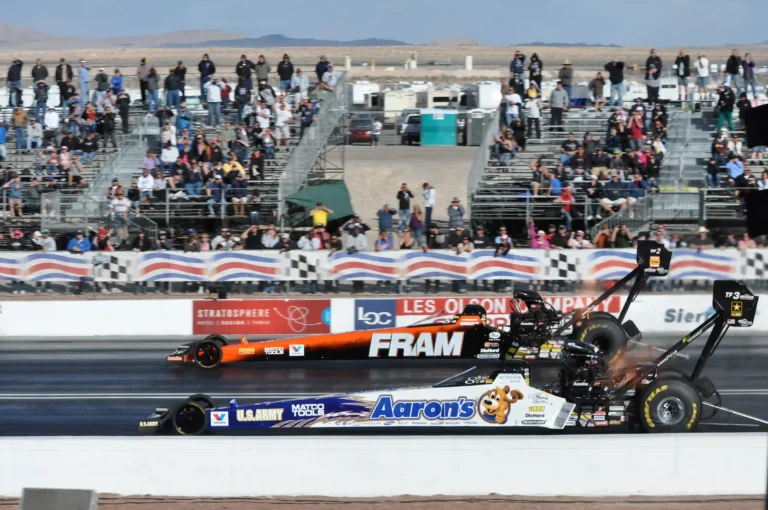
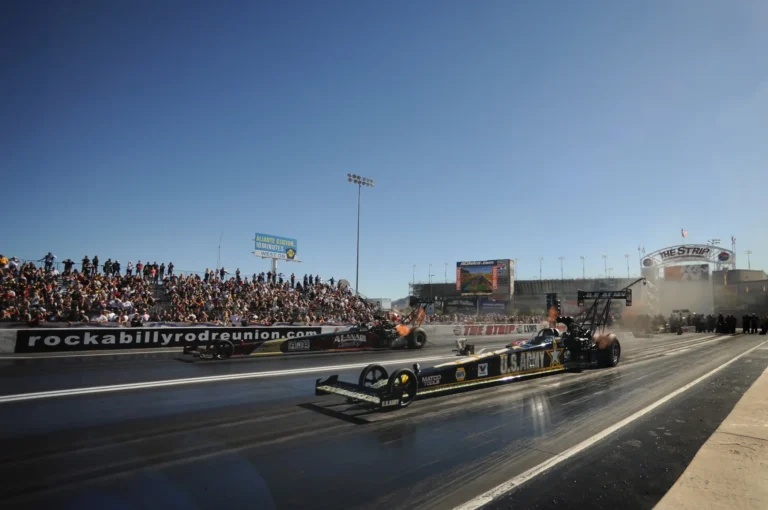
An NHRA Top Fuel engine costs between $100,000 and $120,000 to build from scratch in 2026. That is the entry price for a single 500 cubic inch supercharged Hemi V8 — before it has fired a drop of nitromethane. The moment it makes its first four-second pass down the drag strip, a mandatory complete teardown begins, and $3,500 to $5,000 in parts is consumed. Run the numbers across a full 21-race season and a single car burns through over $1 million in engine parts alone.
This is the complete 2026 NHRA Top Fuel engine cost breakdown — every major component priced, the 40-minute rebuild cycle explained in full, the annual team operating budget dissected, and a clear comparison to F1, NASCAR, and IndyCar programmes. If you have ever watched one of these machines leave the line in a cloud of nitro smoke and wondered what it actually costs to put it there, this is the complete answer.
NHRA Top Fuel Engine Cost: The 2026 Price Answer
A fully assembled, race-ready NHRA Top Fuel engine costs $100,000 to $120,000 to fabricate from raw materials in 2026. That number covers a custom billet aluminum block, a high-output supercharger, a billet steel crankshaft, titanium intake valves, Nimonic alloy exhaust valves, a multi-disc clutch assembly, dual magneto ignition, a high-flow fuel pump, and all the precision hardware that keeps it together under 7,000 psi of cylinder pressure. Installation into the dragster, the fuel system itself, and the pre-event dyno run are separate line items.
Most elite programmes — John Force Racing, Kalitta Motorsports, Tony Stewart Racing — carry five to six complete engine packages in the race hauler at every national event. That is not a safety buffer; it is a logistical requirement. A full weekend of two qualifying sessions plus four elimination rounds means six competitive passes minimum. Each pass demands a complete teardown. The engine rotating through the car across those six passes cannot be the same engine — it needs to be a fresh assembly each time, with used cores being stripped down, inspected, and rebuilt at the back of the trailer while the next engine is in the car running elimination rounds.
Two qualifying passes plus four Sunday elimination rounds equals six competitive runs for a driver who wins the event. Each run is followed by a complete mandatory teardown consuming $3,500–$5,000 in parts. Teams carry complete spare assemblies — not spare parts — because there is no time to machine components between rounds. The entire engine must be back in the car and warmed up in under 40 minutes. Running out of ready hardware mid-event means either missing a round or racing with an under-inspected engine — neither option is acceptable at this level.
To benchmark that $110,000 figure: a NASCAR Cup Series engine costs $50,000–$80,000 and survives an entire 500-mile race weekend without mandatory teardown. A Formula 1 power unit costs $10–15 million but runs for multiple race weekends before a penalty-free swap. A Top Fuel engine is the only competition engine in motorsport specifically engineered to last four seconds — and every element of its cost structure reflects that singular, uncompromising design brief. See F1 car costs compared →
What Engine Is in a Top Fuel Dragster?
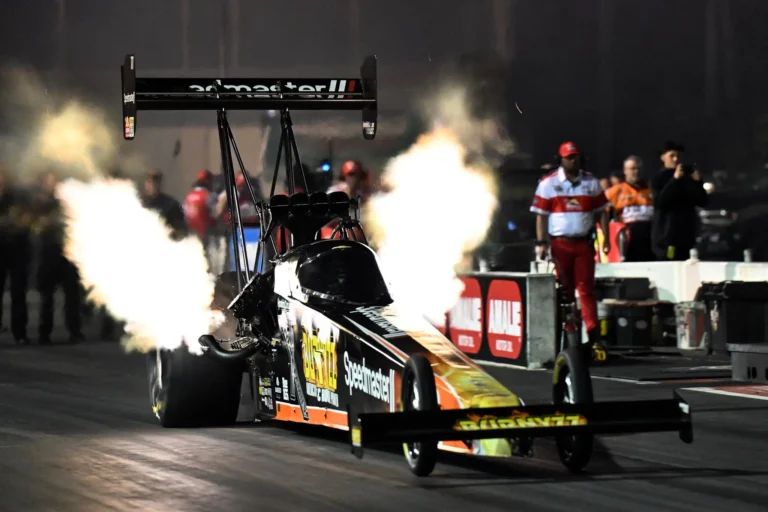
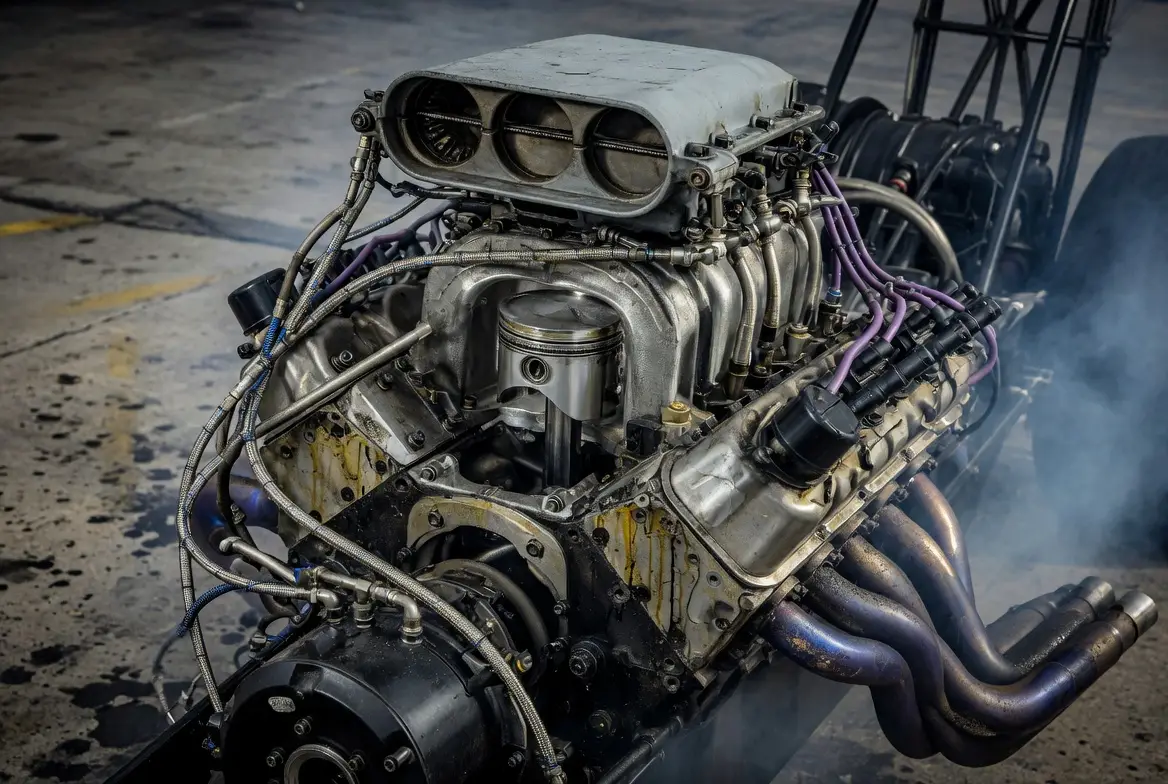
The engine inside an NHRA Top Fuel dragster is a custom-fabricated 500 cubic inch (8.2-litre) supercharged Hemi V8 — inspired by the legendary Chrysler 426 Hemi architecture but sharing almost nothing with any production engine ever manufactured. Every single component is precision-machined from aerospace-grade materials specifically to survive the most violent internal combustion environment in motorsport: cylinder pressures exceeding 7,000 psi, combustion temperatures above 5,000°F, and a fuel delivery rate of up to 100 gallons per minute.

The block is forged from a single piece of billet aluminum with no water-cooling jackets — the engine runs for fewer than five seconds per cycle, and incoming nitromethane fuel combined with heavy racing oil provides all the thermal management these passes require. The crankshaft is machined from high-grade billet steel and rated for the 8,000 lb-ft of torque the engine produces at maximum output. Every bearing, rod, and piston is built to tolerances measured in ten-thousandths of an inch, because at 7,000 psi a misalignment of a fraction of a millimetre can catastrophically shatter an engine block mid-run.
Top Fuel engines run on 90% nitromethane / 10% methanol. Nitromethane carries its own internal oxygen atoms, which allows it to combust with roughly eight times the energy density of conventional gasoline per unit of air. At wide-open throttle, the engine consumes approximately 15 gallons of nitromethane per four-second run — the equivalent of a standard car’s fuel tank in the time it takes to blink twice. Two large magnetos supply 44 amps of current to 16 spark plugs simultaneously, creating ignition conditions the team refers to as an arc-welding environment inside the cylinders. At around $60 per gallon, fuel alone costs approximately $900 per competitive pass. How fast do Top Fuel cars go? →
Top Fuel engine performance numbers at a glance
A single cylinder in a Top Fuel Hemi produces more horsepower than an entire NASCAR Cup Series engine. At peak output, each of the eight cylinders is generating roughly 1,375 hp — more than most purpose-built supercars produce from their entire engine.
Standard automotive dynos cannot measure Top Fuel power output — the torque spike destroys the equipment. Engineers instead calculate output using hub-mounted torque sensors and back-calculate from vehicle acceleration telemetry. The 11,000 hp figure is well-validated, though some crew chiefs believe the fastest cars — including those capable of passes like Shawn Langdon’s historic 345.00 mph run at the 2026 NHRA Southern Nationals — may be producing outputs closer to 12,000 hp during record-setting conditions. How far do NHRA Top Fuel cars race? →
Top Fuel Engine Parts Pricing — Complete 2026 Guide
Understanding the complete NHRA Top Fuel engine cost requires pricing every major component individually. Each part below represents an engineering challenge with no equivalent in any other motorsport application — which is why the pricing reflects aerospace-grade fabrication rather than automotive manufacturing economics.
| Component | 2026 Cost (USD) | Replacement Interval | Engineering Notes |
|---|---|---|---|
| Custom Billet Aluminum Block | $12,500 – $15,000 | 50–80 passes | No cooling jackets; forged from single billet; withstands 7,000 psi |
| High-Output Supercharger (Blower) | $11,000 – $13,000 | 20–30 passes | Roots-type; 60+ psi boost; belt replaced every single run |
| Multi-Disc Clutch Assembly | $8,500 – $10,000 | Full inspection every pass | Steel floater discs discarded after every single run |
| Billet Steel Crankshaft | $4,500 – $5,500 | 10–15 passes | MPI crack-checked after each teardown; $4,500 replacement cycle |
| High-Flow Fuel Pump | $3,800 – $4,500 | 25–40 passes | Delivers 100 gallons per minute at wide-open throttle |
| Titanium Intake Valves (×16) | $2,800 – $3,600 | 5–10 passes | Aerospace titanium prevents thermal meltdown at intake ports |
| Nimonic Exhaust Valves (×16) | $2,200 – $3,000 | 3–8 passes | Nickel superalloy survives exhaust temps above 5,000°F |
| Aluminum Pistons + Wrist Pins (×8 sets) | $2,000 – $3,200 | 2–4 passes | Replaced preventively — waiting for failure risks destroying the block |
| H-Beam Billet Connecting Rods (×8) | $1,800 – $2,400 | 5–10 passes | MPI inspected every teardown; replaced on any indication of stress |
| Dual Magneto Ignition System | $3,200 – $4,000 | Season-based service cycle | 44 amps to 16 plugs; creates arc-weld conditions inside cylinders |
| Supercharger Drive Belt | $600 – $900 | Every competitive pass | New belt for Sunday eliminations; cascaded down to qualifying runs |
| Spark Plugs (×16) | $180 – $260 | Every pass | Tips frequently melt before the car reaches the 1,000-foot mark |
| Complete Per-Run Rebuild Total (Parts) | $3,500 – $5,000 | Mandatory after every pass | Pistons, pins, clutch discs, belt, plugs, gaskets, MPI inspection |
The blower belt: smallest part, biggest strategy
The supercharger drive belt costs $600–$900 and gets replaced after every single competitive pass. But the strategy behind it is more nuanced than simple cost control. Elite teams run brand-new belts exclusively for Sunday elimination rounds — where points and championships are decided — then cascade those lightly used belts down to Saturday qualifying sessions, then further down to Friday sessions and test days. A new belt transfers supercharger power more efficiently, meaning Sunday elimination cars benefit from every marginal advantage in the tune-up package. Over a full season, this rotation discipline saves tens of thousands of dollars while ensuring the best available hardware is in the car when it matters most.
Why pistons are replaced every 2–4 passes — not when they fail
Teams replace aluminum pistons on a fixed preventive interval rather than waiting for failure indicators because at this power level, the moment a piston shows a detectable crack, the engine has already been compromised — and the block that houses it may have sustained invisible damage too. A failed piston at 330 mph costs $30,000–$50,000 in collateral destruction. Replacing pistons preventively every two to four passes costs $250–$400 per set. The economics make the choice straightforward.

The 40-Minute Rebuild: What Happens After Every Single Pass
The moment a Top Fuel dragster rolls back from the shutdown area, a clock starts. In a competitive programme, a specialist crew of five to eight mechanics will have that engine completely disassembled, inspected, rebuilt, reinstalled, and warmed up in under 40 minutes. That is not an impressive turnaround — it is the minimum requirement enforced by the elimination ladder schedule. Between rounds on Sunday afternoon, the time from one burnout to the next can be as little as 45 minutes from a dragster’s perspective on the ladder.
0–5 min: Car returns. Crew begins draining oil and disconnecting fuel lines while the block is still cooling. Blower belt removed immediately — it goes to the classification pile for reuse or discard.
5–15 min: Cylinder heads unbolted. All eight pistons and wrist pins pulled. Each connecting rod goes to the MPI station for magnetic particle crack inspection. Crankshaft checked for microfractures under UV light.
15–25 min: Full clutch disassembly. Steel floater discs discarded and replaced. New clutch pack installed and adjusted to the crew chief’s tune-up specification for the next round, based on track condition data from the previous pass.
25–35 min: New pistons and pins installed. Heads torqued back down to spec. Fuel system reconnected. On-board data recorder downloaded to the crew chief’s laptop for analysis — elapsed time, cylinder pressure traces, clutch engagement timing, tyre slip data.
35–40 min: Brief warm-up on methanol. Transition to nitromethane. Crew chief reviews tune-up sheet and signs off. Car moves to the water box for the next burnout.
If the crew chief pushed the supercharger boost too aggressively on the previous pass, the teardown tells the story immediately — melted valve tips, a cracked piston crown, a cylinder head showing blow-by scoring. In that case the $3,500 baseline rebuild cost escalates fast: replacement cylinder heads add $6,000–$8,000, and if the block itself is compromised the team pulls a complete fresh engine from the trailer at a full $110,000 rotation cost mid-event.
Factoring in rebuild costs, fuel, tyres, and crew salaries, a Top Fuel team spends roughly $3,000–$3,500 per second of actual track time. That is the cost of four seconds of the fastest acceleration ever produced by a vehicle that starts from rest.
Why Top Fuel engines explode — and the real cost when they do
A Top Fuel engine explosion is not a malfunction — it is a predictable consequence of operating at the absolute boundary of what engineering materials can survive. If a single spark plug stops firing mid-run, unburned nitromethane enters the cylinder in liquid form. Liquids cannot be compressed. The piston arrives at top dead centre, encounters a hydraulically locked cylinder, and the force transfers instantly through the weakest structural path — typically the cylinder head bolts. The head blows clear of the block, the exhaust system vents the explosion, and the dramatic fireball results.
Modern driver containment systems, fire suppression, and roll cage standards have made these events survivable for the driver. The engine is another matter entirely. A single catastrophic failure can destroy $30,000–$50,000 in components in a fraction of a second — the block, heads, pistons, connecting rods, and often the supercharger case all sustain damage simultaneously. For the crew that spent their previous 40 minutes rebuilding it, that result is as costly as it is demoralising.
How Much Does It Cost to Run a Top Fuel Team?
The engine cost is the most visible line item, but it is only part of the operational budget. A competitive single-car Top Fuel programme competing across the 2026 Mission Foods NHRA Drag Racing Series carries a total annual operating cost of $3.5 million to $5 million per car. Large multi-car operations like John Force Racing and Kalitta Motorsports run four or more entries simultaneously — placing their total programme expenditure well above $15 million per season.
| Expense Category | Annual Estimate (USD) | Notes |
|---|---|---|
| Engine parts — full season | $1,000,000+ | 21 events × ~4–6 passes each × $3,500–$5,000 per pass |
| Nitromethane fuel | $300,000 – $450,000 | ~$60/gallon × 15 gal/pass × all competitive + test runs |
| Goodyear rear slicks | $150,000 – $200,000 | ~$1,600 per tyre; new pair every single pass; fronts last longer |
| Crew salaries (8-person team) | $600,000 – $900,000 | Specialist engine builders, data engineers, tuning crew chief premium |
| Transport (two 53-foot haulers) | $200,000 – $350,000 | Cross-country logistics, diesel, maintenance, driver pay, tolls |
| Chassis + body maintenance | $150,000 – $250,000 | Titanium frame NDT inspection, fibreglass body replacement, wing hardware |
| Testing + development | $200,000 – $400,000 | Off-calendar track rentals, data acquisition programme, tune-up R&D |
| Total — single car (annual) | $3,500,000 – $5,000,000 | Corporate primary sponsorship is the only viable funding model |
No NHRA event prize fund at any level covers more than a fraction of these operating costs. The only viable funding model is a primary corporate sponsorship — the large livery branding on the car body, wing, and driver suit. Mission Foods, Lucas Oil, Auto Club, Flav-R-Pac, and similar brands pay $3–8 million per season for the visibility that NHRA’s national television presence on FOX, FS1, and NHRA.tv delivers. Without at least one primary sponsor, even the most technically gifted driver and crew cannot sustain a full-season Top Fuel campaign. Independent privateer entries exist but consistently lack the engine rotation budget of factory-supported programmes. How much do NHRA drivers earn? →
The behind-the-scenes pit lane warmup — where the real expense begins
Long before the dragster rolls to the staging beams, the crew fires up the engine on clean methanol alcohol in the pit lane. The startup procedure — a literal shockwave of sound audible across the entire facility — transitions gradually from methanol to the nitromethane blend as the crew chief monitors cylinder temperatures, oil pressure drop-off curves, and blower belt tension in real time. Brilliant green exhaust flames erupt from the header pipes as the nitro molecules begin to ignite. This pre-staging warmup alone burns several gallons of nitromethane and represents hundreds of dollars in fuel expenditure before the car has moved an inch toward the start line.
Top Fuel Engine Cost vs Other Motorsport: Full Comparison
The Top Fuel engine is unique in motorsport not because of its unit cost — Formula 1 power units are vastly more expensive — but because of its cost-per-unit-of-competitive-time model. Every other major racing series amortises its engineering investment across hours of racing. Top Fuel operates on seconds.
| Series / Class | Engine Build Cost | Peak Power | Service Interval | Approx. Cost/Racing Hour |
|---|---|---|---|---|
| NHRA Top Fuel | $100K–$120K | 11,000+ hp | After every 4-second pass | $250,000+ |
| NHRA Funny Car | $100K–$120K | 11,000 hp | After every pass | $230,000+ |
| Formula 1 (Power Unit) | $10M–$15M | ~1,000 hp (hybrid) | Multiple race weekends | ~$18K–$25K |
| NASCAR Cup Series | $50K–$80K | ~750 hp | Full race weekend (500 miles) | ~$5K–$8K |
| IndyCar (Honda / Chevrolet) | $300K–$600K | ~550 hp | Several races per unit | ~$8K–$15K |
| WRC Rally Car | $80K–$150K | ~380 hp | Full rally (3 days) | ~$3K–$6K |
Top Fuel vs Funny Car — are the engines actually the same?
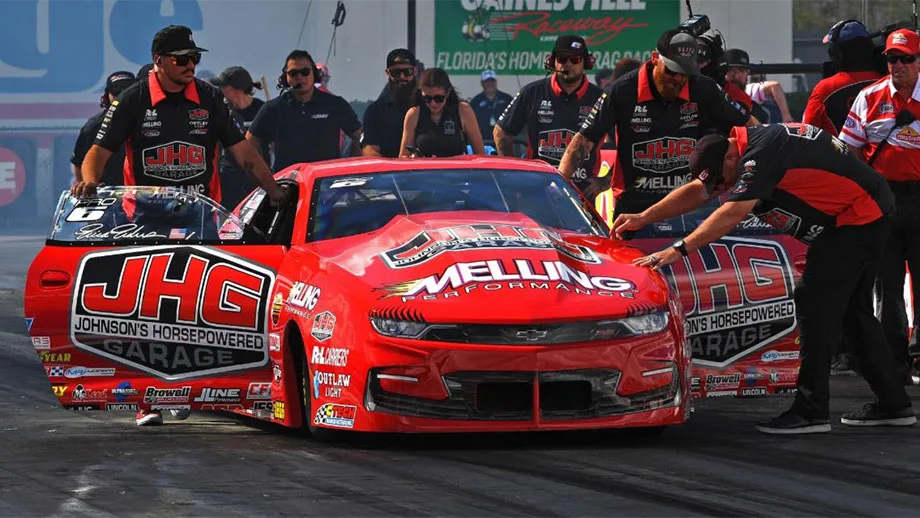
Yes. Both NHRA professional categories use the identical 500 cubic inch supercharged Hemi V8 architecture, and the engine build cost is essentially identical at $100,000–$120,000. The physical packaging differs significantly, however. In a Funny Car, the engine sits directly in front of the driver inside a fibreglass body shell — the shell hinges forward at the front for driver access, earning the cars their “flopper” nickname. The exhaust headers sweep backward rather than venting through upward-firing pipes as in Top Fuel, which alters the aerodynamic leverage on the rear Goodyear slicks and changes the clutch engagement window. Funny Cars typically run 0.10–0.15 seconds slower per pass despite the same basic engine because of these packaging and aerodynamic differences — not because of any engine performance disadvantage. Full NHRA drag racing overview →
Top Fuel vs Formula 1 — a completely different cost philosophy
A Formula 1 power unit costs $10–15 million — roughly 100 times the unit cost of a Top Fuel engine. But that F1 unit is engineered to run reliably for multiple race weekends before a penalty-free replacement, meaning its cost-per-racing-hour figure is dramatically lower than Top Fuel. A competitive Top Fuel team that runs a full 21-event NHRA season will spend more on engine rebuild parts in a single year than many F1 midfield teams spend on their entire power unit lease agreement. The engineering philosophies are exactly inverted: F1 optimises for longevity, fuel efficiency, and sustained performance across 300 km; Top Fuel optimises for a single, unrepeatable, maximum-violence burst lasting 3.7 seconds. Both represent the pinnacle of their respective engineering disciplines. Understanding horsepower →
How car engines work → · Turbo vs naturally aspirated engines → · Why a V8 sounds different from a V12 → · How a 4-stroke engine works →
Frequently Asked Questions
The real cost of four seconds
The $100,000–$120,000 build cost of a Top Fuel engine is extraordinary by any measure. The more revealing figure is what happens after every single pass: $3,500–$5,000 in consumed parts, 40 minutes of elite specialist labour, and another engine inching toward retirement. Across 21 national events in 2026 — approximately 80–120 competitive passes for a full-season programme — that translates to $280,000–$600,000 in rebuild costs alone, plus the proportional replacement of crankshafts, superchargers, cylinder heads, and eventually the blocks themselves.
What that investment buys is four seconds of the most violent, concentrated, spectacular acceleration ever achieved by a vehicle that starts from a standstill — 11,000 horsepower, 330 miles per hour, the ability to reach 100 mph before most people can process that the car has moved. For the teams, crew chiefs, engine builders, and drivers who dedicate their careers to chasing those four seconds, the cost is simply the price of doing the work properly.
For the latest NHRA race results and championship standings, visit worldofspeed.org/nhra.