How a Clutch Actually Works
It’s not just a pedal you press to change gear. The clutch is a precision friction device that connects and disconnects a spinning engine from a stationary gearbox — hundreds of times per journey — without destroying either one. Here’s what’s really going on inside it.
How a Clutch Actually Works
More than just a pedal — the clutch is a precision friction device that keeps your engine and gearbox from destroying each other.
Every time you pull away from a set of traffic lights in a manual car, you’re orchestrating a small mechanical miracle. The engine is spinning — it never stops while the car is running. The gearbox, when you’re in neutral, is not. And the wheels are stationary. Press the clutch, select first gear, and slowly release the pedal, and somehow all three reach a harmony that moves the car smoothly forward without stalling, without a jolt, and without snapping anything in half.
The clutch is how that happens. It’s a friction-based coupling device that sits between the engine and the gearbox, and it has one fundamental job: allow the driver to temporarily disconnect a spinning engine from a stationary transmission, so gears can be selected, then gradually reconnect them without a sudden shock that would either stall the engine or snap the drivetrain. Understanding how a clutch works step by step — and why each part exists — turns gear-changing from a mysterious art into a mechanical process you can actually feel and control.
A car clutch works by using friction between three main components — the flywheel, the clutch disc, and the pressure plate — to progressively connect and disconnect the engine from the gearbox. When you press the pedal, a release bearing pushes on a diaphragm spring that lifts the pressure plate away from the clutch disc, breaking the connection. When you release the pedal, spring pressure clamps the disc against the flywheel again, and torque flows from the engine through to the wheels.
Why Does a Car Need a Clutch at All?
Before you can understand how a clutch works, you need to understand the problem it solves. An internal combustion engine is designed to run continuously — it produces power by burning fuel in a cycle that requires the crankshaft to keep turning. Stop it suddenly, and it stalls. Ask it to spin up from zero rpm to 2,000 rpm in an instant, and it either stalls or delivers such a violent jerk that it could damage the drivetrain.
A gearbox, on the other hand, needs to be stationary — or at least turning at a compatible speed — when you slide a gear into engagement. The internal gear teeth need to mesh cleanly, and forcing spinning gears together at a speed mismatch grinds and damages them. This is actually why old cars without synchromesh gearboxes required a technique called double-declutching: you had to match the gear speeds manually before engaging.
So you have two fundamentally incompatible states that need to coexist: a spinning engine and a stationary (or differently-spinning) gearbox. The clutch is the mechanical bridge between them. It lets the driver temporarily break that connection, select the right gear, then smoothly reintroduce the engine’s rotation to the drivetrain at a controlled rate that neither stalls the engine nor shocks the transmission.
If you want to understand where the engine’s torque comes from before the clutch transfers it, our companion guide on how car engines work and how a 4-stroke engine works step by step covers exactly that.
The Parts of a Clutch: What Everything Is and Why It’s There
A standard single-plate friction clutch — the type fitted to the vast majority of manual passenger cars — consists of six main components. Each has a specific job, and understanding what each one does makes the whole system click into place.

The Flywheel
A heavy, flat, precision-machined steel disc bolted to the rear of the crankshaft. It spins continuously with the engine and provides the smooth, flat friction surface that the clutch disc presses against. Its mass also smooths out the uneven pulses of combustion, keeping engine rotation steady.
The Clutch Disc
Also called the friction disc. This is the plate that sits between the flywheel and the pressure plate. Its faces are covered in friction material (similar to brake pad compound) that grips the flywheel when clamped. The disc is splined to the gearbox input shaft — so when it spins, the transmission spins with it.
The Pressure Plate
A spring-loaded assembly that bolts to the flywheel and spins with it. Its job is to clamp the clutch disc firmly against the flywheel surface. When nothing is pushing it away, it clamps hard. When the driver presses the pedal, something pushes it away to release that clamp.
The Diaphragm Spring
The finger-like spring inside the pressure plate assembly. In its natural state, it pushes the pressure plate into clamping position. When the centre of the diaphragm is pushed inward by the release bearing, the outer edge lifts away — releasing clamp force on the clutch disc. This is the clever mechanical inversion that makes modern clutches light and self-adjusting.
The Release Bearing
Also called the throw-out bearing. It slides along the input shaft on a fork and presses against the diaphragm spring fingers when you push the clutch pedal. It’s a bearing because the spring is spinning (it’s part of the pressure plate, which rotates with the flywheel) — the bearing allows a non-rotating pedal mechanism to push against a spinning component.
The Release Fork & Mechanism
The fork pivots to push the release bearing when you press the pedal. In older cable-operated systems, a steel cable directly connects the pedal to the fork. In modern hydraulic systems, the pedal pushes a master cylinder that sends fluid pressure to a slave cylinder at the gearbox, which moves the fork. Hydraulic systems give a more consistent, self-adjusting pedal feel.
The Clutch Disc in Detail: More Than Just a Friction Pad
The clutch disc deserves a closer look because it does more than just grip things. Welded between the friction material and the central hub are several small coil springs arranged in a circle — these are torsional damper springs. Their job is to absorb the rotational shocks and vibrations that would otherwise transmit every combustion pulse directly through the drivetrain. Without them, the drivetrain would chatter and shudder every time the clutch engaged.
The central hub of the clutch disc has internal splines that slot onto matching external splines on the gearbox input shaft. This means the disc can slide slightly forward and backward along the shaft (to allow for pressure plate movement) but cannot rotate independently of it — so wherever the disc goes, the input shaft follows.
| Component | Rotates With | Connected To | Primary Function |
|---|---|---|---|
| Flywheel | Engine / Crankshaft | Crankshaft (bolted) | Provides friction surface, smooths engine pulses |
| Pressure Plate | Engine / Flywheel | Flywheel (bolted) | Clamps clutch disc against flywheel |
| Clutch Disc | Gearbox (when engaged) | Gearbox input shaft (splined) | Transmits torque via friction |
| Diaphragm Spring | Engine / Pressure plate | Pressure plate housing | Provides and releases clamping force |
| Release Bearing | Does not rotate (outer race) | Release fork | Allows pedal mechanism to push spinning spring |
| Release Fork | Does not rotate | Pedal (cable or hydraulic) | Translates pedal movement to bearing movement |
How a Clutch Works: The Step-by-Step Sequence
The actual working principle of a clutch is a controlled friction system, but the sequence of events from “pedal pressed” to “car moving” is worth walking through in precise order. This is how the clutch transfers engine power to the gearbox — and how it interrupts that transfer cleanly enough to change gear.

State 1: Clutch Engaged (Pedal Released — Normal Driving)
This is the default state. Nothing is pushing against the diaphragm spring. The spring pushes the pressure plate firmly against the clutch disc, clamping it between the pressure plate and the flywheel. The friction between those surfaces is strong enough to transmit the full torque of the engine through to the gearbox input shaft, and from there, through the gearbox, down the driveshaft, and to the wheels.
In this state, everything in the clutch assembly rotates as a single unit at engine speed. The flywheel, the pressure plate, the clutch disc, and the gearbox input shaft are all turning together. The engine is mechanically connected to the drivetrain.
State 2: Pedal Pressed — Disengagement
The clutch doesn’t just connect and disconnect — it bridges two different speeds using friction, letting the driver control how quickly the engine’s rotation is handed off to the drivetrain. That “bridge” phase is what you feel as clutch slip, and it’s normal, deliberate, and essential.
The Role of Friction Material
The friction material on the clutch disc faces is carefully engineered to survive exactly this situation: controlled slipping under heat. It has a high enough friction coefficient to transmit full engine torque when fully clamped, but it also needs to handle enormous heat generated during slip — especially on a hill start or a high-rpm launch.
Traditional clutch friction material is an organic compound (similar to resin-bonded material), though performance and motorsport applications use ceramic or sintered metal compounds that withstand much higher temperatures. The trade-off is that ceramic clutches can be very abrupt — on or off — rather than the progressive feel a road driver needs. Understanding what torque is and how it relates to friction gives real context for why this material specification matters so much.
The Bite Point: Why It Matters and What’s Happening
The clutch bite point — also called the engagement point — is the pedal position at which the clutch disc first begins to make friction contact with the flywheel as you release the pedal. At this moment, you feel the car’s front end dip slightly, the engine note changes, and the car wants to move. This is the start of the slip phase.
Below the bite point, the clutch is fully disengaged. Above it, the clutch is fully engaged. The bite point is the narrow window in between where the clutch disc is slipping against the flywheel — partially transmitting torque, partially absorbing the speed difference through friction and heat.
Why the Bite Point Feels Different in Different Cars
The pedal position of the bite point varies significantly between cars. In a worn clutch, the bite point rises toward the top of the pedal travel. In a new clutch, it’s typically in the middle third of pedal travel. Sports cars often have a higher, more aggressive bite point for sharper response. Economy cars tend to have a lower, more progressive one for easier town driving.
The bite point also changes with temperature. A hot clutch — after repeated hill starts or heavy traffic — behaves differently from a cold one, because friction coefficients and spring rates change slightly with heat. Experienced drivers feel this and adjust their foot accordingly without consciously thinking about it.
When learning to drive, finding the bite point on a stationary car is the single most important skill. Press the clutch fully, select first gear, bring the revs to around 1,500 rpm, then raise the pedal slowly. The moment the car begins to move or you feel the engine note change slightly — that’s your bite point. Hold it there while you come off the footbrake, then gradually raise the pedal further to complete the engagement.
Clutch Slip: Normal vs. Problematic
During a pull-away, some clutch slip is completely normal and intended. The issue arises when the clutch slips when it should be fully engaged — for example, during hard acceleration in a high gear, when the engine revs climb but the car doesn’t accelerate proportionately. That’s a sign the friction material is worn thin and can no longer generate enough grip to transmit full torque without slipping.
Types of Clutch: From Road Cars to Race Cars
The single-plate friction clutch described above covers the vast majority of manual road cars, but it’s far from the only design in existence. Different applications — performance road cars, motorsport, heavy trucks, motorcycles — demand different solutions.
Single-Plate Clutch
One clutch disc between one flywheel and one pressure plate. Simple, reliable, progressive, easy to manufacture and replace. Found in virtually every manual car from city runabouts to entry-level sports cars. The sweet spot of cost, weight, and longevity for everyday driving.
Multi-Plate Clutch
Instead of one friction disc, a multi-plate clutch stacks several alternating friction discs and steel plates. More friction surface area in the same overall package size means the clutch can transmit significantly higher torque without increasing diameter. Common in motorcycles (where space is at a premium), high-performance cars, and — in wet variants — in automatic transmissions.
A wet multi-plate clutch runs submerged in oil, which keeps temperatures lower and extends life dramatically — the oil absorbs heat and carries it away. The trade-off is some power loss through fluid drag. Dry multi-plate clutches, used in high-performance road and race cars, don’t have this drag but need to manage heat more carefully.
Dual-Clutch Transmission (DCT)
The dual-clutch transmission — found in cars like the Volkswagen DSG, Porsche PDK, and countless modern sports cars — uses two clutches inside a single housing. One clutch handles odd gears (1, 3, 5, 7), the other handles even gears (2, 4, 6). While you’re driving in third gear, the transmission has already pre-selected fourth. When you upshift, one clutch releases as the other engages — seamlessly, in milliseconds — with no interruption in drive. It’s the reason DCT cars are so fast at gear changes. There’s no pedal for the driver to operate; the clutches are actuated hydraulically or electro-hydraulically by the gearbox computer.
If you’ve ever wondered how Sport mode in an automatic or DCT car changes the driving feel, our guide on what the S means on a gear shift explains how the transmission’s software changes clutch and shift behaviour.
Centrifugal Clutch
Used in mopeds, go-karts, chainsaws, and some agricultural equipment. There’s no pedal at all — the clutch engages automatically when engine speed rises above a threshold. Weighted shoes inside the clutch housing are flung outward by centrifugal force as revs climb, pressing against a drum and making the connection. At idle, the shoes retract and the clutch disengages. Simple, cheap, and completely automatic.
Torque Converter (Automatic Transmissions)
Strictly speaking, a torque converter isn’t a clutch — it’s a fluid coupling. But it performs the same job: connecting the engine to the transmission while allowing speed differences between them. It uses a rotating pump, a turbine, and a stator immersed in transmission fluid. The engine spins the pump, the fluid carries energy to the turbine which turns the transmission, and at low speeds the stator multiplies torque. Modern torque converters have a lock-up clutch that engages at highway speeds to eliminate the efficiency loss of fluid coupling.
| Clutch Type | Typical Application | Engagement | Key Advantage |
|---|---|---|---|
| Single-Plate (Dry) | Manual road cars | Driver-operated pedal | Simple, progressive, long-lived |
| Multi-Plate (Dry) | Performance / race cars | Driver-operated pedal | High torque capacity in small diameter |
| Multi-Plate (Wet) | Motorcycles, automatics | Handlebar lever / automatic | Oil cooling allows sustained slip |
| Dual-Clutch (DCT) | Modern sporty/performance cars | Automated (no pedal) | Millisecond shifts, no torque interruption |
| Centrifugal | Mopeds, karts, small engines | Automatic (rpm-triggered) | Zero driver input required |
| Torque Converter | Conventional automatics | Automatic (fluid) | Smooth, no wear on friction surfaces |
How Racing Clutches Work Differently
If a road car clutch is a precision instrument, a racing clutch is a weapon. The demands are completely different: instead of lasting 100,000 km with thousands of smooth, progressive engagements, a race clutch needs to survive a handful of brutal launches at maximum engine torque, change gears in fractions of a second, and weigh as little as possible. The design priorities diverge sharply from the road car world.

Formula 1 and the Semi-Automatic Clutch
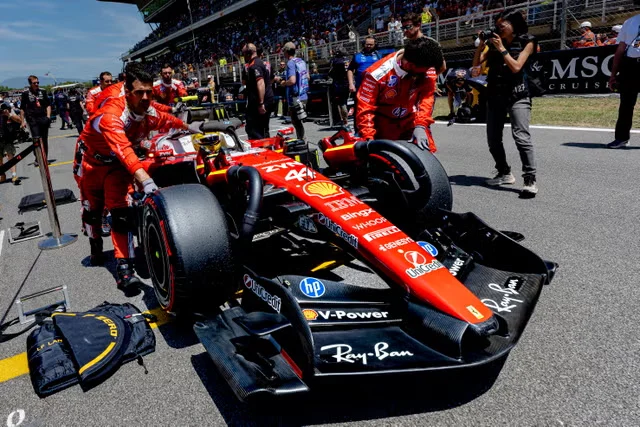
Modern Formula 1 cars don’t have a traditional clutch pedal. Gear changes are made via carbon fibre paddles on the steering wheel, and the clutch itself is operated by two small paddles on the back of the steering wheel — used only at the race start and during pit lane entry/exit. The rest of the time, the semi-automatic gearbox changes gear so quickly (around 50 milliseconds) that a driver operating a clutch pedal would simply slow the process down.
The F1 clutch itself is a tiny, carbon fibre multi-plate unit designed to handle enormous torque in a package small enough to fit inside the bell housing of the gearbox. It has to survive the launch stress of a full-power start — the most violent clutch engagement imaginable — without failing. The FIA’s technical regulations govern what teams can do with the clutch system, partly to prevent fully automatic launch control that removes driver skill from the start procedure. For a deeper look at how these regulations shape the machinery, the World of Speed Explained section covers many of these topics.
NASCAR and Endurance Racing
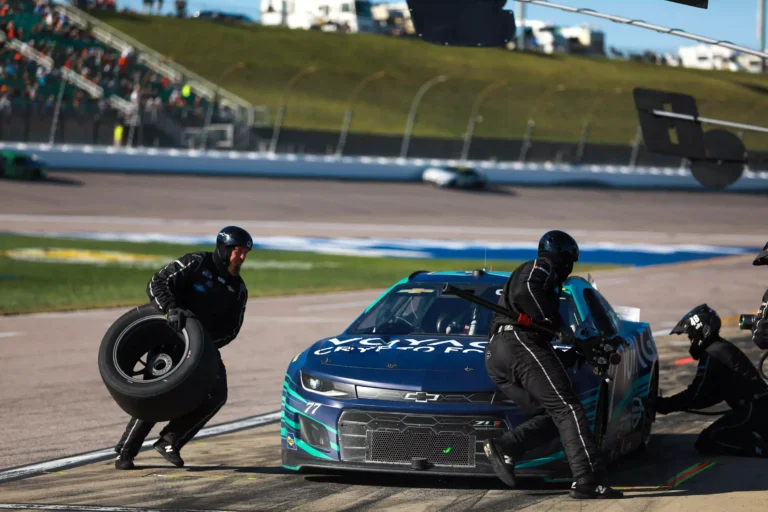
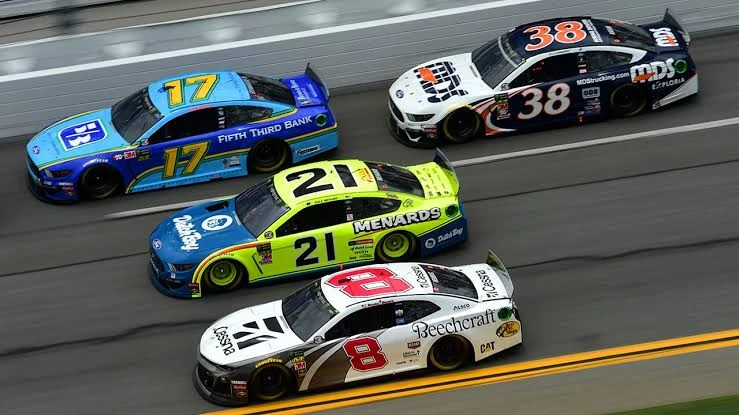
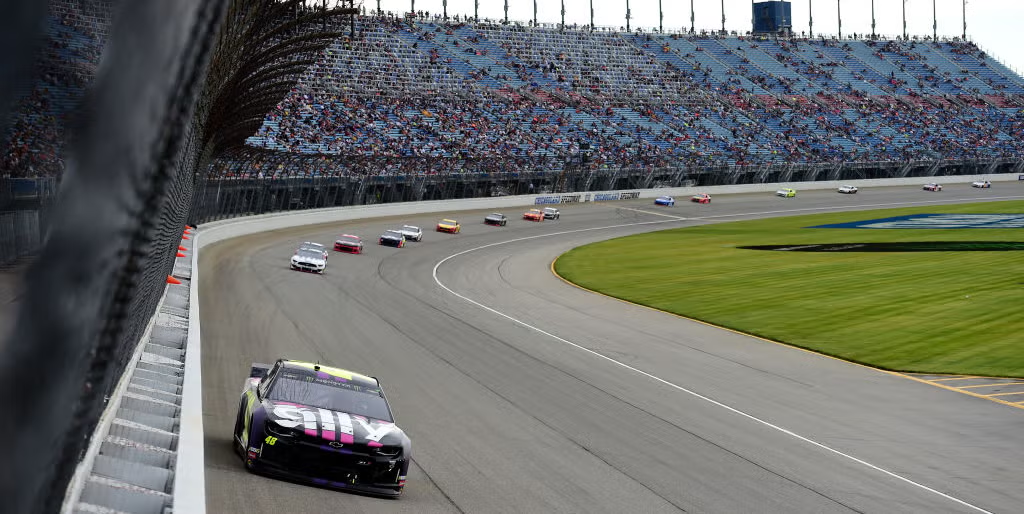
NASCAR Cup cars still use a conventional H-pattern manual gearbox — drivers change gear with a clutch pedal and gear lever. The clutch itself is a heavy-duty single or twin-plate unit capable of handling the torque from a high-displacement V8. Interestingly, experienced NASCAR drivers often skip the clutch entirely when upshifting at speed, matching engine revs to wheel speed and slipping the gearbox into the next ratio without disengagement — a technique only possible with precisely matched speeds and a lot of practice. Downshifts nearly always require the clutch.
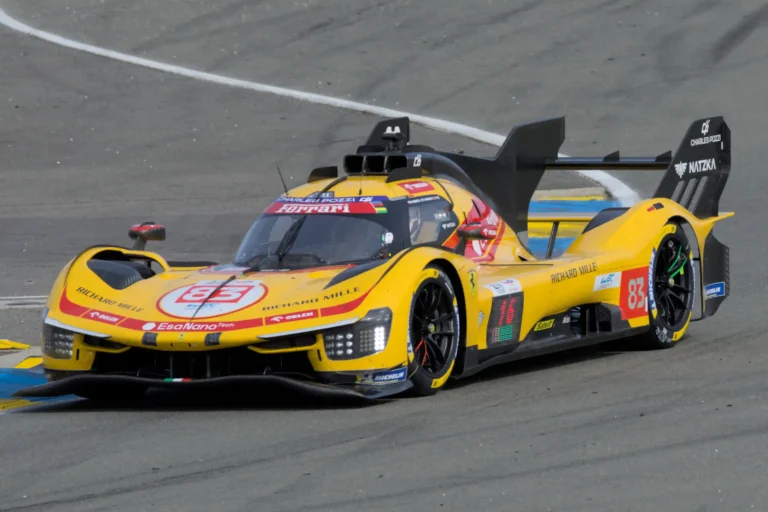
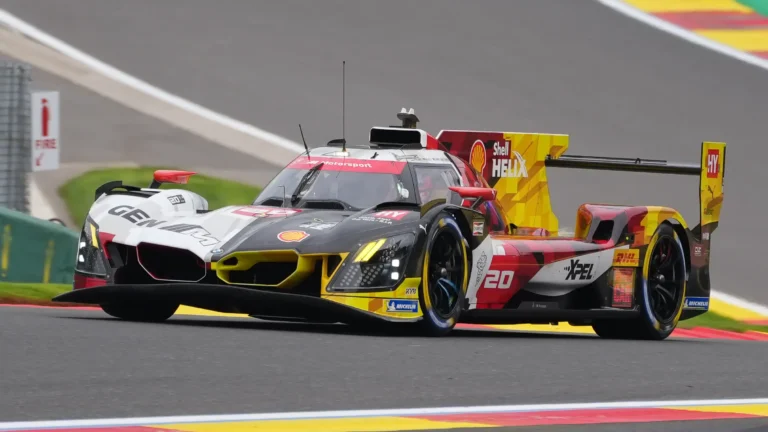
In endurance racing such as the GT3 category, most cars now use paddle-shift sequential gearboxes, but the reliability requirement changes the design calculus: a clutch in a 24-hour race needs to handle thousands of engagements and last a full race distance, often without replacement. Durability, not just performance, is the priority.
Drag Racing: The Most Violent Clutch Duty Cycle in Motorsport
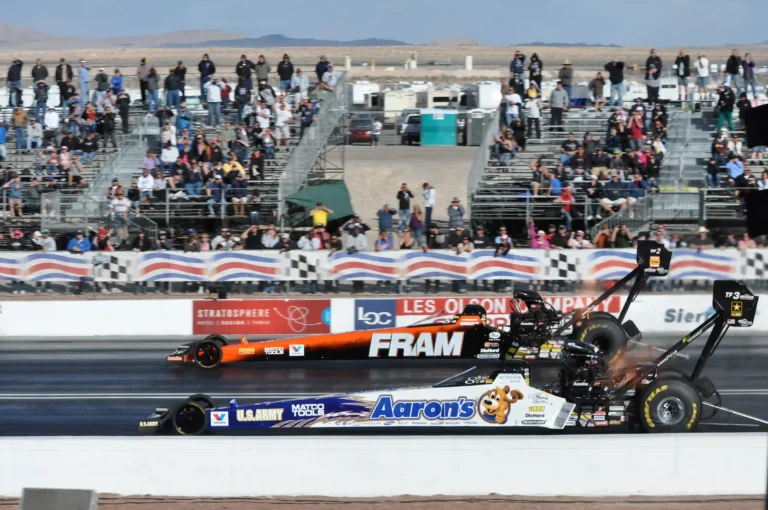
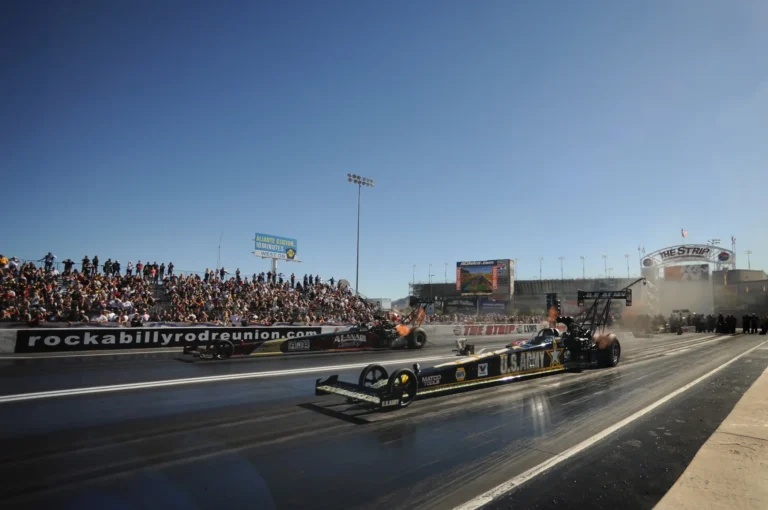
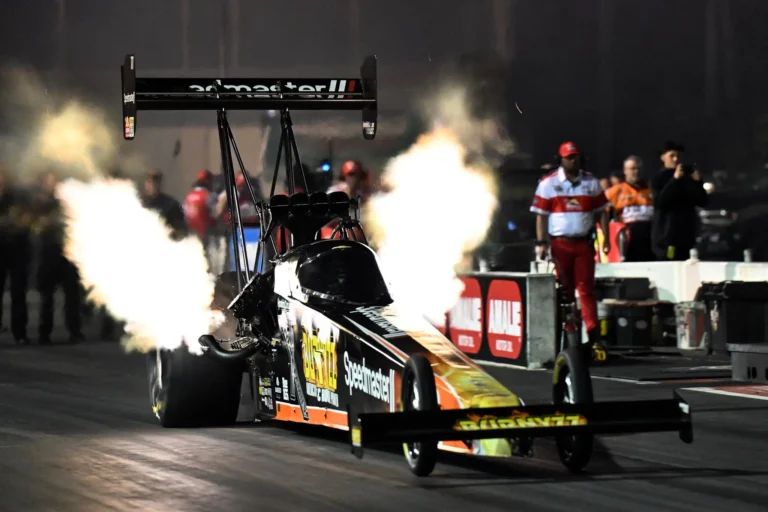
If you want to see a clutch working at its absolute limits, look at NHRA Top Fuel drag racing. A Top Fuel dragster produces around 11,000 horsepower and covers a quarter mile in under 3.7 seconds. The clutch — or more precisely, the multi-stage clutch pack — is a critical element of the car’s performance tuning.
Top Fuel cars use a multi-disc clutch with several clutch packs that progressively engage as the car accelerates down the track. If the full clutch were slammed home at the line with 11,000 hp behind it, it would spin the tyres uncontrollably. Instead, the clutch is tuned to slip for the first fraction of a second, then progressively tighten as vehicle speed increases and the tyres can handle more power. This clutch management is one of the primary tuning variables in drag racing — a tenth of a second on the clutch timing can mean the difference between a record run and a tyre shake.
A Top Fuel clutch must absorb and transmit forces that would destroy a road car clutch in a single engagement. The clutch disc material in a Top Fuel car is sintered metal — not the organic compound used in road cars. It runs extremely hot and is rebuilt between every run. The clutch is not a passenger; it is a tuning device. Read more on how fast NHRA cars go to put that clutch loading in context.
Clutch Wear, Symptoms, and When to Replace
A clutch is a wear item — by design. The friction material on the clutch disc is sacrificial; it’s meant to wear over time so the more expensive flywheel and pressure plate surfaces don’t. A well-driven car in normal conditions might return 80,000 to 150,000 km from a clutch. A car that’s regularly towed heavy loads, driven in stop-start urban traffic, or in the hands of someone who rides the clutch pedal might see that figure halved.
Signs of Clutch Wear and Failure
The symptoms of a worn or failing clutch follow a recognisable progression. They rarely appear all at once — the clutch gives you plenty of warning before it lets you down completely.
Bite Point Rising High
As friction material wears thin, the pressure plate needs to travel further to clamp effectively, so the bite point moves toward the top of the pedal travel. If you notice the bite point is much higher than it used to be, wear is the almost certain cause.
Burning Smell
A sharp, acrid smell after heavy use — particularly after repeated hill starts or towing — indicates the clutch disc is running very hot from excessive slip. Occasional faint smell isn’t alarming; frequent burning smell is a warning to change driving habits and have the clutch inspected.
Slipping Under Load
Engine revs rise but the car doesn’t accelerate in proportion, particularly under hard acceleration in a high gear. This is the most definitive sign of clutch slip — the friction material can no longer hold at full torque. Replacement is needed soon.
Judder or Shudder on Engagement
A shuddering vibration as the clutch takes up drive — usually worse from cold — can indicate contaminated friction material (oil or grease on the disc), worn torsional damper springs in the disc, or a warped flywheel. Not always a simple “replace the disc” fix.
Difficulty Selecting Gears
If the gearbox is stiff, crunching, or won’t select gears cleanly even with the clutch fully pressed, the clutch may not be fully releasing. This can be a hydraulic issue (low fluid, failed slave cylinder) rather than disc wear — worth checking before assuming the worst.
Noise When Pressing the Pedal
A squealing or grinding noise specifically when pressing or releasing the clutch pedal, with no noise in between, points to the release bearing. These bearings typically make noise just before failure. Catching this early saves replacing the whole clutch unnecessarily.
What Not to Do: Clutch Habits That Kill It Early
The single biggest killer of clutches isn’t mileage — it’s driving technique. Specifically, riding the clutch: resting your foot on the clutch pedal while driving, which keeps the release bearing in constant contact with the diaphragm spring. This wears the release bearing and, if the pedal is depressed enough to partially release the pressure plate, causes constant low-level clutch slip that generates heat and wears the friction material without the driver even noticing.
The second bad habit is using the clutch to hold the car on a hill rather than the handbrake. Sitting with the clutch partially engaged to prevent rolling backwards puts the clutch disc in a sustained slip that generates a lot of heat in a short time. Use the handbrake on hills, always.
The clutch is just one piece of the drivetrain puzzle. For context on what the engine is producing before it gets to the clutch, read our guides on what horsepower actually means, what torque is, and how turbo vs naturally aspirated engines differ in the power they produce.
Frequently Asked Questions
The Bottom Line on How a Clutch Works
The clutch is one of the most elegantly simple — and most underappreciated — systems in a car. Three main components, one diaphragm spring, and a release bearing: that’s essentially all it takes to let an engine produce power continuously while giving the driver complete control over when and how that power reaches the wheels.
Understanding the bite point, the slip phase, and why the clutch wears the way it does makes you a measurably better driver in a manual car. You’ll engage more smoothly, protect the clutch disc, and recognise trouble long before it leaves you stranded. And next time someone asks why cars need a clutch at all, you’ll have a real answer — not just “so you can change gears.”