What Is Brake Balance In F1? Formula 1 Brake Bias Explained
Brake balance in F1 is the split of braking force between the front and rear wheels. Drivers adjust it from the steering wheel to control corner entry, prevent lock-ups, manage tyre wear, and keep the car stable under heavy braking.
Brake balance is one of the small cockpit settings that can change a driver’s confidence immediately. Move it too far forward and the fronts lock. Move it too far rearward and the car can become unstable.

What is brake balance in F1 is a key question because braking is not only about slowing the car. It is also about rotating the car into the corner.
Formula 1 defines brake balance as the amount of braking power split between the front and rear of the car. It is also called brake bias.
This topic connects directly with chicanes in F1, apex in racing, grip, and car handling.
In simple terms, brake balance decides which axle works harder when the driver hits the brake pedal. That split changes how the car stops, turns, and protects its tyres.
What Does Brake Balance Mean In Formula 1?
Brake balance in Formula 1 means how braking force is divided between the front axle and rear axle.
If more braking force goes to the front, the car has more front brake bias. If more goes rearward, the rear brakes do more work.
Formula 1’s official glossary says drivers can adjust this balance while driving. Therefore, brake balance is not fixed for the whole race.
Race analyst view: Brake balance is a confidence tool. The right setting lets a driver attack braking zones without locking a tyre or losing the rear.
How Does Brake Balance Work In F1?
When an F1 driver brakes, weight transfers toward the front of the car. This gives the front tyres more load and grip.
Because of that, F1 cars usually run more braking force at the front. However, the best split depends on the corner, tyres, fuel load, track grip, and weather.
The braking system uses separate front and rear circuits. Formula 1’s technical explanation says braking power can be biased by a cockpit control to help stabilise the car under braking.
Modern F1 is more complex at the rear. Energy recovery through the MGU-K also slows the rear axle, so brake-by-wire helps manage rear braking demand.
Front Brake Bias Vs Rear Brake Bias In F1
Front brake bias gives more stopping force to the front wheels. It can make the car stable, especially at high speed.
However, too much front brake bias can lock the front tyres. That creates understeer and can cause a flat spot.
Rear brake bias helps the car rotate into the corner. However, too much rear bias can make the rear unstable under braking.
| Brake Balance Setting | Typical Effect | Main Risk |
|---|---|---|
| More front bias | Stable braking and strong front stopping force | Front lock-up and understeer |
| More rear bias | More rotation into the corner | Rear instability or snap oversteer |
| Wet setting | Often moved rearward for front-lock control | Rear sliding if grip is low |
| Qualifying setting | Sharper corner entry | Less margin for mistakes |
This is why brake balance links with oversteer and understeer, flat spots, G-force, and Delta Time.

How Do F1 Drivers Change Brake Balance?
F1 drivers change brake balance using controls on the steering wheel. They can move the bias forward or rearward during a lap.
They may adjust it before a heavy braking zone, after tyre wear appears, or when fuel load drops. Meanwhile, the race engineer may suggest a direction over team radio.
Formula 1’s brake bias guide says wet conditions often require a more rearward setting to reduce front locking. Drivers also change bias as tyres and car balance evolve.
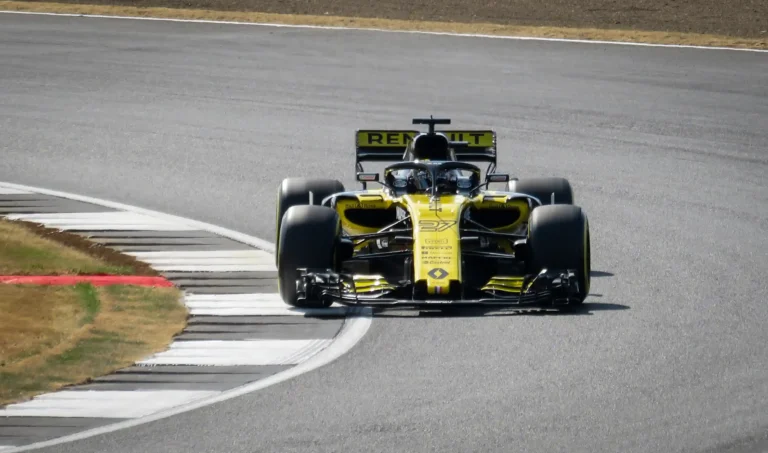
However, automatic brake bias control is sensitive territory. Renault lost its 2019 Japanese Grand Prix points after a system was judged to have saved drivers from making repeated adjustments during a lap.
For cockpit context, read about the F1 cockpit, the ECU, ERS, and Energy Store.
Why Brake Balance Matters For Race Strategy
Brake balance matters because races change. Fuel burns off, tyres degrade, track grip improves, and brake temperatures rise.
As the car gets lighter, the best brake bias may change. Therefore, a setting that worked on lap five may feel wrong on lap forty.
Brake balance also affects tyre management. Too much front locking can damage the front tyres. Meanwhile, too much rearward bias can overwork the rear tyres on entry.
On circuits with heavy braking zones, teams watch brake temperatures closely. Formula 1 has noted that carbon brakes can exceed 1,000 degrees Celsius at brake-heavy tracks such as Canada.
Strategy also links with pit stops, overcut and undercut strategy, F1 debriefs, and F1 qualifying.
What Happens If Brake Balance Is Wrong?
If brake balance is too far forward, the front tyres may lock. The car then slides straight and misses the apex.
If brake balance is too far rearward, the rear can become nervous. The driver may feel the car rotate too quickly on corner entry.
In both cases, lap time disappears. Worse, the driver may damage the tyres or lose confidence in braking zones.
That is why top drivers constantly refine brake balance. They are not only stopping the car. They are shaping the corner before the steering input fully arrives.
Brake Balance Vs Brake Bias: Is There A Difference?
In F1, brake balance and brake bias usually mean the same thing. Both describe the front-to-rear split of braking force.
“Brake bias” is often the phrase used on radio and steering wheel menus. “Brake balance” is the broader explanation used for fans and setup discussion.
Either way, the key idea is simple. The driver is deciding how much braking work each axle should do.
Final Verdict
Brake balance in F1 is the split of braking force between the front and rear brakes. It is one of the driver’s most important live setup tools.
The right brake bias helps the car stop, rotate, and protect its tyres. The wrong setting causes lock-ups, understeer, instability, and lost lap time.
For beginners, the answer is simple. Brake balance controls where braking force goes. For serious fans, it is one of the clearest signs of how a driver manages the car corner by corner.
FAQs About Brake Balance In F1
What is brake balance in F1?
Brake balance is the split of braking force between the front and rear wheels of an F1 car.
What is brake bias in Formula 1?
Brake bias is another name for brake balance. It describes how braking force is divided between front and rear axles.
Can F1 drivers adjust brake balance while driving?
Yes. Drivers adjust brake balance from the steering wheel during practice, qualifying, and races.
What happens if brake bias is too far forward?
The front tyres can lock, causing understeer, flat spots, and missed apexes.
What happens if brake bias is too far rearward?
The rear of the car can become unstable under braking and may rotate too aggressively.
Does brake balance affect tyre wear?
Yes. Poor brake balance can lock tyres, increase sliding, and create faster tyre degradation.