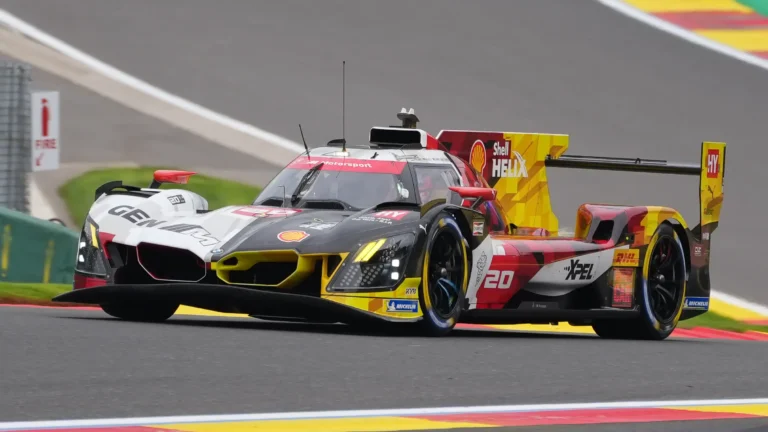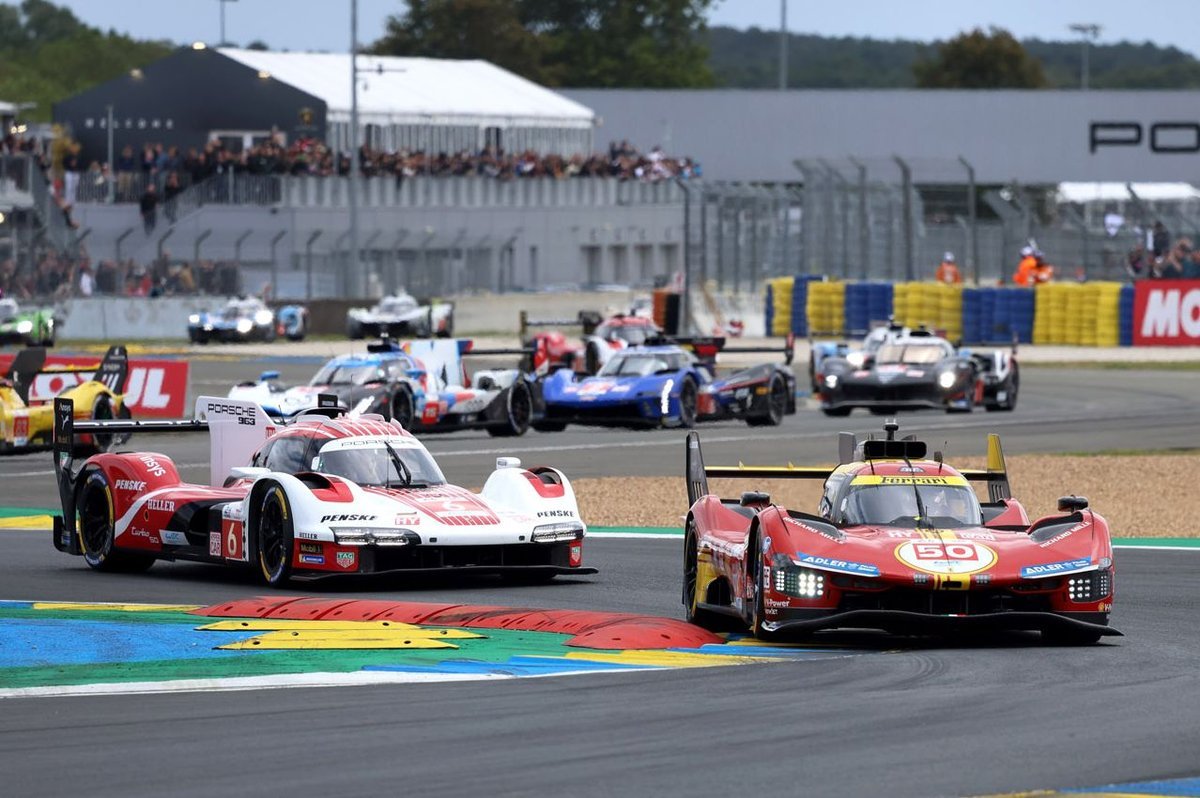
Ferrari Hypercar vs Toyota vs Porsche:
The Complete 2026 Performance Comparison
Three manufacturers built the cars that defined Hypercar racing — but only two are still on the grid. Toyota’s reborn TR010 Hybrid beat Ferrari’s 499P to the 2026 Le Mans win, ending the Italian marque’s three-year streak. Meanwhile, Porsche walked away from the class entirely. Here is the full breakdown: technical specifications, Le Mans results history, regulations, and what each manufacturer’s trajectory tells us about Hypercar racing’s uncertain future.
Ferrari vs Toyota vs Porsche:
The Complete Comparison
Toyota beat Ferrari at Le Mans 2026. Porsche walked away entirely. Full breakdown inside.
Toyota ended Ferrari’s three-year Le Mans winning streak in June 2026 — but the bigger story in Hypercar racing this season isn’t who won. It’s who left. Porsche Penske Motorsport shut down its factory Hypercar programme entirely after the 2025 season, and a last-ditch effort by privateer outfit Proton Competition to keep the 963 on the grid collapsed in December 2025. Consequently, the headline 2026 comparison isn’t a clean three-way fight anymore. It’s Ferrari’s 499P defending its turf against a resurgent Toyota, while Porsche’s 963 watches from the sidelines, its competitive legacy frozen mid-story.
This matters enormously for anyone trying to understand modern endurance racing. For three seasons, Ferrari, Toyota and Porsche represented the gold standard of Hypercar competition — three different engineering philosophies, three different regulatory paths, and genuinely unpredictable racing. However, the 2026 season tells a more complicated story: rising costs, shifting manufacturer priorities, and a regulatory environment that rewards some approaches over others.
This guide breaks down everything: the full technical specifications of all three cars, their complete Le Mans results history, the critical difference between LMH and LMDh regulations that shaped their different fates, and an honest look at why Porsche’s exit happened while Ferrari and Toyota doubled down. Furthermore, we cover what each manufacturer’s approach reveals about where Hypercar racing goes from here.
2026 Hypercar Season — Where Things Stand
Toyota’s reborn TR010 Hybrid — an updated version of the GR010 Hybrid carrying new bodywork and a new team identity, Toyota Racing — won the 2026 24 Hours of Le Mans, securing the manufacturer’s sixth victory at the race and ending a run of three consecutive Ferrari wins. Furthermore, the result triggered an immediate swing in the championship picture: Toyota took a commanding 1-3 finish at Le Mans worth 80 points, and followed it with a 50th career WEC win at Imola to seize the lead in the Manufacturers’ Standings.
Ferrari’s title-leading #51 car, driven by Antonio Giovinazzi, James Calado and Alessandro Pier Guidi, rounded out the podium in third at Le Mans despite a late engine-related concern and a costly spin from Pier Guidi at the pit entry. Therefore, while Ferrari remains competitive — and still leads in total recent Le Mans wins across the 2023–2025 stretch — Toyota’s 2026 form represents a genuine shift in momentum.
Three manufacturers built the technology that defined an era of endurance racing. In 2026, only two of them are still racing each other for it.
2026 Le Mans — Hypercar Top Five
| Pos | Car | Manufacturer | Notes |
|---|---|---|---|
| 🥇 1st | No.7 Toyota TR010 Hybrid | Toyota Racing | Kobayashi / de Vries / Conway |
| 🥈 2nd | No.12 Cadillac Hertz Team Jota | Cadillac | Pole-sitter, strong race pace |
| 🥉 3rd | No.51 Ferrari 499P | Ferrari AF Corse | Giovinazzi / Calado / Pier Guidi |
| 4th | No.50 Ferrari 499P | Ferrari AF Corse | Fuoco / Nielsen / Molina |
| 6th | No.7/8 Toyota (best of sister car) | Toyota Racing | Defending champions’ weaker result |
Source: FIA WEC official results, fiawec.com
Why Porsche Left Hypercar Racing for 2026
On 7 October 2025, Porsche announced it would end its factory WEC Hypercar programme after the 2025 season, citing financial losses tied to broader struggles in Porsche’s road car business. Therefore, Porsche Penske Motorsport’s three-car factory effort — which had delivered Porsche’s first WEC race win since 2017 at Qatar in 2024 and a runner-up finish at the 2025 Le Mans — simply stopped.
A genuine effort was made to keep the 963 alive in privateer hands. Christian Ried’s Proton Competition team explored running two customer cars, with Roger Penske himself reportedly willing to support the project. However, by early December 2025, Proton confirmed that funding for a two-car entry — the minimum required under WEC manufacturer eligibility rules — had fallen through. Consequently, when the FIA WEC published its 35-car provisional entry list for 2026, the Porsche 963 was completely absent from the Hypercar class for the first time since its introduction in 2023.
The 963’s best Le Mans result came in its final WEC season — a second-place finish in 2025, just 14 seconds behind the winning Ferrari, after starting from the back of its class grid following a pre-race disqualification for a weight infraction. Had it won from there, it would have been the lowest starting position before a victory in the race’s history. Porsche also won the 2024 24 Hours of Daytona in IMSA and claimed a podium sweep at the 2024 Qatar 1812km — the first Hypercar to do so since the regulations began.
Crucially, Porsche has not abandoned the 963 platform entirely. The Penske-run factory IMSA GTP programme continues in North America for 2026, and Porsche Penske Motorsport still holds an automatic Le Mans invitation as reigning IMSA GTP champions. However, that invitation cannot be used unless Porsche commits to a full WEC season — a condition the manufacturer chose not to meet. Consequently, the 2026 season marks the first time since 1968’s Porsche 908 that a top-class-eligible Porsche prototype will not contest Le Mans, barring a change of course in future seasons.
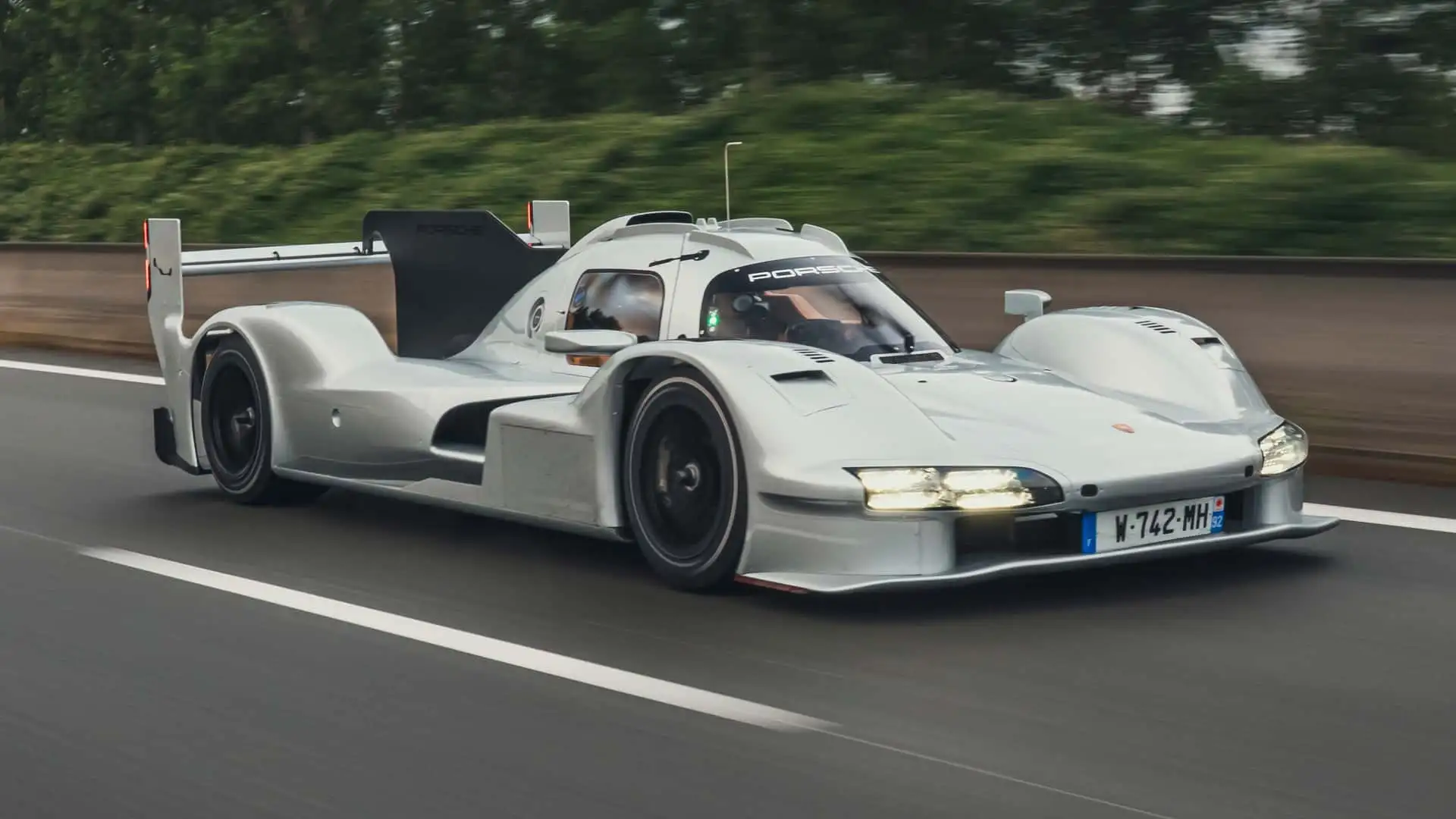
Genesis — Hyundai’s luxury performance division — entered WEC for the first time in 2026 with two Oreca-built GMR-001 LMDh prototypes, partially offsetting Porsche’s exit. Furthermore, Cadillac absorbed two of Jota’s former Porsche-running personnel after Jota sold its 963s over the winter and became Cadillac’s official WEC team. McLaren and Ford are both scheduled to join Hypercar in 2027, suggesting the manufacturer landscape is shifting rather than shrinking — even as Porsche’s specific chapter closes for now.
Technical Specifications — Ferrari 499P vs Toyota TR010 vs Porsche 963
Despite competing on a level playing field through Balance of Performance (BoP), the three cars take fundamentally different engineering approaches. Ferrari and Toyota both built bespoke Le Mans Hypercar (LMH) prototypes from the ground up. Porsche’s 963, by contrast, was built to Le Mans Daytona h (LMDh) regulations, sharing a spec hybrid system and Multimatic-built chassis architecture with rival manufacturers including BMW, Cadillac and Lamborghini.
| Specification | Ferrari 499P | Toyota TR010 Hybrid | Porsche 963 |
|---|---|---|---|
| Regulation | Le Mans Hypercar (LMH) | Le Mans Hypercar (LMH) | Le Mans Daytona h (LMDh) |
| Engine | 2,992cc twin-turbo V6 | 3.5L twin-turbo V6 | 4.6L twin-turbo V8 (“9RD”) |
| Hybrid System | Front-mounted MGU, AWD above 190 km/h | Bespoke hybrid, rear-driven base | Spec LMDh hybrid (Bosch/Williams/Xtrac) |
| Combined Power | Up to 500 kW (671 hp) | 520 kW (BoP-regulated ceiling) | ~650–670 hp total system |
| Drivetrain | Semi-permanent AWD | Rear-wheel drive + front hybrid boost | Rear-wheel drive (spec hybrid) |
| Chassis Builder | Dallara (bespoke) | Toyota in-house / Cologne build | Multimatic (spec LMDh) |
| Baseline Weight | 1,030 kg (BoP-set) | 1,030 kg (BoP-set) | 1,030 kg (BoP-set) |
| Tyres | Michelin | Michelin | Michelin |
| Le Mans Debut | 2023 | 2021 (as GR010) | 2023 |
| 2026 WEC Status | ✅ Full factory entry | ✅ Full factory entry (rebranded) | ❌ Withdrawn — no entries |
Since 2026, the FIA and ACO stopped publishing detailed BoP tables publicly, sharing performance balancing data only with competing teams to reduce speculation. However, the principle remains: weight, power output and energy allocation are adjusted per car, per race, to keep all Hypercar manufacturers competitive regardless of their underlying engineering philosophy. Consequently, a Ferrari’s raw horsepower advantage on paper rarely translates directly into race pace — BoP exists specifically to neutralise those differences. Full explainer on how horsepower translates to race performance.
Engine Philosophy — Why Ferrari, Toyota and Porsche Chose Differently
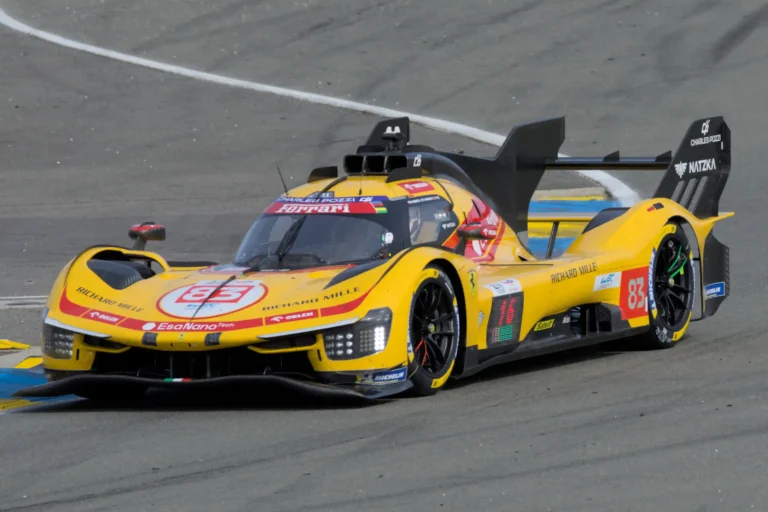
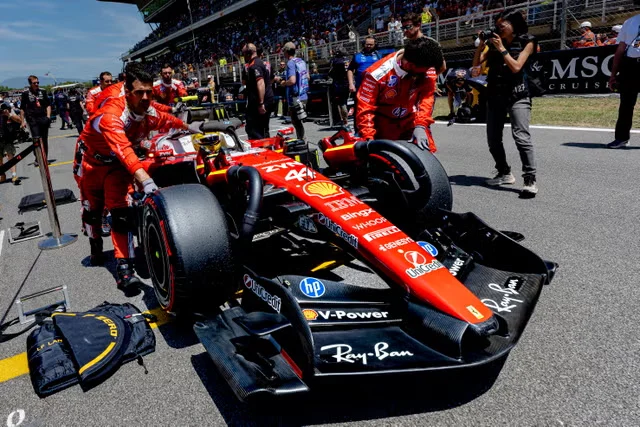
Ferrari’s 499P shares its twin-turbocharged V6 architecture with the road-going Ferrari 296 — though the engine becomes a fully stressed chassis member in race trim, a significant engineering departure from its road-car origins. Moreover, the 499P’s semi-permanent all-wheel-drive system, powered by a 200 kW front-mounted electric motor active above 190 km/h, gives it distinct traction characteristics in wet and slow-speed conditions compared to its rear-driven rivals.
Toyota’s TR010 Hybrid, evolved from the GR010 that debuted Hypercar racing in 2021, uses a larger-capacity 3.5-litre V6. Furthermore, the 2026 bodywork update — substantial enough to earn a new model name — focused on aerodynamic efficiency rather than raw power, reflecting Toyota’s preference for incremental development over wholesale redesign. Porsche’s 963, by contrast, used the spec LMDh hybrid system shared across all LMDh manufacturers, paired with a bespoke twin-turbo V8 — a deliberate cost-saving choice that let Porsche leverage shared components developed for IMSA’s GTP class. Turbo vs naturally aspirated engines — full technical comparison.
Le Mans Results History — Who’s Actually Won More?
Across total Le Mans history, Toyota’s overall record dwarfs both rivals — six wins as a manufacturer, including five consecutive victories from 2018 to 2022. However, narrow the window to the Hypercar era specifically, and Ferrari’s run looks far more dominant: three straight wins from 2023 to 2025, immediately upon entering the class, ending Toyota’s prior streak.
| Year | Le Mans Winner | Manufacturer | Margin / Notes |
|---|---|---|---|
| 2026 | No.7 Toyota TR010 | Toyota Racing | Strategy masterclass, 1-3 finish |
| 2025 | No.83 Ferrari 499P (AF Corse, privateer) | Ferrari | Kubica/Hanson/Ye, beat both factory cars |
| 2024 | No.50 Ferrari 499P | Ferrari | Held off chasing Toyota #7 |
| 2023 | No.51 Ferrari 499P | Ferrari | First Ferrari Le Mans win since 1965 |
| 2022 | No.8 Toyota GR010 | Toyota | Toyota’s 5th straight win |
| 2021 | No.7 Toyota GR010 | Toyota | First Hypercar-regulation Le Mans |
Toyota: 6 total Le Mans wins, including 5 consecutive (2018–2022) and now the 2026 win reclaiming the top step. Ferrari: 3 consecutive Hypercar-era wins (2023–2025), plus its historic first win since 1965 in 2023 — but no win prior to entering Hypercar regulations. Porsche: 0 wins in the Hypercar/LMDh era with the 963, its best result a runner-up finish in 2025 — a near-miss legacy now frozen as the manufacturer steps away from the class.
For complete historical context, our full 2026 24 Hours of Le Mans results coverage breaks down every class, while our analysis of former F1 drivers at the 2026 race covers the crossover talent across all three manufacturer programmes.
LMH vs LMDh — The Regulatory Split Explained
Understanding why these three manufacturers ended up in such different positions requires understanding the two regulatory paths that converge in the same Hypercar class. Le Mans Hypercar (LMH) regulations — used by Ferrari and Toyota — allow manufacturers to design a fully bespoke chassis, aerodynamic package and hybrid system, subject to overall performance targets. Therefore, LMH gives manufacturers maximum design freedom but demands a far larger standalone engineering investment.
Le Mans Daytona h (LMDh) regulations — used by Porsche’s 963, alongside BMW, Cadillac, Lamborghini and Alpine — require manufacturers to use a spec chassis from one of four approved constructors (Dallara, Ligier, Multimatic or Oreca) and a spec hybrid system. Consequently, LMDh dramatically reduces development costs and allows a single chassis platform to compete in both WEC and IMSA’s GTP class simultaneously — exactly the dual-series flexibility Porsche relied on with its 963.
Why This Split Mattered for Porsche’s Decision
Ironically, the cost-efficiency that made LMDh attractive to Porsche in 2023 didn’t ultimately save the WEC programme. Porsche’s financial struggles were tied to broader road car sales declines, not Hypercar-specific costs — meaning the entire factory racing budget came under pressure regardless of which regulatory path the 963 followed. However, the LMDh framework’s IMSA crossover meant Porsche could retreat from WEC entirely while preserving its GTP presence in North America, a strategic flexibility that LMH manufacturers like Ferrari and Toyota don’t have built into their regulations.
On paper, a bespoke LMH car and a spec-chassis LMDh car are fundamentally different machines. However, the FIA and ACO’s Balance of Performance system equalises their on-track performance through weight, power and energy allocation adjustments specific to each car and circuit. This is precisely why Porsche’s spec-chassis 963 could podium-sweep against Ferrari and Toyota’s bespoke machinery in 2024 — the regulatory framework was deliberately designed to make the underlying engineering philosophy irrelevant to outright pace. What is the FIA? Full governing body explainer.
Manufacturer Profiles — Where Each Stands Heading Forward
What Comes Next for Hypercar Racing
The 2026 season marks a genuine inflection point. McLaren and Ford are both scheduled to join Hypercar competition in 2027, suggesting manufacturer interest in the category remains strong even as Porsche steps back. Furthermore, Genesis’s 2026 debut and Cadillac’s continued investment indicate the class is diversifying rather than contracting. Therefore, while the Ferrari-Toyota rivalry will dominate headlines through 2026, the longer-term picture suggests Hypercar racing is entering a genuine transition period — one where this year’s absent manufacturer could plausibly return, and where new names continue to reshape what “the big three” even means.
Ferrari vs Toyota vs Porsche — Frequently Asked Questions
📌 Verified Sources & Further Reading
What This Comparison Really Tells Us
A three-way Hypercar comparison would have been straightforward eighteen months ago. In 2026, it’s something more interesting: a study in contrasting fortunes. Toyota proved that patient, incremental development — a rebrand, a bodywork update, the same fundamental platform — can still produce a championship turnaround at the sport’s biggest race. Ferrari proved that entering a class cold can produce three straight wins, even if 2026 showed that dominance has a shelf life.
Porsche’s story is the most instructive, however. The 963 was never the slowest car on the grid — its 2025 Le Mans runner-up finish proves exactly the opposite. However, motorsport budgets answer to corporate balance sheets, not lap times. Therefore, the most important lesson from this comparison isn’t about engineering at all. It’s that Hypercar racing’s “big three” was always more fragile than it looked, dependent on manufacturer priorities that can shift in a single boardroom decision.
With McLaren and Ford joining in 2027, and Genesis already finding its footing in 2026, the next chapter of this rivalry won’t look like the last one. Whether Porsche eventually returns remains an open question — but for now, the fight belongs to Ferrari and Toyota alone.