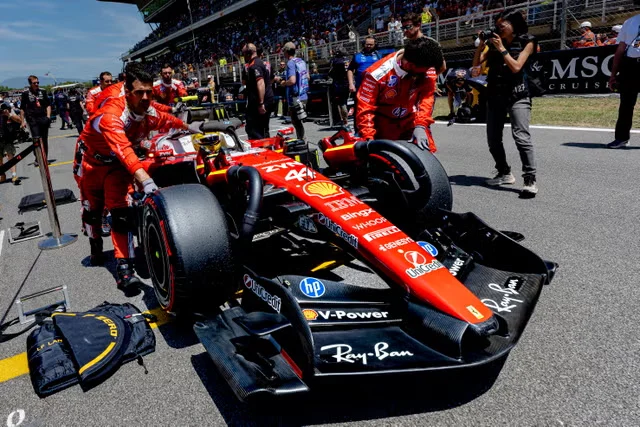
What Is An F1 Debrief? Formula 1 Race Debrief Explained
An F1 debrief is a post-session or post-race meeting where drivers, engineers, strategists, and senior team members review performance. They study telemetry, tyre data, setup choices, pit strategy, driver feedback, and mistakes to improve the car and team operation.
An F1 debrief is where a Grand Prix stops being emotion and becomes evidence. Every lap, radio message, tyre number, and setup choice gets reviewed.

What is an F1 debrief is a question that opens the door to how Formula 1 teams really improve. The race may finish at the chequered flag, but the engineering work continues immediately.
A debrief is not just a casual chat. It is a structured Formula 1 performance review. Teams compare what the driver felt with what the data shows.
This topic connects directly with Grand Prix weekends, Formula 1, F1 qualifying, and Delta Time in F1.
Williams Racing describes the post-race debrief as a critical process. Team Principal James Vowles explained that race data analysis starts from the moment the lights go out and continues after the event.
What Does F1 Debrief Mean?
An F1 debrief means a team meeting held after practice, qualifying, or a race. The goal is to understand what happened and why it happened.
Drivers explain balance, grip, tyre feel, braking confidence, traffic, and race execution. Meanwhile, engineers compare that feedback with telemetry and timing data.
The process is built around evidence. Formula 1’s Ross Brawn has described F1 as a constant feedback loop where teams review where they are and what each person must do next.
Race analyst view: A good F1 debrief does not search for blame. It searches for lap time, reliability, clarity, and better decisions.
How Does An F1 Debrief Work?
The debrief usually starts with the engineering side. Engineers explain balance problems, setup changes, reliability concerns, and performance trends.
After that, the driver gives feedback. They describe what felt strong, what felt weak, and what they needed from the car.
Then the wider team reviews strategy, tyres, pit stops, traffic, energy use, and race execution. Each department looks for lessons that can be used at the next session or next Grand Prix.
Williams says further forums can follow on Monday or later in the week. Therefore, the first debrief is only the start of a longer race-weekend evaluation.
Who Attends An F1 Debrief?
An F1 team debrief usually includes the driver, race engineer, performance engineer, strategy team, tyre engineer, data engineers, and senior technical staff.
Depending on the session, the team principal or technical director may also join. Some staff attend at the circuit. Others join from the factory through the race support room.
Formula 1’s pit wall guide explains that team operations involve race engineers, strategy, track operations, sporting staff, and senior decision-makers. A debrief brings those views back together.
| Role | Debrief Focus | Why It Matters |
|---|---|---|
| Driver | Car feel, tyres, traffic, race events | Turns data into track reality |
| Race engineer | Setup, communication, execution | Connects driver feedback to engineering action |
| Strategist | Pit windows, tyres, rivals, Safety Car risk | Improves future race decisions |
| Performance engineer | Lap time, sectors, balance, telemetry | Finds where the car lost speed |
| Technical leaders | Development direction and reliability | Turns lessons into upgrades |
What Data Is Reviewed In An F1 Debrief?
Teams review telemetry, lap time analysis, sector times, tyre temperatures, brake balance, energy deployment, throttle traces, and GPS data.
Mercedes explains that F1 cars use many sensors to measure temperatures, pressures, system operations, displacement, inertial data, and other car behaviour. That information becomes the backbone of the debrief.
However, the team does not review every number equally. The key is prioritising the data that explains performance. Otherwise, the meeting becomes noise.
This is why debriefs connect with brake balance, Energy Store, ERS, and F1 diffusers.

What Happens During A Post-Race F1 Debrief?
A post-race F1 debrief reviews the full Grand Prix. It usually covers the start, opening lap, tyre stints, pit stops, traffic, Safety Car timing, and final pace.
The driver explains how the car behaved on each tyre compound. Engineers then compare that with tyre degradation, lap time, and balance data.
The team also reviews execution. Did the pit stop happen at the right time? Was the radio clear? Did the driver lose time in traffic? Did the setup match the race conditions?
That is why the debrief links naturally with pit stops, overcut and undercut strategy, backmarkers, and F1 flags.
How Does An F1 Debrief Improve Race Strategy?
An F1 debrief helps the strategy team test its assumptions. Before a race, strategists build plans around tyre life, pace, overtaking difficulty, and weather risk.
After the race, they compare those models with reality. If tyre degradation was worse than expected, the team must understand why.
Meanwhile, if a driver lost time in dirty air, the team may change future pit windows. If DRS was less powerful than predicted, overtaking models need adjustment.
For more strategy context, read about clean air in F1, DRS, race timing, and car handling.
F1 Debrief Vs Strategy Meeting
A strategy meeting is usually more focused on race plans. It looks at tyre choices, pit windows, rivals, Safety Car probability, and weather.
An F1 debrief is broader. It includes strategy, but it also covers driving, setup, engineering, reliability, communication, and development direction.
In simple terms, the strategy meeting asks, “What should we do?” The debrief asks, “What happened, why did it happen, and how do we get faster?”
Final Verdict
An F1 debrief is a structured performance review after practice, qualifying, or a race. It combines driver feedback with telemetry, lap times, tyre data, strategy notes, and engineering judgement.
It matters because Formula 1 is too competitive for guesswork. Every setup change, radio call, pit stop, and tyre decision must create learning.
For beginners, the answer is simple. An F1 debrief is the team’s post-session review. For serious fans, it is the meeting where raw data becomes future speed.
FAQs About F1 Debrief
What is an F1 debrief?
An F1 debrief is a meeting where teams review a session or race using driver feedback, telemetry, strategy data, and engineering notes.
What happens during an F1 debrief?
Teams discuss car balance, tyres, setup, lap times, pit strategy, reliability, driver feedback, and improvement actions.
Who attends an F1 debrief?
The driver, race engineer, performance engineer, strategists, tyre engineers, data engineers, and senior technical staff may attend.
When does an F1 debrief happen?
Debriefs happen after practice, qualifying, and races. Post-race analysis can continue into Monday and later in the week.
Do F1 teams review telemetry after every race?
Yes. Teams use telemetry to compare driver feedback with measured car behaviour and performance trends.
Why is an F1 debrief important?
It helps teams improve setup, strategy, reliability, driver performance, and future car development.