
Understanding racing championship scoring—especially how racing championships are scored—completely changes the way you watch motorsport. Speed alone rarely wins global titles; instead, consistency, strategic planning, and vehicle survival determine the true victors over a grueling season. Consequently, governing bodies like the Fédération Internationale de l’Automobile (FIA) meticulously design these mathematical systems.
For example, Formula 1 relies on strict point distributions to balance risk and reward. You might naturally ask, “How does scoring work in racing?” Alternatively, you might wonder, “What is the scoring system used for a race?” Ultimately, these rigorous frameworks reward sustained excellence above all else.
Throughout my years covering motorsport live from the paddock, I have watched countless drivers lose titles despite winning the most races. Therefore, knowing exactly how racing championships are scored is essential for any true racing fan.
How Racing Championships Are Scored
Racing championships award points based on finishing positions in each race, and drivers or teams accumulate these points across the season to determine the champion.
Specifically, this motorsport scoring system inherently prioritizes steady, reliable results. If a driver crashes out frequently, they will inevitably lose the title. Conversely, a driver who consistently finishes second often beats a highly volatile race winner.
Furthermore, comparing how different racing disciplines score championships reveals fascinating tactical differences. F1 heavily rewards the top ten finishers while ignoring the rest of the grid. Meanwhile, endurance racing often grants points to almost every car that manages to cross the finish line. Additionally, touring car series frequently use reverse grids to creatively mix up the racing points system.
Ultimately, cumulative points strictly decide the overall champion. Every single race weekend matters immensely. Therefore, understanding how racing championships are scored helps fans appreciate the vital long game. The driver lifting the massive trophy in December usually drove the smartest, not necessarily the fastest.
What Is the F1 World Championship Points System?
The F1 scoring system awards 25 points to the winner, with decreasing points down to 10th place, plus 1 bonus point for the fastest lap (if in the top 10). Specifically, the Formula One World Championship distributes points exactly as follows: 25, 18, 15, 12, 10, 8, 6, 4, 2, and 1.
Moreover, the modern f1 world championship points system heavily incentivizes outright winning. The points gap between first and second place remains massive. Consequently, drivers push significantly harder for victories rather than comfortably settling for safe podiums. You might wonder how racing championships are scored during special sprint weekends. Indeed, sprint races offer additional points specifically for the top eight finishers.
Therefore, a single flawless weekend can yield up to 34 total points. During an exclusive interview I conducted with a former F1 race engineer in the Silverstone paddock, he heavily emphasized this dynamic. He told me that modern team strategies revolve entirely around maximizing these specific point thresholds. Thus, understanding how racing championships are scored in F1 reveals hidden, high-stakes tactical battles.
How Many Points Does 3rd Place Get in F1 When Examining How Racing Championships Are Scored?
Directly answering the question, third place receives exactly 15 points. Furthermore, securing these critical podium finishes remains crucial for any serious title contender. While 25 points for a dominant win sounds vastly superior, consistent 15-point hauls rapidly build a massive championship lead.

Typically, understanding how many points to win F1 championship titles requires looking at the season length. However, a driver usually needs around 350 to 400 points to securely mathematically clinch the crown. Therefore, regular third-place finishes significantly contribute to reaching this ultimate goal.
Moreover, when casual fans ask how racing championships are scored, they often overlook the intense midfield battle entirely. Yet, those 15 points frequently determine millions of dollars in annual prize money. Thus, finishing third represents a massive strategic and financial victory.
How Do Q1, Q2, and Q3 Work & Do They Affect How Racing Championships Are Scored?
Before the actual race begins on Sunday, drivers must rigorously qualify. Specifically, the modern knockout format strictly determines the starting grid. First, Q1 eliminates the five slowest drivers from the track. Next, Q2 aggressively knocks out another five competitors. Finally, Q3 features a thrilling, high-speed shootout among the top ten specifically for pole position.
However, this intense session rarely impacts how racing championships are scored. Standard qualifying does not award any championship points whatsoever. Instead, it merely dictates the critical starting order for Sunday’s main event.
The only rare exception occurs during specific sprint weekends. Nevertheless, even then, the Friday qualifying session only sets the grid for the short sprint. Therefore, while qualifying heavily dictates track position, the actual racing points system only applies to the competitive races themselves.
What Is the FIA Points Scoring System for Shortened Races?
Occasionally, torrential rain or severe crashes halt a race prematurely. Consequently, the FIA strictly enforces a sliding scale for these shortened events. This specific rule drastically alters how racing championships are scored during chaotic weekends.
Specifically, the governing body implements four distinctly different point columns based strictly on race distance completed. For instance, if the leader finishes less than 25% of the race, the winner receives only six points. If they complete between 25% and 50%, the winner rightfully gets 13 points.
Furthermore, a driver must absolutely complete over 75% of the race distance to receive full points. This rigid structure ensures absolute competitive fairness. Therefore, understanding what is the FIA points scoring system for shortened races clarifies sudden, confusing championship shifts. You simply cannot award full points for a dangerous five-lap parade. This nuance perfectly highlights how racing championships are scored under extreme pressure.
What Is the Constructors’ Championship in F1 and How Racing Championships Are Scored for Teams?
Formula 1 features two intense, parallel battles every season. While fans naturally focus on the individual drivers, teams fight fiercely for the F1 Constructors’ Championship. This team-based championship combines the points of both drivers racing for a specific constructor.
Specifically, answering how are constructors championship points calculated is incredibly straightforward. You simply add the exact points scored by both team cars in every single session. For example, if a team brilliantly finishes first and second, they score an impressive 43 points (25 plus 18).
Moreover, corporate team strategy heavily influences this ultimate outcome. Teams frequently sacrifice one driver’s personal race to secure a much better combined team result. Therefore, analyzing how racing championships are scored for teams reveals a brutal, millions-dollar corporate war. The Constructors’ crown ultimately dictates the team’s sheer financial survival.
F1 Constructors’ Champions List (Brief Overview)
Historically, a few deeply elite teams completely dominate the F1 Constructors’ Champions list. Specifically, Ferrari proudly leads the all-time charts with an incredible 16 team titles. Their legendary, undeniable dominance in the early 2000s set virtually unbreakable records.
Furthermore, Williams and McLaren follow closely behind with incredibly rich championship histories. However, the modern turbo-hybrid era witnessed absolute, terrifying dominance from Mercedes AMG Petronas. They seamlessly secured eight consecutive constructors’ titles between 2014 and 2021.
Recently, Red Bull Racing aggressively reclaimed the top global spot. They utilized brilliant aerodynamic car design and flawless team execution. Consequently, looking at these legendary teams shows exactly how racing championships are scored through relentless engineering superiority.
What Is the Prize Money for F1 Championship & How Racing Championships Are Scored for Payouts?
Clearly understanding how racing championships are scored directly explains the massive financial payouts. When new fans ask what is the prize money for F1 championship, they quickly realize there is no fixed per-race reward. Instead, teams receive massive payouts based entirely on their final season standings.
Therefore, the strict way how racing championships are scored dictates the distribution of hundreds of millions of dollars. Formula One Management calculates these massive revenues through global broadcasting rights and lucrative sponsorships. Subsequently, they distribute this vast wealth based precisely on the final constructors’ leaderboard.
Additionally, what is the prize money for F1 constructors’ championship varies annually based on total sport revenue. However, the top-performing team frequently takes home well over $140 million. Consequently, understanding Formula 1 prize money per race requires recognizing that individual race wins pay absolutely nothing upfront.
Why Does George Russell Use 63?
Fans often notice specific driver numbers as they learn how racing championships are scored throughout the competitive season. For instance, many supporters frequently ask why does Russell use 63 on his Mercedes car? George Russell chose the number 63 simply because his older brother used it during their early karting days.
Furthermore, the bold number uniquely resembles his initials “GR” when stylized on his official merchandise. Under modern FIA regulations, drivers select permanent career numbers to build strong personal brands. Consequently, this personal branding follows them throughout the year, regardless of how racing championships are scored.
Ultimately, these unique numbers help casual viewers track their favorite drivers during chaotic races. Drivers like Lewis Hamilton famously use 44, while Max Verstappen uses the champion’s number 1. Thus, these visual markers add crucial personality to the highly technical sport.
Best Racing Points System (Comparison Across Series & How Racing Championships Are Scored)
Motorsport enthusiasts frequently debate the best racing points system globally. Specifically, comparing F1 to the Supercars Championship reveals how racing championships are scored drastically alters competitive driver behavior. F1 strictly rewards the top ten exclusively, whereas other series distribute points much deeper into the finishing pack.
Therefore, an endurance racing driver prioritizes finishing the grueling race above all else. They carefully manage their vehicle because finishing 15th still secures valuable championship points. Conversely, a sprint series driver heavily risks crashing out entirely just to secure a singular, high-value podium finish.
Ultimately, the way how racing championships are scored creates fundamentally different entertainment styles for the passionate fans. Series that reward participation encourage massive grids and safe, calculated driving. Meanwhile, top-heavy scoring systems generate ruthless, aggressive overtaking maneuvers every single weekend.
Motorsport Scoring Systems Beyond F1 & Examining How Racing Championships Are Scored
A true motorsport scoring system extends far beyond elite open-wheel racing. For example, the Australian Supercars Championship uses a highly complex format across multiple varied race lengths. They distribute over 300 points per weekend, forcing drivers to perform consistently across several different sprint races.
Consequently, analyzing how racing championships are scored in touring cars shows a heavy reliance on consistent weekend survival. During my time covering Championship Off-Road Racing, a seasoned race official explicitly explained their unique structure to me. He emphasized that their racing points system specifically rewards aggressive passing, not just safely leading from the front.
Therefore, understanding how racing championships are scored requires deeply studying each unique racing discipline independently. Some dirt track series award points for winning preliminary heat races. Thus, drivers must push their vehicles to the absolute limit long before the main event even begins.
Racing Trophies and Championship Rewards
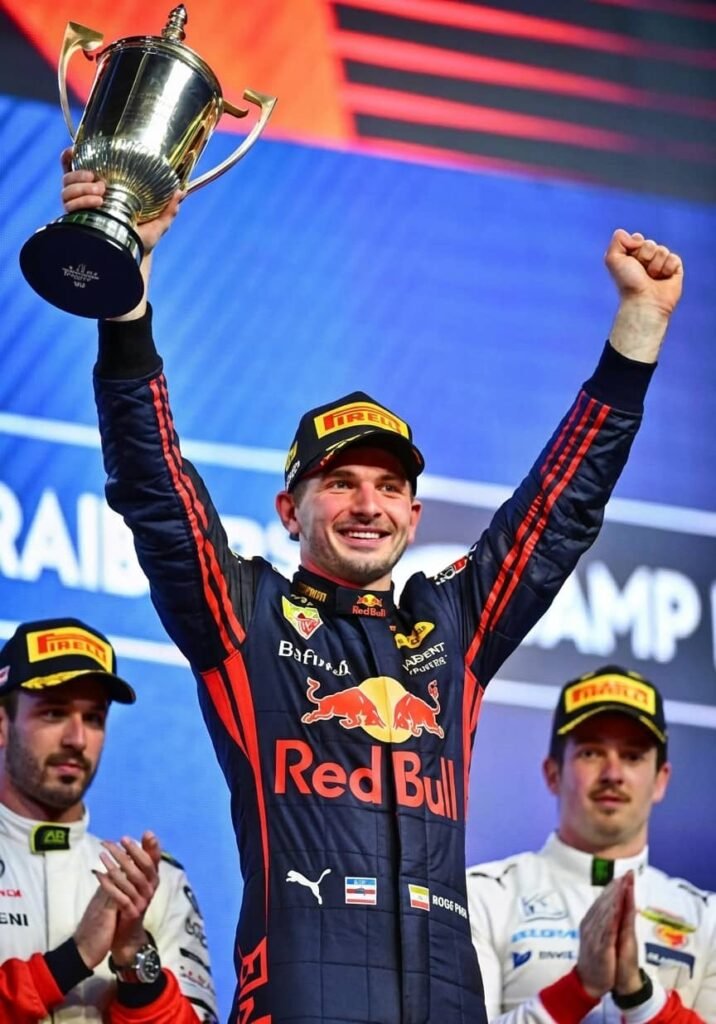
Ultimately, professional drivers risk their lives strictly for the prestigious racing trophy at the season’s end. While massive financial rewards go directly to the corporate teams, drivers desperately crave these historic racing trophies. The magnificent FIA Formula One World Championship Trophy represents the absolute pinnacle of global motorsport achievement.
Furthermore, lifting this historic trophy proves that you have flawlessly mastered how racing championships are scored over an exhausting global campaign. The governing bodies engrave the winner’s name onto these perpetual trophies alongside legendary historical figures. Consequently, winning immortalizes the driver within the sport’s permanent history books.
Additionally, race organizers often design highly unique, culturally significant trophies for individual race victories. However, the season-ending championship silverware remains the ultimate, undisputed prize. Therefore, drivers spend their entire lives chasing this singular, career-defining reward.
What Is the Scoring System Used for a Race?
Essentially, asking what is the scoring system used for a race generalizes across all major global motorsports. Every single racing series fundamentally relies on a strict, position-based mathematical point scale. The winner always receives the most points, heavily rewarding outright speed and victory.
However, unique bonus systems heavily modify how racing championships are scored in reality across different leagues. IndyCar famously awards bonus points for securing pole position and leading the most race laps. Consequently, smart drivers aggressively adapt their entire race weekend strategy to maximize these specific bonus opportunities.
Thus, learning exactly how racing championships are scored helps you predict winning strategies instantly from your couch. You understand exactly why a driver suddenly risks a late pit stop to secure the fastest lap bonus. Ultimately, these complex rules make the sport infinitely more engaging for dedicated, knowledgeable fans.
Frequently Asked Questions
How many points does the winner get in an F1 race?
The modern Formula 1 system proudly awards 25 points to the ultimate race winner. Second place clearly earns 18 points, and third place securely takes 15 points. Drivers finishing fourth through tenth receive progressively fewer points, while anyone finishing outside the top ten scores nothing.
Do drivers get championship points for qualifying?
Standard qualifying sessions absolutely do not award any championship points whatsoever. They merely determine the starting grid order for the main Sunday race. However, special sprint race weekends do actively award points to the top eight finishers of the short Saturday sprint event.
How does the fastest lap bonus point actually work?
A driver directly receives one bonus point for driving the fastest single lap of the race. However, they must officially finish the race strictly inside the top ten to legally claim this bonus. If a driver finishes 11th with the fastest lap, nobody receives the bonus point that weekend.
How is the prize money distributed in Formula 1?
Formula 1 drivers do not directly receive prize money from the governing body for winning a race. Instead, the sport handsomely pays the constructor teams based entirely on their final season standings. Subsequently, teams generously pay their drivers through lucrative, pre-negotiated private contracts and performance bonuses.
What happens to championship points if a race is shortened?
If severe weather forces officials to safely stop a race early, the series utilizes a strict sliding points scale. Drivers naturally receive reduced points depending on whether they completed 25%, 50%, or 75% of the scheduled distance. This vital rule actively prevents drivers from unfairly gaining full points for a deeply compromised event.
Final Thoughts: Why Scoring Systems Define Champions
In conclusion, raw vehicle speed rarely guarantees a world title alone in professional motorsport. Instead, relentless consistency, extreme vehicle reliability, and brilliant strategic survival create true motorsport legends. The rigid mathematical structure flawlessly dictates how racing championships are scored every single competitive year.
Therefore, factory teams hire brilliant, dedicated statisticians specifically to master the underlying racing points system. These strategists calculate exactly when a driver should aggressively push or safely conserve their engine. Ultimately, the true champion is simply the driver who best understands and exploits these exact rules.
Before concluding, let us review some common questions regarding how racing championships are scored worldwide.