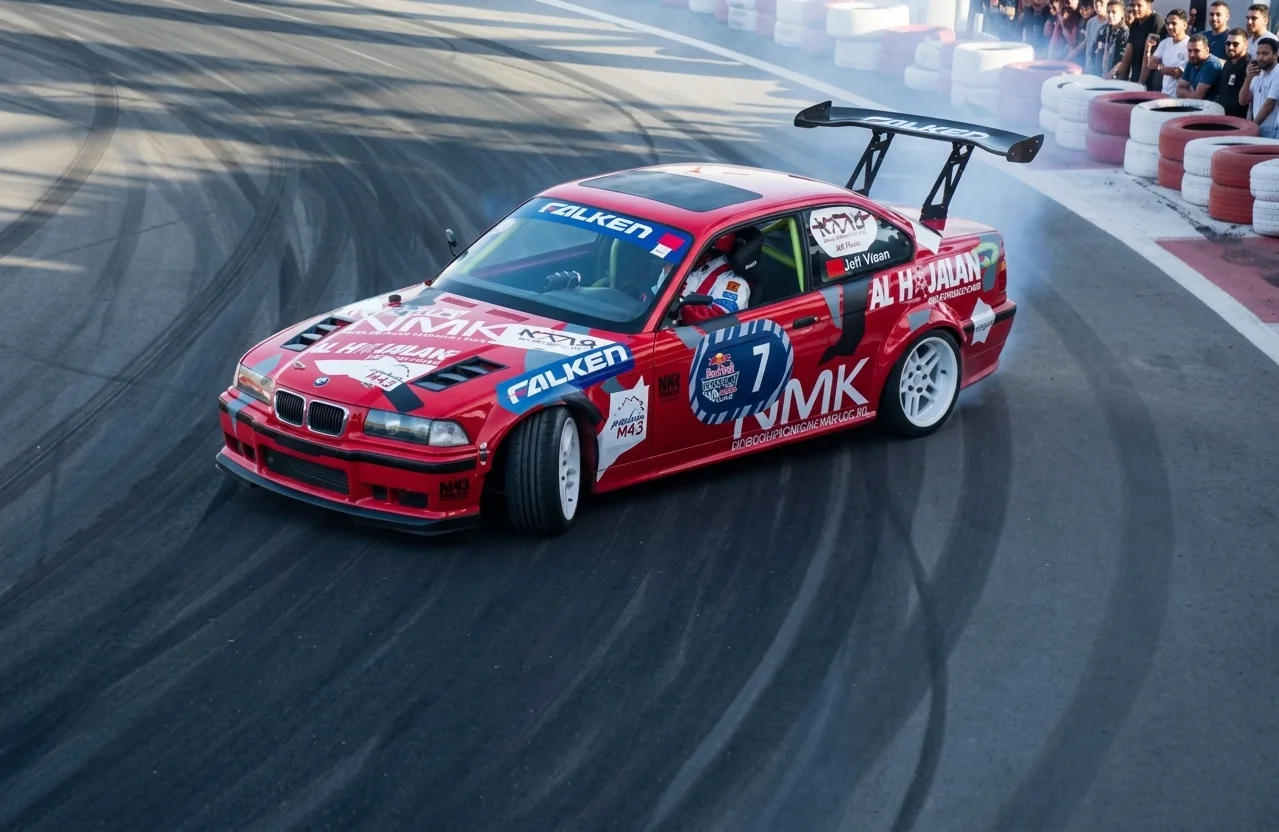


The roar of a thousand horsepower and the smell of toasted rubber define the atmosphere of a professional race track. But long before the lights go out on a Sunday afternoon, a silent, more grueling competition has already taken place. Understanding how racing drivers qualify is the first step in decoding the complex world of professional motorsport. It is a multi-dimensional process that combines raw lap performance, bureaucratic licensing, and strict entry criteria across global series like F1 and NASCAR.
Whether you are an aspiring driver or a fan trying to understand why your favorite driver started at the back of the pack, this guide breaks down the high-stakes journey from grassroots karts to the pinnacle of speed.
What Does a Professional Race Car Driver Do?
To the uninitiated, it looks like “just driving.” In reality, a professional race car driver is a hybrid of an elite athlete, a mechanical engineer, and a corporate spokesperson. Their race car driver career involves far more than the 300 kilometers they cover on race day. The week leading up to a race is a marathon of preparation. Drivers spend upwards of 20 hours in high-fidelity simulators, memorizing every curb and braking zone of a track.
They work with data engineers to analyze telemetry, looking for a tenth of a second in a corner entry. On race day, the physical toll is immense. Drivers lose several kilograms of weight in water during a single event due to heat and exertion. Beyond the cockpit, they manage massive sponsorship obligations, acting as the face of global brands that fund the multimillion-dollar engineering behind their seats.
Race Car Driver Requirements Explained
If you think a standard driver’s license is enough, think again. The race car driver requirements are among the most stringent in the sporting world. Success requires a specific blend of biology and technical education.
Physical Fitness and Reflexes
Drivers endure lateral forces of up to $5G$. This requires specialized neck strength to keep the head upright. Their cardiovascular health must be peak-tier; maintaining a heart rate of 170 BPM for two hours requires the stamina of a marathon runner.
Technical and Educational Foundations
There are no formal race car driver education requirements like a college degree, but most pros have a deep grasp of physics. They must understand “slip angles,” “downforce,” and “weight transfer” to communicate effectively with their pit crew. “During a recent conversation I had with a Formula 3 developmental driver, he noted that the biggest shock wasn’t the speed—it was the mental fatigue. You are essentially doing complex calculus in your head while your body is being crushed by G-forces.”
How to Become a Race Car Driver (Step-by-Step Path)

The road to the podium is steep and expensive. To become a race car driver, most professionals follow a very specific developmental ladder that begins in childhood.
- Start Karting (Ages 5–12): This is the foundation. Karting teaches the “racing line” and wheel-to-wheel combat.
- Junior Formula/GT Series: Around age 14–16, drivers move to cars. If you are looking to become a race car driver at 16, you’ll likely start in Formula 4 or Spec Miata.
- Specialized Training: Professional race car driving training schools offer intensive courses to sharpen technical skills.
- Licensing: You must accumulate signatures and points to graduate to higher-tier series.
- Sponsorship Hunting: Unless you are independently wealthy, finding sponsors is a full-time job. Racing is 50% talent and 50% funding.
Racing Car Drivers License Requirements (FIA, SCCA, etc.)
You cannot simply show up to a track and race. Strict racing license requirements govern who is allowed to compete. These licenses serve as a safety certificate, proving you aren’t a danger to yourself or others.
The FIA Super Licence
In the world of Formula 1, the “Super Licence” is the gold standard. To earn one, a driver must be 18 years old and have accumulated 40 points over three seasons by finishing high in the standings of other sanctioned series like F2 or IndyCar.
The SCCA Racing License
For those in the United States, the SCCA racing license is the gateway to amateur and semi-pro racing. The process involves a medical review, a weekend of specialized racing school, and two successful “novice” race finishes without causing an accident.
| License Tier | Primary Use Case | Key Requirement |
| FIA Grade A | Top-tier GT and Prototype | International success |
| FIA Grade B | Regional GT racing | High-performance history |
| SCCA Full Comp | North American Club Racing | Schooling + Novice finishes |
How Racing Drivers Qualify in Formula 1
The F1 qualifying format is a high-pressure “knockout” system designed to ensure only the fastest drivers reach the final stage. This is the most famous example of how racing drivers qualify in the modern era.
The Three Sessions (Q1, Q2, Q3)
- Q1 (18 minutes): All 20 drivers compete. The 5 slowest drivers are eliminated and take grid positions 16–20.
- Q2 (15 minutes): The remaining 15 drivers fight for speed. The bottom 5 are eliminated (positions 11–15).
- Q3 (12 minutes): The “Top 10 Shootout.” These drivers battle for the “pole position” (1st place on the grid).
Lap Count and Failure to Qualify
No fixed limit exists on the number of laps in F1 qualifying, but teams restrict running mainly due to tire limitations. If a driver fails to qualify—by not setting a time within 107% of the fastest Q1 lap—the stewards may bar them from the race unless they grant an exception based on practice performance.
What is the 75% Rule in F1?
There is a technicality that often confuses new fans: what is the 75% rule in F1? This rule isn’t about qualifying but about race classification. If a driver crashes or their car fails, they can still be “classified” as a finisher if they have completed at least 75% of the total race distance. This is crucial for points eligibility. For example, if a race is 60 laps and a driver’s engine explodes on lap 50, they are still ranked in the final results because they passed the 45-lap threshold.
Is 25 Too Old to Start F1?
It is a harsh reality of the sport: if you are asking if 25 is too old to start F1, the answer is almost certainly yes. Most F1 drivers were world-class karters by age 10 and were in F1-affiliated academies by age 16. However, 25 is not too old to start a professional racing career in other disciplines. Endurance racing (Le Mans), GT racing, and touring cars often see drivers enter in their late 20s or early 30s. F1 is the exception, not the rule, when it comes to age limits.
NASCAR Racing Car drivers Qualify
If Formula 1 is a surgical strike against the clock, NASCAR qualifying is a high-speed game of chess played on banked ovals. For fans wondering how NASCAR qualifying works, the answer has evolved significantly over the last few years to increase television excitement and track-side tension. Currently, the format typically uses a two-round knockout system for most tracks.
Drivers are split into two groups (Group A and Group B) based on their performance in the previous race. Each group gets a short session to post their fastest lap. The fastest five drivers from each group advance to a final round to battle for the pole position.
What’s new in NASCAR’s qualifying rules is the emphasis on specific track types. On short tracks and intermediate ovals, you get two rounds. However, on superspeedways like Talladega, it’s a single-car, one-lap dash to ensure safety and prevent “drafting” manipulation.
How long is NASCAR qualifying? Usually, the entire process takes about 45 to 60 minutes. However, the biggest outlier is the season opener. If you want to know how I qualify for the Daytona 500, prepare for a week-long ordeal.
Only the front row is set by traditional time trials. The rest of the 40-car field must compete in the “Bluegreen Vacations Duels”—two 150-mile sprint races. Your finishing position in these races determines your starting spot for the Great American Race. It is the only event where you literally have to “race” just to qualify.
How Racing Drivers Qualify (Community & Online Insights)
Beyond the official rulebooks, a massive community of aspiring racers shares the “hidden” requirements of the sport. If you search for how racing drivers qualify on Reddit, you’ll find a recurring theme: the “Pay Driver” debate.
Many users point out that while the speed on track is mandatory, the “qualification” often happens in boardrooms. Teams frequently give professional seats to drivers who bring multimillion-dollar sponsorships, a harsh reality that official guides often omit.
How to Get Into Racing With No Money
It is the most common question in motorsport: how to get into racing with no money? While it sounds like an oxymoron, the digital age has created a legitimate “backdoor” into the professional paddock. The most successful path today is Sim Racing. Platforms like iRacing and Assetto Corsa Competizione are so realistic that professional teams now use them for scouting. Drivers like Max Verstappen and Lando Norris frequently use these sims to stay sharp.
“I recently spoke with a driver who spent three years dominating regional iRacing leagues before getting a shot in a real-world GT4 car. He told me the biggest hurdle wasn’t the physics—it was the heat and the physical fatigue of the steering rack, which no home simulator can perfectly replicate yet.”
Another option is the Scholarship route. Many racing schools, like Lucas Oil or Skip Barber, hold annual “shootouts.” You pay a flat entry fee, and if you are the fastest driver over the weekend, the school funds your entire next season. Finally, many pros started as mechanics or “tyre changers,” volunteering their time to teams just to be around the cars and wait for a chance to test.
Roadmap For How Racing Car Drivers Qualify
The path to the professional grid is a marathon of skill, finance, and bureaucratic hurdles. How racing drivers qualify is not a singular event but a years-long accumulation of experience and licensing. Qualification is multi-layered: you must prove your safety through racing license requirements, your speed through qualifying sessions, and your value through sponsorship.

While F1 is the hardest and most exclusive path, the world of NASCAR, GT racing, and club competition offers more accessible entry points for those with the grit to chase the dream. Consistency is your greatest asset. Whether you are starting in a kart at age 8 or a sim-rig at age 20, the goal is the same: stay on the racing line, minimize your mistakes, and always have your pitch deck ready for the next sponsor.
Frequently Asked Questions
How Racing Drivers Qualify for the Daytona 500?
Unlike other races, only the front row is set by speed. The rest of the field is determined by the “Duels,” which are two 150-mile qualifying races held on the Thursday before the main event.
What happens if an F1 driver doesn’t qualify?
If a driver is outside 107% of the fastest time in Q1, they are technically “DNQ” (Did Not Qualify). However, the stewards usually allow them to race if they showed fast times in practice sessions.
How can I become a race car driver at 16?
At 16, you should focus on earning an SCCA or NASA competition license. This usually involves attending a recognized racing school and completing two “novice” races without incidents to prove you are safe on track.
What happens to eliminated Racing car drivers in F1 qualifying?
Drivers eliminated in Q1 or Q2 are “parked” for the rest of the session. Their starting position is fixed based on their fastest lap in the session they were eliminated in.
Is 25 too old to start a racing career?
For Formula 1, yes. For almost every other type of racing, including NASCAR, GT3, and endurance racing, 25 is a perfectly viable age to start if you have the talent and the funding.
Conclusion: How Racing Drivers Qualify
Becoming a professional race car driver is one of the most statistically difficult career paths in the world. It is a sport where the barrier to entry isn’t just physical or mental—it is profoundly financial and bureaucratic. As we have explored, how racing drivers qualify is a question with a moving answer; it depends on whether you are fighting for a tenth of a second in an F1 knockout session or battling through the “Duels” at Daytona.
The modern roadmap to the cockpit has shifted. While the traditional “karting to formula” pipeline remains the primary route for the elite, the rise of high-fidelity simulation and specialized racing academies has opened doors for those who didn’t start at age five. However, the core requirements remain unchanged: technical precision, extreme physical resilience, and the business acumen to secure the sponsorships that keep the wheels turning.
If you are an aspiring driver, the “qualification” never truly ends. You qualify for your license, then your seat, then your starting position, and finally, your place in the history books. It is a grueling, expensive, and often heart-breaking pursuit—but for the few who see the green flag from the front of the grid, there is no other office in the world that compares to the cockpit of a race car.